
A horse that clamps its jaw, tosses its head, or refuses to collect isn’t being stubborn — it’s often reacting to the unnatural pressure of a metal bit against sensitive bars, tongue, and palate. Switching to a bitless bridle redirects pressure from the mouth to the poll, nose, and chin, preserving the horse’s comfort while maintaining clear communication. The right design depends on your horse’s head shape, training level, and the type of riding you do.
I’m Min — the co-founder and writer behind Gadgets Feed. My approach to evaluating bitless bridles involves cross-referencing material quality, pressure-distribution mechanics, and customer feedback across hundreds of real-world riding sessions to pinpoint which designs deliver consistent, gentle control without chafing or slipping.
Whether you’re dealing with a dental-sensitive horse, a young horse in training, or simply prefer a kinder approach to riding, finding the best bitless bridle means understanding how noseband style, hardware durability, and adjustability affect your horse’s response and comfort under saddle.
How To Choose The Best Bitless Bridle
A bitless bridle works by applying pressure to the horse’s nose, poll, chin, or cheeks — or a combination of these — to cue direction and speed. The key is matching the style to your horse’s level of training and sensitivity, while also considering the material, hardware, and adjustability for your horse’s unique head shape.
Noseband Style: Cross-Under vs. Side Pull vs. Hackamore
Cross-under bridles use a strap that passes under the jaw and crosses behind the cheekbones, wrapping the head for even poll-nose-chin pressure with a light touch — ideal for sensitive horses already responsive to leg and seat aids. Side pulls attach reins to rings on the sides of the noseband, offering direct lateral pressure for steering and a simple, forgiving feel that green horses often accept immediately. Mechanical hackamores use long shanks to amplify leverage; they provide stopping power for strong horses but require a steady hand to avoid harsh poll pressure.
Material: Leather vs. Nylon vs. Rope
Leather bridles (like the HORZE or Weaver Leather side pull) mold to the horse’s face over time, offer a classic look, and resist twisting. They need regular conditioning to prevent stiffness and cracking. Nylon webbing (like the Monty Roberts Dually) is lightweight, easy to clean, and won’t stretch, but can rub on sensitive skin without padding. Rope nosebands (seen on the Mustang Breaking Hackamore and Justin Dunn) provide a focused pressure point that encourages the horse to yield, but a rough or thin rope can be abrasive — some riders wrap the noseband with soft wrap to soften the feel.
Hardware and Adjustability
Look for solid stainless steel or brass buckles — nickel-plated hardware can corrode over time, especially in humid barns. The headstall should offer multiple adjustment holes on both sides, not just one, so the browband sits level and the noseband rests 1-2 finger widths below the cheekbone. Reins should be long enough (at least 7 feet) for neck-reining or direct-reining without forcing you to lean forward.
Quick Comparison
On smaller screens, swipe sideways to see the full table.
| Model | Category | Best For | Key Spec | Amazon |
|---|---|---|---|---|
| Justin Dunn Bitless Bridle | Leather Side Pull | Responsive horses, trail riding | Leather with rope nose, 3/4″ average | Amazon |
| HORZE Cross-Under Bitless Bridle | Leather Cross-Under | Mouth-sensitive horses, arena work | Genuine leather, web reins with hand stops | Amazon |
| Weaver Leather Deluxe Side Pull | Leather Side Pull | Horses needing rolling nose pressure | Double rope, latigo leather, burgundy | Amazon |
| Monty Roberts Dually Headcollar | Nylon Schooling Halter | Groundwork, loading, training aid | Adjustable double nose, brass hardware | Amazon |
| Shires Blenheim English Hackamore | Mechanical Hackamore | Strong horses, English disciplines | Leather with sheepskin, 170mm cheeks | Amazon |
| Mustang Breaking Hackamore | Rope/Nylon Hackamore | Young horses, starter training | 7/16″ rope nose, 3/4″ nylon headstall | Amazon |
| Mustang Nylon Side Pull | Nylon Side Pull | Budget-friendly starting point | Braided rawhide nose, nickel hardware | Amazon |
In‑Depth Reviews
1. Justin Dunn Bitless Bridle
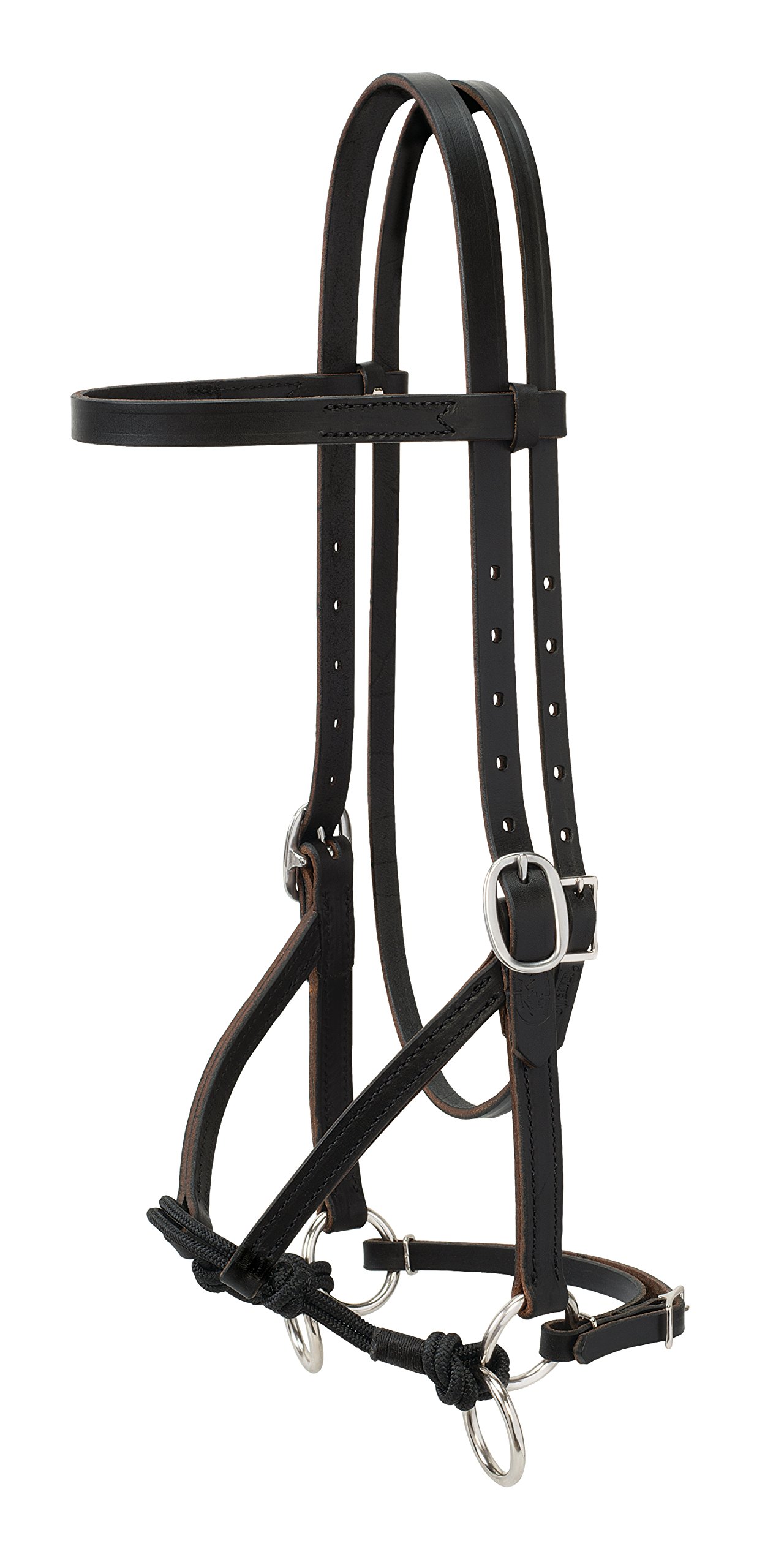
The Justin Dunn Bitless Bridle combines a soft, supple leather headstall with a precisely knotted rope noseband that encourages the horse to yield to pressure rather than brace against it. The strategically placed knots on the noseband provide graduated pressure that rewards the horse the moment it softens, making it an excellent choice for horses already responsive to light aids.
Fitting large draft heads comfortably right out of the box, the 3/4″ average size offers broad adjustability through stainless steel buckles that won’t rust or snap. The leather straps are thick enough to prevent the noseband from spinning, so the rope stays correctly oriented on the nose rather than twisting into the cheek.
Riders consistently report that their horses become lighter in the hand and more willing to stretch forward into a soft contact. The buckle placement sits slightly close to the eye on shorter-faced horses — some users add a short leather strap to shift it forward, which is a simple fix for a near-perfect bridle.
Why it’s great
- Non-rust stainless steel hardware
- Knots provide clear release cues
- Leather prevents noseband spinning
Good to know
- Buckle can sit close to eye on some horses
- Leather arrives stiff, needs conditioning
2. HORZE Genuine Leather Cross-Under Bitless Bridle
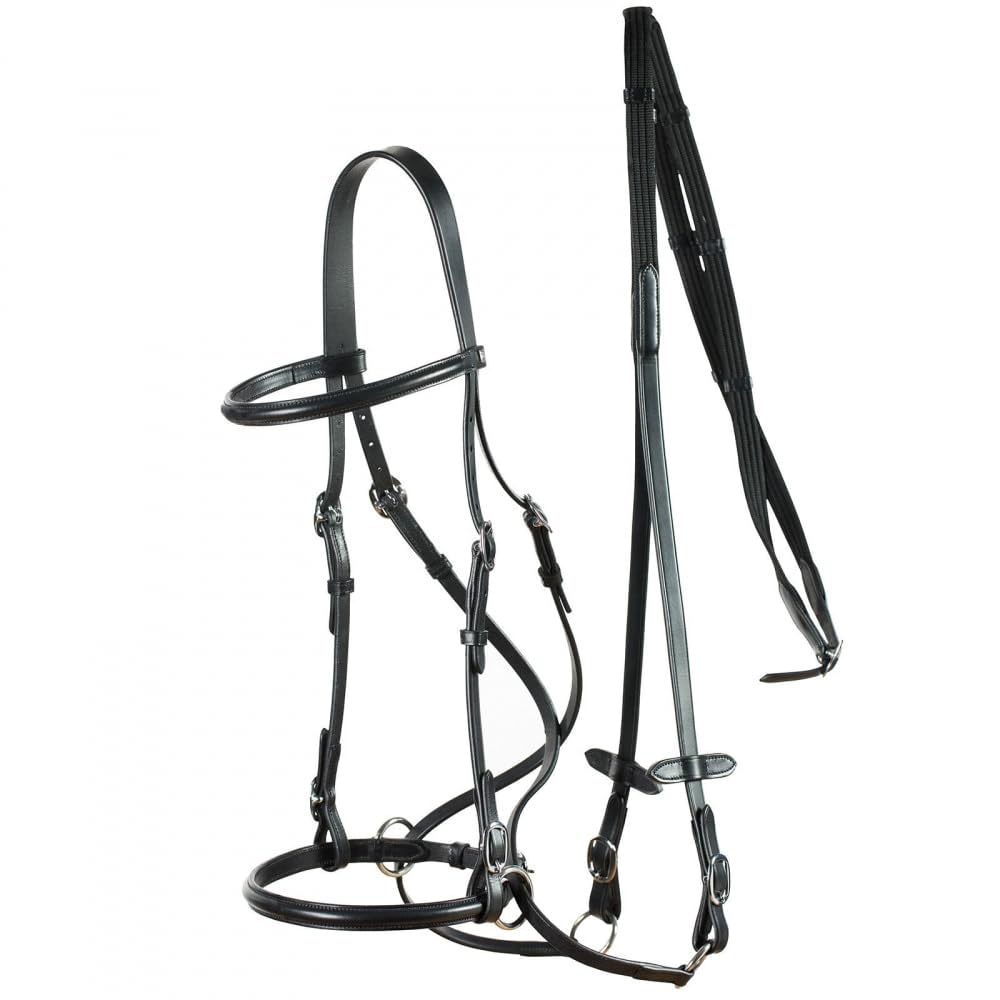
The HORZE Cross-Under Bitless Bridle uses a strap that crosses beneath the jaw and wraps behind the cheekbones, creating even poll-nose-chin pressure that removes any focal point of discomfort. This makes it a strong choice for horses with a sensitive mouth, dental issues, or anxiety about a metal bit.
Made from genuine leather with a raised noseband and browband, the bridle has a classic dressage look that works equally well in the arena and on the trail. The included cotton webbing reins have leather hand stops that give a secure grip even when gloves are wet, and the overall construction feels substantial without being bulky.
Several riders note that the pony size runs small — it fits a POA or Shetland well but is too snug for a cob-sized Quarab. The rein stitching on one unit failed during a high-intensity lesson, which is a safety concern that should be checked before heavy use. For light to moderate riding on sensitive horses, the pressure distribution is excellent.
Why it’s great
- Even pressure across poll, nose, chin
- Soft leather won’t chafe
- Hand stops prevent rein slip
Good to know
- Some units have weak rein stitching
- Pony size runs small for cobs
3. Weaver Leather Deluxe Latigo Leather Side Pull

The Weaver Leather Deluxe Side Pull uses a double-rope noseband attached to a burgundy latigo leather headstall, with a second ring that allows the rope to roll across the nose for a refined side-to-side pulling action. This design is particularly effective for horses that need subtle lateral cues without the abrupt stop of a fixed noseband.
The latigo leather is soft and pliable from the first ride, molding quickly to the horse’s face without a break-in period. Durable nickel-plated hardware keeps the cost manageable while still providing reliable daily function. The average size is generously cut — riders with cob-sized horses found it too large even at the tightest settings.
Some users report that the rope noseband feels harsh and abrasive, with hard glue globs on the side knots that can rub the face. Wrapping the rope with medical sticky wrap or replacing the noseband entirely solves the issue. For the price, the leather quality and stitching are excellent, making it a strong value if you’re willing to soften the noseband.
Why it’s great
- Soft, high-quality latigo leather
- Rolling rope for refined cues
- Secure snap closures
Good to know
- Rope noseband can be abrasive
- Runs large — check measurements
4. Monty Roberts Dually Headcollar

The Monty Roberts Dually Headcollar is a patented schooling halter that adapts to three modes: standard halter on the bottom ring, training halter with the top ring, or bitless bridle for riding. The adjustable double noseband allows you to increase or decrease pressure sensitivity depending on the horse’s responsiveness.
High-quality brass hardware is designed to break away under extreme pressure rather than risking injury if the halter snags. The nylon webbing is lightweight, quick-drying, and stands up to daily ground use. Left and right side rings offer lateral control during leading or long-lining, making it a complete groundwork and riding tool in one piece.
The dually transformed a defiant mule into an obedient partner after just three sessions, according to long-term users. Some riders don’t like the feel of nylon against the face and prefer leather, but as a training aid for groundwork before mounted work, the flexibility of pressure modes is unmatched. It’s not the most elegant bridle for showing, but for functionality, it’s a powerhouse.
Why it’s great
- Three-in-one: halter, training, riding
- Breakaway brass hardware for safety
- Easy to clean nylon webbing
Good to know
- Nylon can feel rough on sensitive skin
- Not ideal for show ring
5. Shires Blenheim English Hackamore
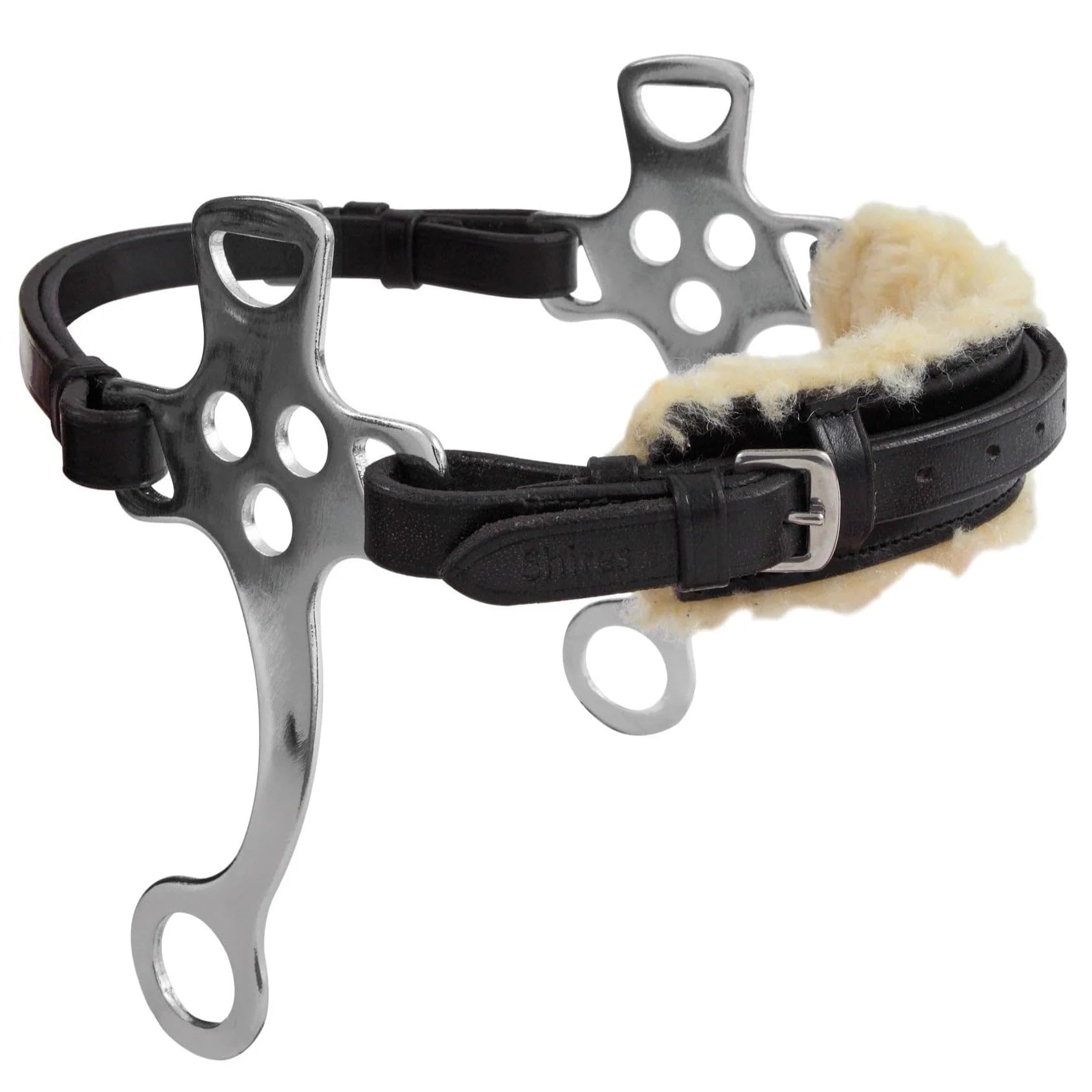
The Shires Blenheim English Hackamore is a mechanical hackamore designed for riders who need additional leverage and stopping power from a bitless setup. Its 170mm long shanks amplify poll and nose pressure, providing clear, firm cues that strong or heavy-on-the-forehand horses respond to when a side pull proves insufficient.
Constructed from quality Havana-brown leather with soft sheepskin padding on the noseband, the hackamore prioritizes comfort despite the leverage mechanics. The stainless steel cheek pieces resist rust and keep the shanks moving smoothly. The adjustable curb strap allows fine-tuning of the pressure response time.
The hackamore fits a large pony as well as a small horse, with the adjustable straps offering enough length for both. Some riders found it ran small and needed extra holes punched in the chin and nose straps. The fleece padding is thinner than expected, so horses with very sensitive poll areas may benefit from additional padding. Overall, a well-built piece for English disciplines where leverage is needed.
Why it’s great
- Long shanks for clear leverage cues
- Sheepskin padding for comfort
- Quality leather construction
Good to know
- Runs small — check head measurements
- Fleece thinner than expected
6. Mustang Breaking Hackamore Bridle

The Mustang Breaking Hackamore is a lightweight entry-level bitless bridle that pairs a 7/16″ rope noseband with a rawhide cover and a 3/4″ nylon headstall. The rope nose focuses pressure into a narrow band that encourages the horse to soften and give, while the flat braided reins provide a secure grip without bulk.
It’s designed as a training tool for young or starting horses, and owners of colts, two-year-olds, and sensitive horses report immediate acceptance. The nylon headstall is thin but functional for light to moderate riding — several users replaced it with a leather headstall for daily use, keeping only the rope hackamore noseband.
The closed macate reins are too short for safe tying, and the nylon webbing is noticeably thinner than premium options, but the rope noseband itself is well-made and effective. For a budget-friendly way to introduce a young horse to bitless riding, this is a capable starting point that won’t break your tack budget.
Why it’s great
- Effective rope nose for yielding cues
- Lightweight for young horses
- Good length and weight on reins
Good to know
- Thin nylon headstall may need replacement
- Macate reins too short for safe tying
7. Mustang Nylon Side Pull
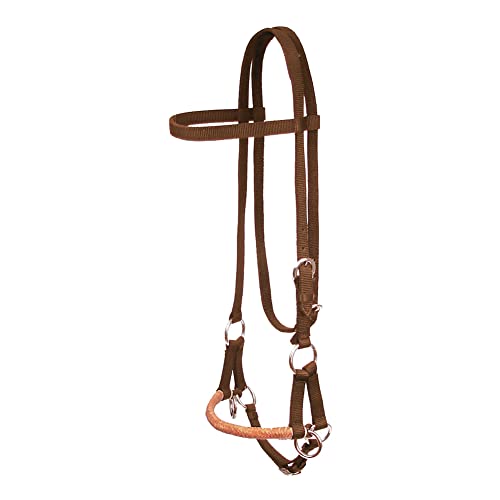
The Mustang Nylon Side Pull is a no-frills bitless bridle with a braided rawhide noseband and nickel hardware, offered at a price point that makes it accessible for owners with multiple horses or those just testing the bitless concept. The side-pull design attaches reins directly to side rings on the noseband, giving direct left-right steering without poll leverage.
At 14 inches in length and weighing just over 15 ounces, it’s light enough for a two-year-old starting training or a rescued mare with a cheek injury that can’t tolerate a bit. The braided rawhide noseband is smooth and non-abrasive, making it comfortable even for thin-skinned horses. Adjustment holes are present but limited — some riders needed to punch extra holes for a perfect fit.
Quality consistency has been a concern: early production runs were strong and long-lasting, while some recent units have thinner nylon and cheaper-feeling material. If you get a good one, it’s a fantastic value that works immediately. For the low price, it’s worth trying, but expect to potentially upgrade to a leather version if you plan heavy use.
Why it’s great
- Smooth braided rawhide noseband
- Very lightweight for young horses
- Direct steering with side rings
Good to know
- Limited adjustment holes
- Quality inconsistent between batches
FAQ
How tight should a bitless bridle noseband be?
Can I use a bitless bridle on a green horse?
Will a bitless bridle fix a horse that pulls or bolts?
Final Thoughts: The Verdict
For most riders seeking the best all-around best bitless bridle, the Justin Dunn Bitless Bridle is the top choice because it pairs premium leather with a responsive rope noseband that rewards lightness without rubbing or spinning. If you want the even pressure of a cross-under wrap, the HORZE Genuine Leather Cross-Under is an excellent option for mouth-sensitive horses. And for groundwork-to-riding versatility, nothing beats the Monty Roberts Dually Headcollar.