
A horse bit is the single most direct line of communication between rider and animal, yet most riders grab whatever hangs on the tack-room hook. The wrong mouthpiece causes head tossing, leaning, or outright refusal, turning every ride into a battle of wills. Choosing the right bit means understanding how cheek design, mouthpiece material, and port shape interact with your horse’s unique palate and tongue clearance.
I’m Min — the co-founder and writer behind Gadgets Feed. I’ve spent hundreds of hours analyzing technical specs, cross-referencing customer experiences, and breaking down the subtle geometry differences that separate a soft, responsive bit from one that causes constant resistance.
Whether you’re training a green colt or looking for gentler communication with a sensitive older horse, understanding these nuances is critical. This guide evaluates seven top-rated options to help you find the best bits for horses in your tack room budget.
How To Choose The Best Bits For Horses
Bit selection starts by matching the mouthpiece to your horse’s mouth conformation and training level. A bit that works brilliantly on a warmblood with plenty of tongue room may cause discomfort on an Arabian with a low palate. Here are the three most critical factors to evaluate before buying.
Mouthpiece Material and Taste
Sweet iron oxidizes and creates a mild, pleasant taste that encourages salivation and softness — ideal for horses that clamp down on stainless steel. Copper inlays or lozenges further boost salivation, which keeps the mouth moist and responsive. Stainless steel is neutral and long-lasting but offers no flavor incentive, making it better suited for horses that already accept a bit readily.
Cheek Style Determines Pressure Points
Eggbutt cheeks prevent pinching at the corners of the mouth and offer a still, consistent contact — perfect for dressage and flatwork. D-rings add cheek stability and help center the bit. Hanging cheek designs apply gentle poll pressure via a small shank, ideal for horses that lean or need subtle lifting cues. Loose rings provide more freedom but can rub sensitive lips.
Mouthpiece Width and Port Design
A bit that’s too wide slides side to side, bruising the cheeks. One that’s too narrow pinches. Measure the horse’s mouth from lip to lip and add about 0.25 inches for a snug but comfortable fit. A single-jointed mouthpiece creates a nutcracker action that can pinch the palate; a French link or dog bone distributes pressure more evenly and is gentler on the bars.
Quick Comparison
On smaller screens, swipe sideways to see the full table.
| Model | Category | Best For | Key Spec | Amazon |
|---|---|---|---|---|
| Korsteel Eggbutt Snaffle | Premium Snaffle | Gentle consistent contact | Copper oval link, 5″ | Amazon |
| Shires Hanging Cheek | Poll Pressure Bit | Balanced head carriage | Copper lozenge, stainless steel | Amazon |
| CHALLENGER D-Ring Comfort Snaffle | Mid-Range Snaffle | Training and green horses | Copper rollers, 5.5″ mouth | Amazon |
| CHALLENGER Dog Bone Snaffle | Western Curb Bit | Transitioning from snaffle to shank | Sweet iron, copper roller, 5.5″ | Amazon |
| Weaver Leather Chrome Bit | Value Snaffle | Budget-friendly training | Copper plated mouth, 5″ | Amazon |
| Tough 1 Gag Snaffle | Leverage Bit | Heavy horses needing lift | Twisted wire dog bone, 5″ | Amazon |
| Westen Rope Hackamore | Bitless Option | Horses that tongue over bit | Rope nose, 6″ | Amazon |
In‑Depth Reviews
1. JP Korsteel Stainless Steel Copper Oval Link Eggbutt Snaffle Bit

The Korsteel eggbutt snaffle uses a fixed cheek that eliminates the pinching common with loose-ring bits at the mouth corners. The copper oval link in the center encourages saliva production, helping the horse soften and accept contact rather than dry-mouth brace against it. At 5 inches, this bit fits narrow-mouthed horses comfortably without excess side-to-side slide.
The French-link style mouthpiece creates two smooth planes that distribute pressure across the tongue and bars, avoiding the aggressive nutcracker action of a single-jointed bit. Riders report immediate improvement in horses that previously tossed their heads or braced against standard snaffles — the stable eggbutt design gives consistent, still contact that builds confidence.
Construction is sturdy with polished stainless steel that resists rust and a slight rainbow curve over the tongue for added clearance. The copper link is well-seated and doesn’t rattle loose over time. For riders who want a kind, effective snaffle that works across dressage, jumping, and flatwork, this is the reference standard.
Why it’s great
- Eggbutt cheeks prevent corner pinching
- Copper link boosts salivation and acceptance
- Stainless steel construction is durable and rust-resistant
Good to know
- Fixed ring means less freedom for horses needing extra play
- Not ideal for horses that prefer a single-jointed mouthpiece
2. Shires Hanging Cheek with Copper Lozenge
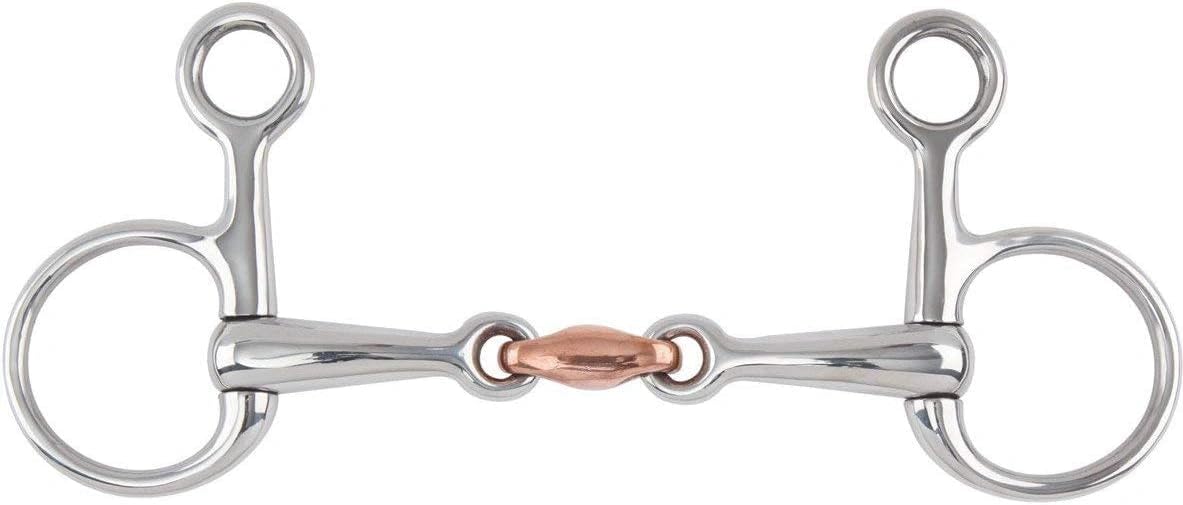
The hanging cheek design—also called a Baucher bit—applies gentle poll pressure through its small shank, encouraging the horse to raise its head and soften through the topline. This makes it especially useful for horses that lean heavily on the bit or drop behind the vertical, as the poll cue helps rebalance without harshness.
The copper lozenge at the center stimulates salivation and acceptance, while the stainless steel mouthpiece remains neutral and easy to clean. Riders transitioning from a double bridle to a snaffle report their horses accept this bit readily, likely because the lozenge provides similar tongue relief to a Weymouth’s port.
At 4.5 inches, this bit is best suited for horses with smaller mouths or ponies. The poll pressure is subtle—strong enough to offer support, light enough that responsive horses don’t overreact. It’s a well-balanced tool for schooling and eventing where head carriage matters.
Why it’s great
- Gentle poll pressure lifts the head and improves posture
- Copper lozenge encourages salivation
- Good transition from double bridle to snaffle
Good to know
- Limited size range — primarily 4.5″
- Some riders may prefer a hanging cheek with more shank length
3. CHALLENGER Horse Stainless Steel D-Ring Comfort Snaffle Bit with Copper Rollers
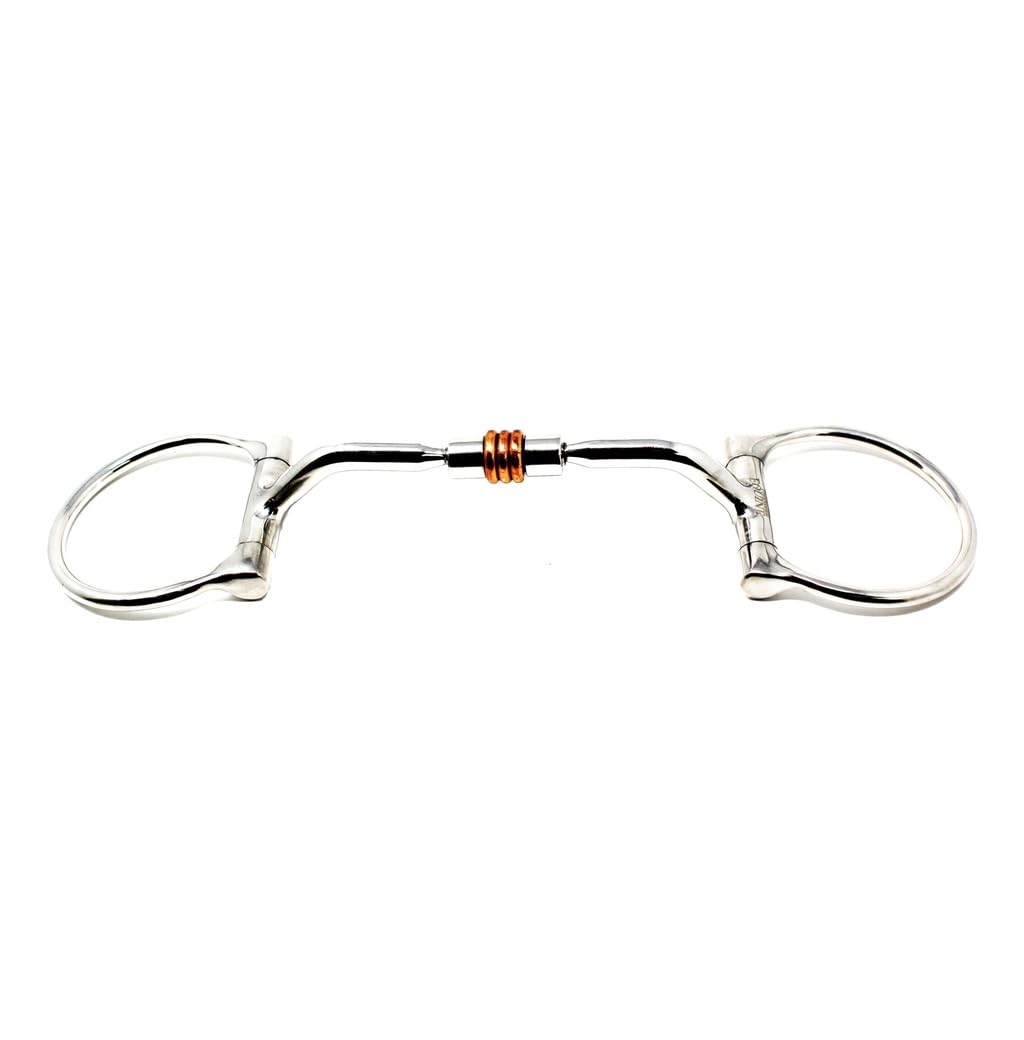
The Challenger D-ring snaffle punches well above its price point, offering tongue relief via a copper roller design that rivals Myler bits costing three times as much. The D-ring cheeks stabilize the bit and prevent it from pulling through the mouth, making it a strong choice for young horses still learning to carry contact evenly.
Polished stainless steel construction feels substantial in hand, and the cheeks rotate freely without pinching or squeaking. The mouthpiece has smooth edges that reduce irritation, and the copper rollers add a taste incentive that softens resistant mouths. Riders note their horses become quieter and more accepting after switching to this bit from cheaper alternatives.
Available in harder-to-find sizes like 5.5 inches, this bit accommodates draft crosses and larger warmbloods without forcing them into undersized mouthpieces. It’s ideal for trail riding, arena work, and general schooling where consistent communication matters more than leverage.
Why it’s great
- D-ring cheeks prevent bit pull-through
- Copper rollers provide tongue relief similar to premium brands
- Available in larger sizes for draft crosses
Good to know
- Heavier than some comparable snaffles
- Not suitable for horses needing strong lateral cues
4. CHALLENGER Horse Western Sweet Iron Mouth Dog Bone Snaffle with Copper Roller
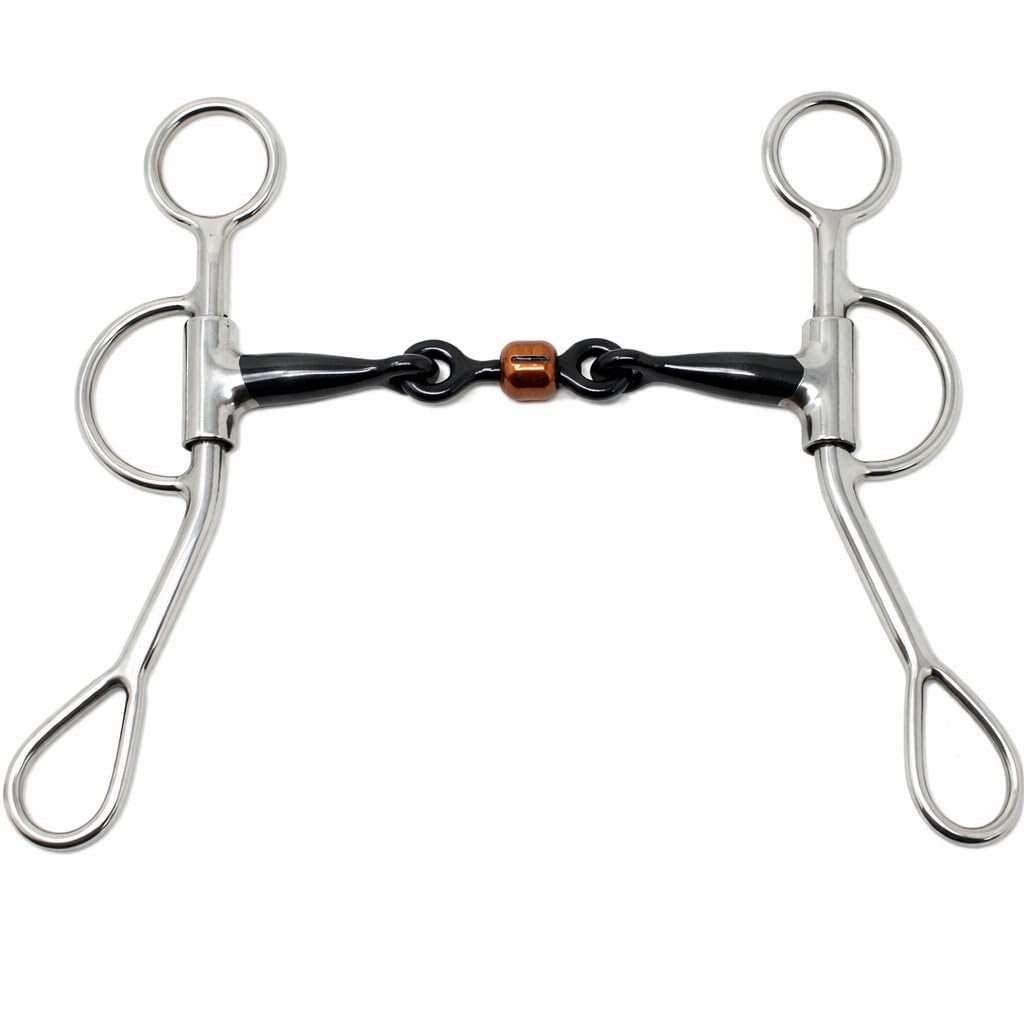
This short-shank curb bit uses a sweet iron mouthpiece that rusts just enough to create a pleasant metallic taste, which encourages the horse to salivate and accept the bit rather than fight it. The dog bone link in the center distributes pressure across the tongue and bars, reducing the harsh nutcracker effect of a simple jointed mouthpiece.
With only slight shank length, this bit works as a gentle introduction to leverage for horses accustomed to snaffles but required to show in a curb. The copper roller adds another layer of taste incentive, and riders report their mares and geldings immediately soften and relax when switching from plain stainless steel.
Watch for the sweet iron surface — it will develop surface rust if left in damp tack rooms, but that’s part of the design. A quick wipe-down after use keeps it in good shape. This is a smart, budget-friendly bridge between direct-rein snaffles and full shank curbs.
Why it’s great
- Sweet iron taste softens resistant mouths
- Short shanks offer subtle leverage without harshness
- Dog bone link reduces pinch pressure
Good to know
- Sweet iron rusts if left wet — requires drying after use
- Not a true direct-reno snaffle
5. Weaver Leather Chrome Plated Copper Mouth Snaffle

The Weaver Leather snaffle combines a chrome-plated cheek with a copper-plated mouthpiece, balancing durability with the taste benefits of copper. The 6.5-inch cheek length gives it a slightly wider presence, which can help with lateral cues while still keeping the bit stable in the horse’s mouth.
Riders note it works especially well during colt starting and early training—the copper surface encourages mouthing and acceptance, and the single-jointed design is simple enough for green horses to understand. It ranks as the third-highest seller in the equestrian bits category on Amazon, reflecting solid trust among owners.
Some users report the chrome plating can chip if dropped on hard surfaces, and the copper plating may wear off over extended use. At this price point, it’s a reliable starter bit or backup option, but serious competitors may prefer solid stainless or sweet iron for longevity.
Why it’s great
- Copper mouthpiece encourages acceptance
- Wide cheeks aid lateral communication
- Good entry-level bit for training
Good to know
- Chrome may chip under hard use
- Copper plating wears over time
6. Tough 1 Gag Snaffle with Twisted Wire Dog Bone Mouthpiece

The Tough 1 gag snaffle uses a twisted wire dog bone mouthpiece that provides both the nutcracker action of a jointed bit and the additional poll leverage from the gag cheek design. This combination gives experienced riders extra stopping power with heavy horses or those that tend to lean and run through lighter bits.
The three-piece twisted wire creates a textured surface that encourages the horse to hold the bit and respond to subtle rein aids, while the dog bone link prevents the twisted sections from pinching the tongue as aggressively as a plain twisted wire. Owners of draft crosses and large warmbloods report this bit keeps their horses light and responsive without turning into a battle.
Quality control can be inconsistent—some units arrive with smooth edges, others with sharp burrs that need filing. The stainless steel construction is generally solid, but one reviewer noted rust after a single use. Inspect and smooth any rough spots before the first ride.
Why it’s great
- Twisted wire adds texture for responsive communication
- Gag cheek provides poll leverage for leaning horses
- Dog bone link reduces pinch vs. plain twisted wire
Good to know
- Inconsistent finishing — some units have sharp edges
- Twisted wire can be harsh for sensitive mouths
7. Westen at Rope Nose Little S Hackamore

The Westen rope hackamore is a bitless alternative that applies pressure across the nose and poll instead of the mouth, making it an excellent choice for horses with dental issues, tongue-over-bit habits, or those that simply need a change from metal mouthpieces. The rope noseband is firm enough to provide clear cues but soft enough to avoid bruising when used with steady hands.
This design works especially well for speed event horses that tend to throw their heads with a bit — the hackamore removes the leverage point on the bars and palate, reducing the incentive to evade. Riders report their geldings and mares move freely and respond without the hollow-backed resistance common to strong bits.
The main trade-off is that hackamores rely on nose pressure, which can desensitize the nose over time if used heavily. It also lacks bridle keepers to prevent the cheeks from shifting, though this can be solved with keeper straps. It’s a great tool to have in the rotation, not a replacement for all bit work.
Why it’s great
- Bitless — ideal for sensitive mouths or tongue issues
- Firm enough for control, soft enough for comfort
- Effective for head-throwing horses in speed events
Good to know
- No bridle keepers — cheeks may shift during use
- Overuse can desensitize the nose to pressure
FAQ
How do I measure my horse for the correct bit width?
What is the difference between a single-jointed and French-link bit?
Can I use a hackamore on a horse with a bit injury?
Final Thoughts: The Verdict
For most riders, the bits for horses winner is the JP Korsteel Eggbutt Snaffle because it combines a stable, non-pinching cheek with a copper link that salivates the mouth and a French-link distribution that keeps pressure off the palate. If you need gentle poll lift for a leaning horse, grab the Shires Hanging Cheek. And for a training-friendly snaffle that punches above its price, nothing beats the CHALLENGER D-Ring Comfort Snaffle.