
Our readers keep the lights on and my morning glass full of iced black tea. As an Amazon Associate, I earn from qualifying purchases.
The difference between a flat, lifeless negative and one with that three-dimensional silver depth comes down to the emulsion in your camera. Choosing black and white film means deciding between grain character, tonal range, and how much light you’re willing to carry. Each roll is a pact between you and the scene — the wrong ISO or developer pairing can ruin a day’s work, while the right stock turns ordinary light into texture you can feel.
I’m Min — the co-founder and writer behind Gadgets Feed. I’ve spent hundreds of hours comparing emulsion formulas, box-speed consistency, and push-process performance across the most popular black and white stocks available today.
This guide breaks down the top contenders by grain structure, exposure latitude, and real-world versatility so you can confidently choose the right best black and white film for your next roll.
How To Choose The Best Black And White Film
Selecting a black and white emulsion isn’t about picking a brand — it’s about matching grain size, tonal response, and exposure latitude to the light conditions you actually shoot in. Slow films like ISO 100 reward tripod work with virtually grain-free enlargements, while ISO 400 stocks let you hand-hold in overcast light at the cost of visible texture. Medium-speed 125 emulsions split the difference with fine grain and forgiving contrast.
Grain Character vs. Sharpness
A film’s RMS granularity number tells you how smooth the midtones will appear in a print. Tabular-grain films like the Kodak T-Max series deliver extremely tight grain for their speed, while traditional cubic-grain emulsions (Tri-X, HP5) produce a more organic, classic grain structure that many darkroom printers prefer. Delta 100 uses core-shell crystal technology to achieve ISO 100 with grain that rivals slower technical films — a real advantage for 35mm users who want 16×20 prints without visible clumping.
Exposure Latitude and Pushability
A film’s ability to handle two stops of overexposure without losing highlight detail or being pushed to ISO 1600 without blocked shadows determines how usable it is across different cameras and conditions. Films with wide latitude — FP4 Plus and HP5 Plus — forgive metering errors and work beautifully in variable lighting. Dedicated professional films like Tri-X 400 are engineered for consistent box-speed reciprocity and predictable push-process results, which is why they dominate reportage and street photography.
Quick Comparison
On smaller screens, swipe sideways to see the full table.
| Model | Category | Best For | Key Spec | Amazon |
|---|---|---|---|---|
| Ilford HP5+ (10‑Pack) | Premium Bulk | High-volume, all-conditions shooting | ISO 400, 36-exp, RMS granularity 10 | $107.50Amazon |
| Kodak Tri-X 400TX 5‑Pack | Mid-Range | Street, reportage, push-processing | ISO 400, 36-exp, traditional cubic grain | $55.70Amazon |
| Ilford Delta 100 2‑Pack | Premium Slow | Landscape, still life, fine art | ISO 100, 36-exp, core-shell grain | $35.48Amazon |
| Ilford FP4 Plus 120 3‑Pack | Mid-Range MF | Medium format, portrait, architecture | ISO 125, 120 roll, RMS granularity 11 | $36.75Amazon |
| Ritz/Ilford HP5 Plus 5‑Pack | Premium Standard | General mixed-lighting photography | ISO 400, 36-exp, wide exposure latitude | $54.99Amazon |
| Kodak Tri-X 400TX 7‑Pack | Premium Bulk | Classroom, assignment bulk shooting | ISO 400, 36-exp, box-speed consistency | $79.95Amazon |
In‑Depth Reviews
1. Ilford HP5+ 36 exp B&W Film, Multipack of 10
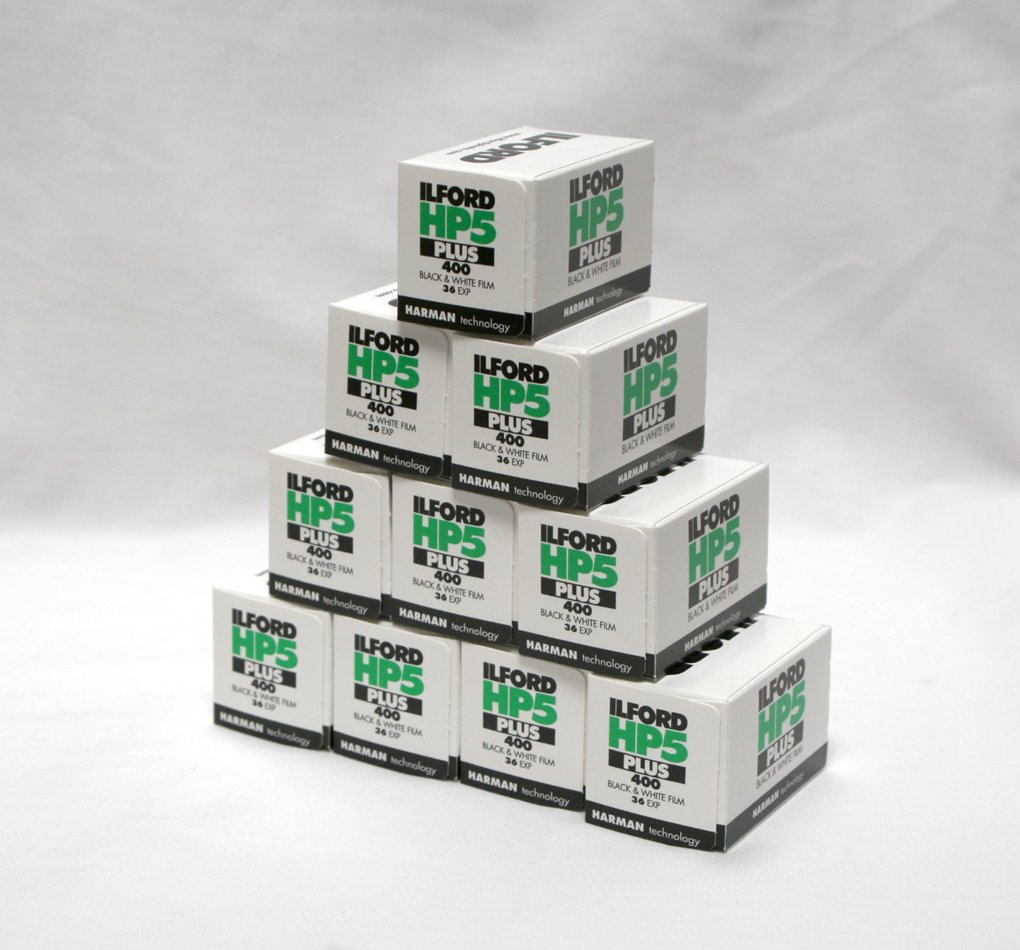
Ilford’s HP5 Plus sits at the center of the black and white film world for good reason: its ISO 400 speed, RMS granularity of 10, and wide exposure latitude make it the most versatile emulsion on this list. You can confidently rate it at box speed for crisp daylight work or push it to 1600 and still retain printable shadow detail — photographers report excellent results pushed to 3200 with only a modest increase in apparent grain.
In direct comparison to Tri-X 400, HP5 Plus delivers slightly smoother midtones and a more forgiving highlight roll-off. The grain is traditional cubic, meaning it looks classic rather than clinical, which is exactly what most enthusiasts want from a general-purpose film. Development times are well-documented across HC-110, D-76, and Ilfosol 3, so there’s no guesswork in the darkroom. Users consistently mention how well it handles mixed lighting — overcast scenes retain contrast while bright sunlight doesn’t block highlights.
The practical advantage of buying a 10-pack is that you can standardize your technique across a whole project without changing emulsions. Whether you’re shooting street candids, environmental portraits, or travel documentation, HP5 Plus delivers consistent negatives frame after frame. The DX-coded cassettes work with any modern 35mm camera with auto-DX reading, and the film base lies flat for easier scanning.
Why it’s great
- ISO 400 works in most daylight and indoor conditions without a tripod
- Excellent push-processing capability up to ISO 1600 or 3200
- 10-roll pack offers the best per-roll value in this class
Good to know
- Cubic grain is visible in 35mm — not ideal for ultra-smooth enlargements
- Box-speed contrast is lower than Tri-X in straight D-76 development
2. Kodak Tri-X 400TX Professional ISO 400, 36mm, Black and White Film (Pack of 5)

Kodak Tri-X 400TX is the benchmark that every other black and white film is measured against, and this 5-pack offers the most economical entry into that legacy. The emulsion uses traditional cubic-grain technology with a nominal sensitivity of 400 ISO, but real-world testing shows it meters beautifully at 200 for reduced contrast or pushed to 800–1600 for available-light reportage. The grain structure is prominent but beautifully defined — it gives prints a tangible texture that digital conversion software can’t replicate.
Where Tri-X pulls ahead of HP5 Plus is in box-speed consistency and highlight separation. At 400 ISO developed in Kodak D-76 1:1, Tri-X produces punchier contrast with cleaner whites that make contact sheets pop. The exposure latitude is slightly narrower than HP5 in the shadows, but the tonal curve in the midtones creates more apparent depth in faces and architectural details. Photographers who push Tri-X to 1600 report that the grain becomes more pronounced but the characteristic curve holds together surprisingly well — far better than most ISO 400 consumer films.
The practical downside is the per-roll cost, which runs higher than HP5 Plus even in bulk packs. But for shooters who want that specific Tri-X contrast curve — the reason it has been a photojournalist staple for six decades — the extra cost is justified by the predictable results roll after roll. The 5-roll pack is the ideal test quantity before committing to a larger 25-roll pro pack.
Why it’s great
- Signature midtone contrast that defines classic black and white photography
- Performs reliably at box speed and pushes well to 1600 ISO
- Widely stocked and supported by every lab and developer reference
Good to know
- Grain is visible in 35mm at 8×10 — not a smooth-tonal emulsion
- Shadow detail degrades faster than HP5 when underexposed
3. Ilford 1780624 Delta 100 Professional Black-and-White Film, ISO 100, 35mm 36-Exposure (2 Pack)

Ilford Delta 100 is the slow-speed specialist that delivers the highest resolving power per ISO in this selection, with an RMS granularity rating that rivals many ISO 50 technical films. The core-shell crystal technology produces exceptionally sharp edge transitions and virtually no grain clumping in 35mm at normal enlargement sizes. Users who develop in Ilfosol 3 1:14 report whites that are genuinely beautiful — clean and luminous without the slight veil that some slow films produce.
The trade-off for that fine grain is speed: ISO 100 forces you onto a tripod in anything other than bright sun, and the exposure latitude is narrower than ISO 400 films. Stick to box speed or pull to 50 for maximum shadow detail — pushing Delta 100 to 200 is possible but increases contrast significantly and loses the tonal smoothness that makes this film special. The 2-pack is a modest quantity, but that reflects the film’s use case as a considered, deliberate choice for landscapes, still life, and fine art rather than a run-and-gun street film.
Where Delta 100 truly excels is in 35mm format for photographers who want to make 16×20 or larger prints. The core-shell grain structure means less visible texture at high magnifications compared to traditional cubic-grain ISO 100 films like FP4 Plus. If you scan your negatives, Delta 100 produces files that need significantly less noise reduction in shadow areas, saving time in post-processing.
Why it’s great
- Extremely fine core-shell grain for high-magnification prints
- Clean, luminous whites in proper development
- Excellent resolving power for detailed subjects
Good to know
- Requires a tripod in anything but direct sunlight
- Narrower exposure latitude than FP4 Plus or HP5 Plus
4. Ilford FP4 Plus, Black and White Print Film, 120 (6 cm), ISO 125 (1678169) 3‑Pack

Ilford FP4 Plus at ISO 125 is the quintessential medium-format black and white emulsion, balancing fine grain with enough speed for handheld shooting in good light. The RMS granularity of 11 is only slightly higher than Delta 100, but the traditional cubic-grain structure produces a more organic, less clinical tonal rendering that many portrait and landscape photographers prefer. Users report pulling the film to ISO 32 for ultra-fine grain in bright conditions or pushing it to 500 with acceptable results — a real testament to its robust exposure tolerance.
The 120 format delivers 12 frames per roll with a negative area roughly four times larger than 35mm, which means even moderate grain looks fine in prints up to 20×24. FP4 Plus shines in medium format because the film’s natural contrast characteristics complement the tonal separation that larger negatives provide. Skin tones in particular benefit from the smooth midtone gradation, making it a strong choice for environmental portraiture shot on Hasselblad, Mamiya, or Bronica systems. The 3-pack is a practical quantity for a weekend of shooting or for testing development times before committing to a larger order.
Compared to Kodak’s T-Max 100 in 120 format, FP4 Plus has a more forgiving highlight shoulder that allows you to overexpose by a stop without blowing out detail. That latitude is especially valuable when shooting transparency-type subjects like architecture where highlight retention is critical.
Why it’s great
- Fine grain with classic tonal rendering in 120 format
- Forgiving exposure latitude — pull to 32 or push to 500
- Excellent highlight detail retention over moderate overexposure
Good to know
- ISO 125 is not fast enough for indoor handheld without a tripod
- Requires an 120mm adapter for some development reels
5. Ritz Camera Pack of 5 Ilford 1574577 HP5 Plus, Black and White Print Film, 35 mm, ISO 400, 36 Exposures

This 5-pack of Ilford HP5 Plus packaged by Ritz Camera offers the same versatile ISO 400 emulsion found in the larger bulk pack, but at a lower entry cost for shooters who don’t need ten rolls at once. The film’s wide exposure latitude is its defining characteristic — it handles mixed and difficult lighting with medium contrast that gives the photographer control in the darkroom. Users consistently note that it works well in older mechanical cameras where light meters may be less accurate, because the film can absorb a stop of overexposure without blocking highlights.
HP5 Plus at ISO 400 is a true multi-purpose film: it’s fast enough for handheld shooting at 1/125 in moderate daylight with an f/5.6 lens, and the push-processing capability means you can rate it at 800 or 1600 with predictable results. The DX-coded cassettes are compatible with all modern 35mm SLRs and rangefinders. In the darkroom, HP5 Plus responds well to standard developers — HC-110 dilution B at 7 minutes gives a good balance of speed and contrast, while Rodinal 1:50 accentuates the grain for a more aggressive look.
The 5-roll count is ideal for travel or a weekend workshop. It’s also a good test quantity for shooters who have been using Tri-X exclusively and want to compare the tonal differences. Side-by-side, HP5 Plus shows smoother midtones and slightly warmer base fog, which can produce richer scans than the cooler Tri-X base.
Why it’s great
- Very forgiving exposure latitude — ideal for older cameras
- Pushes cleanly to 1600 ISO for low-light shooting
- 5-pack is a practical entry quantity for evaluation or travel
Good to know
- Slightly lower box-speed contrast than Tri-X 400
- Not as fine-grained as slower ISO 100 emulsions
6. Kodak Professional TRI-X 400/400TX 35mm Black-and-White Film, 36-Exposure (7 Rolls)

This 7-roll pack of Kodak Tri-X 400TX gives you the same professional-grade emulsion as the 5-pack but with two extra rolls for classroom assignments or extended shooting trips. The film’s box-speed consistency is one of its strongest attributes — shoot after shoot, the contrast curve and base density remain predictable, which is why photography instructors often require Tri-X for introductory film courses. Users report that the exposure works well between 100 and 800 ASA, giving you flexibility to adapt to changing light without burning through extra rolls.
The grain structure is what defines Tri-X: prominent, classic, and full of character. It’s not a smooth-tonal film — the visible grain is part of the aesthetic that makes street and reportage images feel immediate. In 35mm, the grain becomes apparent around 8×10 enlargement, but that’s exactly what Tri-X users want. Developers like Xtol 1:1 tame the grain slightly while maintaining the film’s signature sharpness, while Rodinal 1:50 pushes the grain into view for a more aggressive look.
For the price per roll, this 7-pack represents solid value for committed Tri-X shooters. The 36-exposure length is ideal for assignments where you need to maximize shots between reloads. Just be aware that Tri-X shadow detail is less forgiving than HP5 Plus — accurate exposure at box speed is important to avoid blocked shadows in the final print.
Why it’s great
- Predictable box-speed performance for consistent assignments
- Classic grain character prized by reportage photographers
- 7-roll pack offers noticeable per-roll savings over buying singles
Good to know
- Narrower shadow latitude than HP5 Plus
- Grain is prominent in 35mm — not for smooth-tonal prints
FAQ
Should I choose ISO 100 or ISO 400 black and white film?
Can I develop Tri-X and HP5 Plus in the same chemicals?
What does “push processing” mean for black and white film?
Final Thoughts: The Verdict
For most users, the best black and white film winner is the Ilford HP5+ 10-Pack because it combines outstanding ISO 400 versatility, excellent push-processing capability, and the lowest per-roll cost in this class. If you want that classic punchy contrast and photojournalism look, grab the Kodak Tri-X 400TX 5-Pack. And for fine-art work requiring the smoothest grain from a 35mm negative, nothing beats the Ilford Delta 100 2-Pack.
Product prices and availability are accurate as of the date/time indicated and are subject to change. Any price and availability information displayed on Amazon at the time of purchase will apply to the purchase of this product. As an Amazon Associate I earn from qualifying purchases.
CERTAIN CONTENT THAT APPEARS ON THIS SITE COMES FROM AMAZON. THIS CONTENT IS PROVIDED "AS IS" AND IS SUBJECT TO CHANGE OR REMOVAL AT ANY TIME.
Amazon and the Amazon logo are trademarks of Amazon.com, Inc. or its affiliates.