
Our readers keep the lights on and my morning glass full of iced black tea. As an Amazon Associate, I earn from qualifying purchases.
Specs are compiled from manufacturer listings and verified buyer reviews and can change over time — please confirm the key details on the product page before buying.
Black sand can make your fish look like they are swimming in a jewelry box, but only if it stops turning your water into a muddy grey soup first. The difference between loving your tank and hating your weekend depends on one thing: how much rinsing that bag actually demands before it goes in, and whether it clouds again the second your corydoras (a small bottom-dwelling catfish that digs through sand) starts digging. Get that part right and everything else about a black substrate is easy.
I’m Min — the founder and writer behind Gadgets Feed. This guide is built by comparing the manufacturers’ published specifications and the patterns across verified customer reviews, so you get each pick’s real strengths and trade-offs instead of marketing spin.
The short answer: the imagitarium black sand earns the top spot for most people, because of its fine texture and how reliably its fine grains settle. This breakdown covers what actually matters when you buy best black aquarium sand.
Our Picks at a Glance
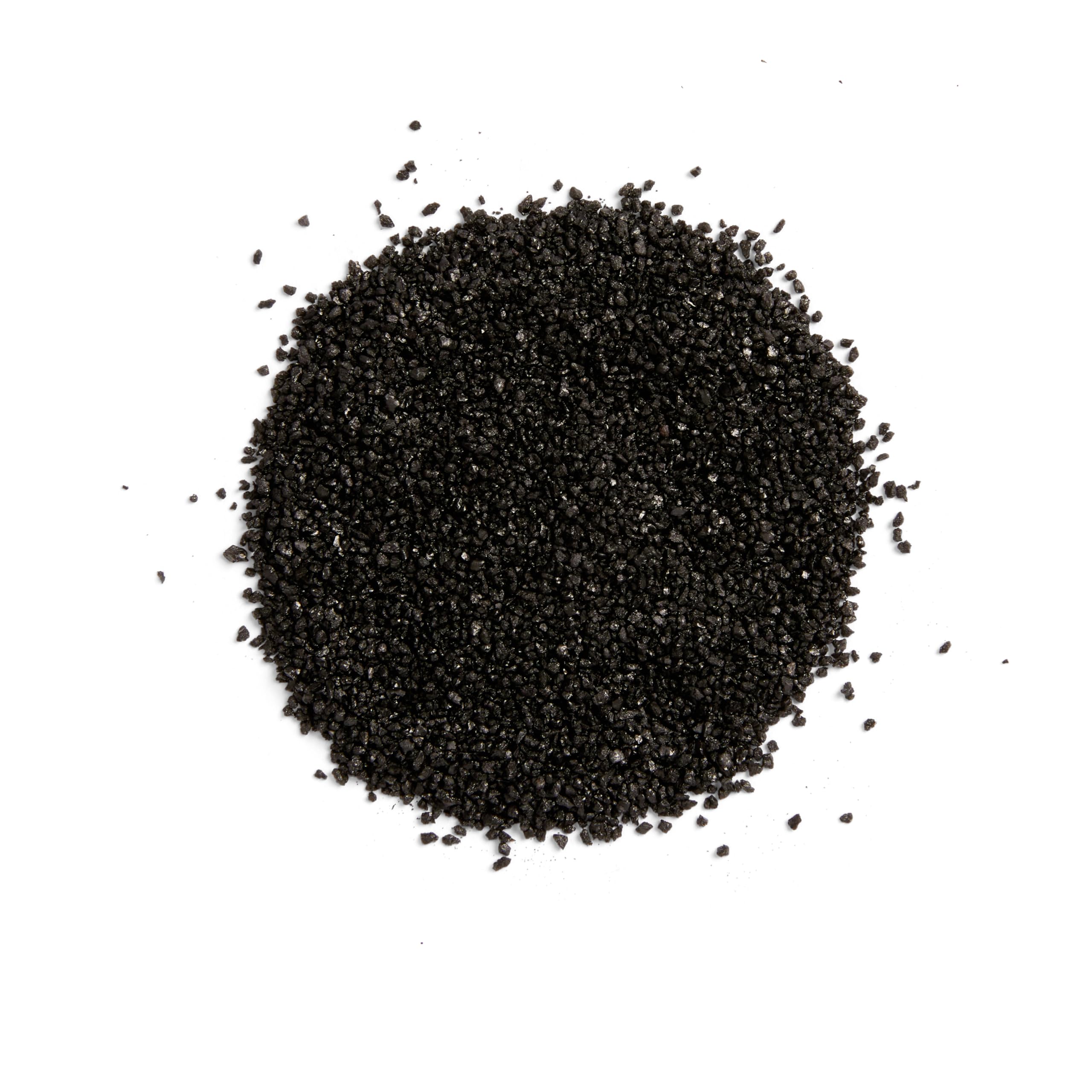

How To Choose The Best Black Aquarium Sand
Most people buying black sand expect a simple transaction: pour, done. Then the water goes milky and the panic sets in. Three things decide whether you end up with a clean, dramatic black bottom or a cloudy mess you have to drain and restart.
Grain size changes everything downstream
Finer grains pack tighter and look sleeker, but they drift into filter intakes and siphon hoses more easily. Coarser grains — some bags you buy as “sand” are really fine gravel — stay put during a water change and let waste sink through to plant roots. Decide upfront if you want a tidy carpet or a working substrate for plants and diggers.
The rinsing question, answered honestly
Nearly every black sand needs at least a few rinses in a bucket until the runoff runs clear. The trick is stirring the sand while the water flows, not just soaking it. Some bags come far cleaner than others — know that going in so a cloudy tank on day one does not feel like a failure.
Black vs. “sort of black”
Some products sold as black sand contain brown or reddish flecks, or small white grains mixed in. That can look natural, or it can ruin the monochrome look you wanted. Check the color description and what buyers actually report before you commit to a full tank’s worth.
Quick Comparison
| Model | Best For | Bag Size | Item Weight | Amazon Rating | Amazon |
|---|---|---|---|---|---|
| imagitarium Black Aquarium Sand★ Best Overall | All-round black substrate | 20 LBS | 20.2 pounds | 4.6/5 | Amazon |
| Aqua Natural Galaxy SandTop Performer | Shimmering planted setups | 20lb | 20.4 pounds | 4.5/5 | Amazon |
| YISZM Aquarium Sand | Freshwater and saltwater tanks | 20 lbs | 19.67 pounds | 4.5/5 | Amazon |
| FANTIAN Black Aquarium Sand | Multi-purpose decor and reptile tanks | 10 LB | 9.79 pounds | 4.4/5 | Amazon |
| CaribSea Eco-Complete Zack Sand | African cichlid tanks | 20-Pound | 9 kg | 4.4/5 | Amazon |
| The Frog House Black Sand Substrate | Planting on a smaller budget | 10 pounds | — | 4.3/5 | Amazon |
In‑Depth Reviews
1. imagitarium by Petco Black Aquarium Sand 20 lbs.
Our pick — over 4.5★ from 700+ verified ratings; the strongest balance of quality and price.
The fine-grained workhorse that makes fish colors hit like a spotlight in a dark room.
If you want a single bag to just work, the imagitarium starts where it counts — a 20 LBS bag of fine black sand that lets your tank’s water read clearer and your fish’s color read brighter against it. The non-toxic, fish-safe grains give the tank a natural-looking floor.
What wins people over is the appearance and the sand quality — that fine grain read and the look it delivers after settling is the stuff owners keep returning for. The matte black finish does exactly what a black substrate should: it makes every fish, snail, and plant color sit up and pop. The company’s own guidance is to rinse the sand well in tap water before use, which is the realistic first step here — and worth noting: two 20 LB bags cover a 90-gallon tank at about one inch deep.
The catch is dust and floaters, which is honest territory for fine grain. Early on you will see floating particles you net out or push under the surface to break the film — that is the fine grain settling, not a defect. Small, light grains can also get pulled into filters and sponge filters, so a gentle siphon hand helps. A 20 LB bag is also easier to work with than a single small bag if you have a bigger tank. Set expectations at “good with a rinse” and this earns its spot.
What earns it the top spot
- Fine texture makes fish and plant colors stand out against the matte black background
- Two 20 LB bags lay roughly one inch of coverage across a 90-gallon tank
- Non-toxic, fish-safe material rated for a wide range of fish
- Four bags fill a 75-gallon tank with no rinsing headaches reported across repeat buyers
The honest trade-offs
- Fine grain means a bit of dust that floats up in the first day or two
- Light, small grains can drift into siphon hoses and sponge intakes
- A brand-new second bag may rinse a little differently than a first one — this is batch variance, not a pattern
Reach for this if: you want the safest single-bag pick for a mixed community or planted tank where color and clarity matter most.
Consider a coarser option if: you need a chunky grain that could never lift into a filter — fine sand is not that.
2. Aqua Natural Aquarium Substrate, Galaxy Sand, 20lb
The fine black sand that catches the light and turns a planted tank into a night-sky backdrop.
Where plain black sand sits matte, the Galaxy Sand has a soft shimmer — fine grain that catches the light and builds a dramatic aquascape foundation that makes plants and decor stand out against it. It is also sourced under license in the USA, which matters if sustainable sourcing is part of your decision.
The physical size is nearly the same as the top pick: this bag measures 14 x 10 x 3 inches versus the imagitarium’s 15.5 x 12 x 1.75, and weighs slightly more at 20.4 pounds versus 20.2. That means it packs a little more densely, which is a small plus if you want a tighter, smoother bed.
A 20lb bag is what you want here for a single-tank project — enough to lay a full, generous layer without running short mid-build. The most-repeated note on this sand is transparency: it needs a thorough rinse, clouds the tank at first, then clears in hours with good filtration. Where some bags skip that and turn the tank into grey soup for days, this one settles predictably. It also leaves a black residue on porous surfaces, so non-porous decor is the smarter pairing. If a black film on a rock bothers you, rinse your decor choice too, not just the sand.
What stands out: a fine grain that sparkles under aquarium light and reads clean once it settles — the shimmer is the reason to pick this one over a strictly matte black sand.
The trade to know: the finish is not pure flat black — it has a glimmer that some prefer and some do not.
Pick it for: aquascapers who want a black base with a little light-catching sparkle and are fine spending a few extra minutes rinsing.
skip it if: you want a perfectly matte black with zero shimmer.
3. YISZM Aquarium Sand, 20lbs Black Fish Tank Sand
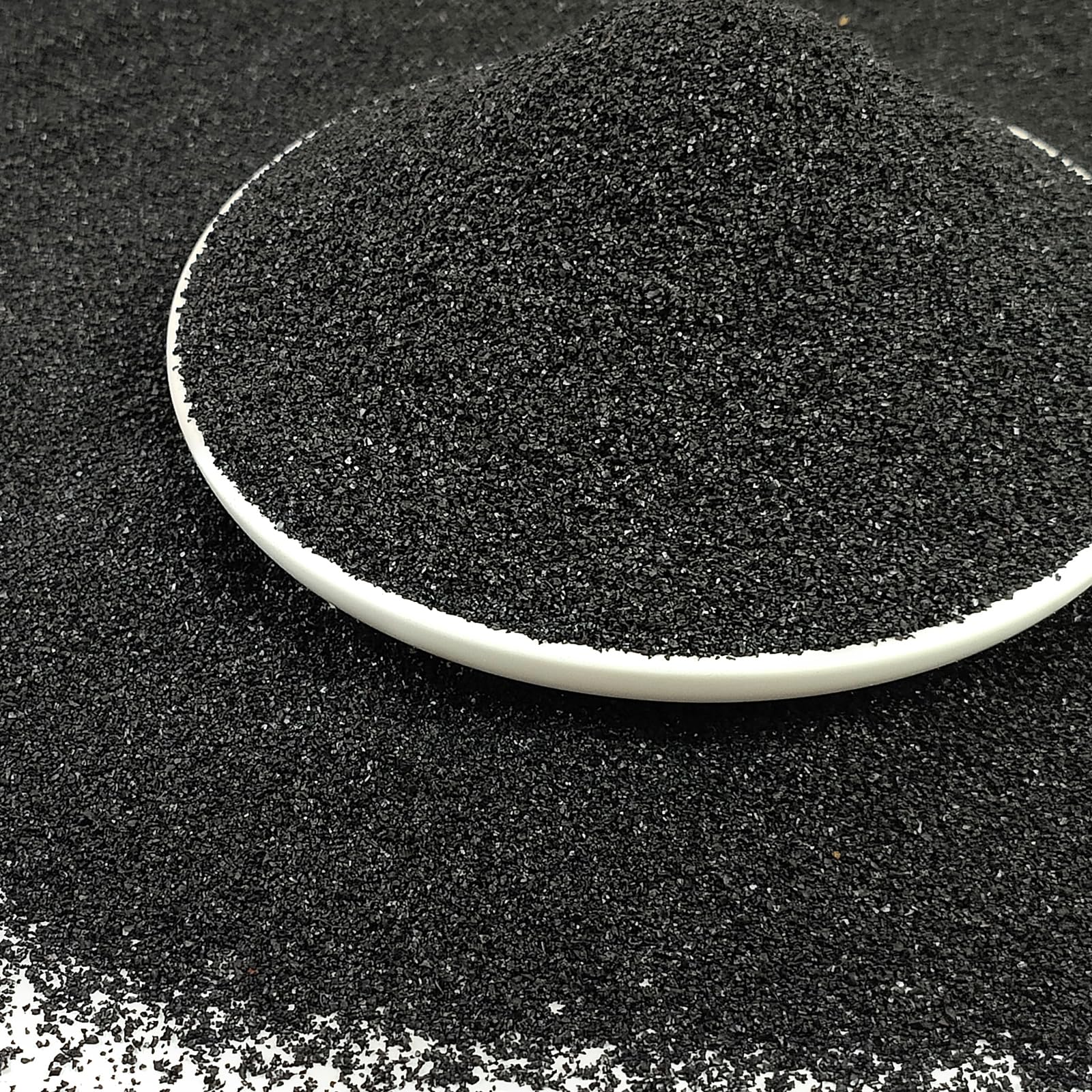
The black substrate that fronts both a freshwater jungle and a saltwater reef.
Not every tank runs freshwater. This YISZM bag is explicitly set up for both freshwater and saltwater setups, so the one aquarium keeper who runs a reef tank and a planted tank can stock the same product twice. The grains are rounded and smooth, and the extra smoothness is the point: it is gentle on bottom-dwellers that sift through the sand.
You get four size options here — 2 lbs, 5 lbs, 10 lbs, and 20 lbs — so a nano jar and a large aquarium can share the exact same black sand. The 20 lbs bag weighs 19.67 pounds. Owners note the rounded grains and how they work cleanly in Java fern and shrimp tanks without tearing anything up. The finish mimics a natural seabed and clouds less than most black bags.
Here is what to expect at opening: one of the more persistent gripes is a lot of rinsing with heavy silt. It does respond to a firm wash — several changes until the water runs clear, and if you skip that first step, expect a cloudy tank for a day. That is common to fine black sand in general, not a rare outlier, so it does not undercut the pick. Round out the value with the manufacturer warranty and you have a durable everyday choice.
Where it shines
- Rated for freshwater and saltwater tanks, so it works across a mixed collection
- Four bag sizes — 2, 5, 10, and 20 lbs — fit nano jars and large tanks alike
- Smooth, rounded grains that suit bottom-dwelling fish and shrimp
- Clouds less than most black bags and settles fast after rinsing
Straight talk
- Heavy silt means a real pre-rinse is non-negotiable before the tank
- The smallest bags run small for larger builds — bigger is usually the smarter call
The right call for: keepers who run freshwater and saltwater tanks and want one black sand that fits both, backed by a manufacturer warranty.
Look at a different grain if: you would rather put sand straight in unrinsed — that is not how this bag behaves.
4. FANTIAN 10 lb Black Aquarium Sand, Fish Tank Sand Aquarium Substrate Gravel
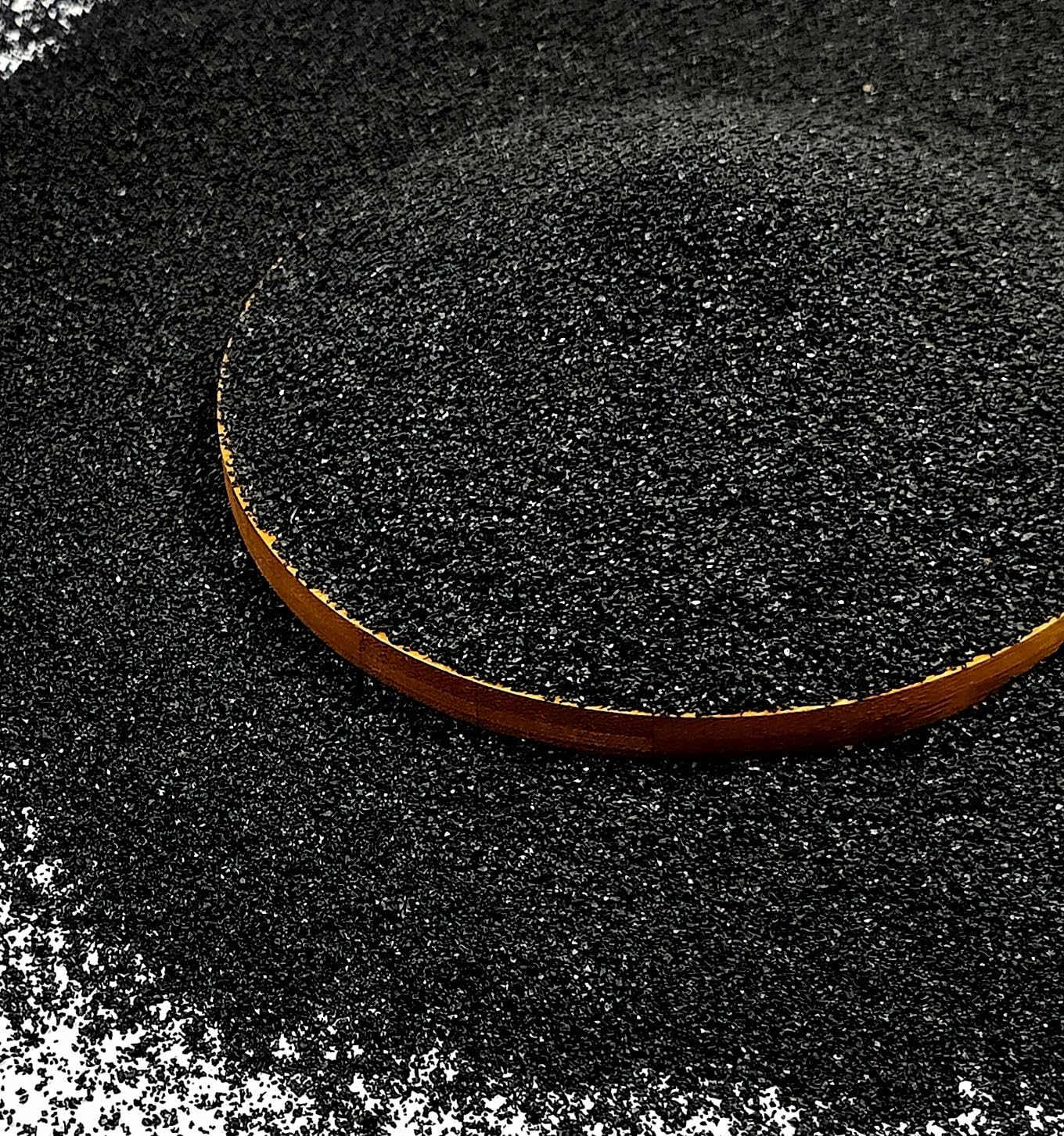
A 10 lb bag of dense-fine black sand that holds its ground instead of floating off.
Small-tank owners get the smartest value here. The grain sits at 0.4-0.8 mm — fine enough to look sleek, dense enough that it does not blow around the tank once it is in place. That is the one spec worth caring about for this bag: a fine sand that stays put is what separates a settled floor from a constant re-settle.
The FANTIAN is not only for aquariums, which is its real versatility. It lists uses from betta and shrimp tanks to vivariums, and it also works for decorative and decorative-jar purposes, arts and crafts fills, and reptile setups for ants, lizards, snakes, and tortoises. That range is the reason a small keeper buys it — one bag, several uses.
The fine grain means two honest things. First, dust is expected: the company is direct that the sand needs washing a few times before it goes in the tank, and the tank water may stay slightly cloudy for the first day or two while the filter works it out. Second, that initial murk is normal for fine sand and not a product flunk. The purchase reviews back the grain and the finish once it settles, and the clean, vibrant look is what earns the price. If you want zero effort, buy something else; if you accept the wash step, this is a solid small-project bag.
The case for it: dense 0.4-0.8 mm grains sit in the tank without stirring up a sandstorm every time a fish moves.
Worth knowing: a careful wash is required — plan on a couple of rinses before it goes anywhere near a tank.
Choose this for: small planted tanks, betta setups, or non-aquarium uses where a compact 10 lb bag fits the plan.
Do not pick it for: a full-size 75-gallon floor — one 10 lb bag will run short for that volume.
5. CaribSea Aquatics Eco-Complete African Cichlid Zack Sand, 20-Pound, Black

The heavy hitter that drops pH and gives digging cichlids the rocky floor they love.
If you keep African cichlids, the substrate is not just scenery — it is part of the water chemistry. This CaribSea bag is sized and designed specifically around that crowd: it is the one to look at when you want a stable, buffered floor rather than a purely decorative one. It weighs 9 kg, so it also stays planted and does not get vacuumed up easily.
One thing that will surprise you: this is not pure black sand. It is a finer gravel mixture — black and reddish-brown pieces mixed with small white grains. That is why some buyers call it a gravel rather than a sand. If you want a strictly monochrome black lake-bottom look, this is not that product; if you want a natural-looking, working cichlid floor, the mix is the point.
The payoff is real for the right tank. It buffers the water and holds steady parameters — it holds pH steady for months, which African cichlids need. It is easy to rinse once you accept the gravel size, and it stays put while cichlids dig and rearrange. The caveat: vacuuming takes practice because the grains are light enough to be sucked up if you are not careful. That is manageable with a slower siphon hand, not a flaw.
The strong case: a buffered substrate that keeps African cichlid water stable and gives digging fish a floor they can rearrange.
The honest read: it is a gravel mix, not a pure-black fine sand — know that before you buy if the color is your top priority.
Best if: you keep African cichlids and need a buffering, heavy substrate that can take real digging.
Look elsewhere if: a fine, uniform jet-black carpet is what you actually want.
6. The Frog House Black Aquarium Sand Substrate (10lbs)

A 10 lb budget bag with a rich dark color and a soft spot for planted tanks.
Plant lovers get the most out of this one. The Frog House sells its black substrate as a rooting medium for freshwater plants — firm enough that stems hold, easy enough to clean around them — and the dark black color makes plants and decor pop against it. Its porous grains give nitrifying bacteria surface area to colonize.
The standout strength is the raw quality and the value: a 10 lb bag that gives you a striking, rich black base without needing a second bag to finish the job. Gravel-vacuuming worries are handled too — one review notes it does not get pulled out during a routine vacuum, and it clears fairly well once you stir it. Beginners who want to start small will find the two-burlap-bag packaging and clean, well-prepared bag genuinely welcoming.
Two things to know. First, the black is more of a very dark, non-uniform tone than a pure black — a few owners note small brown flecks mixed in, and if a strict monochrome look is what you are after, that detail will bug you. As a 10 lb bag at a budget-friendly price, it is a smart entry point for a planted nano or mid-size tank.
The best part: a rich, deep black base that makes freshwater plants and colorful fish stand out, with enough firmness for roots to take hold.
Why you might pass: if a strict jet-black, speck-free appearance is non-negotiable, the slight color variation here is worth checking the reviews on first.
Pick it when: you are setting up a freshwater planted tank on a budget and want a dark, rooting-friendly base.
Pass it when: you need a perfectly uniform black with zero mixed grain color.
Understanding the Specs
Grain size (the number that controls everything)
The width of each particle decides how your sand behaves. Fine grains under about 1 mm pack tightly and look sleek, but they drift into filter inlets and siphon tubes. Coarser mixes — anything labelled fine gravel rather than sand — stay put and let waste sink through to plant roots. Match the grain to your stocking: sifters and corydoras like finer sand; cichlids that dig prefer a heavier mix. Check the listed millimeter range where a brand gives one, because that is the spec that predicts how your tank will actually behave.
Bag weight and how much you actually need
Bag weight tells you the volume of substrate you get, and it is the difference between a thin sprinkle and a real layer. The typical guide is two pounds of substrate per gallon of water. A 20 lb bag is a substantial project bag; a 10 lb bag is compact and better suited to nano and mid-size tanks. Weigh your tank’s footprint before you buy — running a gallon short at the end of a build is a common and annoying mistake.
How to read a “black” claim
Not every product sold as black sand delivers a uniform black result. Some contain brown or reddish pieces, some contain small white grains, and some are closer to fine gravel than sand. Read the product description and the buyer feedback carefully if a strict monochrome look matters to you. For a natural biotope look, a mixed-color substrate can actually be the better choice.
Clouding, rinsing, and settling
Most black sand arrives with dust that clouds the water when first added. The reliable method is to rinse in a bucket with running water while stirring the sand until the runoff runs clear. The amount of rinsing varies a lot from bag to bag and brand to brand, so check what other buyers experienced. With good filtration, most initial cloudiness clears within hours to a day or two.
Substrate for plants vs. digging fish
If you keep rooted plants, you want a substrate that holds stems firm without compacting so hard that roots suffocate. Loaches, corydoras, and cichlids need a floor they can sift or rearrange. Those are two different jobs. Read the product’s stated plant compatibility and any notes about fish that dig before you commit to a whole tank’s worth.
Freshwater, saltwater, and water chemistry
Some substrates are intended for both freshwater and saltwater; some are designed to alter parameters like pH. If you keep African cichlids, a buffering substrate can help hold their water stable. If you keep a community tank, a neutral black sand is usually the safer bet. Whatever you choose, confirm the manufacturer’s stated suitability for your tank type before adding it.
FAQ
How much black aquarium sand do I need for my tank size?
Does black aquarium sand need to be rinsed before use?
Is black aquarium sand safe for fish and plants?
How much sand do I add to reach a one-inch layer?
Will fine black sand clog my filter or siphon?
What is the difference between black sand and black gravel for a fish tank?
Will black aquarium sand change my tank water pH?
How often do I need to replace black aquarium sand?
Is black sand good for planted tanks and root-feeding plants?
Final Thoughts: The Verdict
For most setups, the black aquarium sand winner is the imagitarium Black Aquarium Sand because its fine, matte-black grain settles predictably, keeps fish color bright, and comes in a 20 LB bag that covers a real tank without a second order. If you want a shimmering planted look, the Aqua Natural Galaxy Sand is the one to reach for. For a freshwater-and-saltwater-friendly option, the YISZM Aquarium Sand earns its spot. And if you keep African cichlids and want a buffering, heavy-duty floor, the CaribSea Eco-Complete Zack Sand is built for exactly that. The one thing these bags all share is that the rinse step pays off — do it properly and your black substrate stays striking for years, not just for the first water change.
How We Picked
We do not accept paid placement. Every pick is matched to a real buyer and a real use-case; we do not hands-on test units.
Sources & Methodology
Specifications: manufacturer listings and product documentation. Review insights: verified customer reviews, as of September 2026. Pricing: not shown on this page (it changes often); check the current price via the retailer link.
As an Amazon Associate, Gadgets Feed earns from qualifying purchases. This does not affect which products we feature.