
A dull blade isn’t just frustrating—it’s dangerous. When you have to force a knife through a tomato or a piece of meat, you lose control, and that’s when accidents happen. A proper blade sharpener restores that factory-fresh bite, letting the tool do the work so your hands stay safe and your cuts stay clean.
I’m Min — the co-founder and writer behind Gadgets Feed. I’ve spent countless hours researching the abrasive materials, angle guides, and grit progressions that separate a fleeting sharpening job from a true, lasting edge.
This guide breaks down the seven best models on the market, comparing oil stones, water stones, diamond plates, and electric systems to help you find the ideal blade sharpener for your kitchen, workshop, or outdoor kit.
How To Choose The Best Blade Sharpener
Every blade sharpener works by removing a small amount of metal to form a new apex, but the method—and the result—varies wildly. The best choice depends on your steel type, your tolerance for mess, and how much precision you want without a steep learning curve.
Abrasive Material: Oil Stone vs. Water Stone vs. Diamond
Oil stones like the classic Norton are durable and cut hard steels but require honing oil and are slower to cut than modern alternatives. Water stones (whetstones) cut faster and produce a finer finish but need soaking and flattening. Diamond plates cut the fastest and stay flat forever, making them ideal for super steels and heavy reprofiling, though they can feel aggressive on the finest grits.
Guided vs. Freehand Sharpening
Freehand sharpening on a bench stone gives you total control but demands consistent angle holding—a skill that takes practice. A guided system, whether magnetic angle wedges or preset electric slots, locks the angle for you. This dramatically reduces the learning curve and ensures the same edge geometry every time, which is critical for kitchen knives used daily.
Grit Progression and Finishing
Jumping from a coarse stone straight to a strop leaves a weak, toothy edge. A proper progression moves through at least two grits—coarse (under 400 grit) for reshaping, medium (600–1000 grit) for sharpening, and fine (3000+ grit) for polishing. The final step, a leather strop with compound, aligns the microscopic burr for a shaving-sharp finish that lasts longer.
Quick Comparison
On smaller screens, swipe sideways to see the full table.
| Model | Category | Best For | Key Spec | Amazon |
|---|---|---|---|---|
| Chef’sChoice 15XV | Electric | Quick daily sharpening | 3-stage diamond abrasives, 15° angle | Amazon |
| Homly Electric | Electric | Ease of use at mid-range | 3-stage diamond abrasives | Amazon |
| SHARPAL 168H | Diamond Plate | Hard super steels | 325/1000 grit, ±0.002″ flatness | Amazon |
| Goodjob Whetstone Kit | Water Stone | All-in-one beginner setup | 400/1000 + 3000/8000 grit | Amazon |
| Work Sharp Benchtop | Water Stone | Consistent guided angles | 1000/6000 grit, 15°/17° guides | Amazon |
| Bogoni Rolling | Guided System | Effortless angle control | 400 diamond / 3000 ceramic, N52 magnets | Amazon |
| Norton Oil Stone | Oil Stone | Durable all-around sharpening | 100/280 grit combination | Amazon |
In‑Depth Reviews
1. Chef’sChoice 15XV Professional Electric Knife Sharpener

The Chef’sChoice 15XV is the reference standard for electric sharpeners. Its brushed metal housing and 5-pound heft signal pro-grade durability, while the 3-stage EdgeSelect system uses 100-percent diamond abrasives to convert factory 20-degree edges into a 15-degree Trizor XV edge that is both razor-sharp and chip-resistant. The third stage is a dedicated stropping slot that polishes and maintains serrated blades without damage.
What sets this unit apart is the speed: a first-time sharpening takes roughly one minute, and subsequent touch-ups take about ten seconds. The patented flexible spring guides automatically adapt to blade curvature, removing the angle guesswork entirely. For households that rotate through eight or more knives weekly, this machine consistently delivers a paper-cutting edge with almost no learning curve.
On the downside, the aggressive diamond abrasives remove more metal than a guided stone system like the Edge Pro Apex. Users report that the package labeling sometimes shows “Model 15” rather than “15XV,” though the internal mechanism is identical. The sharpener also operates at a noticeable 65–75 dB, so it’s not silent, but the trade-off for that speed is worthwhile for most home cooks.
Why it’s great
- Fastest edge restoration of any model tested—under 1 minute
- Brushed metal housing and heavy base stay planted on the counter
- Third-stage stropping slot handles serrated knives safely
Good to know
- Removes more material per pass than guided stone systems
- Runs at 65–75 dB; not silent during operation
- Packaging may not match the “15XV” label exactly
2. Homly Professional Electric Knife Sharpener

The Homly Professional Electric knife sharpener brings diamond abrasive technology to a price point that undercuts the Chef’sChoice by a wide margin. Its three-stage system uses 100% diamond abrasives in the first two slots for sharpening and honing, then a polishing stage for finishing. The flexible spring guide rods hold the blade at a consistent arch-shaped edge angle, which reduces the risk of digging in at the heel or tip.
In real-world use, users report that even heavily dulled chef knives return to paper-cutting sharpness after a few passes through stage one. The 3-pound weight and rubberized base keep the unit stable, and the double-layer shell paint resists scratching from repeated use. This sharpener handles everything from Santoku knives to fillet knives, though ceramic blades require a specialized slot that isn’t included here.
The main compromise is the plastic housing, which doesn’t match the Chef’sChoice’s metal build for longevity under heavy commercial use. Some users also note that very thin-bladed pocket knives can shift slightly in the guide rods if too much pressure is applied. For home kitchens running weekly maintenance, however, the Homly provides a level of speed and convenience that rivals sharpeners costing over twice as much.
Why it’s great
- Diamond abrasives at a mid-range price point
- Three-stage system with polishing slot for finishing
- Compact 12.2″ footprint fits most kitchen drawers
Good to know
- Plastic housing less durable than metal-body competitors
- Thin pocket knives may shift in spring guides under pressure
- Not suitable for ceramic knife sharpening
3. SHARPAL 168H Dual-Grit Diamond Sharpening Stone
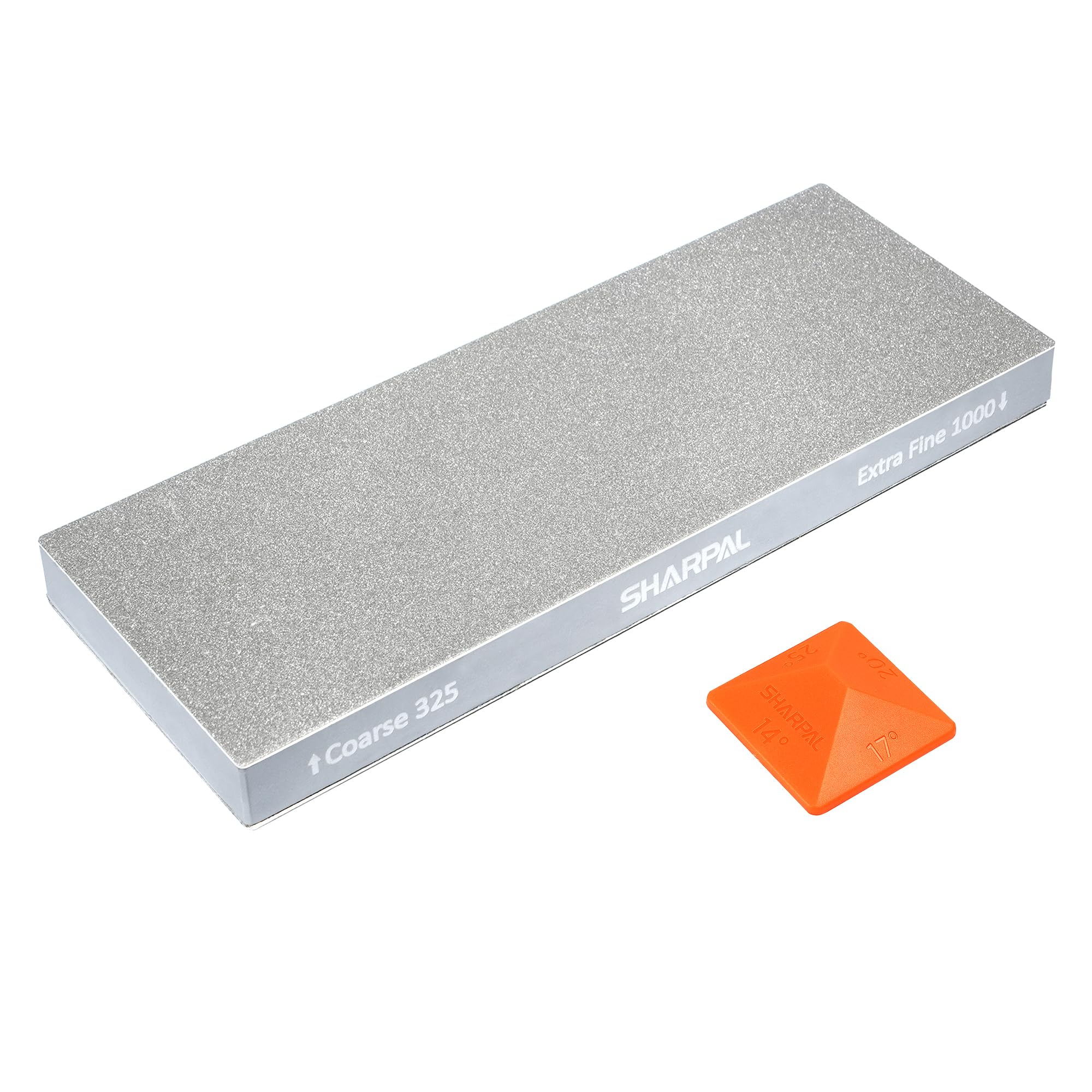
The SHARPAL 168H is the go-to diamond plate for users who work with super steels like CPM-S30V, M390, or Elmax. Its monocrystalline diamond surface, bonded via a three-times electroplating process, cuts aggressive material removal on the 325-grit (45 micron) side and finishes cleanly on the 1000-grit (15 micron) side. The MirrorFlat technology holds flatness to within ±0.002 inches, ensuring every pass makes even contact across the entire blade edge.
The 8-by-3-inch surface is large enough for chef knives, chisels, and plane blades alike. An included 4-angle pyramid guide (14°, 17°, 20°, and 25°) takes the guesswork out of holding the correct angle, while the non-slip pad keeps the plate stationary on any benchtop. Unlike water stones, this diamond plate requires no soaking or flattening—just a spritz of water or dry use, and it’s ready to go.
Some users note that the 0.55-inch thickness is relatively thin, so mounting the plate on a wooden block or 2×4 scrap improves ergonomics for heavy sessions. The diamond surface does wear slightly faster than a DMT plate under extreme pressure, but for most home and workshop use, the SHARPAL 168H holds its cutting aggression through dozens of knives without noticeable degradation.
Why it’s great
- MirrorFlat technology ensures perfectly even blade contact
- Cuts super steels like M390 and Elmax quickly
- No soaking, no flattening, no oil required
Good to know
- Thin 0.55″ profile benefits from a mounting block
- Diamond wears slightly faster than premium DMT plates
- 1000-grit side is fine, not ultra-fine for final polishing
4. Goodjob Premium Whetstone Kit

Goodjob’s whetstone kit bundles everything a beginner needs to progress from dull to shaving-sharp without buying extra gear. The set includes two dual-grit stones: a 400/1000 for shaping and sharpening, and a 3000/8000 for honing and polishing. Both stones are made from white corundum fired at 2000°F using Japanese Osaka production techniques, which yields a consistent, slow-wearing abrasive matrix.
The kit comes with a bamboo base that holds the stone securely via a silicone non-slip pad, a honing guide and angle guide for beginners, two leather strops pre-loaded with green compound, and cut-resistant gloves. This essentially hands you the entire sharpening workflow out of the box. Users report that the 8000-grit side, when combined with the strop, produces a mirror finish capable of whittling hair after just a few minutes of work.
The trade-off for this value is stone density: the corundum material cuts slower on stainless steels than a premium Japanese water stone or diamond plate, so reprofiling a badly chipped edge requires more passes. Some units also have a small manufacturer logo embossed on the stone surface that creates a rough spot—easily sanded off with 400-grit paper. For the price of a single dinner out, this kit delivers a complete sharpening education.
Why it’s great
- Complete bundle with two stones, strop, angle guide, and gloves
- 8000-grit side delivers a true mirror-polished edge
- Bamboo base and silicone pad grip work surface securely
Good to know
- Stone cuts slower on stainless steel than premium alternatives
- Embossed logo may create a slight roughness on the surface
- No spray bottle included to keep stones wet during use
5. Work Sharp Benchtop Whetstone Knife Sharpener

Work Sharp solves the biggest problem freehand sharpeners face: holding a consistent angle. This benchtop unit pairs a premium 1000/6000 corundum water stone with removable magnetic angle guides set to 15° and 17°. You simply soak the stone for five minutes, place the guide on your blade, and sweep it across the stone. The angle guide locks the blade’s orientation, so every stroke is identical.
The water control base is a thoughtful addition: it holds water for the stone, collects slurry runoff, and doubles as storage. A non-slip mat underneath keeps everything in place during use. The 1000-grit side handles dull edges efficiently, while the 6000-grit side refines the edge to a polished, razor-sharp state. Users transitioning from pull-through sharpeners find this system intuitive enough to produce professional results on their first try.
The biggest complaint is that the plastic base feels slightly less premium than Work Sharp’s other products. The stone itself is also smaller than a full-sized bench stone, measuring 4 by 2.25 inches, which means longer blades like a 10-inch chef’s knife require multiple passes to cover the full edge. For the price, it remains the most beginner-friendly guided water stone system on the market.
Why it’s great
- Magnetic 15°/17° angle guides eliminate freehand guesswork
- Water control base keeps the stone lubricated and work area tidy
- Limited lifetime warranty from a trusted USA-based company
Good to know
- Plastic base feels less substantial than Work Sharp’s pro line
- Small 4″ stone surface requires multiple passes on long blades
- Only two angle options (15° and 17°) limit custom geometry
6. Bogoni Rolling Knife Sharpener
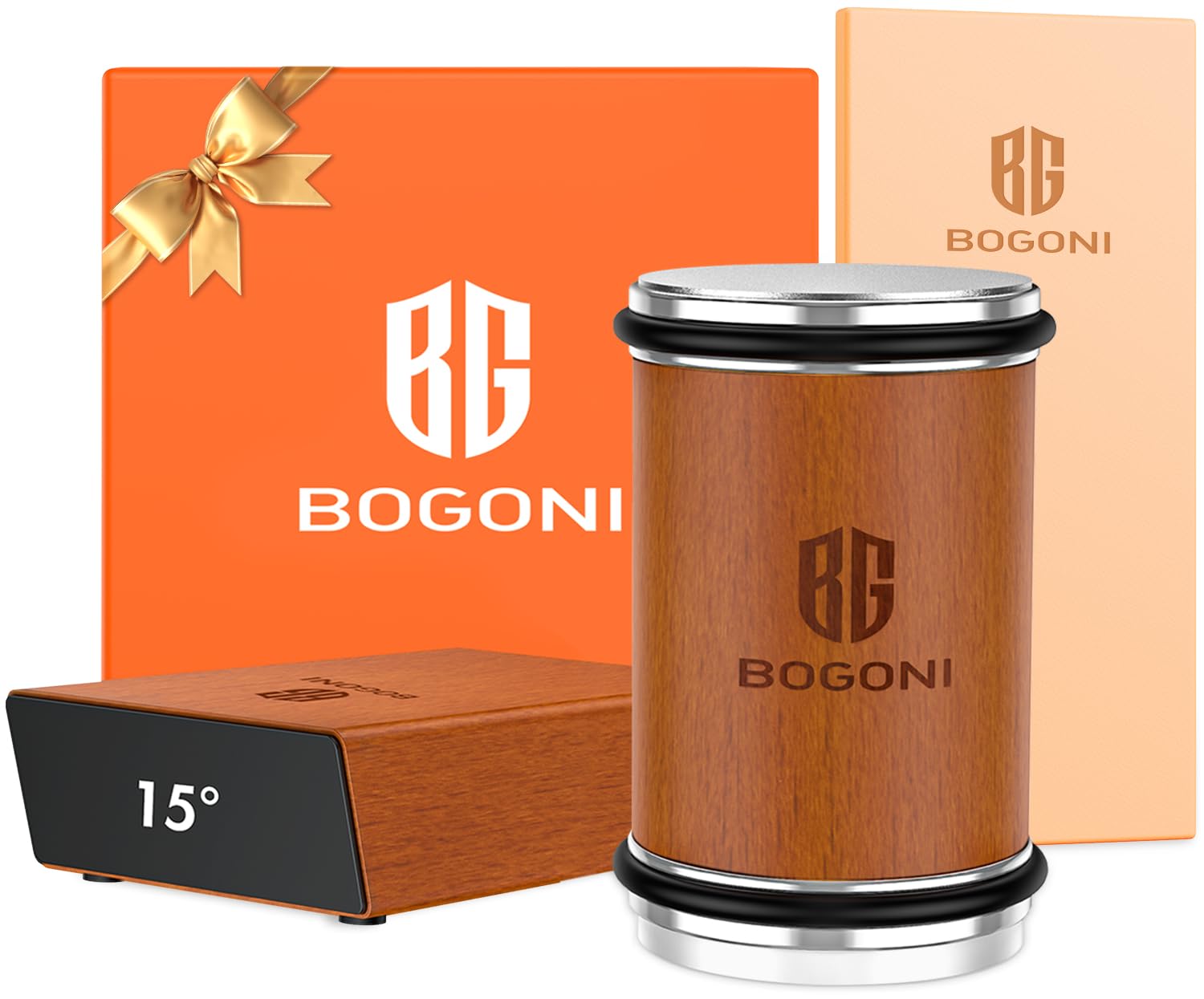
The Bogoni Rolling Knife Sharpener rethinks the sharpening motion entirely. Instead of dragging a blade across a stationary stone, you roll a handheld cartridge across a magnetically held knife. The tool uses a 400-grit diamond disc for reshaping and a 3000-grit ceramic disc for polishing, mounted in a smooth-rolling wooden body. Six N52 neodymium magnets hold the knife firmly to a steel plate, eliminating any slipping or wobbling.
For users with limited hand strength or conditions like tendonitis, this design is a revelation. A professional chef with 37 years of experience reported restoring badly dinged blades in under four minutes with almost no wrist strain. The magnetic angle guides snap into two positions—15° for ultra-sharp edges on high-carbon or Damascus steel, and 20° for a more durable everyday edge on softer stainless kitchen knives.
The natural wood construction and deluxe gift box give it a premium presentation, but the plastic internal roller mechanism may not hold up to decades of daily commercial use. The diamond disc, while replaceable, is proprietary to the Bogoni system, so replacement availability could become an issue. For home cooks who prioritize ease and safety over brute-force material removal, this is the most comfortable sharpener to use over time.
Why it’s great
- Rolling motion requires minimal wrist force—ideal for arthritis
- N52 magnets hold the blade securely with zero slipping
- Includes leather strop for final edge refinement
Good to know
- Proprietary diamond discs may be hard to find later
- Plastic internal roller less durable than metal alternatives
- Requires a flat counter surface to roll the cartridge smoothly
7. Norton Combination Grit Oil Stone

The Norton Combination Grit Oil Stone is the working-class hero of the sharpening world. Its 100-grit side aggressively reprofiles damaged edges and restores the cutting geometry on axes, hatchets, and very dull knives. The 280-grit side refines that edge to a serviceable sharpness suitable for most home and field tasks. The stone is prefilled with oil and made from durable corundum that outlasts soft water stones by a wide margin.
This stone is best understood as a tool for maintenance and repair rather than finishing. Users report that the 280-grit side feels closer to an extra-medium grit—adequate for a working edge on a hunting knife or plane iron but not fine enough for a hair-whittling finish without a subsequent finer stone or strop. The 8-by-2-inch surface is wide enough for most kitchen knives and narrow enough for smaller blades and chisels.
The stone must be kept wet with honing oil or WD-40 to prevent metal loading, and the sharp corners can dig into fingers during use. It also requires more passes to achieve the same edge sharpness as a 1000-grit water stone. For users who want a durable, inexpensive stone for rough work and are willing to follow up with a finer finish, the Norton delivers classic performance that has earned its reputation over decades.
Why it’s great
- Durable corundum construction outlasts water stones significantly
- 100-grit coarse side removes chips and damage quickly
- Classic design with pre-filled oil for immediate use
Good to know
- 280-grit fine side is not fine enough for final finishing
- Sharp corners can be uncomfortable during extended use
- Requires oil lubricant and more passes than finer stones
FAQ
How often should I sharpen my kitchen knives with a blade sharpener?
Can a single dual-grit stone replace a full progression of multiple stones?
What angle should I use for my kitchen knives on a blade sharpener?
Why does my electric knife sharpener remove so much metal?
Final Thoughts: The Verdict
For most users, the blade sharpener winner is the Chef’sChoice 15XV because it delivers the fastest, most consistent results with zero learning curve—ideal for busy home cooks who want razor edges in under a minute. If you prefer a guided hand-sharpening experience, grab the Work Sharp Benchtop Whetstone for its 15°/17° magnetic guides that teach you proper angle control. And for outdoor enthusiasts or owners of super-steel knives, nothing beats the SHARPAL 168H diamond plate for its ability to cut through the hardest alloys without flattening or soaking.