
Blood flow restriction cuffs are no longer just for elite athletes and physical therapists. They are now a mainstream training tool for anyone looking to build muscle, speed up recovery, or maintain strength while rehabbing an injury. The category has expanded rapidly, but so have the differences between good cuffs and dangerous or ineffective ones.
I’m Min — the co-founder and writer behind Gadgets Feed. I’ve spent countless hours analyzing the technical specifications, customer feedback, and material science behind dozens of BFR cuffs to identify which ones deliver precise, reproducible occlusion without cutting into your skin or losing pressure mid-set.
Whether you are recovering from knee surgery, trying to break through a plateau, or simply want to build muscle with less joint strain, finding the right pair of cuffs is critical for both results and safety. This guide will help you find the best blood flow restriction cuffs for your specific training goals.
How To Choose The Best Blood Flow Restriction Cuffs
Blood flow restriction training relies on precisely modulating venous return while maintaining arterial inflow. Three variables separate a safe, effective BFR system from one that is either uncomfortable or inconsistent: the cuff type, the width, and the pressure regulation system.
Inflatable Cuffs vs. Elastic Nylon Bands
Elastic nylon bands with metal buckles are the most affordable entry point. They rely on your own tightening force to create occlusion, which introduces variability between sets and days. Inflatable cuffs use a pump and gauge to deliver reproducible pressure measured in millimeters of mercury (mmHg), giving you exact control over the venous restriction stimulus. For rehabilitation and scientific training, inflatable systems are superior because they allow you to target a specific percentage of your limb occlusion pressure (LOP).
Cuff Width and Limb Fit
Research recommends BFR cuffs between 3 and 5 centimeters wide for arms and 5 to 10 centimeters for legs. Narrower cuffs require higher pressure to achieve occlusion, increasing discomfort and nerve compression risk. Wider cuffs distribute pressure more evenly but may restrict working muscles if placed incorrectly. A proper fit should snugly encircle the most proximal portion of the limb without pinching or sliding.
Pressure Regulation and Safety Features
Precision matters. A manual pump with an integrated pressure gauge is the minimum for safe inflatable systems. Some premium cuffs offer digital pressure readouts or smart pumps that automatically maintain a set pressure throughout a set. Quick-release valves are essential so you can deflate instantly if discomfort exceeds tolerance. For most users, a system that can deliver between 40 percent and 80 percent of LOP is ideal for targeting different muscle fiber types.
Quick Comparison
On smaller screens, swipe sideways to see the full table.
| Model | Category | Best For | Key Spec | Amazon |
|---|---|---|---|---|
| Dr. Gains BFR Pro 2.0 | Premium | Precision training & rehab | Inflatable TPE cuffs with pump & gauge | Amazon |
| Puxhoea BFR Bands | Mid-Range | Versatile arm & leg training | Multi-chamber design, 3 pressure levels | Amazon |
| Lisxeoc BFR System | Mid-Range | Full-body occlusion | Cotton blend cuffs with pump | Amazon |
| lewitools BFR Resistance Bands | Mid-Range | Partner training & physiotherapy | Includes door anchor, 260g weight | Amazon |
| Dr. Gains Premium Nylon & Metal Buckle | Value | Budget-friendly gym use | Nylon straps with metal buckle, 1-inch width | Amazon |
In‑Depth Reviews
1. Dr. Gains Inflatable BFR Bands Pro 2.0
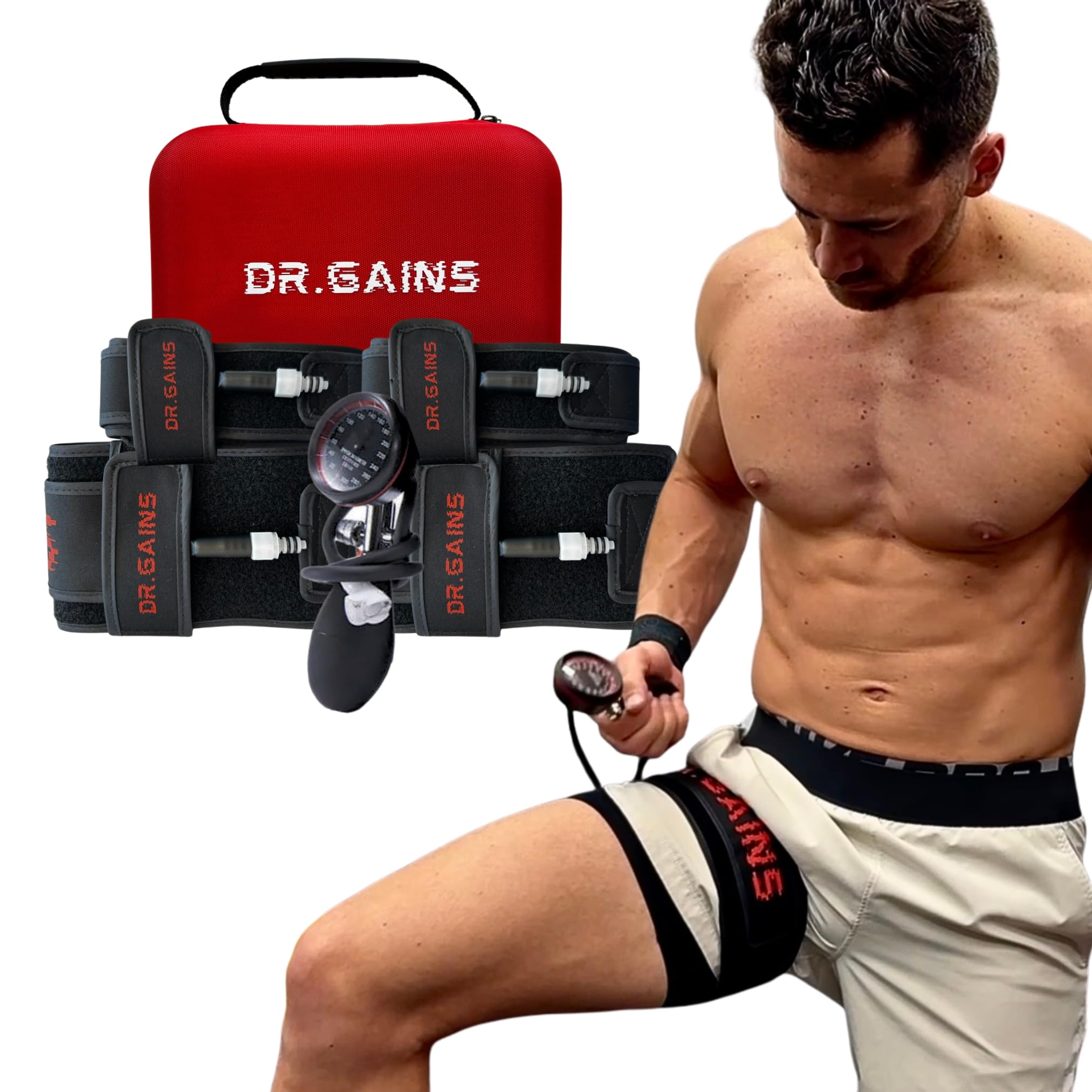
The Dr. Gains BFR Pro 2.0 represents the premium tier of blood flow restriction cuffs. Instead of elastic nylon straps that rely on subjective tightness, these inflatable cuffs use a CE-certified pump and pressure gauge to deliver repeatable occlusion measured in mmHg. The thermoplastic elastomer (TPE) material is noticeably softer than traditional nylon, molding to the limb without digging in or chafing, and the arm cuffs are 40 percent thinner than standard designs to preserve full range of motion during bicep curls and tricep extensions.
Users consistently report that this system stays comfortable even during prolonged sets, and the ability to dial in the exact same pressure session after session eliminates the guesswork that plagues buckle-based bands. The inflatable design also compensates for the natural muscle pump that occurs during a set — as your muscle swells, the air cuff expands slightly rather than tightening uncomfortably like a static strap. Real-world feedback confirms that the build quality and valve reliability hold up well over six weeks of regular use, though one reviewer noted a failed unit, suggesting some batch variability exists.
The Pro 2.0 includes lifetime access to Dr. Gains’ Total Body BFR workout program, which provides structured video guidance for getting the most out of the system. For anyone serious about rehabilitation or precise progressive overload, the reproducibility of an inflatable system is a significant advantage over elastic alternatives. The trade-off is the highest price in this guide, but for users who treat BFR as a core training method rather than an occasional workout accessory, the investment justifies itself quickly.
Why it’s great
- Precision pressure control for repeatable occlusion from session to session
- Ultra-soft TPE material molds to limbs without chafing or digging in
- Thinner arm cuff design preserves full range of motion for upper body exercises
Good to know
- Premium price point is significantly higher than nylon buckle alternatives
- Some users experienced pump connection failures after several months of use
2. Puxhoea BFR Blood Flow Restriction Bands
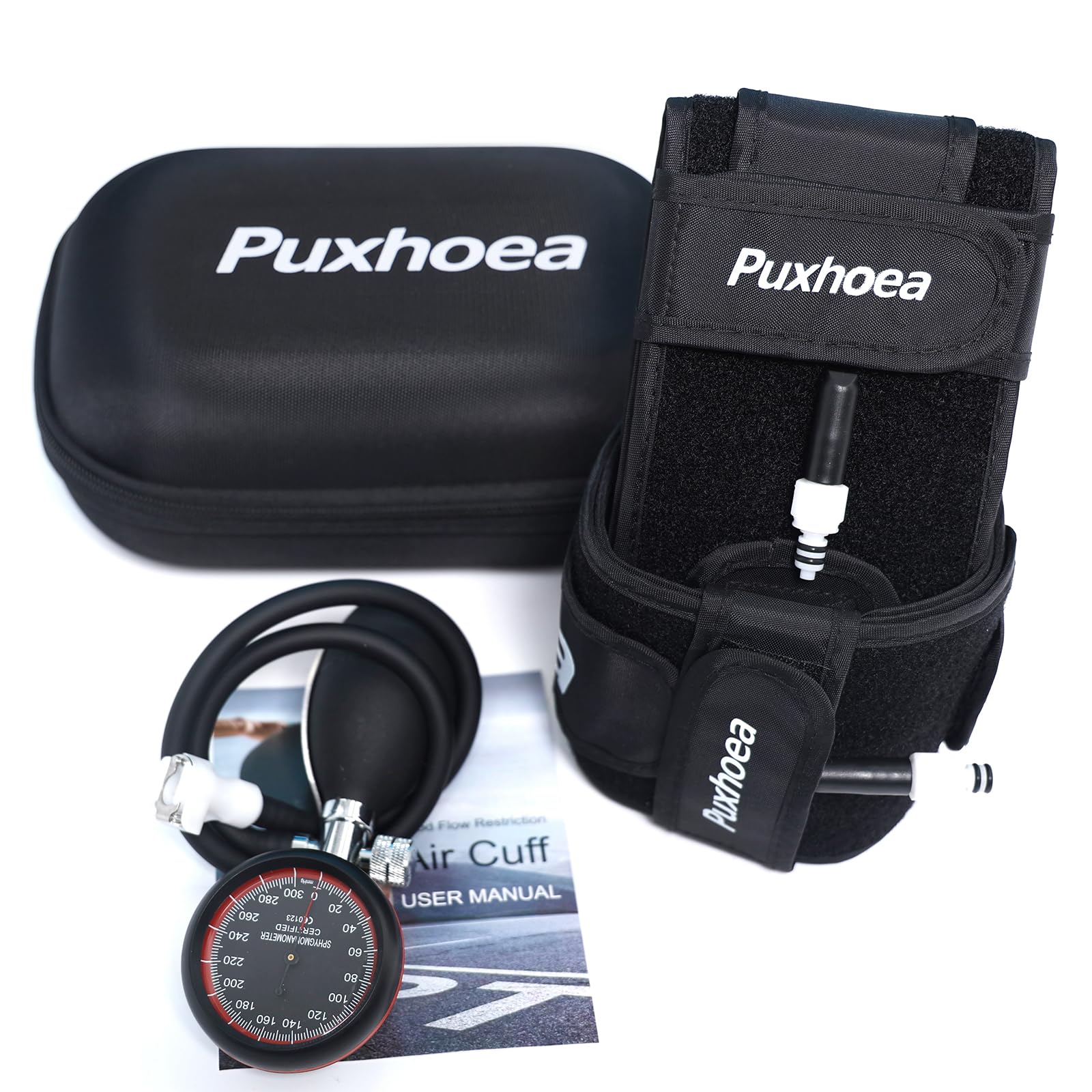
The Puxhoea BFR system bridges the gap between budget nylon bands and premium inflatable units. It uses a multi-chamber design with an accurate pump and an integrated pressure gauge, giving you the ability to target specific PSI settings for different limbs and training goals. The three resistance levels let you progress from lighter occlusion for endurance work to higher pressures for hypertrophy-focused sessions.
Customer feedback highlights the comfort of the polyester-cotton blend material, which fits snugly without causing the skin irritation that can occur with rougher nylon webbing. The quick-release valve provides instant deflation, a critical safety feature when using higher pressures. Users rehabbing from knee surgery or ACL reconstruction found the system easy to set up for leg work, with the leg cuffs accommodating a wide range of thigh circumferences.
The carrying case adds portability, making this kit practical for users who train in multiple locations. One common point of feedback is that the instruction manual lacks detailed guidance on how to determine your personal limb occlusion pressure, so beginners should plan to research BFR protocols before their first session. For the price, the Puxhoea kit delivers a well-rounded package that works for both upper and lower body training.
Why it’s great
- Multi-chamber design with pressure gauge for repeatable occlusion
- Comfortable polyester-cotton blend reduces skin irritation during extended use
- Compact carrying case makes it easy to train at home, gym, or while traveling
Good to know
- Instructions lack basic BFR protocol guidance for beginners
- Some users found the overall build quality adequate but not premium
3. Lisxeoc BFR Training System
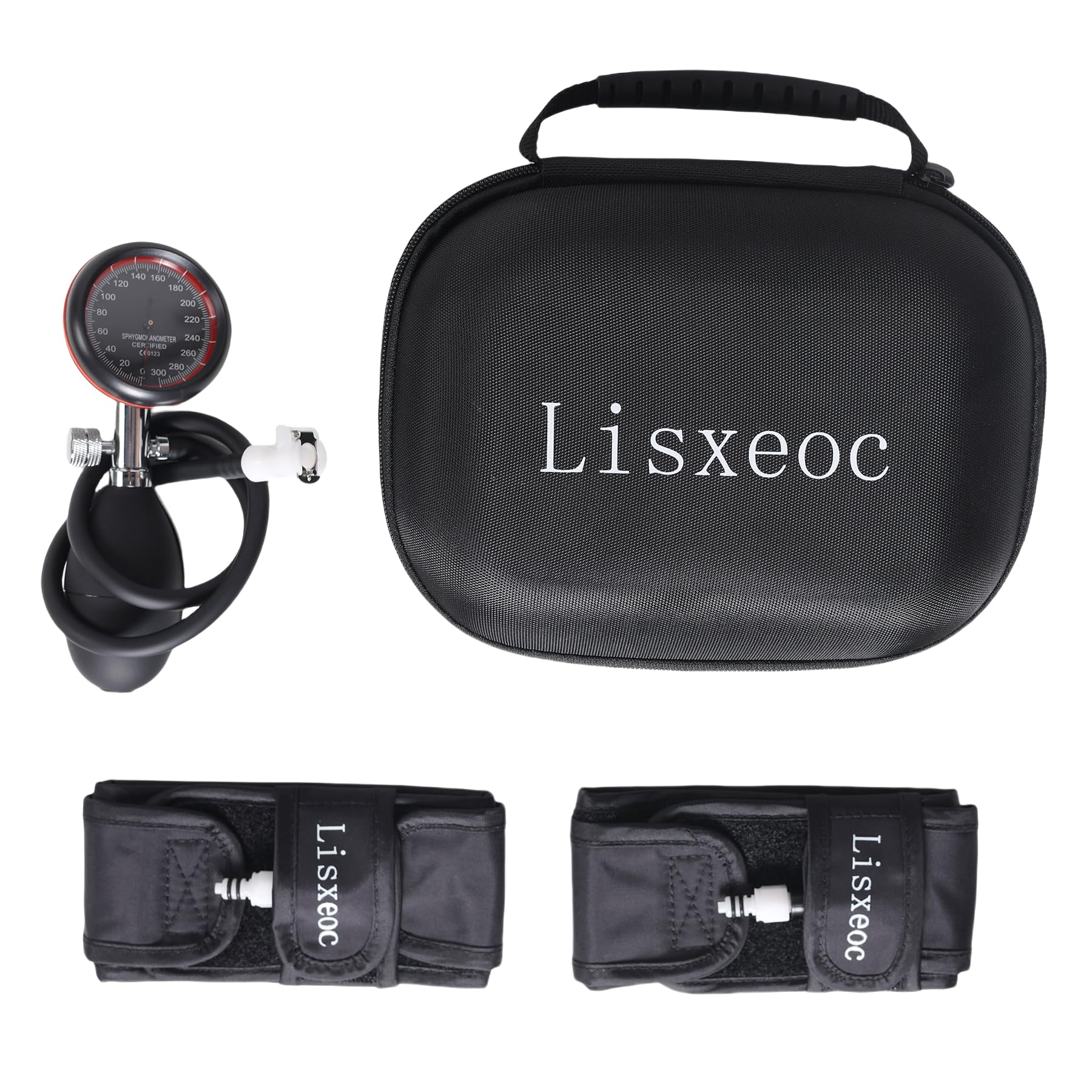
The Lisxeoc BFR system competes directly with the Puxhoea kit at a similar price point, offering a pump-based inflatable design with a focus on safety. The chamber construction is explicitly marketed as safer than improvised tourniquets because it gradually slows venous return rather than abruptly cutting off arterial flow. The 26.7-inch cuff length and 2.95-inch width are designed to accommodate both arms and legs.
Users consistently praise the slip-resistant material and the ease of putting the cuffs on and removing them, even during sweaty workouts. The straps remain securely in place during dynamic movements like lunges and overhead presses, which is a common pain point with lower-end elastic bands. However, multiple reports mention frustration with the pump connection port becoming difficult to attach after several weeks of use, a durability concern that potential buyers should weigh.
The Lisxeoc system is not as refined as the Dr. Gains Pro 2.0, but for users who want an inflatable system without the premium price tag, it delivers the core functionality. The cotton-blend material is noticeably softer than nylon webbing, making it a comfortable choice for sensitive skin. Just be prepared for the pump connection to potentially degrade over time — treating the valve gently and cleaning the port after sweaty sessions may extend its lifespan.
Why it’s great
- Slip-resistant cotton blend cuffs stay in place during dynamic leg and arm exercises
- Chamber design safely restricts venous flow without acting like a tourniquet
- Wide 2.95-inch straps distribute pressure evenly for improved comfort
Good to know
- Pump connection port may become difficult to attach after weeks of regular use
- No written BFR protocol guide included for setting limb occlusion pressure
4. lewitools BFR Resistance Training Bands

The pump-based inflatable design allows for precise pressure application, and the cotton blend cuffs aim for a balance between durability and skin comfort. The set weighs just 260 grams, making it one of the more portable options for packing in a gym bag.
User experiences are mixed but instructive. Several reviewers describe this as the best equipment they have owned for building muscle without joint pressure, particularly for users with knee or back issues. However, a critical durability issue emerged in longer-term feedback: one user reported the pump attachment and pump itself failing after approximately 14 uses over six months. Another reviewer noted that the cuff does not stay tight after inflation, requiring multiple attempts to achieve a secure fit.
The lewitools system is best suited for casual BFR users who do not train with occlusion more than once or twice per week. The door anchor is a nice touch for performing movements like banded pull-throughs or chest presses while maintaining occlusion. For more frequent or higher-volume training, the pump connection reliability is a genuine risk that makes the Puxhoea or Dr. Gains options more compelling.
Why it’s great
- Lightweight 260g design is very portable for gym bag or travel use
- Includes door anchor for partner-assisted occlusion training exercises
- Effective for users with joint pain who need to train at lower intensity
Good to know
- Pump and attachment may fail after a few months of regular use
- Cuffs sometimes struggle to maintain tightness after initial inflation
5. Dr. Gains Premium Nylon & Metal Buckle BFR Bands
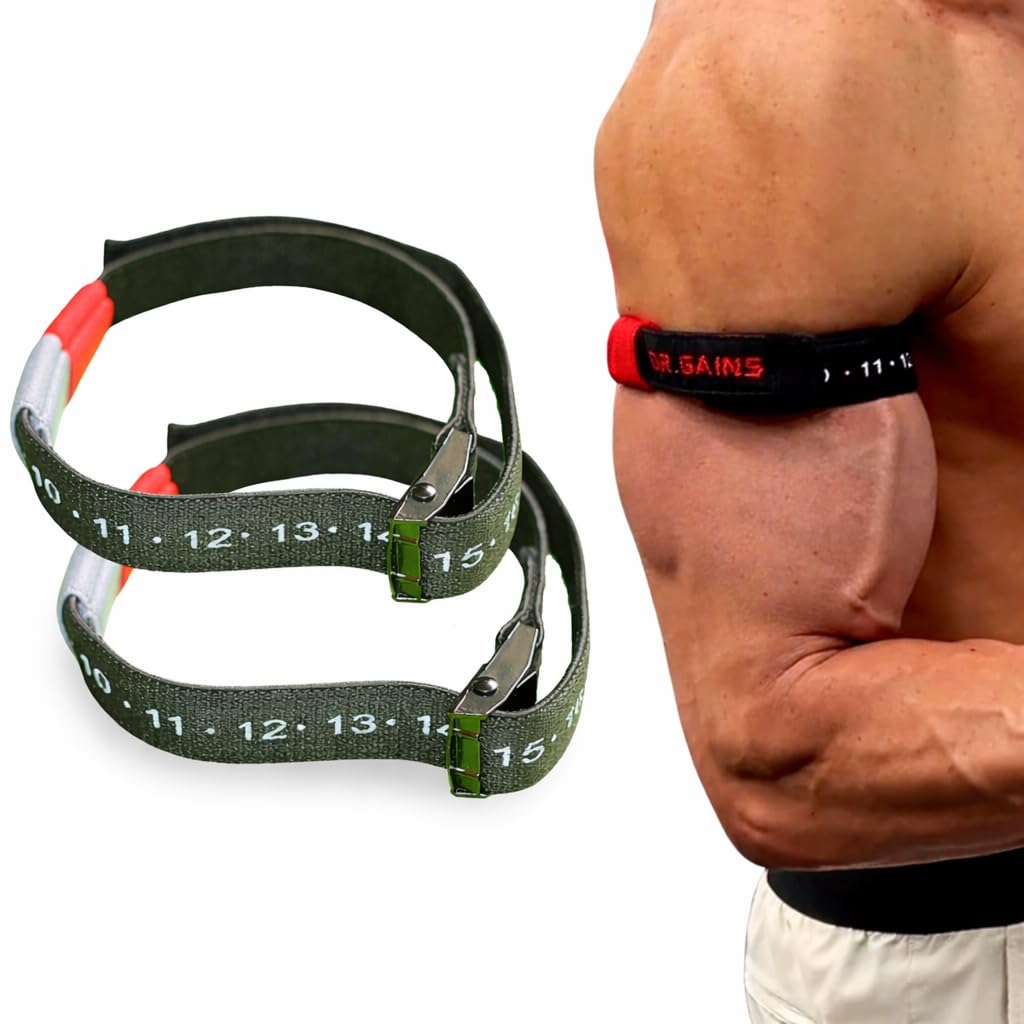
If you want an entry into BFR training without investing in an inflatable pump system, the Dr. Gains nylon bands are the strongest option in the elastic category. The standout feature is the metal buckle with grip teeth, which solves the primary failure point of plastic buckle systems: they slip under tension. The EZ-Adjust lever lets you tighten or loosen the band using one or two fingers, a convenience that matters when you are mid-workout and need to quickly dial in pressure between sets.
The 1-inch width is backed by research indicating that this size provides effective occlusion for the arms without encroaching on the deltoid or bicep muscle bellies. Users consistently describe the nylon material as high-quality and non-itchy, a real advantage over cheaper elastic bands that cause chafing after repeated use. The included carrying case keeps the bands organized in a gym bag, and a QR code provides access to a setup video that helps beginners understand proper placement.
The main limitation is inherent to the elastic category: you cannot quantify the pressure you are applying. Different users will tighten the bands to different degrees, and the same user may apply inconsistent pressure between sessions. For general fitness and light hypertrophy work, this variability is acceptable, but for rehabilitation or scientific training, an inflatable system with a gauge is the safer choice. At this price, the Dr. Gains nylon bands deliver exceptional build quality and thoughtful design.
Why it’s great
- Metal buckle with grip teeth prevents slipping under high pressure during heavy sets
- EZ-Adjust lever allows one-handed tightening and loosening between exercises
- Premium nylon construction is comfortable on skin and holds elasticity over time
Good to know
- Elastic design means occlusion pressure is subjective and varies between sessions
- Nylon material may be slightly uncomfortable on bare skin for some users
FAQ
How tight should blood flow restriction cuffs be during training?
Can I use blood flow restriction cuffs on both arms and legs with the same set?
How long should I wear BFR cuffs during a training session?
Final Thoughts: The Verdict
For most users, the best blood flow restriction cuffs winner is the Dr. Gains Pro 2.0 because the inflatable design with a pressure gauge provides the safe, repeatable occlusion that makes BFR training actually work. If you want a highly versatile inflatable setup for both arms and legs at a more accessible price, grab the Puxhoea BFR bands. And for budget-conscious lifters who want the most durable elastic band on the market, nothing beats the Dr. Gains nylon bands with the metal buckle.