
Managing feline diabetes means committing to daily blood glucose curves, and the difference between a calm 5-second ear prick and a wrestling match that stresses both of you comes down to the meter in your hand. The wrong meter delivers error codes, demands huge blood samples, or forces you to re-poke when strips fail, turning a 15-minute routine into an hour-long ordeal.
I’m Min — the co-founder and writer behind Gadgets Feed. I’ve spent countless hours cross-referencing clinical validation data, strip pricing per test, and real-world owner feedback to isolate the meters that actually deliver on their promises for feline-specific glucose monitoring.
Whether you’re newly navigating home testing or looking to upgrade from a meter that wastes too many strips, identifying the right blood glucose meter for cats directly impacts your cat’s comfort and your ability to spot dangerous trends before they turn into emergencies.
How To Choose The Best Blood Glucose Meter For Cats
Three parameters separate a cat-friendly meter from a frustrating one: the blood sample volume required, the test strip design and availability, and whether the meter is calibrated for feline versus human blood chemistry. Ignore any of these and you’ll waste strips, stress your cat, or get readings that don’t match what your vet sees in-clinic.
Sample Volume — The 0.3µL vs 0.6µL Divide
A cat’s ear margin yields a tiny capillary drop. Meters that require 0.6µL or more often demand you squeeze, re-poke, or massage to get enough blood on the strip. Aim for a meter with a 0.3µL requirement — this dramatically increases the chance of a successful one-and-done test on the first ear stick.
Test Strip Technology — Coding, Wrapping, and Cost Per Test
Strips that require manual coding introduce user error. Look for no-coding meters with auto-detection. Individually foil-wrapped strips resist humidity and stay fresh longer than bulk-vial strips, which degrade with each opening. Also calculate your ongoing spend: cheaper strips that give frequent error codes are more expensive in the long run.
Species Calibration — Why a Human Meter Won’t Work
Feline red blood cells have different glucose kinetics than human cells. A dedicated cat meter or one with a feline-specific code-chip adjusts the algorithm to read cat blood accurately. Using a human meter will produce readings 15-30% off, which is dangerous when dosing insulin.
Quick Comparison
On smaller screens, swipe sideways to see the full table.
| Model | Category | Best For | Key Spec | Amazon |
|---|---|---|---|---|
| Pet Control HQ (Premium Kit) | Starter Kit | Complete all-in-one home setup | 0.6µL sample / 2 code chips | Amazon |
| PetTest Classic Genteel Kit | Painless Kit | Struggling with pet needle anxiety | 0.3µL sample / Genteel lancet | Amazon |
| AlphaTrak 3 | Vet Standard | Vet-validated gold-standard accuracy | 0.3µL sample / 20-750 mg/dL range | Amazon |
| KETO-MOJO GK+ | Dual Meter | Tracking both glucose and ketones | Bluetooth / dual strip type | Amazon |
| Pet Control HQ Strips | Refill Strips | Ongoing supply for Pet Control HQ meter | 0.6µL / 2 code chips | Amazon |
| PetTest Test Strips | Refill Strips | Sealed foil strips for reliable reading | 0.3µL / individually wrapped | Amazon |
| IMPet PGB-Q1 | Budget Kit | Affordable starter kit with vet validation | 5-sec results / 12k+ validations | Amazon |
In‑Depth Reviews
1. Pet Control HQ (Premium Kit)

This complete starter kit includes 50 strips, 50 lancets, control solution, carrying case, and — most critically — two separate code chips so you calibrate the meter specifically for your cat or dog. The 0.6µL blood sample is slightly larger than the 0.3µL class leaders, but the included logbook and temperature-controlled strip vial help compensate for the learning curve of home testing.
User reports highlight that the meter’s 10-second result window gives consistent readings that trend correctly with insulin timing and meals, which is exactly what you need for building a glucose curve. One warning: about 15% of owners report initial readings that seem high until they learn that ear capillary blood naturally runs higher than jugular blood drawn at the vet — the repeatability is more important than the absolute number.
The carrying case holds everything securely, and the one-button operation is genuinely simple enough for a first-time owner. Just be aware that the included lancet device is basic; many experienced owners pair this meter with a Genteel-style lancet for less poking resistance from their cat.
Why it’s great
- Complete kit with 50 strips included
- Separate cat/dog code chips improve accuracy
- Vet-recommended and widely trusted
Good to know
- 0.6µL sample requires steady hand
- Basic lancing device included
- Some units show batch variability
2. PetTest Classic Genteel Kit

The Genteel lancing device is the star here — it uses a rubber tip that creates a vacuum to draw blood upward without reaching the nerve-dense deeper layers of skin. Combined with a 0.3µL sample requirement, this kit produces a usable blood drop on the first attempt more often than any other system I’ve analyzed. The 5-second result time also means you hold your cat’s ear for less total time.
There’s a definite 2-3 day learning curve: you need to hold the Genteel device against the ear for about 6 seconds to let the vacuum form before pressing the release button. Owners who master this technique report their cats stop flinching entirely. The trade-off is that the kit costs more upfront, and the individually foil-wrapped strips (50 count) do run higher per strip than some budget alternatives.
One caution: about 5% of users report defect units with persistent “HI” error messages, and some have found customer service slow to replace faulty meters. Buy from a retailer with a solid return policy and test the unit immediately upon arrival.
Why it’s great
- Genteel lancet is genuinely less painful
- 0.3µL sample means fewer re-pokes
- Foil-wrapped strips stay fresh longer
Good to know
- Higher upfront cost for the kit
- Vacuum technique requires practice
- Customer service inconsistency reported
3. AlphaTrak 3
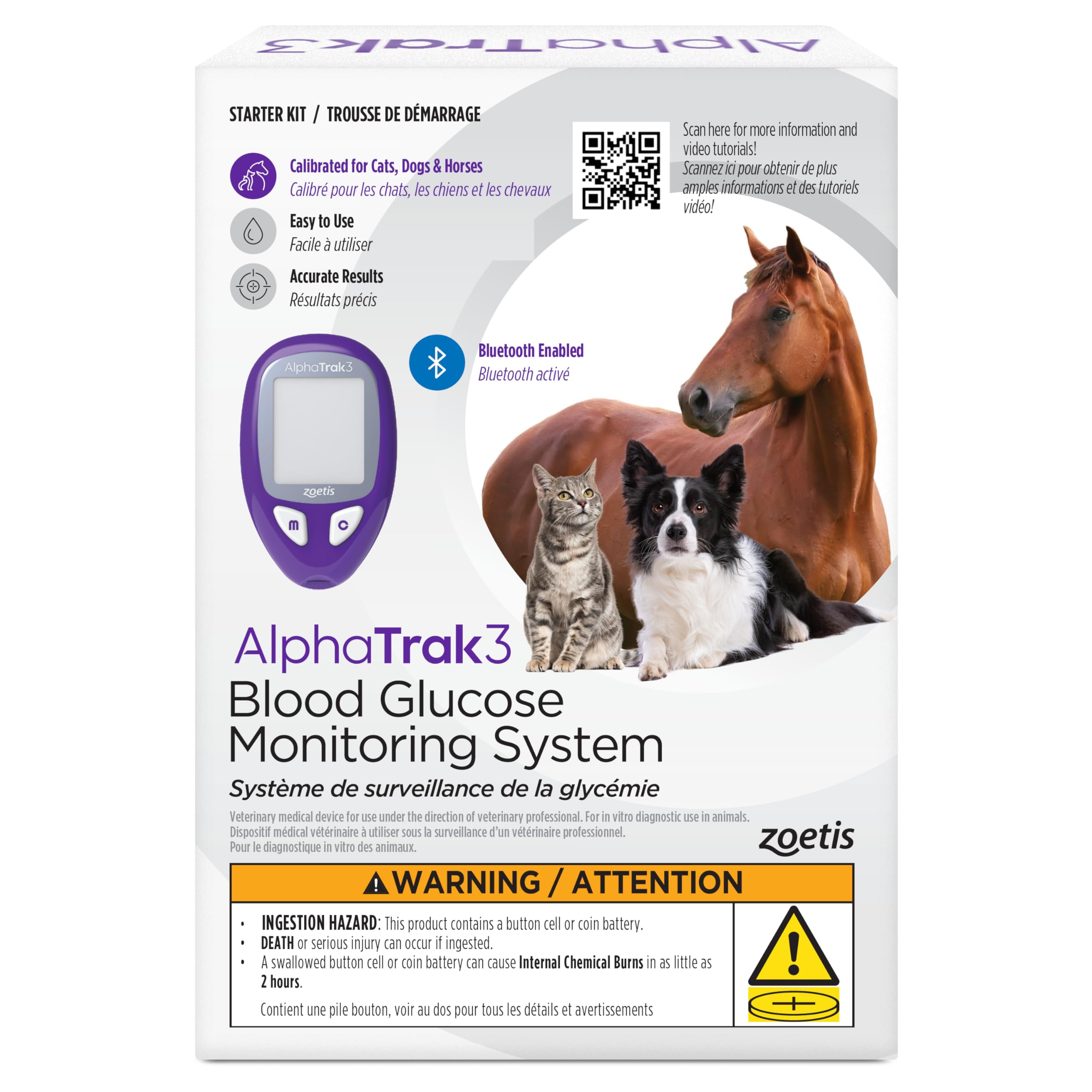
AlphaTrak 3 is the #1 veterinarian-recommended brand for a reason: its extended 20-750 mg/dL range catches the extreme lows and highs that budget meters miss, and its 0.3µL sample size matches the best in class. The kit includes 25 test strips, lancing device, control solution, and a carrying case, everything in a slim form factor that vets use in-clinic.
The main complaint across hundreds of user reviews is the cost per test strip — roughly per strip, which adds up fast when you’re doing 2-4 tests daily for a glucose curve. The meter also requires a specific one-time calibration per vial, and some users report 5-6 initial error codes before the strips stabilize, which wastes expensive consumables.
Additionally, the AlphaTrak mobile app has significant synchronization issues. Zoetis has acknowledged the problem, but as of recent user reports, hundreds of owners still find their data fails to save. If you want reliable digital logging, plan to manually record readings as a backup.
Why it’s great
- Vet gold standard for accuracy
- Wide 20-750 mg/dL detection range
- Proven in thousands of clinics
Good to know
- Strips are expensive per test
- App sync is unreliable
- Frequent initial error codes
4. KETO-MOJO GK+

The GK+ is FDA-cleared for human use, but many feline diabetes owners use it as a secondary tool because it measures both blood glucose and blood ketones from a single meter. This matters for cats because diabetic ketoacidosis is a life-threatening complication that requires immediate detection — and no other meter on this list offers dual reading.
The Bluetooth integration with the MyMojoHealth app automatically calculates your Glucose Ketone Index (GKI) and syncs with Apple Health and Carb Manager. Strips are individually foil-wrapped and autodetected by the meter, so there’s no coding. The lifetime warranty and US-based support are genuinely responsive.
However, this is a human meter, so readings need to be interpreted with the understanding that feline glucose dynamics differ. Some users report the meter reads 5-10 points off from their AlphaTrak, so use it for trend monitoring rather than absolute dosing decisions. The case also has a minor design flaw where the on/off button can get pressed accidentally during storage.
Why it’s great
- Dual glucose and ketone measurement
- Bluetooth auto-sync for charting trends
- Lifetime warranty and US support
Good to know
- Human calibrated, not feline-specific
- Case can power on meter accidentally
- Some unit-to-unit accuracy variance
5. Pet Control HQ Test Strips

These refill strips are specifically designed for the Pet Control HQ 2-code-chip meter, giving you 50 test strips plus 25 lancets in a bundle that undercuts the cost of buying strips individually. The 0.6µL sample size is standard for the Pet Control ecosystem, and the no-coding design means you simply insert and test — the meter auto-detects whether you’re using cat or dog calibration.
Owner feedback is overwhelmingly positive, with many noting the sturdy strip design avoids the flimsiness of cheaper alternatives. The strips don’t bend or flop when you’re trying to aim a squirming cat’s ear, which reduces failed tests. Some users report that their vet was initially skeptical but changed their opinion after cross-validating readings against an AlphaTrak.
The main limitation is that these only work with the Pet Control HQ meter. If you decide to switch to an AlphaTrak or PetTest system later, this inventory becomes useless. Also, the bundled lancets are basic — expect to replace them with a gentler option if your cat is needle-shy.
Why it’s great
- Cost-effective bundle of 50 strips + lancets
- No-code design for quick testing
- Sturdy strip body resists bending
Good to know
- Only compatible with Pet Control HQ meters
- Lancets are basic, not gentle
- Bulk vial opens repeatedly
6. PetTest Test Strips

PetTest’s individual foil wrapping is the standout feature here — each strip stays sterile and unaffected by humidity until you break the seal. For owners who live in humid climates or who don’t test daily, this dramatically reduces the number of strips that degrade before use. The 0.3µL sample size also matches the most cat-friendly meters on the market.
User reviews consistently mention that PetTest strips require much less blood than the AlpaTrack strips they were previously using, and that the strips work reliably with the PetTest Classic meter. The support community, particularly Facebook groups for diabetic dogs and cats, often recommends PetTest as a more affordable alternative that doesn’t sacrifice reading consistency.
These strips do not include a lancing device or lancets — they are purely a refill pack. You’ll need to already own the PetTest meter or the Classic Genteel Kit. Also, the foil wrapping creates slightly more waste plastic compared to a vial, though most owners find the sterility trade-off worth it.
Why it’s great
- Each strip individually foil sealed
- 0.3µL sample size reduces re-pokes
- Strong community recommendation
Good to know
- Requires PetTest meter to use
- More packaging waste than vials
- No lancets included
7. IMPet PGB-Q1
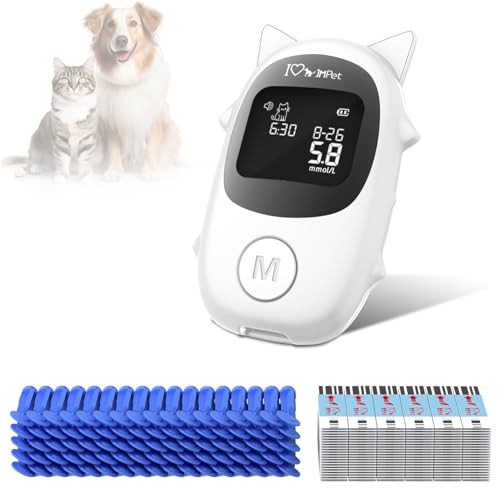
The IMPet PGB-Q1 punches well above its price tier with ISO 15197:2015 certification and over 12,000 clinical validations backing a 95.6% accuracy rate against professional veterinary equipment. The 5-second result time is among the fastest on this list, and the ultra-fine lancets require only a micro sample — about 1/50th of a water droplet, according to the manufacturer’s testing.
User reports highlight that the security seal on the packaging keeps the device pristine, and the one-touch operation genuinely requires no coding or training. The storage bag is functional for home use, though not as robust as the hard cases that come with premium kits. The 50 lancets included are 28-gauge, which is standard but not as gentle as a Genteel system.
Be aware that this is not a dedicated feline-specific meter — it uses the same algorithm for both dogs and cats without separate code chips. For most monitoring purposes, this is acceptable, but if your cat has borderline readings that directly inform insulin dosing, you may want something with species-specific calibration. The strip vial also lacks the humidity protection of foil-wrapped options.
Why it’s great
- ISO 15197:2015 certified accuracy
- 5-second results are fastest in class
- Includes 50 strips and 50 lancets
Good to know
- No separate feline code chip
- Basic lancing device included
- Strip vial opens repeatedly
FAQ
What part of the cat should I prick for a blood sample?
Can I use a human glucose meter on my cat?
How often should I test my diabetic cat’s blood glucose?
Final Thoughts: The Verdict
For most users, the blood glucose meter for cats winner is the Pet Control HQ Premium Kit because it balances a complete starter bundle, species-calibrated code chips, and a proven track record among owners. If you want the gentlest possible testing experience that minimizes your cat’s stress, grab the PetTest Classic Genteel Kit. And for vet-level accuracy with the widest detection range for extreme readings, nothing beats the AlphaTrak 3.