
Nothing matches the quiet thrill of a living thing deciding to unfurl a flower in your home. But the gap between a healthy green plant and one that reliably blooms is wider than most beginners expect — and most live plants sold as “flowering” simply arrive with their factory-set floral display, then never repeat the performance. The real test is whether the variety, light tolerance, and root maturity align to push out a second or third flush without you coaxing.
I’m Min — the co-founder and writer behind Gadgets Feed. I’ve spent hundreds of hours cross-referencing soil composition, light requirements, and bloom-cycle data from nursery specs and verified buyer reports to isolate which flowering houseplants actually deliver repeat color in the average home.
I sorted through dozens of live plant SKUs to find the few with proven bloom persistence and pest-free roots so you can confidently pick the best blooming houseplants for your exact light conditions and care schedule.
How To Choose The Best Blooming Houseplants
Indoor flowering plants live or die by three variables: light intensity at the leaf surface, watering consistency at the root zone, and whether the variety is genetically programmed to rebloom under typical indoor photoperiods. Many houseplants sold as “flowering” are actually greenhouse-forced annuals that will never perform again without professional grow lights. The selection below focuses on proven repeat bloomers that match real home conditions.
Match the Light, Not the Label
A “full sun” succulent like Euphorbia will drop buds and stretch within weeks on a north-facing windowsill. Peace Lily and Maranta, however, bloom reliably in medium indirect light because their native understory environment matches typical living-room lumens. Check the plant’s natural habitat before assuming any plant labeled “flowering” will work in your specific window orientation.
Root-to-Canopy Ratio Matters More Than Pot Size
Blooms are an energy-expensive process. A plant that arrives rootbound can sometimes bloom out of stress, but it will exhaust itself and stop. Look for a visible 1–2 inches of healthy root tips at the pot drainage holes — anything less indicates the plant may have been recently divided and has no energy reserve for flowering. African Violets and Kalanchoe packed in 4-inch pots rarely rebloom if the roots haven’t filled the container.
Expect a Dormancy Phase
No flowering houseplant blooms year-round without rest. Peace Lily typically rests 6–8 weeks between flushes. African Violet cycles through 4–6 weeks of active blooms followed by a 3-week rest. If a plant is marketed with “blooms year round” in the specs, it means the species can flower in any season under ideal conditions — not that the plant you receive will produce flowers continuously without a break. Factor the rest period into your expectations to avoid blaming the plant for normal behavior.
Quick Comparison
On smaller screens, swipe sideways to see the full table.
| Model | Category | Best For | Key Spec | Amazon |
|---|---|---|---|---|
| Peace Lily (Costa Farms) | Premium | Low-light rooms & air purification | 14–24 in. tall, self-watering pot | Amazon |
| 3-Pack African Violets (La Costa) | Premium | Compact desktop color year-round | Three 4-in pots, assorted colors | Amazon |
| 6 African Violets (JMBAMBOO) | Premium | Maximum bloom variety & volume | Six plants, growers-choice colors | Amazon |
| 3 African Violets (JMBAMBOO) | Mid-Range | Novelty collector violets | Three plants, partial shade | Amazon |
| Euphorbia Crown of Thorns | Mid-Range | Full-sun windowsills & patios | Pink blooms, drought tolerant | Amazon |
| Lemon Lime Maranta Prayer Plant | Mid-Range | Pet-safe foliage & leaf movement | 12–16 in., 4-in nursery pot | Amazon |
| Florist Kalanchoe (3-Pack) | Mid-Range | Succulent lovers & low-water setups | Three 3.5-in pots, multicolor blooms | Amazon |
In‑Depth Reviews
1. Costa Farms Peace Lily Live Plant
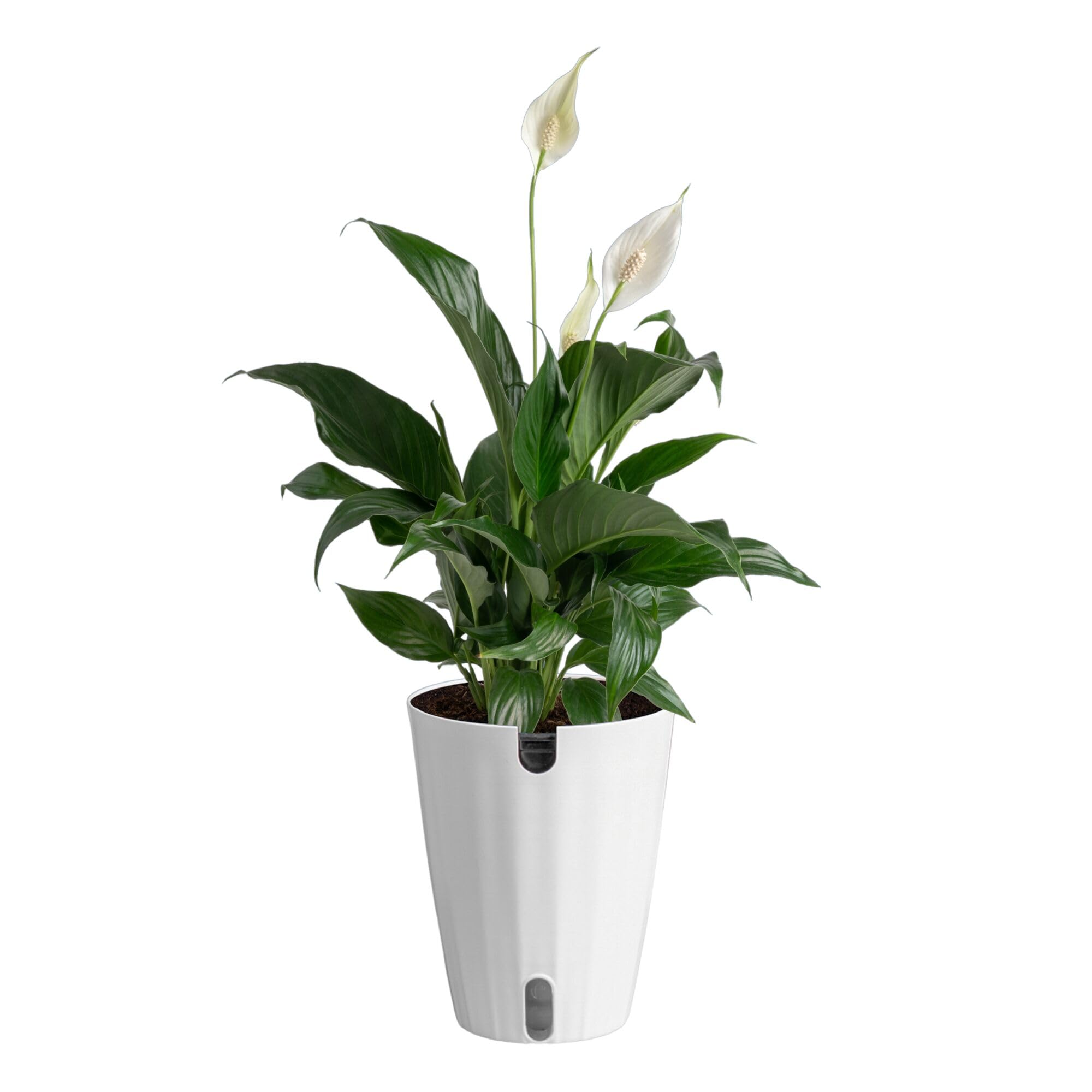
The Peace Lily from Costa Farms arrives between 14 and 24 inches tall in a decorative self-watering pot — a setup that eliminates the most common cause of bloom failure (inconsistent moisture). The plant naturally tolerates low light, making it one of the few flowering houseplants that will actually rebloom on a north-facing desk or dim living room corner. Multiple verified buyers reported the plant arrived with 2–3 white spathes already open and deep green leaves free of yellowing.
What separates this from cheaper big-box Peace Lilies is the root maturity. Buyer reviews consistently note that the rootball was dense but not circling, meaning the plant has enough stored energy to push a second flush of blooms within 6–8 weeks. The included self-watering pot reduces watering frequency to roughly once every 10 days, which prevents the root rot that kills most Peace Lilies within the first three months of ownership.
One caveat: the decorative pot is plastic and can crack during shipping if handled roughly. A handful of buyers reported arriving to find the pot shattered. The plant itself survived in every case because Costa Farms wraps the root zone separately, but the gift-ready presentation was ruined. If this is a gift, budget for a spare cachepot.
Why it’s great
- Self-watering pot prevents moisture stress that halts blooming
- Proven repeat bloomer even in low indirect light
- Large, healthy root system supports continuous flower cycles
Good to know
- Decorative pot is plastic and may crack in transit
- Some buyers received rootbound plants needing immediate repotting
2. 3-Pack African Violets (La Costa Plants)
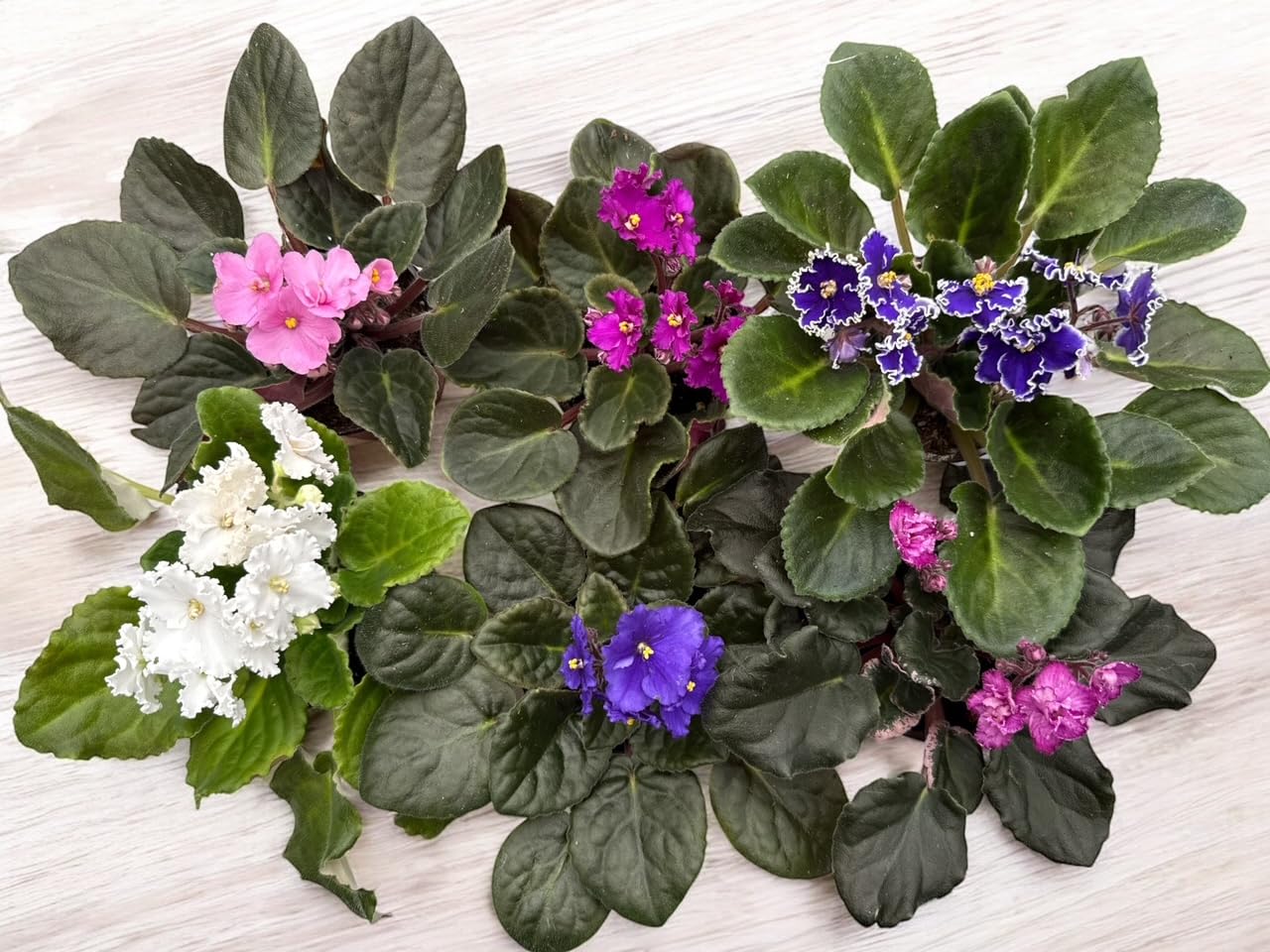
African Violets remain the most reliably repeat-blooming houseplant for the average home, and this 3-pack from La Costa delivers three distinct colors in separate 4-inch pots. The key spec here is the pot size: 4-inch containers allow the root system to reach maturity before blooming, which means the flowers last longer and the plant reblooms within 4–6 weeks instead of the 8–12 week cycle typical of smaller 2-inch starter violets.
Buyer reports highlight the exceptional packaging — double-wrapped with thermal insulation, and the plants arrived in active bloom with buds still forming. Unlike many generic violet suppliers that ship plants in a single season of forced color, La Costa’s stock is grown under standard home lighting conditions, so the plants adapt to your windowsill without dropping leaves. The 3-pack covers a range of pink, purple, and white hues depending on seasonal availability.
The trade-off is that the “assorted colors” are not selectable. If you need specific shades for a design scheme, this pack is a gamble. Also, the pots are standard nursery plastic with no cachepot — budget an additional –5 per pot for decorative covers if presentation matters on day one.
Why it’s great
- 4-inch pots allow mature root systems for fast rebloom
- Arrives in active bloom with buds ready to open
- Packed with thermal protection for safe shipping
Good to know
- Colors are random — cannot choose specific shades
- Plain nursery pots require separate decorative covers
3. Six African Violet Plants (JMBAMBOO)

If your goal is maximum bloom density across a shelf or windowsill, this six-plant bundle from JMBAMBOO offers the best per-plant value among premium violet options. Each plant ships in a 4-inch pot with growers-choice colors that typically span three to four distinct shades per order. Verified buyers consistently describe the plants as “large, blooming, and healthier than garden center stock” — a direct result of the 4-inch root zone capacity that supports continuous flower production rather than the one-time forced blooms of smaller starts.
User reviews from long-time violet growers note that these plants rebloom reliably under standard fluorescent or LED desk lamps, not just specialized grow lights. The six-plant bundle also gives you redundancy: if one variety doesn’t match your home’s microclimate, the other five still produce. Multiple reviews mention that even with 5-day shipping through extreme weather, only occasional leaf creasing occurred — the buds and blooming flowers remained intact.
The honesty about color selection is appreciated: JMBAMBOO states clearly that colors vary by season, and some buyers report receiving one smaller plant among the six. Also, these are not named hybrid varieties — you won’t get a ‘Ness’ Satin Rose’ or other show-grade violet, just healthy blooming plants. If you need named cultivars, go to a specialty hybridizer. For reliable, voluminous home color, this bundle delivers.
Why it’s great
- Six mature plants in 4-inch pots for maximum bloom coverage
- Reliable rebloom under standard home lighting
- Excellent packaging survives multi-day shipping with minimal damage
Good to know
- Colors are growers choice — cannot select specific shades
- One plant may be slightly smaller than the other five
4. Three African Violet Plants (JMBAMBOO)

This three-plant set from JMBAMBOO targets buyers who want novelty varieties rather than the standard grocery-store violet colors. The plants are labeled “growers choice” seasonal novelty selections, meaning you get rare color combinations — deep magenta, bi-color ruffles, or miniatures — that aren’t typically found in big-box garden centers. The plants ship in bloom or with well-developed buds, and the 4-inch pot size allows for natural rebloom within 4–6 weeks under bright indirect light.
Buyer feedback emphasizes the double-wrapped packaging that survives USPS handling: a cardboard sleeve prevents leaf breakage, and thermal insulation protects against temperature swings. One experienced violet grower noted that while the leaves weren’t perfectly flat (competition-grade), the plants were “beautiful and cheerful in the window” and bloomed continuously. The novelty colors add genuine variety to a collection without the premium markup of named hybrid suppliers.
Be aware that “novelty” also means unpredictable — you might receive a miniature, a trailer, or a standard variety you already own. The care instructions recommend sandy soil with partial shade, which is specific to the succulent-like root structure of novelty violets. If you keep them in standard potting mix, the roots can rot within weeks. Use a violet-specific mix with 50% perlite or sand for best results.
Why it’s great
- Novelty colors and forms not found in standard violet packs
- Blooms upon arrival and reblooms within 4–6 weeks
- Excellent packaging prevents shipping damage
Good to know
- Novelty varieties require specific sandy soil, not standard potting mix
- Color and form are completely random — no selection possible
5. Euphorbia Crown of Thorns (Plants for Pets)

Euphorbia milii, commonly called Crown of Thorns, is a succulent flowering plant that demands full sun and rewards neglect with near-continuous pink blooms. This specimen from Plants for Pets arrives at approximately 4 inches tall in a 3.5-inch pot, with the signature thorny stems and clusters of bright pink bracts already open. The drought tolerance is genuine — the fleshy stems store enough water to survive 2–3 weeks without watering, making this among the most forgiving blooming houseplants for forgetful owners.
Verified buyer reports consistently describe the plant as “larger than expected” and “full of blooms” upon arrival. The Euphorbia’s natural growth habit means it will push new flowers as long as it receives at least 6 hours of direct sun — a full south or west windowsill is mandatory. Unlike Peace Lily or African Violet, this plant will not rebloom in medium or low light. However, in the right conditions, the bloom cycle repeats continuously from spring through fall, with only a brief winter rest.
The primary downside is the sap: Euphorbia latex is a skin irritant. Pruning or repotting requires gloves and eye protection. Also, the plant arrives with pink blooms as standard, but no color options exist — if you want orange, red, or yellow varieties, you’ll need to source from a specialty succulent nursery. The 4-inch height upon arrival also means it will take several months to reach a visually substantial size.
Why it’s great
- Extreme drought tolerance — survives 2–3 weeks without water
- Continuous pink blooms spring through fall in full sun
- Larger and healthier than typical big-box succulent stock
Good to know
- Sap is a skin irritant — gloves required for handling
- Only pink blooms available; no color variety
- Requires full direct sun — will not rebloom in low light
6. Lemon Lime Maranta Prayer Plant (Hopewind)

The Lemon Lime Maranta Prayer Plant is not a heavy bloomer like African Violet or Peace Lily — its primary appeal is the dramatic leaf movement (praying hands at night) and the striking yellow-on-green foliage patterns. However, it does produce small white or pale purple flowers in spring when grown in consistently humid conditions above 50%. This is the best choice on this list for pet owners: the ASPCA lists Maranta as non-toxic to cats and dogs, unlike Peace Lily (which causes oral irritation) or Euphorbia (toxic sap).
This Hopewind specimen arrives 12–16 inches tall in a 4-inch nursery pot, with well-developed roots that fill the container. Verified buyers report the plant is exceptionally healthy, with multiple describing it as “the healthiest plant I have ever ordered online.” The care requirements are straightforward: bright indirect light (east or north window), water when the top half of the soil is dry, and occasional misting. The prayer plant will bloom only if humidity stays above 50% — a bathroom or kitchen counter with a pebble tray will trigger flowers more reliably than a dry living room.
The 4-inch pot is plain nursery plastic — no decorative cover included. Also, the maranta’s flowering is sporadic compared to dedicated bloomers; if your primary goal is continuous color, choose Peace Lily or African Violet instead. The leaf movement and pet safety are the main draws here, with occasional flowers as a bonus rather than the headline feature.
Why it’s great
- ASPCA-certified non-toxic — safe for cats and dogs
- Dramatic leaf movement adds living art to any room
- Exceptionally healthy root system on arrival
Good to know
- Flowers are small and sporadic — not a primary bloomer
- Requires humidity above 50% for any blooms at all
- Plain nursery pot with no decorative cachepot included
7. Florist Kalanchoe 3-Pack (Plants for Pets)
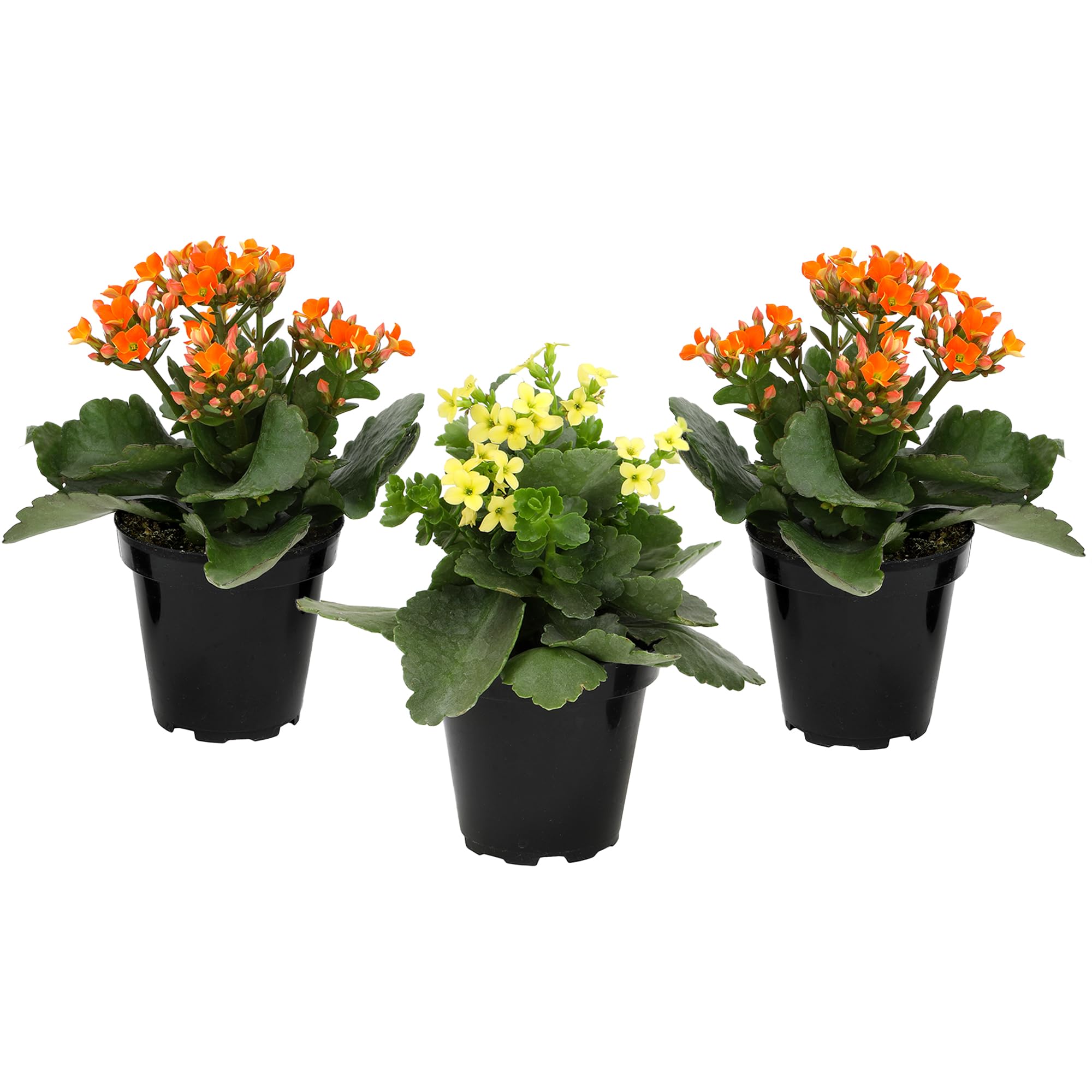
Kalanchoe blossfeldiana is the succulent world’s answer to African Violet — it blooms for 6–8 weeks straight, rests, then reblooms under the right light conditions. This 3-pack from Plants for Pets delivers three separate 3.5-inch pots with orange, red, and yellow blooms, giving you immediate multicolor impact on a single shelf. The plants are drought-tolerant like the Euphorbia, but Kalanchoe is less demanding of full sun — bright indirect light (east or west window) is sufficient for reblooming.
Verified buyers consistently praise the health of these plants, noting they survived winter shipping with heat packs and arrived small but well-rooted. The key spec here is the extended bloom time advertised in the product details: Kalanchoe is one of the few species that genuinely blooms for months in a single cycle, then pushes new buds after a 4-week rest if you trim the spent flower stalks. Multiple reviewers reported the plants were still blooming a month after arrival, with new buds forming as the old flowers faded.
The downsides are size and longevity. The 3.5-inch pots mean each plant is only about 7 inches tall upon arrival — substantially smaller than the Peace Lily or Maranta. Also, Kalanchoe is a short-day plant: to trigger rebloom, it needs 14 hours of complete darkness per night for 6 weeks. A living room with evening lights on will suppress blooming unless you move the plant to a dark closet at night. If you can manage that dark cycle, this 3-pack offers the best color-per-dollar ratio on the list.
Why it’s great
- Three distinct bloom colors in one purchase for immediate impact
- Drought tolerant and forgiving of irregular watering
- Extended bloom cycles — flowers last 6–8 weeks per flush
Good to know
- Small pots mean plants are only 7 inches tall at arrival
- Requires 14 hours of nightly darkness to trigger reblooming
- Colors are random — cannot select specific shades
FAQ
Will a Peace Lily rebloom in a low-light office with no windows?
How do I trigger rebloom on African Violets after the initial flowers fade?
Can Kalanchoe bloom year-round indoors or is it seasonal?
Which blooming houseplant on this list is safest for cats and dogs?
Final Thoughts: The Verdict
For most users, the best blooming houseplants winner is the Costa Farms Peace Lily because it reblooms reliably in the low light conditions of the average home, the self-watering pot eliminates the most common bloom-killing mistake, and the air-purifying foliage is a bonus that justifies the small premium. If you want maximum color density for a shelf or windowsill, grab the Six African Violet Plants from JMBAMBOO — the six 4-inch pots give you months of continuous bloom rotation with minimal care. And for pet owners who need non-toxic greenery with occasional flowers, nothing beats the Lemon Lime Maranta Prayer Plant — the leaf movement provides daily entertainment even when the blooms are between cycles.