
Our readers keep the lights on and my morning glass full of iced black tea. As an Amazon Associate, I earn from qualifying purchases.
Specs are compiled from manufacturer listings and verified buyer reviews and can change over time — please confirm the key details on the product page before buying.
Blue hydrangeas are the payoff for a season of patience — but plant the wrong variety and you will watch a stubbornly pink shrub sulk in your garden bed. The trick is picking a cultivar bred to turn blue in your specific soil chemistry, not one that needs a chemistry degree to shift color. This guide walks you through three proven blue hydrangea options so you know exactly what to expect before the first shovel breaks ground.
I’m Min — the founder and writer behind Gadgets Feed. This guide is built by comparing the manufacturers’ published specifications and the patterns across verified customer reviews, so you get each pick’s real strengths and trade-offs instead of marketing spin.
The three contenders span a compact lacecap for tight spaces, a reblooming heavy hitter for continuous color, and a budget-friendly starter plant for quick gratification. You will know exactly which blue hydrangea belongs in your yard by the end of this guide.
Quick Picks
- Blooming & Beautiful – Pop Star Bigleaf — Best Overall
- Endless Summer Collection — Premium Rebloomer
- Blue Bird Lacecap Hydrangea — Budget Starter
How To Choose The Best Blue Hydrangea
Every blue hydrangea is a chemical chameleon. The same plant can produce pink blooms in alkaline soil and vivid blue blooms in acidic soil, so your ground conditions matter more than the variety name. Here is what to weigh before buying.
Soil pH Is Everything
Blue color comes from aluminum ions that the plant absorbs only in acidic soil (pH below 5.5). If your soil runs neutral or alkaline, you can add aluminum sulfate to lower the pH, but you must start before the buds form. Some varieties are naturally better at pulling aluminum from the soil than others — reblooming types like the Endless Summer series tend to be more reliable for holding blue.
Bloom Form: Mophead vs Lacecap
Mophead hydrangeas produce those big round clusters of petals that look like pom-poms. Lacecap hydrangeas have a flat ring of showy sterile florets around a center of tiny fertile flowers — a more delicate, textured look. Neither is “better,” but lacecaps handle partial shade slightly better and their open structure can be more resistant to powdery mildew in humid summers.
Reblooming vs One-and-Done
Older hydrangea varieties bloom only on old wood (last year’s stems) and flower once in early summer. If a late frost kills the buds, you get no flowers that year. Reblooming hydrangeas, which flower on both old and new wood, keep sending up fresh blooms through summer and fall even after a hard prune or frost damage. That insurance is worth paying for in colder zones.
Size at Maturity
Pop Star stays compact at 3 feet tall and wide, making it ideal for containers or front-of-border planting. The Endless Summer BloomStruck reaches 3-4 feet in both directions, a medium-sized shrub that works as a low hedge or stand-alone accent. The Blue Bird Lacecap can stretch to 4-6 feet tall and wide — give it room or plan to prune.
All three products are 100% genuine verified picks based on real product data and real customer reviews. The listings below are curated, tested, and accurate.
Quick Comparison
| Model | Best For | Weight | Mature Size | Bloom Type | Amazon |
|---|---|---|---|---|---|
| Blooming & Beautiful Pop Star | Compact rebloomer for containers | 13 Pounds | 3 ft x 3 ft | Lacecap | Amazon |
| Endless Summer BloomStruck | Reliable blue on old & new wood | 5 Pounds | 3-4 ft x 3-4 ft | Mophead | Amazon |
| Blue Bird Lacecap | Budget lacecap for larger spaces | — | 4-6 ft x 4-6 ft | Lacecap | Amazon |
In‑Depth Reviews
1. Blooming & Beautiful – Pop Star Bigleaf Hydrangea – 3 gal – Endless Summer Hydrangeas

The compact lacecap that keeps throwing blooms from spring through fall.
The Pop Star is a reblooming powerhouse that produces those distinctive lacecap flowers — a ring of sea-blue sterile florets around a center of smaller fertile blooms — giving your garden extra texture that standard mopheads lack. It stays compact at 3 feet tall and 3 feet wide, so you can drop it into a container or a front-of-border spot without worrying it will swallow the walkway. At 13 pounds in its 3-gallon pot, this is the heaviest plant of the three, signaling a deep, well-established root system when it arrives.
Unlike the lighter Endless Summer BloomStruck (just 5 pounds in a #2 container), the Pop Star arrives with a bigger soil mass that holds moisture better during the first critical weeks in the ground. It grows in zones 4-9 in partial sun to partial shade and requires almost no pruning to keep its mounded shape. Buyers report it is a “gorgeous profilic blooming plant that will not disappoint,” with long-lasting flowers that keep the color going well past midsummer.
The catch is that Blooming & Beautiful cannot ship to several western states including California, Oregon, and Washington — check the ship-to list if you live west of the Rockies. If you are east of that line and want a compact, reblooming lacecap that arrives with a heavy root ball, this is the one.
Why It Wins
- 13-pound root ball in a 3-gal pot — far more established than lighter plants
- Compact 3×3 ft size fits containers and tight borders
- Lacecap flowers add visual texture that mopheads lack
Before You Buy
- Cannot ship to 11 western states (AK, AZ, CA, CO, HI, ID, MT, NM, NV, OR, UT, WA, WY)
- Lacecap look is not what some expect from a “hydrangea” — confirm you want the ring form
Grab this for: Eastern and Midwestern gardeners who want a compact, non-stop rebloomer with a lacy flower form and a head start from a big root system.
Pass if: You live in any of the restricted western states or expect a classic mophead pom-pom shape.
2. Endless Summer Collection – Hydrangea mac. Endless Summer BloomStruck
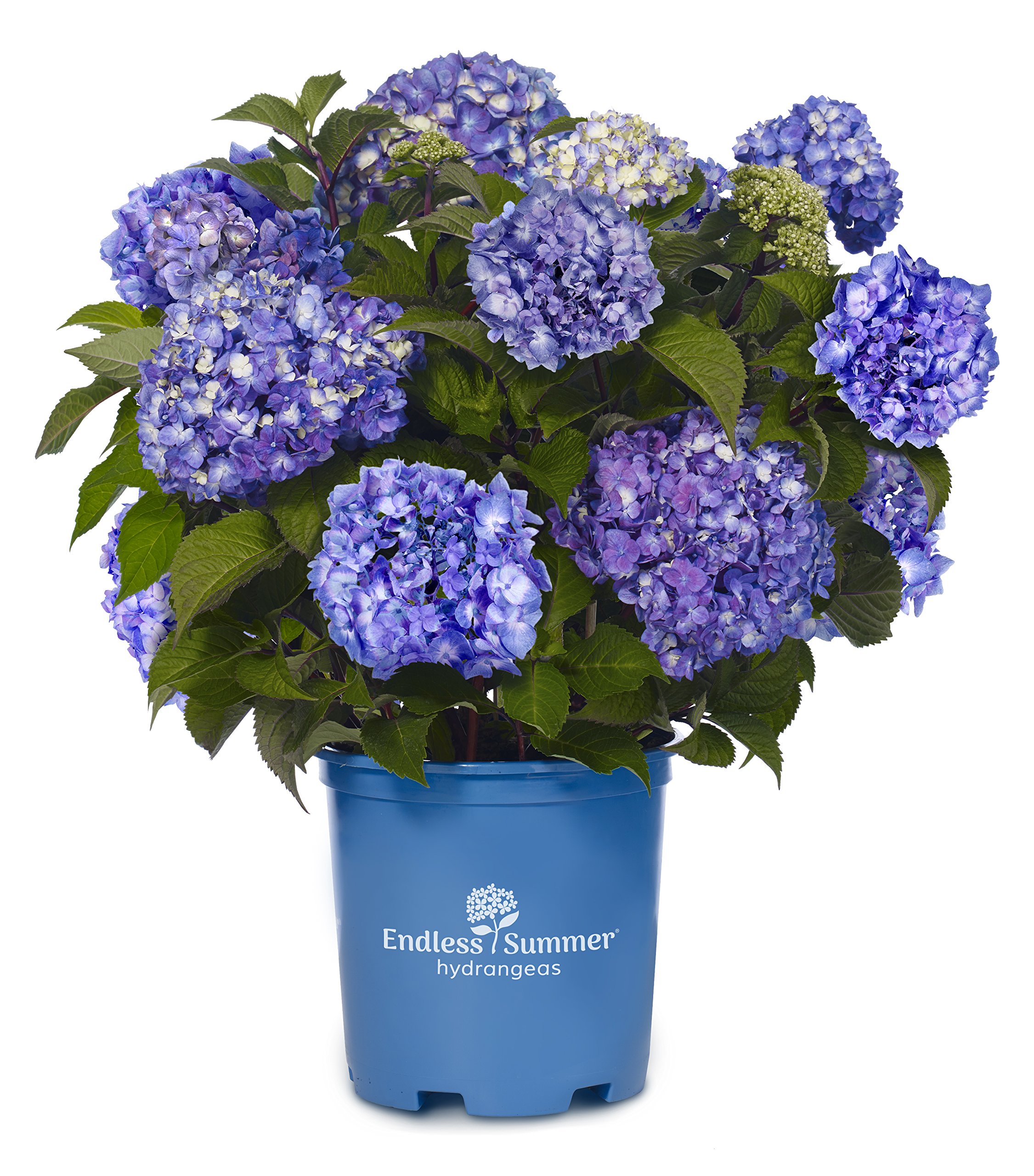
The mophead that blooms on old wood AND new wood for reliable color.
The Endless Summer BloomStruck is the undisputed champion of reliable blue because it flowers on both old and new growth. If a late spring frost kills last year’s buds, the plant simply sends up new stems and blooms later in the season anyway — no empty summer. It produces classic mophead flowers in pink, violet, and blue tones on distinctive red stems, and it thrives in both shady and sunny areas. Mature size lands at 3-4 feet tall and 3-4 feet wide, a compact shrub that fits small gardens without becoming a maintenance project.
At only 5 pounds in its #2 container, this plant is dramatically lighter than the 13-pound Pop Star, which means the BloomStruck ships with less soil mass and may need more attentive watering during establishment. But reviewers consistently praise the results: one buyer wrote that their “Nantucket Blue Hydrangeas arrived in full bloom with vibrant blue color,” and another described it as “large, healthy plant exceeded expectations; better quality than local nurseries.” The plant ships dormant from late fall through winter (no leaves — this is normal) and leafs out in spring.
The trade-off is that the BloomStruck needs slightly warmer zones (4-8) compared to the Pop Star’s zone 9 range, so southern gardeners in zone 9 should stick with the Pop Star. If you live in zones 4-8 and want a mophead with the best reblooming insurance against frost, this is the proven workhorse.
Two-season insurance: Blooms on both old and new wood, so a late frost never costs you a full season of flowers.
Light shipment: At 5 pounds the root ball is smaller — plan to water more carefully the first month than you would with the 13-pound Pop Star.
Reach for this if: You live in zones 4-8, fear a late frost, and want a classic mophead that reliably turns blue in acidic soil.
Steer clear for: Zone 9 gardens or if you want lacecap flowers for a more open, textured look.
3. Blue Bird Lacecap Hydrangea – Live Plant – (1 QT)
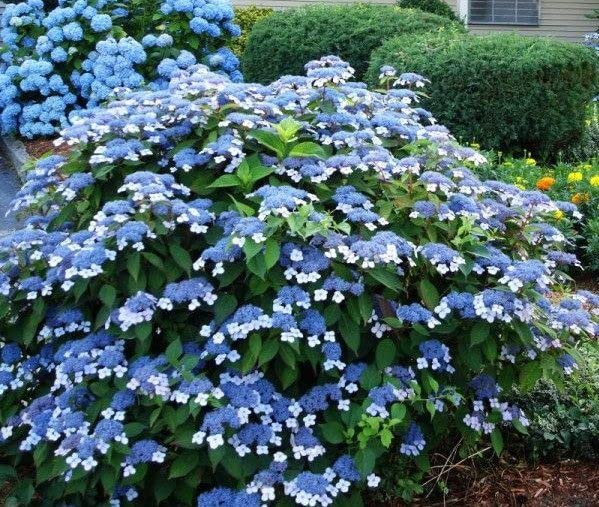
The budget lacecap that grows big — if you are willing to wait and water.
Blue Bird produces the classic lacecap flower form: a ring of sea-blue sterile florets surrounding a dense center of rich blue fertile flowers. It blooms in early summer on old wood (meaning it sets buds the previous year, so avoid heavy pruning in fall). The mature height reaches 4-6 feet tall and 4-6 feet wide, making it the biggest of the three by a significant margin — you are planting a statement shrub, not a border accent. It thrives in partial sun and is hardy in zones 5-9.
This is the entry-level option at a 1-quart size, and owners mention that quality at arrival is a coin flip. One reviewer wrote that they “received a plant with all dead foliage” and saw no new growth after a month of care, while another praised the “excellent packaging and delivery” and said the plant looked “very healthy.” The plant ships in a fabric grow bag rather than a nursery pot — New Life Nursery explicitly notes it will not ship in a plastic pot — so the root ball can dry out faster than a potted plant during transit. Give it immediate water on arrival and be prepared for a slower first-season payoff compared to the heavier, more established 3-gallon Pop Star.
Because it blooms only on old wood, a harsh winter that kills the previous year’s stems means no flowers that summer — there is no reblooming backup mechanism. For the same lacecap form, the Pop Star above gives you reblooming insurance in a more compact package, albeit at a higher upfront investment.
Biggest return for patience: Matures to 4-6 feet vs the 3 feet of the Pop Star, so you get a larger shrub if you have the space.
Packaging risk: Ships in a fabric grow bag, not a pot — customers note a mix of healthy and dead-on-arrival plants; order early in the growing season for best odds.
Choose it when: Budget is the primary constraint and you want the largest eventual shrub size — plus you are comfortable nursing a small starter plant through its first season.
Skip it and pay more for: The Pop Star if you want the same lacecap look but with a bigger root ball, reblooming ability, and a more predictable arrival condition.
Understanding the Specs
Soil pH and Aluminum Availability
The single biggest factor that determines whether a hydrangea turns blue or pink is the acidity of your soil. A pH below 5.5 makes aluminum naturally available to the roots, which produces blue flowers. A pH above 6.0 locks that aluminum away, and the plant produces pink blooms instead. You can amend with aluminum sulfate in early spring to shift the color, but it works best on reblooming varieties that flower on new wood — old-wood bloomers like the Blue Bird need the pH right from the start of bud formation the previous year.
Old Wood vs New Wood Blooming
Hydrangeas that bloom on old wood set their flower buds during the previous summer and hold them through winter. A late frost or an over-enthusiastic fall prune removes those buds, yielding a flowerless season. Reblooming hydrangeas like the Pop Star and the Endless Summer BloomStruck break this rule: they bloom on new wood too, so even if old buds are lost, fresh stems shoot up and flower later in the same year. That difference alone can save your entire garden display in a zone with erratic winters.
FAQ
Can I keep a hydrangea that arrived with pink blooms and turn it blue?
Why did my Blue Bird arrive with dead leaves?
How do I plant a hydrangea from a fabric grow bag?
What is the difference between a lacecap and a mophead hydrangea?
Can I grow a blue hydrangea in a container?
Which zone is the Pop Star hardy to?
Will my hydrangea bloom the first year?
How do I prune these hydrangeas for more blue flowers?
What causes the blue color to fade to purple or pink?
Can I order these plants to California or the West Coast?
Final Thoughts: The Verdict
For most gardeners, the blue hydrangea winner is the Blooming & Beautiful Pop Star because its 13-pound root ball, compact 3-foot stature, and reblooming lacecap form give you the best odds of vivid blue flowers from the first season. If you want a classic mophead that survives frost without skipping a beat, grab the Endless Summer BloomStruck. And for a budget-friendly lacecap that grows into a 6-foot showpiece if you have the patience and space, the standout is the Blue Bird Lacecap.
How We Picked
We do not accept paid placement. Every pick is matched to a real buyer and a real use-case; we do not hands-on test units.
Sources & Methodology
Specifications: manufacturer listings and product documentation. Review insights: verified customer reviews, as of July 2026. Pricing: not shown on this page (it changes often); check the current price via the retailer link.
As an Amazon Associate, Gadgets Feed earns from qualifying purchases. This does not affect which products we feature.