
Our readers keep the lights on and my morning glass full of iced black tea. As an Amazon Associate, I earn from qualifying purchases.
Specs are compiled from manufacturer listings and verified buyer reviews and can change over time — please confirm the key details on the product page before buying.
Finding a blueberry bush that doesn’t sulk through your Zone 8 summers or skip fruiting after a mild winter can feel like a guessing game. The chill-hour lottery and heat tolerance separate the duds from the dependable producers, and this guide skips straight to the varieties backed by real buyer experience and published specs.
I’m Min — the founder and writer behind Gadgets Feed. This guide is built by comparing the manufacturers’ published specifications and the patterns across verified customer reviews, so you get each pick’s real strengths and trade-offs instead of marketing spin.
You get reliable harvests in hot Southern summers when you pick blueberries for zone 8 that need few chill hours (hours below 45°F to set fruit buds) and have heat-tolerant roots. The best ones also have a solid record in Southern gardens, if you want a single bush for a patio pot or a multi-pack for a full hedgerow.
Our Picks at a Glance

How To Choose The Best Blueberries For Zone 8
Zone 8 is a balance for blueberries, but you need a variety that gets enough winter chill (hours below 45°F) to set fruit buds, yet handles long, hot summers without wilting or dropping leaves.
Chill Hours — The Single Number That Determines Your Harvest
Blueberries need a certain number of cold hours to break dormancy and flower properly in spring. Zone 8 typically delivers between 400 and 800 chill hours per year. If you pick a variety that needs 1,000+ hours, you’ll get lush green growth but few to no berries. Stick with low-chill rabbiteye (300-500 hours) or Southern highbush (200-500 hours) types.
Rabbiteye vs. Southern Highbush — Which Grows Best in Your Dirt
Rabbiteye blueberries (Vaccinium virgatum) are the Zone 8 workhorses — they tolerate heat, drought, and a wider range of soil pH, and they reach up to 15 feet tall if unpruned. Southern highbush (Vaccinium corymbosum hybrids) stay more compact (2-6 feet), ripen earlier, and often produce larger berries, but they demand more precise soil acidity and consistent moisture. Your choice depends on space and how much soil-tending you want to do.
Quick Comparison
| Model | Best For | Mature Height | Chill Hours | Plants Per Order | Amazon |
|---|---|---|---|---|---|
| Bushel and Berry Blueberry Glaze★ Best Overall | Container patios & beginners | 3 Feet | 400-500 | 1 | Amazon |
| Perfect Plants 3 Pack RabbiteyeAlso Great | Heavy harvest in tight space | 15 Feet | 300-500 | 3 | Amazon |
| Perfect Plants Pink Lemonade | Unique pink berries & show | 6 Feet | 400-500 | 1 | Amazon |
| Live O’Neal Southern Highbush 4-Pack | Early-season harvesters | 4-6 Feet | 400-500 | 4 | Amazon |
| Sweetcrisp 4-Pack by Hello Organics | Budget bulk planting | — | 200-250 | 4 | Amazon |
In‑Depth Reviews
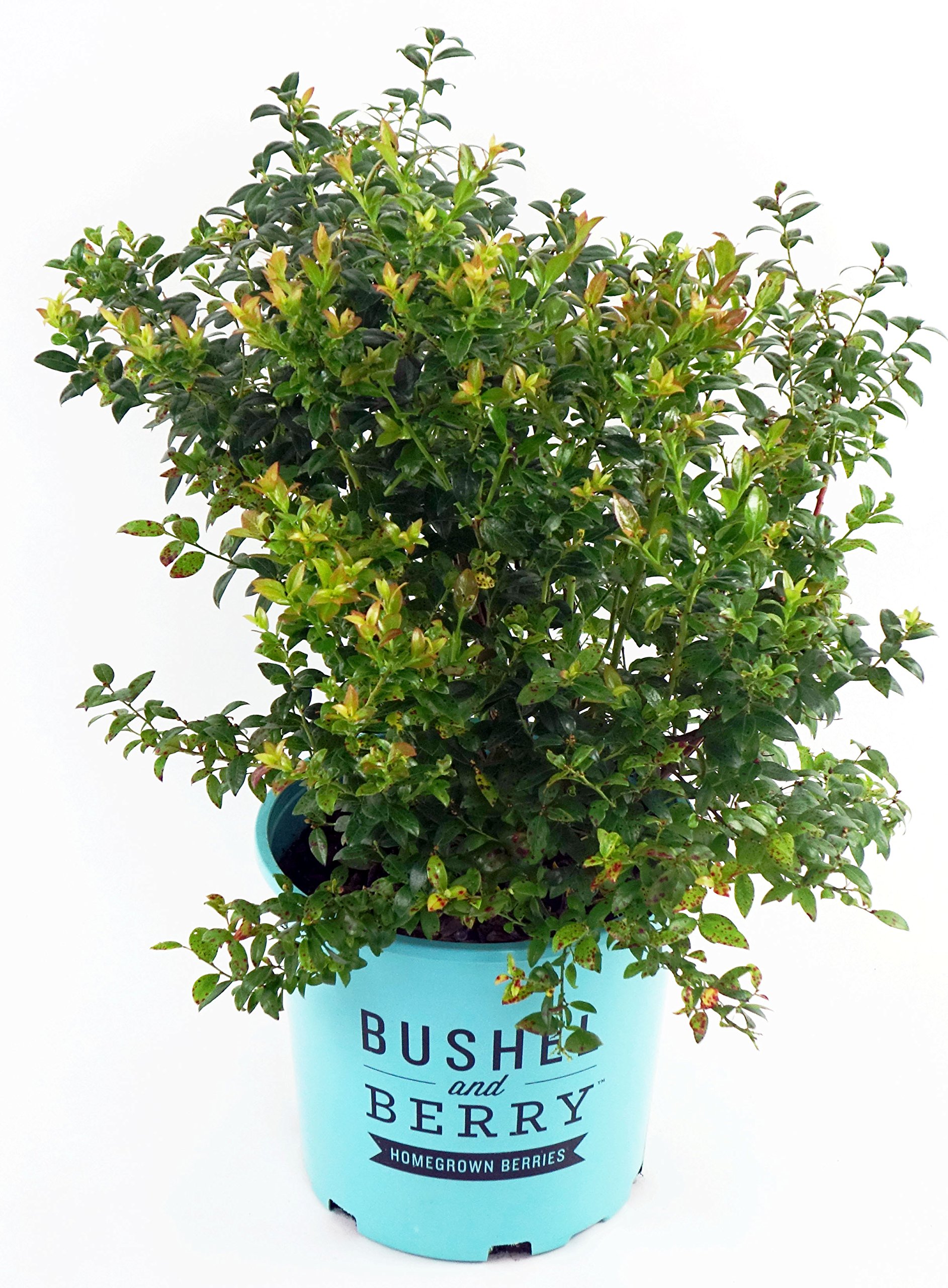
1. Bushel and Berry Blueberry Glaze (Vaccinium cor., #2 Container)
Our pick — 4.5★ from 700+ verified ratings; the strongest balance of quality and price.
A compact, low-fuss blueberry that nails the container-garden brief.
If you lack garden space but still want fresh berries within arm’s reach of your back door, this is the pick. The Blueberry Glaze bush tops out at 3 feet tall with a 2-3 foot spread, making it a perfect fit for a 16-inch patio pot. One buyer called it “sweet, productive, low-maintenance” and noted it “thrives in a 16″ container” while ripening gradually from July through September — 1 to 4 berries every few days. The dark green leaves and white-to-pink spring flowers add ornamental value even when it is not fruiting.
It suits USDA Zones 5-8, putting it right at home in all of Zone 8. The plant arrives fully rooted in a #2 container and can go into the ground or a larger pot immediately. It is self-fertile, but pairing it with the Rabbiteye trio above or a second Blueberry Glaze will improve yields. With a 4.5-star rating from 740 reviews, this is the most-reviewed bush in the list and the one beginners gravitate toward.
Buyers consistently praise the packaging and health on arrival — “the soil was still moist” and berries were already forming. The trade-off is that 3 feet of height means a smaller total harvest than the 15-foot rabbiteyes above, and the foliage is “less ornamental” than some other varieties according to one detailed review.
One-line take: The lowest-effort route to homegrown blueberries on a balcony or patio, backed by hundreds of happy owners.
Reach for this if: You garden in containers and want a bush that stays put at 3 feet, produces reliable berries, and arrives with fruit already started.
skip it if: You want maximum berry volume — the rabbiteye trio yields many times more once mature.
2. Perfect Plants 3 Pack Rabbiteye Blueberry Bushes (1 Gallon)
Three established bushes that hit the ground running with fruit already forming.
This is the set that skips the waiting game. You get three different one-gallon rabbiteye varieties shipped together, which means built-in cross-pollination for a longer, heavier harvest. The mature height reaches 15 feet — at 15 feet versus the Blueberry Glaze’s 3 feet — so these are real landscape shrubs, not just patio accents. Buyers report the plants arrived “full of berries and looked extremely healthy,” with one reviewer noting they were “larger than I expected.”
Rabbiteye blueberries are the Zone 8 specialists here — they handle heat and drought that would stress a Southern highbush, and they thrive in USDA Zones 7-9. You can plant them in the ground or keep them in containers for smaller spaces. The three varieties ripen at different points across the summer, so you get fresh berries from early season through late.
The catch: the manufacturer warranty is just one month, and one buyer received a plant that was “a stick with one leaf” — though most reviews (4.6 stars across 86 ratings) describe packaging as “beautifully packed” and the plants as thriving after transplant. The 20-pound shipping weight compared to the O’Neal 4-pack’s 0.5-pound weight makes the difference clear: these are already sizable, rooted bushes.
Why It Leads the List
- 3 different rabbiteye varieties cross-pollinate for you
- 15-foot mature height yields pounds of berries per season
- Heat and drought tolerant for Zone 8’s toughest summers
The Honest Trade-Off
- 1-month warranty is short if a plant fails to establish
- Does not ship to CA, AZ, or WA
Best for: Anyone who wants a real berry patch fast — three proven varieties that do the pollination work for you, at a size that fruits the first season.
Look elsewhere if: You only have a small patio and cannot give a 15-foot bush room to grow; the Blueberry Glaze stays a third of the height.
3. Perfect Plants Pink Lemonade Blueberry Bush (1 Gallon)

Bright pink berries that taste like classic blueberry but look nothing like it.
The ‘Pink Lemonade’ is a rabbiteye variety that swaps the usual blue-black fruit for vivid pink berries that ripen mid-to-late season. It performs best in milder climates, including all of Zone 8 (rated for Zones 4a-8b), and reaches a manageable 6 feet tall — a middle ground between the 3-foot Blueberry Glaze and the 15-foot rabbiteye trio. The plant offers four-season interest: green leaves in spring, white-pink flowers, the pink berries in summer, and fall foliage color.
Owners mention mixed arrival quality. One gave a 5-star review saying the bush arrived “healthy and beautiful” even in cold weather, while another described receiving a plant that was “a quarter of the size of the seller’s photos in terms of number of canes” with a single cane that arrived damaged. At 20 reviews with a 3.9 average, the sample is smaller than the top picks, so your experience depends on shipping conditions. The bush itself is vigorous once established — it is a rabbiteye, after all — and the pink fruit is genuinely unique.
Note that this plant does not ship to CA, AZ, or WA due to agricultural restrictions. The 5-pound shipping weight matches the Blueberry Glaze, so you are getting a similar-size starter, but the 6-foot eventual height opens up more garden placement options.
The Big Draw
- One-of-a-kind pink berries that stand out in any garden
- 6-foot height fits both ground beds and large containers
- Four-season ornamental value beyond the fruit
The Risk Factor
- Mixed reports on arrival size — some buyers got a single thin cane
- Limited to 20 reviews, less proven than the top picks
Grab it for: The novelty of pink blueberries that taste like the real thing plus a conversation-starting garden centerpiece.
Hesitate if: Consistency matters more than novelty — the Rabbiteye 3-pack has far more predictable quality at similar price-per-plant.
4. Live O’Neal Blueberry Plants (4 Pack) – Southern Highbush
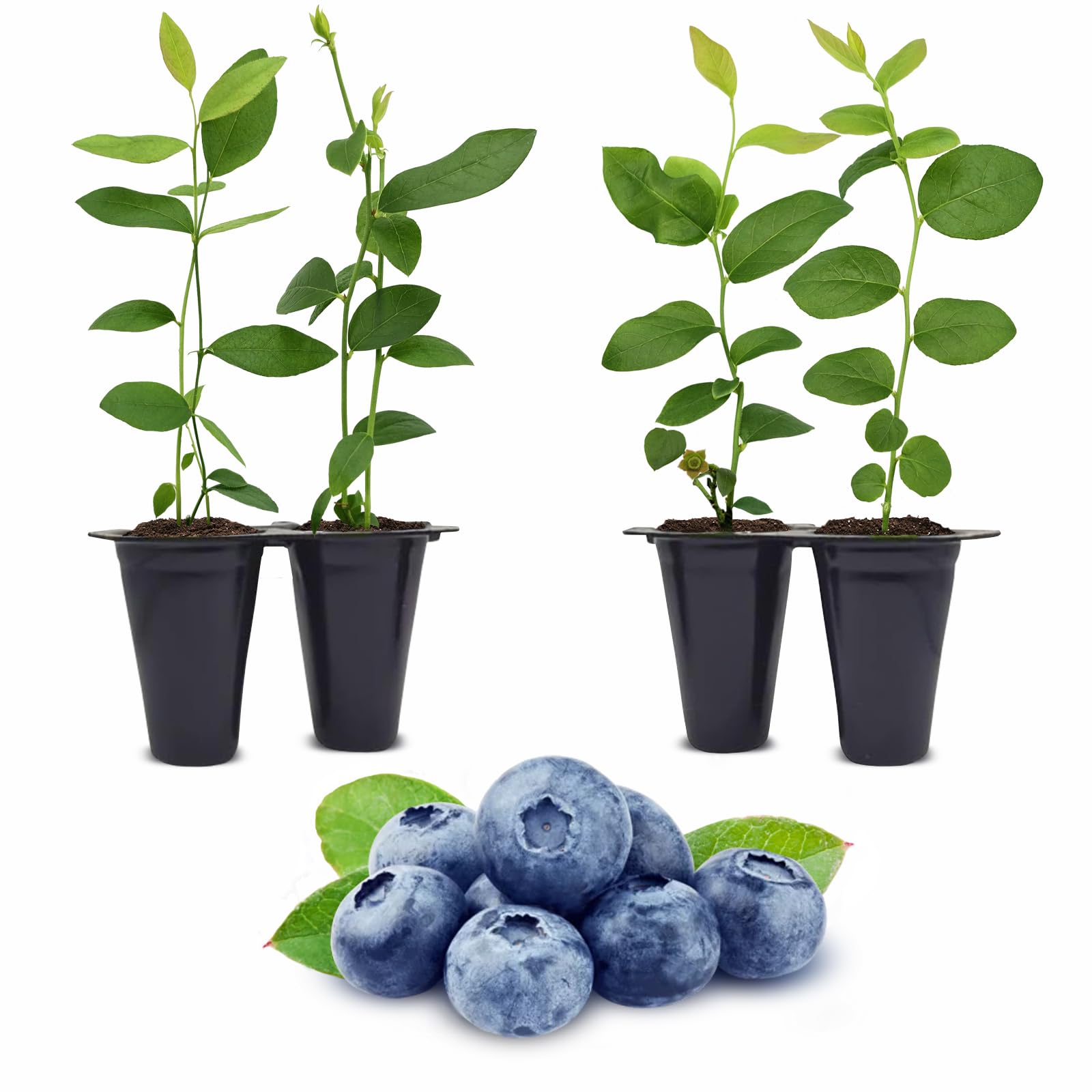
Four early-ripening Southern highbush starters for the Zone 8 grower who wants June berries.
O’Neal is one of the first varieties to ripen each season, and this 4-pack gives you that early harvest in multiples. The plants are rated for Zones 5-9 and need 400-500 chill hours — a perfect match for Zone 8’s typical winter. The mature bushes reach 4-6 feet with attractive gray-green foliage and red-accented stems, offering ornamental value between harvests. While the pack is self-fertile, pairing it with another Southern highbush variety will boost yields; it sits well alongside the Blueberry Glaze above.
Here is where buyer experience splits hard from the marketing. One reviewer called the plants “extremely small and sensitive” at 3-4 inches tall versus the advertised 8-inch bush, describing them as “poor quality with two tiny branches.” The soil fell out of the 2-inch pots on arrival. Another buyer had a better experience — “arrived in top shape” and “looking good” after following care instructions. With a 3.1-star average across 130 reviews, this is the riskiest pick in the list. The 0.5-pound shipping weight vs the 5-pound Pink Lemonade bush confirms these are tiny starter plugs, not established bushes.
Follow the care instructions precisely: soak pots in 1 inch of water for 30 minutes, trim damaged leaves, avoid immediate repotting, and gradually introduce to full sun. You are gambling on patience here — these plants need a year or two to size up before they fruit reliably.
The Upside
- Early-season ripening means berries weeks before other varieties
- 4 plants for the price of 1 larger bush — good if you have time to wait
- Adaptable to Zones 5-9, handles varied climates
The Downside
- Many buyers received unhealthy, undersized plugs
- 3.1-star average reflects real disappointment on arrival
Try it if: You are an experienced gardener who wants early Southern highbush flavor and will nurse young plugs through their first year in pots.
Avoid it if: You expect ready-to-fruit bushes this season — the Sweetcrisp pack below is similarly priced but has a better survival track record.
5. Sweetcrisp Blueberry Plants (4 Pack) by Hello Organics

Four Sweetcrisp starters for the budget-minded planter who does not mind waiting.
Sweetcrisp is bred for Southern and Central states with a low chill requirement of 200-250 hours — the lowest in this lineup, making it the safest bet if your Zone 8 microclimate trends toward mild winters. The description promises “large to extra large berries with a little crunch” and moderate ease of growth. The plants arrive as tiny plugs (customers note 2-4 inches tall initially), which is why the unit count is listed as 1.0 Count despite containing 4 plants — the package is one box of four small starters.
Buyer experience is a mixed bag that mirrors the O’Neal pack but edges slightly better on survival. One reviewer noted “3/4 Sweetcrisp and 3/4 Palmetto survived” after leaves dried out, while another reported a 50% survival rate two weeks in. The reviewer who saw 3 of 4 die attributed it to roots unable to break out of the coir pot, a caution worth heeding. On the positive side, the plants that do establish “grew to 8 inches” after a year, and multiple reviewers point out they would purchase again despite the losses.
Expect zero fruit for at least two years, possibly three. These are for the patient grower who wants to fill a larger plot on a budget and does not mind losing a few to attrition. The Sandy Soil compatibility in the specs is notable — if your ground is heavy clay, you will need to amend generously with peat moss and sand.
Honest verdict: A low-cost entry point for bulk planting if you accept a ~50-75% survival rate and a multi-year wait for fruit. The low 200-250 chill hours make it the most forgiving choice for warm-winter areas of Zone 8.
Buy it for: The lowest chill-hour requirement in the list, ideal for the warmest parts of Zone 8, and the lowest per-plant cost if you are filling a large bed.
Pass if: You want a single reliable bush that fruits this season — the Blueberry Glaze costs more but arrives with berries and a proven 4.5-star track record.
Understanding the Specs
Chill Hours
Chill hours are the number of hours below 45°F (not freezing) that a blueberry bush needs during winter dormancy to flower and fruit properly the next spring. Zone 8 typically provides 400-800 chill hours per year, but warmer microclimates may only offer 200-300. Pick a variety whose chill requirement matches your actual spot — too high, and you get leaves with no fruit; too low, and the bush may break dormancy too early and get zapped by a late frost.
Mature Height and Spacing
Rabbiteye blueberries can reach 15 feet tall and 10 feet wide at maturity; Southern highbush bushes stay between 2 and 6 feet. Your available planting area determines which type fits. Rabbiteyes need to be spaced 5-6 feet apart for a hedgerow, while Southern highbush can go as close as 3-4 feet. Buyers often underestimate how large a mature bush gets — a 3-foot bush like the Blueberry Glaze is a permanent container plant, while a 15-foot rabbiteye is a small tree.
FAQ
How many blueberry bushes do I need for good pollination?
Can I grow these Zone 8 blueberries in containers?
What is the difference between rabbiteye and Southern highbush blueberries?
Will these berries survive a Zone 8 summer?
How long does it take for these blueberry bushes to produce fruit?
What soil do blueberries need in Zone 8?
Do I need to prune these blueberry bushes?
What is the warranty on these plants?
Can I plant different blueberry types together for cross-pollination?
Final Thoughts: The Verdict
For most people, the best blueberries for zone 8 winner is the Perfect Plants 3 Pack Rabbiteye because it gives you three established, cross-pollinating bushes that fruit the first season and tolerate the toughest Zone 8 conditions. If you want a compact container bush that keeps life simple, grab the Bushel and Berry Blueberry Glaze. And for a garden showpiece with a twist, the Perfect Plants Pink Lemonade delivers pink berries and four-season color that no other pick matches.
How We Picked
We do not accept paid placement. Every pick is matched to a real buyer and a real use-case; we do not hands-on test units.
Sources & Methodology
Specifications: manufacturer listings and product documentation. Review insights: verified customer reviews, as of July 2026. Pricing: not shown on this page (it changes often); check the current price via the retailer link.
As an Amazon Associate, Gadgets Feed earns from qualifying purchases. This does not affect which products we feature.