
Our readers keep the lights on and my morning glass full of iced black tea. As an Amazon Associate, I earn from qualifying purchases.
Specs are compiled from manufacturer listings and verified buyer reviews and can change over time — please confirm the key details on the product page before buying.
If your blueberry bush is sulking with yellow leaves, the problem is almost never the plant — it is the soil underneath it. Blueberries are acid-loving plants, which means they grow best in soil with a low pH, and a standard garden bed or general-purpose potting mix simply is not built for them. The right blueberry soil mix fixes that at the root, and the four options below cover everything from a single potted bush on a balcony to a full raised-bed row.
I’m Min — the founder and writer behind Gadgets Feed. This guide is built by comparing the manufacturers’ published specifications and the patterns across verified customer reviews, so you get each pick’s real strengths and trade-offs instead of marketing spin.
You do not need a chemistry set, but you do need to know what pH and drainage mean for a berry bush. This shortlist covers mixes that hold their acidity and drain properly, so you can pick the right blueberry soil for your pots without guessing or overpaying.
Our Picks at a Glance

How To Choose The Best Blueberry Soil
A bush planted in the wrong medium sits pale and stunted for a whole season, so the buying decision matters more than the watering schedule.
Get the pH right first — everything else follows
Blueberries are acid-loving plants, which means they absorb nutrients best in soil with a low pH. A low pH is simply a measure of how acidic the soil is, and for blueberries the target window sits roughly between 4.5 and 5.5. If your mix is neutral or alkaline, the plant cannot take up iron properly, which is exactly why the leaves turn yellow while the stems stay green. Peat moss and pine bark are the two ingredients that naturally push pH down, so a good blueberry mix leans on both rather than asking you to add a separate acidifier.
Drainage keeps the roots alive
Blueberry roots are shallow and they hate sitting in water. A mix that stays soggy will rot those roots faster than almost any other mistake. That is why the good blends blend in perlite or sand — both are gritty, airy materials that let excess water run straight through instead of pooling around the root ball. If you are growing in a container, drainage matters even more than in open ground, because a pot has nowhere for trapped water to escape.
Match the bag volume to your planting plan
Bag sizes across blueberry mixes swing wildly, and a bag that looks big in a product photo can leave you short halfway through filling a container. A single starter plant in a small pot needs very little material. A mature bush in a large container, or a run of plants in a raised bed, will burn through several bags. Measure your pot or bed before you order, and remember that a large bush needs root room far beyond what one small bag provides.
Quick Comparison
| Model | Best For | Volume | pH / Acidity Approach | Drainage Ingredients | Amazon |
|---|---|---|---|---|---|
| Coast of Maine Planting Soil for Acid-Loving Plants, 20qt (Pack of 2)★ Best Overall | Raised beds and multiple bushes | 20 quarts (pack of 2) | Naturally low pH blend | Sphagnum peat moss, aged bark | Amazon |
| Perfect Plants Blueberry Soil, 4 qt, Acidic Potting Mix for Berries | Potted blueberry bushes | 4 quarts | Peat moss lowers pH with no added sulfur | Composted pine bark, granite sand | Amazon |
| Doter Organic Blueberry Soil Mix, Indoor Plants Potting Mix for All Potted Blueberry | Indoor potted starter plants | 10 quarts | Low pH, typically around 4.5 to 5.5 | Perlite and sand | Amazon |
| Soil Sunrise Acid Loving Plant Potting Soil Mix (12 Quarts) | Container growing and mixed acid-lovers | 12 quarts | Pine-enriched acidity boost | Perlite and sphagnum moss | Amazon |
In‑Depth Reviews
1. Coast of Maine Planting Soil for Acid-Loving Plants, 20qt (Pack of 2)
Our pick — over 4.5★ from 300+ verified ratings; the strongest balance of quality and price.
Two big 20-quart bags of peat-and-bark blend built for anything that craves acid.
The headline here is volume, and it is not close. This two-pack gives you 20 quarts total, while the Perfect Plants mix in this roundup gives you just 4 quarts — a genuine 5.0x gap between the two. For anyone filling a raised bed, re-potting several bushes, or top-dressing a row of hydrangeas and azaleas alongside your blueberries, that difference decides the purchase on its own. It carries 18 pounds in total, so you are handling real weight, but each bag spreads across a lot of ground.
What earns this the top spot is how the mix behaves once it is in the pot. It is built from sphagnum peat moss, composted manure, and aged bark — three ingredients that together hold moisture without turning the root zone into a swamp. Owners consistently describe it as staying light and fluffy rather than compacting into a dense brick, which is exactly what shallow blueberry roots want. One five-star review summed the feel up plainly: “Very impressed with quality of soil for my plants. Will buy again.”
Two honest notes before you commit. First, the pH draws mixed reactions. A handful of growers who tested the soil themselves found it landed at 5.5 and wanted it lower for their blueberries — still in the acidic range, but at the upper edge of it. Second, a couple of bags arrived with a sealed seam defect or a stray garden insect, so open the box carefully with scissors rather than a blade. Neither issue touches how the soil performs, but they are worth knowing.
What buyers keep coming back for
- 40 quarts total across the two-pack — enough for a proper raised-bed project, not just one pot
- Sphagnum peat moss, composted manure, and aged bark hold moisture while still draining
- Stays airy instead of compacting, which suits shallow blueberry roots
- OMRI Listed and made with sustainably sourced ingredients
Where it runs into limits
- Independent home tests have landed around 5.5 pH — acidic, but not as low as some blueberry growers want
- 18 pounds of soil to carry and store between the two bags
- A small number of bags arrive with a seam issue, so check before you cut
Made for beds: If you are planting multiple bushes or filling a raised bed in one go, the two-pack volume alone justifies the choice.
Look elsewhere for: A single small starter plant in a windowsill pot — you would be storing half a bag for a season.
2. Perfect Plants Blueberry Soil, 4 qt, Acidic Potting Mix for Berries
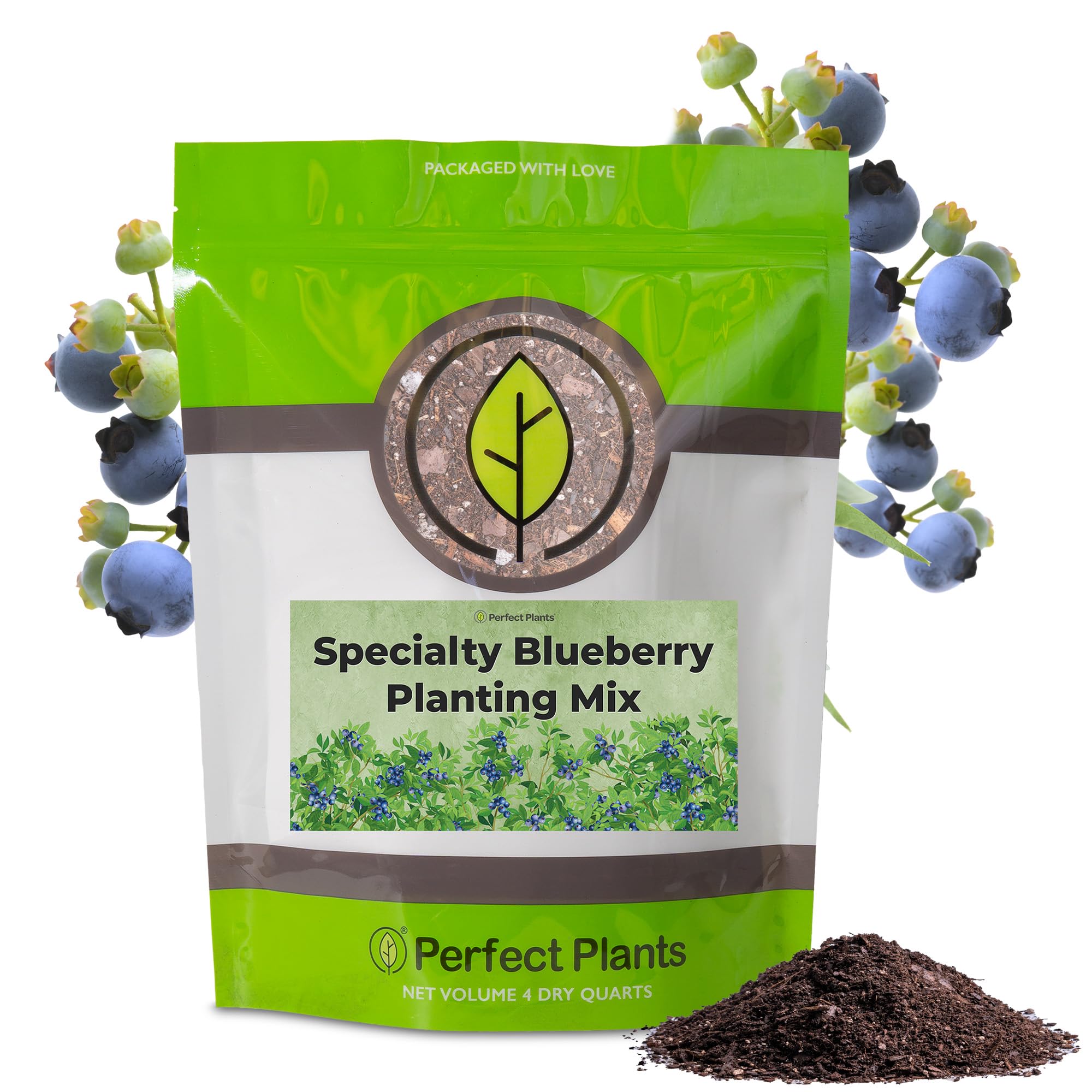
The mix that does the feeding for you, so a struggling potted bush gets a fresh start.
Here is the one thing that separates this bag from every other pick on the list: it arrives with fertilizer already blended in. The 18-6-8 slow-release fertilizer — that is a blend of nitrogen, phosphorus, and potassium in those proportions — feeds your bush for up to 12 months, so you are not mixing in your own plant food on top of everything else. The peat moss also acidifies the mix on its own, which means no sulfur or separate acidifier product is needed to get started.
The recipe is straightforward and well matched to berries: composted pine bark, granite sand, and peat moss. The bark and sand keep water moving, the peat handles the acidity. This is a medium-drainage mix, and it is blended for both rabbiteye and northern highbush varieties, so most common blueberry types are covered. Hand-mixed on a family-owned farm in the USA with over 40 years of horticulture behind it, it also comes in a heavy-duty resealable bag you can close between uses.
Real-world results back it up. The most common story in the reviews is a bush that had gone yellow or stalled for a season or more and then turned around after repotting — the yellowing usually being the classic sign of soil that is not acidic enough. One grower reported buds within days of planting two bushes in need of a quick home. The obvious trade-off is the bag size: at 4 quarts, this is a one-pot fix, not a bed-filler, and it costs more per quart than the Coast of Maine two-pack.
Self-feeding, self-acidifying: Peat moss lowers the pH without added sulfur, and the 18-6-8 slow-release fertilizer carries the plant for up to 12 months before you need to think about feeding again.
The catch: 4 quarts fills one modest container and no more, so plan on a second bag if you have two bushes to transplant.
Pick it when: Your blueberry is already in a pot and has been limping along with pale leaves — this is the fresh start in one bag.
Skip past it when: You are filling a raised bed or planting a row; the volume is too small for the job.
3. Doter Organic Blueberry Soil Mix, Indoor Plants Potting Mix for All Potted Blueberry

A 10-quart indoor mix with a pH window printed right on the label.
Doter does something the other three mixes do not: it names the numbers. The bag states a low pH typically around 4.5 to 5.5, which is the exact window blueberries prefer, so you know what you are planting into before you open it. The blend is enriched with peat moss and pine bark for acidity and structure, plus perlite and sand so water flows freely through the pot. There is also a mycorrhizal fungi inoculation in the mix, a soil organism that teams up with the roots to help them draw in water and nutrients.
Sizing lands in the middle of the field. At 10 quarts this sits well below the Coast of Maine two-pack but comfortably above the 4-quart Perfect Plants bag. It weighs 2100 g total, so a single bag is manageable to carry and store indoors. For balcony and windowsill growers who want a ready premix and an easy fill, the format makes sense — several owners describe it as simple to use straight out of the bag. One five-star review from a grower in an alkaline-soil region called it “GREAT for getting those acid-loving plants off to a good start in pots before transplanting them into their larger permanent growing containers.”
The recurring caution here is the bag itself, not the soil. Buyers who ordered expecting a larger sack have been disappointed by how compact the package feels, and the reviews play out accordingly — users planting into a single starter pot are perfectly happy, while those trying to cover two bushes or a large container run short. Read the volume before you order and size up accordingly if your pots are anything beyond a starter.
Ready to plant: Peat moss and pine bark handle the acidity, perlite and sand handle the drainage, and mycorrhizal fungi come mixed in — no amendments required before you pot up.
Mind the bag: 10 quarts covers one starter plant comfortably, but buyers hoping it will stretch to a second bush consistently run out. Order by volume, not by the photo.
Made for: The indoor or balcony grower potting a single blueberry starter with a documented pH window and premixed, ready-to-use texture.
Better alternatives exist if: Your plants are already well past the starter stage and need more material than one 10-quart bag can give.
4. Soil Sunrise Acid Loving Plant Potting Soil Mix (12 Quarts) Premium Container Blend pH Balanced for Azaleas, Rhododendrons, Blueberries and More
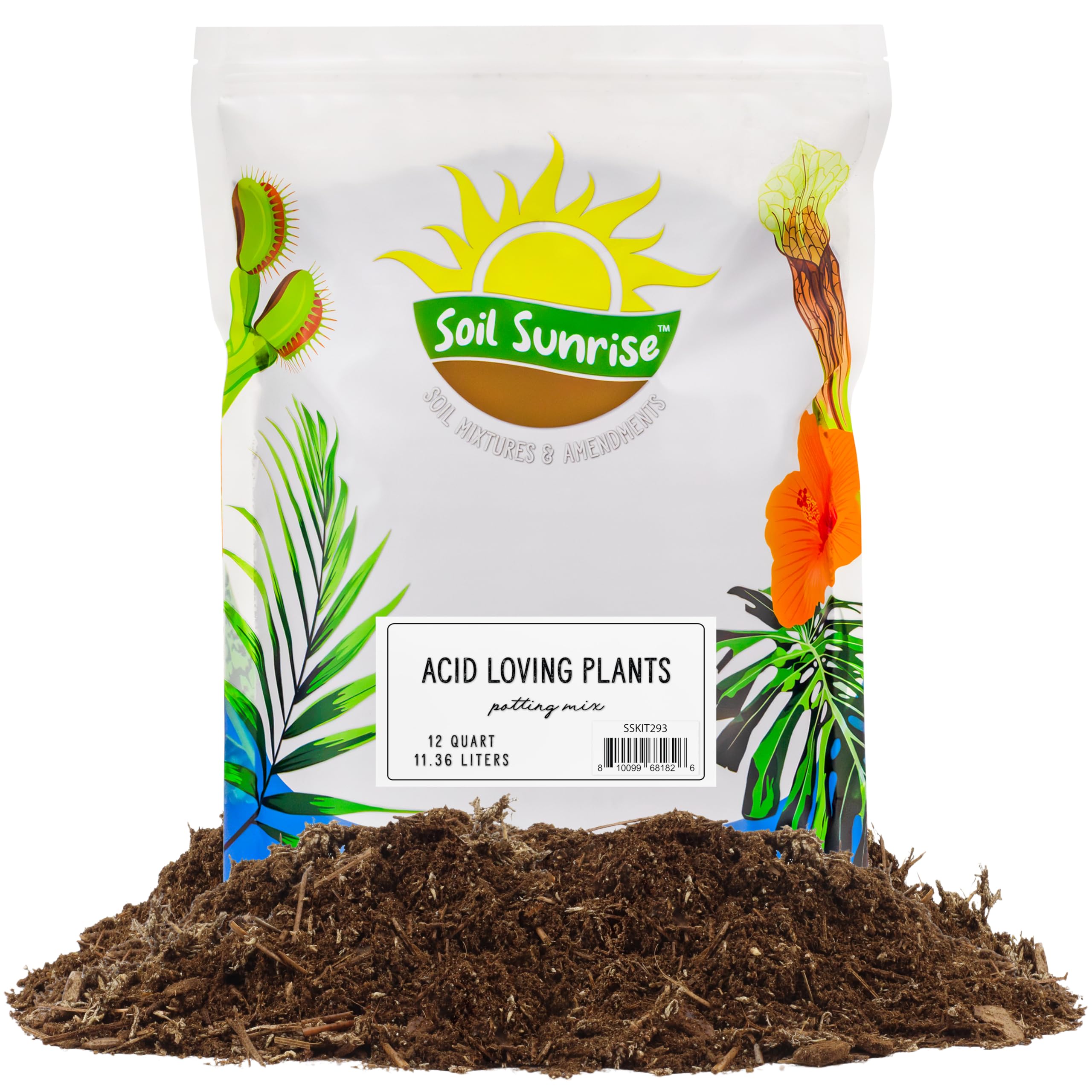
A pine-heavy five-ingredient blend that feeds blueberries and gardenias from the same bag.
Soil Sunrise builds its acidity the slow way. Instead of leaning on a single acidifier, the recipe mixes peat moss, pine needle mulch, pine bark mulch, sphagnum moss, and vermiculite — five ingredients where the two kinds of pine do the pH work and the sphagnum and vermiculite keep the texture open. The blend is designed for a whole family of acid lovers at once: azaleas, rhododendrons, blueberries, and more, so a blueberry bush and the gardenia beside it can share the same bag. It is artisan-crafted in Kentucky and carries 12 quarts, which places it above the Doter mix in capacity without reaching the Coast of Maine two-pack. It weighs 3.3 pounds.
Where this mix earns its place is with growers who water carefully from the start. It feeds well when it is set up correctly. One gardenia grower who uses it regularly reports the plant thriving in it, and a coffee plant that doubled in size after being repotted into the same bag.
The honest catch is entirely about the first watering, and it shows up in the mix of opinions on the stuff. Straight from the bag this soil can be hydrophobic — meaning water beads off the surface instead of soaking in. The fix is simple: moisten it thoroughly in a bucket before potting and let the runoff drain, after which it takes water normally. Do that one preparation step and everything else falls into place. A couple of buyers also found the bag smaller than the photos suggested, so buy by the quart figure rather than the picture.
One prep step, then it works: Wet the mix fully in a bucket before potting — it resists water straight from the bag — and it settles down and takes moisture normally from then on.
Choose it if: You have several acid-loving plants sharing a rotation — blueberries, azaleas, rhododendrons — and want one bag that handles all of them in a 12-quart container format.
Think twice if: You want to tip soil straight into a pot and water immediately, or you need enough material to fill a large bed. Pre-moistening and a small bag are the two things to plan around.
Understanding the Specs
pH and Acidity
pH is a number that tells you how acidic or alkaline your soil is, running from about 4 on the acidic end up to 8 on the alkaline end with neutral sitting at 7. Blueberries are acid-loving plants, so they want that number low — the ballpark most growers aim for is roughly 4.5 to 5.5. When the pH drifts up toward neutral, the bush literally cannot pull iron out of the soil, which is what produces those yellow leaves with green veins while the plant stalls. Peat moss and pine bark are the two ingredients that push the number down naturally, which is why every mix on this list leans on at least one of them.
Volume and Pot Size
Volume is how much soil you are actually buying, measured in quarts, and it is the spec that catches most first-time growers out. A starter blueberry in a small container needs only a few quarts; a mature bush in a large pot, or several plants in a raised bed, can swallow a whole bag and more. Mulch, compost, and potting mix all get measured this way, and the sizes here range from a small 4-quart bag up to a 20-quart bag sold as a two-pack. Before you order, measure your pot’s capacity or your bed’s area and compare it against the bag volume — it is the single fastest way to avoid ending up a bag short mid-planting.
FAQ
What pH does blueberry soil need to be?
How many quarts of Blueberry Soil do I need for one bush?
Is this soil safe for my blueberries outdoors as well as indoors?
Can I grow blueberries in a container with this Blueberry Soil?
Do I need to add fertilizer on top of this soil?
What do I do if the Blueberry Soil feels too wet after potting?
Why is my soil not absorbing water at all?
Will this soil also work for hydrangeas, azaleas, and rhododendrons?
How do I stop my blueberry leaves turning yellow again?
Is a smaller bag of Blueberry Soil enough to get started?
Final Thoughts: The Verdict
For most growers chasing the best blueberry soil, the Coast of Maine Planting Soil for Acid-Loving Plants is the pick that fits the most real-world planting jobs, because its two 20-quart bags give you enough material to fill a raised bed or re-pot several bushes in a single order. If you only have one potted bush that has been sulking and turning yellow, the Perfect Plants Blueberry Soil gets it a fresh, self-acidifying, pre-fed start from a single 4-quart bag. And if you grow blueberries indoors on a balcony alongside a gardenia or a coffee plant, the Doter Organic Blueberry Soil Mix is the one to reach for, with its printed 4.5 to 5.5 pH window and ready-to-use premixed texture.
How We Picked
We do not accept paid placement. Every pick is matched to a real buyer and a real use-case; we do not hands-on test units.
Sources & Methodology
Specifications: manufacturer listings and product documentation. Review insights: verified customer reviews, as of September 2026. Pricing: not shown on this page (it changes often); check the current price via the retailer link.
As an Amazon Associate, Gadgets Feed earns from qualifying purchases. This does not affect which products we feature.