
Our readers keep the lights on and my morning glass full of iced black tea. As an Amazon Associate, I earn from qualifying purchases.
Specs are compiled from manufacturer listings and verified buyer reviews and can change over time — please confirm the key details on the product page before buying.
You stare at a bare patch of soil in your yard that just won’t fill in, no matter what you throw at it. You want that deep-green, thick carpet look Kentucky bluegrass is famous for, but picking the wrong bag means you wait weeks for little or no results. The difference between a so-so lawn and a thick, dark green one depends on a handful of specs you can learn to spot in the next few minutes.
I’m Min — the founder and writer behind Gadgets Feed. This guide is built by comparing the manufacturers’ published specifications and the patterns across verified customer reviews, so you get each pick’s real strengths and trade-offs instead of marketing spin.
if you need to patch bare spots or start a new lawn from scratch, this breakdown of the best bluegrass seed options covers each bag’s coverage, germination speed, and what real buyers most often discover after opening it.
Quick Picks
- Jonathan Green (11970) Blue Panther Kentucky Bluegrass Grass Seed — Best Overall
- Barenbrug Turf Blue Pro Kentucky Bluegrass Lawn Seed (25 lb) — Premium Pick
- GreenView Pure Grass Seed Kentucky Bluegrass Blend (3 lb) — Best Value
- Pennington Smart Seed Kentucky Bluegrass Blend (3 lb) — Smart Buy
- Scotts Turf Builder Grass Seed Kentucky Bluegrass Mix (2.4 lbs) — Compact Patch Fix
How To Choose The Best Bluegrass Seed
Kentucky bluegrass is not the fastest grass to sprout, but it forms a dense, self-repairing turf that many other cool-season grasses cannot match. Knowing a few key factors before you buy will save you from a bag that sits unused or one that simply won’t grow in your yard’s conditions.
Coverage: New Lawn vs. Overseeding
Every bag lists two different coverage numbers — one for starting a new lawn from bare dirt and a larger number for overseeding (spreading seed over an existing thin lawn). For a new lawn you need roughly twice as much seed per square foot, so always check which number you are looking at. A bag that covers 1,600 sq. ft. for overseeding may only cover 530 sq. ft. for a new lawn, a gap that can leave you short if you do not plan ahead.
Germination Speed and Patience
Kentucky bluegrass typically takes 14 to 28 days to germinate (sprout through the soil surface), which is slower than ryegrass which can sprout in 5 to 10 days. Some premium blends with coated seeds can sprout as early as 8 days under ideal conditions, but many buyers report waiting 3 to 4 weeks before seeing any green. If you need fast coverage, consider a mix that includes a faster-germinating species. For a pure bluegrass lawn, the wait is part of the process.
Sunlight and Shade Tolerance
Most Kentucky bluegrass blends need at least 4 to 6 hours of direct sunlight daily. Some blends tolerate light shade, but none thrive in deep, full shade. Check your yard’s sun exposure before choosing — a bag marketed for “full sun and light shade” may scorch in direct afternoon sun if not watered heavily, or fail to fill in under a dense tree canopy.
Quick Comparison
On smaller screens, swipe sideways to see the full table.
| Model | Best For | Coverage (New Lawn) | Germination Time | Sunlight Needs | Amazon |
|---|---|---|---|---|---|
| Jonathan Green Blue Panther | Pure KBG sod-quality lawn | 2,400 sq. ft. | 21–28 days | Full sun to partial shade | $24.99Amazon |
| Barenbrug Turf Blue Pro | Large, drought-resistant lawns | Not specified (25 lb bag) | 8–14 days (coated) | Full sun | $160.00Amazon |
| GreenView Pure Kentucky Bluegrass | Sun & light shade versatility | 1,500 sq. ft. | 14–28 days | Full sun to light shade | $22.49$24.99Amazon |
| Pennington Smart Seed Kentucky Bluegrass | Budget overseeding + fertilizer | 2,000 sq. ft. | 15–30 days | 4–6 hours sunlight | $16.34$21.33Amazon |
| Scotts Turf Builder Kentucky Bluegrass Mix | Small patches & root-building | 530 sq. ft. | Not specified | Full sun to light shade | $19.97$30.99Amazon |
In‑Depth Reviews
1. Jonathan Green (11970) Blue Panther Kentucky Bluegrass Grass Seed

The pure-bred Kentucky bluegrass that builds a dark green, sod-quality lawn from seed.
Jonathan Green’s Blue Panther is a 100% Kentucky bluegrass blend, not a mix that includes fescue or ryegrass. For overseeding an existing KBG lawn, the 3 lb bag covers up to 4,800 sq. ft., versus 1,600 sq. ft. for overseeding with the Scotts Turf Builder mix. For a new lawn from bare dirt, it covers 2,400 sq. ft. The germination window is 21–28 days, so patience is required. It needs full sun to partial shade, with the best planting window from mid-August to mid-October or mid-March through mid-May.
Owners mention that this seed produces a fuller, darker green lawn that stays less weedy into spring compared to other brands at a similar cost. One reviewer noted “less than 1% germination rate” after following instructions, so results are not universal. The tiny seeds require careful spreading — a broadcast spreader set to a fine setting helps avoid clumps. Unlike the GreenView blend which tolerates light shade, the Blue Panther prefers full sun for the thickest growth.
This is the bag to reach for if you want a pure KBG lawn with the genetics used by leading sod growers across the USA. It is a premium product at a mid-range price, but the 21–28 day wait for germination is the real trade-off — faster mixes like Barenbrug’s coated seed can sprout in as little as 8 days.
What Makes It Stand Out
- 100% Kentucky bluegrass with no filler species
- 4,800 sq. ft. overseeding coverage from a 3 lb bag
- Produces dark green, uniform, high-traffic-tolerant turf
The Real Trade-Offs
- Germination takes 21–28 days, slower than coated seeds
- Several customers note very low germination rates despite correct application
- Tiny seed size requires precision spreading to avoid waste
Best suited for: The homeowner who wants a pure Kentucky bluegrass lawn and is willing to wait three to four weeks for it to fill in.
One real caution: If your soil temps drop into the 40s shortly after planting, germination is unlikely — time this bag for late summer or mid-spring.
2. Barenbrug Turf Blue Pro Kentucky Bluegrass Lawn Seed (25 lb)
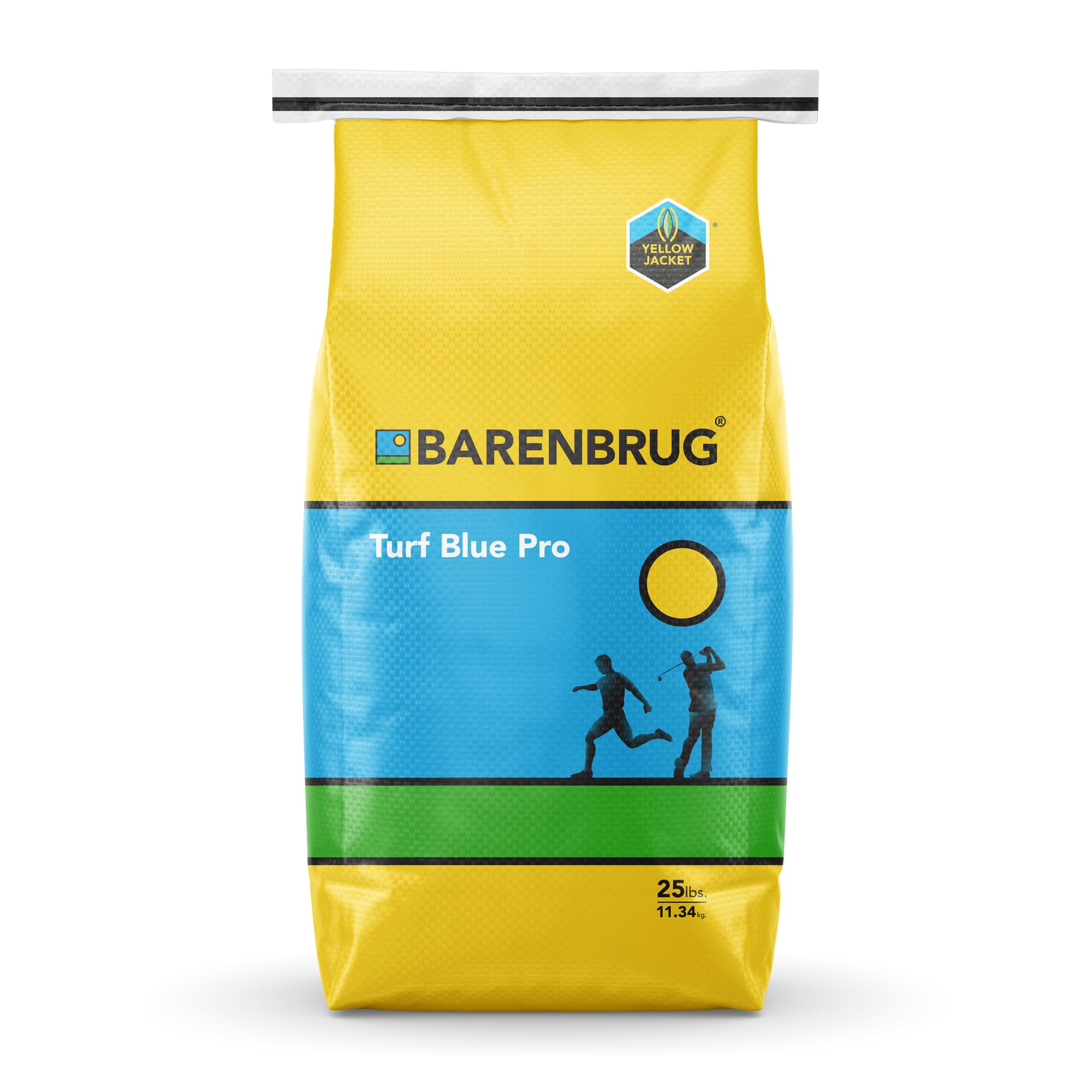
The professional-grade 25 lb bag with coated seed that germinates in as little as 8 days.
The Barenbrug Turf Blue Pro blends four elite Kentucky bluegrass varieties plus Barserati, a strain bred for drought tolerance. The Yellow Jacket seed coating helps protect the seed from drying out, which is why one buyer mentioned sprouts appearing on day 8 — unusually fast for Kentucky bluegrass. The 25 lb bag is a serious investment in quantity, intended for large lawns or heavy overseeding projects. It is designed for full sun and grows well in sandy soil, though buyers confirm it also works in heavy clay soil with attentive watering.
One owner reported that the “yellow jacket” coating reduces actual seed weight, saying there were roughly 12.5 lbs of actual seed inside the 25 lb bag, with the coating making up the rest. The same buyer reported only about 5% germination in their area. Another reviewer praised its ability to match an existing Kentucky blue lawn perfectly, with no fescue or rye contamination. Unlike the Jonathan Green Blue Panther which has no coating, the Yellow Jacket coating here aims to speed up germination and improve drought resilience.
If you are seeding a large area and want the fastest possible start from a bluegrass blend, this bag is a strong option. The catch is the premium price and the fact that the coating means you are paying for some non-seed weight — so calculate your actual coverage carefully before buying.
Why Go Big
- Germinates in 8–14 days — extremely fast for Kentucky bluegrass
- Barserati genetics provide superior drought tolerance
- Coated seed resists drying during germination
What to Watch For
- Coating reduces actual seed weight by roughly half
- Uneven germination reported in some areas (possibly bird or squirrel damage)
- Very expensive compared to smaller bags
Ideal for: Homeowners with large lawns who want drought-tolerant bluegrass that greens up earlier in spring and recovers quickly from wear.
Not ideal for: Small patch repairs where a 3 lb bag would be more practical and cost-effective.
3. GreenView Pure Grass Seed Kentucky Bluegrass Blend (3 lb)

The weed-tested blend that handles both sunny spots and light shade without fuss.
GreenView’s blend is tested to be 99.9% weed-free according to the manufacturer — meaning fewer unwanted plants competing with your grass. It covers 1,500 sq. ft. for a new lawn or 3,000 sq. ft. for overseeding, a strong middle-ground option between the smaller Scotts bag (530 sq. ft. new lawn) and the larger Jonathan Green (2,400 sq. ft.). Germination is listed at 14–28 days, and buyers confirm seeing growth in about 3 weeks. One customer observed that shaded patches survived well while direct sun scorched the grass, so early spring planting or a spot with afternoon shade works best.
The blend is designed to resist heat, drought, insects, disease, and brown patches once deep roots are established — a versatility that the 100% KBG bags like the Blue Panther do not advertise as explicitly. One buyer grew it in barren clay soil with no fertilizer and still got decent germination. A dissenting review reported zero growth after using over half a bag across multiple locations and seasons, so soil preparation and consistent watering remain critical. Compared to the Pennington Smart Seed, the GreenView does not include any fertilizer — you need to add your own if your soil is poor.
For the price, you get a large coverage area with a very low weed content guarantee. The trade-off is that it is a blend of KBG varieties rather than a single strain, which means slightly less uniformity than a pure-bred bag like the Jonathan Green.
Value Highlights
- 99.9% weed-free tested — fewer unwanted plants competing with your grass
- 3,000 sq. ft. overseeding coverage from a 3 lb bag
- Grows in all common soil types including clay
What to Know
- No fertilizer included — you must prepare the soil separately
- Some reviewers point out complete germination failure despite following instructions
- Direct sun can scorch young grass, so partial shade is safer
Great for: The budget-conscious buyer who wants a large coverage area with minimal weed intrusion and is comfortable adding their own starter fertilizer.
Maybe skip if: Your yard gets full, harsh afternoon sun all day — look for a shade-tolerant blend instead.
4. Pennington Smart Seed Kentucky Bluegrass Blend (3 lb)

The seed-plus-fertilizer combo for areas that get 4 to 6 hours of daily sunlight.
Pennington’s Smart Seed blend includes a dose of fertilizer right in the bag, so you do not need to make a separate trip for starter food. It covers up to 2,000 sq. ft. for a new lawn and is designed for areas getting only 4 to 6 hours of sunlight — a lower light requirement than many other KBG blends. Expected results are in 15 to 30 days, though one user highlighted no germination after 1 month in low-60s temps with full sun and regular watering. Another saw sprouts after about 2 weeks by raking the dirt down 2 inches, spreading a heavy layer, and watering twice a day all summer.
The bag is 3 lbs, making it a close competitor to the GreenView in weight, with 2,000 sq. ft. of new-lawn coverage versus 1,500 sq. ft. for GreenView. Unlike the Scotts mix, which covers 530 sq. ft. for a new lawn, this bag covers 2,000 sq. ft. The included fertilizer is a convenience that the GreenView and Jonathan Green bags lack. However, the one-reviewer warning about zero germination after a month matches the general theme across all bluegrass seeds — temperature and soil prep matter as much as the seed itself.
If you want a single-bag solution that includes the starter nutrients and covers a solid area, this is a strong contender. The trade-off is that the fertilizer amount is fixed, so you cannot adjust it for your specific soil conditions.
Convenience Points
- Built-in fertilizer means one less product to buy
- Works in areas with only 4–6 hours of daily sun
- 2,000 sq. ft. new-lawn coverage from 3 lbs
Real Limitations
- Germination can fail completely if temps drop below 60°F
- Fertilizer is pre-mixed — no way to adjust for soil deficiencies
- Some buyers reported the seed spread into flower beds and grew there
Smart pick for: The first-time lawn overseeder who wants the simplicity of seed and fertilizer in one bag without extra steps.
Reconsider if: You have very specific soil needs or are planting in early spring when soil temps are still in the 50s.
5. Scotts Turf Builder Grass Seed Kentucky Bluegrass Mix (2.4 lbs)

The small-bag specialist for tight patches and overseeding with root-building nutrients.
The Scotts Turf Builder Kentucky Bluegrass Mix uses Root-Building Nutrition to establish deep roots, and it covers 530 sq. ft. for a new lawn or 1,600 sq. ft. for overseeding. That overseeding number is 1,600 sq. ft., versus 4,800 sq. ft. for Jonathan Green — so this bag is really for smaller jobs. It is designed for full sun and light shade, with medium drought resistance and high durability. Plant it when soil temps are consistently between 55°F and 70°F, or air temps between 60°F and 80°F.
One shopper added that the seed initially failed to grow for 3 weeks, then sprouted after a longer time — possibly due to the blue coating on the seed. Another saw visible growth in 10 days after raking dead grass, covering with topsoil, and watering daily. A third reviewer noted that a hole in the bag caused static cling that trapped a large portion of the seed, so inspect the packaging on arrival. Unlike the Pennington bag which includes fertilizer, the Scotts mix includes its own Root-Building Nutrition formula, so it is not a bare seed either.
For a quick fix on a small bare patch or a light overseeding of a tired lawn, this bag is tough to top for the price. The coverage is just much smaller than the other options here — you will need multiple bags for anything bigger than a modest front yard.
Patch-Perfect Features
- Root-Building Nutrition helps establish deep roots for a stronger lawn
- Visible growth as early as 10 days, per verified buyers
- Good price point for small-area seeding
Watch Out For
- 530 sq. ft. new-lawn coverage is very small — need multiple bags for larger areas
- Blue coating may delay germination by a week or more
- Bag can arrive damaged or leaking seed during shipping
Perfect for: Spot-repairing bare patches in a small lawn where you do not need to cover a whole acre.
Not for: Seeding a large new lawn from scratch — the 530 sq. ft. coverage will require buying several bags and increase your cost per square foot.
Understanding the Specs
Coverage Area (New Lawn vs. Overseeding)
Every bag of bluegrass seed lists two coverage numbers. The new-lawn number is always smaller — roughly half the overseeding number — because you need a heavier seed density to establish grass from bare dirt. For example, a bag that covers 1,600 sq. ft. for overseeding may only cover 530 sq. ft. for a new lawn. Always check which category your project falls into before deciding how many bags to buy.
Germination Time and Coating
Kentucky bluegrass naturally germinates in 14 to 28 days, which is slower than ryegrass. Some premium seeds use a coating (like Barenbrug’s Yellow Jacket) that helps the seed retain moisture and can speed sprouting to as little as 8 days. Uncoated seeds are cheaper but more dependent on consistent watering and soil temperature. If you need fast results, a coated seed is worth the higher price.
FAQ
How long does Kentucky bluegrass seed take to germinate?
Can I plant bluegrass seed in the summer?
How much does a 3 lb bag of bluegrass seed cover?
Is Kentucky bluegrass good for shade?
What does the blue coating on some seeds do?
Should I buy seed with fertilizer already mixed in?
How do I spread bluegrass seed evenly?
Will bluegrass seed grow in clay soil?
How often should I water new bluegrass seed?
Can I mix bluegrass seed with ryegrass?
Final Thoughts: The Verdict
Across the board, the best bluegrass seed winner is the Jonathan Green Blue Panther because it delivers a pure 100% Kentucky bluegrass lawn with the largest overseeding coverage (4,800 sq. ft.) and a dark green, high-traffic-tolerant turf that survives well into spring. If you want the fastest possible germination for a large lawn, grab the Barenbrug Turf Blue Pro — its coated seed can sprout in as little as 8 days. And for a budget-friendly overseeding project with built-in fertilizer, the Pennington Smart Seed gives you simplicity and solid coverage in one bag.
How We Picked
We do not accept paid placement, and we did not hands-on test every unit. Instead, we match each pick to a real buyer and use-case by comparing the manufacturers’ published specifications against the patterns in verified customer reviews — so you get each pick’s real strengths and trade-offs instead of marketing copy.
Sources & Methodology
Specifications: manufacturer listings and product documentation. Review insights: verified customer reviews, as of July 2026. Pricing: not shown on this page (it changes often); check the current price via the retailer link.
As an Amazon Associate, Gadgets Feed earns from qualifying purchases. This does not affect which products we feature.
Product prices and availability are accurate as of the date/time indicated and are subject to change. Any price and availability information displayed on Amazon at the time of purchase will apply to the purchase of this product. As an Amazon Associate I earn from qualifying purchases.
CERTAIN CONTENT THAT APPEARS ON THIS SITE COMES FROM AMAZON. THIS CONTENT IS PROVIDED "AS IS" AND IS SUBJECT TO CHANGE OR REMOVAL AT ANY TIME.
Amazon and the Amazon logo are trademarks of Amazon.com, Inc. or its affiliates.