
For millions living with mild to moderate hearing loss, the struggle isn’t just about volume—it’s about clarity in a noisy world. You want to hear your grandchild’s whisper, not the rumble of the air conditioner. Bluetooth hearing aids promise that reality, but the market is flooded with everything from simple amplifiers to complex medical devices that cost thousands. The right pair doesn’t just make things louder; it intelligently processes sound, cancels feedback, and streams crystal-clear phone calls directly into your ears.
I’m Min — the co-founder and writer behind Gadgets Feed. By dissecting audiograms, real-user reviews, and technical specs like Bluetooth codecs, battery capacity in mAh, and IP ratings, I can separate true OTC hearing aids from glorified amplifiers to help you find real value.
After analyzing dozens of models across every price tier, I’ve narrowed the field to nine standout options that define the category of best bluetooth hearing aids for everyday conversations and modern connectivity.
How To Choose The Best Bluetooth Hearing Aids
Selecting the right Bluetooth hearing aid requires understanding that not all devices are created equal. The core difference lies in whether a device is a true hearing aid—designed to compensate for specific hearing loss patterns—or a simple personal sound amplifier (PSAP) that makes everything louder. For a device to be effective, it needs to pair Bluetooth streaming with clinical-grade sound processing, and features like AI-driven noise reduction and feedback cancellation are what separate a frustrating experience from life-changing clarity.
Sound Processing: AI Noise Reduction vs. Simple Amplification
The primary job of a modern hearing aid is to isolate speech from background noise. Look for models that advertise “AI noise reduction” or “VocClear” technology. These systems use microprocessors to analyze the soundscape in real-time—boosting frequencies where speech resides (typically 250 Hz to 4000 Hz) while suppressing consistent background noise like a fan or traffic. Without this, you’re just amplifying the noise along with the voices, leading to listening fatigue.
Form Factor: RIC vs. CIC vs. BTE
Your physical comfort and cosmetic preference dictate the form factor. Receiver-in-Canal (RIC) designs, like the ELEHEAR-Beyond Pro, house the electronics behind the ear, with a tiny speaker resting in the ear canal. This offers a good balance of power, comfort, and reduced feedback. Completely-in-Canal (CIC) models, like the Eargo 8, are nearly invisible but typically have smaller batteries and may not fit all ear canals comfortably. Behind-the-Ear (BTE) models are more robust and suited for more severe hearing loss.
Bluetooth Connectivity & Codec Support
Bluetooth is the gateway to hands-free calling and music streaming. A higher Bluetooth version (5.3 or 5.4) ensures lower power consumption and a more stable connection. However, the audio codec matters more for quality. Look for support for AAC (for iPhones) or aptX Low Latency (for Android) to ensure your phone calls don’t lag and your music doesn’t sound tinny. The AuraLink’s Bluetooth 5.4 is a current top-tier standard that ensures future compatibility.
Quick Comparison
On smaller screens, swipe sideways to see the full table.
| Model | Category | Best For | Key Spec | Amazon |
|---|---|---|---|---|
| Apple AirPods Pro 2 | TWS Earbuds | iPhone users & mild loss | H2 Chip, Hearing Test | Amazon |
| ELEHEAR-Beyond Pro | RIC | Premium sound & features | VocClear 2.0, 8500Hz range | Amazon |
| AuraLink iBstone | RIC | Clinical-grade & durability | Bluetooth 5.4, IP68 | Amazon |
| Jabra Enhance Select 700 | RIC | Full audiology support | IP68, 24hr battery | Amazon |
| Jabra Enhance Select 500 | CIC | Discreet & audiology support | Micro design, 18hr charge | Amazon |
| Eargo 8 | CIC | Virtually invisible wear | Sound Match, 16hr battery | Amazon |
| Vivtone Xpure 2.0 | RIC | Budget app control | RIC design, 24hr run time | Amazon |
| Nova Hearing Aids (iBstone) | CIC | Seniors & first-time users | 80% noise reduction, 100hrs | Amazon |
In‑Depth Reviews
1. Apple AirPods Pro 2
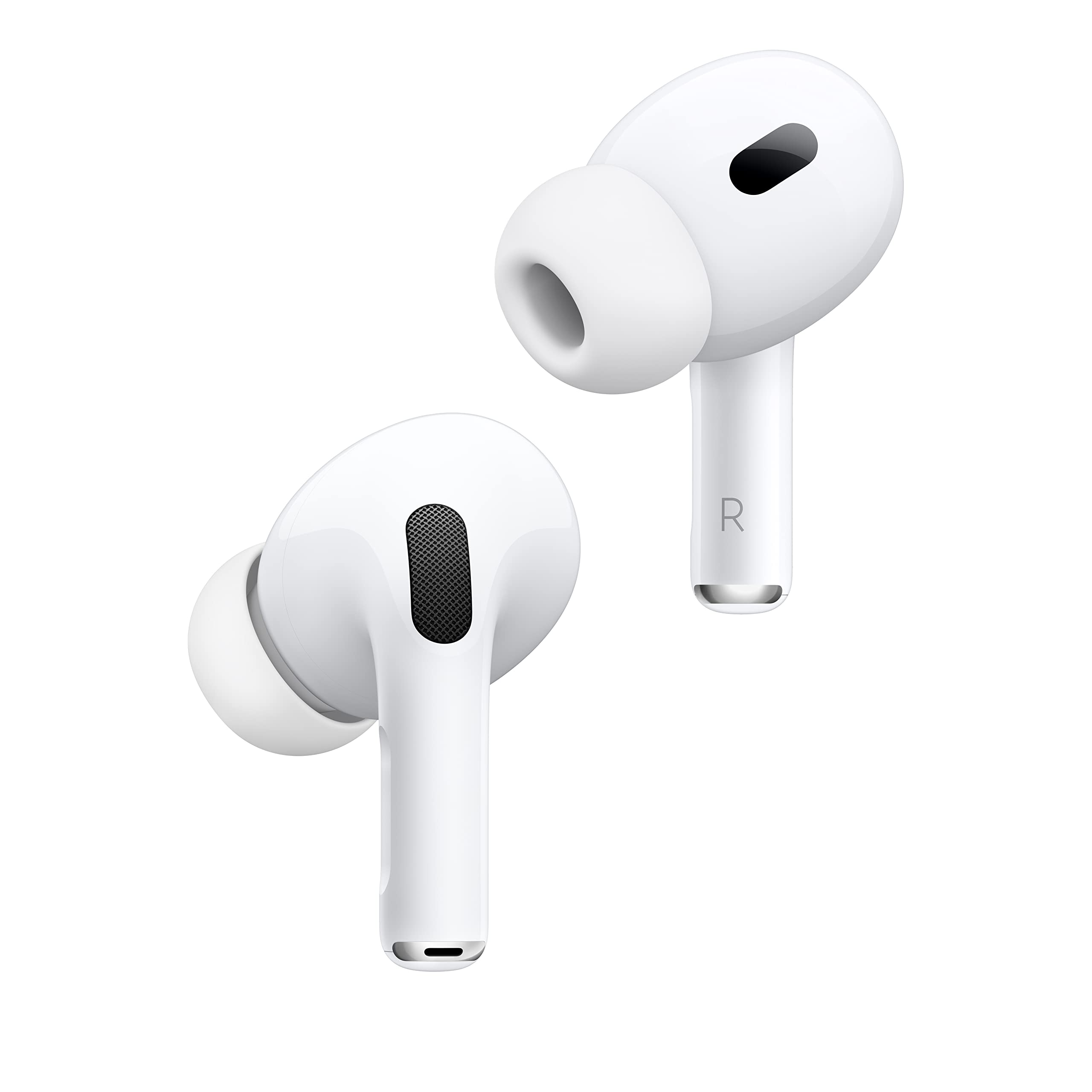
Apple’s AirPods Pro 2 have redefined the entry point for hearing assistance. The FDA-approved Hearing Test feature generates a personalized audiogram, and the H2 chip uses that data to apply clinical-grade amplification in real-time. For mild to moderate loss (-32dB to -39dB), users report these perform considerably better than commercial hearing aids, boosting only the exact frequencies needed while the Active Noise Cancellation makes a noisy room completely silent.
The ecosystem integration is second to none. You get seamless pairing with any Apple device, Personalized Spatial Audio, and Conversation Awareness that automatically lowers media volume when you start speaking. The stem-based volume control and Siri Interactions (nod your head to answer a call) are intuitive. With up to 6 hours of listening time per charge and 30 hours total, plus a USB-C MagSafe case with Precision Finding and a built-in speaker, it’s a complete package.
Some users with very small ears find the silicone tips don’t create a perfect seal, and the initial setup—which involves a deep, multi-step calibration—can be confusing for less tech-savvy users. While the IP54 rating makes them sweat and dust resistant, they lack the full IP68 water resistance of dedicated premium hearing aids. For mild loss, however, these are a phenomenal value that double as world-class earbuds.
Why it’s great
- Industry-leading ANC and Transparency modes
- FDA-cleared hearing test creates personalized audiogram
- Seamless Apple ecosystem integration with Spatial Audio
Good to know
- Not suitable for moderate-to-severe hearing loss
- Setup process is complex and technical
- Ear tips may not fit very small ear canals perfectly
2. ELEHEAR-Beyond Pro
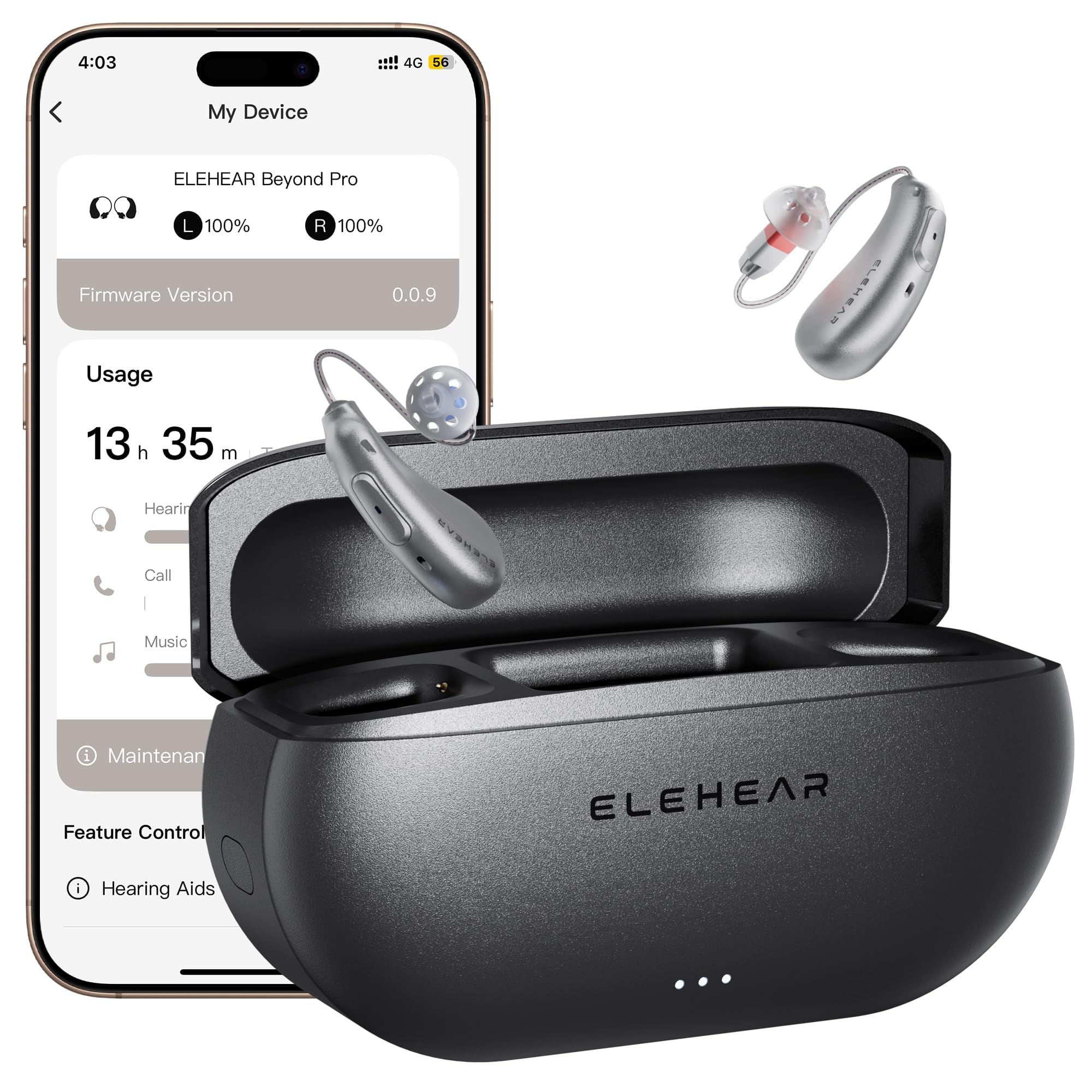
The ELEHEAR-Beyond Pro sits at the sweet spot of premium performance and reasonable cost. Powered by VocClear 2.0 technology, it delivers 30% clearer speech with an extended high-frequency response up to 8500Hz and ultra-low latency of just 8ms. This makes music streaming—a common pain point with other hearing aids—actually enjoyable, revealing the richness in every note without the tinny, delayed sound that plagues lesser devices.
The companion app is a standout feature. It allows for a full in-app hearing test, a 4-band frequency slider (with a promised full EQ update), and four preset scene modes plus four custom slots. The addition of 20 immersive soundscapes for relaxation and a real-time AI translator for 11 languages are genuinely innovative extras. The build quality is solid, with a RIC design that is featherlight and comfortable for all-day wear alongside glasses.
Some users report initial feedback issues that were resolved with firmware updates or by switching to the retention wires. The stabilizer wire on the stem is missing by default, which can cause the aid to shift during chewing. A few customers have also experienced issues with the left aid failing after two months, though customer service eventually provided a full refund. For moderate loss, the balance of features and sound quality here is exceptional.
Why it’s great
- VocClear 2.0 delivers 30% clearer speech with 8ms latency
- Excellent app with hearing test, frequency slider, and soundscapes
- Fast 15-minute charge provides 6 hours of use
Good to know
- Missing retention wire on stem can cause movement
- Some reports of device failure after a few months
- No full manual EQ, only a frequency slider
3. AuraLink iBstone
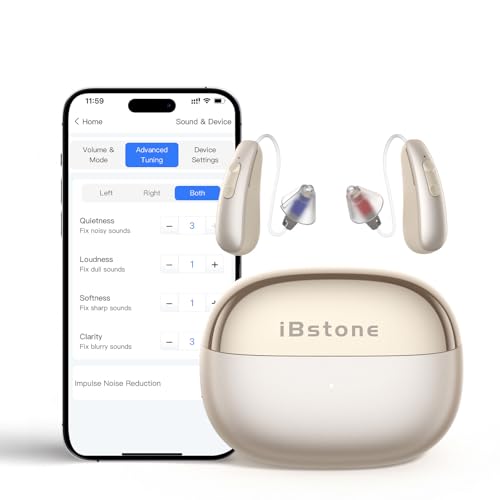
The AuraLink from iBstone is built for those who want clinical-grade performance without the audiologist price tag. It features Bluetooth 5.4, which is the current gold standard for stable, low-latency connections to your phone. The IP68 rating means it’s dust-tight and can withstand submersion in water, making it the most durable option for an active lifestyle—jogging in the rain is no problem here.
The AuraFit app is where this device shines. You can run a hearing check, input results directly from your audiologist’s audiogram, and enable tinnitus masking, all without a clinic visit. The device has been voluntarily endorsed by over 1,000 clinicians and is part of a US physician-led study on cognitive health, lending it a level of professional trust rarely seen in the OTC space. The UV-sanitizing charging case is a thoughtful addition for hygiene.
The primary complaint centers on the wire connecting the body to the earpiece, which some users find too stiff and long, making the earpiece difficult to seat correctly. While the AI noise reduction is effective, some users in extremely noisy environments still wish for more granular control. At this price, you’re paying for a superior build, professional recognition, and peace of mind.
Why it’s great
- Bluetooth 5.4 for stable, low-latency streaming
- IP68 dust/water resistance for active lifestyles
- Endorsed by clinicians and part of cognitive health study
Good to know
- Stiff wire from unit to earpiece can be uncomfortable
- Higher price point than most OTC competitors
- App design could be more intuitive for seniors
4. Jabra Enhance Select 700
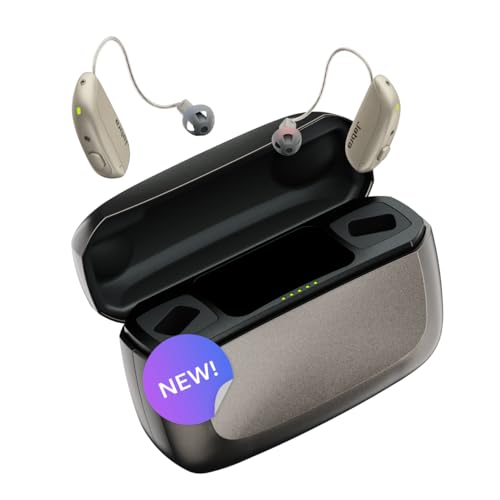
The Jabra Enhance Select 700 represents the closest you can get to a prescription hearing aid without the in-clinic price. It includes a full audiology service: a licensed US-based audiologist will program the device to your audiogram or online hearing test results, and you get unlimited follow-up adjustments. The SoundScape with Auto Focus technology provides effortless hearing by adapting in real-time to your environment, a feature typically found in + aids.
This is the world’s smallest rechargeable RIE (Receiver-in-Ear) hearing aid, making it incredibly discreet. The IP68 rating with a weatherproof nano-coating ensures protection against rain, sweat, and dust. The battery life is a class-leading 24 hours on a single charge, and the included portable charger extends that further. TapControl for hands-free calls works seamlessly on both iOS and Android.
One of the most significant drawbacks is the app. While the hardware is excellent, the Jabra app has been criticized for being difficult to use, especially when traveling or if you need to make quick adjustments. Some users experienced synchronization issues where settings reset when the aids were placed in the charger. While customer support is responsive, relying on a remote audiologist for basic tweaks can be frustrating for some.
Why it’s great
- Includes full licensed audiology services for programming
- World’s smallest rechargeable RIE design
- 24-hour battery life with IP68 protection
Good to know
- App can be difficult and glitchy for self-adjustment
- Initial setup requires multiple steps and apps
- Music streaming quality is poor, best for speech only
5. Jabra Enhance Select 500
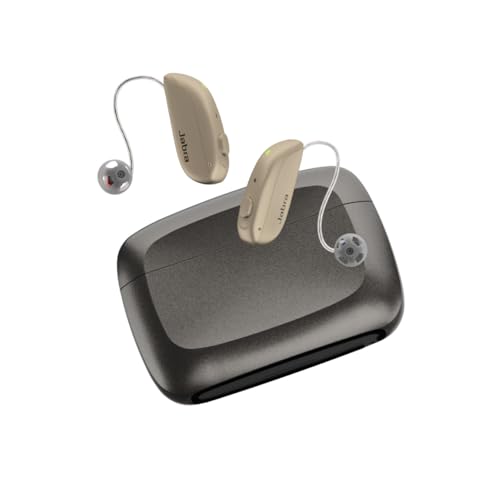
The Select 500 is for those who prioritize discretion above all else. It is a “Micro” CIC (Completely-in-Canal) design that is nearly invisible when worn. Despite its tiny size, it still packs the clinic-quality audiology support of the Jabra Enhance ecosystem, including a 3-year warranty with loss and damage protection and personalized programming from a licensed audiologist.
While it doesn’t have the 24-hour battery life of the Select 700, it still offers 18 hours of listening on a single charge, which is more than enough for a full day of use. The Bluetooth LE Audio support and hands-free calling with TapControl (double-tap your ear to answer a call) work reliably. For complex listening situations like a party, users report excellent sound clarity that rivals prescription models.
The tiny form factor brings some trade-offs. The battery life is lower than larger RIC models, and the earpieces can be fiddly to handle for users with dexterity issues. Some customers noted that the volume for phone calls is too low initially and requires tweaking through the audiologist. It’s also one of the most expensive OTC options on our list, reflecting the included professional services.
Why it’s great
- Nearly invisible Micro-CIC design
- Includes audiologist support and 3-year warranty
- Excellent sound clarity in complex listening environments
Good to know
- Small size can be difficult to handle
- Phone call volume can be low without adjustment
- High price reflecting bundled professional services
6. Eargo 8

The Eargo 8 is the ultimate expression of invisible hearing aid design. Its award-winning, virtually invisible CIC form factor sits deep inside the ear canal. The new Smart Sound Adjust technology automatically adapts to your environment—it boosts speech in a quiet room and cuts noise in a busy restaurant. It is FDA-cleared as a self-fitting device, backed by lifetime customer support.
The charger is a serious highlight. It provides up to 14 full recharges, giving you up to two weeks of on-the-go power. The device has an IP68 rating, the highest for dust and water resistance. The Sound Match feature in the app allows you to self-tune your hearing profile without an audiologist, and the Device Scan technology checks the health of your eargos to ensure they are working optimally.
This is a pure hearing aid—no Bluetooth streaming for music or calls. The straight-barrel shape can be too large for very small or oddly shaped ear canals, with some users finding that the curved design of a competitor fits much better. The initial fit is critical; if not inserted perfectly, the aids can produce a metallic feedback sound. For comfort and discretion, it is unmatched, but it is a single-purpose device.
Why it’s great
- Virtually invisible and extremely comfortable
- IP68 rated with a charger that lasts two weeks
- FDA-cleared self-fitting with Smart Sound Adjust
Good to know
- No Bluetooth streaming for music or phone calls
- Straight shape may not fit small ear canals
- Requires precise insertion to avoid feedback
7. Vivtone Xpure 2.0

The Vivtone Xpure 2.0 proves that you don’t need to spend thousands for a capable Bluetooth hearing aid. It uses a Receiver-in-Canal (RIC) design that minimizes distortion and feedback, and the companion app allows for precise frequency tuning to match your personal preferences. Users with mild to moderate loss consistently report that it performs nearly as well as prescription models that cost ten times as much.
For under , you get Bluetooth streaming for music and calls, multiple preset sound modes (quiet, noisy, outdoor), and a charging case that provides a week of standby power. The buttons on the device itself offer simple volume and mode control for when you don’t have your phone handy. The build quality is solid, and the earpieces stay in place better than more expensive alternatives according to several users.
The music streaming quality through Bluetooth is notably tinny compared to dedicated earbuds or higher-end models like the ELEHEAR Beyond Pro. The tubes lack stabilizers, which can cause them to fall out or become uncomfortable during eating. While the app is functional, it lacks the polish of the ELEHEAR or Jabra apps, and customer phone support is less responsive than email support.
Why it’s great
- Exceptional value for a full-featured RIC hearing aid
- Bluetooth streaming for calls and music
- Comfortable fit with multiple eartip options
Good to know
- Music streaming sound is tinny and lacks bass
- Tubes lack stabilizers, can fall out during eating
- Customer phone support is slow
8. ELEHEAR-Beyond

The standard ELEHEAR-Beyond offers a compelling bridge between affordability and advanced technology. Its VocClear AI boosts speech clarity by 17% while cutting 24dB of background noise, making it a significant step up from simple amplifiers. The device comes with four scene modes accessible via the intuitive app, allowing wearers to tailor the sound for a quiet conversation or a busy restaurant.
Battery life is a standout feature. You get 20 hours of runtime per charge, and the portable charging case adds four more full charges, totaling an impressive 100 hours of listening. A 15-minute quick charge provides 6 hours of use. The RIC design is comfortable and discreet, and the app allows for fine-tuning volume, frequency, and sound directionality (360° or front-focused).
Some users report that the hearing aids are slightly larger than expected, and there can be an initial itching sensation until you get used to the fit. The frequency adjustment in the app is a single slider rather than a full graphic equalizer (though an update is promised). It struggles in very noisy environments, performing decently but not as well as the “Pro” variant. For the price, the feature set is very generous.
Why it’s great
- Excellent 100-hour total battery life with case
- VocClear AI significantly improves speech clarity
- Bluetooth streaming with adjustable sound directionality
Good to know
- App lacks a full graphic equalizer for fine-tuning
- Slightly larger than some competitors
- Can struggle with noise in very loud environments
9. Nova Hearing Aids (iBstone)
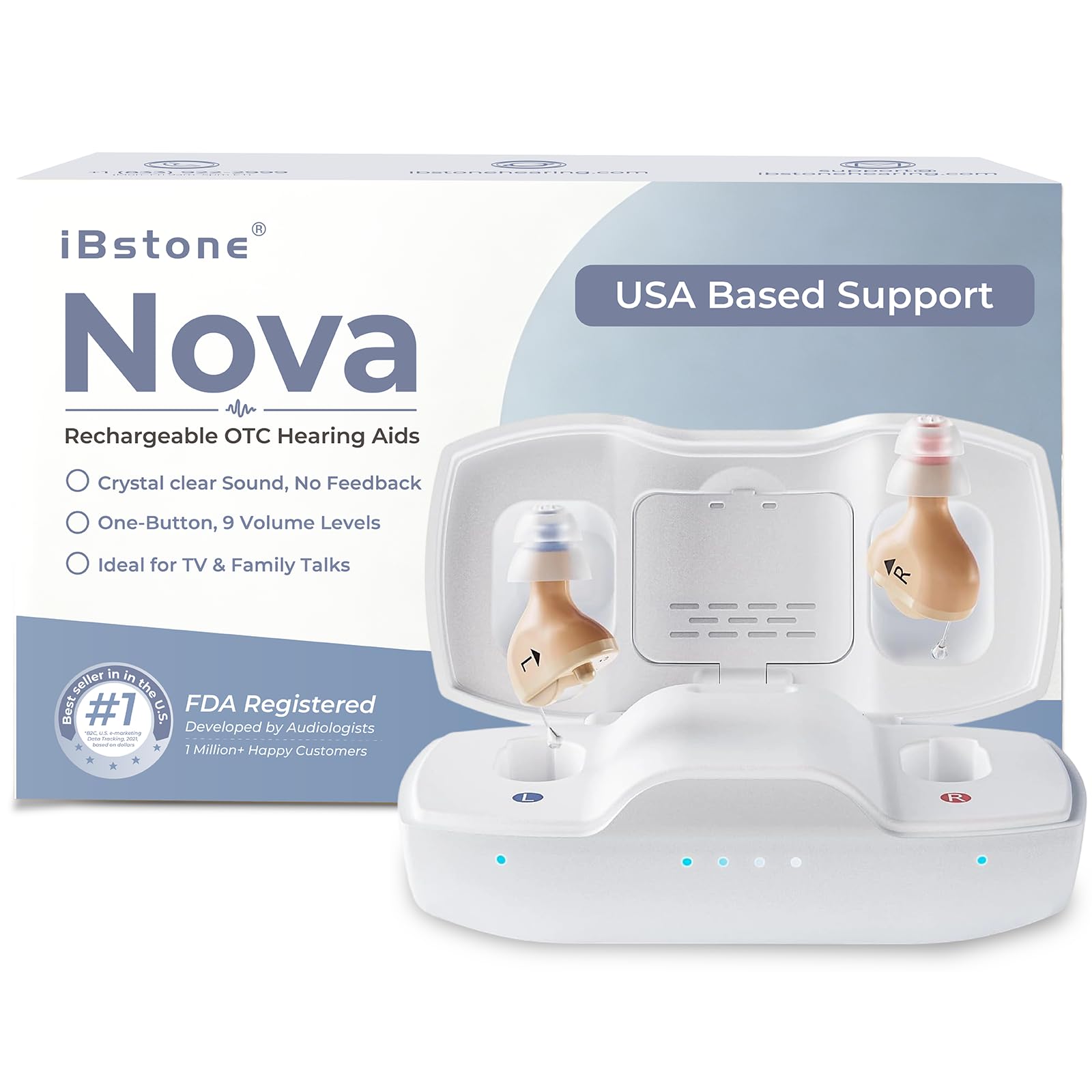
The iBstone Nova is the perfect entry point for seniors who are new to hearing aids and want a simple, effective solution without breaking the bank. It offers a “Zero Feedback” guarantee, which is critical for first-time users who fear the whistling sound. The smart chip focuses on human voices, reducing background noise by 80%, so you hear conversations, not the hum of the refrigerator.
The package is incredibly generous. It includes 9 pairs of soft tips for a perfect fit, a drying case that automatically removes moisture (a fantastic feature for long-term maintenance), and a fast charge of 1.5 hours that delivers up to 20 hours of use, with the case holding additional charges for a total of 100 hours. The completely-in-canal design is so comfortable users report wearing them for 16 hours without thinking about them.
It is important to note that these are classified as amplifiers rather than full medical-grade hearing aids by the manufacturer. The noise reduction is effective but not as precise as AI-driven systems. Some users find the modes are too similar and the volume cycling through buttons is cumbersome. For a first pair of hearing aids, the price and performance make it a very low-risk, high-reward purchase.
Why it’s great
- Zero feedback (whistling) design
- Fast charging with 100-hour total battery life
- Includes a drying case for moisture removal
Good to know
- Classified as amplifiers, not medical-grade hearing aids
- Modes are similar and volume control is cumbersome
- No Bluetooth streaming for calls or music
FAQ
Can I stream music or take calls with any Bluetooth hearing aid?
What is the difference between a hearing aid and a personal sound amplifier (PSAP)?
How do I know which dome size or ear tip to use?
Why do my Bluetooth hearing aids keep cutting out or losing connection?
Final Thoughts: The Verdict
For most users, the best bluetooth hearing aids winner is the Apple AirPods Pro 2 because it combines world-class ANC, seamless Apple integration, and a surprisingly effective clinical-grade hearing test for a fraction of the cost of traditional aids. If you want advanced speech clarity and music streaming, grab the ELEHEAR-Beyond Pro. And for full audiology support with professional programming, nothing beats the Jabra Enhance Select 700.