
Boas thrive when their enclosures mimic the humid, structured floor of a tropical forest floor — and the substrate you choose is the single biggest factor in achieving that microclimate. The wrong bedding leads to stuck sheds, respiratory irritation, and constant rehydration battles that drain hours from your weekly maintenance routine.
I’m Min — the co-founder and writer behind Gadgets Feed. I’ve sifted through hundreds of real user reports and technical datasheets to separate the substrates that actually hold stable humidity from those that degrade into dust or harbor dangerous bacteria.
Whether you’re setting up a new PVC enclosure or troubleshooting a persistent low-humidity problem, this guide to the best boa substrate options cuts through the marketing noise with concrete specs and real keeper experiences.
How To Choose The Best Boa Substrate
Boas, unlike many colubrids, require a sustained humidity range between 60 and 80 percent. The substrate you choose directly determines whether you’re fighting to keep levels up or effortlessly maintaining them. The three factors below will immediately filter out poor candidates.
Chip Size and Impaction Risk
Fine coco coir fibers and dusty soils pose a serious impaction risk if your boa accidentally ingests them during feeding strikes. Medium to large coconut husk chips — roughly 10mm to 35mm — pass through the digestive tract safely or are simply refused. Always prioritize chip size over softness when choosing a substrate for an adult boa.
Hydrated Expansion and Volume
Compressed bricks are economical but require accurate hydration to reach their full volume. A brick that claims 72 quarts when expanded may only deliver 50 quarts if you don’t add enough water. Loose-fill bags offer predictability — you know exactly how many quarts of bedding you’re getting and can layer it to the recommended 2 to 3 inch depth for burrowing without guesswork.
Bioactive Compatibility
If you plan to run a bioactive or naturalistic enclosure with live plants and a cleanup crew of springtails and isopods, the substrate must support plant root growth and contain no chemical additives. Straight coco husk chips drain too quickly for most plants without a deeper drainage layer, while premixed bioactive blends already include charcoal and organic matter for a balanced ecosystem.
Quick Comparison
On smaller screens, swipe sideways to see the full table.
| Model | Category | Best For | Key Spec | Amazon |
|---|---|---|---|---|
| Josh’s Frogs BioBedding Tropical | Bioactive Blend | Long-term bioactive enclosures | 10 quarts pre-mixed with charcoal | Amazon |
| Josh’s Frogs Coco Husk Block | Compressed Husk | Large enclosures needing bulk volume | 38 quarts expanded from 5kg block | Amazon |
| RediChip Reptile Bedding (2 Pk) | Loose Fill | Ready-to-use deep substrate layers | 72 quarts total (2 x 36-qt bags) | Amazon |
| BabiChip Coconut Chip Substrate | Small Chip | Smaller snakes and arid setups | 12 quarts loose fill | Amazon |
| Legigo 10LB Coconut Chip Brick | Compressed Chip | Budget-friendly bulk substrate | 72 quarts expanded from 10lb brick | Amazon |
| ZeeDix 10LB Coco Husk Brick | Compressed Chip | Value-tier chip substrate | 72 quarts expanded from 10lb brick | Amazon |
| Legigo 8 Pack Coco Fiber Bricks | Fine Fiber Bricks | Humidity-loving amphibians and hatchlings | 8 x 1.4lb compressed bricks | Amazon |
In‑Depth Reviews
1. Josh’s Frogs BioBedding Tropical Bioactive Substrate

This is the gold standard for keepers who want a truly self-sustaining enclosure. The BioBedding already includes activated charcoal and organic matter, so your springtails and isopods can establish a cleanup crew immediately without you having to mix a separate drainage layer. At 10 quarts, it fills a 3-foot enclosure to a 2-inch depth comfortably.
Customer reports confirm that this substrate stays moist without becoming waterlogged — a critical balance for boas because oversaturation leads to scale rot, while dryness causes stuck sheds. The texture is loose enough for burrowing but structured enough to hold plant roots for species like pothos and snake plants. One reviewer found a live snail hitchhiker that turned into a full bioactive micro-ecosystem over six months.
The main trade-off is that this is a specialty blend rather than a bulk value product. You pay a premium for the pre-mixed bioactive formula, and it is not ideal for a dry or arid setup — use it only if you intend to maintain high humidity and a living soil cycle. For a straightforward humidity-holding substrate without the bioactive commitment, the loose husk options below are more economical.
Why it’s great
- Supports live plants and cleanup crew right out of the bag
- Holds steady humidity without becoming soggy or rotting
- Charcoal layer reduces odor between full enclosure cleanings
Good to know
- Small 10-quart bag is expensive per quart compared to bulk bricks
- Not suitable for arid or low-humidity boa setups
2. Josh’s Frogs Coco Husk Block (5 kg/38 quarts)
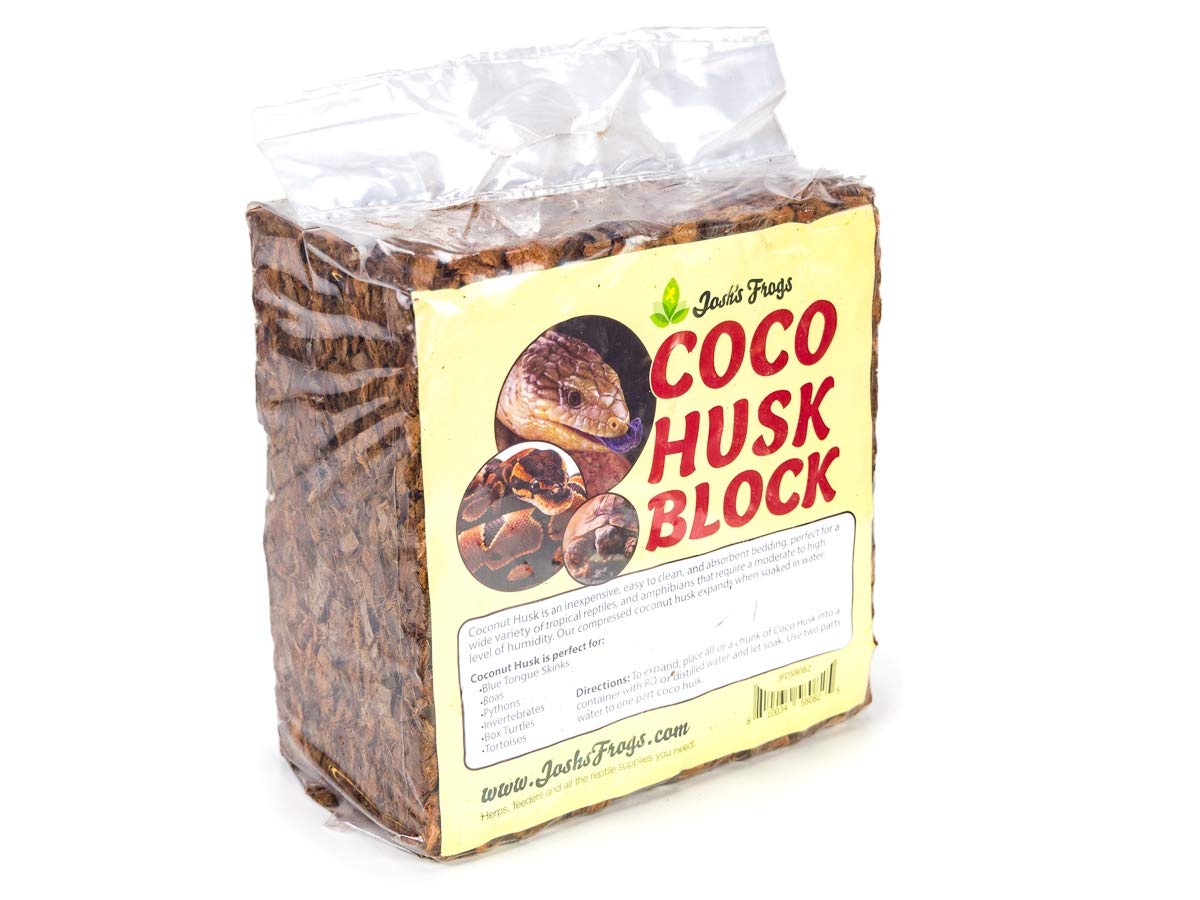
Josh’s Frogs delivers a compressed block that expands to roughly 38 quarts when fully hydrated — enough to provide a 3-inch layer across a 4-foot by 2-foot enclosure. The husk chips are rinsed in freshwater rather than saltwater, which keeps the electrical conductivity below 1.0 ms/ds, making it safe for both boas and live plants.
Keeper feedback highlights the fact that these chips drain significantly better than standard coco coir fiber. The coarse, mulch-like texture prevents compaction, so air circulates through the bedding and reduces anaerobic bacteria growth. Several users also repurpose this block as a soil amendment for houseplants like Hoyas and orchids, which speaks to its clean processing standards.
The block requires about 30 minutes to fully expand with warm water, and you must break it apart manually — expect a bit of effort. Compared to the RediChip loose bags, this block is more compact to store but demands a hydration step before use. For keepers who prefer grab-and-go convenience, the loose fill options are more straightforward.
Why it’s great
- Low salt content (EC under 1.0) is safe for sensitive reptiles and plants
- Coarse chip structure provides excellent drainage and aeration
- Compact storage until hydrated — ideal for limited space
Good to know
- Requires manual breaking and hydration before use
- Higher cost per quart than some budget brick options
3. RediChip Reptile Bedding Loose Medium Coconut Chip 36 Quart (2 Pack)
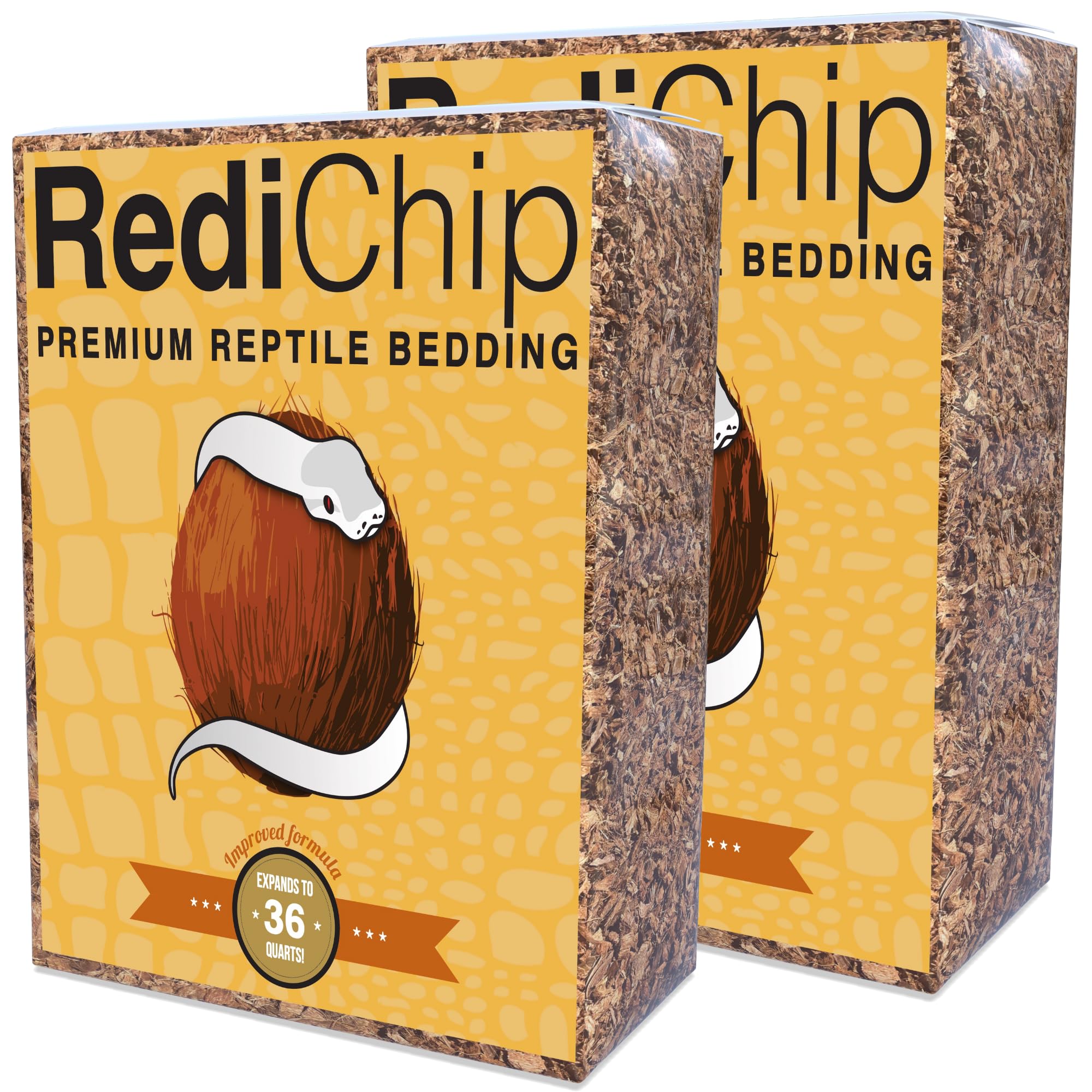
The RediChip two-pack delivers the largest volume of loose, ready-to-use bedding in this roundup — 72 quarts total across two 36-quart bags. That is enough to layer a 6-foot PVC enclosure to a 3-inch burrowing depth without needing to hydrate or expand anything. The medium chip size, roughly 15mm to 30mm, is ideal for adult boas because it resists compaction and passes safely if accidentally ingested.
Customer reports from ball python and boa keepers emphasize that this substrate holds humidity without staying saturated. When mixed with a layer of sphagnum moss or orchid bark, keepers report humidity staying above 70 percent for 4 to 5 days between mistings. The chips are sorted and refined in the United States, which explains the low dust levels compared to some imported brick products.
The biggest downside is the price — this is the most expensive option per quart in the list. You are paying for the convenience of pre-expanded, dust-screened chips that require zero preparation. If budget is a primary concern, the compressed brick options from Legigo or ZeeDix offer comparable chip quality at roughly half the per-quart cost after expansion.
Why it’s great
- Zero preparation — use directly from the bag for immediate setup
- Low dust and debris content after US-based sorting and refining
- Medium chip size is safe for burrowing and digestion
Good to know
- Expensive per quart compared to compressed alternatives
- Two-pack may be excessive for small 20-gallon enclosures
4. BabiChip Coconut Chip Substrate for Reptiles 12 Quart

BabiChip offers a more manageable chip size than the traditional forest floor bark or large husk chunks, making it a strong choice for juvenile boas and smaller colubrids where impaction risk is a higher concern. The bag provides 12 quarts of loose, ready-to-use bedding that requires no soaking or expansion — simply pour it in and shape the terrain.
Real user reviews consistently highlight the cleanliness of this product. Multiple keepers note that it produces almost no dust when poured, which matters because fine particulate can irritate a boa’s respiratory system over time. The odor-absorbing properties also get frequent praise — the chips encapsulate waste rather than letting it sit on top, which extends the time between full substrate changes.
The 12-quart bag is best suited for smaller tanks in the 20 to 40 gallon range. For a larger PVC or wood enclosure, you will need multiple bags, and at that point the cost per quart climbs above the bulk brick options. This is a premium small-batch product for keepers who prioritize cleanliness and chip consistency over raw volume.
Why it’s great
- Exceptionally low dust — safe for sensitive snake respiratory tracts
- Smaller chip size reduces impaction worry for young boas
- Odor encapsulation keeps the enclosure smelling fresh longer
Good to know
- Expensive per quart for larger enclosures requiring depth
- Some keepers found chips too sharp for very long adult corn snakes
5. Legigo 10LBS Coconut Chip Substrate 72QT Compressed Brick
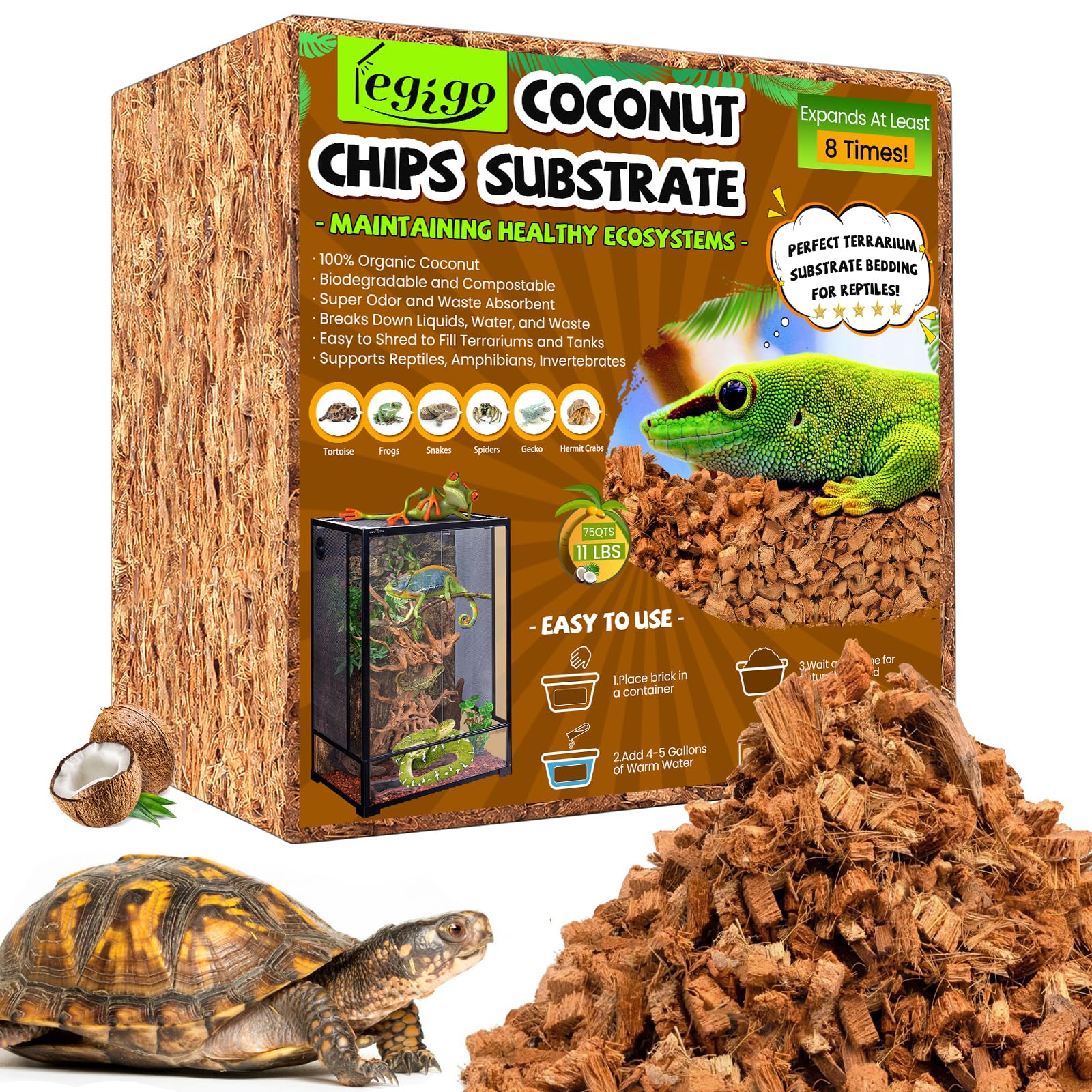
Legigo’s 10-pound compressed brick expands to approximately 72 quarts once hydrated, matching the volume of the RediChip two-pack at a significantly lower per-quart cost. The chips after expansion range from roughly 10mm to 30mm — a solid middle ground that works for both burrowing and surface walking. The brick is compact at 11.8 inches square, making it easy to store before use.
Keeper feedback is largely positive, with multiple customers specifically mentioning this as a cost-effective alternative to premium name brands for ball python and boa enclosures. Reviewers note that the chips are not sharp and pass safely if ingested. A few users also buy this for non-reptile uses like soil amendment for aroids and tropical houseplants, which speaks to the versatility of the product.
The brick requires about 10 minutes of soaking and manual crumbling to reach full expansion. Some customers reported finding a small number of plastic fragments or rocks in a single batch — an occasional quality control issue that is more common in budget-tier compressed bricks. Inspect the chips as you layer them into the enclosure.
Why it’s great
- Excellent cost per quart — one of the cheapest options in this list
- Expands to a large volume sufficient for 4×2 foot enclosures
- Chip size is safe for most boa species when ingested
Good to know
- Occasional debris (tiny plastic or rock fragments) in some batches
- Not suitable for bearded dragons or lizards prone to impaction from chips
6. ZeeDix 10LBS Coconut Husk Chip Substrate 72QT Compressed Brick
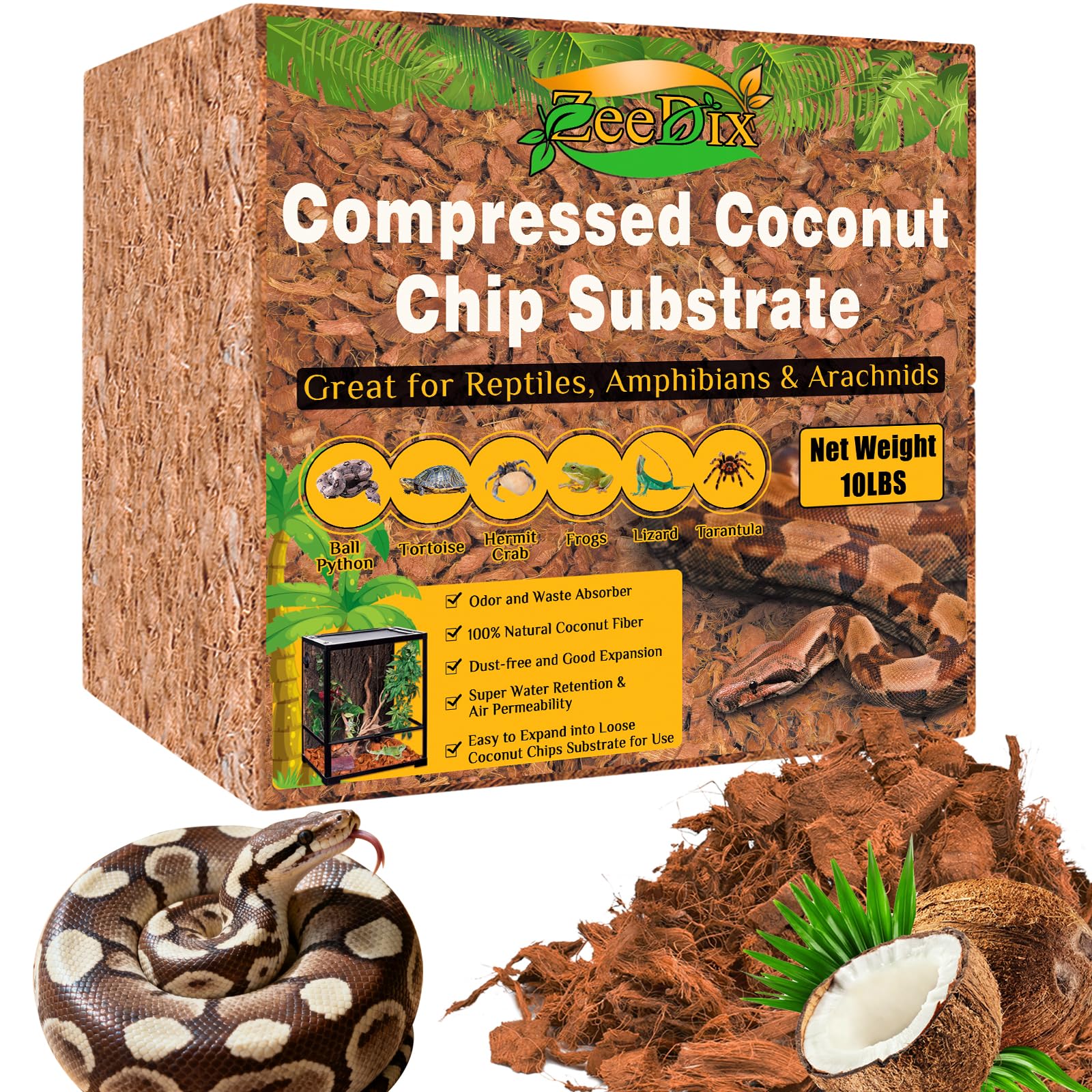
ZeeDix offers a nearly identical compressed brick to the Legigo option — 10 pounds expanding to around 72 quarts at a comparable price point. The individual chips after expansion measure between 10mm and 35mm, which is slightly larger on the upper end than Legigo. This makes the ZeeDix chips better suited for larger adult boas that need deep burrowing material that won’t compact under their weight.
Customer reviews are overwhelmingly positive, with one ball python keeper reporting that their snake started burrowing and exploring more immediately after switching to this substrate. The brick expands well when soaked properly — reviewers recommend using warm water and letting it sit for at least 15 minutes before breaking apart. The chips hold humidity effectively without becoming soggy, enabling complete sheds.
Like the Legigo brick, quality control is not as tight as premium brands. A small number of users reported that if you overwater the brick, the chips can hold too much moisture and stay wet longer than desired. This is manageable if you squeeze out excess water during setup, but it requires more hands-on calibration than a loose-fill product like RediChip.
Why it’s great
- Larger upper-end chip size (up to 35mm) resists compaction well
- Very affordable per-quart cost for keepers on a budget
- Low dust content after expansion — good for respiratory health
Good to know
- Requires careful hydration — overwatering leads to soggy bedding
- No instructions included on the packaging for first-time users
7. Legigo 8 Pack Coconut Fiber Substrate Bricks
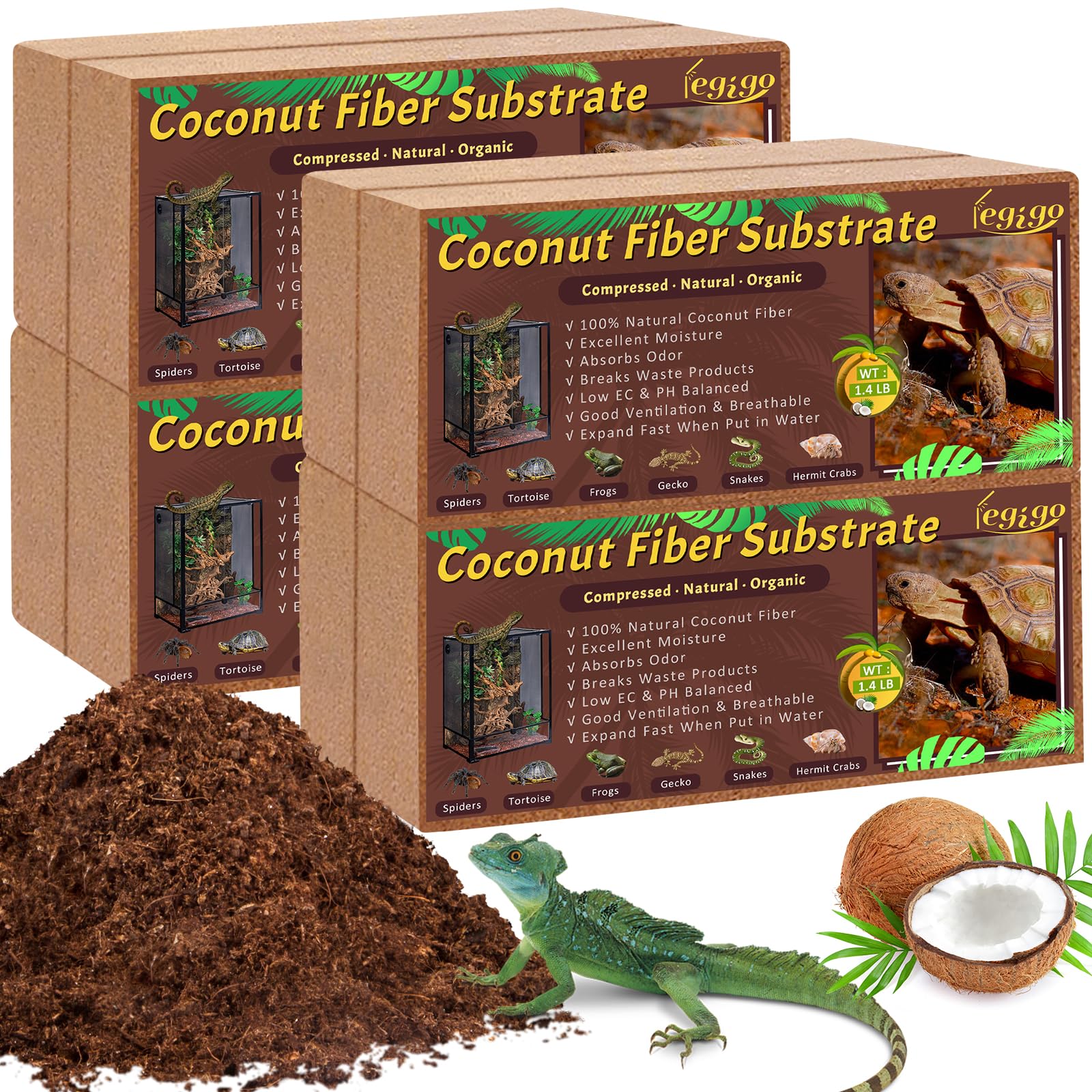
This is a fine coco coir fiber product, not chipped husk — a distinction that matters for boa keepers. The material expands into a fluffy, soil-like consistency that excels at holding humidity but poses a higher impaction risk if your boa is a messy feeder that ingests substrate. It is best reserved for amphibians, hatchling snakes under close observation, or as a humidity-boosting top layer over a husk base.
Reviews from tortoise keepers are particularly strong — the fine texture holds moisture against the carapace without drying out, and the eight-brick pack provides ample volume for a medium tortoise table. Each brick expands to roughly 6 to 8 quarts, giving you a total of 48 to 64 quarts of finished bedding. The bricks dissolve quickly in warm water with minimal effort.
For an adult boa enclosure, I would not recommend using this as the sole substrate layer. The fine fibers compact over time, reducing air circulation and potentially creating anaerobic zones. It also sticks to the snake’s scales when wet, which can trap bacteria. If you already own this for other pets, mixing it 50/50 with husk chips creates a hybrid substrate that balances humidity retention with safe particle size.
Why it’s great
- Excellent humidity retention due to fine fiber structure
- Eight-brick pack provides good value for multi-pet households
- Bricks expand quickly and evenly with minimal soaking time
Good to know
- Fine fiber texture poses impaction risk for adult boas
- Compacts over time and may require more frequent full changes
FAQ
Is coco coir fiber safe for boas or should I only use husk chips?
How many quarts of substrate do I need for a 4-foot boa enclosure?
Can I reuse boa substrate between deep cleanings?
Final Thoughts: The Verdict
For most users, the best boa substrate winner is the RediChip two-pack because it provides the largest volume of ready-to-use, low-dust chips that hold steady humidity without demanding any preparation or hydration guesswork. If you want a bioactive enclosure that supports live plants and a cleanup crew for years, grab the Josh’s Frogs BioBedding. And for budget-conscious keepers who do not mind a short soaking step, nothing beats the cost-per-quart value of the Legigo 10LB compressed brick.