
Our readers keep the lights on and my morning glass full of iced black tea. As an Amazon Associate, I earn from qualifying purchases.
Specs are compiled from manufacturer listings and verified buyer reviews and can change over time — please confirm the key details on the product page before buying.
Pulling a ten-to-twelve-year-old away from a phone and into a tabletop game is its own kind of victory. You need a game that clicks fast, stays fun past the first round, and works with more than two players. This guide breaks down seven very different board games that hook preteens without talking down to them—whether they love word association, building with bricks, or managing a race car’s engine heat.
I’m Min — the founder and writer behind Gadgets Feed. This guide is built by comparing the manufacturers’ published specifications and the patterns across verified customer reviews, so you get each pick’s real strengths and trade-offs instead of marketing spin.
Every choice here was filtered for the exact age range you need, from classic strategy to hands-on building — these are the best board games for 10-12 year olds you can buy right now.
Our Picks at a Glance

How To Choose The Best Board Games For 10-12 Year Olds
Not every game labeled for ages eight to fourteen actually works for a twelve-year-old. Some are too simple and bore them quickly; others have rules that take forty-five minutes to explain before you even start. The key is matching the game’s mechanics to how your child likes to think and how long your family is willing to sit. Here are the three specs that separate a one-time play from a weekly tradition.
Player Count & Social balance
For this age group, a game that works with exactly four players is a safe bet because that covers most standard family sizes and one visiting friend. Games that stretch to six or eight players open up party-style nights without needing an expansion. Check both the minimum and maximum — a game that requires exactly four but claims 2-4 feels broken when only two of you want to play.
Playing Time & Attention Span
Ten-year-olds and twelve-year-olds have different patience ceilings. A game that clocks in at twenty minutes keeps the pace brisk and lets you fit multiple rounds into an evening, which is great for competitive kids who want redemption. A sixty-minute game like Catan or Ticket to Ride demands more sustained focus and planning, making it better for weekend afternoons when no one is rushing off to practice.
Replay Value & Random Setup
The biggest trap is a board game that plays identically every time. Preteens will solve it in two sessions and never touch it again. Look for games that change the board layout each play — modular hex tiles (six-sided game pieces that fit together), shuffled card grids, or variable track pieces. That one feature multiplies the game’s life by ten because no two rounds force the same strategy.
Quick Comparison
| Model | Best For | Players | Playing Time | Age Range | Amazon |
|---|---|---|---|---|---|
| Catan (6th Edition)★ Best Overall | Strategic builders & traders | 3-4 | 60 min | 10+ | Amazon |
| Ticket to Ride (2025 Refresh)Premium Pick | Family train route planning | 2-5 | 30-60 min | 8+ | Amazon |
| HEAT: Pedal to the Metal | Intense car racing simulation | 1-4 | 60 min | 10+ | Amazon |
| Monkey Palace (LEGO Board Game) | Creative brick builders | 2-4 | 45 min | 10+ | Amazon |
| Codenames (2nd Edition) | Large group word association | 4+ | — | Teen | Amazon |
| Battle Sheep | Quick abstract strategy | 2-4 | 20 min | 7+ | Amazon |
| Tetris: The Board Game | Fast-paced tile dropping | 2-4 | 20 min | 8+ | Amazon |
In‑Depth Reviews
1. CATAN Board Game (6th Edition)
Our pick — over 4.5★ from 39,500+ verified ratings; the strongest balance of quality and price.
The trading-and-building classic that teaches resource management without feeling like homework.
Catan teaches you to manage brick, wood, wheat, ore, and sheep (the 6th Edition renamed Grain to Wheat and Lumber to Wood for clarity) so you can build roads, settlements, and cities. You get a different puzzle each game because the modular hexagonal board is reassembled every time — no two setups look the same. Buyers report that a typical game lasts 1-2 hours, which is enough time for real strategic decisions without dragging past bedtime.
The 6th Edition (2025) brings built-in card trays, chunkier wooden pieces in four colors, and an improved rulebook that makes the first teach far easier than earlier versions. With a 4.8 rating across nearly 40,000 reviews, the consistency is hard to argue with. The catch: it plays exactly 3-4 players, so if you have a group of five or just two of you, you will need the expansion kit to adjust the headcount.
It also beats the shorter games on the list in depth — at 60 minutes of estimated playing time, versus the Tetris board game at 20 minutes, giving preteens a bigger strategy arc to work through. One reviewer noted that since their family bought it, “there hasn’t been a week where we haven’t played,” which is about the strongest testament to replay value you can get.
Why it hooks preteens
- Modular board means no two games feel the same
- Teaches strategy, risk assessment, and negotiation in a natural way
- Upgraded components (card trays, chunky pieces) make setup smoother
The main limitation
- Only 3-4 players — families of five need an expansion
- 60-90 minute playtime can drag with distracted younger players
Snag this if: your kid loves building, trading, and thinking three moves ahead — and you have a consistent 3-4 person group willing to sit for an hour.
Pass on it if: you need a game that finishes in under 30 minutes or accommodates a party-sized group of five or six.
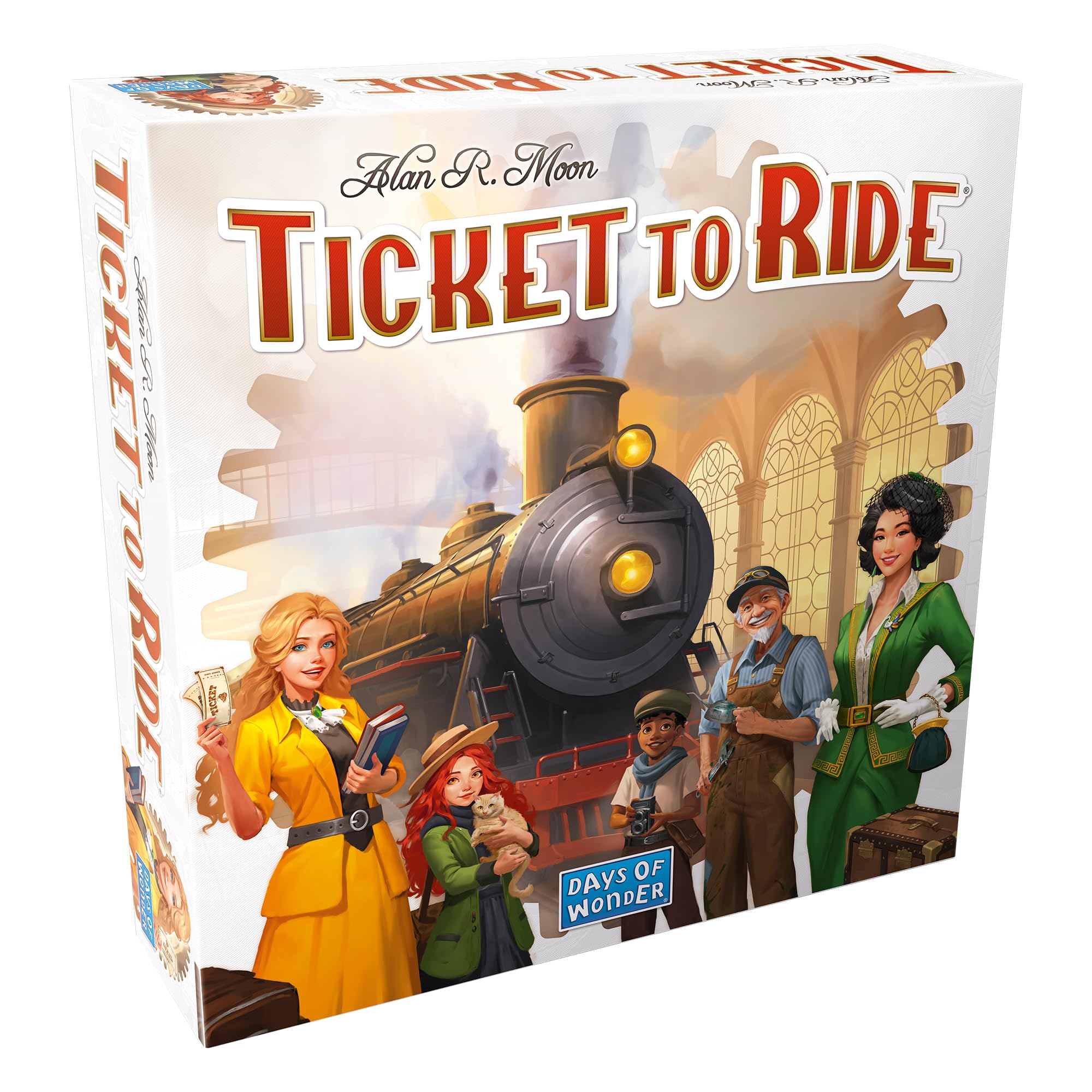
2. Asmodee Ticket to Ride Board Game (2025 Refresh)
Collect train cards, claim North American routes, and outmaneuver your family with a simple set-collection loop.
You get flexible player count here—unlike Catan, which locks you to 3-4 players, Ticket to Ride scales from 2 to 5 players. The core action (draw a card, claim a route) takes thirty seconds to teach, but the decision of which routes to chase keeps every player engaged between turns. The 2025 Refresh includes a giant map of the North American network, 225 plastic trains in five distinct colors, and matching wooden scoring markers. You earn points by completing destination tickets, building the longest continuous route, and blocking opponents from their connections.
The estimated playing time of 30-60 minutes sits neatly between Catan’s hour-plus and Tetris’s twenty-minute sprints. It also leads the whole list in rating — a 4.9 out of 5 across over 27,000 reviews, with buyers calling it “easy to explain and pick up” and noting they play it “around three times a week.”
The trade-off: since the board is fixed (unlike Catan’s modular hexes or Battle Sheep’s rearranged tiles), experienced players start to memorize optimal routes after a half-dozen games. That said, the puzzle of reading which routes your opponents are chasing keeps the game fresh longer than you expect. For a preteen just graduating from simpler card games, this is the right next step.
What makes it work
- Scales from 2 to 5 players without losing balance
- Simple rules (draw cards, claim routes) but genuine strategic depth
- Nearly perfect 4.9 rating across 27,000+ reviews
One thing to note
- Fixed board means less variety per session compared to modular games
- Plastic trains are durable but can be small for younger hands
Best suited for: families with varied player counts (2-5) who want a game that takes under an hour and scales from casual to competitive.
Skip if: your kid needs a fresh board every time to stay interested — the fixed map may feel samey after ten plays.
3. Asmodee HEAT: Pedal to the Metal Board Game

A racing game where you manage engine heat, not just speed — perfect for the kid who loves cars and math.
HEAT puts you in the driver’s seat with a hand-management system. You play Speed cards to move, but push too hard and Heat cards (penalty cards that slow your deck) clog your hand, limiting your options. There are also Stress cards that add a random-value element, and a slipstreaming mechanic (drafting behind other cars for free speed) lets you gain ground without spending cards. The box includes two giant double-sided boards (four tracks total), six race cars with matching gear pawns, and a full championship system that lets you play an entire season in one night.
Reviewers praise the “fast-paced racing with hand management” and call it “highly replayable” with the modular expansions. Unlike Ticket to Ride’s fixed map, HEAT’s four tracks and weather tokens give more variety per session. The championship module includes weather and road condition tokens that change track grip, and a Legends module (an AI for solo play) allows you to play alone, which is rare for this category.
The big catch is the price — it sits at the higher end of the list and the box is large. Also, the car components are serviceable but not premium-quality, which matters if your kid is rough on pieces. At 60 minutes of playtime, it matches Catan’s duration, so this is not a quick after-school filler.
What pulls you in
- Heat and stress cards add real tension — you feel the risk of overheating
- Four tracks, solo AI mode, and championship system for massive replayability
- Slipstreaming mechanic creates notable overtakes
What holds it back
- Large box takes up serious shelf space
- Car component quality is just okay for the price tier
Reach for this if: your ten-to-twelve-year-old is into racing, cars, or games where you manage resources under pressure — the heat mechanic is genuinely clever.
Look elsewhere if: your budget is tight or you need a game that packs small for trips.
4. Monkey Palace — LEGO Board Game

A board game that uses real interlocking LEGO bricks as the board — half build, half strategy.
Monkey Palace is the most physically engaging game here because you are not just moving a token on cardboard — you are actually stacking 231 LEGO elements to build a monkey fortress. The included LEGO plate (32 x 32 knobs) serves as the base, and as you play cards and count banana points, you construct a wobbling tower that can crash down mid-round. That physical risk of collapse creates genuine laughter and tension that no flat board game can match.
It is designed for 2-4 players ages 10 and up, with an estimated playtime of 45 minutes. The game includes 84 game cards and 4 jungle maps that guide your building strategy.
At 45 minutes, it splits the difference between Battle Sheep’s 20-minute sprints and Catan’s hour-long sessions, making it a good bridge game for a weekend afternoon. Just be prepared for a slightly longer setup and cleanup than a pure card game requires — the bricks need sorting after each play.
Why it stands out
- Real LEGO building as the core mechanic — no other game here does this
- Wobbling towers create memorable, laugh-filled moments kids love
- Bricks are compatible with existing LEGO collections for expansion
What to watch for
- May not include enough bricks for extended games with 3-4 players without supplementing
- Setup and cleanup take longer than a typical card-based board game
Ideal for: LEGO-obsessed kids who struggle with pure abstract board games — the bricks give them a tactile anchor.
Better to skip if: your family hates sorting small pieces after every play or you only have two players most nights.
5. CGE Codenames Board Game (2nd Edition)

A word-association party game where one clue can connect four cards — or sink your whole team.
Codenames is the game to grab when you have a big group. Unlike the other picks, which cap at 4 or 5 players, Codenames thrives with 6, 8, or even 10 people split into teams. You give a one-word clue plus a number to guide your teammates to the right cards on a 5×5 grid. If the team guesses correctly, they keep going; if they hit the assassin card (a random opponent card that ends the game), the game ends instantly. The 2nd Edition brings 200 cards (400 codenames), refreshed word lists, updated art, and a better insert that organizes the components more cleanly.
Owners mention it is “easy to learn, quick rounds, works well with 8 players.” With a 4.8 rating across 29,149 reviews, this is among the most widely loved games on the list. The downside is that there is no formal playing time — a round can last two minutes or ten, depending on your spymaster’s creativity. Also, the assassin mechanic and one-word-clue pressure can frustrate kids who are less confident with vocabulary. Just keep in mind that the “Teen” age rating is a touch older than the 10-12 balance — it works best with kids who are strong readers and comfortable with abstract language.
Why groups love it
- Scales to large groups (6-8+ players) easily
- Quick rounds mean everyone stays engaged — no long downtime
- Extremely portable — small box, no board setup
The main hurdle
- Requires strong reading skills and comfort with word association
- No fixed playtime per round can make the overall evening length unpredictable
Snag this for: large family gatherings or sleepovers where you need a game that accommodates eight kids without dragging.
Pass on it if: your child is a reluctant reader or gets anxious about performing under a time constraint in front of a team.
6. Battle Sheep Abstract Strategy Board Game
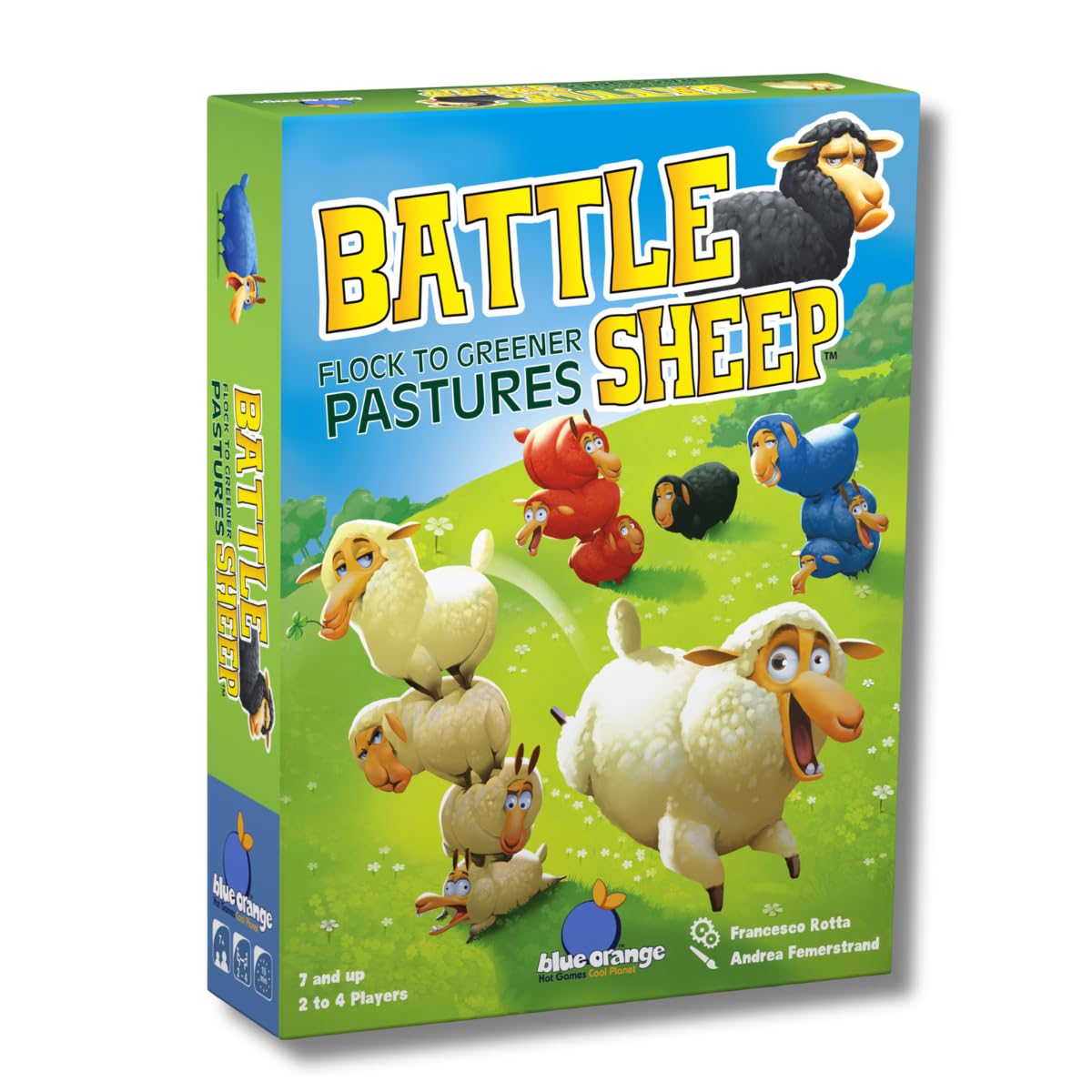
A 20-minute abstract strategy game with sheep chips — think chess but faster and cuter.
Battle Sheep is the fastest game in this list along with the Tetris board game, clocking in at about 10-20 minutes per round. You build the board from identical four-hex pasture tiles (so it changes shape every game), then each player places a tall stack of sheep discs on a border hex. On your turn, you take some discs off the top of one of your stacks and move them in a straight line as far as they can go. You must leave at least one disc behind, so the board gradually fills up and your movement options shrink. The player occupying the most spaces wins.
Customers note that “quick games (~10 min), high strategy.” The high-quality urea tokens (a type of durable plastic) are weighty and satisfying to handle, and the grippy board pieces stay put during play. The changing board layout ensures that no two games feel the same, giving it surprisingly strong replay value for a game that plays in under half an hour.
The trade-off: the theme (sheep on a pasture) is charming but completely abstract. Kids who love narrative or thematic games — like the train adventure of Ticket to Ride or the tower building in Monkey Palace — may find the sheep theme too thin. It is much closer to a quick-light abstract like checkers than to a deep trading game like Catan, so calibrate your child’s taste accordingly.
What makes it click
- Very fast: ~10-20 minutes with easy rules you can teach in under a minute
- Modular board means the puzzle changes every time
- Premium-quality pieces — weighty sheep chips and durable pasture tiles
What to consider
- Abstract theme may not hook kids who prefer storytelling games
- Tall stack of discs can topple, frustrating younger players
Ideal for: families who want a quick warm-up game before a longer one, or for kids who love strategic puzzles like chess but prefer a faster pace.
Better to skip if: your child needs a strong theme or story to stay engaged — this is pure abstract strategy, no fluff.
7. Spin Master Games Tetris: The Board Game
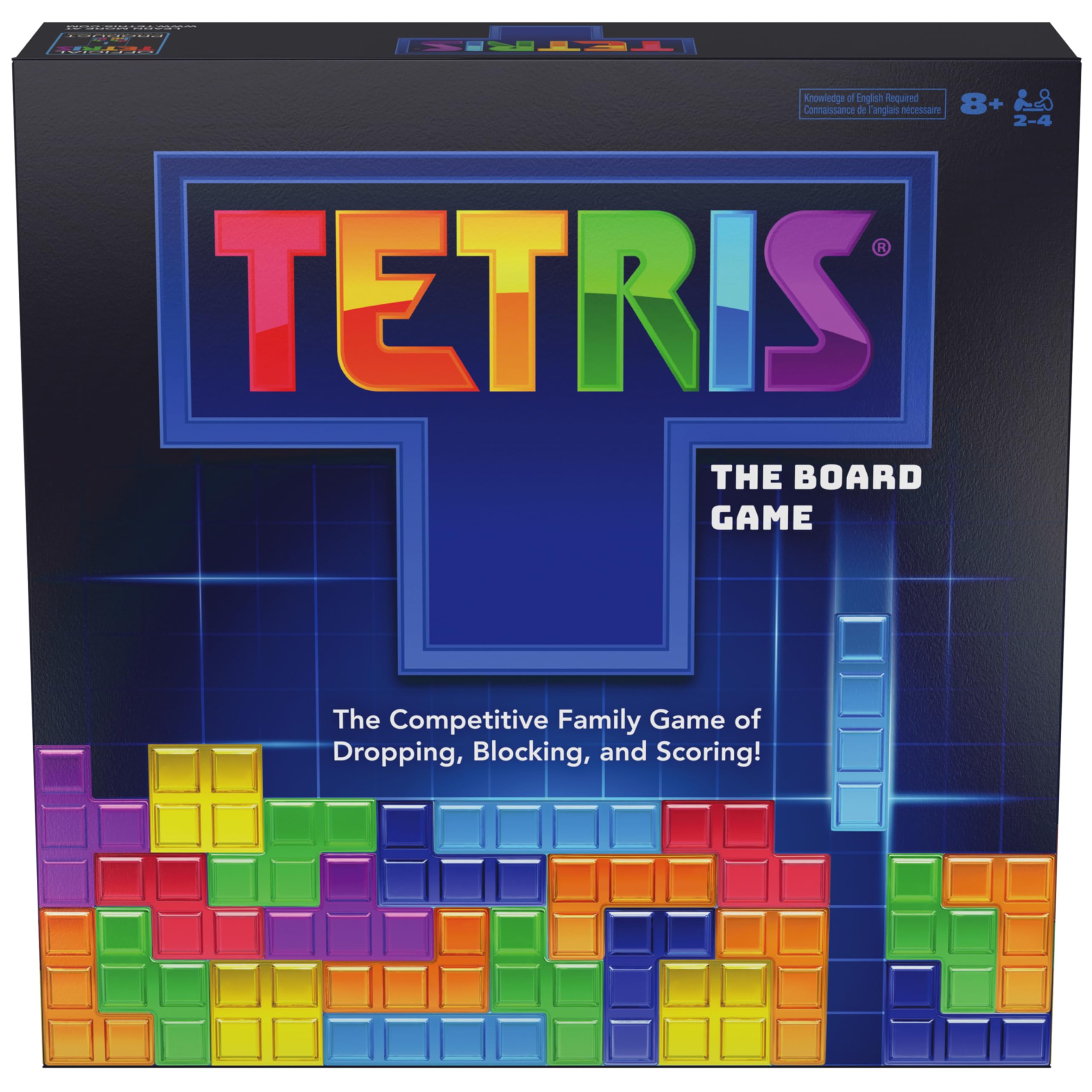
Turn digital Tetris into a physical race where you drop semi-translucent pieces onto opponents’ grids.
Tetris: The Board Game is exactly as fast as Battle Sheep — 20-minute rounds — but plays differently. You drop semi-translucent Tetrimino pieces onto your own 4×4 grid, trying to complete lines. The twist: whenever you land a piece on a black Garbage Drop Icon (a space that triggers an attack), you get to add a piece to an opponent’s grid, blocking their progress. The game includes 128 Tetriminos, 8 Minos, 4 Tetris Grids with bases, 24 Tetrimino Cards, and a central gameboard that tracks the round.
One buyer mentioned it is a “fun, interactive game that is perfect for my 10-year-old,” while another flagged the “Lots of tiles though” — the cleanup and organization after each game can be overwhelming because the set includes a high volume of small pieces. Unlike Catan (3-4 players, 60 minutes), Tetris accommodates 2-4 players in 20 minutes — a 20-minute versus 60-minute speed advantage that matters on busy school nights. The pieces are colorful and durable, and the competitive blocking mechanic means kids stay engaged even when it is not their turn.
Why it works
- Fast 20-minute rounds fit easily into busy weeknights
- Competitive blocking mechanic keeps players engaged between turns
- Familiar Tetris brand makes it an easy sell for kids who love the video game
The real trade-off
- Organizing 128 Tetriminos after each game is tedious
- Instructions can be tricky to parse on the first read-through
Best for: families with kids who grew up on digital Tetris and now want the physical version, or anyone who wants a fast-paced, entry-level strategy game.
skip it if: you cannot stand sorting hundreds of tiny pieces after every play session, or your child prefers deep single-player strategy over disruptive multiplayer play.
Understanding the Specs
Player Count & Scalability
This is the most practical spec because it dictates whether the game actually hits your table. A game that supports 2-4 players covers most families, but if your household regularly has five people, you will want something like Ticket to Ride (2-5) or Codenames (4+). A game locked at exactly 3-4 players, like Catan, leaves a couple out unless you buy an expansion. Always check the minimum count too — some “4-player” games only work well at the maximum and feel broken with fewer people.
Playing Time & Real World Duration
The box often says one thing, and real play yields another. For example, Catan’s box says 60 minutes, but reviewers report a typical game lasts 1-2 hours. Battle Sheep claims 20 minutes, and buyers confirm it plays in about 10 minutes. The delta between claimed and actual matters most for strategy games where group size and analysis paralysis stretch the clock. If bedtime is strict, a 20-minute game is safer than a 60-minute one that could run 90 minutes.
FAQ
Can a 10-year-old learn Catan on the first try?
Which game works best for a group of 8 kids?
Is the Tetris board game different from the video game?
How long does a typical Catan game actually take?
Does Battle Sheep work for a 7-year-old and a 12-year-old together?
Can you play Ticket to Ride with just two players?
Does Monkey Palace require extra LEGO bricks?
Which game has the most replay value?
Is HEAT: Pedal to the Metal too complex for a 10-year-old?
Can you play Codenames with non-readers?
Final Thoughts: The Verdict
For most families, the best board games for 10-12 year olds winner is the CATAN Board Game (6th Edition) because it teaches resource management and negotiation naturally, has a nearly perfect 4.8 rating across 40,000 reviews, and keeps a preteen’s attention for a solid hour of strategic play. If you want a faster, more accessible game that also scales to five players, grab the Ticket to Ride (2025 Refresh). And for large group game nights where you have eight kids and need everyone involved, the standout is the Codenames (2nd Edition).
How We Picked
We do not accept paid placement. Every pick is matched to a real buyer and a real use-case; we do not hands-on test units.
Sources & Methodology
Specifications: manufacturer listings and product documentation. Review insights: verified customer reviews, as of July 2026. Pricing: not shown on this page (it changes often); check the current price via the retailer link.
As an Amazon Associate, Gadgets Feed earns from qualifying purchases. This does not affect which products we feature.