
Finding a board game that works perfectly for exactly three people is a specific challenge — many games either feel too crowded with four or drag with two, leaving that sweet spot underserved. The best options avoid player elimination and keep everyone engaged from the first turn to the last.
I’m Min — the co-founder and writer behind Gadgets Feed. I’ve spent countless hours analyzing game mechanics, player counts, and community feedback to identify which titles truly shine with a trio at the table.
This guide cuts through the noise to deliver the definitive list of the best board games for 3 people, focusing on concrete specs like playtime, mechanics, and replay value.
How To Choose The Best Board Games For 3 People
Not every board game scales down to three players gracefully. Some require exactly four for balanced trading, while others become too predictable with fewer participants. When selecting a title for three, focus on mechanics that maintain tension without player elimination.
Player Interaction vs. Multiplayer Solitaire
With three players, you want games that encourage direct or indirect interaction — trading resources, blocking placements, or racing for objectives — without letting one player get left behind. Games where each player builds their own engine with minimal overlap can feel like three separate solitaire sessions.
Playtime and Pacing
A three-player game should run between 30 and 60 minutes to respect attention spans while allowing meaningful strategic depth. Avoid games that balloon past 90 minutes with three, as downtime between turns can kill momentum. Look for estimated playing times in the 30-45 minute sweet spot.
Replayability and Variable Setup
Because you’ll likely return to the same game with the same three people, modular boards, randomized objectives, or multiple starting configurations are critical. Without variable setup, even the best mechanics grow stale after five sessions.
Quick Comparison
On smaller screens, swipe sideways to see the full table.
| Model | Category | Best For | Key Spec | Amazon |
|---|---|---|---|---|
| Carcassonne | Tile Placement | Classic strategy with expansions | 35 Min / 2-5 Players | Amazon |
| HEAT: Pedal to the Metal | Racing/Deck Mgmt | High-octane competitive racing | 60 Min / 1-4 Players | Amazon |
| CATAN (6th Edition) | Resource Trading | Negotiation and strategy | 60-90 Min / 3-4 Players | Amazon |
| Harmonies | Tile-Laying/Puzzle | Relaxing 3D landscape building | 30 Min / 1-4 Players | Amazon |
| Castle Panic (2nd Ed) | Cooperative Defense | Teamwork against monster waves | 45 Min / 1-6 Players | Amazon |
| Planted | Resource Management | Light strategy with plant theme | 20-30 Min / 2-5 Players | Amazon |
| HUES and CUEs | Word Association | Creative, color-based guessing | 30 Min / 3-10 Players | Amazon |
In‑Depth Reviews
1. Carcassonne Board Game
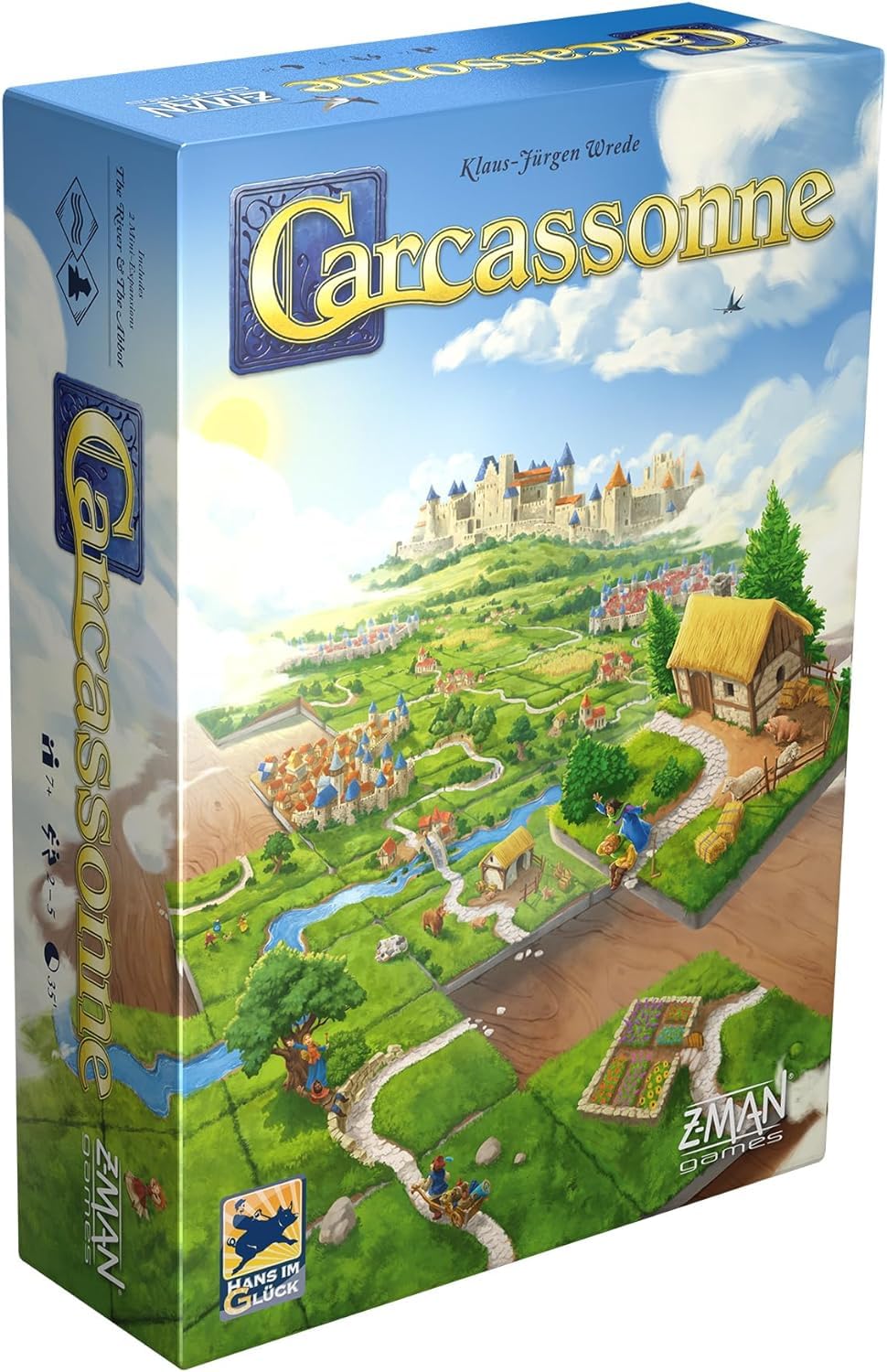
Carcassonne uses a simple tile-laying core: draw a tile, place it to expand the medieval landscape, and deploy a meeple to claim a city, road, field, or monastery. With three players, the competition for space becomes intense without ever feeling mean-spirited — each tile drawn changes the board in a way that forces you to adapt your long-term plan.
The included River and Abbot mini-expansions add immediate variety, and the randomized draw ensures no two games unfold the same way. The 35-minute estimated playtime holds up well with three — turns cycle quickly because each player only places one tile and makes one scoring decision per round. Components are clean, durable, and the meeple count is perfectly balanced for a trio.
A 2001 Spiel des Jahres winner that remains a benchmark in the genre, Carcassonne scales effortlessly from two to five players but truly shines at three because the board grows fast enough to create meaningful blocking without leaving anyone boxed in. It’s the gold standard for trio game nights.
Why it’s great
- Included River and Abbot expansions add immediate depth
- Fast 35-minute play keeps three players constantly engaged
- No player elimination — everyone scores until final tile
Good to know
- Field scoring can be confusing for first-time players
- Base game lacks the variety found in larger expansions
2. HEAT: Pedal to the Metal Board Game

HEAT drops you into the driver’s seat of a high-speed Formula-style race where hand management and risk assessment decide the winner. The core mechanic revolves around a gear-shifting system — you can only move up or down one gear per turn — and your deck fills with Heat cards that clog your hand if you push too hard. With three players, every slipstream draft and corner brake matters more because the pack stays tight.
The game includes four double-sided tracks, six car miniatures, and multiple modular systems: garage upgrades, weather conditions, and a full championship mode. The estimated 60-minute playtime flies by because players take simultaneous turns to a degree — you play speed cards and then resolve movement together, keeping downtime near zero. The solo Legends module works well too, but three real players creates the best balance of competition and chaos.
Component quality is high overall — thick boards, vibrant card art, and functional gear pawns — though the car minis and player dashboards are thinner than expected for the price. For a group of three who want a game night that feels like an event, HEAT delivers unmatched tension and replayability.
Why it’s great
- Simultaneous card play keeps downtime to a minimum
- Modular upgrade and weather systems offer high replay value
- Championship mode creates a satisfying multi-race arc
Good to know
- Large box and many components require significant table space
- No collision or take-out mechanics for direct conflict fans
3. CATAN Board Game (6th Edition)

CATAN is the gateway that taught millions how to negotiate, trade, and build. The 6th Edition streamlines the experience with built-in card trays, chunkier wooden pieces, and a revamped rulebook that renames resources — Lumber becomes Wood, Grain becomes Wheat — making it more accessible than ever. With exactly three players, the resource scarcity and trading dynamics hit a sweet spot where no single player can dominate the board.
The modular hexagonal board ensures variable setup, and the 60-90 minute playtime gives enough room for strategy to unfold without dragging. The robber mechanic creates tension because the leading player becomes a target, and that pressure is especially sharp with three — coalitions and temporary truces form naturally. The included card trays are a welcome upgrade for tabletop tidiness.
While the base game is excellent for a trio, dedicated players will eventually want expansions like Seafarers or Cities & Knights to add depth. The 6th Edition’s card backs differ slightly from older expansion sets, so check compatibility before buying extras. For a proven, endlessly replayable trio experience, CATAN remains a powerhouse.
Why it’s great
- Modular board ensures no two games are identical
- Trading and negotiation mechanics create dynamic interaction
- 6th Edition upgrades components and rule clarity
Good to know
- Longer 60-90 minute play may outlast casual groups
- Player elimination via robber can frustrate newcomers
4. Harmonies Board Game

Harmonies tasks each player with building a 3D landscape by stacking wooden tokens and placing animal cubes to match card patterns. It’s a tile-laying game at heart, but the vertical element — stacked terrain pieces — adds a tactile satisfaction that flat boards can’t match. With three players, everyone builds their own world with minimal interference, making it a low-stress option for groups who prefer parallel puzzle-solving over direct conflict.
The game includes 120 wooden tokens, 79 animal cubes, 32 Animal cards, and 10 Nature’s Spirit cards, all packed with high-quality card stock and a functional storage pouch. The 30-minute playtime is brisk, and the three difficulty levels on the cards allow the same deck to work for casual players and strategy optimizers alike. The art direction from Libellud is stunning — each card is a tiny painting worth appreciating.
Minimal player interaction is both a strength and a limitation: it’s perfect for relaxed evenings but won’t satisfy groups craving competitive tension. For a trio that wants to wind down after work while still engaging their brains, Harmonies delivers a beautiful, satisfying puzzle every time.
Why it’s great
- Wooden tokens and 3D stacking create a premium tactile feel
- Variable card difficulties provide high replay value
- 30-minute sessions are perfect for quick game nights
Good to know
- Players work on separate boards with minimal direct interaction
- Game end can feel abrupt as the final card triggers completion
5. Castle Panic 2nd Edition

Castle Panic flips the competitive dynamic entirely — three players must cooperate to defend Castle Bravehold against waves of monsters pouring from the forest. Each player manages a hand of cards representing archers, swordsmen, and special actions, trading resources and coordinating attacks to keep all six towers standing. With three, the team feels balanced: enough hands to cover weaknesses but not so many that individual contributions get diluted.
The 2nd Edition adds 3D castle walls and towers, vibrant monster tokens, and an illustrated board that sets the siege atmosphere immediately. Estimated playtime is 45 minutes, and the adjustable difficulty means you can fine-tune the challenge as your group improves. The cooperative core eliminates the kingmaker problem common in three-player competitive games — everyone wins or loses together, which keeps tension focused on the board, not on each other.
Experienced gamers may find the tactical depth limited after several plays, but expansions like Wizard’s Tower add new layers. For a trio that values teamwork and shared victory over backstabbing, Castle Panic is a top-tier pick.
Why it’s great
- No player elimination and full cooperative teamwork
- Adjustable difficulty extends replay value significantly
- 3D components and monster tokens heighten immersion
Good to know
- Base game may feel shallow for veteran strategy gamers
- Visual design is functional but not as polished as premium alternatives
6. Planted Strategy Board Game

Planted puts you in the role of a plant parent managing water and plant food tokens to nurture 42 unique houseplant species. Designed by Phil Walker-Harding (creator of Sushi Go!), the game uses a resource-management engine where you draft cards and collect resources to complete sets. With three players, the card draft flows smoothly — the market doesn’t swing too wildly, and the 20-30 minute playtime is the shortest on this list.
Components are a highlight: the cardboard tokens are thick and satisfying to handle, the plant cards feature beautiful botanical illustrations, and the included score pad and storage bag show thoughtful design. The game is very easy to teach — explain the token types and set collection rules, and everyone is playing within two minutes. It compares favorably to similar-weight games like Sushi Go or Splendor but with a more approachable theme.
The main limitation is that experienced gamers might exhaust its strategic depth after a dozen plays — the decision space is narrower than heavier titles. But as an entry-level or transition game for a trio, Planted offers exceptional value and charm.
Why it’s great
- Ultra-fast setup and teach — playable immediately
- Premium cardboard tokens and beautiful plant artwork
- Compact 20-30 minute sessions fit busy schedules
Good to know
- Strategic ceiling is lower than heavier resource games
- Token shortage can occur with the 1-token-for-4 rule
7. HUES and CUES
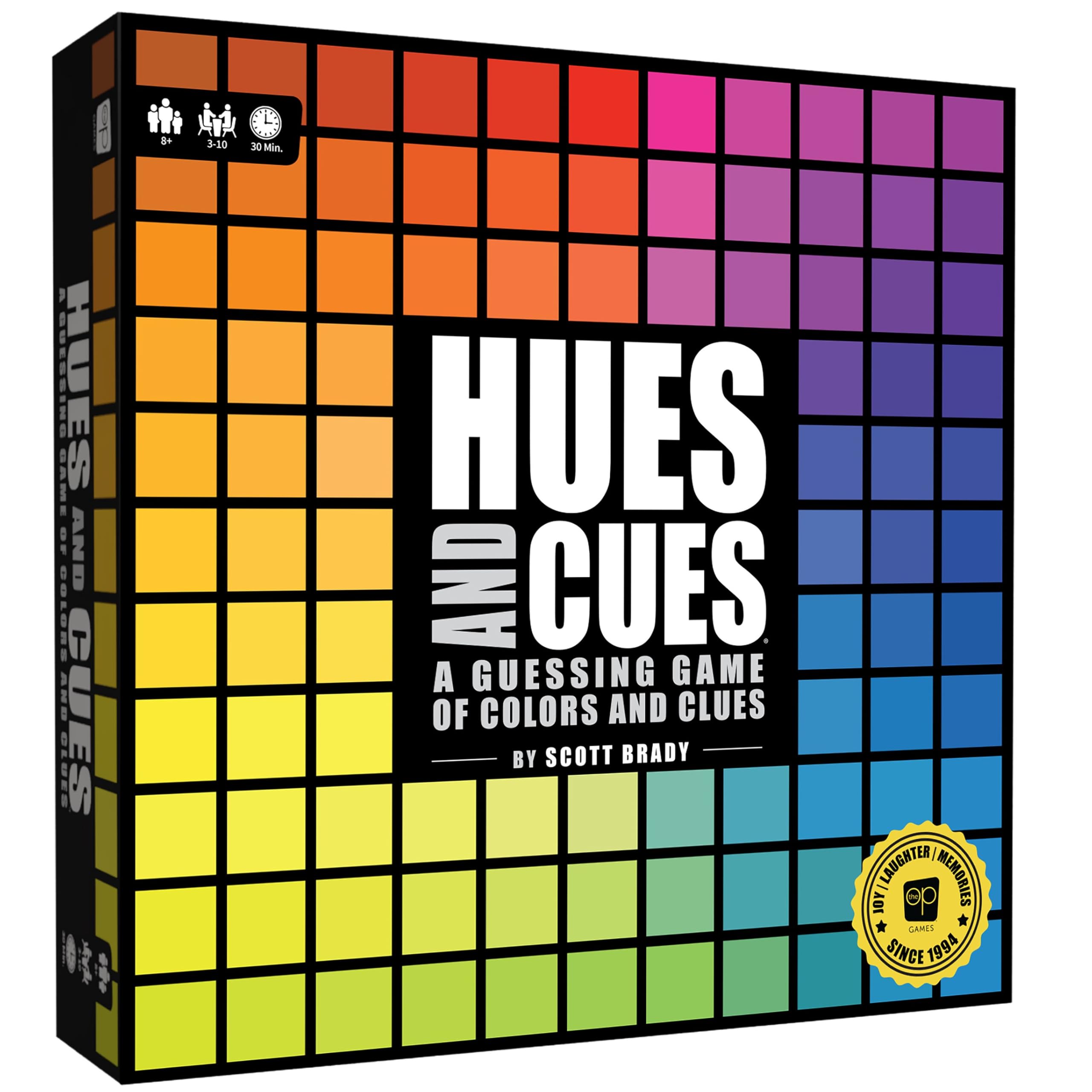
HUES and CUES challenges players to give one- or two-word clues that guide others to guess a specific color from a board of 480 distinct hues. The twist is that color perception is deeply subjective — a clue like “ocean” might land at deep blue for one person and turquoise for another, creating hilarious mismatches. With three players, the game moves quickly and the limited field of guessers keeps each round focused and competitive.
The components are simple but effective: a game board showing the 480 color squares, 100 color cards, 30 player pieces, and a scoring frame. No batteries required, and the rules are explained in under 60 seconds. Estimated playtime is 30 minutes, but you can easily run multiple rounds because the fun comes from the variability of human perception, not from complex mechanics. It works for ages 8 and up, and the colorblind-friendly design ensures accessibility.
The only catch is that the open-ended nature of the clues can occasionally frustrate players who prefer concrete, black-and-white rules. But for a trio looking for laughter and creativity, HUES and CUES delivers a uniquely colorful experience every time.
Why it’s great
- Extremely easy to teach — playable in under 60 seconds
- Subjective color perception creates genuinely funny moments
- Colorblind-friendly design broadens accessibility
Good to know
- Open-ended clues can feel vague for literal-minded players
- Replayability depends on group creativity, not game mechanics
FAQ
Why do many 2-4 player games feel worse at exactly 3 players?
What game mechanic works best for a trio?
Should I buy expansions right away for three-player games?
Final Thoughts: The Verdict
For most users, the best board games for 3 people winner is the Carcassonne Board Game because its tile-laying mechanics create strategic tension without player elimination, scales perfectly to three, and includes expansions that extend replay value. If you want high-octane competition and modular gameplay, grab the HEAT: Pedal to the Metal Board Game. And for a relaxing, tactile puzzle session, nothing beats the Harmonies Board Game.