
Our readers keep the lights on and my morning glass full of iced black tea. As an Amazon Associate, I earn from qualifying purchases.
Specs are compiled from manufacturer listings and verified buyer reviews and can change over time — please confirm the key details on the product page before buying.
Finding a board game that actually works for four is harder than it sounds. You need something that doesn’t drag with downtime, isn’t too chaotic with a full table, and keeps everyone engaged from the first turn to the last. This guide cuts through the noise to focus on the games that shine specifically when you have that perfect quartet sitting around the table.
I’m Min — the founder and writer behind Gadgets Feed. This guide is built by comparing the manufacturers’ published specifications and the patterns across verified customer reviews, so you get each pick’s real strengths and trade-offs instead of marketing spin.
From cooperative crisis management to cutthroat tile drafting, these board games for 4 players are the ones that earn a permanent spot on your shelf and keep your group asking for one more round.
Our Picks at a Glance


How To Choose The Best Board Games For 4 Players
The best four-player game isn’t just the one with the highest rating — it’s the one that fits your group’s personality. A group that loves a shared challenge will hate a cutthroat auction game, and a group of newcomers will bounce off a 150-minute slog. Match the mechanics to your table, not just the theme.
Play Style: Co-op vs. Competitive
Decide first whether your group wants to win together or win against each other. Cooperative games like Pandemic make everyone a teammate fighting the game itself, which removes the sting of losing and encourages talking through every move. Competitive games reward ruthless efficiency, which is great for groups that like to trash-talk lightly but can leave a sore loser feeling ganged up on.
Game Length and Depth
Look at the estimated playing time before you commit. A 20-minute quick-play is perfect for a weeknight, while a 90-minute strategy game is a real event that needs everyone’s attention. The depth of the rules matters too — a “light” game you can teach in five minutes is different from a “midweight” game that takes a full round to click. Know your group’s patience level before you pick a 45-minute game or a 2.5-hour epic.
Replayability and Table Presence
A great four-player game holds up after the tenth play. Look for games with variable goals, changing tile layouts, or multiple strategies that make each session feel fresh. The physical components matter for a different reason: chunky wooden tokens and beautiful art keep players invested during other people’s turns and make the game a joy to set up week after week.
Quick Comparison
| Model | Best For | Players | Playtime | Core Mechanic | Amazon |
|---|---|---|---|---|---|
| Pandemic★ Best Overall | Teamwork & shared wins | 2-4 | 45-60 min | Cooperative | Amazon |
| Lanterns: The Harvest FestivalBest Value | Fast, family-friendly strategy | 2-4 | 20-40 min | Tile Placement | Amazon |
| HarmoniesBest Aesthetics | Beautiful buildable landscapes | 1-4 | 30 min | Tile Placement | Amazon |
| Azul | Cutthroat tile drafting | 2-4 | 30-45 min | Draft & Place | Amazon |
| Ticket to Ride | Accessible route building | 2-5 | 30-60 min | Set Collection | Amazon |
| King of New York | Chaotic monster dice action | 2-6 | 60 min | Dice Rolling | Amazon |
| Castles of Mad King Ludwig | Creative castle architecture | 1-4 | 90 min | Tile Placement | Amazon |
| Ark Nova | Deep zoo-management strategy | 1-4 | 90-150 min | Card Drafting | Amazon |
| Everdell Collector’s Edition | Charming woodland engine building | 1-4 | 60 min | Worker Placement | Amazon |
In‑Depth Reviews
1. Pandemic Cooperative Strategy Board Game
Our pick — over 4.5★ from 18,500+ verified ratings; the strongest balance of quality and price.
The ultimate team-up where you and three friends race to save humanity from four simultaneous global outbreaks.
This is the game that makes you and your friends work as one unit against the board itself. You’ll take on specialist roles like the Medic or Scientist, each with a distinct ability, and combine your actions to contain outbreaks, share knowledge, and race to cure all four diseases before time runs out. The victory is shared, which means a win feels like genuine teamwork and a loss hits everyone equally.
It plays in about 45-60 minutes, which fits a family game night or a dedicated adult board game group. The strategic depth comes from balancing immediate threats against long-term progress, with tense decisions every single round. What wins people over is the gameplay itself — the sheer tension of watching an epidemic spread and knowing you have to coordinate perfectly to stop it keeps the table engaged the whole time.
Buyers report win rates that show just how brutal it can get: two players with four epidemic cards win 100% of the time, that drops to 70% with five epidemics, and six epidemics is unbeaten. At four players with four epidemics, you’re looking at roughly a 50% win rate. The recurring gripe is the difficulty — it’s easy to learn but complicated to master, and some find the rules confusing at first. This is a game about planning and card management, not luck, so if your group prefers zero pressure and pure luck, this will frustrate them more than delight.
Why it owns the table
- Forces genuine cooperation instead of solo play
- High replayability — once you win, you’ll want to try harder epidemics
- Sets the standard for cooperative games
Where it’s rough
- Difficulty swings wildly based on the number of epidemics
- Can suffer from “alpha player” syndrome where one person dictates moves
- Losing via outbreaks can feel sudden and harsh
Grab this if: you want a cooperative challenge that rewards communication and shared planning over individual glory.
Think twice if: your group prefers light, low-stress games where nobody is ever at risk of losing together.
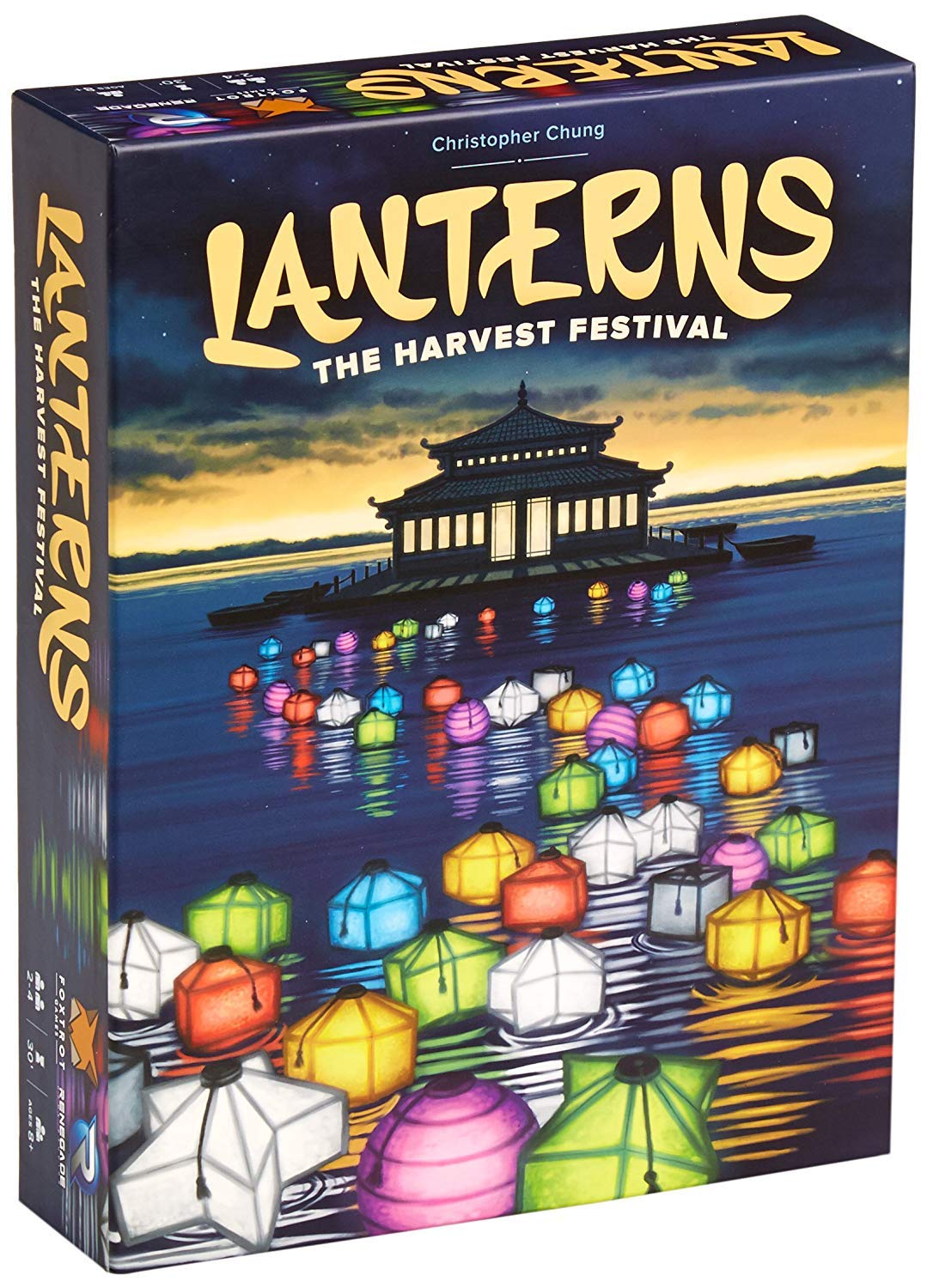
2. Renegade Game Studios Lanterns: The Harvest Festival
A fast-paced tile-laying game where everyone gains lanterns on every turn, keeping the whole table engaged.
If you want an abstract strategy game that anyone can learn in minutes, this is the one. The goal is to collect sets of seven different colored lantern cards by placing tiles, with each placement granting cards to everyone — including your opponents. That simple twist means you’re always paying attention even when it isn’t your turn, because someone else’s move could hand you exactly the card you need.
At 20-40 minutes, it’s a perfect weeknight filler that scales smoothly from 2 to 4 players. The strategy is deeper than it looks, with diminishing set values and a limited card market forcing you to decide when to cash in. It’s a favorite for couples and kids aged 7+, and the rulebook is clear enough that a 9-year-old can pick it up while adults still find real tactical depth.
The art is pleasant and the components are decent, though the cards are average quality and the tiles can feel fragile — you’ll likely want to sleeve them. Because it plays faster than most — wrapping up in about 20 minutes versus the longer strategy games on this list — it’s great for casual settings and new players who aren’t ready for a deep commitment.
Core appeal: the “everyone gets cards” mechanic keeps all four players engaged every single turn, eliminating the dreaded downtime where you check your phone.
Reach for this if: you need a quick, easy-to-teach game that still rewards strategic thinking and works for mixed-age groups.
Look elsewhere if: you want a game with more complex rules and a longer, more epic play session.
3. Asmodee Harmonies Board Game
A poetic puzzle where you build dreamlike 3D habitats with 120 wooden tokens and 42 illustrated cards.
Harmonies is the game you pull out when you want something visually stunning that still has real strategic bite. You create your own dreamlike world, combining landscapes and animals to earn victory points. It looks like a relaxing nature-building game, but the scoring gets deep — you’re balancing animal habitats, terrain height, and pattern development all at once.
What wins people over is the satisfying gameplay backed by three levels of difficulty, making it easy for younger kids to learn while still challenging experienced players. The premium components are a genuine highlight: 120 wooden tokens and high-quality cards that make the board look fantastic on the table. It plays in about 30 minutes, making it a solid mid-length option that fits nicely between a quick filler and a long strategy session.
The structural play is a relaxing 3D puzzle where you collect and place stones to score and build habitats. The one thing to note is that player interaction is minimal — some describe it as multiplayer solitaire — and it ends somewhat abruptly. If your group loves games where you directly mess with each other, this one won’t satisfy that itch.
Standout feature: the gorgeous Libellud artistry and tactile wooden pieces make it a joy to look at and hold, even when you’re just waiting for your next turn.
Choose this for: a family night that values beautiful aesthetics and relaxing, thinky gameplay over direct confrontation.
skip it if: you thrive on player interaction and want a game where you can actively block or attack opponents.
4. Azul Mosaic Tile-Placement Strategy Board Game

The 2018 Spiel des Jahres winner that turns gorgeous mosaic tiles into a beautifully cutthroat drafting war.
Azul is the game that proves a simple concept — drafting colorful tiles to build a mosaic wall — can hide a surprisingly deep and mean strategy. While it shines in head-to-head 2-player duels, it scales brilliantly to 3 or 4 players, with new tile combinations each round keeping every game fresh. The rules are easy enough to get playing in minutes, but the draft-and-deny mechanics create satisfying complexity for experienced players.
The tactile quality is a huge part of the appeal. The 100 resin tiles are gorgeous and weighty, and building your wall of pattern rows and mosaic art is genuinely satisfying. The game moves quickly at 30-45 minutes, which is perfect for a group that wants multiple rounds in one night. What wins people over is the gameplay that starts slow and becomes cutthroat as you learn to force opponents into losing points.
The strategy develops over time — you’ll teach it in one round, but it takes several plays to understand how to block opponents and plan your own pattern rows. Some find the rules slightly confusing on the first read, but that clears up within a single game. This is a game that rewards planning and blocking over luck, making it a top choice for adults and families alike.
What makes it shine
- Beautiful, weighty, tactile resin tiles
- Deep strategy with multiple winning approaches
- Quick rounds that keep the pace lively
The honest trade-off
- Starts slow before the cutthroat depth emerges
- Rules can feel slightly confusing on the first teach
Pick this up if: you want a beautiful game that’s easy to learn but rewards repeated plays with deeper strategy.
Not for you if: you dislike games where players can directly sabotage each other by forcing them to take unwanted tiles.
5. Asmodee Ticket to Ride Board Game
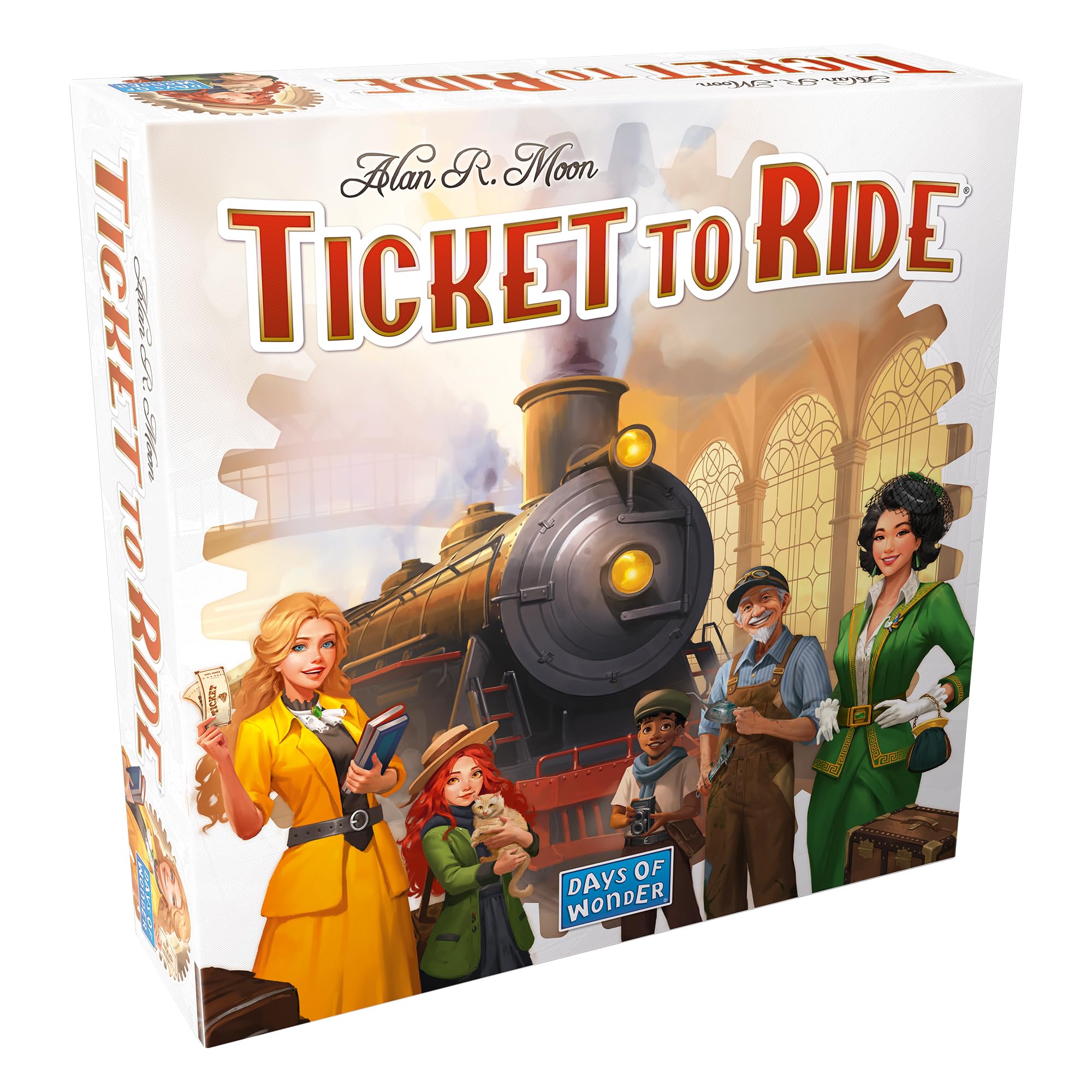
A cross-country train adventure where you claim routes and build your network on a giant map of North America.
Ticket to Ride is the classic gateway game for a reason. You collect train cards and claim routes to connect cities across a giant map of early 20th-century North America, complete with 225 miniature plastic trains in five colors. The rules are simple enough to teach in about ten minutes, yet the strategy of blocking opponents and completing your tickets runs deep.
It’s a game that works beautifully for four players, and even scales up to five if you have a guest. The gameplay offers a good balance of strategy and luck, and games typically finish in under an hour. It’s a genuinely educational game too — it teaches geography and planning while staying fun, making it a hit for family game nights where someone is always learning the routes.
The player count flexibility is a real strength — it’s one of the few games here that supports up to 5 players comfortably. While it lacks the cutthroat elements of games like Catan, that’s precisely what makes it so accessible. The instructions are mostly clear, though some find the ticket completion rules a little complicated on the first read. It suits beginners and advanced players alike, with endless replayability from different ticket combinations.
Why it’s a safe bet: it’s language-independent on the board and cards, easy to set up, and visually based, meaning new players grasp the goal within one turn.
Best for: families and mixed groups of gamers and newcomers who want a fun, strategic, low-pressure experience.
Not ideal if: you seek a game with high player interaction and direct sabotage — this one is more about racing than attacking.
6. IELLO King of New York

A gloriously chaotic monster battle where you smash buildings, fight military units, and vie for control of Manhattan.
If your group likes dice-chucking chaos with a real strategy layer underneath, King of New York delivers. You control a giant monster rolling six dice with three rerolls to heal, attack, gather energy, earn stars, and destroy buildings. It’s simple and fast-paced like its predecessor King of Tokyo, but adds more depth and decisions to make.
The game shines with a full table — it’s better with 5 or 6 players, but works great at 4. The goal is to be the last monster standing or reach 20 stars, with Manhattan offering perks but also making you a target. Outside attacks only hit Manhattan while Manhattan attacks hit everyone outside, creating a tense dynamic of when to push forward or lay low. It runs about 60 minutes, giving you a more substantial session than the quick fillers.
What wins people over is the gameplay that goes beyond just throwing dice — the new “ouch” and “celebrity” dice, building destruction, and balanced energy cards add a real strategic element. The artwork by Regis Torres is incredible. The downside is that player elimination means early losers wait for the game to finish, so keep that in mind for your group’s tolerance.
Why it’s a blast
- More strategic than King of Tokyo, with richer decisions
- Great table presence and incredible artwork
- Fast-paced and lively, with games from 20 minutes to an hour
Where it stumbles
- Eliminated players sit out waiting for the game to end
- Learning curve is a bit steeper than it looks
Reach for this if: your group loves dice games with a midweight strategy layer and doesn’t mind a little player elimination.
Look elsewhere if: you hate dice luck and prefer pure strategy with no random outcomes.
7. Bezier Games Castles of Mad King Ludwig 2nd Edition
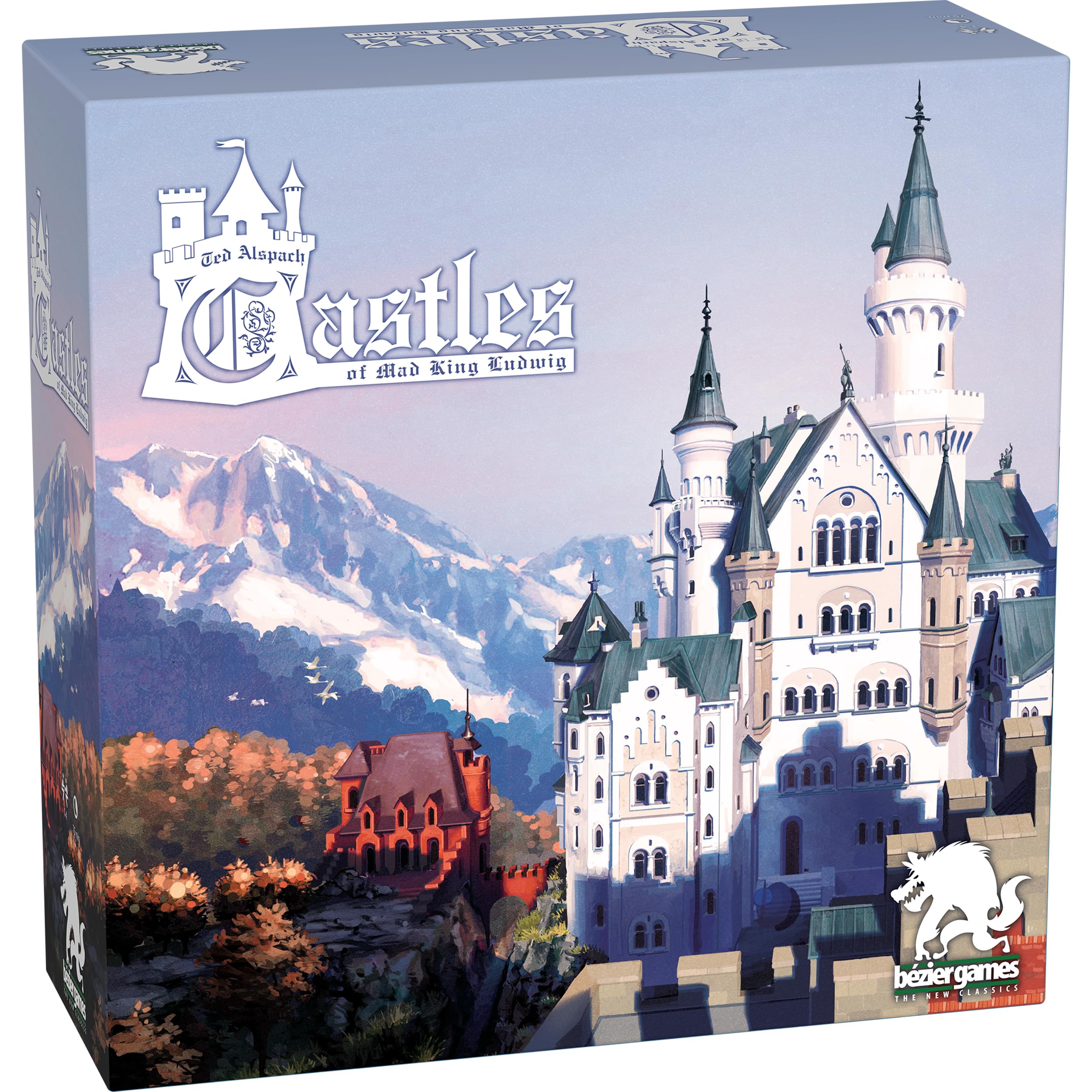
The Master Builder mechanic lets each player set room prices, creating a brilliant negotiation-and-building puzzle.
Castles of Mad King Ludwig puts you in the role of a castle architect building fantastical rooms one tile at a time. The genius twist is the Master Builder: each turn, one player arranges the available room tiles and sets their prices, and everyone else must buy from them. This creates an incredible dynamic where you’re pricing rooms to either bleed your opponents dry or fund your own construction next round.
It plays in about 90 minutes for up to 4 players, making it a real centerpiece for dedicated game nights. The scoring is based on clever room placement — connecting halls, stairs, and specialty chambers earns points for adjacency and completed layouts. Variable king’s favors, public bonus cards, and a wide mix of room types create new puzzles every game, ensuring high replay value.
What wins people over is the gameplay depth and variety. It’s easy to learn the rules, but the strategy is deep, especially around pricing. Some find the setup annoying due to the sheer number of pieces, and the complexity gets mixed feedback — some find it simple while others say it takes a bit to grasp all the aspects. It’s great for 2 to 4 players and offers endless replay through variable goals.
Its defining trait: the Master Builder pricing mechanic is unlike anything else on this list, forcing constant player interaction and negotiation.
Pick this up if: you enjoy creative building games with a strong negotiation element and don’t mind a longer play session.
pass on it if: you prefer games with minimal setup and quick, straightforward play.
8. Capstone Games Ark Nova Zoo Management Strategy Board Game

The heavyweight zoo-building game with 250 animal photos and 5 action types that satisfies the deepest strategy cravings.
Ark Nova is the game for your group that loves a serious strategy marathon. You use card drafting and hand management to build a zoo, develop sustainable habitats, and compete for resources. It features roughly 250 animal photos and five different action types — animals, enclosures, conservation, sponsors, and cards — giving you multiple strategic paths to victory.
You’ll need a dedicated evening for this one, as a full game runs 90-150 minutes—so it’s not for you if you want a quick after-dinner round. For strategy lovers, the depth is class-leading: you build your zoo, collect animals, and grow your conservation score, which feels genuinely rewarding. The non-violent zoo and conservation theme is a refreshing change for the genre, and the card graphics are a standout.
The downside is a steep learning curve — it takes a while to learn, but once it clicks, it becomes a favorite. Owners describe a slow on-ramp that rewards patience. It’s not for casual or new players, but for enthusiasts it’s a must-have. The game weighs in at 2.44 kg, so it’s a hefty box that signals the substantial experience inside.
Why it’s the deep-cut pick
- Incredible strategic depth with multiple winning paths
- Beautiful artwork and a unique conservation theme
- High replayability — no two games play out alike
Be prepared for
- A steep learning curve that takes a few plays to master
- A long playtime of 2.5-3 hours per session
- Heavy setup and a large table footprint
This is your game if: your group craves deep, complex euro-style strategy and has the patience for a long, rewarding session.
Definitely not if: you’re new to strategy games or prefer sessions under an hour.
9. Everdell Collector’s Edition Board Game

A charming woodland engine-builder where you build a critter city beneath the Ever Tree with adorable squirrel and hedgehog workers.
Everdell is the game that makes everyone at the table smile just looking at it. You build your own critter city beneath the Ever Tree with charming characters like squirrels, mice, and hedgehogs. The gameplay combines worker placement resource generation with engine-building card laying, creating new card combinations with every play. It’s approachable and strategic, fun for both hobby and casual gamers.
The Collector’s Edition is the standout version here, upgrading the tokens and cards to high-quality, tactile components that are incredibly satisfying to handle — particularly the metal tokens and extra meeples. It plays in about 60 minutes at up to 4 players, making it a medium-length game that doesn’t overstay its welcome. Players report it’s particularly fun with 4 players, which is exactly what you’re looking for.
Over four seasons, you gather resources like berries, twigs, resin, and pebbles to buy critter and construction cards, with the highest points winning. The scoring can get complex — some find it harder to learn than Catan or Wingspan — but it’s more satisfying to win. The value question comes up since the Collector’s Edition carries a premium, but for the quality and family fun, most find it worth it.
Its defining charm: the beautiful artwork and cozy theme, combined with components that are fun to fidget with while waiting for your next turn.
Reach for this if: you value gorgeous components and charming themes and want a game that’s easy to teach but deep enough for hobby gamers.
Consider the standard edition if: you’re not a completionist — the base game delivers the same fun without the premium price.
Understanding the Specs
Player Count
Before you buy, always check the player count—it’s the first thing that decides whether a game works for your table. A game that supports 2-4 players often plays best at exactly 4, while a 1-4 player game might lose tension with a full group. For example, Azul shines as a 2-player duel but scales well to 4, whereas King of New York is explicitly better with a larger crowd. Match the game’s balance to your exact group size.
Playtime
Playtime is the single biggest factor in whether a game actually hits your table. A 20-minute game like Lanterns is perfect for a weeknight or as a warm-up. A 45-60 minute game like Pandemic fits a standard family game night. And a 90-150 minute game like Ark Nova is an event that needs everyone’s buy-in. Be honest about how long your group will actually stay engaged.
Mechanics: Co-op vs. Competitive
The core mechanic determines the whole vibe. Cooperative games put everyone on the same team against the game itself, which is great for groups that prefer collaboration over conflict. Competitive games reward efficiency and can get cutthroat — great for spirited groups but risky for sore losers. Worker placement, tile placement, and card drafting all shape how players interact with each other and the board.
FAQ
What board game is best for exactly 4 players?
Which game is easiest to learn for new players?
What is the difference between cooperative and competitive board games?
Which game takes the longest to play?
Is Pandemic too difficult for casual players?
What does “worker placement” mean in Everdell?
Can these games be played with fewer than 4 players?
What is the best game for a family with kids?
What is the “Master Builder” mechanic in Castles of Mad King Ludwig?
Which game has the best replay value?
Final Thoughts: The Verdict
For most groups, the best board games for 4 players winner is the Pandemic because it turns a game night into a genuine team effort — the crowd favorite with 4.8 stars and thousands of happy owners. If you want something fast and accessible, grab Lanterns: The Harvest Festival for a 20-minute round that anyone can learn. And for a heavy strategy session that your group will talk about for weeks, the Ark Nova is the one to reach for.
How We Picked
We do not accept paid placement. Every pick is matched to a real buyer and a real use-case; we do not hands-on test units.
Sources & Methodology
Specifications: manufacturer listings and product documentation. Review insights: verified customer reviews, as of August 2026. Pricing: not shown on this page (it changes often); check the current price via the retailer link.
As an Amazon Associate, Gadgets Feed earns from qualifying purchases. This does not affect which products we feature.