
Gathering a group for game night isn’t always possible, but that doesn’t mean you have to miss out on the strategic depth, tense narratives, and satisfying tactile experiences that modern board games deliver. Dedicated single-player games have evolved far beyond simple solitaire variants, offering rich campaigns, emergent decision-making, and clever mechanical systems designed entirely for one pair of hands.
I’m Min — the co-founder and writer behind Gadgets Feed. My analysis pits dice allocation against bag-building and tile-laying mechanics to isolate which solo titles offer the most compelling loops and highest replay value from a crowded field of niche offerings.
After sorting through countless options and studying the mechanical DNA of the genre, I’ve put together this guide to the best board games for single player, focusing on depth, replayability, and true solo-first design.
How To Choose The Best Board Games For Single Player
Choosing a solo board game requires a different lens than picking one for a group. You are not just the player — you are the entire table, the opposition, and the audience. The right choice hinges on mechanical depth, narrative hooks, and a system that feels fair even when it crushes you.
Mechanical Depth and Player Agency
Solo games live or die on how many meaningful decisions they present per turn. Look for mechanics like dice allocation, bag-building, or hand management that force trade-offs. A game where you can easily calculate the single correct move every turn will feel hollow quickly. True agency comes from imperfect information and resource scarcity that demands creative problem-solving, not just rote optimization.
Replayability and Variable Set-Up
A great solo game should not feel solved after three plays. Seek out titles with modular scenarios, multiple playable characters with unique abilities, or campaign systems that evolve the ruleset over time. Even a simple game can offer dozens of sessions if the components allow meaningful randomization of goals, enemies, or map layouts. Games that include a campaign or a storybook that adapts to your choices offer the highest long-term value.
Quick Comparison
On smaller screens, swipe sideways to see the full table.
| Model | Category | Best For | Key Spec | Amazon |
|---|---|---|---|---|
| The Lost Expedition | Survival | Quick, punishing solo sessions | 56 adventure cards across 3 modes | Amazon |
| theory11 Box ONE | Puzzle | Narrative puzzle immersion | Internet-required evolving puzzles | Amazon |
| CGE Under Falling Skies | Wargame | Dice allocation strategy | 9-card nanogame to full box | Amazon |
| Renegade Warp’s Edge | Sci-Fi | Bag-building space combat | 4 starfighters vs 5 motherships | Amazon |
| Van Ryder Final Girl | Horror | Thematic slasher survival | 20-60 minute play sessions | Amazon |
| The Night Cage | Horror | Atmospheric tile-laying | 10.75″ x 10.75″ tile grid | Amazon |
| Golden Bell Unbroken | Fantasy | Compact card game survival | 7.6″ x 5.6″ box footprint | Amazon |
In‑Depth Reviews
1. CGE Under Falling Skies Board Game
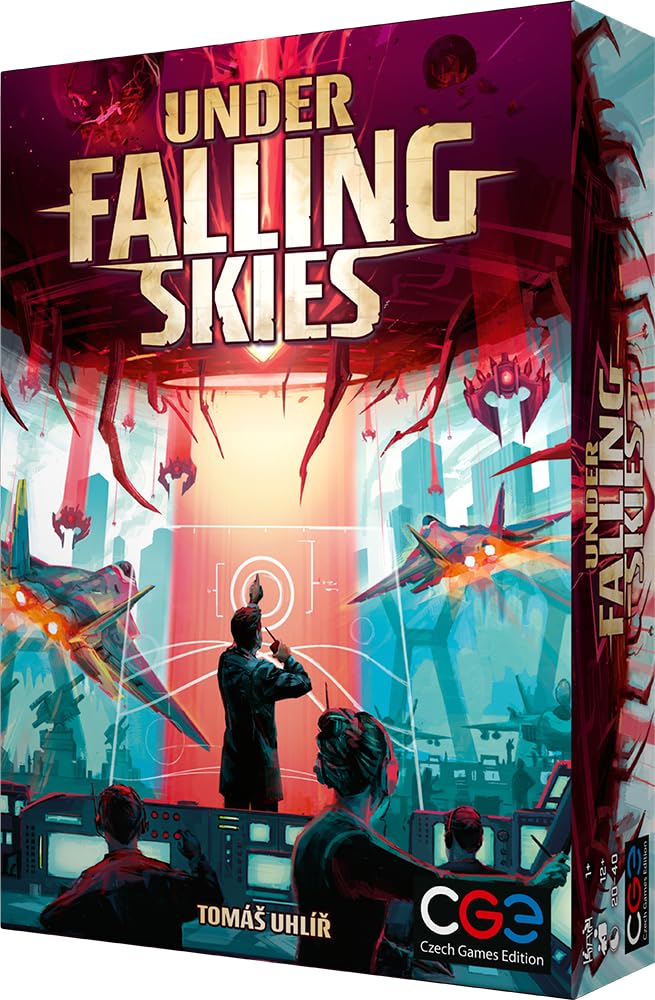
Under Falling Skies starts as a brilliant 9-card nanogame and expands into a full box that proves dice allocation can feel strategic, not random. Each turn you roll dice and assign them to columns of your city board, using their values to research technology, build rooms, or shoot down the alien ships descending from a massive mothership overhead. The tension builds as the mothership grows closer with every missed shot, and the mandatory reroll of a single die each round injects exactly the right amount of input luck to keep you on edge.
The campaign mode adds immense value, introducing persistent upgrades, new alien types, and special rooms that change your strategy across multiple sessions. The modular set-up — different mothership arrangements and a selection of base rooms — ensures the puzzle feels fresh on the tenth play. The compact box dimensions (only a few inches thick) make it an ideal choice for a solo game that travels well in a bag without sacrificing tactical depth.
Setup takes under two minutes, and a standard session runs about 35 minutes, making it perfect for a weekday evening. The rulebook is clear, and the game scales difficulty elegantly by letting you choose different mothership patterns and starting room layouts. It is a masterclass in tight, solo-first design that never wastes your time.
Why it’s great
- Elegant dice allocation with tough trade-offs every round
- Robust campaign mode adds long-term progression
- Very compact footprint and fast setup
Good to know
- Box is thin and can dent during shipping
- Not a game for playing on an airplane tray table
2. Van Ryder Games – Final Girl Starter Set

Final Girl is built around a core loop of rolling dice to take actions — moving, searching for items, attacking — while the killer advances inexorably on a track of terror cards. The Starter Set pairs the Core Box with the Happy Trails Horror feature film, giving you one killer (Hans the Butcher), one location (Camp Happy Trails), and two playable girls with distinct special abilities. You manage a hand of cards from the item deck and a set of time-based resources that limit your actions each round, forcing you to balance rescue efforts against your own survival.
The modular expansion system is the real hook: buying additional Feature Film boxes swaps in new killers like the Poltergeist or Dr. Fright, each with unique terror cards that dramatically shift the tactical landscape. The game also has a healthy online community of custom scenarios and fan-made content. Gameplay can swing from five minutes of brutal, careless death to a two-hour strategic epic if you play cautiously and optimize every roll.
Be prepared for a substantial initial rules overhead. The rulebook is dense, and most new players will need a play-through video to internalize the action phase structure and the killer priority system. The large footprint — roughly the size of a twin bed when fully spread — also means you need dedicated table space. The payoff is a rich, narrative-driven solo experience that captures the rhythm of a slasher film better than any other board game on the market.
Why it’s great
- Brilliant thematic integration with evolving killer behavior
- High replay value from modular killer and location combinations
- Two unique playable characters with distinct abilities
Good to know
- Requires significant table space to play
- Rules are complex; a tutorial video is highly recommended
3. theory11 Box ONE Board Game Presented by Neil Patrick Harris

Box ONE is less a traditional board game and more an interactive puzzle box experience that unfolds entirely through physical components and an internet-connected browser. The box itself is the game: you open it to find layered compartments, hidden messages, encoded disks, and a series of physical puzzles that must be solved in sequence. Each solution feeds into an online portal that unlocks the next phase of the story, weaving trivia, lateral thinking, and pattern recognition into a cohesive narrative arc.
Designed specifically for a single player, the game takes roughly three hours to complete and is structured as a one-time campaign that cannot be spoiled by a second look — the physical destruction of certain components is part of the experience. The production value is exceptional, with high-weight card stock, embossed surfaces, and a custom box design that feels substantial in hand. The puzzles start simple and escalate in cleverness, rewarding methodical observation over raw intelligence.
Replay value is inherently limited — you can only solve these puzzles once — but the game makes an excellent gift or a shared experience you can watch a friend attempt. Internet access is mandatory throughout, and some users report timed delays on the website that can be bypassed by adjusting your computer’s clock. For a single evening of immersive, head-scratching fun, Box ONE delivers a level of narrative polish few other solo games achieve.
Why it’s great
- Unmatched production quality and physical component design
- Clever, escalating puzzle progression that respects your intelligence
- Can be enjoyed as a shared spectator experience
Good to know
- Only solvable once; no traditional replay value
- Requires a stable internet connection throughout play
4. Renegade Game Studios Warp’s Edge

Warp’s Edge uses a bag-building mechanic — you start with a pool of basic pilot tokens and draw from it each turn to fire weapons, raise shields, or repair your hull. As you defeat enemy ships, you add upgraded tokens to your bag, making your starfighter more potent with each lap through the loop. The twist is a time-loop narrative: when your ship is destroyed, you warp back to the start of the mission, retaining some upgrades and knowledge, while the alien mothership also resets but learns from your previous approach.
The game includes four distinct starfighters, each with unique weapon loadouts and special abilities, and five different alien motherships that present entirely different tactical puzzles. The included choose-your-path storybook ties missions together, letting narrative choices affect the game set-up and unlock bonus objectives. Sessions run 30 to 45 minutes, making it easy to squeeze in a quick loop between other activities.
The component quality is solid — thick tokens and a well-laid-out player dashboard — and the cartoonish art style keeps the sci-fi theme light despite the desperate odds. The bag-building system feels fairer than dice because you know the distribution of your tokens and can plan around expected draws. The main limitation is that after ten to fifteen plays, the optimal upgrade paths become familiar, but the sheer number of mothership-pilot combinations extends the freshness considerably.
Why it’s great
- Bag-building system feels strategic and fair
- Four pilots and five motherships offer high variety
- Storybook campaign adds context and replayability
Good to know
- Optimal strategies become apparent after many plays
- Token tactility is a plus, but thin cardboard could wear over time
5. The Night Cage by Smirk and Dagger

The Night Cage traps you in a shifting maze of darkness where only your candle’s glow reveals adjacent tiles. The core mechanic is tile-laying: you draw a path tile and place it next to your current position, expanding the labyrinth while trying to collect keys and reach the exit gate. The catch is that darkness tiles — empty black spaces — appear around you, and Wax Eaters stalk through the shadows, moving closer every turn. Playing solo means controlling a single character who must navigate this ever-shrinking circle of light.
The game’s atmosphere is its strongest suit. The recommended mode of playing with the lights off and thematic music dramatically enhances the tension. The candle mechanic, where your vision radius shrinks as you move further from the start, creates a real sense of encroaching dread. The advanced game mode introduces new monsters and obstacles that add tactical variety without bloating the playtime beyond 40 minutes for a solo session.
Tile-laying inherently creates variable set-ups, and the included difficulty settings let you tune the challenge from manageable to punishing. The rulebook could be clearer — a few edge cases around Wax Eater movement and gate positioning require a YouTube explanation — but once internalized, the rules are simple enough to support effortless concentration on the creeping fear. It works best as a palette cleanser between longer solo campaigns.
Why it’s great
- Exceptional atmospheric tension with lights-off play
- Advanced game mode extends shelf life significantly
- Quick playtime with easy setup
Good to know
- Rulebook has ambiguous sections that need clarification
- Best sustained atmosphere requires darker play environment
6. Golden Bell Studios Unbroken

Unbroken is a solo-only card game that pits you against a gauntlet of monsters in a dark fantasy setting. The core loop involves drawing cards to fight enemies, gather resources, and upgrade your gear across a series of encounters. The resource management is tight — you must balance health, stamina, and a hand of ability cards, with each decision having weight that carries forward into later stages. The game plays in 20 to 30 minutes, making it one of the most compact full solo experiences available.
The retail edition includes all the previously Kickstarter-exclusive add-ons, giving you a generous variety of enemy cards and character upgrades right out of the box. The component quality is functional — thick card stock with blank cards provided for player customization — though some users note the sliders and colored cubes feel less premium than tokens. The flavor text is immersive, though the tiny font size can be off-putting for extended reading sessions.
The publisher’s Kickstarter history has generated mixed sentiment in the board game community, but the gameplay itself is independently acknowledged as excellent. The rules are mostly clear with a small FAQ needed for edge cases around monster abilities. If you can look past the production history, Unbroken offers a tight, strategic solo card game that fits in a small box and demands real tactical thinking in every seven-minute segment of play.
Why it’s great
- Very compact footprint and quick playtime
- Deep resource management with meaningful trade-offs
- Includes all Kickstarter content in the retail box
Good to know
- Publisher drama colors the game’s reception
- Small font on flavor text strains readability
7. The Lost Expedition: A Game of Survival in the Amazon

The Lost Expedition challenges you to guide a team of three explorers through the Amazon jungle, balancing food, ammunition, and health against a deck of adventure cards that constantly throw obstacles in your path. The solo mode asks you to manage all three characters simultaneously, splitting resources and assigning actions to each as you navigate branching path cards. The tension is relentless — one wrong turn can deplete a critical resource and cascade into a lost run within a few minutes.
The award-winning art by Garen Ewing, presented in a diary format, is a highlight. The large cards (80x120mm) are beautiful and durable, though they require extra space to spread out and are harder to shuffle. The game includes three modes — solo, cooperative, and competitive — which adds flexibility if you ever have a group. The rulebook is straightforward, and setup takes under five minutes, with a session typically running 20 to 30 minutes.
The difficulty is punishing: most reviewers report winning fewer than one in five attempts with the suggested rules, which can frustrate players who prefer a more forgiving experience. The luck factor is significant, but the strategic layer — choosing which path to take and which character to sacrifice — provides enough agency to keep the game feeling earned. It is an excellent entry point for solo gaming at a remarkably affordable price point.
Why it’s great
- Beautiful diary-style art and compact box design
- Three modes (solo, co-op, competitive) in one box
- Quick setup and very short playtime
Good to know
- Extremely punishing difficulty may frustrate casual players
- Large cards are hard to shuffle and need generous table space
FAQ
How do I know if a board game has true solo content or just a tacked-on variant?
Can I use a game designed for 2 players as a solo experience?
Which game has the best campaign mode for long-term solo play?
Final Thoughts: The Verdict
For most users, the best board games for single player winner is the CGE Under Falling Skies because it delivers unmatched replayability, elegant dice allocation mechanics, and a compact footprint at a balanced price point. If you want a narrative-heavy experience with modular content that grows with you, grab the Van Ryder Games Final Girl Starter Set. And for a single, unforgettable evening of puzzle-solving, nothing beats the theory11 Box ONE.