
Our readers keep the lights on and my morning glass full of iced black tea. As an Amazon Associate, I earn from qualifying purchases.
Specs are compiled from manufacturer listings and verified buyer reviews and can change over time — please confirm the key details on the product page before buying.
Choosing a strategy board game is about finding the right weight for your group — how much thinking you want after dinner, and how long you want to stay at the table. The picks below range from light engine-builders you can teach in minutes to deep, hour-long civilization epics, so the real question is which kind of night you are planning.
I’m Min — the founder and writer behind Gadgets Feed. This guide is built by comparing the manufacturers’ published specifications and the patterns across verified customer reviews, so you get each pick’s real strengths and trade-offs instead of marketing spin.
Whether you are shopping for a family game night, a couple’s ritual, or a hardcore solo session, these board games strategy picks cover every player count, complexity level, and session length worth your shelf space.
Our Picks at a Glance


How To Choose The Best Board Games Strategy
The first thing to nail down is your group’s size. Some of these games are strictly two-player affairs, while others flex from two to five, and picking the right fit determines whether the box collects dust or hits the table weekly.
Match complexity to your group
A game like Race for the Galaxy has a famously punishing learning curve, while Stone Age is often the gateway that pulls casual players in. If your group includes kids or infrequent gamers, lean toward simple rules with depth underneath — you can always graduate to heavier titles later.
Decide how long a session you want
Your available time is the other big filter. Games here range from a quick 20-minute round of Planted to a 2-3 hour Civilization campaign. A shorter playtime often means you can squeeze in two or three rounds in one night, which changes how the whole evening feels.
Quick Comparison
| Model | Best For | Player Count | Playtime | Complexity | Amazon |
|---|---|---|---|---|---|
| Harmonies★ Best Overall | Zen solo or family play | 1-4 | 30 min | Light-Medium | Amazon |
| PlantedBest Value | Plant lovers & quick rounds | 2-5 | 20-30 min | Light | Amazon |
| Race for the GalaxyTop Performer | Card-game purists | 2-4 | 30 min | Medium-Heavy | Amazon |
| Splendor Duel | Two-player head-to-head | 2 | 30 min | Light-Medium | Amazon |
| Earth | Simultaneous engine building | 1-5 | 90 min | Medium | Amazon |
| Civilization: A New Dawn | Civ video-game fans | 2-4 | 1-2 hours | Medium-Heavy | Amazon |
| Stone Age | Newcomers to worker placement | 2-4 | 60-90 min | Medium | Amazon |
| Risk Legacy | Groups that meet repeatedly | 3-5 | 60 min | Medium | Amazon |
| Wyrmspan | Dragon lovers & Solo play | 1-5 | 90 min | Medium | Amazon |
In‑Depth Reviews
1. Asmodee Harmonies Board Game
Our pick — over 4.5★ from 800+ verified ratings; the strongest balance of quality and price.
The zen tile-laying game that turns nature into a brain-engaging puzzle for any age.
Harmonies drops you into a dreamlike world where you build 3D landscapes and place animals to score victory points. The rules are simple enough that a 6-year-old can learn them, yet the layered scoring keeps it interesting for adults, and the three difficulty levels let the whole family grow into it together.
The production quality stands out immediately. You get 120 wooden tokens and 42 beautifully illustrated cards, and the tactile feel of stacking the pieces is genuinely satisfying. Owners describe it as a hit even in 200+ game collections, and the “played 10+ times in first week” crowd proves the replayability is real.
The balance of luck and strategy keeps every round tense without becoming frustrating. It works beautifully for 2 to 4 players, and the solo version means you can enjoy it on quiet afternoons alone.
Why It Earns the Top Spot
- Three difficulty levels scale from kids to veterans
- Simple to learn with genuinely deep tactical play
- Stunning 3D wooden pieces and gorgeous artwork
- Includes a full solo mode
The Honest Trade-Offs
- Ends abruptly once the landscape is complete
- Minimal direct player interaction — multiplayer solitaire
Reach for this if: you want a beautiful, calming game that a family can play together across skill levels.
Look elsewhere if: your group craves aggressive head-to-head conflict, not peaceful puzzle-building.
2. Buffalo Games Planted Strategy Boardgame
A fast-growing card game that turns plant care into a delightfully competitive engine.
Planted puts you in the role of a plant parent managing resources to grow your nursery. You select plants, trade cards for tokens to nurture them, and race to build the most thriving collection of greenery. Designed by acclaimed game designer Phil Walker-Harding, the mechanical loop is satisfyingly simple yet strategic.
You get 42 unique plant varieties from the fiddle leaf fig to the lush monstera, each with different needs. Sessions run a quick 20 to 30 minutes, making it a perfect warm-up or a full evening of repeated rounds. Owners praise the high-quality tactile cards and pieces, describing it as a perfect gift for plant lovers.
The high-quality tactile cards and well-made tokens are a standout feature. The hidden scoring keeps the strategy tense, and the game scales well for 2 to 5 players, though it needs real table space for 2-3 players. The only recurring gripe is a token shortage, where a 1-token-equals-4 placeholder is sometimes needed.
What Makes It Shine
- High-quality tactile cards and well-made tokens
- Easy to learn, fun mechanics for ages 7 and up
- Great variety of plant types with different needs
Heads-Up Before Buying
- Token shortage can require a placeholder
- Needs a good amount of table space
Ideal for: plant-loving families and casual gamers who want a light, beautiful game with real strategy underneath.
skip it if: you need a compact footprint for a small table.
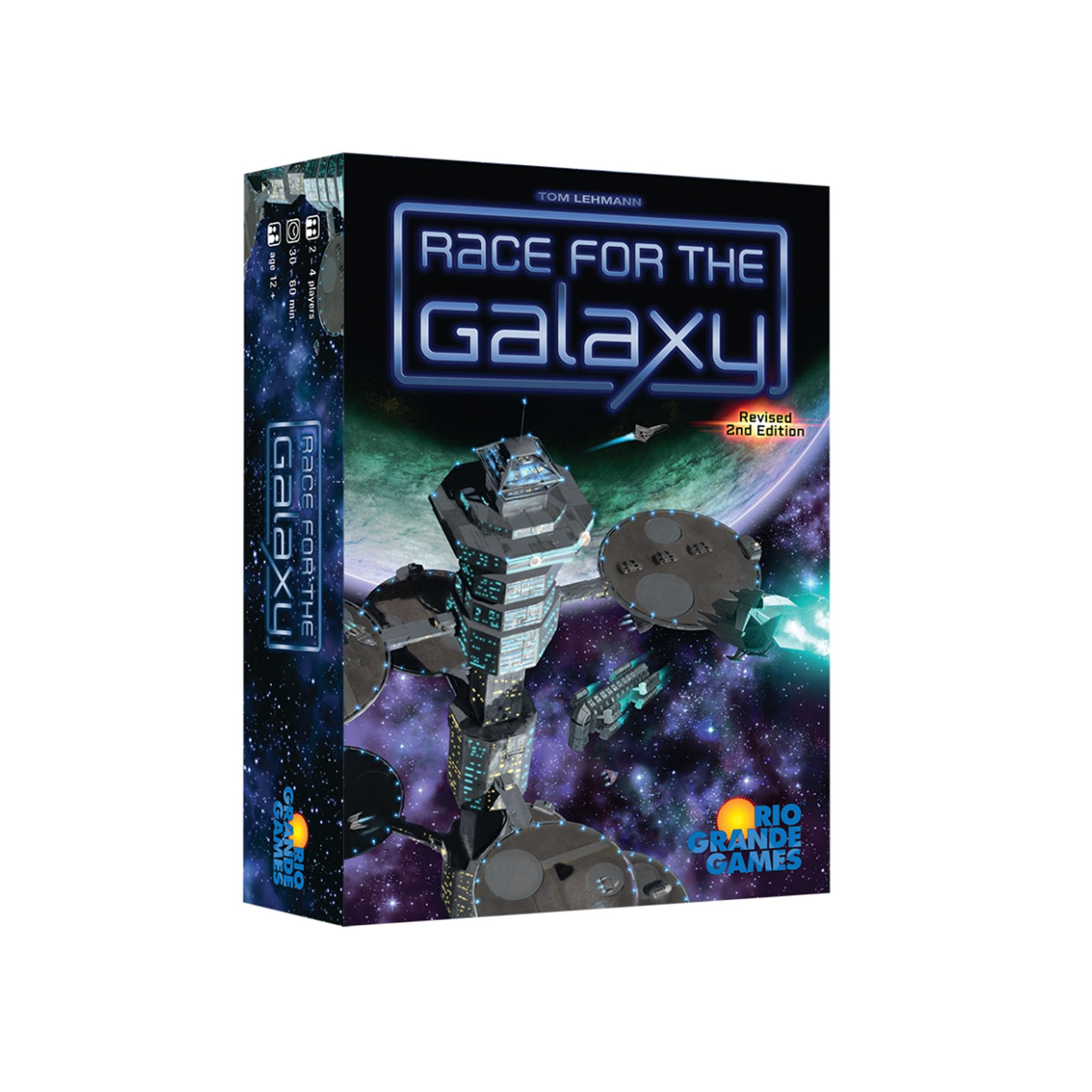
3. Rio Grande Games Race for the Galaxy
A deep card-driven empire builder that rewards patient players with fluid, simultaneous turns.
Race for the Galaxy is a card adaptation of the classic Puerto Rico, where you build an empire through worlds and developments. The catch is that everyone takes their turn simultaneously, choosing phases that all players benefit from — so the real strategy is predicting which phases your opponents will pick.
The learning curve is famously steep, with over 100 cards and a dense symbol system. But owners consistently say it becomes intuitive after one or two games, and the depth is worth the patience. Sessions run a brisk 20-30 minutes, and the 2-player variant is exceptional — this is a game that shines with just two people at the table.
The sheer replayability comes from every card having a use and no dominant strategy. Every card has a use, making discards genuinely difficult, and there’s no dominant strategy. The main drawback is that teaching beginners takes effort, and the rules sometimes need online clarifications — but the reward is a fast, deep game that beats many pricier alternatives.
The Payoff
- Excellent 2-player variant and strong multiplayer
- High replayability with no dominant strategy
- Fast 20-30 minute sessions once learned
The Investment
- Steep learning curve with a dense symbol system
- Rules sometimes need online clarifications
Best for: patient couples and groups who want a deep, quick card game and will invest in the learning process.
Not for: casual players who want to jump in without studying a rulebook first.
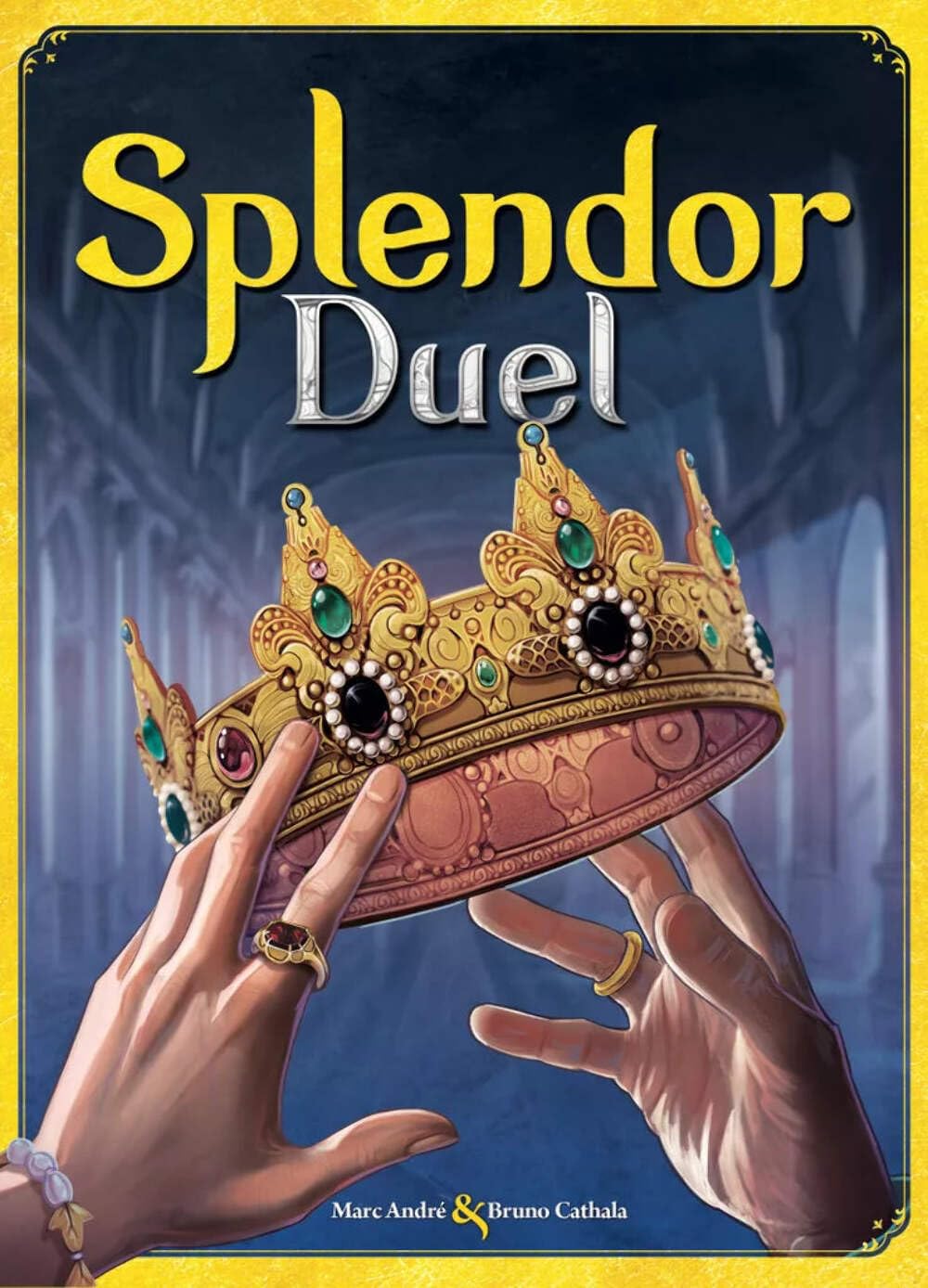
4. Splendor Duel Board Game
A tense two-player gem battle that packs the full Splendor experience into a travel-friendly box.
Splendor Duel is designed exclusively for two players, and it improves on the original in nearly every way. You collect gemstones to purchase development cards, building combinations that race you toward prestige points. The addition of new mechanics like the pearl and privilege scrolls adds variables that keep the core loop fresh and intense.
The compact size is a major draw — the box measures just 5.11 x 7 inches, making it perfect for travel or playing on the go. Sessions run about 30 minutes, and the game offers constant scrutiny of your opponent’s moves, creating a genuinely battle-like feel. Owners consistently call it one of the best two-player board games on the market.
It exceeds the original Splendor for two players with multiple win conditions and a dynamic board. The game has multiple win conditions, and the dynamic board means no two games are alike. The one mixed note is the card size — several players mention the cards are quite small, which can be a comfort issue for some hands.
Why It Works
- Simplified, faster version of classic Splendor
- Compact size perfect for travel or home use
- Multiple win conditions for endless replayability
The Fine Print
- Cards are noticeably small
- Strictly two players only
Grab it if: you and a partner want a quick, intense strategy game that fits in a backpack.
Think twice if: you need to seat more than two people at the table.
5. Inside Up Games Earth Board Game

A simultaneous engine-builder that keeps everyone engaged with zero downtime between turns.
Earth is an ecosystem-building game where every turn, the active player chooses a major benefit and all others gain a minor one. This simultaneous play design eliminates the dreaded downtime — everyone is involved throughout, making it a standout for groups prone to analysis paralysis.
The game boasts over 350 unique cards, some double-sided, offering over 25,000 starting setups for endless replayability. It supports Solo, Team, and Competitive variants, so you can tailor the experience to your group. Sessions run about 90 minutes, and owners describe it as easy to teach in 20-30 minutes despite looking complex.
The beautiful production features gorgeous photos on all 500+ cards and satisfying island growth. Owners compare it favorably to Wingspan, calling it superior to Terraforming Mars. The main caveat is a large footprint — it needs about 1.5 sq ft per player — and the growth tokens can fall over during play.
The Highlights
- Simultaneous play means no downtime
- Multiple viable strategies and high replayability
- Solo, Team, and Competitive modes
The Caveats
- Large table footprint of 1.5 sq ft per player
- Growth tokens are prone to falling over
Choose this for: groups that hate waiting, and players who love beautiful, strategic engine-building.
Pass if: you have a cramped game table or want a shorter session.
6. Asmodee Sid Meier’s Civilization: A New Dawn

A streamlined Civilization epic that captures the video game’s endless choices in 2-3 hours.
Civilization: A New Dawn is the closest you can get to the computer version on a tabletop. You rewrite history your way, choosing between multiple paths to victory, with a modular map and unique civilizations that change the game’s feel every session. The game engages both new and experienced players with its streamlined design.
You can finish 2-3 rounds in one night, so it fits a regular game evening. Setup takes about 15 minutes, and turns speed up once you learn the flow. The box holds 224 small cards and dozens of markers, giving you plenty of variety without overwhelming you.
The multiple layers of strategy and high replayability keep each session fresh. The one honest limitation is the complexity — the rules are involved, and the lack of any token storage means you’ll want ziplock bags or organizers. The dice-based attacks are a notable design choice that some players find less satisfying than physical military units.
The Glory
- Multiple paths to victory for unique strategy
- Fast turns and endless choices each session
- Modular map and unique civilizations
The Cost
- Complex rules with a steep learning curve
- No storage solution for the many pieces
Made for: Civilization video-game fans and players who want a deep, rewarding strategy epic.
Avoid if: you’re a beginner to strategy games or expect to finish in under an hour.
7. Stone Age Board Game by Z-Man Games

The classic worker placement gateway that’s simple to learn yet deceptively complex to master.
Stone Age is the perfect introduction to worker placement. You place your wooden people on limited board spaces to gather resources, construct buildings, and advance your tribe’s culture. The game sports 40 wooden people, 58 wooden resources, and a leather dice cup, creating a satisfyingly tactile experience that owners love.
The gameplay is simple — place workers, gather resources, feed your tribe — but the strategic depth comes from balancing development, resource management, and food sustainability. It works well with 3-4 players and is great for introducing non-gamers to the hobby, staying competitive without feeling cutthroat.
The accessible rules make it easy to recall mechanics even after months away. Owners describe it as a game where mechanics can easily be recalled months later, making replaying easy. The game takes 60-90 minutes, and the quality of the pieces is praised consistently. The only honest note is that some veteran players find it too easy once they understand the system.
Why It’s a Classic
- Perfect gateway into worker placement games
- Tactile, high-quality wooden pieces
- Competitive without feeling cutthroat
The Catch
- Veterans may find it too easy
- Best with 3-4 players, less ideal at 2
Start here if: your group is new to strategy games and you want a friendly, rewarding introduction.
Graduate past it if: you’re a seasoned strategy veteran seeking a heavier challenge.
8. Hasbro Gaming Avalon Hill Risk Legacy

A modern warfare epic where your decisions permanently change the board over multiple sessions.
Risk Legacy brings legacy mechanics to the classic Risk formula, meaning your group’s decisions will change the gameboard forever. No two games are the same, as rules, cards, and stickers come into play and go out of play permanently. The game includes over 275 detailed military units and a briefcase-sized box with a handle.
Sessions take about 1 hour, significantly faster than regular Risk, and the goal is to reach 4 victory points, which prevents the endless games Risk is known for. The legacy mechanics add meaningful freshness, with unlockables keeping the pace quick and notable. Owners recommend it for war-game fans who want a shorter, more involved experience.
The top-notch board and over 275 detailed miniatures are a highlight. The game is best enjoyed with a regular group of 4-5 players who meet repeatedly, as the legacy elements reward consistency. The one limitation is that it’s less fun with infrequent or different players, and the campaign design means once components are sealed, they’re changed forever.
The Innovation
- Legacy mechanics mean every game changes the board
- Faster than regular Risk at about 60 minutes
- High-quality board and over 275 miniatures
The Commitment
- Best with a consistent group of 4-5 players
- Once components are revealed, they’re changed forever
Perfect for: a regular game night group that wants a living, evolving campaign experience.
Not ideal if: your group lineup changes every session or you want a one-off game.
9. Stonemaier Games Wyrmspan

A dragon-collecting, cave-excavating engine builder that improve the Wingspan formula to new heights.
Wyrmspan casts you as an amateur dracologist excavating a hidden labyrinth to entice dragons into your cave sanctuary. Designed by Connie Vogelmann and developed by Elizabeth Hargrave of Wingspan fame, the game feels familiar yet completely fresh. The 183 dragon cards — 148 full-grown and 35 hatchlings — offer incredible variety and replayability.
The components are exceptional: shiny cardboard coins, wooden tokens, beautifully printed cards, and lovely wooden speckled eggs. Sessions run about 90 minutes with only 5 minutes of setup, and the game supports 1-5 players, making it ideal for couples, solo gamers, and families alike. The solo Automa mode simulates a real opponent.
What wins people over is the intuitive gameplay that’s easy to learn while offering multiple winning strategies. The thematic chaining of dragon powers by walking your adventurer meeple down the cave genuinely feels like you’re exploring. It works brilliantly as a 2-player game, and owners consider it a worthy addition for any Wingspan fan.
The Splendor
- Beautiful watercolor artwork and premium components
- Quick 5-minute setup for a 90-minute game
- Excellent solo play with the Automa mode
The Consideration
- Heavier on the brain than Wingspan, requires concentration
- Larger footprint and higher price point
Splurge on this if: you’re a Wingspan fan or dragon lover wanting a premium, beautiful engine-building experience.
Hold off if: you prefer lighter, quicker games or want a more casual experience.
Understanding the Specs
Player Count
The single most important spec. A 2-player-only game like Splendor Duel is perfect for couples but useless for a group of four. Games that flex from 2-5 players, like Earth or Wyrmspan, offer the most versatility, though some play better at specific counts.
Playtime
This dictates how many rounds you’ll fit in a night. A 20-30 minute game like Planted lets you play 3-4 rounds, while a 90-minute game like Earth or Wyrmspan is a full evening’s centerpiece. Legacy games like Risk Legacy expect you to commit to multiple sessions.
FAQ
What is a worker placement game and is it hard to learn?
Which game works best for exactly two players?
What does a legacy game mean for Risk Legacy?
Can I play any of these games solo?
Which game is the easiest to teach to kids and newcomers?
How many players does Earth support and how long does it take?
Is Race for the Galaxy really that hard to learn?
Which game has the most replay value?
What is the difference between an engine builder and a tableau builder?
Final Thoughts: The Verdict
For the majority of shoppers, the board games strategy winner is the Harmonies because it balances simple rules, stunning components, and real strategic depth across every age group. If you want an intense two-player duel, grab the Splendor Duel. And for a regular group that loves long campaigns, the Risk Legacy is the one to reach for, while Wyrmspan delivers the premium Wingspan-style experience for dragon lovers.
How We Picked
We do not accept paid placement. Every pick is matched to a real buyer and a real use-case; we do not hands-on test units.
Sources & Methodology
Specifications: manufacturer listings and product documentation. Review insights: verified customer reviews, as of August 2026. Pricing: not shown on this page (it changes often); check the current price via the retailer link.
As an Amazon Associate, Gadgets Feed earns from qualifying purchases. This does not affect which products we feature.