
Every season you drop your boat in the water, you’re betting the bottom won’t turn into a crusty ecosystem of barnacles, slime, and zebra mussels. That bet hinges entirely on the layer of paint between your hull and whatever lives beneath the surface. A bad bottom paint choice means hauling out mid-season for a scrub-down you didn’t budget for.
I’m Min — the co-founder and writer behind Gadgets Feed. I’ve spent countless hours dissecting biocide chemistries, ablative wear rates, and compatibility charts to separate the coatings that actually hold up from the ones that wash off before Labor Day.
Whether you’re protecting a fiberglass cruiser, an aluminum skiff, or an outdrive that sees brackish water, selecting the right best boat bottom paint determines how much time you spend on the water versus scraping a hull in a boatyard.
How To Choose The Best Boat Bottom Paint
Boat bottom paint is not a one-size-fits-all purchase. The best coating for a trailered skiff that lives on a lift is completely different from what a slip-kept sailboat needs. Your decision comes down to hull material, water type, and how long the boat stays submerged between hauls.
Hard vs. Ablative vs. Epoxy Coatings
Hard paints form a durable film that holds up against trailering bunks and frequent beaching, but they don’t self-polish — fouling protection fades over time. Ablative paints wear away gradually as the boat moves through water, exposing fresh biocide and minimizing buildup that requires sanding between seasons. Epoxy bottom coatings like the Fasco Super Slick act as a tough, slippery barrier for shallow-water boats that drag across mud, sand, or grass.
Copper-Free vs. Copper-Based Biocides
Copper is the traditional antifouling agent, but it causes galvanic corrosion on aluminum hulls, outdrives, and trim tabs. If your boat has any bare aluminum below the waterline, a copper-free formula like TotalBoat Krypton prevents electrolysis damage while still blocking barnacles and algae. Copper paints also tend to look dull and chalky, whereas copper-free formulations hold brighter colors longer.
Quick Comparison
On smaller screens, swipe sideways to see the full table.
| Model | Category | Best For | Key Spec | Amazon |
|---|---|---|---|---|
| TotalBoat JD Select Ablative | Ablative | Full-season saltwater cruising | 500 sq. ft. / gallon coverage | Amazon |
| Interlux Aqua-One Performance Ablative | Water-based Ablative | Eco-friendly marinas & yard restrictions | Water cleanup, low odor | Amazon |
| Interlux Fiberglass Bottomkote NT | Hard Paint | Freshwater boats needing durability | 500 sq. ft. / gallon, gloss finish | Amazon |
| TotalBoat Krypton Copper-Free | Copper-Free Ablative | Aluminum hulls, outdrives, trim tabs | 500 sq. ft. / gallon, no galvanic corrosion | Amazon |
| Rust-Oleum Marine Flat Boat Bottom | Hard Paint | Trailered fiberglass boats on bunks | 110 sq. ft. / quart, 16-hour launch time | Amazon |
| Fasco Epoxies Super Slick 2000 | Epoxy Coating | Airboats, jon boats, beaching hulls | ~30 sq. ft. / quart, PTFE-reinforced | Amazon |
| Pettit Paint Hydrocoat | Ablative | Multi-season protection in salt/brackish | 700-1200 sq. ft. / gallon, water-based | Amazon |
In‑Depth Reviews
1. TotalBoat JD Select Ablative Antifouling Bottom Paint
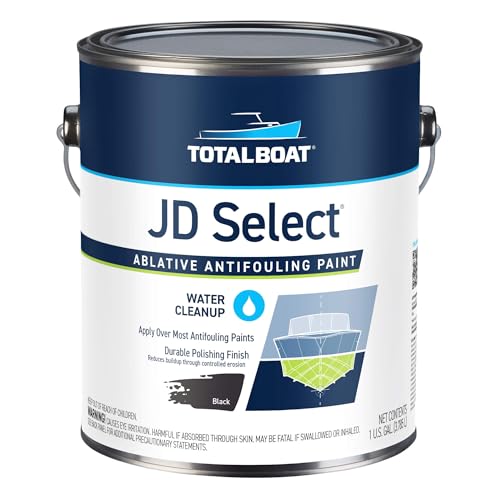
The TotalBoat JD Select uses a hybrid ablative film that self-polishes as you cruise, keeping the hull clean of barnacles, weeds, and slime for a full season. One gallon covers a generous 500 square feet, and the low-VOC, water-based formula means easy cleanup with soap and water — a real advantage if your marina restricts solvent fumes. Compatible with most existing bottom paints, so you don’t have to strip everything down to gelcoat before recoating.
Customers running 33-foot powerboats in the Sea of Cortez report that a single gallon delivers one solid coat on a large fin keel with acceptable fouling protection over the season. The paint goes on smoothly with a 3/16-inch nap roller or natural bristle brush, and it levels without runs or lumps. Drying time is about two hours between coats, and you can launch once the paint is fully cured — typically six hours.
Be aware that shipping protection has been inconsistent — some cans arrive dented or leaking because the box lacks internal padding. Ordering from a local supplier may be safer, but if you buy on Amazon, inspect the packaging immediately and request a replacement if the seal is broken. The paint itself performs reliably year after year.
Why it’s great
- Self-polishing ablative action minimizes sanding between seasons
- Low-VOC, water-based formula cleans up with soap and water
- Compatible with most existing hard and ablative paints
Good to know
- Shipping packaging often lacks protective padding
- Premium price compared to hard paints
2. Interlux YBE179/1 Aqua-One Performance Ablative

Interlux designed the Aqua-One as a water-based ablative that works equally well in salt, brackish, and fresh water. The coating wears away with the boat’s motion, exposing fresh biocide and reducing the heavy sanding required before seasonal recoatings. It cleans up with plain water instead of solvents, making it a strong candidate for boatyards with strict environmental compliance rules.
Multiple seasons of use in brackish and saltwater environments confirm that this paint keeps the bottom clean and holds up longer than many competitor water-based products. The application is straightforward — moderate drying time, and the metals in the formula settle quickly in the can, so thorough mixing with a drill-powered stirring paddle is essential before every session. Users report excellent packaging from most sellers, with cans arriving secure and leak-free.
The biggest limitation is the same one that applies to all water-based bottom paints: if your boat sits in direct sunlight for extended periods out of the water, the paint’s UV resistance is weaker than solvent-based alternatives. Keep the hull covered during long dry spells to prevent the coating from degrading before it ever sees the water.
Why it’s great
- Water-based with easy soap-and-water cleanup
- Ablative wear reduces sanding at each haulout
- Effective across salt, brackish, and fresh water
Good to know
- Requires very thorough mixing before application
- Not as UV-tolerant as solvent-based paints during dry storage
3. Interlux Fiberglass Bottomkote NT

Interlux Bottomkote NT is a hard, solvent-based antifouling paint that produces a durable gloss finish — uncommon in the bottom paint world. It is formulated specifically for fiberglass hulls, and the low-viscosity consistency flows almost like water when applied, allowing thin, even coats that self-level nicely. A single gallon covers approximately 500 square feet, which is enough for two coats on a 27-foot Bayliner with paint left over for touch-ups.
After three years in fresh water, users report roughly 5% coverage from algae and quagga mussels, which is outstanding for a non-ablative hard paint. The surface cures to a hard, slightly textured film that holds up well against trailering and pressure washing. The price consistently undercuts local marine stores, and Amazon packaging with four lid clips and taped seals keeps the can intact during transit.
This paint is not ideal for aluminum because it contains copper biocide that can trigger galvanic corrosion. And the strong solvent smell demands a cartridge respirator — a simple dust mask will not filter the fumes. Stick to fiberglass and wood hulls, and always work in a well-ventilated area.
Why it’s great
- Exceptional multi-season protection in fresh water
- Low viscosity spreads thin and self-levels well
- Often priced lower than local marine retailers
Good to know
- Contains copper — not safe for aluminum hulls or outdrives
- Strong solvent odor requires a respirator, not a dust mask
4. TotalBoat Krypton Copper Free Antifouling Bottom Paint
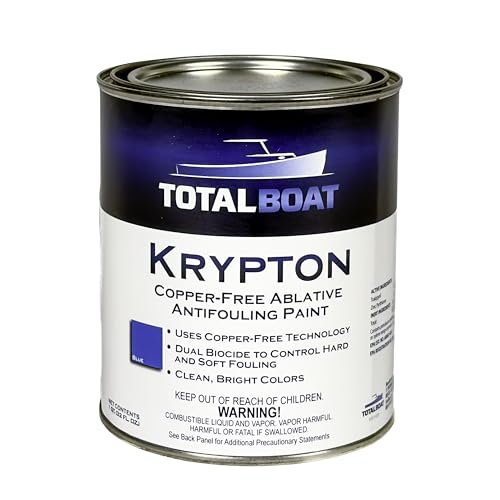
The TotalBoat Krypton line is specifically engineered to eliminate the galvanic corrosion risk that copper-based paints pose to aluminum hulls, outdrives, and trim tabs. The copper-free biocide formula delivers single-season protection against barnacles, weeds, and slime in fresh, salt, and brackish water — and because there is no copper, the colors stay noticeably brighter without the chalky dullness that plagues traditional bottom paints. It is suitable for fiberglass, wood, steel, iron, and aluminum.
A sailing magazine test ranked Krypton as having the least growth after two years of immersion. Users applying it to Volvo Penta DP-S outdrives praise its adhesion over zinc chromate primer and the clean eggshell finish it leaves when sprayed with an HVLP system. The coverage rate is the standard 500 square feet per gallon, and there is no maximum dry time before launch, so you can paint weeks ahead if needed.
The one real weakness is UV sensitivity — one owner of a 32-foot Bayliner left the boat in Arizona sun for seven months, and the blue paint on direct-sun-exposed sections turned black, cracked, and blistered. This paint is designed for below-the-waterline use only; if the boat sits on blocks in direct sunshine for extended periods, cover the hull with a tarp.
Why it’s great
- Copper-free formula prevents galvanic corrosion on aluminum
- Brighter colors that resist chalky fading
- No maximum dry time before launch
Good to know
- Prone to UV degradation if stored in direct sun out of water
- Shipping cans sometimes arrive dented
5. Rust-Oleum 396967 Marine Flat Boat Bottom Antifouling Paint
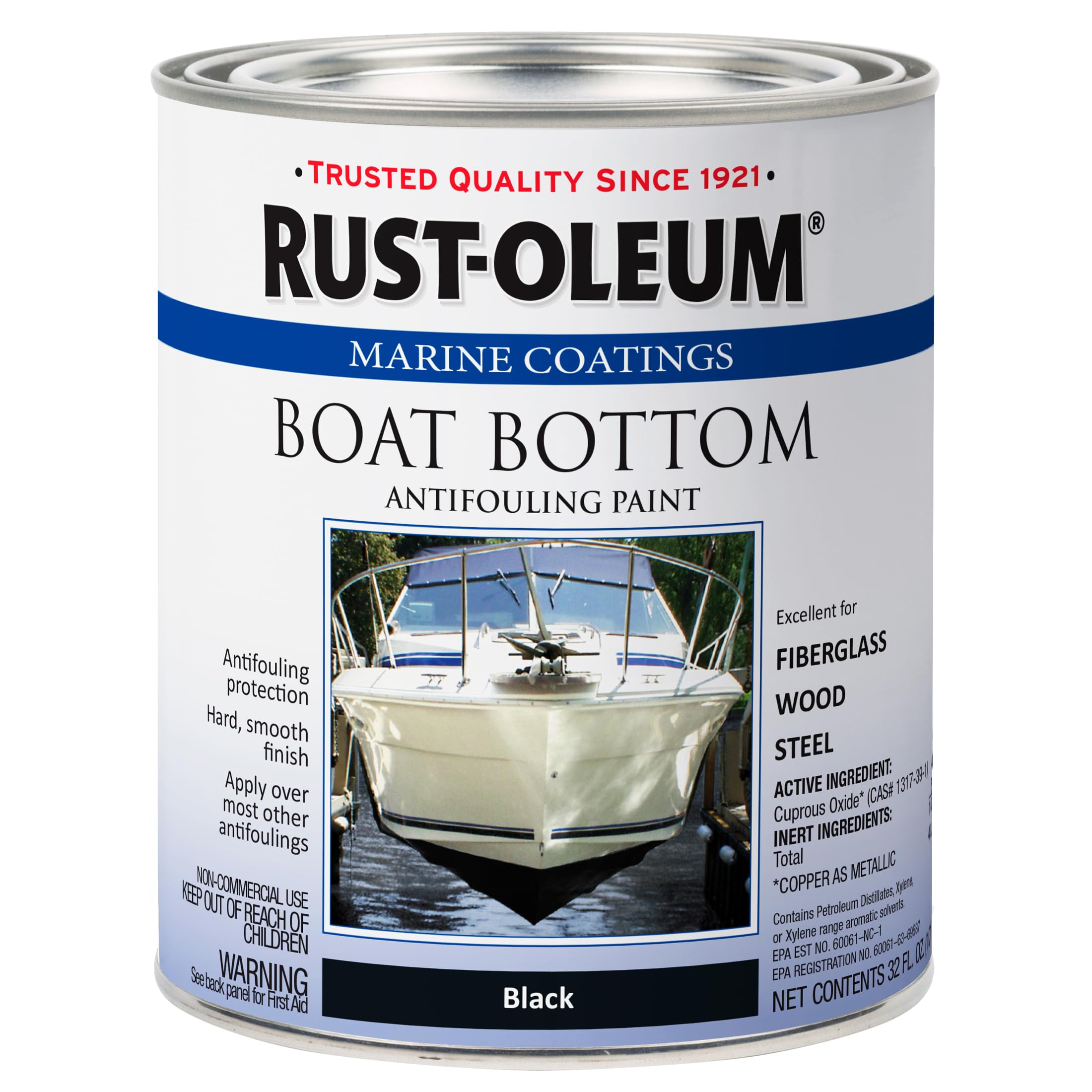
Rust-Oleum’s Marine Flat Bottom Paint is the go-to entry-level option for trailer-launched boats that need a hard coating that won’t rub off on bunks. The copper-based formula slowly releases biocide to prevent barnacle and algae buildup, and the hard flat finish stands up well to the abrasion of bunks and rollers during launch and retrieval. Coverage is about 110 square feet per quart, and you can apply a recoat in four hours and launch in sixteen.
Owners of 13-foot Boston Whalers and 22-foot center consoles report that a quart covers two coats on a small hull, while two quarts handle one coat on a 22-footer. After a full year in hot South Florida water, monthly diver cleaning keeps growth manageable with minimal barnacle attachment. On Lake Michigan, the blue version holds up for two seasons with power washing removing most fouling easily. The paint is thick and requires thorough mixing and a brush for edges, though a roller handles the large flat areas well.
The biggest complaint is not about the paint itself — it is about shipping. Multiple buyers report cans arriving damaged or leaking because the packaging lacks the heavy-duty clips needed to secure the lid. Contact Amazon support immediately if the can arrives compromised. Also note that this paint is only for fiberglass, wood, or steel — do not use it on aluminum hulls due to the copper content.
Why it’s great
- Hard finish resists rubbing off on trailer bunks
- Fast recoat time (4 hours) and launch time (16 hours)
- Very affordable for small to mid-size boats
Good to know
- Frequent shipping damage with leaking cans
- Not suitable for aluminum hulls — copper biocide causes corrosion
6. Fasco Epoxies Super Slick 2000 Epoxy Bottom Coating
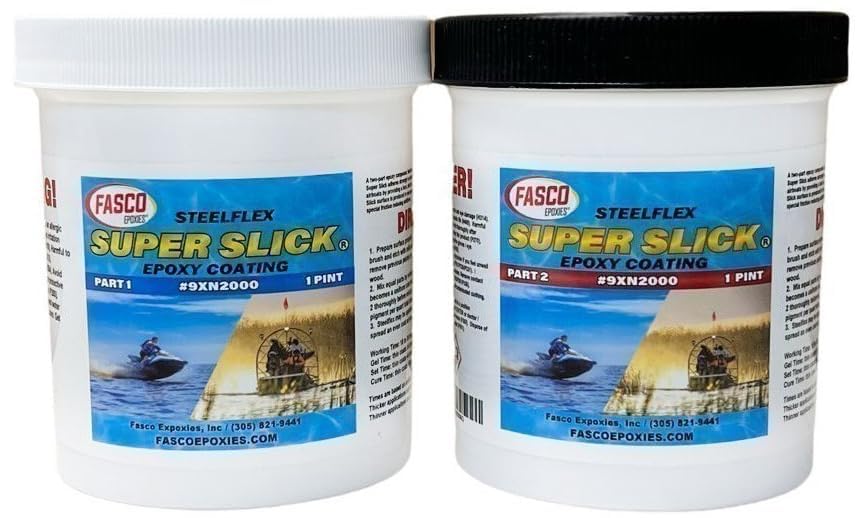
This is not an antifouling paint — it is a two-part epoxy coating loaded with PTFE that creates an ultra-slick, abrasion-resistant barrier for boats that regularly drag across mud, sand, grass, or gravel. Airboat owners, jon boat operators, and anyone who beaches their hull will appreciate how the coating reduces friction and protects the underlying metal or fiberglass. The 1:1 mix ratio is simple, and a quart kit covers roughly 30 square feet.
Users on 14-foot Lowe jon boats report that the coating seals leaky rivets and pinholes completely — one owner went from taking on water to staying bone dry after application. The slick surface makes the boat slide off the trailer unexpectedly, so tie-downs are essential. Canoe owners note a dramatic reduction in sticking on rocks and a noticeable quieting of the metal hull vibration during paddling. The epoxy cures to a very slick finish in about 24 hours.
The application is thick and somewhat tricky to spread evenly — work quickly because the pot life is shorter than standard paints. Some users report that the coating can fade or wrinkle if left in direct sun for days before fully cured. It is also heavy per quart compared to paint, so factor that into shipping costs.
Why it’s great
- Extreme abrasion resistance for mud, sand, and beaching
- Seals leaky rivets, pinholes, and seams
- PTFE-reinforced finish reduces drag significantly
Good to know
- Short pot life — requires fast, even application
- Can fade or wrinkle if exposed to UV before full cure
7. Pettit Paint Hydrocoat, Black, Gallon

Pettit Hydrocoat is a water-based ablative paint that offers one of the highest coverage rates on the market — between 700 and 1,200 square feet per gallon depending on surface texture and application method. This makes it an economical choice for larger hulls even though the per-gallon price sits at the premium end. The paint is self-polishing, so it wears away gradually as the boat moves, reducing the need for heavy sanding and allowing multi-season buildup control.
Long Island boaters who have used Hydrocoat for years report that it checks nearly every box: water-based for easy cleanup, ablative action, multi-season compatibility, and reliable bottom cleanliness in salt and brackish waterways. The formula contains copper, so it is not suitable for aluminum hulls, but for fiberglass boats it delivers consistent protection season after season. The gloss black finish looks sharper than most flat bottom paints.
The one serious caution comes from a user who soda-blasted the hull, applied barrier coat, and then two coats of Hydrocoat — only to find the paint along the waterline completely gone after five months. This suggests that Hydrocoat may struggle on hulls that sit in high-current or debris-laden water without regular motion. Some owners also note that it will not make the bottom fully algae-proof and that occasional brushing is still needed.
Why it’s great
- Very high coverage rate (700-1200 sq ft/gallon) reduces total cost
- Water-based with simple soap-and-water cleanup
- Gloss finish looks better than typical flat bottom paints
Good to know
- Copper-based — not safe for aluminum hulls
- Some durability concerns in high-current or debris-heavy water
FAQ
How long does boat bottom paint last before needing recoating?
Can I apply bottom paint over an existing coating?
What happens if I use copper-based paint on an aluminum hull?
Final Thoughts: The Verdict
For most boat owners, the best boat bottom paint winner is the TotalBoat JD Select Ablative because it balances self-polishing convenience, easy water cleanup, and reliable single-season protection at a fair price point. If you need a copper-free formula for an aluminum hull or outdrive, grab the TotalBoat Krypton. And for a budget-friendly hard paint that stands up to trailer bunks, nothing beats the Rust-Oleum Marine Flat Bottom Paint.