
Our readers keep the lights on and my morning glass full of iced black tea. As an Amazon Associate, I earn from qualifying purchases.
Specs are compiled from manufacturer listings and verified buyer reviews and can change over time — please confirm the key details on the product page before buying.
Laying new carpet in a boat is a one-shot job. Pull it up again after a bad bond and you are scraping glue off fiberglass for a weekend. The glue you choose decides whether that carpet stays flat through rain, splash, sun, and hours of trailer vibration, so this guide cuts straight to the four marine adhesives worth your time and explains exactly what each one is good at.
I’m Min — the founder and writer behind Gadgets Feed. This guide is built by comparing the manufacturers’ published specifications and the patterns across verified customer reviews, so you get each pick’s real strengths and trade-offs instead of marketing spin.
You will see how cure time, water resistance, and coverage area separate a quick touch-up tube from a full-deck pail, so you can match the glue to the job instead of guessing. Match the glue’s cure chemistry to your deck material and weather before you buy.
Our Picks at a Glance
How To Choose The Best Boat Carpet Glue
Two things decide whether your carpet survives its first season: the type of glue and how long you leave it alone before you put weight on it. Get those right and the rest is detail work.
Cure time versus working time
Cure time is how long the glue needs before it holds under load, and on a boat deck it is the single biggest scheduling factor. A 24-hour cure like the Marine Grade Boat Carpet Adhesive Glue means you can lay carpet one day and be back on the water the next. A 48-hour cure like the 3M 7000000623 Marine Adhesive Sealant is slower, but that longer window is what lets you reposition a large piece before it locks. Working time is the separate, shorter window where the glue is still wet enough to move the carpet around. If you are covering a wide deck alone, more working time matters more than raw speed.
Material compatibility matters more than brand
Read the compatible-material line on the container before you buy. PVA-based carpet glues bond well to wood, fiberglass, and aluminum, which covers most deck rebuilds. Polyurethane adhesives handle above-and-below-waterline jobs that a water-based glue is not designed for. If your deck is rubber-backed vinyl or pontoon flooring, check that the glue lists rubber, because an alcohol-based product can attack that backing over time while a water-based one will not.
How much glue you actually need
Coverage is quoted per pail and it is usually generous on paper. Plan on buying the container size that matches your deck, not the smallest one that saves a few dollars, because running out halfway through leaves a visible seam where the first batch cured. A 2-gallon pail setup covers a full pontoon deck in one sitting, which is why it is the choice for complete recarpets rather than patch jobs.
Quick Comparison
| Model | Best For | Container Size | Full Cure Time | Weight | Amazon |
|---|---|---|---|---|---|
| 3M Auto/Marine Sealant 3 oz.★ Best Overall | Small repairs and touch-ups | 3 oz. tube | 5-7 days | 4.2 ounces | Amazon |
| 3M 7000000623 Marine Adhesive Sealant – 10 oz., White | Permanent above and below waterline bonds | 10 oz. can | 48 hours | 14.4 ounces | Amazon |
| Marine Grade Boat Carpet Adhesive Glue- 1 Gallon | Full deck recarpet on wood, fiberglass, or aluminum | 1 gallon can | 24 hours | 16 ounces | Amazon |
| Marine Adhesive for Boat Carpet & Pontoon Vinyl Flooring – 2 Gallons | Pontoon and rubber-backed flooring installs | 2 gallons (2 pails) | 24 hours | 8 pounds | Amazon |
In‑Depth Reviews
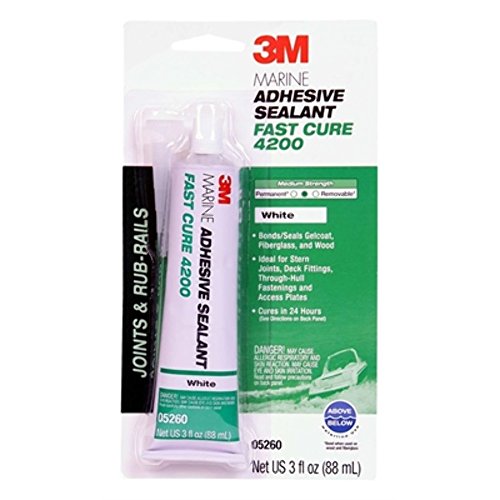
1. 3M Auto/Marine Sealant 3 oz.
Our pick — over 4.5★ from 250+ verified ratings; the strongest balance of quality and price.
The pocket-sized polyurethane tube that keeps carpet edges and trim locked down where a big pail cannot reach.
Fixing one lifted corner of carpet does not justify mixing a gallon of glue. This 3M tube is a polyurethane adhesive and sealant, meaning it is built to bond and to seal out water at the same time, and it works both above and below the waterline. That combination is why it sits at the top of this list despite being the smallest container here. At 4.2 ounces it slips into a glovebox or tackle bag, so it is the one you keep aboard for a running repair mid-season.
The trade-off is patience. This formula becomes tack-free in 48 hours but cures completely in 5-7 days, roughly a week before the bond reaches full strength. Compare that to the Marine Grade Boat Carpet Adhesive Glue at 24 hours and the 3M 7000000623 at 48 hours, and you can see this is the slowest of the group. Buyers report it “spread easily and filled well” into a narrow fiberglass crack, which tells you the consistency is workable for detail jobs rather than broad coverage. Wear gloves; it is messy by nature.
Weathering and saltwater resistance round out the package, and the strength here is the thing people keep coming back for. It is not the right tool for gluing down an entire deck, and rubber is a known weak point, so keep it off shoe soles and rubber trim. For seams, edge trim, and screw-hole repairs after an epoxy plug, it does the job with room to spare.
Where it earns its keep
- Works above and below the waterline, so splash and bilge water are not a problem.
- Saltwater and weathering resistant polyurethane that holds up outdoors.
- 4.2-ounce tube is easy to store aboard for mid-season touch-ups.
Where it asks for patience
- Full cure runs 5-7 days, the slowest option in this group.
- Rubber is a weak bond point, so it is not the pick for rubber trim or soles.
- Sticky and messy to apply — have gloves and a rag ready.
Grab it for: small carpet seams, edge trim, and hardware repairs where a fast-setting big pail is overkill.
Not the one for: a full deck recarpet, where the 3-ounce tube volume and week-long cure will slow you down.
2. 3M 7000000623 Marine Adhesive Sealant – 10 oz., White

A 10-ounce can of the white polyurethane sealant that boatyards have trusted for decades of permanent deck work.
When a bond has to survive being wet, sun-baked, and loaded for years, this is the can that keeps showing up. The tough, flexible polyurethane polymer grips wood and forms a permanent bond both above and below the waterline. Handling strength arrives in 48 hours, and it has been an industry standard for over 50 years. For sealing thru-hull fittings, mounting seats, or locking down carpet along a deck edge, that track record does the talking.
The catch is commitment. This is a permanent bond, and owners describe removal as genuinely difficult — the kind of job you do once and plan around. Value is the other honest note: some buyers feel the price is fair for the reliability, others think it runs high. A few shipments have also arrived with a damaged tube missing its applicator tip, so check the can when it shows up. Owners mention it “worked great on plywood project” with delivery that beat expectations, which is the everyday experience most people have.
Set it against the Marine Adhesive for Boat Carpet and Pontoon Vinyl Flooring 2-gallon setup and you see the split clearly: this 10-ounce can handles seals and hardware, while the pail handles broad flooring. The 48-hour handling strength also beats the 24-hour cure of the gallon options only on repositioning room, not on speed. For anything that must never come loose, this is the one.
The standout: Permanent above-and-below-waterline bonding with 48-hour handling strength and an over-50-year industry pedigree behind the formula.
Plan around: Removal is difficult by design and some buyers find it priced on the high side, so commit only where you mean it.
Reach for this if: you need a forever bond on thru-hull fittings, seat mounts, or a deck edge that takes constant water contact.
Look elsewhere if: you expect to pull the carpet back up someday, because this bond does not let go easily.
3. Marine Grade Boat Carpet Adhesive Glue- 1 Gallon
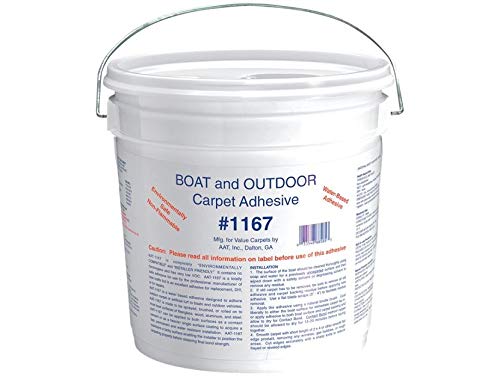
A gallon of high-viscosity, water-based PVA built so you can lay a whole deck and be back on the water next day.
For a complete recarpet, you want two things: enough glue and a cure you do not have to wait a week on. This gallon delivers both. It is a water-based PVA (polyvinyl acetate, the same glue family as school glue but formulated to stay put on marine surfaces) that cures in 24 hours and is non-flammable, so cleanup and storage are simpler than solvent-based options. It works on wood, fiberglass, and aluminum, covering the three deck materials most owners are actually dealing with.
The high viscosity is the real ergonomic win here. A thick gel resists running down vertical surfaces, so you are not chasing drips off the side of a gunwale the way you would with a thinner glue. Customers note “used to recarpet entire bass boat. Easy to apply and cures in 24 hours” — the exact workflow this gallon is sized for. One gallon at 16 ounces of product weight also keeps the pail manageable to move around a deck by yourself.
The honest split in the reviews is plywood. Adhesion and effectiveness drew mixed feedback, and it does not dry well on every plywood surface. A few owners also found the bond let go once dried. So prep the surface and test a corner first if your deck is plywood. On fiberglass and aluminum, the story is far more consistent: second-container buyers, great adhesion, easy application, and a formula that cures in 24 hours.
Why deck builders like it: A 24-hour cure means one-day turnaround, and the high-viscosity gel stays where you spread it instead of running down vertical surfaces.
The plywood caveat: Adhesion draws mixed feedback and it does not dry well on some plywood, so prep carefully or test a patch first.
Pays off when: you are recarpeting a full fiberglass, aluminum, or wood deck and want it dry and walkable the next day.
Think twice if: your surface is aged plywood that has not been prepped, since that is where the bond is least reliable.
4. Marine Adhesive for Boat Carpet & Pontoon Vinyl Flooring – 2 Gallons

Two pails of water-based adhesive sized to cover a whole pontoon or boat deck without stopping for more glue.
This is the big-job answer. Two gallon pails, each one covering an 8′ x 10′ area, so you are not hitting the bottom of a container halfway through laying a pontoon deck. Like the 1-gallon Marine Grade option, it is a water-based PVA that cures in 24 hours, but the key difference is in the labeling: this adhesive is specifically stated to adhere to rubber-backed flooring without deteriorating the backing over time the way an alcohol-based glue would. If your project is pontoon vinyl flooring rather than traditional carpet, that rubber-safe chemistry is the deciding spec.
The compatible-material list here is the broadest in the group: marine plywood, particle board, concrete, aluminum, and fiberglass. A gallon of water-based gel weighs 8 pounds across the pair, so the pails are stable and easy to set down while you work. The install itself is straightforward — let the glue sit a few minutes before pressing the flooring down. Reviewers point out “coverage was as described” and a bit of extra tack time in humid weather, which is normal for water-based adhesives in muggy conditions.
The honest caveat is the one every PVA shares: if the surface is not prepared or the humidity is high, the bond can disappoint. A few owners found it would not stick at all when it was applied thin or over a dirty deck, and it can look thin and milky straight from the pail, which alarmed some installers until it cured clear and strong. Follow the directions, let it tack up properly, and it delivers a professional-looking flooring install you can do yourself.
Why it wins on big decks
- Two pails cover a full pontoon deck at 8′ x 10′ each, so you never run short mid-install.
- Formulated to adhere to rubber-backed flooring without deteriorating the backing over time.
- The widest material list here: plywood, particle board, concrete, aluminum, and fiberglass.
What to plan for
- Humidity can stretch the tack time, so work in dry weather or factor in the extra wait.
- A few owners found it will not hold if applied thin or over a poorly prepped surface.
- The pails are heavier and bulkier to store than a single gallon can.
Best fit: pontoon and large-deck flooring projects where rubber-backed vinyl or a wide carpet run has to be covered in one pass.
Skip it for: a small touch-up or a single seat cushion, where a 3-ounce tube or 10-ounce can does the same job with less waste.
Understanding the Specs
Full Cure Time — Why 24 vs 48 Hours Changes Your Weekend
Full cure time is how long the glue needs before it reaches its final, load-bearing strength. A 24-hour cure, like the Marine Grade 1-gallon and the 2-gallon pontoon adhesive, means you can glue down carpet one day and walk on it the next. A 48-hour cure, like the 3M 7000000623, buys you more open working time for repositioning a large carpet piece, but it costs you a full extra day before the bond is at full strength. If you are recarpeting on a tight schedule, the 24-hour water-based glues win. If you are moving a wide carpet section into place by yourself and need room to adjust, the slower-setting sealant gives you the working window you actually want.
Water-Based PVA vs Polyurethane Sealant — Which One for Your Deck
PVA (polyvinyl acetate) is a water-based glue family, which means it cleans up with water, is non-flammable, and bonds reliably to wood, fiberglass, and aluminum. It is the right choice for carpet and rubber-backed vinyl over a prepared deck. Polyurethane sealant is a different chemistry: it cures into a tough, flexible, waterproof rubber that bonds above and below the waterline and resists saltwater and UV. It is the choice for thru-hull fittings, hardware, and seams that must never loosen. The easy rule: reach for PVA for broad flooring over dry, prepped surfaces, and for polyurethane when the joint is permanently wet or structural.
FAQ
How much glue do I need to recarpet my boat deck?
Can I use boat carpet glue on a pontoon with rubber-backed vinyl flooring?
How long should I wait before walking on the glued carpet?
Will these adhesives work below the waterline?
What surfaces can I glue boat carpet to?
Does humidity affect how long boat carpet glue takes to cure?
Can I remove a permanent marine adhesive if I need to redo the carpet?
Is 3M 5200 better than 3M 4200 for boat carpet?
Do I need to seal the carpet edges, or does the glue handle it?
Final Thoughts: The Verdict
For edges, seams, and small repairs, start with the 3M Auto/Marine Sealant 3 oz. — its polyurethane formula bonds above and below the waterline and resists saltwater and weathering. If you are laying a full deck and want a 24-hour cure that has it walkable the next day, grab the Marine Grade Boat Carpet Adhesive Glue- 1 Gallon — its high-viscosity, water-based PVA works on wood, fiberglass, and aluminum with a formula owners reach for a second time. And for a pontoon or rubber-backed vinyl flooring project where you need the widest coverage and a backing-safe formula, the Marine Adhesive for Boat Carpet & Pontoon Vinyl Flooring – 2 Gallons is the one to load in the cart.
How We Picked
We do not accept paid placement. Every pick is matched to a real buyer and a real use-case; we do not hands-on test units.
Sources & Methodology
Specifications: manufacturer listings and product documentation. Review insights: verified customer reviews, as of September 2026. Pricing: not shown on this page (it changes often); check the current price via the retailer link.
As an Amazon Associate, Gadgets Feed earns from qualifying purchases. This does not affect which products we feature.