
Our readers keep the lights on and my morning glass full of iced black tea. As an Amazon Associate, I earn from qualifying purchases.
Specs are compiled from manufacturer listings and verified buyer reviews and can change over time — please confirm the key details on the product page before buying.
If you own a boat, you know the season-ending chore of scrubbing a hull caked with barnacles and slime. The right bottom paint changes that — it creates a surface that marine life simply cannot stick to, so your boat stays faster, uses less fuel, and requires far less elbow grease at haul-out.
I’m Min — the founder and writer behind Gadgets Feed. This guide is built by comparing the manufacturers’ published specifications and the patterns across verified customer reviews, so you get each pick’s real strengths and trade-offs instead of marketing spin.
You want a paint that sticks to your hull and lasts, so the key specs to check are coverage area (how many square feet a quart covers), cure time (how long it takes to dry), paint type (like ablative or hard), and compatibility with your hull material (fiberglass, wood, or aluminum).
Quick Picks
- TotalBoat JD Select Ablative Antifouling Bottom Paint — Best Overall
- TotalBoat Underdog Marine Antifouling Bottom Paint — Value Pick
- Interlux Fiberglass Bottomkote NT — Freshwater Champion
- TotalBoat Krypton Copper Free Antifouling Bottom Paint — Copper-Free Power
- Rust-Oleum 396967 Marine Flat Boat Bottom Antifouling Paint — Budget Bottom Paint
- Fasco Epoxies Super Slick 2000 Epoxy Bottom Coating — Epoxy Sled Coating
- Pettit Paint EZ-Poxy, Gloss White, Quart — Topside Specialist
How To Choose The Best Boat Paint
Boat paint is not one-size-fits-all. You choose based on what your hull is made of, how often you use the boat, and whether you leave it in the water or trailer it. Here are the three decisions that matter most.
Ablative vs. Hard Paint
Ablative paint is designed to wear away slowly as the boat moves through the water — like a bar of soap thinning over time. This exposes fresh biocide (the chemical that prevents growth) with each trip. It is the best choice for boats that get used regularly and reduces paint buildup over multiple seasons. Hard paint stays on as a solid barrier; it lasts longer on boats left in the water for months, but requires more sanding to remove later.
Copper vs. Copper-Free
Traditional antifouling paint uses copper to kill barnacles and algae. But if your hull is aluminum (many jon boats, outdrives, and trim tabs), copper causes galvanic corrosion — literally eating holes in the metal. For aluminum, you must choose a copper-free formula that uses a different biocide. Copper-free paints also offer brighter, more vibrant colors since they skip the dulling effect of copper.
Coverage and Cure Time
Coverage is measured in square feet per quart or gallon — buying a quart when your hull needs a gallon means a wasted trip to the store. Cure time is the hours you must wait after the last coat before the boat can be launched. Some paints let you launch in six hours; others need 16 hours. If you have a tight weather window, a fast-curing paint saves the day.
Quick Comparison
| Model | Best For | Coverage | Full Cure Time | Paint Type | Amazon |
|---|---|---|---|---|---|
| TotalBoat JD Select | Best Overall | 125 sq ft per quart | 6 hours | Ablative | $72.99Amazon |
| TotalBoat Underdog | Value Pick | 500 sq ft per gallon | — | Ablative | $139.99Amazon |
| Rust-Oleum Marine | Budget Bottom Paint | 100 sq ft per quart | 16 hours | Hard | $64.98Amazon |
| Fasco Epoxies Super Slick | Epoxy Hull Coating | ~30 sq ft per quart | — | Epoxy | $65.99Amazon |
| TotalBoat Krypton | Aluminum / Copper-Free | 11.6 sq ft per quart | 8 hours | Ablative (Copper-Free) | $119.99Amazon |
| Interlux Bottomkote NT | Freshwater Boats | 500 sq ft per gallon | — | Antifouling | $132.00Amazon |
| Pettit EZ-Poxy | Topside / Above Waterline | 10 sq m per liter | — | One-Part Epoxy | $56.59Amazon |
In‑Depth Reviews
1. TotalBoat JD Select Ablative Antifouling Bottom Paint

The self-polishing bottom paint that cures in six hours and covers 125 square feet per quart.
You do not want to wait two days to launch after painting, and this water-based ablative paint lets you splash the boat in just six hours. By comparison, the Rust-Oleum bottom paint takes 16 hours to cure. The 125 square feet per quart coverage means a quart covers two coats on a smaller powerboat or sailboat — buyers report a quart was enough for two coats on a boat plus leftovers. It cleans up with soap and water, not harsh solvents, and has low-VOC (low-volatile organic compound) fumes, so you can apply it at marinas with environmental restrictions.
The ablative (self-polishing) formula wears away gradually as you move through the water, which means less paint buildup and less sanding next season. It works on fiberglass, wood, and steel hulls in both salt and fresh water. Owners mention the flat black finish looks clean and applies smoothly with a brush or roller.
One experienced owner noted a single gallon did one coat on a 33-foot boat with a large fin keel, so get the gallon if your hull is bigger than 25 feet. The biggest complaint is packaging — some cans arrive without bubble wrap and leak in transit.
Ablative copper protection: The fastest cure in this list at 6 hours, generous 125 sq ft per quart coverage, and low-odor water cleanup make it the most practical bottom paint for most boat owners.
Hard fouling waters: you want a fast-curing, low-odor ablative paint that works on fiberglass, wood, or steel and cleans up with water.
Low boat usage: you have an aluminum hull — this paint contains copper, which corrodes aluminum.
2. TotalBoat Underdog Marine Antifouling Bottom Paint
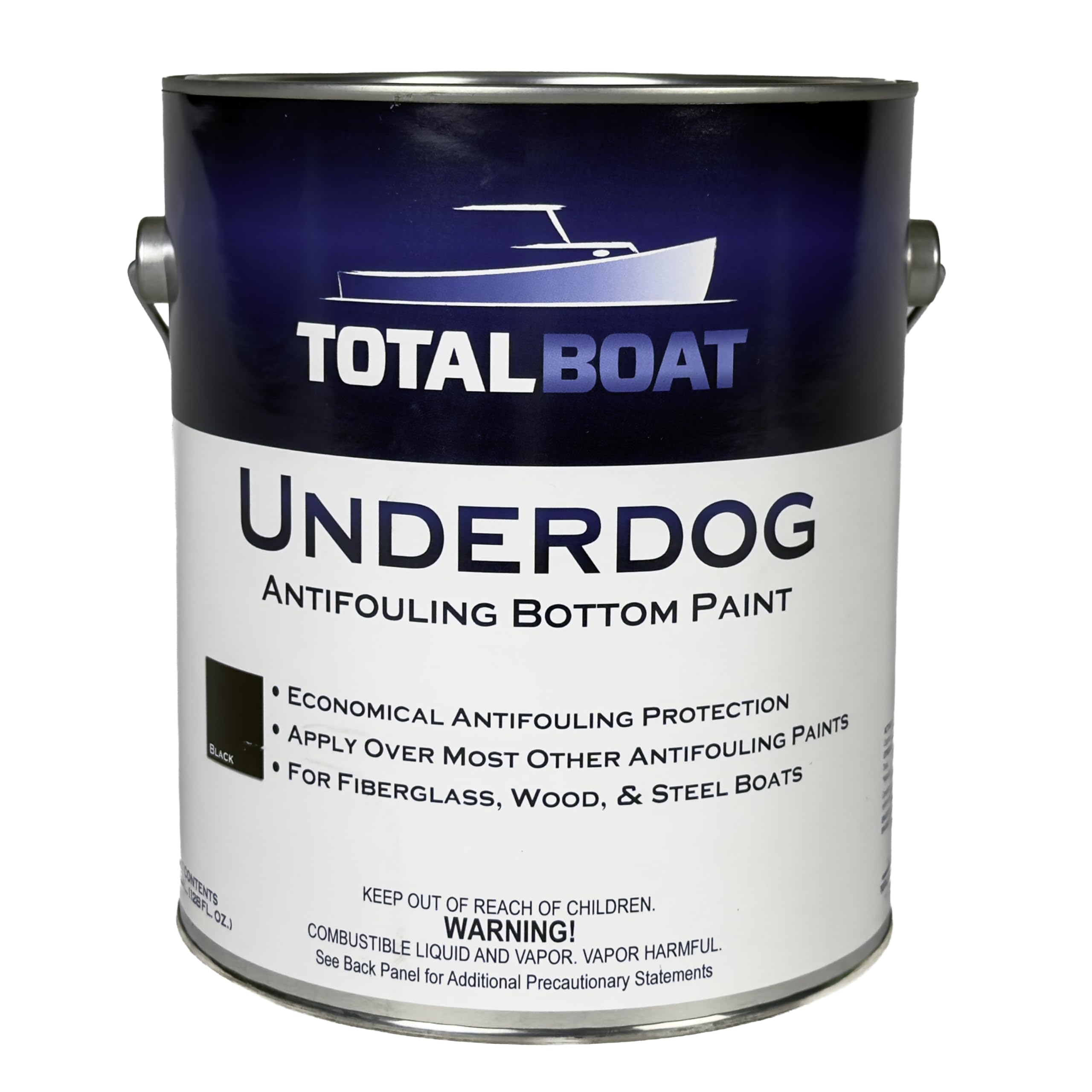
The thick, one-coat bottom paint that covers 500 square feet per gallon and protects barnacle-prone boats.
If you have a bigger hull — say 26 to 28 feet — this gallon-size ablative paint covers the whole job in a single coat. Customers note one gallon covered a 28-foot boat and another covered a 26-footer with 4/5 of a gallon. The paint is thick and applies without drips or bare spots, and it dries to a true black, smooth finish. That is 500 square feet of coverage per gallon, matching the Interlux Bottomkote NT, but at a more accessible tier.
The copper biocide formula prevents barnacles from attaching by releasing fresh biocide as the boat moves. It is designed for saltwater conditions on fiberglass, wood, steel, and iron hulls. Unlike some ablative paints, this one withstands trailering and beaching better — the durable finish handles the scrape of a trailer bunk.
Buyers love the value — one long-time owner said the kit includes free roller, tray, gloves, suit, mask, and mixing sticks. The main issue is shipping damage: multiple reports of dented cans arriving in a single beat-up box. Order early and inspect the can upon arrival.
Budget-friendly ablative: mid-size powerboats and sailboats where one gallon does the job in a single coat, at a price that beats the marine store by a wide margin.
Seasonal boats: you want a thick one-coat ablative paint that comes with application accessories and handles trailering better than standard ablative formulas.
Year-round mooring: your hull is aluminum — copper biocide will cause galvanic corrosion.
3. Interlux Fiberglass Bottomkote NT

The industry-standard bottom paint that covers a 27-foot boat in two full coats from a single gallon.
Interlux is a name that commands respect in marine circles, and the Bottomkote NT lives up to that by covering 500 square feet per gallon — the same footprint as the TotalBoat Underdog. One reviewer noted that a single gallon did two full coats on a 27-foot Bayliner with enough left for a third coat. The paint is thinner than typical bottom paints, with a water-like viscosity, which means it flows out smoothly but can drip if you overload the roller.
This is an antifouling paint designed for fiberglass hulls. It resists algae and quagga mussels in fresh water — one owner reported only about 5% growth after three years in a freshwater lake, which is excellent performance. The gloss finish leaves a hard, slightly textured surface that holds up well to the elements.
Reviewers point out it has a strong smell — you need a cartridge respirator, not just a dust mask. It applies best with a 3/8-inch nap roller and should be mixed thoroughly with a drill mixer. The price sits at a premium level, but shoppers say it is a better value than the West Marine brand.
Fiberglass-safe formula: Three-year performance in fresh water with minimal growth, and a gallon is enough for two thick coats on a boat up to 27 feet.
Freshwater boats: you keep your boat in fresh water and want a proven brand with a track record of multiple seasons of protection.
High silt areas: you are sensitive to strong fumes — this paint requires a cartridge respirator and good ventilation.
4. TotalBoat Krypton Copper Free Antifouling Bottom Paint
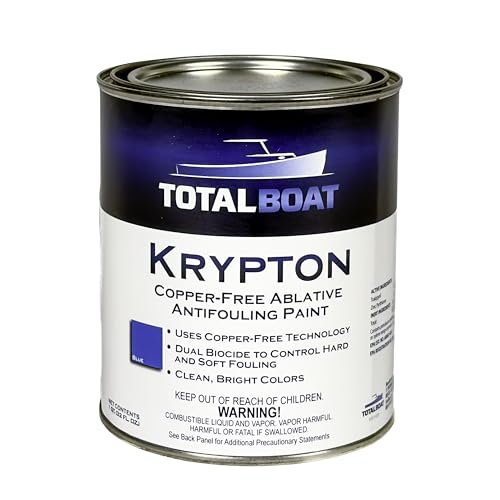
The only copper-free ablative paint here that protects aluminum hulls without causing galvanic corrosion.
Aluminum boat owners have a problem: copper in standard antifouling paint eats through aluminum. This copper-free formula solves that — it uses a different biocide that stops barnacles, algae, and slime in fresh, salt, and brackish water without the corrosion risk. It works on fiberglass, wood, steel, iron, AND aluminum, including outdrives and trim tabs. The trade-off is coverage: 11.6 square feet per quart, versus 125 square feet per quart for the JD Select If you need a quart, it covers a small area like an outdrive or a dinghy, while a gallon handles about 46.5 square feet.
The paint dries to an eggshell finish and takes eight hours to fully cure before launch. Buyers are impressed — one applied it to Volvo Penta DP-S outdrives with an HVLP sprayer and praised how it adheres to zinc chromate primer. Another owner reported two coats on a 22-foot Grady Seafarer with one gallon and a quarter can left over. The color is much brighter than copper-based paints, because there is no copper dulling the blue pigment.
One buyer mentioned a sailing magazine test found this paint had the least growth after two years among ablative paints tested. The main headache is shipping — cans arrive dented from being tossed around in the box. Buy local if you can.
Copper-free alternative: aluminum boats, outdrives, and trim tabs where copper would cause corrosion, and anyone who wants brighter, richer bottom paint colors.
Aluminum hulls: your hull is aluminum or you have outdrives and trim tabs — this is the safest antifouling option that still delivers excellent protection.
Tropical climates: you need to cover a large hull cheaply — the coverage per quart is the smallest on this list.
5. Rust-Oleum 396967 Marine Flat Boat Bottom Antifouling Paint
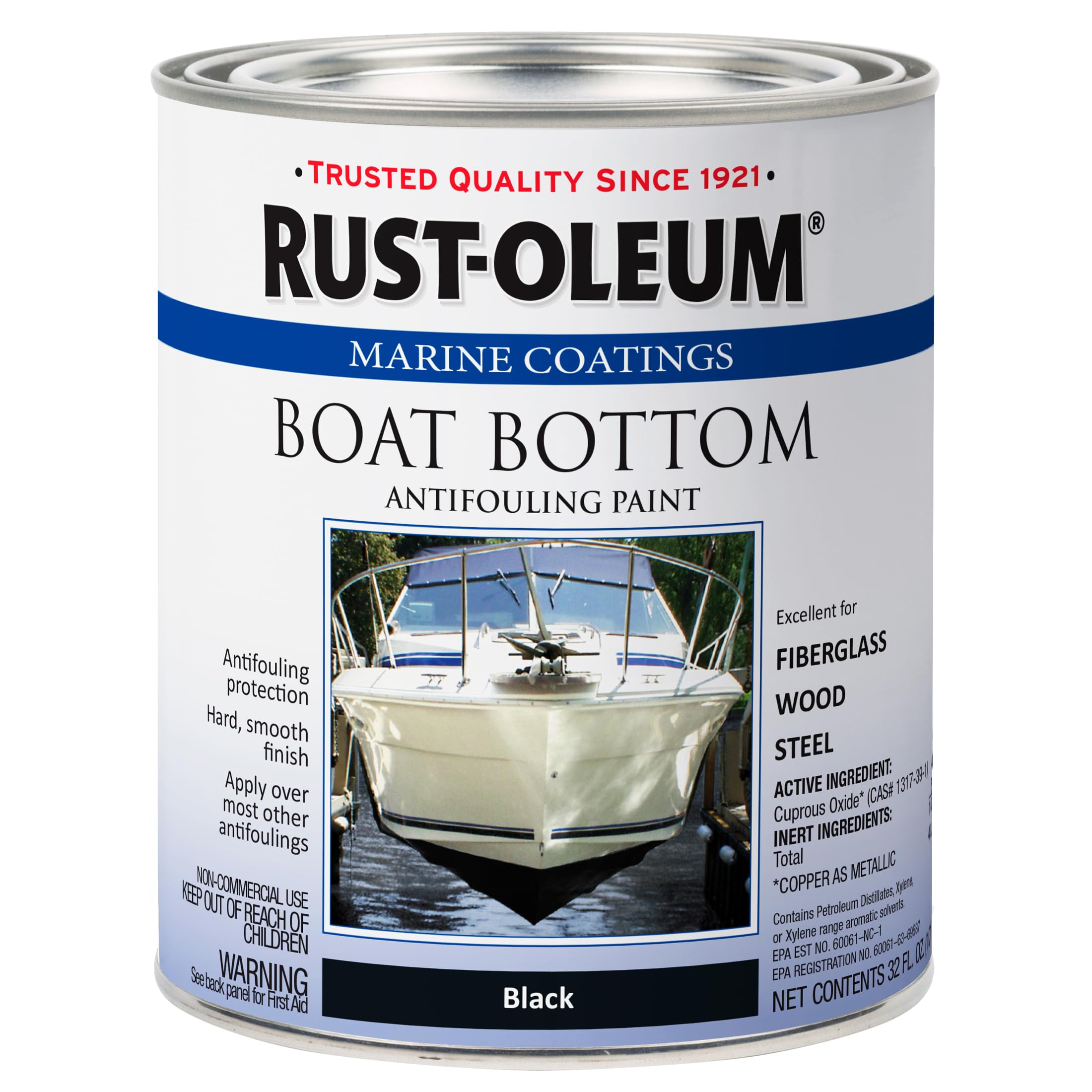
The hard, durable bottom paint that one buyer says covers a 13-foot boat with two coats from a single quart.
This is a hard antifouling paint — not ablative — meaning it stays on as a solid barrier rather than wearing away. It is ideal for trailer-launched boats that stay in the water for days or weeks at a time. The coating resists barnacles, algae, and other marine growth using a copper-based formula that slowly releases biocide. Coverage is 100 square feet per quart, and you can recoat in four hours. The catch is the 16-hour full cure time — more than double the TotalBoat JD Select’s six hours. If you need to launch the same day, this is not the paint.
Buyers report it is thick and requires thorough mixing, but applies easily once stirred. One owner used it on a 22-foot center console in South Florida and after one year in hot saltwater, minimal growth and few barnacles appeared with monthly diver cleaning. Another buyer got two seasons out of it on Lake Michigan with a power wash at haul-out. The flat black finish provides a hard, smooth surface that handles trailering well.
The price is the lowest on this list — this is a genuine budget option that many boaters swear by. The main drawback is packaging: owners mention cans arrive damaged and leaking, and Amazon cannot accept returns on HazMat items. Inspect the can immediately and contact Amazon chat for a reship if it is damaged.
Affordable basic paint: You get hard, durable protection at a low entry price, but you pay with a 16-hour cure time and packaging that often arrives dented.
Trailered boats: trailer boaters who keep the boat in the water for a few days at a time and want a tough, budget-friendly bottom paint.
Saltwater mooring: you need to launch in under 16 hours or you are applying on aluminum — copper in this formula corrodes aluminum.
6. Fasco Epoxies Super Slick 2000 Epoxy Bottom Coating
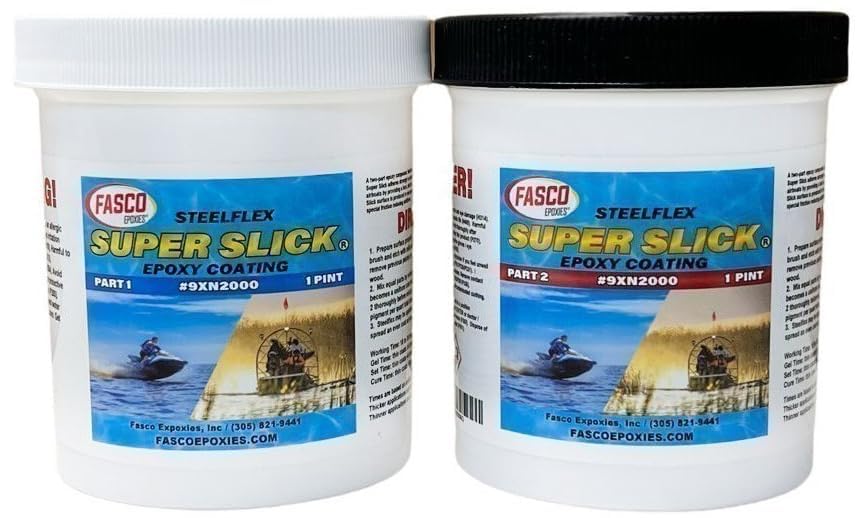
The two-part epoxy coating that turns a jon boat into a mud-sliding, rock-gliding machine.
This is not a standard antifouling paint. It is a two-part epoxy coating loaded with PTFE (a friction-reducing additive) that creates an ultra-slick, abrasion-resistant surface. It is designed for airboats, jon boats, aluminum hulls, and jet skis that run through mud, grass, sand, and shallow water. The 1:1 mix ratio is straightforward, and one quart covers about 30 square feet — enough for a 14-foot jon boat with one coat according to buyers. Fasco recommends two thin coats for full protection.
Customers note dramatic results: one owner said his boat would slide right off the trailer when backing in, so you have to secure it. Another sealed leaky rivets and pinholes on an aluminum canoe, and not a single drop of water seeped through afterward. A third buyer noted it reduced getting stuck on rocks and made paddling quieter. The coating is thick and a little tricky to spread, but the effort is worth it.
Unlike the others on this list, this is not primarily an antifouling paint — it is a protective hull coating that also seals leaks and reduces drag. It works best on boats that scrape across surfaces, not on boats that sit in a slip all season. One owner reported the initial slickness faded after curing and the finish crinkled slightly, but adhesion to rivets and joints remained excellent.
Slick low-friction finish: No other paint on this list seals leaky rivets and transforms an aluminum boat into a slick, low-drag craft that slides over mud and rocks.
Racing sailboats: you run an airboat, jon boat, or aluminum skiff through mud, sand, or shallow water and want a slick, abrasion-resistant coating that also seals rivets.
Rough hulls: your boat sits in a saltwater slip all season — you need a dedicated antifouling paint, not an epoxy coating.
7. Pettit Paint EZ-Poxy, Gloss White, Quart

The easy-to-apply topside paint that gives a gloss white finish without mixing two parts together.
This paint does not go near your bottom — it is a marine topside paint for above-the-waterline surfaces like hull sides, decks, and cabin tops. Unlike the two-part epoxy paints that require precise mixing, this is a one-part formula that is much simpler to work with. The coverage is 10 square meters per liter (about 107 square feet per quart), and it dries to a bright gloss white finish. Buyers recommend applying it with a foam brush for the smoothest result.
The paint includes brushing thinner and spraying thinner in the box, so you have the right consistency no matter how you apply it. One reviewer called it a decent grade marine topside paint that is easy to use and provides good coverage, though they noted it will not last as long or be as durable as a true two-part epoxy. A quart weighs 32 ounces and is waterproof once cured.
The main limitation is that this is not a bottom paint — do not use it below the waterline, because it does not have antifouling properties. It is strictly for the cosmetic, above-water surfaces of the boat. Buyers praise the bright, smooth finish it delivers with minimal effort.
Glossy cosmetic finish: boat owners refreshing the above-waterline surfaces with a gloss white finish, without the complexity of mixing a two-part epoxy.
Trailer boats: you need a simple, one-part topside paint that applies easily with a foam brush and delivers a bright gloss white finish.
Bottom protection: you need bottom paint for below the waterline — this product does not have any antifouling properties.
Understanding the Specs
Ablative vs. Hard Paint
The biggest spec choice you will make. Ablative paint is designed to wear away very slowly as the boat moves — each trip through the water exposes a fresh layer of biocide that kills barnacles and algae. This means less paint buildup over multiple seasons, so next year’s sanding is easier. Hard paint stays on as a permanent barrier; it lasts longer on boats left in the water for months, but it builds up and requires more elbow grease to remove. For most recreational boaters who use their boat regularly, ablative is the better choice because it is self-maintaining.
Coverage Rate
Coverage tells you how many square feet a quart or gallon covers — the larger the number, the less paint you need to buy. The TotalBoat JD Select covers 125 square feet per quart, while the TotalBoat Krypton covers only 11.6 square feet per quart. Always measure your hull’s surface area below the waterline before buying. A rough rule: a 22-foot powerboat needs about 150-200 square feet of coverage per coat, which typically requires one gallon of standard paint.
FAQ
Can I paint over old bottom paint without sanding?
How long does boat paint last before I need to repaint?
Can I use regular copper bottom paint on an aluminum hull?
How long do I have to wait before launching after painting?
Do I need a primer before applying bottom paint?
What is the difference between ablative and hard bottom paint?
How many coats of bottom paint do I need?
Can bottom paint be applied with a brush or do I need a sprayer?
Will bottom paint work on a wooden boat?
How do I dispose of leftover boat paint and cleaning materials?
Final Thoughts: The Verdict
For most boat owners, the best boat paint is the TotalBoat JD Select because it cures in just 6 hours, covers 125 square feet per quart, cleans up with water, and works on fiberglass, wood, and steel hulls. If you have a larger boat and want excellent value per gallon, grab the TotalBoat Underdog for its thick one-coat coverage at 500 square feet per gallon. And for aluminum hulls and outdrives where copper causes corrosion, the TotalBoat Krypton is the only copper-free choice here that still delivers excellent antifouling protection.
How We Picked
We do not accept paid placement. Every pick is matched to a real buyer and a real use-case; we do not hands-on test units.
Sources & Methodology
Specifications: manufacturer listings and product documentation. Review insights: verified customer reviews, as of July 2026. Pricing: not shown on this page (it changes often); check the current price via the retailer link.
As an Amazon Associate, Gadgets Feed earns from qualifying purchases. This does not affect which products we feature.
Product prices and availability are accurate as of the date/time indicated and are subject to change. Any price and availability information displayed on Amazon at the time of purchase will apply to the purchase of this product. As an Amazon Associate I earn from qualifying purchases.
CERTAIN CONTENT THAT APPEARS ON THIS SITE COMES FROM AMAZON. THIS CONTENT IS PROVIDED "AS IS" AND IS SUBJECT TO CHANGE OR REMOVAL AT ANY TIME.
Amazon and the Amazon logo are trademarks of Amazon.com, Inc. or its affiliates.