
A wet deck at 15 knots of heel is not the place to discover your shoes lack bite. The right pair of boat shoes for sailing delivers a non-slip rubber outsole that grips fiberglass and teak, a fast-drying upper that sheds saltwater, and a fit that stays secure whether you’re hiking off the rail or standing at the helm. This isn’t a style purchase — it’s a safety and performance decision that affects every moment on the water.
I’m Min — the co-founder and writer behind Gadgets Feed. I’ve spent hundreds of hours combing through technical specs, user reports, and real-world sailing conditions to isolate the footwear that actually performs when the wind pipes up and the spray flies.
The sea demands specific gear. boat shoes for sailing must combine wet-grip rubber compounds, breathable or waterproof construction, and enough structure to support your feet during hours of constant motion — all without draining seawater into your socks the moment you step aboard.
How To Choose The Best Boat Shoes For Sailing
Not every shoe sold as a “boat shoe” belongs on a sailboat. Many casual leather mocs use smooth soles that slide on wet fiberglass. A true sailing shoe balances three non-negotiable traits: grip, dry time, and foot security. Here’s what to examine before you buy.
Outsole Compound and Tread Pattern
The rubber compound determines wet traction. Look for a non-marking, slip-resistant formula with razor-cut siping — those thin slits that expel water from under the sole. Sperry’s Grip and Helly Hansen’s HH Slip-On are proven siping patterns. On teak decks, deep vertical channels also help channel water away. Avoid smooth leather-soled moccasins unless you only sail on dry docks.
Upper Material: Breathable vs. Waterproof
Textile uppers (like Helly Hansen’s mesh) drain fast and weigh less, making them ideal for warm-water racing where feet get repeatedly splashed. Full-grain leather (like Sebago’s Schooner) resists water penetration and offers better lateral support but takes longer to dry inside. If you sail in wet spray all day, prioritize leather treated with waterproofing wax. If you race in hot conditions, go with breathable textile or a hybrid with mesh.
Sizing, Fit, and Break-In
Handsewn mocs almost always require size down by half. Sneaker-style sailing shoes usually fit true to size. Leather will stretch 0.5 to 1 full size after 20 hours of wear. Textile uppers do not stretch. A heel-lock lacing system (360-degree rawhide on Sebago, for example) prevents your foot from sliding forward when the rail goes down. Always try on with the socks you intend to sail in.
Quick Comparison
On smaller screens, swipe sideways to see the full table.
| Model | Category | Best For | Key Spec | Amazon |
|---|---|---|---|---|
| Helly-Hansen Ahiga V4 HP | Mid-Range | All-around sailing performance | Textile upper, EVA midsole, HH Slip-On rubber outsole | Amazon |
| Helly Hansen Feathering | Mid-Range | High-wind, wet-deck sailing | Mesh upper, lightweight EVA, grippy rubber outsole | Amazon |
| Sperry Mako 2 Eye | Mid-Range | Classic casual sailing and dockside wear | Leather upper, non-marking rubber outsole, rawhide laces | Amazon |
| Sebago Endeavor Waterproof | Premium | Extended cruising in wet conditions | Waterproof full-grain leather, 360° lacing, non-slip sole | Amazon |
| Sebago Portland | Premium | High-quality leather construction for performance and style | Full-grain leather, leather sock lining, non-marking siped rubber outsole | Amazon |
| Sperry STS19475 | Premium | Top-tier comfort and durability for all-day wear | Full-grain leather, cushioned Gold Cup insole, non-marking outsole | Amazon |
| Sebago Portland Crazy H | Premium | Distressed waxed leather for unique style and good grip | Waxed leather upper, leather sock lining, non-slip rubber outsole | Amazon |
| SCARPA Mojito | Premium | Mixed-terrain use from dock to trail | Leather upper, ACTIVimpact midsole, Vibram solo outsole | Amazon |
| Sebago Schooner Waterproof | Premium | Top-tier waterproof moccasin for long-term cruising | Waterproof full-grain leather, 360° rawhide lacing, slip-resistant sole | Amazon |
In‑Depth Reviews
1. Helly-Hansen Ahiga V4 HP

The Ahiga V4 HP strikes the ideal balance of performance, weight, and cost for serious sailing. Its textile upper dries quickly after each wave, and the HH Slip-On rubber outsole delivers measured grip on wet fiberglass. Users consistently report secure footing on skiffs after two seasons of use — a testament to the durability of the EVA cushion midsole that doesn’t pack out prematurely.
The fit runs slightly narrow at the midfoot, which locks your heel in place when hiking, but wider-footed sailors may find it constrictive during longer watches. Break-in is short thanks to the flexible textile construction, and the shoe stays cool even under direct sun. Multiple reviewers note the drainage is excellent — water flows out rather than pooling inside the collar.
For the sailor who wants a do-it-all shoe that works from the starting line to the bar after the race, this is the most coherent package at its tier. It skips leather altogether, so you trade classic aesthetics for function — but on a wet deck, you’ll be glad you did.
Why it’s great
- Excellent traction on wet fiberglass and teak decks
- Quick-drying textile upper with good breathability
- Lightweight and supportive EVA midsole
Good to know
- Narrow fit at midfoot — not ideal for wide feet
- Runs slightly small; consider going up half a size
2. Helly Hansen Feathering
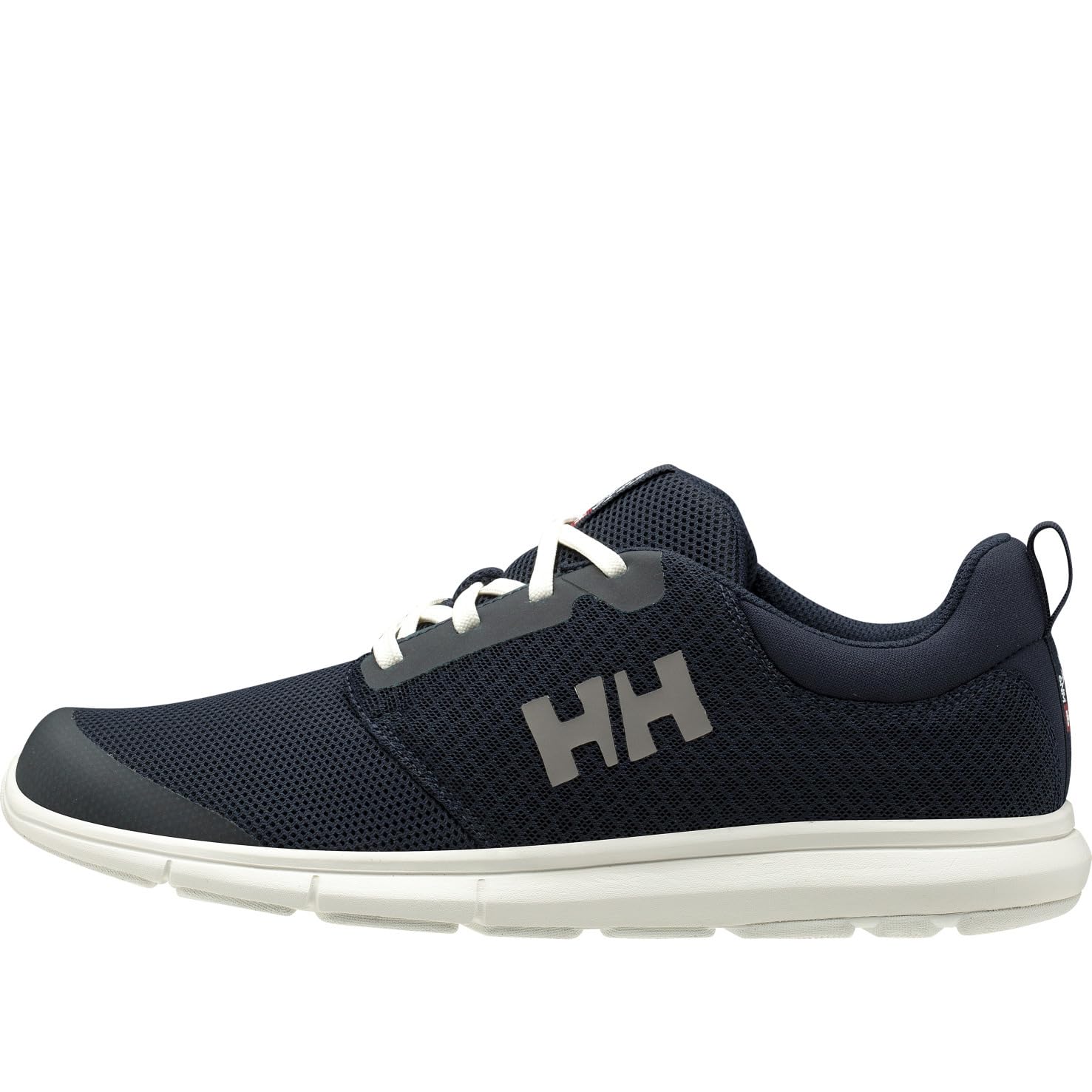
If you sail in sustained winds above 20 knots where the deck stays wet for hours, the Feathering is engineered for exactly that. The mesh upper vents heat aggressively, and the lightweight EVA midsole keeps your feet from feeling like they’re anchored to the deck. Tested by buyers across a full week of 20+ knot days, the outsole held on both dry and wet fiberglass and on teak without a single slip.
The featherweight construction makes this feel more like a performance sneaker than a traditional boat shoe — you notice the reduced fatigue after a long race. The fit is true to size, with enough toe room for splaying during lateral loads. Lace-up closure provides a secure feel, and the white colorway cleans up easily with a spray-down after a salty session.
Where it falls short for some is arch support: the insole is thin, so sailors with high arches may want to add an orthotic. It’s also purely a warm-weather tool — no insulation or waterproof membrane for cold-water sailing. For summer racers, this is the lightest, most breathable option on the list.
Why it’s great
- Amazing wet-grip performance in high-wind conditions
- Very lightweight and breathable for hot days
- Dries fast after complete soakings
Good to know
- Thin insole with minimal arch support
- Not suited for cold or rough-weather cruising
3. Sperry Mako 2 Eye

The Sperry Mako 2 Eye is the benchmark for traditional leather boat shoes that actually work on the water. Its non-marking rubber outsole features the classic siped pattern that Sperry pioneered — capable of channeling water away from the contact patch for surprising grip on a slick deck. The full-grain leather upper is durable enough to survive multiple seasons of yard work, fishing, and casual sailing.
Break-in is real here: the Mako ships a full eighth-size long and needs about three weeks of indoor wear to shrink and mold to your foot. After that shrinkage, the leather conforms well. Buyers consistently report their pairs lasting three to five years of regular use. The leather insoles are firm and flat — less padded than the brand’s premium Gold Cup line — but they provide adequate support for non-race days.
If your sailing is more about casual daysails and dockside socializing than aggressive racing, the Mako delivers the classic profile without the premium sticker shock of top-tier models. Just be prepared for the break-in curve and consider ordering half a size down.
Why it’s great
- Proven non-marking siped outsole for wet traction
- Built to last multiple seasons with proper care
- Classic style works on and off the water
Good to know
- Requires 2-3 week break-in period for proper fit
- Leather insoles lack thick cushioning
4. Sebago Endeavor Waterproof

The Sebago Endeavor is the choice for cruising sailors who face wet spray all day and need a shoe that keeps feet dry without sacrificing deck feel. The “waterproof” designation comes from the waxed full-grain leather construction and leather lining, which resists water penetration far better than textile mesh. The non-slip rubber sole is reliably sticky on both fiberglass and teak, and the 360-degree lacing system lets you cinch the collar tight to keep water from pouring in over the top.
Owners praise the effortless break-in: these mocs need only a couple of days to become comfortable, unlike many traditional leather boat shoes that require weeks of stretching. The sizing recommendation is to go down half a size — standard for handsewn moccasins. Some buyers note a slight squeak from the leather on dry floors, but that disappears once the leather flexes after a few wears.
The tradeoff is weight: all-leather construction is heavier than textile alternatives, and these shoes do not drain water quickly if fully submerged. For prolonged wet-deck days where you’re not repeatedly dunking your feet, the Endeavor offers the best water resistance in the mid-tier range.
Why it’s great
- Excellent water resistance from full-grain leather
- Short break-in period compared to other leather mocs
- 360-degree lacing locks foot in place
Good to know
- Heavier than mesh-based sailing shoes
- Can squeak during initial break-in
5. Sebago Portland
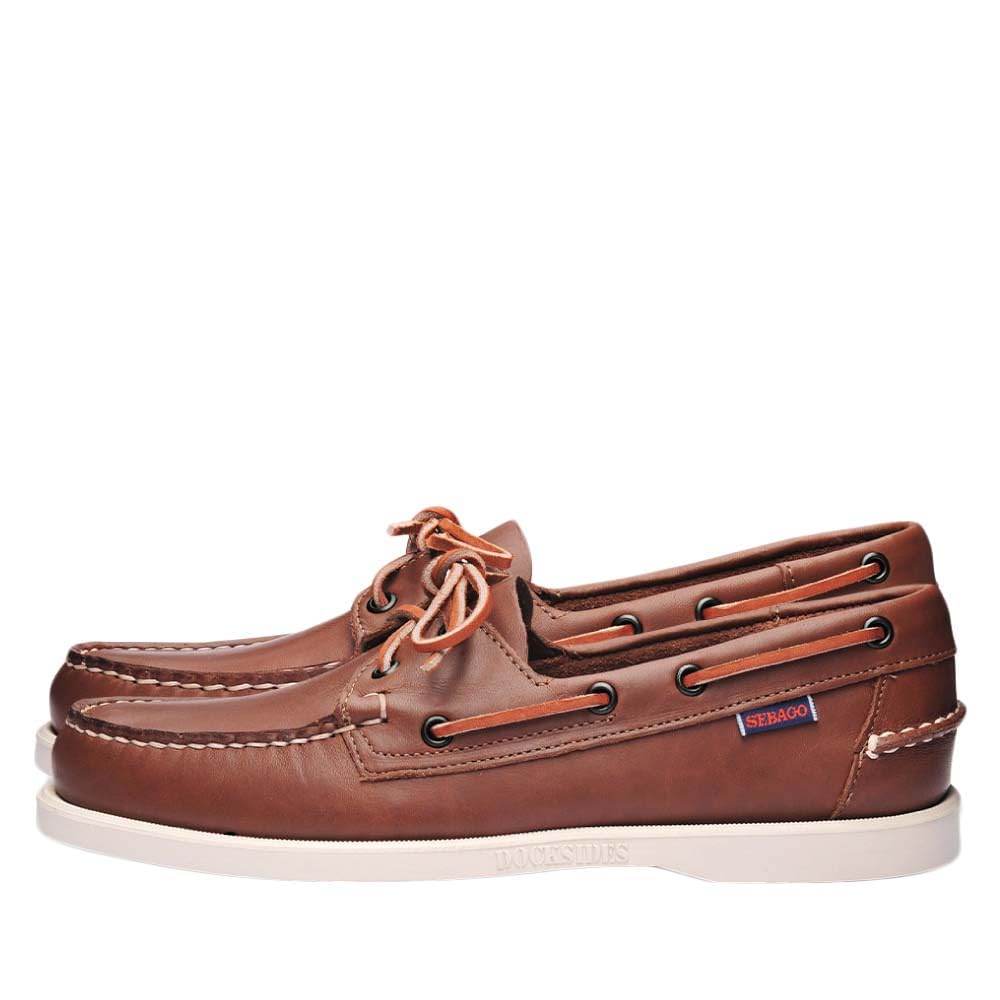
The Sebago Portland represents a step up in materials and hand-finishing. The full-grain leather is supple and thick, while the leather sock lining provides a moisture-wicking interior that reduces hot spots during long days at the tiller. The slip-resistant, non-marking rubber outsole features razor-cut siping that performs well on wet decks — not quite as aggressive as the HH Slip-On pattern, but sufficient for most cruising and club racing.
Multiple generations of Sebago buyers report these shoes hold up for five-plus years with basic leather conditioning. The Portland fit is described as “true to size” by most, though wider-footed sailors may want to size up half a step. The handsewn moccasin toe construction gives a classic look that transitions easily from the cockpit to dinner ashore.
Where the Portland loses points is the price gap to the Schooner: unless you specifically want the Portland’s traditional unstuffed toe profile, the Schooner’s waterproof build offers more function for a similar investment. The Portland is better as a crossover shoe that looks sharp at the club bar without sacrificing all-day sailing comfort.
Why it’s great
- Premium full-grain leather with excellent longevity
- Leather sock lining improves comfort and moisture control
- Classic handsewn look suitable for on and off the water
Good to know
- Not waterproof like the Sebago Schooner
- Premium price with no additional performance features
6. Sperry STS19475 (Gold Cup)

The Sperry STS19475 from the Gold Cup line is the most comfortable traditional boat shoe we’ve examined. The full-grain leather upper is supple yet firm, and the Gold Cup’s proprietary cushioned insole provides noticeably more arch and heel padding than standard Sperry models. Reviewers who stand on their feet all day at the helm — or at the club bar after — report zero discomfort even after hours of wear. The non-marking siped outsole is the same proven pattern Sperry has refined for decades.
A long-time Sperry wearer noted that this is their third or fourth pair of this exact model, with the leather holding up for four-plus years per pair before needing replacement. The shoe does require occasional wax polish to maintain appearance, as the untreated leather is prone to staining. The rawhide laces, while classic, do not lie completely flat and may need trimming at the tips after repeated tying.
The Gold Cup premium is justified if you log serious hours onboard and need the best underfoot comfort from a leather boat shoe. It looks dressy enough for a country club dinner, but the performance features — solid wet grip, durable stitching, quality leather — mean it earns its keep on the water, not just on the dock.
Why it’s great
- Superior cushioning from Gold Cup insole for all-day wear
- Excellent build quality with 4+ year lifespan reported
- Classic Sperry styling that looks polished on and off the water
Good to know
- Leather stains easily without wax polish protection
- Rawhide laces may twist and not lie flat
7. Sebago Portland Crazy H
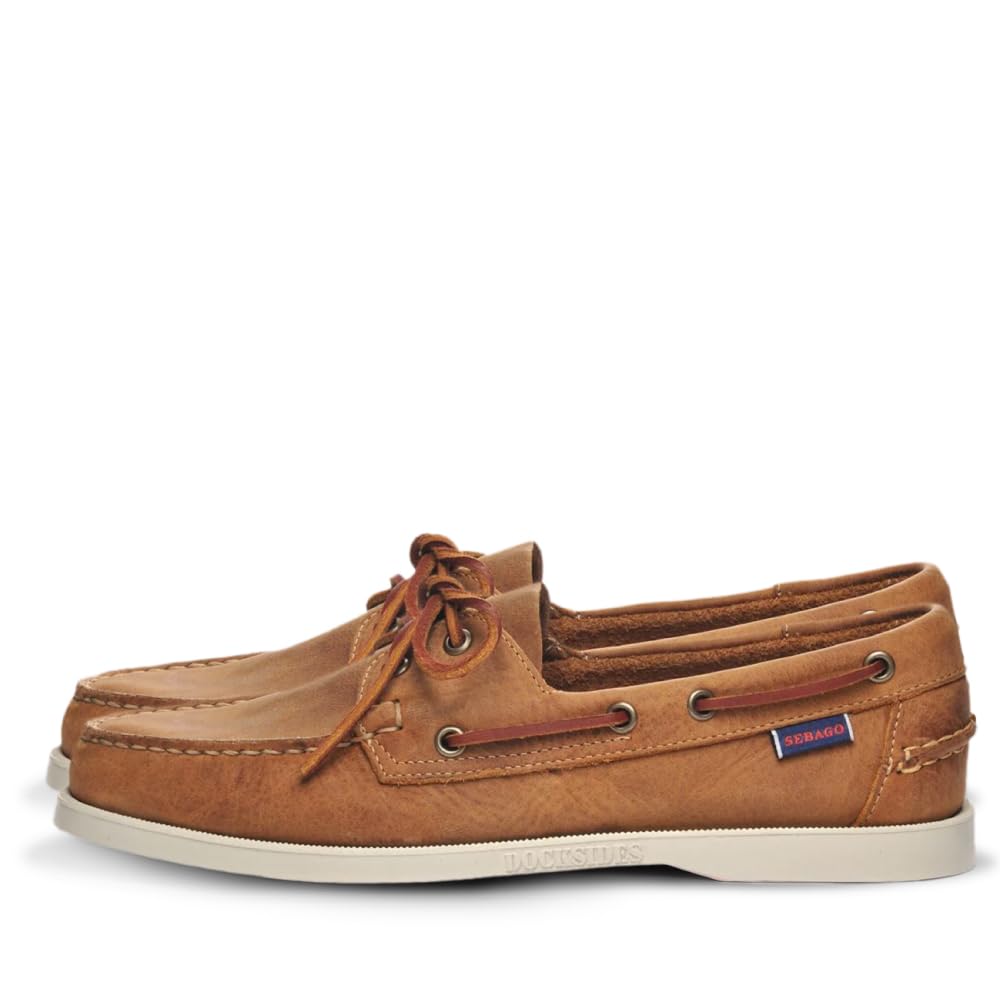
The Portland Crazy H takes the classic Sebago moccasin blueprint and gives it a distressed, waxed finish that looks like it’s already survived a storm — even when brand new. The waxed leather is patterned and lightly cracked, giving each pair a unique texture that stands out from the uniform tan and brown of traditional boat shoes. Functionally, the non-marking, slip-resistant rubber outsole is identical to the standard Portland, providing the same wet traction on deck.
Break-in is required: the waxed leather is stiffer out of the box than smooth leather, and owners report needing about a week of wear for the upper to conform. Sizing runs large — most reviewers recommend going a half size down. Once broken in, the Crazy H is versatile enough for both a racing crew meeting and a casual dinner. The leather sock lining adds a touch of refinement that textile linings lack.
If your sailing wardrobe leans toward darker, more rugged looks, the Crazy H’s weathered aesthetic is by far the most distinctive on this list. Just know that the waxed finish may require occasional reapplication of a wax-based conditioner to keep the leather supple and waterproof over the long term.
Why it’s great
- Unique distressed waxed leather look
- Solid non-slip outsole for deck safety
- Versatile enough for casual and semi-formal settings
Good to know
- Runs large — order half a size down
- Requires break-in period due to stiff waxed leather
8. SCARPA Mojito
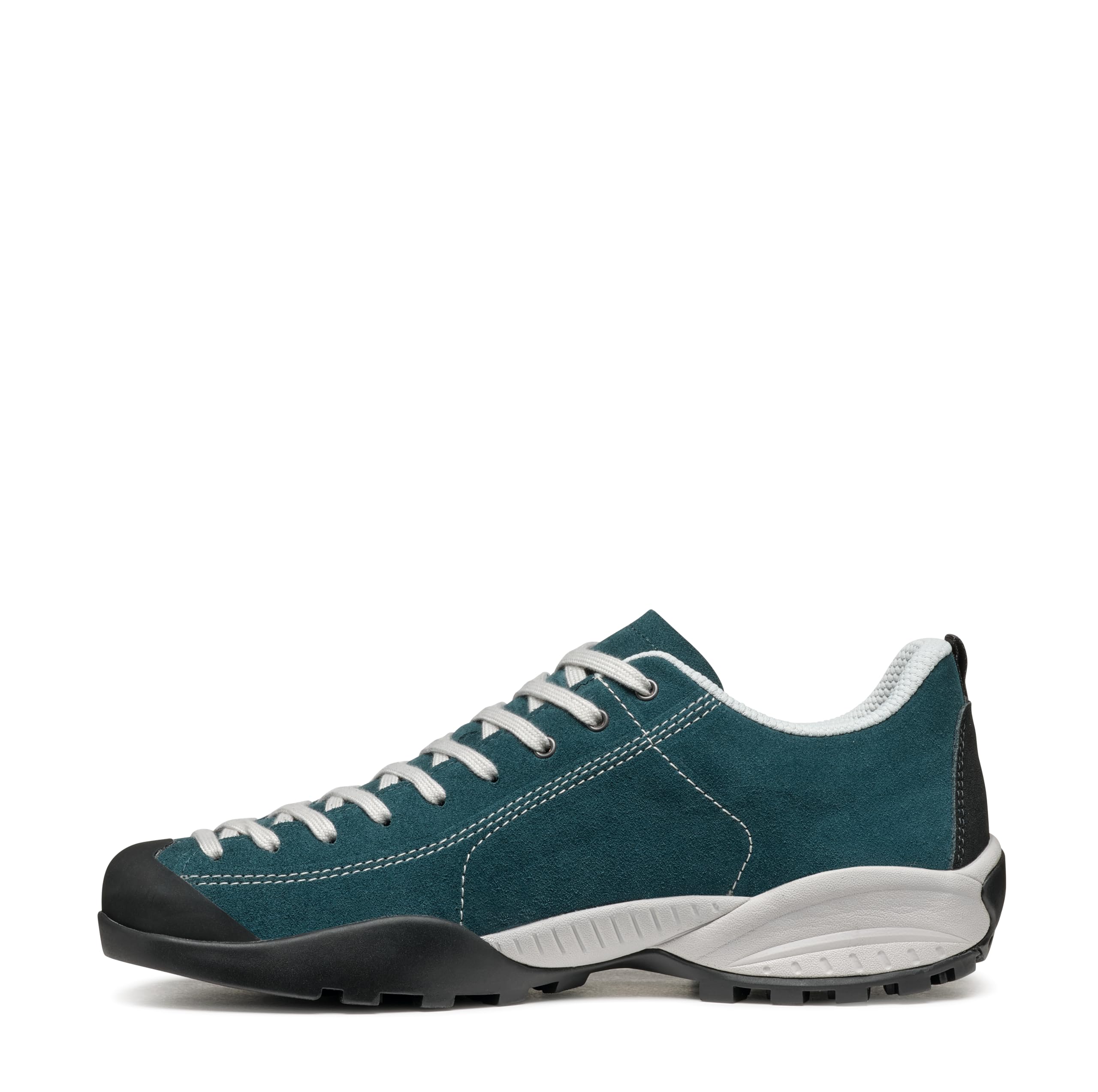
The SCARPA Mojito is the outlier on this list — an outdoor leather shoe with a Vibram sole that happens to work extremely well for sailing and dock-to-trail transitions. The upper is a single-piece leather construction with a lace-down toe box that lets you fine-tune the fit for sock thickness. The ACTIVimpact midsole provides responsive cushioning that outperforms any traditional flat moccasin insole, making this the shoe of choice if your sailing day includes a hike to the anchorage or a long walk along the dock.
Durability is SCARPA’s calling card; one owner reports five years of regular use with the shoe still looking new after a basic cleaning. The fit runs small — you need to size up by half to a full size compared to running shoes. The Vibram sole is aggressive enough for mixed terrain (asphalt, dirt paths, metal bridge gratings) while remaining non-marking on fiberglass decks. It’s not the best dedicated sailing shoe for pure wet-deck grip, but it handles the role well enough for the multi-activity sailor.
The Mojito’s main drawback for dedicated sailors is its slower dry time: the leather and thick midsole hold water longer than a mesh-based textile shoe. It also lacks the classic boat shoe silhouette, so traditionalists may find the look too “hiking boot adjacent” for club formality. For the solo sailor who rows ashore and hikes to the store, this is the most capable hybrid shoe available.
Why it’s great
- Extremely durable build — lasts 5+ years
- Excellent cushioning for mixed terrain and all-day wear
- Adjustable lace-down toe box for a custom fit
Good to know
- Runs small — go up half to a full size
- Slow to dry after full submersion in water
9. Sebago Schooner Waterproof

The Sebago Schooner is the most purpose-built traditional moccasin for serious sailing. It features a waterproof full-grain leather upper that has withstood daily wear for nearly four years per pair, as reported by a 20-year repeat buyer. The 360-degree rawhide lacing system wraps around the heel, letting you lock your foot in place to prevent forward slide when the boat heels. The slip-resistant rubber sole is sewn rather than glued to the leather, which contributes to the shoe’s legendary longevity.
Comfort is immediate: multiple owners confirm zero break-in required out of the box, with good arch and heel support that surpasses most leather moccasins. The fit is true to size but slightly wider than Sperry’s standard last, which is welcome for sailors with broader feet. The leather does need periodic treatment with a wax-based conditioner to maintain the waterproof seal, especially after prolonged exposure to saltwater.
The Schooner sits at the top of the price bracket, but its construction justifies the investment for anyone who sails multiple times per week or month. It is the closest thing to a “buy it for life” boat shoe on this list — provided you treat the leather annually. The tradeoff is weight and dry time: it’s heavier than any textile shoe and takes overnight to fully ventilate after a soaking.
Why it’s great
- Waterproof full-grain leather with proven 4-year lifespan
- No break-in required — comfortable from first wear
- 360-degree lacing system prevents heel lift on heeling boat
Good to know
- Heavier and slower to dry than textile alternatives
- Requires annual leather conditioning for waterproofing
FAQ
How should boat shoes fit for sailing?
What is the difference between a deck shoe and a boat shoe?
Can I wear leather boat shoes in the water?
Final Thoughts: The Verdict
For most sailors, the boat shoes for sailing winner is the Helly-Hansen Ahiga V4 HP because it delivers the best balance of wet grip, breathability, and durability without crossing into premium pricing. If you want a classic leather moccasin that performs on deck and looks sharp ashore, grab the Sebago Schooner Waterproof. And for high-wind racing where every gram counts and the deck never dries, nothing beats the Helly Hansen Feathering.