
A bonsai pot is not just a container—it is the stage that frames your tree’s silhouette, the anchor that controls root growth, and the single most decisive factor in whether your miniature tree thrives or slowly declines. The wrong pot can drown roots through poor drainage, stunt growth with inadequate depth, or clash so badly with your tree’s form that the entire composition feels off. Choosing the right pot means weighing material, glazing, drainage geometry, and the critical match between pot depth and your tree’s root mass.
I’m Min — the co-founder and writer behind Gadgets Feed. After spending countless hours analyzing the material science of ceramic vs. plastic bonsai containers, evaluating drainage hole configurations, and cross-referencing thousands of customer reviews on fit and finish, I’ve narrowed down the options to the pots that actually deliver on their promises for serious growers and beginners alike.
Whether you are training a juniper cutting or displaying a mature ficus, this guide cuts through the noise to help you find the best bonsai pots that balance proper root health with aesthetic harmony.
How To Choose The Best Bonsai Pots
Selecting a bonsai pot is a deliberate act of balancing horticultural necessity with visual art. You are not just buying a planter—you are choosing the environment where a living sculpture will spend years developing. Prioritize function first, then let aesthetics follow.
Depth and Root Architecture
Bonsai pots are deliberately shallow to restrict vertical root run and encourage a dense, fibrous root pad. Depth between 2 and 4 inches is the sweet spot for most species. A pot that is too deep invites stagnant moisture at the bottom, leading to root rot, while one that is too shallow leaves no room for the root ball to anchor the tree. Measure your tree’s current root mass and add roughly half an inch of clearance underneath for fresh soil and drainage.
Drainage Hardware
A single unblocked drainage hole is the minimum, but larger pots benefit from two or three holes to eliminate perched water. The holes should be wide enough (at least half an inch) to allow water to flow freely. Look for pots that include mesh pads or screens to prevent soil from washing out while still letting water escape. Bamboo trays and ceramic saucers are common additions—ceramic saucers are more durable under standing water, while bamboo can warp over time.
Material and Glaze
Unglazed ceramic (bisque) allows the pot to breathe, wicking moisture away from the soil and promoting air exchange at the root zone—ideal for outdoor trees in humid climates. Glazed ceramic pots retain moisture longer, making them better suited for indoor bonsai or species that prefer consistently moist soil. Plastic training pots are lightweight, economical, and feature excellent drainage, but they lack the weight and aesthetic finish needed for display. Never use metal or glass containers for bonsai—they lack breathability and can cook roots in direct sun.
Quick Comparison
On smaller screens, swipe sideways to see the full table.
| Model | Category | Best For | Key Spec | Amazon |
|---|---|---|---|---|
| ARTKETTY 7.5″ Bamboo Tray | Glazed Ceramic | Indoor display with bamboo aesthetic | 8″ wide x 2.76″ deep, glossy blue glaze | Amazon |
| Brussel’s 10″ Rectangle | Glazed Ceramic | Large specimen display with tie-down wires | 10″ x 8″ x 2.5″, includes wire and screen | Amazon |
| EPFamily 10″ Round | Glazed Ceramic | Large trees needing deep root space | 10.83″ outer diameter x 4.41″ tall, blue glaze | Amazon |
| EPFamily 8″ Round Bamboo | Glazed Ceramic | Mid-sized trees with bamboo saucer | 8″ diameter x 3.14″ tall, green glaze | Amazon |
| SQOWL 6″ Beige Ceramic | Glazed Ceramic | Small succulents and compact bonsai | 6.1″ waist diameter x 2.76″ tall, includes mesh | Amazon |
| ARTKETTY 7.9″ Rectangle | Glazed Ceramic | Multiple succulent arrangements in one pot | 7.9″ long x 2.7″ tall, light blue paint finish | Amazon |
| Yesland 6 Pack Training | Plastic Training | Mass propagation and root development | 9″ x 6.5″ x 3″, built-in mesh, 6-pack | Amazon |
In‑Depth Reviews
1. ARTKETTY 7.5″ Succulent Pot with Bamboo Tray
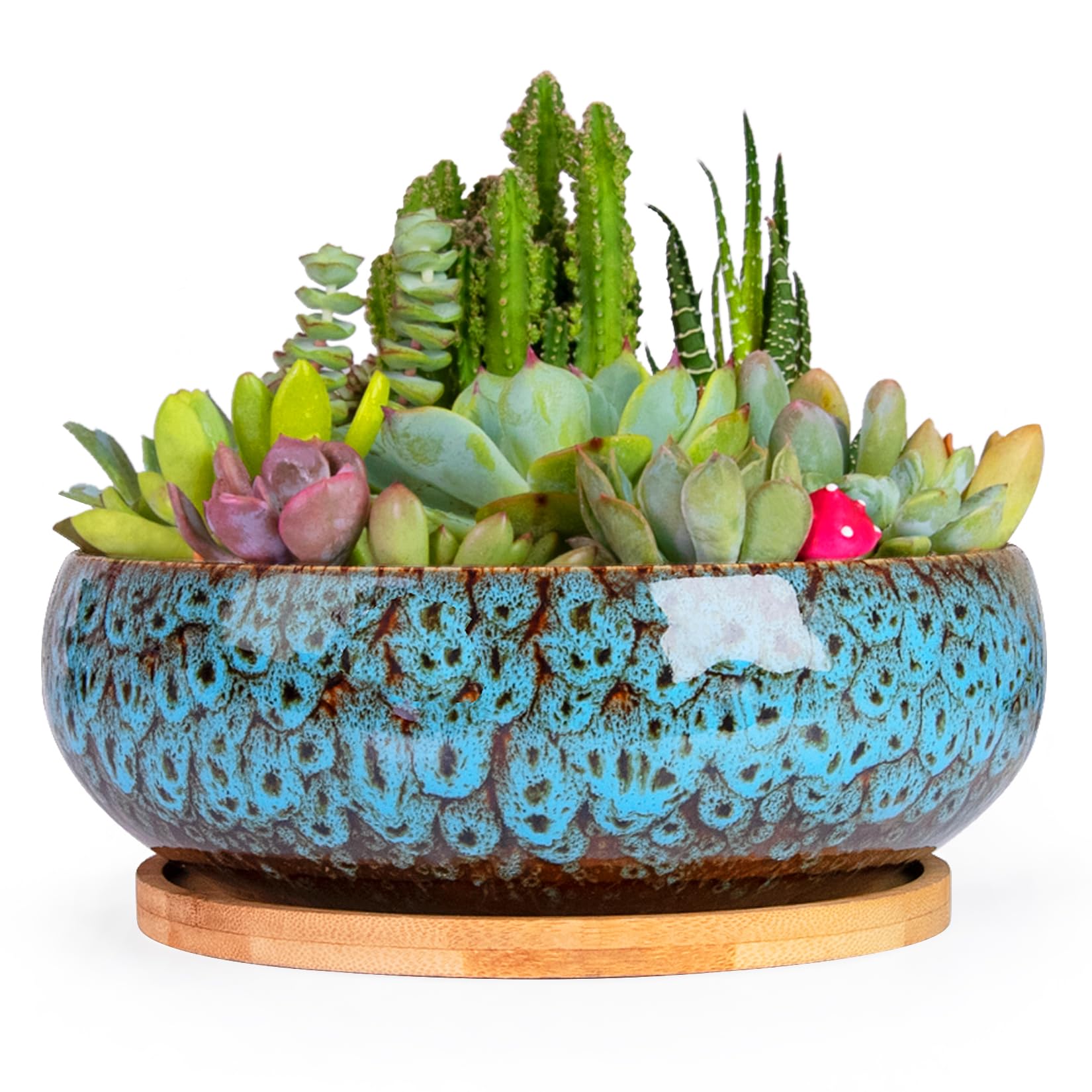
This ARTKETTY pot hits the sweet spot of form and function for indoor bonsai and succulents. The glossy blue glaze is deep and even, and the 8-inch diameter with a 2.76-inch depth provides enough room for a mature root pad without wasting soil volume. The included bamboo tray raises the pot slightly off the surface, allowing airflow underneath while catching drips.
The built-in drainage hole is properly sized, though the plastic mesh screen included with some units can be fiddly to seat correctly—once it is in place, soil loss stops completely. Several reviewers noted that the pot’s wide, bowl-like shape makes it ideal for creative succulent arrangements alongside a single bonsai tree, and the weight (roughly under a kilo) gives it stability without being immovable.
For growers who want a display-ready pot that works immediately on a desk or shelf, this is the most balanced option. The bamboo tray is a softer wood that may show water stains if moisture sits for days, but for indoor use with proper watering discipline, it holds up well. The only real miss is the absence of an unglazed interior option for species that need maximum breathability.
Why it’s great
- Rich, glossy glaze that highlights plant foliage
- Bamboo tray adds natural contrast and protects surfaces
- Generous width for spreading shallow root systems
Good to know
- Bamboo tray can warp if left in standing water
- Plastic drain screen may arrive misaligned from the factory
- Glazed interior reduces air exchange through pot walls
2. Brussel’s 10″ Rectangle Bonsai Glazed Ceramic Pot
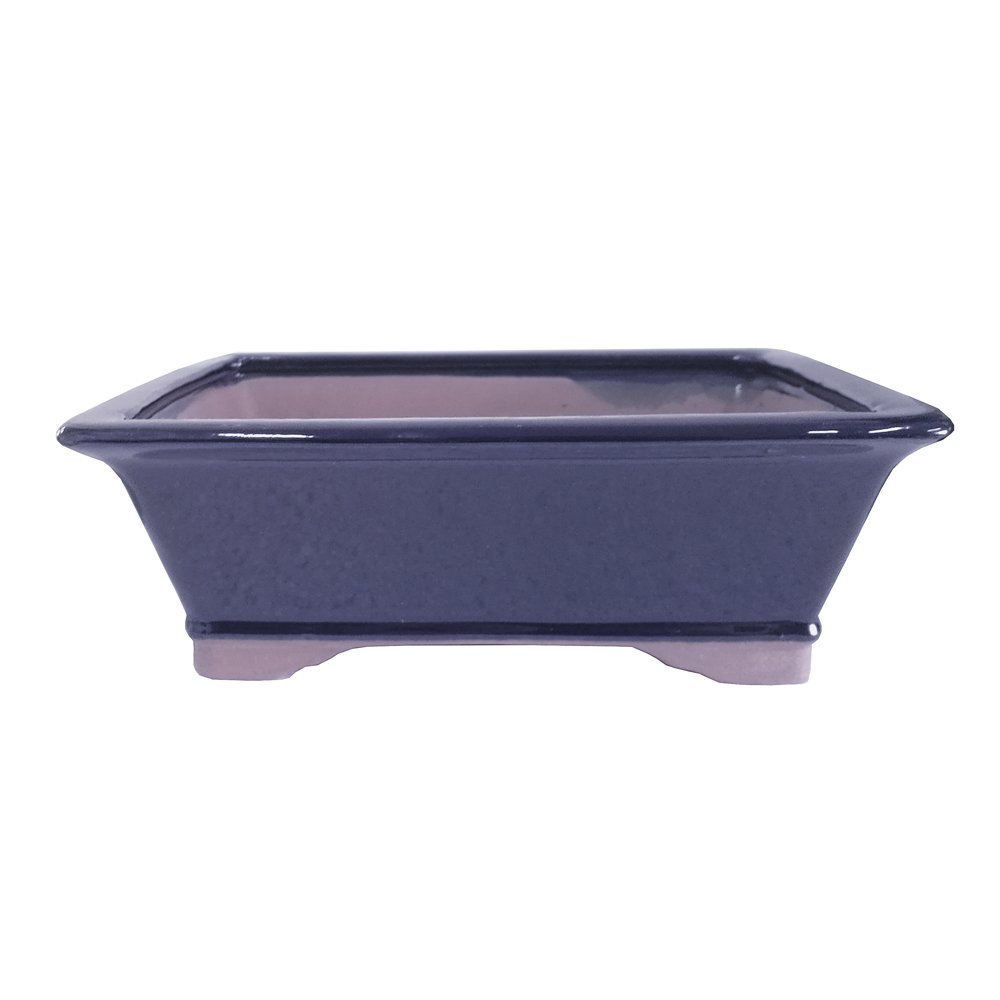
Brussel’s is a name that carries weight in the bonsai community, and this 10-inch by 8-inch rectangular pot justifies the reputation. The dark navy glaze is applied smoothly and evenly, and the ceramic body feels dense—just over 3 pounds—which anchors a large tree without tipping. The pot comes pre-equipped with mounting wires and drain screens, which saves the hassle of sourcing those separately.
The 2.5-inch depth is intentionally shallow, forcing the root system to spread laterally and develop the flat pad that serious bonsai display demands. The wire holes are cleanly drilled and positioned to secure trees with trunks up to about 2 inches in diameter. A few customers reported receiving a different color than ordered, which appears to be a batch-labeling issue, but the overall craftsmanship is consistently praised.
This is the pot to choose when you are repotting a specimen that has outgrown a training container and needs a permanent home. The rectangular form suits formal upright and slanting styles particularly well. If you want the classic bonsai aesthetic with pro-level hardware included, this is the closest you will get without custom pottery pricing.
Why it’s great
- Includes professional tie-down wires and drain screens
- Heavy ceramic body prevents toppling on outdoor benches
- Classic rectangular shape suits upright and slanting styles
Good to know
- Color inconsistency reported between batches
- Limited depth may not suit trees with large taproots
- No saucer included—requires separate drip tray for indoor use
3. EPFamily 10″ Ceramic Bonsai Pot with Saucer
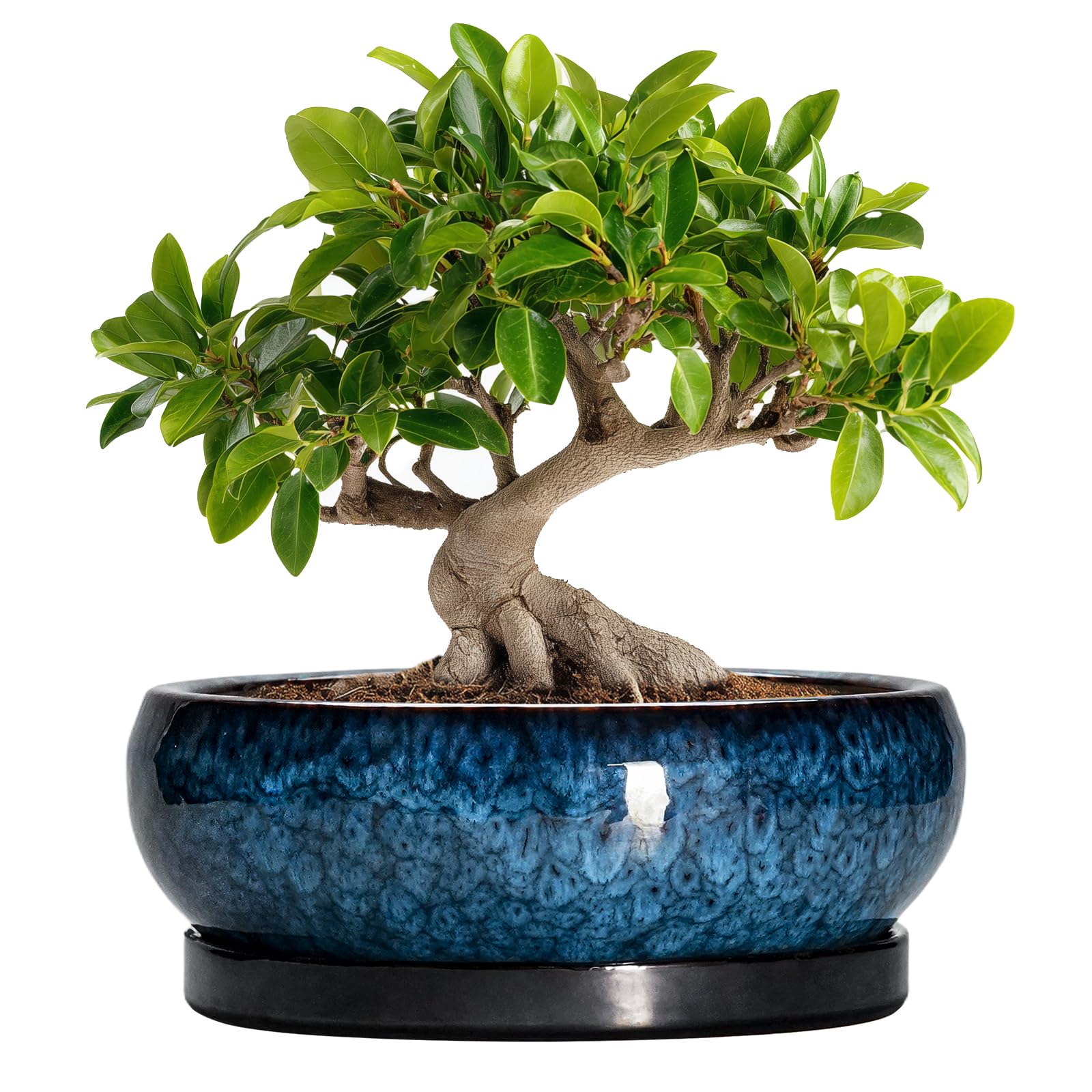
When your tree has outgrown standard shallow pots, the EPFamily 10-inch round offers a rare combination: a full 4.41 inches of interior depth with a 9.4-inch inner diameter opening. That extra vertical room accommodates species like ficus or Chinese elm that prefer slightly deeper root zones while still maintaining a bonsai-appropriate profile.
The blue glaze is uniform and fired at high temperature, which means it resists fading even under direct outdoor sunlight. The kit includes a matching ceramic saucer and a 9mm mesh net for the drainage hole—both of which are more durable than the bamboo or plastic alternatives found on lower-tier pots. At roughly 6.7 pounds, this is a substantial pot that will not shift in the wind.
One trade-off is the rounded bowl shape, which works beautifully for cascade and semi-cascade styles but does not frame formal upright trees as cleanly as a rectangle would. The ceramic saucer, while matching perfectly, does not have rubber feet, so it may slide on smooth surfaces. For growers prioritizing root health and longevity over strict bonsai pot tradition, this is a top contender.
Why it’s great
- Exceptional 4.4-inch depth for larger root systems
- Matching ceramic saucer is more durable than bamboo trays
- High-temperature glaze resists outdoor UV damage
Good to know
- Round shape limits formal upright display options
- Ceramic saucer lacks non-slip feet
- Heavier than most pots in this size class
4. EPFamily 8″ Ceramic Bonsai Planter with Bamboo Saucer

The EPFamily 8-inch round pot delivers a handmade feel at a price that undercuts most competition. The jade green glaze has subtle variations that give it character, and the 3.14-inch depth hits the ideal middle ground for most medium-sized bonsai and succulent arrangements. The bamboo saucer is 6.1 inches in diameter—slightly smaller than the pot—which can lead to drip overflow if you water heavily.
The drainage hole is generously sized, and several reviewers noted that the pot’s weight (just over a pound) feels substantial without being heavy. The glazed finish is easy to wipe clean, and the color works well with both green foliage and bare winter branches. A handful of customers reported that the bamboo saucer deforms if water is left standing in it for extended periods, so it is best to empty the tray after watering.
For the price, this is a remarkably well-finished pot that looks far more expensive on a shelf than its cost suggests. It is not the largest pot in this guide, but for a single tree in the 6-to-8-inch range, it provides the depth and drainage needed for healthy development. The handmade nature means slight glaze irregularities, but that is a feature, not a flaw.
Why it’s great
- Handmade glaze with unique color variation
- 3.14-inch depth suits most medium bonsai species
- Lightweight but stable on tabletops
Good to know
- Bamboo saucer can warp under standing water
- Saucer is smaller than pot diameter
- Glaze may show tiny pinholes in the finish
5. SQOWL 6″ Small Ceramic Bonsai Pot with Saucer
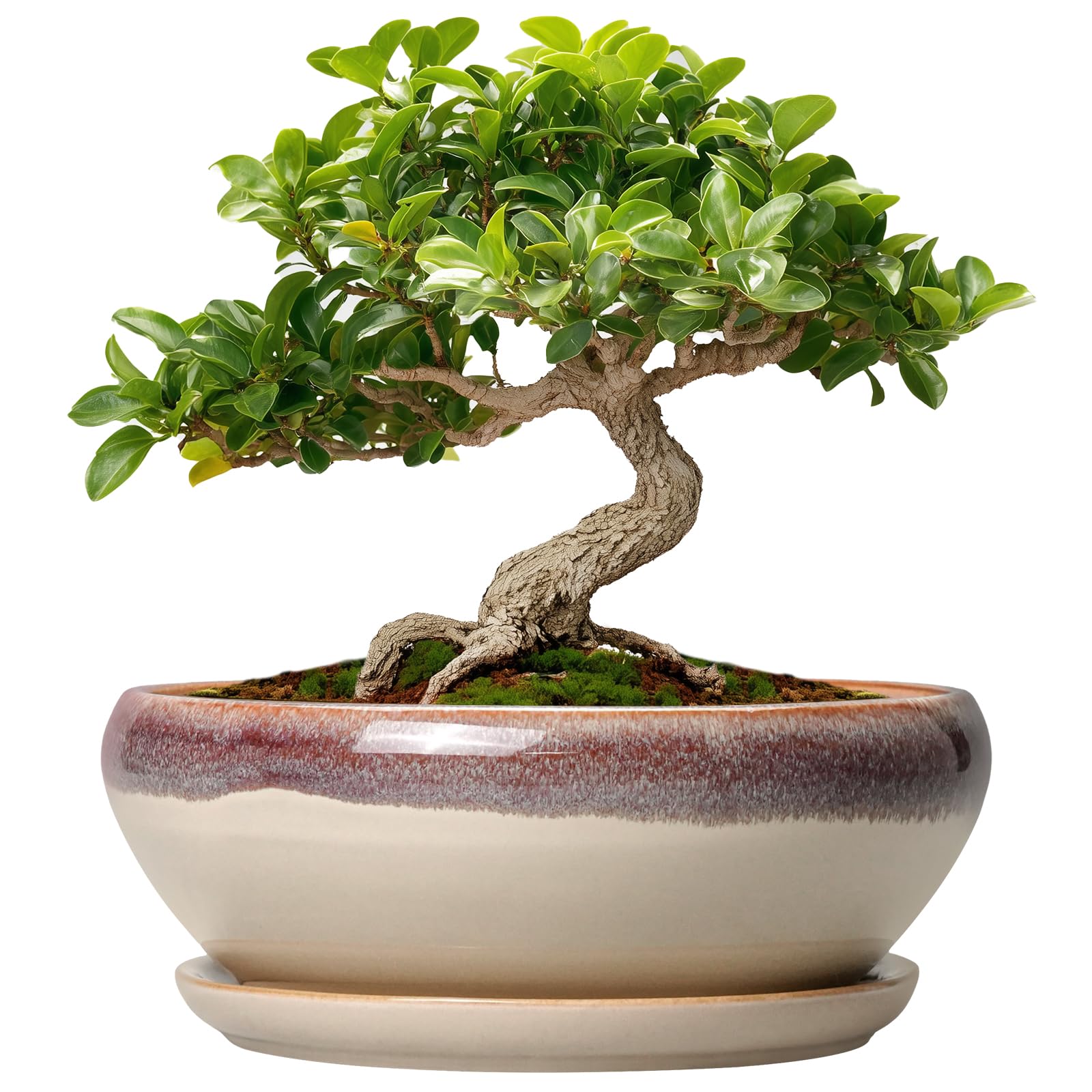
Not every bonsai grower needs a massive container. The SQOWL 6-inch pot is purpose-built for small succulents, starter trees, and compact species like dwarf jade or portulacaria afra. The beige glaze is smooth and neutral, letting the plant take center stage, and the 2.76-inch height provides just enough soil depth for a young root system to establish.
The kit includes a matching ceramic saucer and a mesh pad for the drainage hole—a thoughtful addition at this size class. The pot weighs only 4.8 ounces, making it easy to move around or group in display arrangements. Several reviewers noted that the pot’s waist diameter (6.1 inches) is slightly wider than the rim, giving it a pleasing rounded profile that resembles traditional Japanese bonsai containers.
Where this pot falls short is its shallow soil capacity: if you are working with a tree that has already developed a thick root ball, the 2.76-inch depth will be cramped. This is strictly a pot for young plants or species that naturally stay small. The glazed finish also means the interior is less breathable, so careful watering discipline is required to avoid soggy soil.
Why it’s great
- Compact size perfect for small species and starters
- Neutral beige glaze complements any foliage color
- Includes ceramic saucer and drainage mesh
Good to know
- Shallow depth limits root ball size
- Glazed interior reduces air exchange
- Not suitable for trees with heavy top growth
6. ARTKETTY 7.9″ Rectangle Succulent Planter with Tray

Rectangular bonsai pots offer a distinct visual line that suits multiple-tree forest plantings and formal upright styles. The ARTKETTY 7.9-inch rectangle provides a 7.9-inch length and 3.9-inch width with a 2.7-inch depth—proportions that work well for grouping three to five small succulents or for a single medium-sized bonsai with a spreading root base.
The light blue painted finish has a matte texture that looks clean and modern, though it lacks the depth of a fired glaze. The included drainage tray fits securely under the pot, and the drainage hole is positioned at one end to help water flow out more efficiently. Customers consistently praised the pot’s build quality, with several noting that it arrived well-packaged without chips or cracks.
The painted finish is less durable than a true glaze—scratching or chipping is possible if you move the pot around frequently or use metal tools during repotting. The 2.7-inch depth is on the shallower side, so this pot is best suited for plants that have already been trained to a shallow root pad. For growers who prize the clean geometry of a rectangle, this is a solid mid-range choice.
Why it’s great
- Rectangular shape suits forest plantings and linear designs
- Lightweight ceramic is easy to reposition
- Drainage hole placement promotes efficient water runoff
Good to know
- Painted finish is less durable than fired glaze
- Shallow depth limits species requiring more soil volume
- Color may appear slightly different from product listing
7. Yesland 6 Pack Bonsai Training Pots

If you are propagating multiple trees or raising seedlings to training size, the Yesland 6-pack is the most economical route to get a dozen root systems developing simultaneously. Each pot measures 9 inches by 6.5 inches by 3 inches, and the heavy-duty poly-resin plastic is surprisingly rigid—it does not flex or crack when dropped, and it withstands full sun without fading.
The built-in mesh bottom is a standout feature: instead of separate screens that can be lost, the mesh is molded directly into the plastic, creating a permanent barrier that prevents soil loss while allowing water to drain freely. The four supporting feet elevate the pot off the surface, promoting airflow underneath and preventing water from pooling. The rolled edges make carrying multiple pots comfortable, even when wet.
These are training pots, not display pots—the brown matte finish is functional, not decorative, and there is no saucer included, so you will need a tray underneath if using indoors. The plastic construction also means no breathability through the walls, so moisture retention is higher than in ceramic. For their intended purpose—growing strong root systems in bulk—these are unbeatable for the price.
Why it’s great
- Built-in mesh bottom eliminates soil washout
- Six pots for the price of one ceramic unit
- Rolled edges and feet make handling and ventilation easy
Good to know
- No saucers included—requires separate drip trays
- Plastic walls offer no air exchange
- Not suitable for final display presentations
FAQ
Can I use a regular ceramic flower pot for bonsai training?
What size pot should I choose for a tree with a 1-inch trunk diameter?
Should I choose a glazed or unglazed pot for outdoor bonsai?
Final Thoughts: The Verdict
For most users, the best bonsai pots winner is the ARTKETTY 7.5″ with Bamboo Tray because it delivers the ideal blend of glazed ceramic quality, proper drainage hardware, and a display-ready aesthetic that works for both bonsai beginners and experienced growers. If you need a pot for a large specimen with deeper root requirements, grab the EPFamily 10″ Round with Ceramic Saucer. And for mass propagation or training seedlings on a budget, nothing beats the Yesland 6 Pack Training Pots.