
Our readers keep the lights on and my morning glass full of iced black tea. As an Amazon Associate, I earn from qualifying purchases.
Specs are compiled from manufacturer listings and verified buyer reviews and can change over time — please confirm the key details on the product page before buying.
Your first bonsai scissors should match how much time you want to spend on upkeep. A hand-forged carbon steel blade stays razor-sharp but needs oiling after every use to prevent rust, while a stainless steel pair stays rust-free with almost no maintenance. The real trade-off is blade care, not just price.
I’m Min — the founder and writer behind Gadgets Feed. This guide is built by comparing the manufacturers’ published specifications and the patterns across verified customer reviews, so you get each pick’s real strengths and trade-offs instead of marketing spin.
We’ve weighed sharpness, steel type, weight, and handle comfort to find truly great options. Here are the best bonsai scissors for making clean, healing cuts on your trees.
Our Picks at a Glance


How To Choose The Best Bonsai Scissors
Bonsai scissors aren’t just tiny scissors. They are precision tools designed to make cuts that heal quickly and don’t crush the tree’s delicate wood fibers. Picking the right pair means thinking about the steel, the handle, and the blade tip.
Steel Type: Carbon vs. Stainless
The biggest decision you’ll make. Carbon steel (like S58C or SK steel) takes an incredibly sharp edge and holds it well, making it the traditional favorite. But it will rust and stain if you don’t wipe it dry and oil it after every session. Stainless steel (like AUS-8) needs far less maintenance and resists rust, but you might sacrifice a bit of that razor-sharp edge over time.
Blade Tip and Handle Design
Look at the tip shape. A pointed, micro-tip is perfect for reaching into tight spots and isolating thin stems without damaging surrounding growth. The handle matters just as much. Traditional “butterfly” handles are large, looped, and sit close to the blade for better control, while long, slim handles give you more reach into the center of a dense canopy.
Quick Comparison
| Model | Best For | Blade Material | Blade Length | Weight | Amazon |
|---|---|---|---|---|---|
| Hanafubuki Wazakura★ Best Overall | Traditional Craftsmanship | S58C Carbon Steel | 2 inches (50mm) | 5.5 oz (156g) | Amazon |
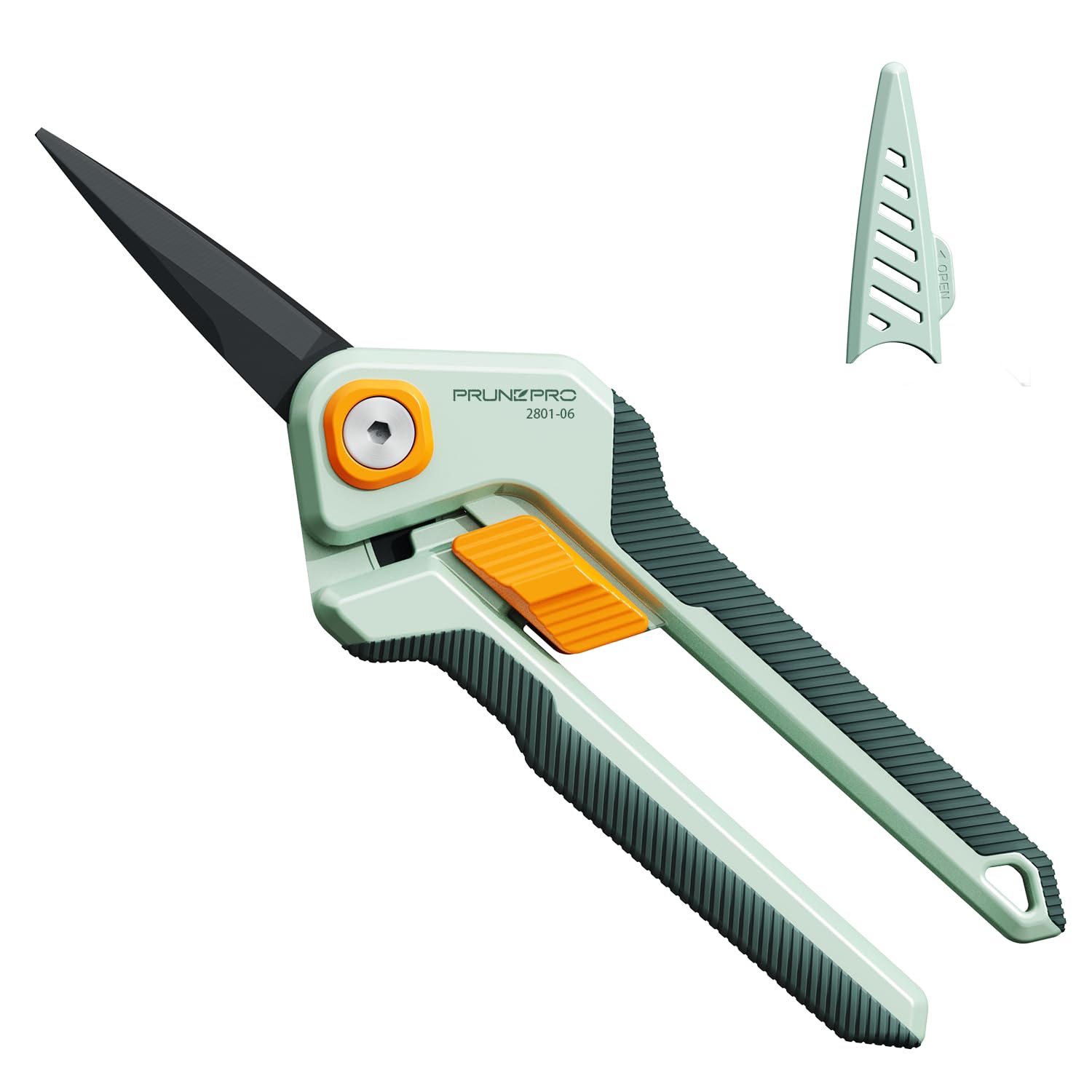
| PruneProBest Value | Low-Maintenance Precision | German Stainless Steel | Micro-tip | 0.14 kg | Amazon |
| Vouiu 8inch ScissorsCompact Pick | Budget-Friendly Value | Stainless Steel | Long Handle | 0.15 kg | Amazon |
| SUIZAN Trimming | Featherlight Grip | Carbon Steel | 1.57 inches | 1.94 oz (55g) | Amazon |
| Wakashishi | Razor-Sharp Edge | SK Steel | 180mm Total | 5.8 oz | Amazon |
| TONMA Ashinaga | Heavy-Duty Stainless | Japanese AUS-8 | 2.36 inches | 6.8 oz | Amazon |
| Wazakura Satsuki | Deep Canopy Reach | S58C Carbon Steel | 1.57 inches (40mm) | 2.82 oz (84g) | Amazon |
| Wazakura Yasugi | Premium Tool Steel | YCS3 Alloy Tool Steel | 2.05 inches (52mm) | 5.22 oz (148g) | Amazon |
| Vouiu 4-Piece Set | Complete Starter Kit | Stainless Steel | 8-inch Tools | 0.82 kg (Set) | Amazon |
In-Depth Reviews
1. Hanafubuki Wazakura Bonsai Scissors
Our pick — over 4.5★ from 600+ verified ratings; the strongest balance of quality and price.
Hand-forged in Japan’s Sanjo city, this is the traditional tool that sets the standard.
Hand-forged in Sanjo, this pair wins over buyers with authentic Japanese craftsmanship. Forged by local artisans in Sanjo, a city known for blacksmithing since the 17th century, these scissors use S58C black carbon steel. The blade measures 2 inches (50mm) and it weighs in at a satisfying 5.5 oz (156g). The 5.5 oz weight feels balanced, and the S58C edge severs fibers cleanly for faster healing.
The “butterfly” handle design is a classic for a reason. The large, looped handle sits close to the blade, giving you precise control without using much force. It is an ambidextrous design that works for lighter pruning tasks. While it’s made for bonsai, it also handles ikebana flower arranging and general gardening, from roses to indoor plants.
You will need to look after the carbon steel. Buyers report the blade can stain if you don’t keep it clean and dry, especially after cutting plant juices. The habit is simple: wipe it down after each use. As owners put it, they are a “beautiful tool, good weight” and they’ll likely be handed down because they’re so well made.
Why it earns the top spot
- Authentic hand-forged Japanese quality in every cut
- S58C carbon steel severs fibers cleanly for faster healing.
- Comfortable butterfly handle offers excellent control
Consider this first
- Carbon steel demands cleaning and drying after every session
- Some owners find the fit slightly uncomfortable on fingers
Reach for this if: you value traditional craftsmanship and want a sharp, well-weighted tool that feels like an heirloom.
Look elsewhere if: you want a low-maintenance blade that handles moisture without staining.
2. PrunePro Garden Scissors
This micro-tip snip pairs German steel with a non-stick coat for easy, rust-free cuts.
If you want precision without the fuss of carbon steel, this is the pick. The PrunePro uses high carbon 1.4031 German stainless steel with a Teflon coating, which means the blade stays sharp, resists rust, and doesn’t let sap stick to it. The micro-tip snips are designed to trim only the exact area you want, protecting the healthy stems around it.
It’s built with a high-tension spring and ergonomic polypropylene handles, so your hand stays comfortable during extended pruning sessions. Weighing just 0.14 kg, it’s a touch lighter than the Vouiu 8-inch pair (0.15 kg). Owners mention it’s “super sharp” and doesn’t seem to lose its edge, even when cutting things slightly larger than intended.
The catch is to respect its design. The maker says these are meant for delicate stems and thin green growth, so you should avoid thick, woody branches to keep the edge lasting. The safety lock is a unique anti-break design that stops the lock from sliding up during a cut; though some owners find the locking mechanism a bit mixed in practice.
easy precision: The Teflon-coated German steel is a dream for clean, low-effort trims on roses, vegetables, and bonsai.
Know your limits: Stick to green growth and thin stems—this isn’t the tool for heavy, woody limbs.
3. Vouiu 8inch Bonsai Scissors
A sturdy stainless steel workhorse that proves you don’t need to spend big for a sharp cut.
This is the budget-friendly option that punches well above its weight. The Vouiu is a solid stainless steel tool with a long handle design, measuring 210mm in total. It’s specifically used for pruning bonsai leaf buds, tender branches, and twigs. Owners consistently call it sturdy, comfortable, and sharp, noting it works just as well as more expensive name-brand trimmers.
What wins people over is the value for money. Customers note it gives “nice sharp clippers that should last a life time” and makes “very clean cuts.” The one thing to know is that it runs a bit bigger than expected. If you have smaller hands or are working in extremely tight spots, this might be larger than you’d like, though many find the size perfect for their needs.
Sturdy value: The rust-resistant stainless steel build and sharp edge make it a reliable everyday pick for bud and twig trimming.
Size check: It’s a larger set of snips, so measure your hand size against the 210mm length before you commit.
4. SUIZAN Trimming Scissors

At just 1.94 oz (55g), this micro-tip trimmer is the one you’ll forget you’re holding.
This is the featherweight champion for detail work. Weighing only 1.94 oz (55g), the SUIZAN trimming scissors are crafted in a town with over 250 years of blade-making history since the Edo period. The heat-treated carbon steel blades are coated with a high-grade electroless plating to prevent rust and wear, keeping that razor-sharp edge for years.
The thin blades are the standout feature. Owners say they cut through thick, hard stems with ease despite their delicate look, and they’re perfect for reaching tight spots on orchids. Beyond bonsai, this works brilliantly for floral arranging, crafting, sewing, and even plastic modeling—a truly versatile micro-tip shear.
The soft grip handle is the other big sell. It’s easy to hold and reduces wrist fatigue, which is great for long trimming sessions. Owners also note the construction feels like a tool that, if taken care of, will always be around—surgical sharp is how one described it.
What stands out
- Featherlight 55g weight eliminates wrist fatigue
- Plated carbon steel resists rust and stays razor-sharp
- Versatile enough for bonsai, orchids, and crafting
Who it’s not for
- Not ideal for heavy, woody branch cutting
- Small size might feel too delicate for large hands
Perfect for detail: If you do precise bud and herb trimming and hate heavy tools, this is your match.
skip it if: you need a heavy-duty cutter for thick branches—this is a precision instrument, not a lopper.
5. Wakashishi Bonsai Scissors

Owners call these “ridiculously sharp,” making them the edge-enthusiast’s dream in the garden.
Sharpness is the thing everyone raves about here. Made in Japan from SK steel, these scissors total 7.08 inches and weigh 5.8 ounces. The precise grind yields clean cuts with no stem bruising, preventing die-back.
The blade tip has a slight overhang, which owners love for “small crevice work.” It lets you reach into tight spots and snip precisely without moving the whole branch. They’re well-balanced despite being larger and heavier, and work great for thick branches and flower stems, even for small hands.
The honest trade-off is the steel. Like most carbon steel tools, this pair is rust-prone if neglected. The extremely pointed tip can also snag easily if you’re not careful. Some owners note the larger grips and wider blades aren’t a perfect ergonomic fit for smaller hands, making it better suited for larger hands and heavier tasks.
class-leading sharpness: The SK steel edge slices branches cleanly, avoiding crushed tissue for faster healing.
Care required: This carbon steel tool needs oil and dry storage—it will rust if you leave it dirty or damp.
6. TONMA Ashinaga Bonsai Scissors
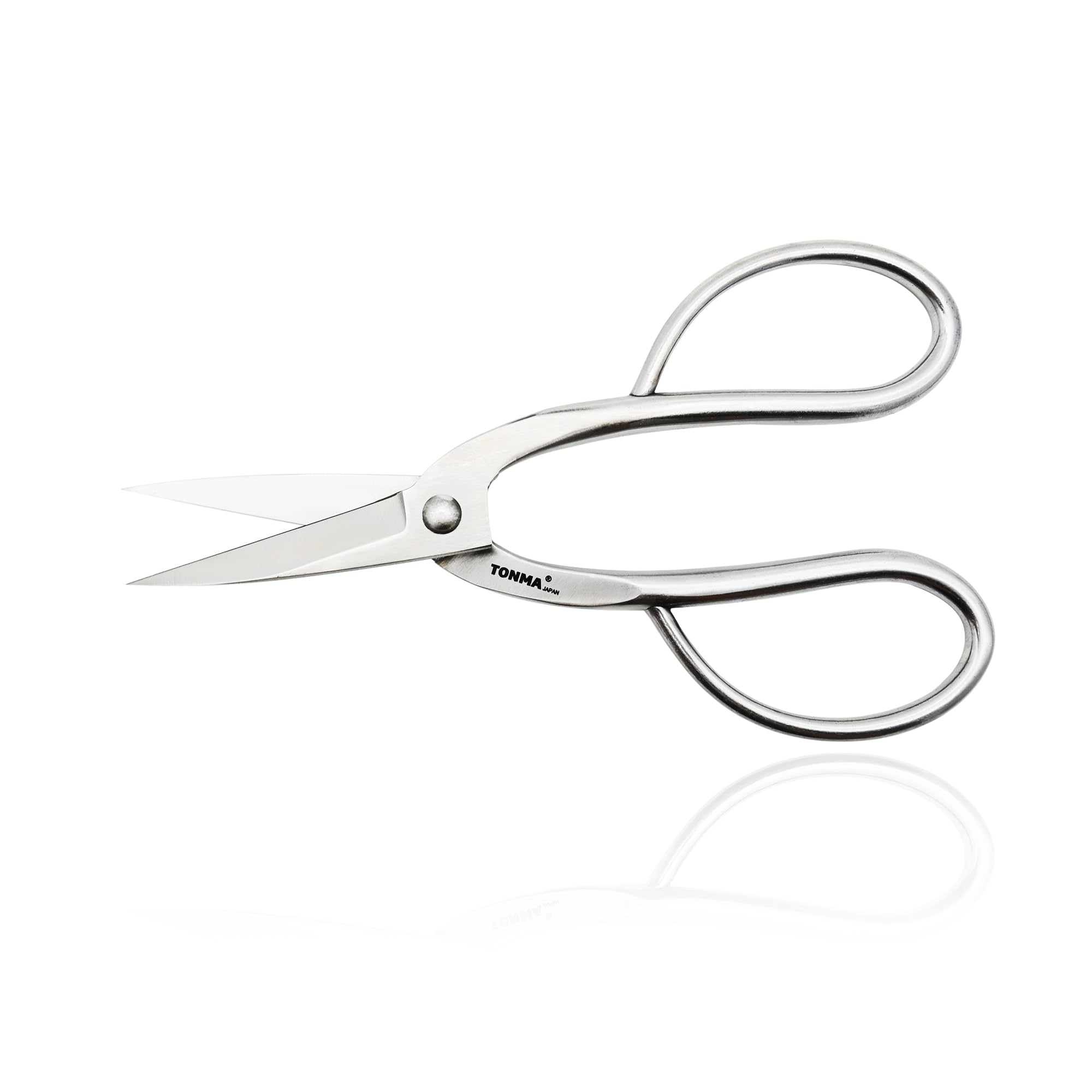
Solid one-piece Japanese AUS-8 stainless steel built to handle heavy pruning with zero maintenance fuss.
This is the stainless steel pick that doesn’t compromise on guts. The TONMA Ashinaga is made of all solid, high-strength Japanese AUS-8 stainless steel in one piece, with 4.5mm blade thickness and a hardness of HRC 59±1. That translates to a heavy-duty built quality that’s designed to last a lifetime, and it handles all major pruning tasks without flinching.
Unlike carbon steel tools that need constant oiling, this one offers excellent rust protection and easy cleaning—just wash with water and dry with a cloth. The all-steel ergonomic, non-slip handles give you excellent leverage for extended use without soreness. Owners praise it as “very sharp, comfortable to hold, and beautiful to look at.”
It weighs in at 6.8 ounces, making it the heaviest pair on this list, which gives it that solid, substantial feel in hand but might be overkill for very fine bud work. For orchids, stems, and herbs, though, it scores high marks, and the brand backs it with a lifetime warranty.
The maintenance-free edge
- AUS-8 stainless resists rust far better than carbon steel
- One-piece 4.5mm build offers heavy-duty durability
- Ergonomic non-slip steel handles reduce fatigue
The weight to consider
- 6.8 oz is the heaviest here—noticeable during long sessions
- Not as delicate as micro-tip trimmers for fine bud work
Grab this for: a low-maintenance, tank-like pruner that shrugs off moisture and handles tough stems.
Pass if: you need a featherlight precision tool for hours of delicate wiring and bud removal.
7. Wazakura Satsuki Bonsai Scissors

The slim body and long handle of this Satsuki-style shear reach deep into dense canopies with ease.
This is the specialist for deep access. The Wazakura Satsuki features a small handle and long, slim body design, measuring 7.08 inches long with a blade length of just 1.57 inches (40mm). That narrow profile lets you reach deep spots within the canopy, between branches, and along the trunk with more precision than a bulkier tool.
At only 2.82 ounces (84g), it feels light and nimble in hand. The S58C blade severs fibers cleanly for faster healing cuts. Owners describe it as “delicate enough for accurate and atraumatic pruning,” and the ergonomic design feels great without being heavy—perfect for precise work.
The right-hand orientation is the key spec to note here; this isn’t ambidextrous. Durability gets mixed feedback: most find it pretty durable, but an occasional owner reports the tip separating after heavy use. It’s a precision tool, so treat it with care and use it for what it’s designed for—delicate, accurate pruning.
Deep canopy specialist: The long, slim handle reaches inner branches that sit deep inside the foliage, so you can prune without forcing your hand through the tree or damaging nearby growth.
Handle with care: It’s a light, precise tool—not a heavy-duty cutter, and it’s built for right-handed use.
8. Wazakura Yasugi Steel Twig Scissors

Forged from Japan’s exclusive Yasugi steel, this twig shear is engineered for extra strength and lasting sharpness.
This is the premium choice for those who want specialist Japanese steel. Made from YCS3 Alloy Tool Steel—a unique steel produced only in Japan that removes impurities like phosphorus and sulfur—this tool is extra strong, wear-resistant, and long-lasting sharp. It’s hand-forged by third-generation artisans in Sanjo, Niigata prefecture.
Designed primarily for trimming thin branches and narrow spaces, the long handle and slim design let you reach deep between branches without damaging your bonsai. At 8.25 inches total with 2.05-inch (52mm) blades, it weighs 5.22 ounces (148g)—a comfortable, all-steel heft that owners say feels great in hand. Four fingers fit in one loop and the thumb in the other.
Owners note it comes lightly oiled and needs regular oiling to prevent rust, as opinions on rust resistance are split. Some mention the tips might cross slightly, which the maker says is easily adjusted and not a defect. For creating bonsai trees, reviewers point out it makes the work a breeze, saying they’d happily pay more.
The steel advantage
- Exclusive Yasugi steel holds an edge longer than standard carbon
- Comfortable ergonomic grip with a traditional four-finger loop
- Long, slim design reaches deep without branch damage
Keep this in mind
- Rust resistance is mixed—regular oiling is a must
- Tips may arrive slightly crossed; an easy DIY adjustment
Step up to this for: the highest-grade tool steel from Japan, ideal for serious enthusiasts who appreciate metallurgy.
Think twice if: you prefer a no-oil stainless steel blade for low-maintenance everyday snips.
9. Vouiu 4-Piece Bonsai Tool Set

This is the full starter kit that jumps you straight from “just scissors” to proper bonsai toolkit.
If you’re building your kit from scratch, this set is the smartest way to start. The Vouiu 4-Piece set gives you the four essential tools: an 8-inch Concave Cutter, 8-inch Knob Cutter, 8-inch Trunk Splitter, and 8-inch Bonsai Scissors. It’s suitable for both beginners and professionals, with sharp stainless steel blades that deliver clean, smooth cuts every time.
Each tool has a distinct job. The concave cutter leaves a fish-shaped incision that heals invisibly. The knob cutter handles tumors and knots on the trunk. The trunk splitter is for bending or branching. And the bonsai scissors handle leaf buds, tender branches, and twigs. Owners praise the “sturdy” feel that fits perfectly in hand.
The main trade-off in the data is durability. While some say it’s made to last for years, others report the cutting edges can collide during use. It’s a budget-friendly way to learn proper technique before investing in premium single tools, and the fact that owners rave about how easy it makes pruning, trimming, and cutting for bonsai is a strong sign.
Why a set makes sense
- Four essential 8-inch tools cover pruning, cutting, and splitting
- Sharp stainless steel blades suitable for beginners and pros
- High quality and heavy duty for the price
Watch out for
- Occasional reports of cutting edges colliding during use
- Durability is mixed—treat as a great starter, not an heirloom
Start here if: you’re new to bonsai and want a complete, sharp toolkit to learn the craft while staying affordable.
Upgrade later if: you develop a serious passion—premium single-purpose tools from Japan will be your next step.
Understanding the Specs
Blade Steel
This is the heart of any bonsai scissors. Carbon steel (like S58C, SK, or YCS3) takes the sharpest edge and holds it, making cleaner cuts, but rusts quickly if not oiled. Stainless steel (like AUS-8 or German 1.4031) resists rust and needs less care, trading a little ultimate sharpness for convenience.
Blade Length & Tip
Length determines reach and leverage. Micro-tips (around 1.5-2 inches) are for precision bud work in tight spots, while longer blades (2 inches+) give more cutting power for thicker twigs. A pointed tip lets you isolate single stems, protecting surrounding growth.
FAQ
What’s the difference between carbon steel and stainless steel bonsai scissors?
How often do I need to oil my carbon steel bonsai scissors?
Can I use bonsai scissors on regular garden plants?
What is a micro-tip snip used for?
Are all bonsai scissors ambidextrous?
Why do my bonsai scissors get stains on the blade?
How much does a good pair of bonsai scissors weigh?
What is a concave cutter and do I need one?
Final Thoughts: The Verdict
Across the board, the bonsai scissors winner is the Hanafubuki Wazakura because it pairs authentic Japanese hand-forged craftsmanship with a satisfying weight and razor-sharp carbon steel edge. If you want a low-maintenance tool that resists rust, grab the PrunePro. And for a complete starter kit that covers all your base pruning needs, the Vouiu 4-Piece Set is the one to reach for.
How We Picked
We do not accept paid placement. Every pick is matched to a real buyer and a real use-case; we do not hands-on test units.
Sources & Methodology
Specifications: manufacturer listings and product documentation. Review insights: verified customer reviews, as of August 2026. Pricing: not shown on this page (it changes often); check the current price via the retailer link.
As an Amazon Associate, Gadgets Feed earns from qualifying purchases. This does not affect which products we feature.