
The difference between catching a wave and eating foam comes down to a single choice: the density of the EPS core and the quality of the slick bottom. A bodyboard that feels right in the store can turn into a soggy noodle after three sessions if the heat lamination is weak or the stringer is missing. Every inch of rail shape and channel placement determines whether you glide smoothly or spin out at the critical moment of the ride.
I’m Min — the co-founder and writer behind Gadgets Feed. I’ve spent hundreds of hours analyzing construction specs, reading verified buyer reports on delamination and channel performance, and comparing the subtle geometry differences between cheap glued boards and properly heat-laminated designs so you don’t waste money on a toy that looks like the real thing.
Whether you are a beginner catching your first whitewash or an intermediate rider looking for a durable upgrade, this guide ranks the top models available today. We break down the hard specs and real-world performance to help you choose the best boogie board for your next trip to the shore.
How To Choose The Best Boogie Board
Picking the right bodyboard is about matching foam density, slick bottom material, and tail shape to your weight and the wave conditions you’ll ride. Most buyers overspend on graphics or underspend on core durability, then wonder why the board bends on the first steep drop.
Core Material and Stringers
The EPS foam core is what keeps you floating. High-density EPS resists water absorption and holds its shape after repeated impacts. Boards with an FRP stringer — a thin fiberglass rod embedded lengthwise — add stiffness so the board doesn’t flex unnaturally when you turn. A heat-laminated board uses heat and pressure to bond the deck skin to the core, which prevents the top layer from peeling or bubbling after a few sessions in the sun.
Tail Shape and Channels
The crescent tail is the standard for modern bodyboards because it allows your body to drape over the back while giving you leverage to pivot into turns. Dual or graduated channels on the bottom direct water flow under the board, reducing side slip and maintaining speed when you’re angling down the wave face. Boards without channels rely entirely on your body weight to steer, which works poorly in choppy conditions.
Bottom Material
HDPE (high-density polyethylene) is the slickest material used on bodyboard bottoms. It generates the least drag and lets you glide faster with less effort. IXPE is a softer cross-linked polyethylene foam used on decks for comfort, but some premium boards use IXPE on the bottom as a compromise for durability over raw speed. For peak performance, HDPE is the clear choice.
Quick Comparison
On smaller screens, swipe sideways to see the full table.
| Model | Category | Best For | Key Spec | Amazon |
|---|---|---|---|---|
| MOREY Cruiser 42.5″ | Premium | All-skill wave performance | 42.5″ x 21.5″ HDPE bottom | Amazon |
| THURSO SURF Quill 42″ (Turquoise) | Premium | Heavy riders up to 210 lbs | EPS core + FRP stringer | Amazon |
| Own the Wave Wave Weapon 37″ | Mid-Range | Family all-rounder | 1.85 lb EPS, coiled leash | Amazon |
| THURSO SURF Quill 42″ (Tangerine) | Mid-Range | Buoyant intermediate rides | 42″ length, HDPE slick | Amazon |
| Wavestorm Foam 40″ | Mid-Range | Youth/adult first board | 1.8 lb, 6.55 liter volume | Amazon |
| RAYWER 41″ | Budget | Entry-level beach fun | 41″, HDPE slick bottom | Amazon |
| GYMAX Body Board 33″ | Budget | Kids lightweight play | 33″, EPS core, XPE deck | Amazon |
In‑Depth Reviews
1. MOREY Boogie Board Cruiser 42.5″
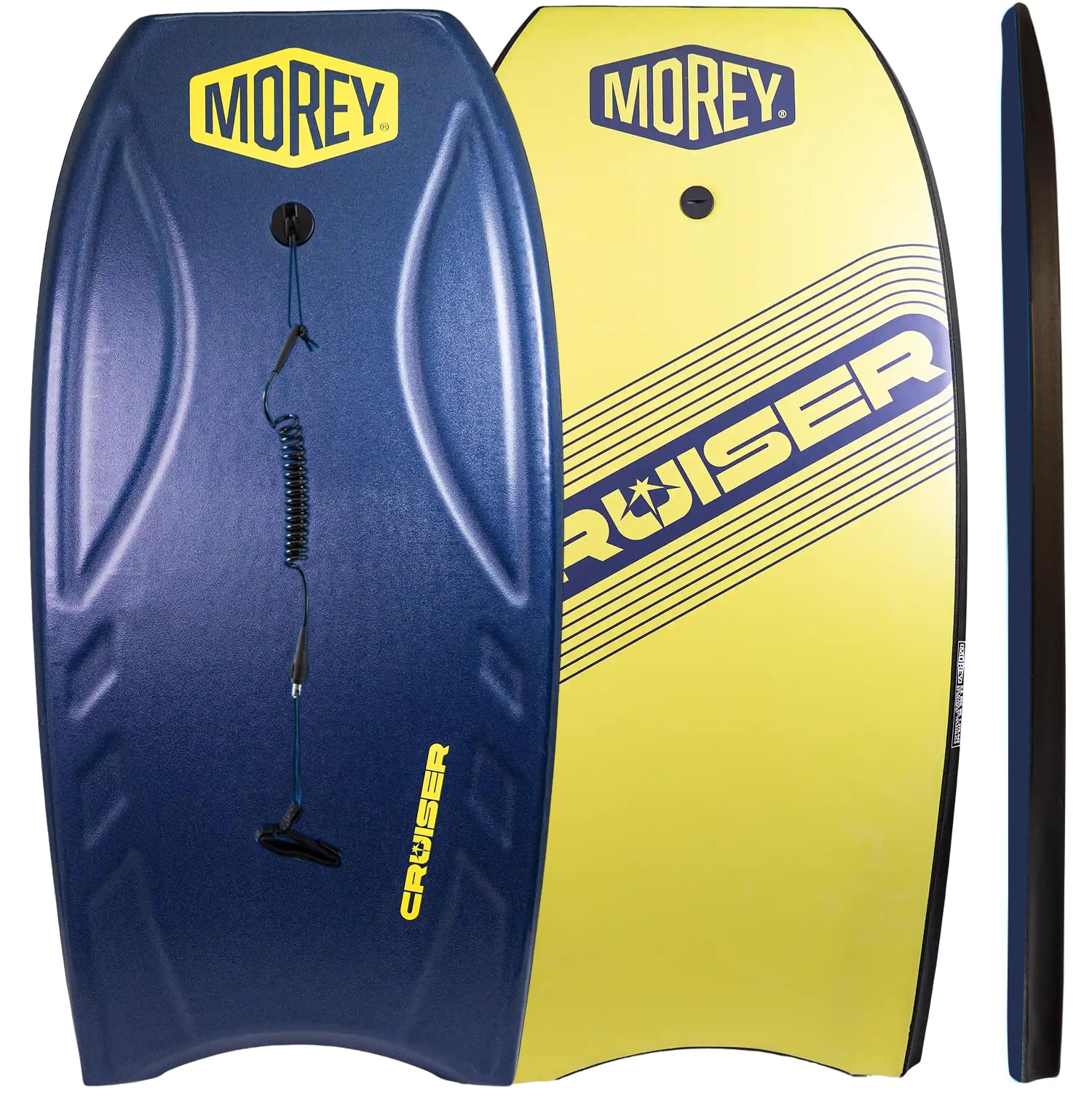
The brand that invented the bodyboard category in 1971 continues to lead with the Cruiser. The 42.5-inch template uses an EPS core wrapped in a heat-laminated IXLPE deck and an HDPE slick bottom. The graduated channels widen near the tail, efficiently channeling water to prevent side slip, while the Tube Rail System curves the bottom rail inward near the tail for deeper wave grip during turns. The deck contours are placed precisely where your elbows and ribs contact the board for extra grip during steep drops.
Riders up to 200 pounds will find the 2.4-inch thickness provides enough buoyancy for solid floatation without feeling overly bulky. The coiled wrist leash comes with a pre-installed leash plug that uses stainless steel hardware. Multiple verified owners report the board survives seasons of use without the slick bottom peeling or the deck bubbling, which is the first failure point on cheaper heat-laminated boards.
If you want a single bodyboard that works equally well for a beginner learning to prone paddle and an intermediate carving down a shoulder-high face, the Cruiser is the most complete package. The crescent tail offers stability on straight rides and sharp pivot points for cutbacks, making this the only board many riders will ever need.
Why it’s great
- Full-size 42.5″ works for all body types up to 200 lb
- Graduated channels and Tube Rail System improve edge control
- Heat-laminated construction resists delamination better than glued boards
Good to know
- Premium price is justified by build quality but may exceed a casual user’s budget
- Some users prefer a softer deck foam for long sessions
2. THURSO SURF Quill 42″ (Turquoise)

The Quill distinguishes itself with an embedded FRP stringer running through the EPS core. This glass-reinforced rod adds longitudinal stiffness that prevents the board from flexing under heavier riders — tested up to 210 pounds according to the brand. The HDPE slick bottom is reinforced with a plastic mesh layer that adds tear resistance, which directly addresses the common failure mode of slick bottom ripping at the rail edge.
Heat lamination seals the IXPE deck to the core without glue, which means no chemical degradation from sun exposure or salt water. The 42-inch length and 22-inch width provide a stable platform for intermediate riders who want to experiment with bottom turns and roundhouse cutbacks. The dual channels are deeper than average, directing water flow more aggressively for better hold in hollow waves.
Multiple five-star reviews highlight that this board survived a full season without bubbling or delaminating — even after being left in the sun. The stainless steel double-swivel coiled leash is a notable upgrade over basic leashes, resisting tangles and rust far longer than standard chrome-plated hardware. For heavier surfers who struggled with flimsy boards in the past, this is the most reliable pick.
Why it’s great
- FRP stringer adds stiffness for riders up to 210 lb
- Plastic mesh reinforcement on HDPE bottom prevents rail tears
- Double-swivel coiled leash resists rust and tangles
Good to know
- Heavier than some all-foam boards at 2.9 lb
- Limited color options compared to other models
3. Own the Wave Wave Weapon 37″

The Wave Weapon delivers a solid EPS core with an HDPE slick bottom at a mid-range price point that competes with boards costing significantly more. The crescent tail and dual rear channels are standard for the category, but the exacting rail shape — a 60/40 rail — allows the board to bite into the wave face during turns rather than sliding out. Owners report the board lasts multiple years with annual use, though some have noted the top layer can peel after extended sun exposure.
The coiled leash from BPS is a highlight: the tight coiling prevents dragging on the water surface, reducing the risk of the leash catching on submerged rocks or jetties. The neoprene cuff and Velcro closure are more comfortable than the thin nylon straps found on budget boards. Available in 37-inch and 41-inch sizes, the smaller version works well for lighter riders and children, while the larger size handles adults up to 195 pounds.
What sets this brand apart is the customer service. Multiple reviews mention the company replacing or refunding boards with manufacturing defects beyond the standard return window, including a report of a board replaced years after purchase. For families wanting a single reliable board with backup support, the Wave Weapon reduces the risk of a bad purchase.
Why it’s great
- Excellent build quality for the price with heat-laminated construction
- Coiled leash prevents drag and snagging
- Exceptional customer service with reported out-of-warranty replacements
Good to know
- Deck foam can peel after extended sun exposure
- Not as stiff as boards with FRP stringers for heavier riders
4. THURSO SURF Quill 42″ (Tangerine)
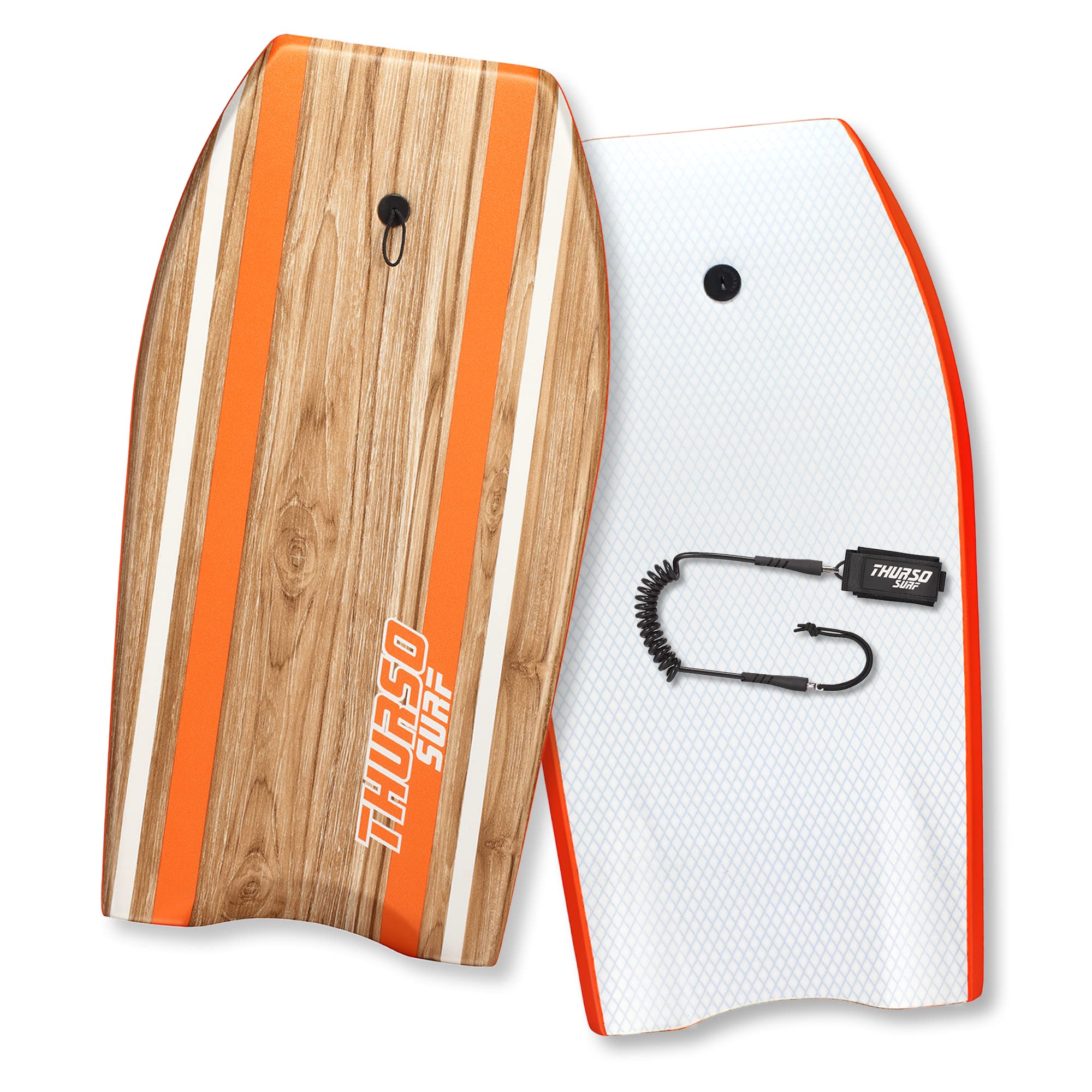
This second color variant of the Quill series shares the same essential DNA: an EPS core with an FRP stringer, an IXPE deck, and an HDPE slick bottom. The 42-inch length suits riders up to 210 pounds, and the dual-channel crescent tail design provides predictable tracking on both left and right breaks. The heat-laminated construction eliminates glue lines, which are the weakest structural point on budget boards.
Where this model excels is the balance between stiffness and weight. At roughly 2.9 pounds, it is light enough for a child to carry to the water but rigid enough to hold a line at speed. The wood grain printing technology used on the deck gives it a more premium aesthetic than the typical single-color foam board, and the printing holds up against UV fade according to long-term testers.
Verified reviews specifically call out the board’s performance in waist-high surf. Users report that the board maintains speed through flat sections and responds sharply when they shift weight to the rail. The included stainless steel double-swivel leash is identical to the turquoise version, which means no compromise on hardware quality. If you want the same performance as the top-ranked model in a brighter color, this is the direct alternative.
Why it’s great
- Stiff EPS core with FRP stringer supports heavier riders
- Wood grain print resists UV fade better than solid colors
- Dual channels provide strong tracking in choppy water
Good to know
- Same core as the turquoise model but may have slight color-specific stock variations
- Some users report the leash can feel short for larger riders
5. Wavestorm Foam Bodyboard 40″

The Wavestorm 40-inch is a thermal-molded board with a wrap-around slick rail, which means the slick bottom material extends up and over the rail edge. This is a meaningful construction detail because traditional glued-on slick bottoms fail first at the rail seam. The thermal molding process fuses the slick material to the foam core, eliminating the glue seam entirely and preventing edge delamination.
With a volume of 6.55 liters and a weight of 1.8 pounds, this board is extremely buoyant relative to its weight. The generous volume keeps lighter riders — up to 180 pounds — floating high in the water, reducing drag and making it easier to catch slow, mushy waves. The contoured deck includes nose grips and elbow texture, which helps beginners maintain body position without sliding off during pop-ups.
The UV-inhibiting graphic deck uses a patented technology that resists water absorption and color fade. Parents report buying this board repeatedly after their kids outgrew cheaper options because the slick bottom held up to consistent summer use without peeling. It is not a high-performance board for steep hollow waves, but as a first bodyboard for youth and lighter adults, it delivers reliable durability at a mid-range price point.
Why it’s great
- Thermal-molded wrap-around slick rail prevents edge delamination
- High 6.55 liter volume provides excellent buoyancy for lighter riders
- UV-inhibiting deck graphics resist water absorption and fading
Good to know
- Recommended weight capacity of 180 lb limits use by heavier adults
- Not as stiff as FRP-stringered boards for aggressive surfing
6. RAYWER Body Board 41″
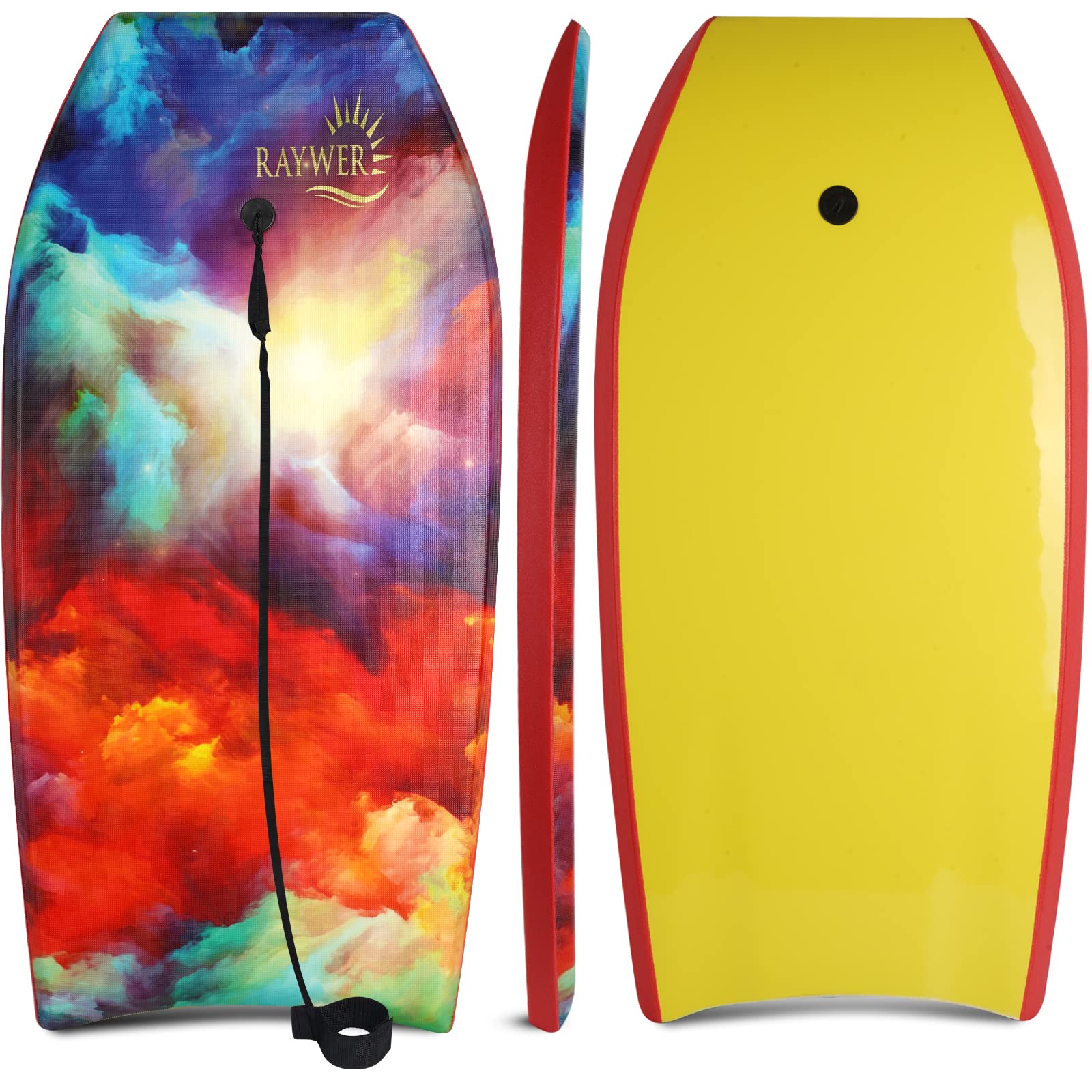
The RAYWER 41-inch board uses an EPS core with heat lamination, which is unusual to find at this budget tier. Most economy boards use glued lamination that separates after a few uses. The HDPE slick bottom and dual-channel crescent tail are standard for the category, but the 60/40 rail shape improves maneuverability beyond what a flat rail board can offer. The board weighs only 1.5 pounds, making it easy for kids to handle.
Buyers report that the board performed well for a full week of heavy use at the beach, with one reviewer noting it worked great for sledding in snow as a bonus use case. However, there is a consistent complaint about long-term durability: some users report the seams coming undone after roughly five uses. This suggests the heat lamination may not be as robust as on premium boards, and the board is best suited for occasional beach trips rather than daily heavy surfing.
The included wrist leash is functional but basic, with no stainless steel hardware. The bright color options help parents spot their kids in crowded water. For a family vacation where the board might see a week of use and then sit in a garage for months, the RAYWER offers the most essential features at the lowest entry cost, but buyers should expect a shorter lifespan than premium alternatives.
Why it’s great
- Heat-laminated EPS core is a rarity at this price point
- Lightweight at 1.5 lb, ideal for kids and travel
- Bright color options for easy visibility in water
Good to know
- Reported delamination issues after limited use in some units
- Basic leash hardware without stainless steel components
7. GYMAX Body Board 33″
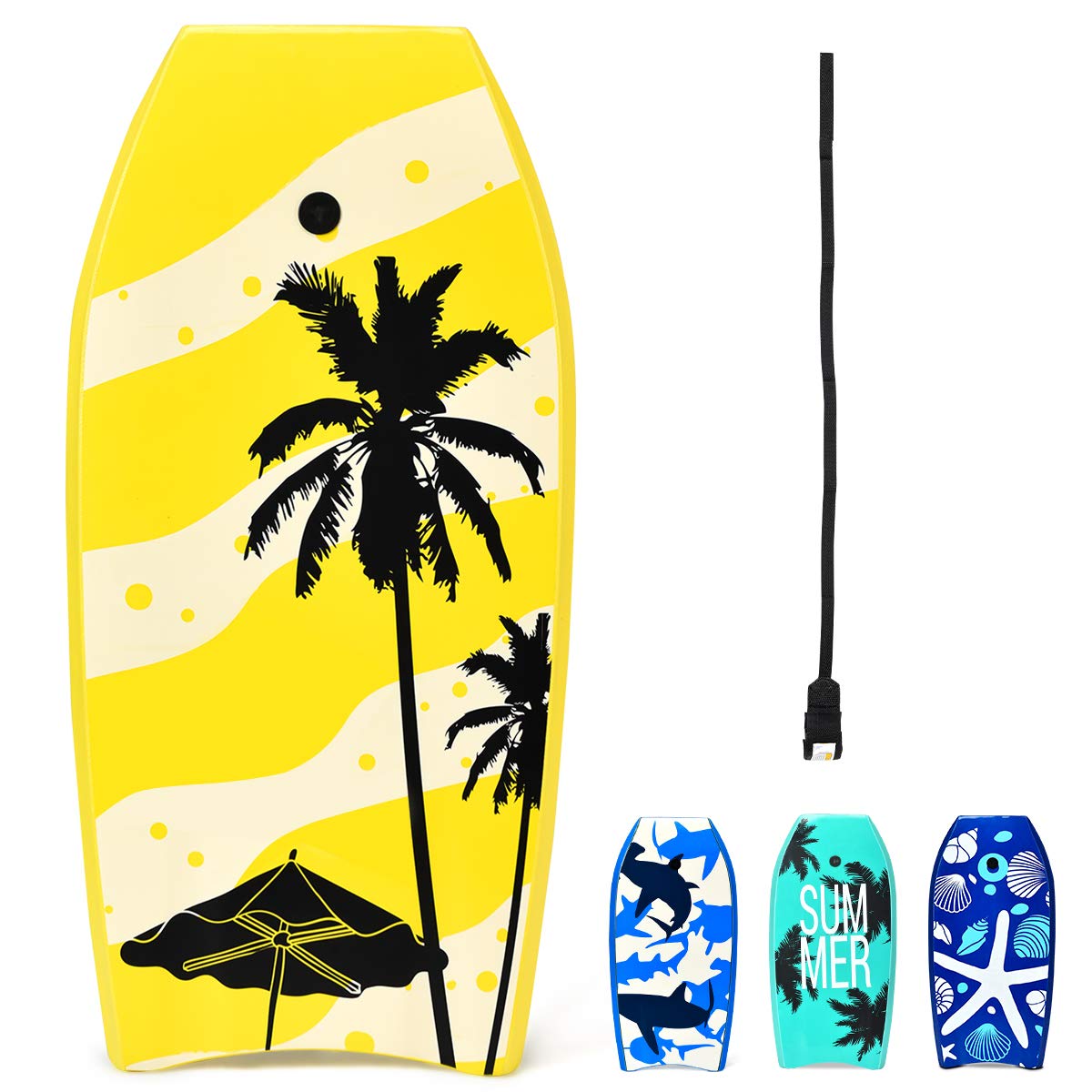
The GYMAX 33-inch bodyboard is purpose-built for children and small youth riders. The EPS foam core uses a waterproof XPE deck that provides a stable grip surface without becoming slippery when wet. The upward nose design reduces water resistance by keeping the front of the board planing above the surface, making it easier for kids to paddle out without exhausting themselves on smaller waves.
The dual rear channels and crescent tail are scaled down proportionally for the shorter length, meaning children still get the tracking and control features of adult boards. The adjustable wrist leash attaches to a secure plug and can fit small wrists without slipping off. Verified reviews from parents confirm that a 7-year-old rider used the board for multiple days of consistent wave riding without any damage or loosening of the heat-laminated seams.
The 33-inch length limits the board to children under roughly 100 pounds. Older teens or adults will find it too short and lacking the buoyancy needed for proper floatation. However, the 90-day warranty covers manufacturing defects, and the board comes in multiple color patterns that kids can choose from. For a dedicated children’s bodyboard that balances weight, grip, and durability, this is the most practical option.
Why it’s great
- 33″ size is ideal for kids 7-12 years old
- Waterproof XPE deck provides secure grip when wet
- Upward nose design reduces paddling resistance for small riders
Good to know
- Too short for riders over 100 lb
- 90-day warranty is shorter than premium alternatives
FAQ
How do I choose the correct bodyboard length for my weight?
How do I prevent my bodyboard from delaminating?
Is a crescent tail better than a bat tail for bodyboarding?
Final Thoughts: The Verdict
For most users, the best boogie board winner is the MOREY Cruiser 42.5″ because it combines the original brand’s heritage with modern construction features like graduated channels, a Tube Rail System, and an HDPE slick bottom that resists delamination. If you want a board that can handle heavier riders up to 210 pounds, grab the THURSO SURF Quill 42″ with its FRP stringer and plastic mesh reinforcement. And for families on a budget who still want heat-laminated quality, nothing beats the Own the Wave Wave Weapon for the balance of price, durability, and customer support.