
TV dialogue that sounds like muffled noise and action scenes that fall flat aren’t a problem with your content — they are a problem with the tiny, low-quality drivers built into modern flat-panel televisions. Upgrading to a proper pair of dedicated speakers designed for the task transforms your viewing experience, delivering crisp vocals, spatial imaging, and the dynamic range that makes explosions thump and whispers feel present.
I’m Min — the co-founder and writer behind Gadgets Feed. I’ve spent hundreds of hours poring over frequency response graphs, impedance curves, and real-world user comparisons to identify which models actually deliver on their promises when paired with a television.
This deep-dive analysis covers connectivity, driver configurations, and real-world performance to help you find the best bookshelf speakers for tv that match your room and your listening habits.
How To Choose The Best Bookshelf Speakers For TV
Picking the right pair depends on your AV receiver, room size, and whether you prioritize dialogue clarity or cinematic boom. These four factors will guide your decision.
Powered vs. Passive: The Amplifier Question
Powered speakers (active) have a built-in amplifier, so you can plug your TV’s optical or RCA output directly into them — no separate receiver required. Passive speakers need an external amplifier or AV receiver, but offer more flexibility for future upgrades and often sound superior with higher-quality amplification.
Sensitivity and Impedance: Matching Your Receiver
Sensitivity, measured in decibels (dB), tells you how loud a speaker will play with a given amount of power. A rating of 88dB or higher is considered efficient, meaning your receiver won’t strain to produce clear volume. Impedance (8 ohms is standard) should match your amplifier’s spec to avoid overheating or distortion.
Driver Configuration: 2-Way vs. 3-Way
Two-way designs use a tweeter for highs and a woofer for mids and bass, which works well for most TV content. Three-way speakers add a dedicated midrange driver, which can significantly improve vocal clarity — crucial for dialogue-heavy movies and news. The trade-off is usually higher cost and larger cabinet size.
Port Position and Room Placement
Rear-ported speakers need at least 6-8 inches of clearance from the wall to avoid boomy, muddy bass. Front-ported or sealed designs are more forgiving and can sit closer to a wall or inside a bookshelf, making them much more practical for tight living room setups.
Quick Comparison
On smaller screens, swipe sideways to see the full table.
| Model | Category | Best For | Key Spec | Amazon |
|---|---|---|---|---|
| Sony CS SS-CS5M2 | Passive | Dialogue clarity & soundstage | 3-Way / 53 Hz – 50 kHz | Amazon |
| Klipsch RP-600M II | Passive | High efficiency & dynamics | 90 dB Sensitivity / 6.5″ Woofer | Amazon |
| Klipsch R-41M | Passive | Compact & lively sound | 90 dB / 68 Hz – 21 kHz | Amazon |
| Polk Reserve R200 | Passive | Critical listening & bass depth | 6.5″ Turbine Cone / Hi-Res | Amazon |
| Polk Signature ES20 | Passive | Power Port bass extension | 6.5″ Woofer / 3 dB louder | Amazon |
| ELAC Uni-Fi 2.0 UB52 | Passive | Neutral 3-way imaging | Concentric Driver / 46 Hz | Amazon |
| Edifier R1280DB | Powered | Simple TV setup with Bluetooth | Optical Input / Remote | Amazon |
| Edifier R1280T | Powered | Budget-friendly entry level | Dual AUX / 42W RMS | Amazon |
| Rockville RockShelf 68C | Passive | Kevlar drivers on a budget | 6.5″ Kevlar / Wall-Mountable | Amazon |
In‑Depth Reviews
1. Sony CS Speakers, SS-CS5M2 3-Way 3-Driver Hi-res Bookshelf Speakers (Pair), Black

The Sony SS-CS5M2 punches well above its size thanks to a genuine 3-way, 3-driver layout that includes a dedicated super tweeter for airy highs and a 5.12-inch woofer for bass foundation. This architecture brings exceptional dialogue clarity and a wide, immersive soundstage that makes TV content feel spacious without needing a massive receiver to drive them.
With a frequency response reaching down to 53 Hz and a 6-ohm impedance, these speakers deliver clean output even with modest amplifiers. The bass reflex enclosure keeps distortion low, though the rear port means you’ll want a few inches of breathing room from the wall to avoid muddy low frequencies.
Pair them with a subwoofer for real cinematic depth, but even standalone, the three-driver array delivers vocal articulation that cheaper two-way models simply cannot match. The compact footprint fits standard shelves without dominating the room.
Why it’s great
- True 3-way design with dedicated super tweeter
- Excellent soundstage and off-axis performance
- Hi-Res Audio certified up to 50 kHz
Good to know
- Rear port needs space from wall
- Bass limited below 50 Hz without subwoofer
- Best value found during sale periods
2. Klipsch Reference Premiere RP-600M II Walnut Bookshelf Speakers

The RP-600M II takes everything that made the original a legend and refines it with a larger 90×90 Tractrix horn and a new vented tweeter design for even lower distortion. The result is 90 dB sensitivity, meaning your AV receiver can deliver room-filling volume without breaking a sweat — ideal for action-heavy TV and movies.
The 6.5-inch Cerametallic woofer produces bass that is tight and punchy, often convincing enough to skip a subwoofer in small to medium rooms. The bi-wiring capability and furniture-grade walnut finish add a level of sophistication that matches premium home theater gear.
Placement is critical with the horn-loaded tweeter: keep them at ear level and about 6-8 feet apart for the laser-focused imaging the Klipsch sound is famous for. The silicone composite horn smooths out the brightness that earlier models were criticized for.
Why it’s great
- Extremely high sensitivity for effortless volume
- Bi-wiring capable with dual input terminals
- Larger Tractrix horn reduces distortion
Good to know
- Horn tweeter has a narrow sweet spot
- Requires careful placement for best imaging
- Premium price point for the brand
3. Klipsch R-41M Reference Bookshelf Speakers (Pair), Black
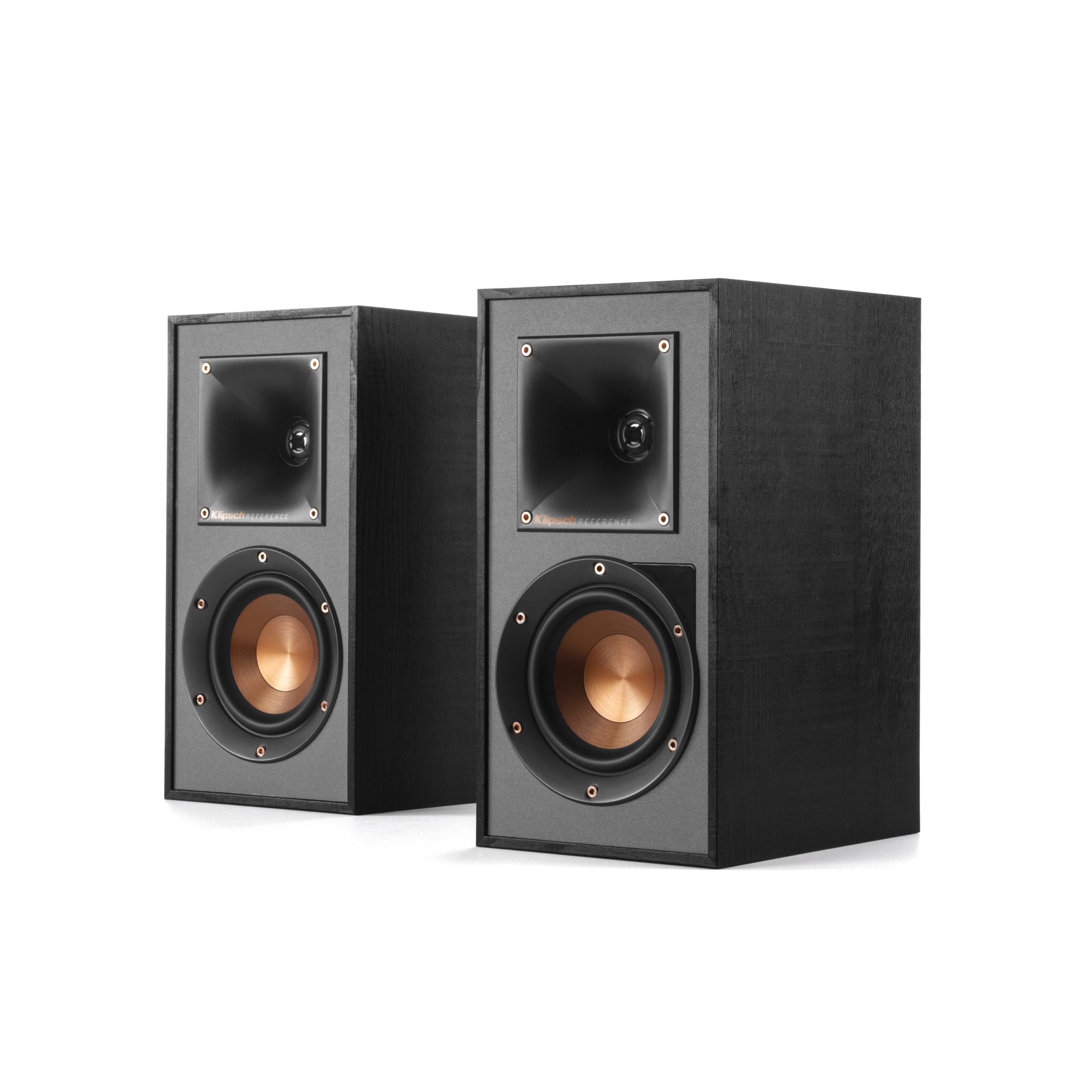
The R-41M packs the iconic Klipsch horn-loaded tweeter and copper-spun IMG woofer into a chassis that is barely 11 inches tall, making it one of the most space-efficient options for TV setups where shelf real estate is tight. Despite the small 4-inch woofer, it achieves 90 dB sensitivity, ensuring clear, dynamic output even from a modest entry-level receiver.
The 1-inch aluminum LTS tweeter with Kapton suspension delivers the crisp, detailed highs that make dialogue pop, but some listeners find the signature brightness a bit forward. Pairing with a warmer amplifier or tube preamp can tame the treble and reveal the surprisingly solid midrange performance.
Bass from the 4-inch driver is limited below about 68 Hz, so a subwoofer at an 80 Hz crossover is recommended for action movies. The reinforced MDF cabinet keeps resonances in check, and the scratch-resistant vinyl finish handles daily living-room wear well.
Why it’s great
- Very compact footprint fits tight shelves
- High sensitivity works with low-power amps
- Classic Klipsch horn sound for clear dialogue
Good to know
- Bright tweeter may sound harsh to some
- 4″ woofer requires sub for low end
- Rear port needs wall clearance
4. Polk Audio Reserve R200 Large Bookshelf Speaker, Black

The Reserve R200 is Polk’s statement that a bookshelf speaker can compete with floor-standers. Its 1-inch Pinnacle Ring Radiator tweeter and 6.5-inch Turbine Cone woofer produce a full, non-fatiguing sound with a wide soundstage that excels at off-axis listening — perfect for group movie nights where not everyone sits dead center.
This speaker is Hi-Res Audio certified and supports IMAX Enhanced, meaning it carries the dynamic range and detail resolution for modern streaming and Blu-ray content. The rear-firing port is paired with Polk’s patented X-Port technology, which eliminates port noise and keeps bass tight and distortion-free even at higher volumes.
The cabinet is heavily cross-braced to minimize internal resonances, and the anti-diffraction magnetic grille offers a clean look without sacrificing sound quality. It does require a substantial amplifier and careful placement due to its directional tweeter, but the payoff in vocal clarity and instrument separation is substantial.
Why it’s great
- Excellent off-axis soundstage
- X-Port eliminates bass distortion
- IMAX Enhanced and Hi-Res Audio certified
Good to know
- Tweeter has a narrow sweet spot
- Heavy cabinet requires sturdy stands
- Premium price positioned at high end
5. Polk Audio Signature Elite ES20 Bookshelf Speakers – Pair (Walnut)

The ES20 is all about bass. Polk’s patented Power Port technology extends the port down and out, reducing turbulence and delivering 3 dB louder low-end compared to conventional ported speakers. This means you feel the rumble of action scenes without cranking the volume or adding a subwoofer, making it a strong contender for TV setups where space is at a premium.
The 1-inch Terylene tweeter and 6.5-inch woofer, paired with the Dynamically Balanced Acoustic Array, produce a warm, non-clinical sound that flatters movie soundtracks and acoustic music alike. The carbon ash cabinet finish looks sharp from a distance, though the faux wood vinyl reveals its nature on close inspection.
These speakers are quite deep — over 13 inches — which can clash with shallow TV stands or modern wall-mounted displays. But if you have the depth, the ES20 delivers a cinematic bass punch that few bookshelf speakers at this level can match.
Why it’s great
- Power Port delivers louder, cleaner bass
- Warm, non-fatiguing sound signature
- Compatible with Dolby Atmos AVRs
Good to know
- Very deep cabinet requires space
- Faux wood finish not premium up close
- Initial treble may sound harsh before break-in
6. ELAC Uni-Fi 2.0 UB52 Bookshelf Speakers (Pair), Black

The UB52 from ELAC is a 3-way speaker that uses a concentric driver design — with a 1-inch wide-roll surround tweeter nestled inside a 4-inch aluminum midrange — to deliver pinpoint imaging that makes voices and instruments feel precisely located in space. For TV, this translates to a soundstage where dialogue sits dead-center and effects pan smoothly across the room.
The 5.25-inch aluminum cone woofer handles low frequencies down to 46 Hz, and critically, the ports face forward. This lets you place the speakers flush against a wall or inside a bookshelf without the bass becoming muddy, solving one of the biggest placement headaches in TV setups.
The sound signature is neutral and revealing, which means it excels with well-mastered content but can expose the flaws of compressed streaming audio. The cabinet design is utilitarian rather than luxurious, but the performance per dollar is exceptional.
Why it’s great
- Concentric driver produces superb imaging
- Front ports allow wall-friendly placement
- Neutral sound reveals subtle audio details
Good to know
- Utilitarian cabinet looks plain
- Neutral sound exposes poor source quality
- Binding posts are closely spaced
7. Edifier R1280DB Powered Bluetooth Bookshelf Speakers – Optical Input

The R1280DB solves the most common TV-speaker pain point: connectivity. With optical, coaxial, and dual RCA inputs plus Bluetooth 5.0, you can connect your TV, gaming console, phone, and computer simultaneously and switch inputs with the included remote control. No AV receiver required — just plug and play.
The 13mm silk dome tweeter and 4-inch full-range driver produce a balanced sound that works well for general TV watching, with adjustable bass and treble controls on the side panel to fine-tune for your room. The 42W RMS output is sufficient for small to medium living rooms, though the 4-inch driver cannot produce deep bass — a subwoofer output would have been welcome here.
The walnut wood-effect vinyl cabinet and low-profile design blend nicely with most decor. The remote is small and occasionally finicky with TV control, but for the price, the convenience of a fully integrated powered system with multiple inputs is hard to beat.
Why it’s great
- Multiple inputs including optical and Bluetooth
- No external amplifier or receiver needed
- Remote control for volume and source switching
Good to know
- Limited bass without a subwoofer
- Small remote works poorly with TV IR
- 4-inch driver limits overall output
8. Edifier R1280T Powered Bookshelf Speakers – 2.0 Active Near Field Studio Monitor Speaker

The R1280T is the entry point into quality powered bookshelf speakers, offering a simple dual AUX setup that connects to your TV’s headphone or RCA output in minutes. The natural sound reproduction from the 13mm silk dome tweeter and 4-inch woofer provides a massive upgrade over built-in TV speakers, with clear mids that make dialogue intelligible.
Side panel controls for bass and treble give you quick EQ adjustment, and the included remote lets you manage volume from the couch. The 42W RMS output fills a small room comfortably, though users seeking cinematic bass will want to add a subwoofer via the speaker-level inputs.
The classic wood-finish MDF cabinet looks more expensive than the price suggests, and the magnetic grilles add a clean aesthetic. This is a straightforward, no-fuss solution for anyone wanting better TV sound without investing in a full receiver system.
Why it’s great
- Very simple setup with dual AUX inputs
- Remote control and side panel EQ
- Classic wood finish looks premium
Good to know
- Bass is limited without a subwoofer
- No optical or Bluetooth connectivity
- Not suitable for large rooms
9. Rockville Pair RockShelf 68C V2 400W Wood 6.5″ Bookshelf Speakers

The Rockville RockShelf 68C delivers an astonishing feature set at the lowest price point: 6.5-inch Kevlar woofers, 1-inch silk dome tweeters, and a resonance-free MDF cabinet in a classic wood finish. For budget-conscious buyers building a TV system around a basic receiver, these speakers provide a solid foundation with impressive frequency response and punchy bass for their size.
The gold-plated 5-way binding posts accept banana plugs, spade terminals, or bare wire, giving flexibility in cabling. The integrated wall-mount brackets are a standout feature for space-saving setups, allowing you to mount them flush to the wall without extra hardware.
They are smaller than expected but produce surprising power when paired with a 50-100W amplifier in a small to medium room. The Kevlar woofers handle mids and lows with authority, though the high end can be slightly rolled off compared to more expensive tweeters.
Why it’s great
- 6.5″ Kevlar woofers for enhanced bass
- Integrated wall-mount brackets included
- Gold-plated binding posts accept all cable types
Good to know
- Smaller physical size than expected
- Tweeter highs slightly rolled off
- Best suited for small to medium rooms
FAQ
Can I use bookshelf speakers with a TV that has no audio outputs?
Do I need a center channel speaker with bookshelf speakers for TV?
How much power do bookshelf speakers need for TV use?
Can I mix bookshelf speakers from different brands?
Why does my TV sound muffled through bookshelf speakers?
Final Thoughts: The Verdict
For most users, the best bookshelf speakers for tv winner is the Sony CS SS-CS5M2 because its 3-way driver array delivers exceptional dialogue clarity and a wide soundstage at a mid-range price. If you prioritize high efficiency and dynamic punch for action movies, grab the Klipsch RP-600M II. And for a simple, receiver-free TV setup with optical input and Bluetooth, nothing beats the Edifier R1280DB.