
Our readers keep the lights on and my morning glass full of iced black tea. As an Amazon Associate, I earn from qualifying purchases.
Specs are compiled from manufacturer listings and verified buyer reviews and can change over time — please confirm the key details on the product page before buying.
Flat feet in a pair of work boots is a special kind of misery — the arch collapses, the heel rolls inward, and by hour six your knees and lower back are joining the chorus. The fix is not a thicker cushion; it is a firmer arch platform that holds your foot where it belongs. That is exactly what this guide is about.
I’m Min — the founder and writer behind Gadgets Feed. This guide is built by comparing the manufacturers’ published specifications and the patterns across verified customer reviews, so you get each pick’s real strengths and trade-offs instead of marketing spin.
We break down the firmest arch shells, the deepest heel cups, and the trim-to-fit options that actually stay put inside a boot.
Our Picks at a Glance


How To Choose The Best Boot Insoles For Flat Feet
Most people buy insoles wrong. They reach for the softest, squishiest pair on the shelf, and their flat feet feel great for about twenty minutes. Then the arch collapses again, because soft foam can’t hold a foot up. When your arch fails, the whole leg rotates inward, which is what eventually shows up as knee and back pain.
Look for a firm arch shell, not just cushioning
A flat foot needs something rigid under the arch — a hard shell that props the foot up and stops the inward roll. Cushioning matters at the heel and forefoot, where you take impact, but the middle of the insole needs to push back. The firmer models here use hard TPU (a rigid plastic that flexes slightly and springs back) to do that job.
The heel cup is your anti-roll device
A deep heel cup cradles the back of your foot and keeps it sitting square instead of tipping inward. It also spreads landing impact over a wider area. If a boot insole has a shallow, flat heel, it will not control overpronation no matter how thick it feels underfoot.
Sizing and trim-to-fit
Boots run narrow and deep. If you add a thick insole, you may need to remove the boot’s factory insole first, and you may need a half size up in tighter boots. Many models here are trim-to-fit, meaning you cut along the outline near the toes to match your shoe. Start one size large and trim down rather than starting too small.
Give your feet an adaptation period
Almost every brand here tells you to start at 2–3 hours a day and build up. A firm arch is a new sensation for a flat foot, and your foot needs a few days to stop fighting it. Push through too fast and you’ll blame the insole for what is really just an adjustment period.
Quick Comparison
| Model | Best For | Arch Type | Weight | Heel / Fit Notes | Amazon |
|---|---|---|---|---|---|
| PowerStep Pinnacle Maxx★ Best Overall | Firmest total control | Firm, 2-degree medial post | 5.29 oz | Squared, deep heel cup | Amazon |
| WalkHero Plantar FasciitisBest Value | Everyday value comfort | Moderate, high-volume fit | 4.8 oz | Deep heel cup | Amazon |
| VALSOLE Heavy DutyHeavy-Duty Pick | 220+ lb work boots | High, hard TPU | — | Extra deep heel cup | Amazon |
| OrthoComfoot Flat Feet | Trim-free easy fit | Reinforced U-shaped arch | 8.82 oz | GEL heel pad | Amazon |
| Memory Foam Arch Support | Budget all-day standing | Sturdy TPU plus memory foam | 4.97 oz | Separate forefoot/heel GEL | Amazon |
| BestHalo Heavy Duty | Trim-to-fit all shoes | High arch, deep heel cup | 8.15 oz | Trim-to-fit design | Amazon |
| Welnove Work Orthotic | Steel-toe work boots | 3D dynamic TPU, medium arch | 9.17 oz | Deep U-cup heel, GEL pads | Amazon |
| Welnove 220+ lbs Heavy Duty | Heavier frames, flat arches | Strong high arch | 11.68 oz | Deep heel cup, PU base | Amazon |
| FORM Maximum Support | Custom mold-to-foot fit | Comfort-shaped moldable arch | 7.37 oz | Custom form-fitting | Amazon |
In‑Depth Reviews
1. PowerStep Pinnacle Maxx Orthotic Insoles
Our pick — 4.5★ from 19,500+ verified ratings; the strongest balance of quality and price.
The firm-shell workhorse that stops a flat foot from rolling inward
This is the insole for a flat-footed worker who wants real structural control in a boot, not a soft pillow. Its defining spec is the 2-degree medial post (a built-in wedge that tilts your foot slightly outward to fight overpronation). That wedge, paired with a firmer shell and a deeper heel cup than the original Pinnacle, is what actually changes how your foot lands with every step.
Translate that to your shift: instead of the boot’s insole letting your arch collapse, this platform props it up and keeps your ankle tracking straight. The 100% polyester top fabric is there to cut friction and heat so your foot stays drier through a long day. The squared heel design is a small but real detail — it sits flat in the boot and won’t roll to either side as you walk.
This PowerStep Pinnacle Maxx beats the WalkHero below on firmness and structure. The WalkHero is the cushier, more forgiving daily pick at 4.8 ounces; this PowerStep is the firmer tool at 5.29 ounces for a foot that needs to be pushed back into line, which the heavy-overpronation crowd tends to want. Buyers with plantar fasciitis report meaningful pain reduction inside a week, though the first few days can feel worse before they feel better. Physical therapists and an ankle surgeon have pointed owners toward this model, and one workwear buyer’s son wore them through double shifts with no fatigue.
Max cushioning for heel pain
- Firm shell plus a 2-degree medial post that actively fights the inward roll
- Squared heel sits flat and won’t roll sideways in a boot
- Transfer from boot to dress shoe to athletic shoe with no trimming required
- Made in the USA and spot-clean only keeps maintenance simple
Thick fit in tight shoes
- The firm arch is aggressive — a few owners find the correction too strong over time
- Durability gets mixed feedback, so heavy daily use may mean replacement
- The arch can read as too low for some very high-arched wearers
Heel pain relief: you overpronate heavily, want the firmest control in the group, and wear boots that can take a structured shell.
Dress shoe use: you want a soft, forgiving feel underfoot or prefer a lower-cost first step.
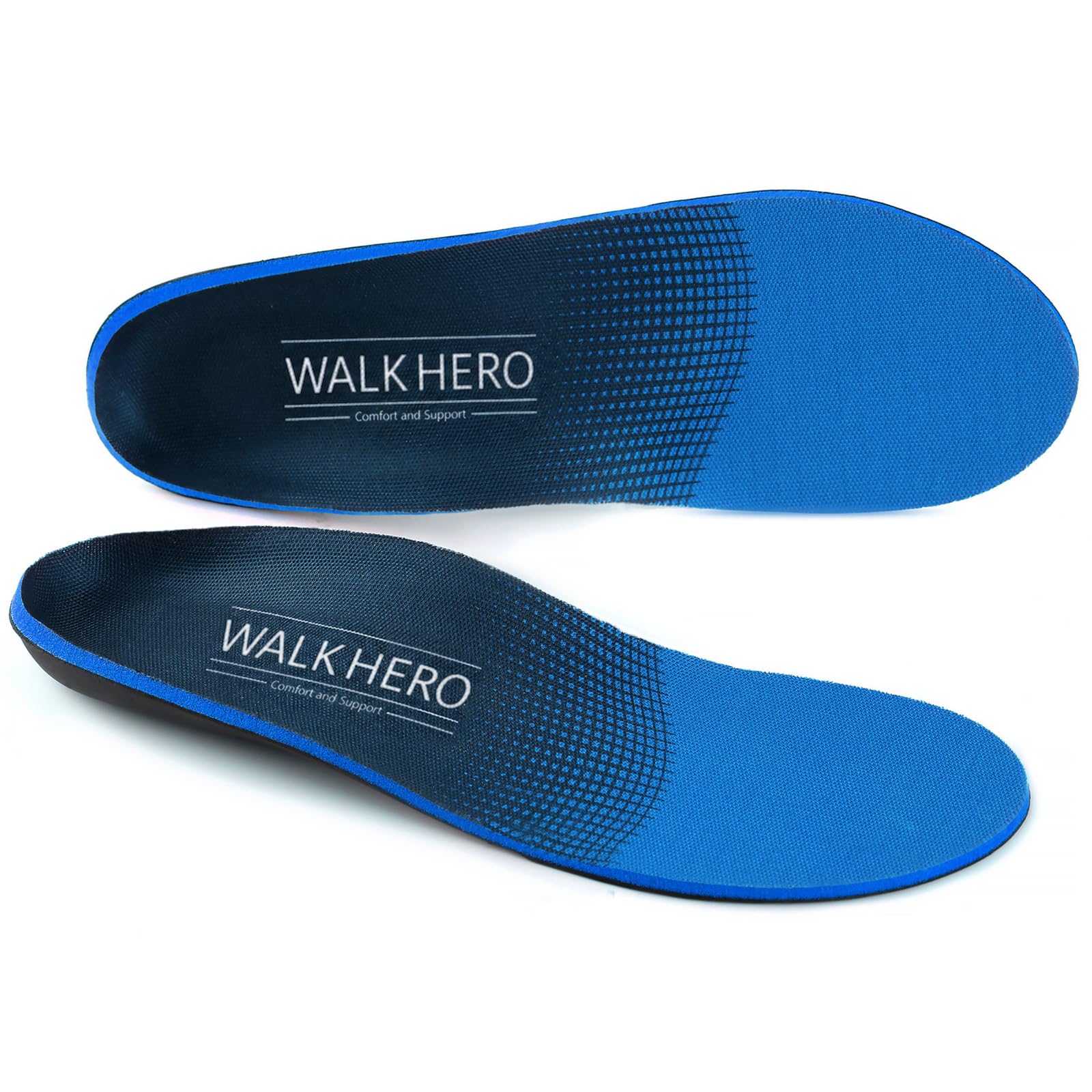
2. WalkHero Plantar Fasciitis Insoles
The budget-friendly daily driver that fits wide, high-volume boots without trimming
For anyone new to flat-foot insoles who wants to test the concept without a big outlay, this WalkHero is the natural starting point. The premium EVA material (a firm, lightweight foam that absorbs shock without turning to mush) does the cushioning work, while the deep heel cup keeps your foot positioned correctly on impact. It’s built for wider, high-volume shoes — the exact shape of most work boots, basketball shoes, and running shoes.
What wins people over here is the arch support that isn’t just padding. Bigger-framed buyers with plantar fasciitis describe dramatic relief, sharp arch support, and heel cushioning that holds up over a year. The size is also unusually forgiving — one active 200-lb walker found the 12–12.5 inserts dropped straight into size 12 shoes with no trimming, and users who stand on their feet for long hours say it fixes knee and lower-back ache too.
Here’s the honest catch: a good number of owners find the firmness too hard at first, and a flat foot that needs the arch broken in gradually may want the PowerStep’s more structured correction instead. The forefoot volume can also crowd tight shoes, so plan on a half size up in anything snug. At 4.8 ounces it’s the lighter of the two value leaders even though the PowerStep is the firmer one, so pick based on feel, not weight.
Budget arch support: for the money, the pain relief and no-trim fit are the story — this is the pick buyers reach for when they want results without a premium price tag.
Mild daily pain: wide-boot wearers and first-time insole buyers who want an affordable, shock-absorbing daily option.
Heavyweight runners: you dislike a firm feel or your shoes are already snug and can’t spare the forefoot space.
3. VALSOLE Heavy Duty Support Pain Relief Orthotics
Built for the over-220 crowd who stand on hard floors all day
VALSOLE designed this one around a specific problem: extra weight turns every step into more strain on the arch. The answer is a hard TPU (a rigid plastic that supports without collapsing) frame under the arch, a PU pad in the heel to soak up impact, and extra-stable EVA material for cushioning. The deep heel cup cradles the foot and corners for side-to-side stability, which is what keeps a flat foot from wobbling in the boot.
If you’re a bigger person logging ten or twelve hours, the payoff is a foot that doesn’t fatigue out by mid-afternoon. What the reviews show is genuinely impressive: A retail owner on her feet 70 hours a week with seven years of plantar fasciitis says this pair, combined with gait changes, brought her to near-zero pain in months.. Others describe turning dead sneakers into favorite shoes and holding up through long shifts. The heel pad earns particular praise as the softest, most cushioned landing in the group.
Body weight is the deciding factor here. If you’re heavier, the firmer support is exactly right; if you’re lighter, some owners feel the plastic frame is a touch much and the heel padding could be thicker. That’s the trade for a shell that won’t cave in. Also note the fit: it works best in roomy boots, and the company even suggests a gradual 2–3 hour break-in.
Rigid heavy duty shell: heavier users and anyone whose pain hasn’t budged with cheaper cushioning insoles — the rigid frame is the point.
Construction work: you’re 220+ lbs and need a sturdy frame that refuses to collapse in boots or wide sneakers.
Casual wear: you’re on the lighter side and prefer a more cushioned bounce over a rigid arch.
4. OrthoComfoot Insoles for Flat Feet

The no-cutting-required option for people who just want to drop them in and go
If trimming an insole sounds like a chore, the OrthoComfoot is the pick — it’s built to slip straight into most footwear with no cutting. Under the foot you get a reinforced U-shaped heel cup that locks the heel in place and fights overpronation, plus a high-resilience GEL heel pad (a jelly-like insert that spreads impact) that softens every step. A ventilated, moisture-wicking top layer keeps the foot dry and cuts odor on long workdays.
This is a newer model with a smaller review base, so the early word is thin but encouraging. Owners with very flat feet call it an instant fit that shifts weight off the fallen arch, and a couple point out you can extend the life of a worn pair of boots with a fresh set of inserts rather than a whole new pair. It’s a fair-value choice for the casual-to-serious user.
A couple of quirks are worth knowing before you buy. One owner found the size 8.5 both too long and too narrow — a reminder that trim-free doesn’t always mean perfect, and a size that lands right for one foot may crowd another. A few also note a squeaking sound when walking. Neither is a deal-breaker, but they’re the reason this sits as the convenience pick rather than the firmest option here.
Flat foot support: anyone who wants zero trimming, a cushioned GEL heel, and dry feet through a workday.
High arches: you have a wider foot that needs a broader platform, or you can’t stand any squeaky insole noise.
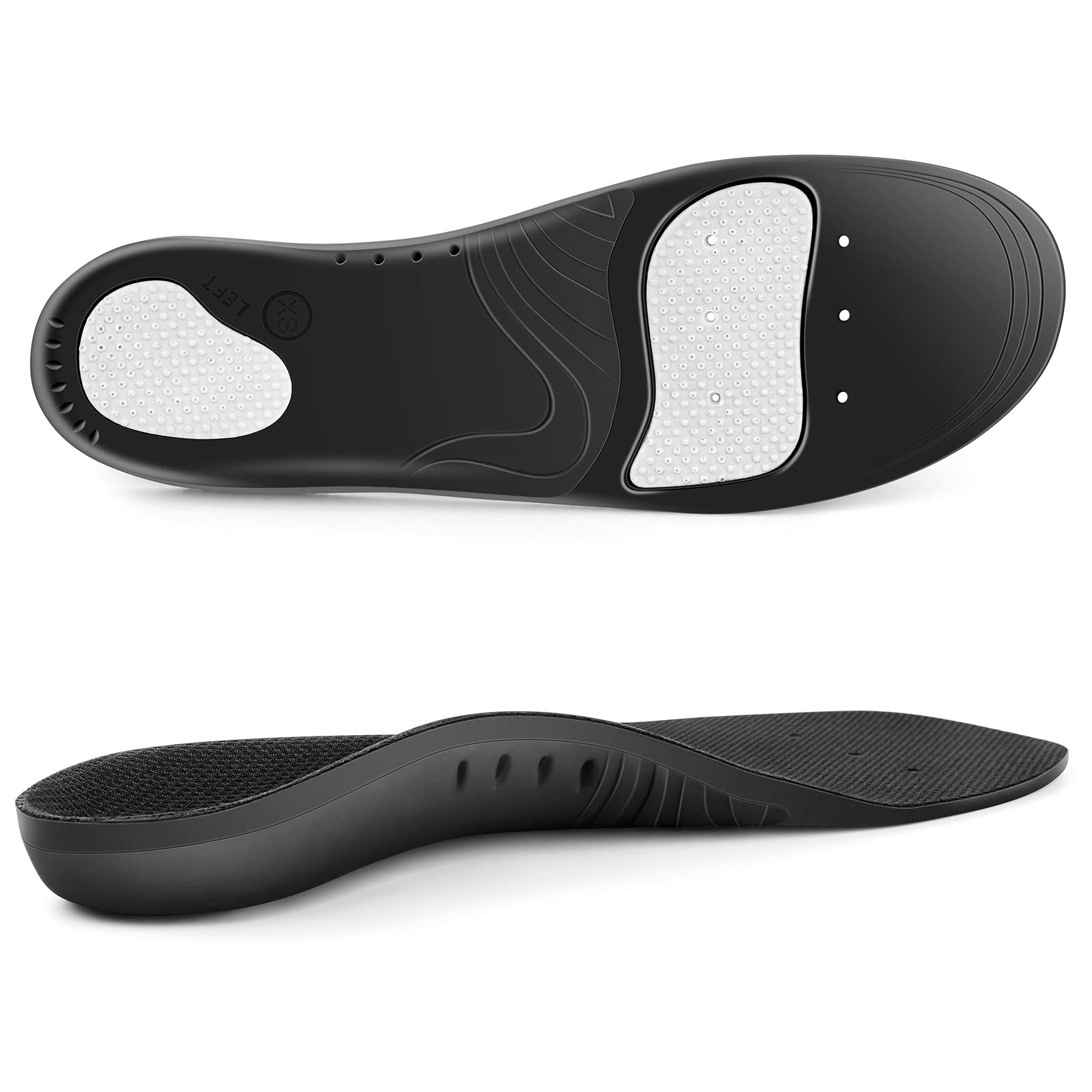
5. Plantar Fasciitis Relief Insoles (220+ lbs)
Budget all-day-standing support that doesn’t fear a 370-pound owner
This one earns its spot on the strength of a sturdy TPU arch layer paired with soft memory foam and separate GEL pads at the forefoot and heel. That combination is the point — the TPU (a firm support material) holds the arch up, and the foam plus GEL handle the cushioning so you get both support and softness. A deep heel cup corrects pronation and stabilizes the foot on landing.
For the heavier user, the durability claim matters: A 370-lb owner reports the arch doesn’t collapse under load and the cushioning eases heel and knee pressure.. Another 245-lb wearer compares it directly to Superfeet, saying it has thicker foam, a higher firmer arch, and evened-out pressure across the ball of the foot. With its own deep heel cup and separate forefoot pad, this insole was clearly engineered for the long day on your feet.
The honest note is that results are more variable here than with the firmest picks above — comfort and effectiveness get mixed feedback, with some wearers saying it didn’t help and others getting clean relief. That spread usually depends on whether your foot happens to line up with the arch position. Try the 2–3 hour break-in the brand recommends before deciding, and read the sizing carefully.
Reinforced for heavy bodies: the foam-plus-TPU combo does a lot for the money, and heavier owners get the sturdiest build of the three budget options here.
Over 220 pounds: you want a low-cost, sturdy arch that can take serious weight and long standing shifts.
Slim footwear: you’ve had bad luck matching arch position to your foot and would rather invest in a firmer, more predictable shell.
6. BestHalo Heavy Duty Plantar Fasciitis Insoles

A trim-to-fit high-arch shell that plays nicely with almost any boot or sneaker
BestHalo’s selling angle is flexibility — a high-arch support system built on a deep heel cup, wrapped in premium EVA (a lightweight shock-absorbing foam) with gel cushioning. Because it’s trim-to-fit, you can cut the outline to match your shoe size, which is useful when you own boots and sneakers in different sizes. It’s designed to control both overpronation and supination, so it handles a foot that rolls either way.
The deep heel cup does the quiet work here: it locks the heel in line so the arch stays supported as you move. Owners put it in Hoka running shoes and never need to trim for a women’s 9, and the same insert swaps into everyday shoes for all-day wear. Foot and ankle alignment is the thing buyers notice most, and the cushioned heel under the high arch is what people keep coming back for.
It also holds up under real load — one reviewer noted no foot, arch, or ball pain after hours of basketball and pickleball, and another swapped out pricier Superfeet for this pair and called it the new go-to for boots. The one limit to keep in mind: if you’re on your feet 40+ hours a week, a couple of wearers found the relief faded after the first two weeks and the thickness made it best for lighter use.
Long shifts: you want one high-arch insert that trims to fit multiple shoes and handles both overpronation and supination.
Light activity: you need maximum long-term firmness for a 40-hour-plus standing job.
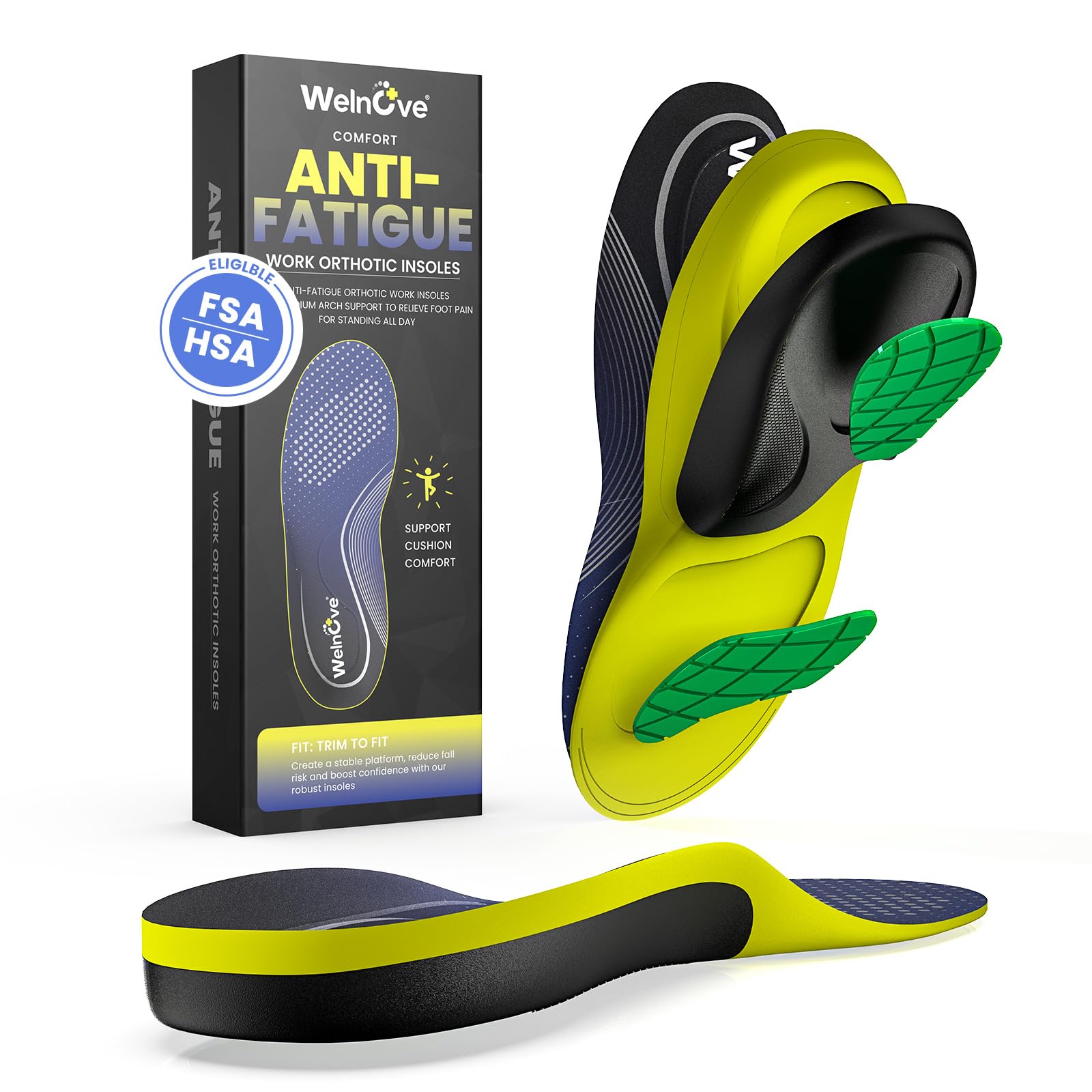
7. Welnove Work Orthotic Insoles for Plantar Fasciitis
The anti-fatigue build for concrete floors, steel toes, and long shifts
Welnove stacked four layers into this work insole: a PU foam cushion, a 3D dynamic TPU arch-support layer, a deep U-cup heel, and GEL pads at both the heel and ball of the foot. The idea is to keep your foot in the correct position and spread the plantar force points so your muscles and joints get less of a beating. It supports both the length-wise and cross-wise arches of the foot, which matters for a flat foot that needs help in two directions.
The clearest praise comes from the job site. A wearer on a concrete floor in steel toes for ten hours a day says it genuinely helps, and another describes a husband whose work boots used to be good for only three or four hours before his feet burned — with these, he gets through the whole day. That’s the anti-fatigue promise delivered, not just claimed, and for many it rivaled the orthopedic brands.
There are two things to expect. First, the fit runs thick, so Welnove recommends pulling out the boot’s factory insole or reserving these for roomy shoes — that’s a fit note, not a flaw. Second, the comfort and quality draw divided opinions, with some owners getting great results and others finding them uncomfortable. The brand suggests a 3–5 hour daily break-in to smooth the transition.
Work boots: steel-toe and work-boot wearers on hard floors who want anti-fatigue support with gel where it counts.
Sandals: your boots are snug and you can’t spare room for a thicker footbed.
8. Welnove 220+ lbs Heavy Duty Support Insoles

A firm high-arch shell engineered specifically for heavier frames
Where the other Welnove leans anti-fatigue, this one is built for weight. It’s aimed squarely at 220+ lb users, with a firm high arch, superior shock absorption, and a gel heel pad over a PU base. The deep heel cup keeps the foot stable while the arch distributes weight across the spine and joints instead of dumping it onto the fallen arch. It’s a workhorse for the standing, walking, or long-shift crowd.
Owners above 220 lbs are the most satisfied camp. One 260-lb wearer calls these the best quality insoles he’s used for work and daily wear, crediting strong support, real pain relief, and a build that doesn’t fall apart. Another with extremely flat feet says it eliminates the discomfort of prolonged standing. Crucially, the insole stays supportive — the arch doesn’t flatten out under load, which is the whole battle with heavy-duty support.
Talk to the weight target and the honest limit is clear: this is support tuned for a heavier body, and value for money draws divided responses, with some feeling it’s a premium ask. It also won’t suit a lighter foot — one wearer found it made their feet hurt worse, which usually means the arch is firmer than that foot needed. If you’re genuinely heavy and on your feet, though, it’s built for you.
Extra weight support: the firm high arch is the defining trait, and it’s best matched to wearers whose weight justifies a stiffer shell.
Big and tall: 220+ lb wearers who need a high, firm arch that won’t give way under a full day’s load.
Soft cushion lovers: you’re lighter and a firm arch tends to hurt rather than help your feet.
9. FORM Maximum Support Plantar Fasciitis Insoles

The mold-to-your-foot option that splits the difference between soft and rigid
The FORM insoles take a different route to support: they mold to the shape of your foot, then hold that contour. The comfort-shaped arch does the support work, while a TemperWeave top sheet combined with high-density breathable foam handles odor and moisture — genuinely useful if you’re in boots all day. Unlike the firmer picks above, it’s designed to bridge the gap between a hard doctor’s orthotic and a soft cushion.
That balance is what owners notice. A tennis player reports post-match heel pain cut by 80–90% after switching to these, and one wearer cycles three pairs through running shoes and combat boots with no hot-spot rub. Compliance is high here — a medical staffer patrolling five miles a day on concrete calls them a daily staple.
Softer means sizing gets fussy. You’ll almost certainly size up — one owner went from a women’s 8 to a 10 athletic shoe — and if you go too small the arch position can shift forward off your foot. Cushioning also divides opinion, with some wanting more padding and others calling it fine. Moldable comfort is the draw, but it rewards a careful fit.
Severe plantar pain: you want a softer, moldable feel between a hard orthotic and a basic cushion, and you don’t mind sizing up.
Flat feet: your arch placement is hard to match or you want maximum rigidity from the start.
Understanding the Specs
Firmness and Arch Material
The arch is the whole reason you’re buying. A flat foot collapses inward under load, and only a firmer material — like the hard TPU used in the VALSOLE and Welnove heavy-duty models — will hold it up. Soft EVA or memory foam alone feels nice but gives way once you stand. The best designs stack a firm shell for support with softer foam and gel for cushioning, so you get structure where you need it and comfort where you land.
Weight Rating and Heel Cup Depth
Several insoles here are tuned for a body weight of 220+ lbs, because a heavier frame simply needs a stiffer shell and better shock absorption to keep the arch from flattening. Heel cup depth is the second half of the equation — a deep cup keeps the heel square and fights the inward roll that strains your knees. A shallow, flat heel won’t control a flat foot, no matter how much padding sits under the ball.
Trim-to-Fit vs. Ready-to-Wear
Some insoles drop straight into a boot, while others are trim-to-fit, meaning you cut along a guide near the toes to match your shoe. The trim-to-fit models suit people with several pairs of shoes in different sizes; the ready-to-wear models suit anyone who wants zero fuss. Either way, if the insole feels thick, remove the boot’s factory insole first for a proper fit.
Break-In and Care
A firm arch is a new sensation, so nearly every brand suggests starting at a couple hours a day and building up over a week or so. Expect a short adaptation window before the comfort arrives. For cleaning, spot-clean by hand with a mild detergent and air dry — do not soak an insole or put it in a machine, as moisture breaks down the foam and support layers.
FAQ
Will these boot insoles actually help flat feet?
Do I need to size up my boots for a heavy duty insole?
Are insoles rated for 220+ lbs really different from standard ones?
How long do flat-foot boot insoles typically last?
Can I trim a boot insole to fit a smaller shoe?
Will a deep heel cup help with overpronation?
How long should I wear new insoles before deciding they work?
Can I move the same insoles between work boots and sneakers?
Should I wear insoles if my arches are high rather than flat?
Final Thoughts: The Verdict
For most flat-footed buyers, the winner among these boot insoles for flat feet is the PowerStep Pinnacle Maxx — it holds the firmest control in the group with its 2-degree medial post and deep, squared heel cup, which is exactly what stops a flat foot rolling inward in a boot. If you’d rather spend less and test the waters, the WalkHero delivers no-trim comfort and shock absorption for a fraction of the commitment. And if you’re a heavier user who needs a shell that won’t collapse, grab the VALSOLE Heavy Duty, built for 220+ lbs with a hard TPU frame. Whichever you pick, break them in slowly and size up in tight boots.
How We Picked
We do not accept paid placement. Every pick is matched to a real buyer and a real use-case; we do not hands-on test units.
Sources & Methodology
Specifications: manufacturer listings and product documentation. Review insights: verified customer reviews, as of September 2026. Pricing: not shown on this page (it changes often); check the current price via the retailer link.
As an Amazon Associate, Gadgets Feed earns from qualifying purchases. This does not affect which products we feature.