
Our readers keep the lights on and my morning glass full of iced black tea. As an Amazon Associate, I earn from qualifying purchases.
Specs are compiled from manufacturer listings and verified buyer reviews and can change over time — please confirm the key details on the product page before buying.
If you stand on concrete, asphalt, or hard shop floors for a living, a good boot insole can mean the difference between a day that flies by and one that leaves your feet throbbing. The right insole supports your arch, cushions your heel, and keeps your legs from feeling like lead by 3 p.m. — this guide cuts through the options to find the ones that actually hold up under real work.
I’m Min — the founder and writer behind Gadgets Feed. This guide is built by comparing the manufacturers’ published specifications and the patterns across verified customer reviews, so you get each pick’s real strengths and trade-offs instead of marketing spin.
Here’s the honest bottom line: the crowd favorite in boot insoles is Dr. Scholl’s Work, praised for comfort that stands up to 10,000+ daily steps.
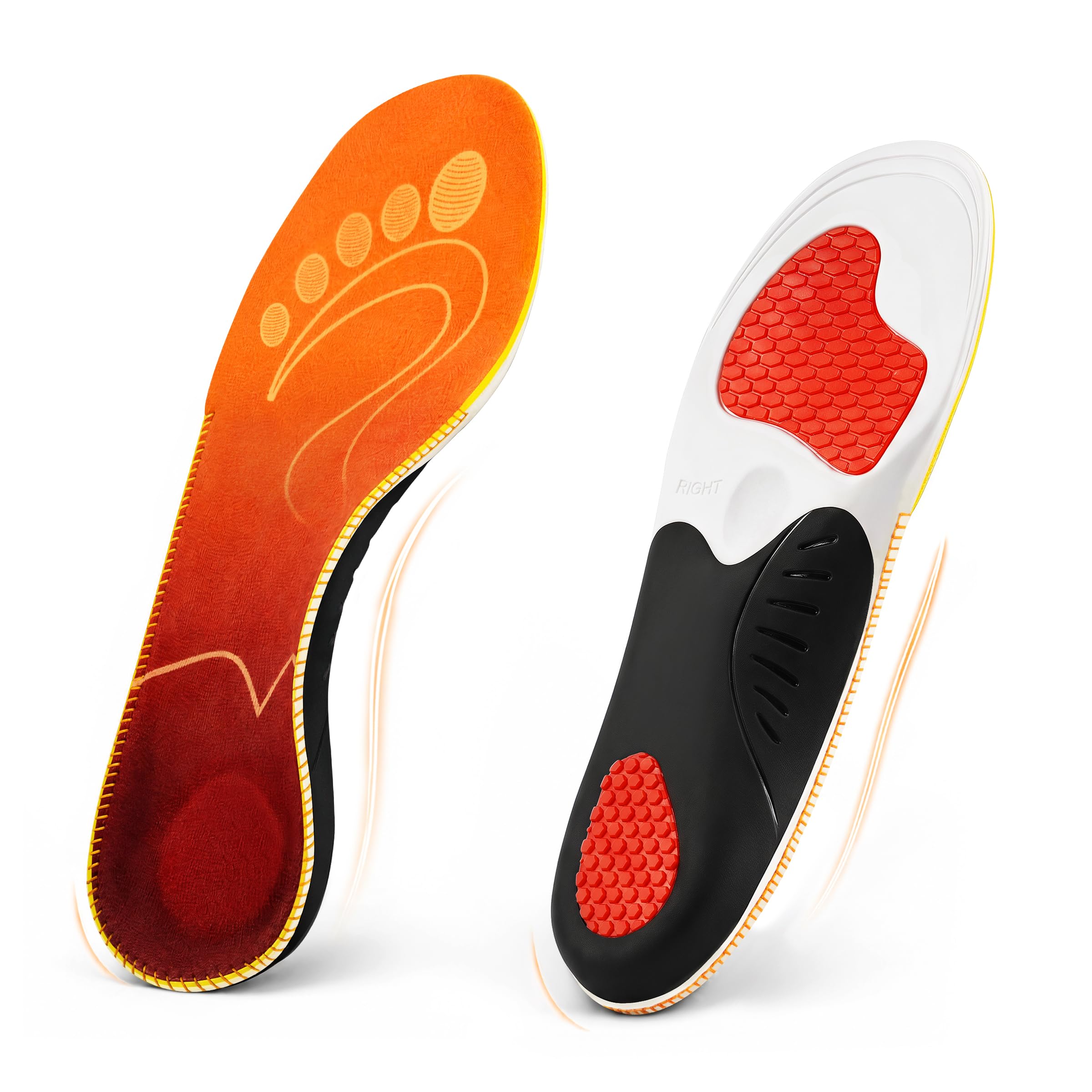
Our Picks at a Glance


How To Choose The Best Boot Insoles
Boots are built tough, but the factory footbed inside them is often thin and flat. Swapping in a supportive insole changes how your whole leg feels by the end of a shift — but only if you pick the right type for your foot and your work.
Match the Support to Your Arch
Most work insoles are designed with a visible arch bump that props up the middle of your foot. High-arch support suits people with a pronounced arch; a flatter profile suits low arches. If you have plantar fasciitis — that stabbing heel pain in the morning — you want a firmer, structured arch and a deep heel cup to hold your heel in place.
Think About Your Work Surface
Hard surfaces like concrete and asphalt transmit shock straight up your legs. Look for insoles with a cushioned heel and responsive foam that absorbs impact and returns energy into your step. If you stand on metal grates or uneven ground, a stiffer, more supportive footbed often beats a soft one.
Check the Fit Before You Buy
Some insoles drop straight in at your exact boot size; others need trimming along cut lines. Measure your factory insole heel-to-toe if you are between sizes. A thick insole can make a snug boot feel tight, so check whether your boot has extra interior depth before choosing a high-cushion profile.
Quick Comparison
| Model | Best For | Arch Support | Cushion Type | Trim to Fit | Amazon |
|---|---|---|---|---|---|
| Dr. Scholl’s Work Insoles★ Best Overall | All-day standing on hard floors | Reinforced support | Massaging gel | Yes | Amazon |
| WalkHero Plantar Fasciitis InsolesBest Value | Heel pain and wider boots | Firm structured | Premium EVA foam | Yes | Amazon |
| Shoe Insoles for ComfortTop Performer | 12-hour shifts and retail | Steady support | Dual-layer cushioning | Yes | Amazon |
| ARIAT Energy Max Work Insole | ARIAT and round-toe boots | Anatomical contour | Anti-fatigue rebound | No | Amazon |
| BestHalo Heavy Duty Insoles | High arches and heavier builds | High arch | EVA foam + gel | Yes | Amazon |
| Timberland PRO Insite Footbed | Construction and long wear | Dynamic support | Anti-fatigue cone | No | Amazon |
| PowerStep Pinnacle Hiker | Hiking and trail boots | Firm podiatrist arch | Maximum cushion | No | Amazon |
| SOLE Performance Thick | Roomy boots needing firmness | Heat-moldable cork | Cork + cushion (4.8mm) | Yes | Amazon |
| Superfeet Hike Women’s | Women’s hiking boots | Medium to high | Carbon fiber + dual-layer | Yes | Amazon |
In‑Depth Reviews
1. Dr. Scholl’s Work Insoles (Pack)
Our pick — 4.5★ from 11,000+ verified ratings; the strongest balance of quality and price.
The all-day workhorse that turns a brutal concrete shift into a survivable one.
This is the pick that wins people over for one simple reason: comfort, and lots of it. The gel cushioning runs the full length of the footbed, so the shock you feel walking on asphalt or cement gets absorbed before it reaches your joints. Buyers report it “fits size 13 with minor trim,” which tells you the sizing runs generously and the trim-to-fit design handles big boots without fuss.
The arch support is reinforced rather than flimsy, and the whole footbed stays put while you move — no sliding around inside your boot. The Polygiene StayFresh Technology treatment also tackles odor and moisture buildup, a real bonus for people who log 10-12 hour shifts. It ships as a 2-count pack, so you get a backup pair or one for each of your daily boots.
Compared to firmer orthotic-style insoles, this one leans softer and more cushioned than rigid. If you want aggressive motion control, this is not that. But for the worker who just wants the ache gone at the end of the day, this delivers — one reviewer noted it “made a big difference on my feet working all day.” The only real complaint: a few owners found them slightly bulky, needing looser laces to fit comfortably.
What wins people over
- Comfort is the biggest praise — over 190 owners single it out
- Foot comfort earns a second big wave of shout-outs
- Trim-to-fit sizing makes customization easy
The trade-off
- Slightly bulky in tight boots, may need looser laces
- Softer feel, not a rigid orthotic
Reach for this if: you stand on hard floors all day and want proven, cushioned relief in a value 2-pack.
Look elsewhere if: you need a stiff, motion-controlling orthotic for a diagnosed foot condition.
2. WalkHero Plantar Fasciitis Insoles
Serious heel-pain relief at a budget-friendly price, built for wider, high-volume boots.
If plantar fasciitis is your daily enemy, this is the budget-friendly insole that punches far above its cost. The deep heel cup grabs your heel and holds it in correct position through the heavy impact of each landing step, which is exactly what your foot needs when the arch is straining. It’s made from premium EVA material that absorbs shock and keeps your feet cool through the day.
The arch support is firm — noticeably firmer than the Dr. Scholl’s above — and that firmness is what makes it work for people with flat feet, pronation, or heel spurs. Owners mention “bigger guys” getting drastic pain reduction and replacing them every 3-4 months, which is a fair lifespan for a value insole. It’s designed for wider, high-volume shoes, so it slips into work boots, basketball shoes, and running shoes without squeezing.
At 4.97 ounces, it’s lighter than the 12-hour comfort option below, so it won’t weigh your boots down. The honest caveat is the firmness itself: several owners find them too hard, especially in the first days. If you want a soft, pillow-like feel, this is not it — but if you want structural support that eases heel pain, this delivers more than most options at twice the price.
The big draw: thousands of owners praise the quality and pain relief — this is a hugely proven value pick for heel pain.
Best for: workers with plantar fasciitis who need firm arch support in roomy boots.
Think twice if: you prefer a soft, plush footbed — the firmness here is the point, and it’s not subtle.
3. Shoe Insoles for Comfort: 12-Hour Arch Support
The retail-shift savior that keeps your arches happy from clock-in to clock-out.
This one is built around a single promise: 12 hours of comfort, and the reviews back it up. Customers note “great arch/heel support for retail shifts; less foot fatigue,” which is exactly the scenario this insole is designed for. The dual-layer cushioning absorbs impact while the firm arch structure supports your foot through walking, standing, and active routines on hard floors.
what separates it is the build quality. The edges are hand-stitched, which prevents the peeling and flattening that kills basic foam inserts after a few weeks. It’s a balanced firm-soft feel — supportive without being punishingly hard, making it suitable for plantar fasciitis support and heel comfort alike. At 5.75 ounces, it’s the heaviest of the mid-tier options, so you’ll feel it in the boot, but owners say the stability is worth it.
Compared to the WalkHero above, this one is less rigid and more cushioned, making it the better pick if you want a middle ground between soft and firm. One unverified review called it “heavy and stiff,” but the verified consensus is clear: hikers praise the downhill impact absorption, and retail workers buy a second pair. The trim-to-fit lines make it easy to match your boots.
The standout: stitched edges that resist fraying — the one thing basic foam inserts fail at.
Pick this if: you want durable, balanced support for long standing or walking shifts.
skip it if: you need a lighter insole for tight, low-volume boots.
4. ARIAT Men’s Energy Max Work Insole
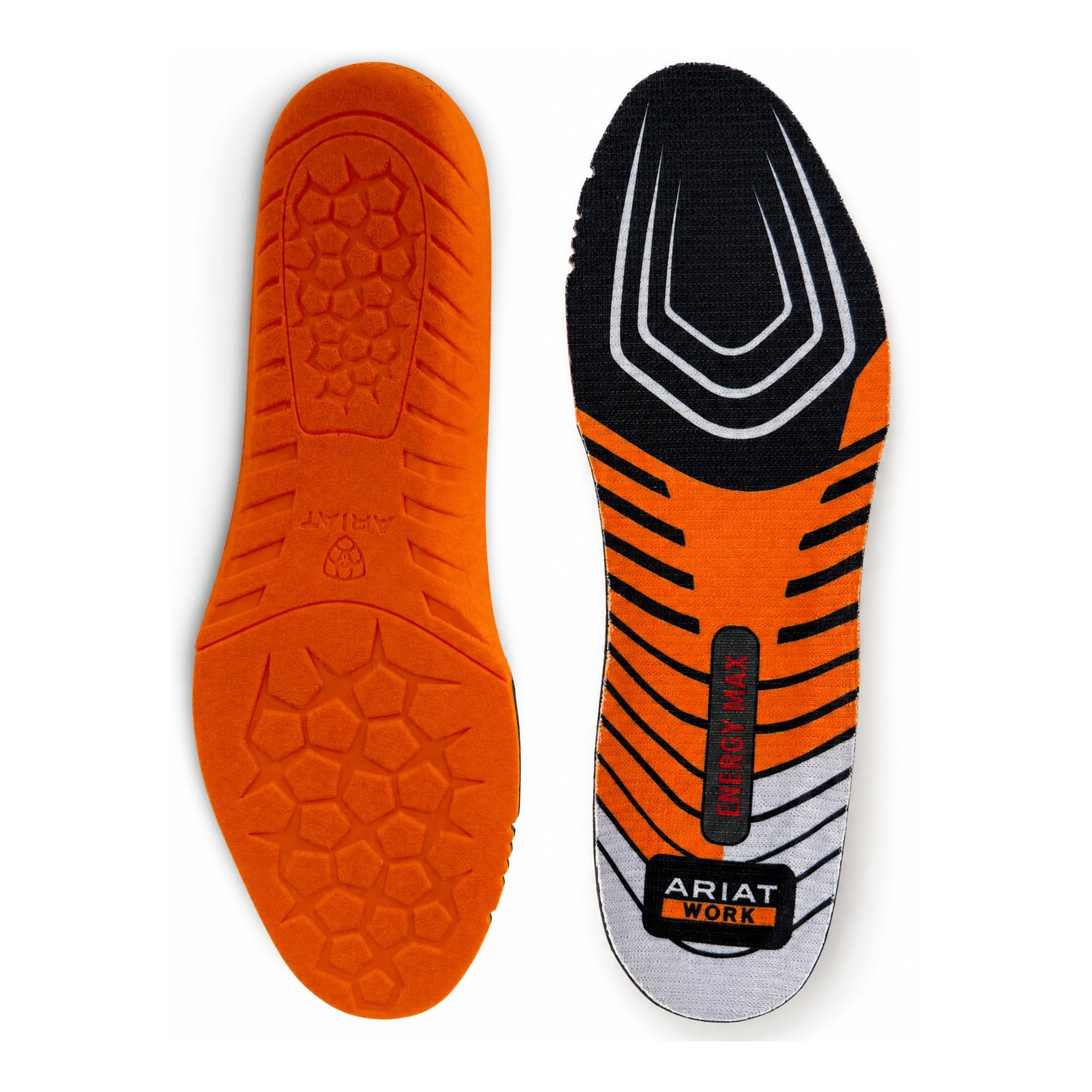
The drop-in replacement so precise you won’t need to trim a thing.
If you wear ARIAT work boots, this is the insole that fits like it came with the boot — because it’s pre-shaped to the round-toe last. Reviewers point out the size “is exactly what your shoe size is, no need to cut,” which saves you the trim-to-fit hassle entirely. The Energy Max layer compresses under each step and springs back, feeding energy into your stride so long shifts on hard floors drain you less.
The anatomical cushioning spreads your weight evenly across the foot’s natural contours, and the moisture-wicking liner pulls sweat away from your sock to keep feet dry from clock-in to clock-out. The cool open-cell core also vents heat, so the footbed stays comfortable through warm floors and long hours. At 7.37 ounces, it’s a solid, substantial insole that holds up.
Compared to the trim-to-fit options, this one trades customization for perfection of fit in ARIAT boots — you lose the ability to adjust it for other brands. Owners who’ve worn them in Double H and Chippewa boots report a perfect fit there too, with one noting they’re “exactly like the ones they came with.” The durability feedback is mixed, so it’s not the longest-lasting option, but the comfort is a near-universal praise point.
The winning angle: quality and comfort dominate the reviews — a proven boot-specific upgrade.
Grab this if: you wear ARIAT or round-toe work boots and want a zero-fuss, exact-fit insole.
Pass if: you need trim-to-fit flexibility for many different shoe brands.
5. BestHalo Heavy Duty Plantar Fasciitis Insoles
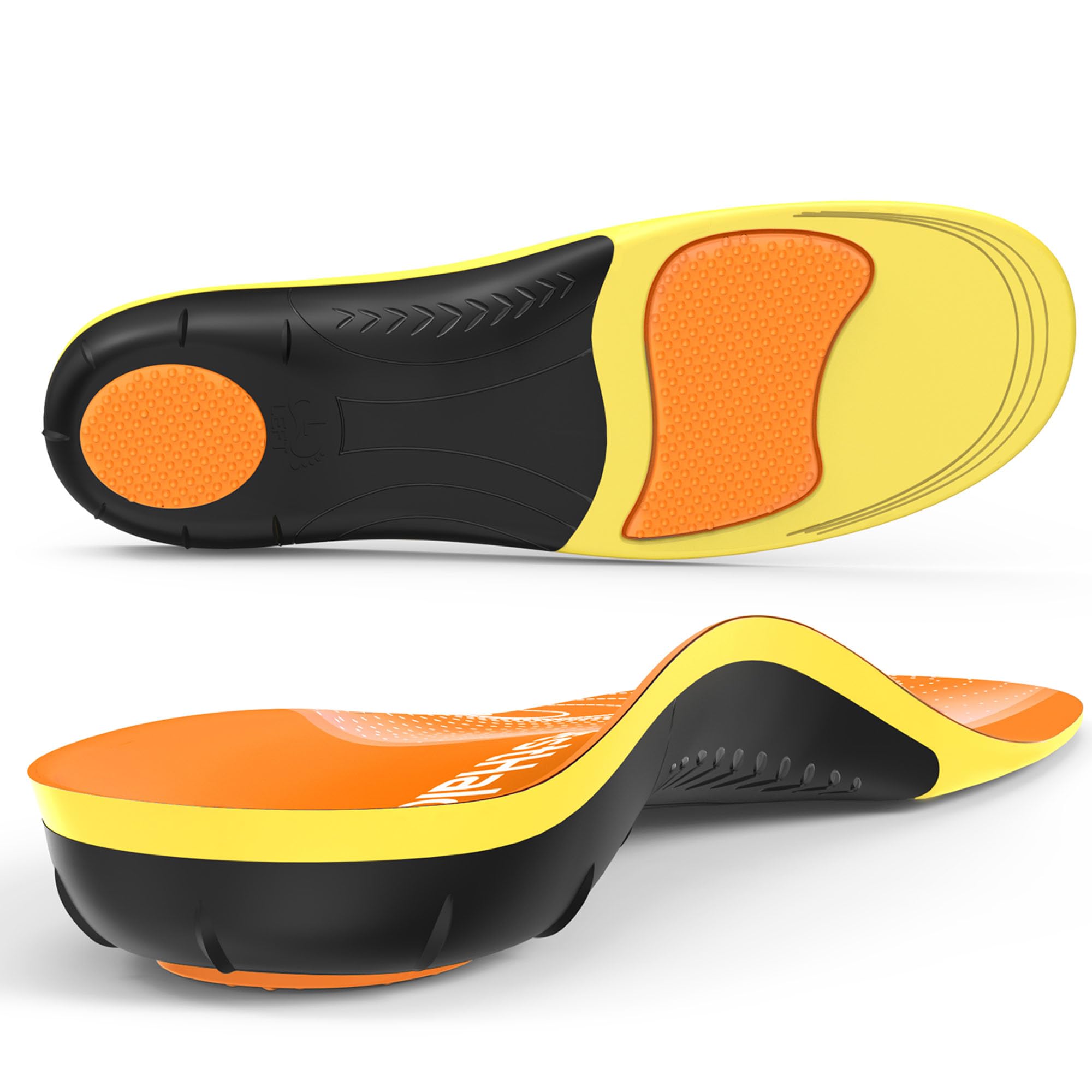
High-arch support engineered for bigger builds and demanding standing jobs.
This is the heavy-duty option, literally — it’s designed for 220+ lb users with high arches, and it shows in the build. The high arch support improves foot and leg alignment while the deep heel cup stabilizes your heel and controls overpronation and supination, promoting balanced movement. The premium EVA foam and gel cushioning deliver serious shock absorption for running, walking, or prolonged standing.
What impresses owners is the pain relief. Buyers put them “in all of my Hoka running shoes” and report eliminated foot and toe pain after a single day at a demanding standing job. The arch is genuinely high — a podiatrist-recommended level of support — and the cushioning is plush yet rigid. At 10.23 ounces, these are the heaviest insoles in this roundup, built for people who need substantial structure, not featherlight foam.
That high arch is also the catch. One owner found it too high, causing new foot and lower back pain after two weeks, and switched to a firmer, lower option. So this is a specific fit: if you have high arches, this is a standout; if you have flat or neutral arches, the aggressive arch may work against you. The gradual adjustment guidance recommends 2-3 hours daily for the first 3-7 days.
Why owners stay loyal
- Quality is the most-praised aspect — over 150 owners mention it
- Pain relief is the second biggest praise point
- Deep heel cup controls overpronation
The fit warning
- High arch is not for flat or neutral feet
- Heaviest insole here at 10.23 ounces
Ideal for: high-arched, heavier workers who want aggressive support and pain relief.
Not for: flat-footed users or anyone who finds high arches uncomfortable.
6. Timberland PRO Insite Technology AFT Footbed
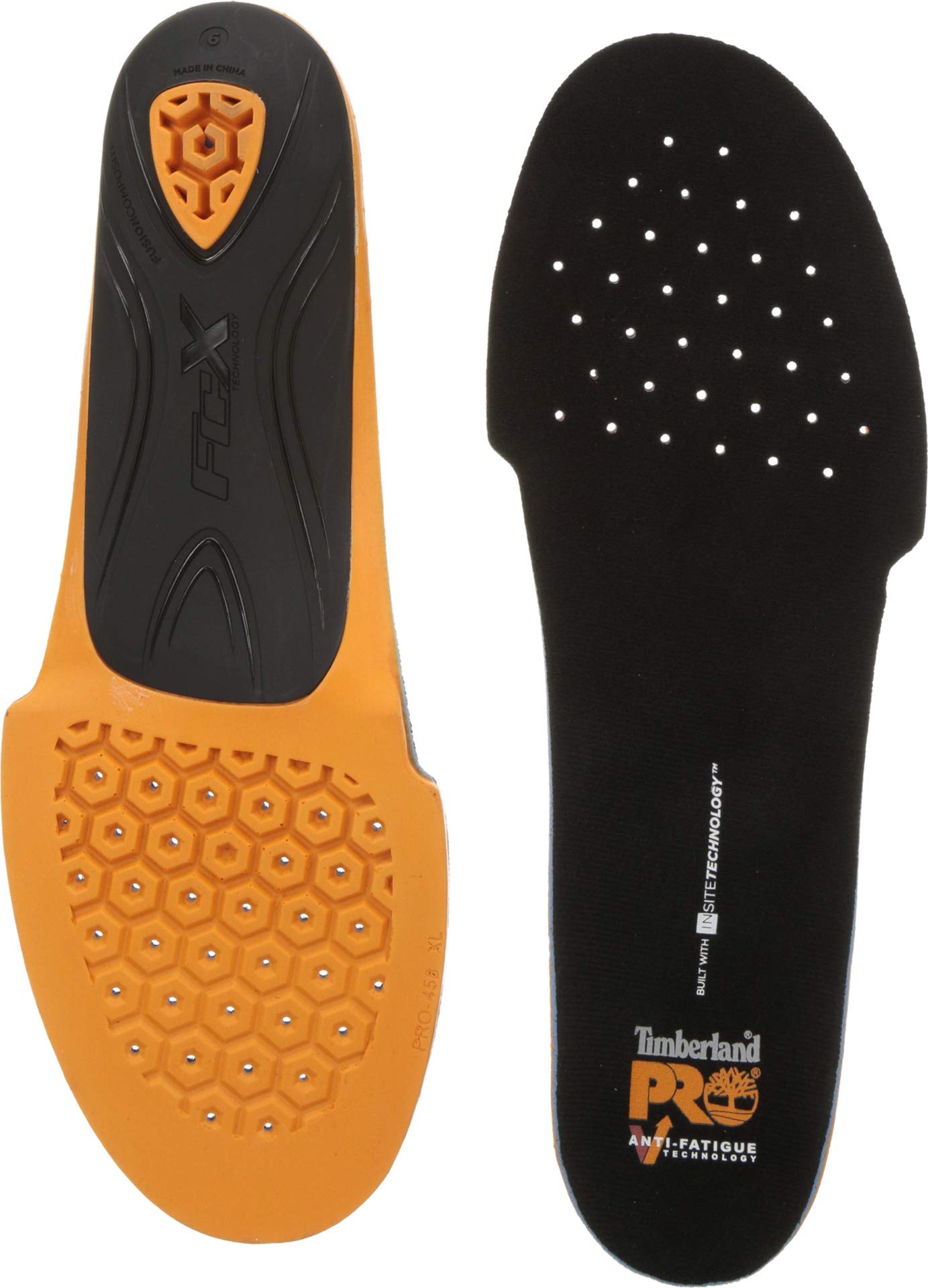
Construction-grade anti-fatigue tech that makes a 12-hour day feel like a short one.
Timberland PRO built this footbed for the same people who wear their boots: construction workers, and anyone on their feet 10-13 hours a day. The anti-fatigue technology uses a unique inverted cone design that absorbs shock on impact and returns energy into your step. One buyer, wearing work boots 10-13 hours daily, said at the end of the day “it feels like I never even had them on.”
The Insite technology adds dynamic arch support designed to help prevent injuries and fatigue, and the footbed is moisture-wicking and highly resilient. It’s a premium pick at this price, and that upfront cost is the main hesitation. A construction worker walking 6000+ steps daily called them a huge help, and owners use them across Sorel and Danner boots, not just Timberland.
Compared to the ARIAT above, this one offers more dynamic, energy-returning support but comes at a higher cost. The honest mixed feedback is real: some owners got blisters on top of their feet and questioned the value, so it’s not a universal fit. If you already trust Timberland PRO quality, this footbed matches that standard — but it’s worth expecting a break-in period.
The core strength: quality and arch support lead the praise, with standing-all-day relief as the headline result.
Choose this if: you log long daily hours on your feet and want proven anti-fatigue tech.
Consider the cost: it’s a premium price, and a few owners found the fit caused top-of-foot blisters.
7. PowerStep Pinnacle Hiker Orthotic Insoles

The podiatrist-designed arch that carried a 16-mile hike with zero foot pain.
If your boots live on trails rather than shop floors, this is the orthotic built for you. The arch was designed by a podiatrist specifically to treat plantar fasciitis and overpronation, and it’s firm — one hiker completed a 16-mile hike pain-free after switching from thin stock insoles. The maximum cushioning is a step up from Superfeet, giving you both support and comfort.
Shoppers say these last over a thousand hiking miles, making them a long-term investment rather than a disposable insert. The forefoot cushioning is excellent for downhill impact, and the semi-rigid support holds up under heavy packs. One hiker noted they’re ideal for heavy packs in stiff boots, calling them the most comfortable plug-and-play option they’d tried.
Compared to the Timberland PRO above, this one trades energy return for structured, firm orthotic support — it’s less springy but more corrective. The catch is thickness and sizing: they run short (one buyer needed a size 14.5 for a size 15 boot), and the thick profile can compress toes in snug footwear. They’re built for roomy, true-to-size hiking boots, not tight shoes.
The big wins
- Comfort is the most-praised aspect — over 60 owners mention it
- Arch support is the second biggest praise point
- Lasts 1,000+ hiking miles
Watch for
- Runs short — size up
- Thick profile needs roomy boots
Best for: hikers with plantar fasciitis or overpronation who want firm, lasting arch support.
Not for: tight-fitting shoes or anyone who prefers a slim, flexible insole.
8. SOLE Performance Thick Insoles

A heat-moldable cork base that shapes itself to your exact arch height.
This is the insole that literally molds to your foot. The ReCORK base is heat-moldable, meaning you heat it up and it adapts to your low, medium, or high arch height — a level of personalization factory boot insoles can’t match. The Thick profile, at 4.8mm total with 3.2mm of cushioning, is built for boots and roomy footwear where both maximum cushioning and firm arch support matter.
The firm cork-and-cushion construction absorbs impact and distributes pressure, helping with plantar fasciitis, heel spur discomfort, and the lower back pain that comes from poor foot alignment. A military boot owner reported three years of daily use with no failure, and a worker spending 12-14 hours daily in boots said they “still look and work as great as they did the first day.” That’s serious durability for a premium insole.
Compared to the PowerStep above, this one is more customizable thanks to the heat molding, but it’s also a heavier, firmer ride. The honest downside is the mixed durability feedback — some buyers report them falling apart within three months, which contradicts the long-term users, so quality may vary. There’s also a noted squeakiness from some owners. If you have roomy boots and want a custom fit, this is the one.
The unique draw: heat-moldable cork that adapts to your arch — personalization no other pick here offers.
Reach for it if: you want a custom-molded, firm insole for roomy hiking or work boots.
Be aware: durability reports are split, and a few owners mention squeaking.
9. Superfeet Hike Women’s Support Insoles

Women’s-specific carbon-fiber support that holds your heel steady on steep trails.
Built specifically for women’s feet on rough terrain, this Superfeet insole delivers medium-to-high arch support that stabilizes the foot and reduces stress on feet, ankles, knees, and back. The proprietary EVOLyte carbon fiber and polymer blend provides responsive, weight-defying support — strong without the bulk. At just 4.66 ounces, it’s one of the lightest structural insoles here.
Hikers report it stops hip pain on long treks, keeps the heel from sliding forward on steep inclines, and holds up during a 3-hour horseback ride. One buyer calls it her fourth pair, wearing them in all her boots. The Moisturewick top cover reduces odors and keeps feet fresh, and the dual-layer cushioning adds comfort without excessive padding. It’s a premium pick that earns its price for trail users.
Compared to the SOLE above, this one trades heat-molding for a lighter, springier carbon-fiber design — less customizable but less bulky. The mixed feedback centers on fit: some find them too narrow, others note the cushioning is thinner than expected. They’re trim-to-fit, so sizing up and trimming down gives you the best chance at a good fit. The 12-month/500-mile warranty is a genuine safety net.
The trusted strength: quality and foot support dominate the praise, with hiking suitability a standout.
Pick this if: you’re a woman who hikes or rides and wants light, stable arch support.
Skip if: you need a wide fit or a heavily cushioned, plush footbed.
Understanding the Specs
Arch Support
The bump under the middle of your foot that holds your arch in a neutral position. Firm arch support reduces strain on the plantar fascia — the band of tissue that runs along the bottom of your foot — which is the root of most heel pain. High-arch insoles suit pronounced arches; flatter profiles suit low arches. If you have plantar fasciitis, you want a firmer, structured arch, not a soft one.
Deep Heel Cup
The cupped section at the back of the insole that wraps around your heel. A deep heel cup holds your heel in correct position during the heavy impact of each landing step, stabilizing your foot and reducing strain on your ankles and knees. It also helps control overpronation — when your foot rolls inward too much as you walk.
Cushioning Material
The foam, gel, or cork that absorbs shock. EVA foam is light and springy; gel provides a softer, more plush feel; cork (like the heat-moldable ReCORK base) offers firm, dense support that shapes to your foot. Softer cushioning feels nicer from the start but can flatten faster, while firmer materials last longer and give more structural support.
Trim-to-Fit
Cut lines on the insole that let you trim it down to match your exact boot size. Some insoles drop straight in at your size; others need trimming along the marked lines. Measure your factory insole heel-to-toe before cutting, and size up if you’re between sizes. A thick insole can make a snug boot feel tight, so check your boot’s interior depth first.
FAQ
How often should I replace my boot insoles?
Will these insoles fit my steel-toe work boots?
What is the difference between arch support and cushioning?
How do I know if I need high arch support?
Can I use hiking insoles for work boots?
How do heat-moldable insoles work?
Why do my insoles make my boots feel tight?
Are these insoles available for women?
Do these insoles work for plantar fasciitis?
What does a deep heel cup actually do?
Final Thoughts: The Verdict
For most people, the boot insoles winner is the Dr. Scholl’s Work Insoles because comfort is what the crowd raves about most, backed by a value 2-pack that fits most work boots. If you want firm heel-pain relief at a budget-friendly price, grab the WalkHero Plantar Fasciitis Insoles. And for serious trail time, the PowerStep Pinnacle Hiker is the one to reach for.
How We Picked
We do not accept paid placement. Every pick is matched to a real buyer and a real use-case; we do not hands-on test units.
Sources & Methodology
Specifications: manufacturer listings and product documentation. Review insights: verified customer reviews, as of August 2026. Pricing: not shown on this page (it changes often); check the current price via the retailer link.
As an Amazon Associate, Gadgets Feed earns from qualifying purchases. This does not affect which products we feature.