
Our readers keep the lights on and my morning glass full of iced black tea. As an Amazon Associate, I earn from qualifying purchases.
Specs are compiled from manufacturer listings and verified buyer reviews and can change over time — please confirm the key details on the product page before buying.
An Alaskan winter isn’t a season — it’s a test of your gear. You need boots that laugh at -30°F, stay waterproof in slush, and grip ice so you don’t end up on your back. This guide cuts through the noise to find the real champions for extreme cold, with honest trade-offs pulled straight from thousands of owner experiences.
I’m Min — the founder and writer behind Gadgets Feed. This guide is built by comparing the manufacturers’ published specifications and the patterns across verified customer reviews, so you get each pick’s real strengths and trade-offs instead of marketing spin.
The true test for a pair of boots for alaska winter depends on three things: a proven temperature rating for sub-zero work, a waterproof shell that seals out snow, and a sole that doesn’t become a hockey puck below zero.
Our Picks at a Glance


How To Choose The Best Boots For Alaska Winter
Alaska winter boots need to handle three things at once: keeping you warm when you stop moving, keeping your feet dry in slush, and keeping you upright on glare ice. The wrong choice means cold toes, wet socks, or a fall. Here is what separates gear that merely claims to work from gear that actually does.
Insulation Rating: Grams vs. Activity
The number attached to insulation — 200g, 600g, 1200g — tells you how much synthetic fill is packed inside. Higher grams mean more warmth, but also more bulk and weight for your feet to carry. For standing still on a frozen lake ice fishing, you want 1200g or more. For shoveling snow or a brisk walk where your own body heat helps, 400g to 800g is often plenty and way more comfortable to walk in. Overshooting your insulation for high activity just makes your feet sweat, which then gets cold faster.
Waterproofing: It’s Not Just a Specification
Alaska winter isn’t dry snow. It is wet snow, slush, overflow ice, and puddles. A boot’s waterproof claim matters only if the construction backs it up. Neoprene and sealed rubber shells, like those on the Muck boots, are nearly impenetrable. A Gore-Tex liner inside a leather boot is also excellent but can fail if the leather isn’t regularly treated. A boot that claims to be waterproof but has a fabric upper with a DWR coating will wet out eventually — know what shell material you are buying.
Traction: Rubber Compound is the Secret
Lug pattern gets all the attention, but the rubber compound is what actually grips ice. Some rubbers turn rock-hard below zero and slide like glass. Compounds like Baffin’s Polar Rubber or Sorel’s AeroTrac are engineered to stay flexible in extreme cold, which is what lets the tread bite into ice instead of skating over it. A deep lug is great for mud and soft snow, but for an Alaska winter, a softer, cold-tolerant rubber is the real traction winner.
Quick Comparison
| Model | Best For | Insulation | Waterproof | Key Feature | Amazon |
|---|---|---|---|---|---|
| MUCK Arctic Sport★ Best Overall | Wet outdoor work & leisure | Rated -40°F | Fully sealed rubber | 5mm neoprene upper | Amazon |
| ROCKY Blizzard StalkerBest Value | Extreme cold & budget | 1200g Thinsulate | Rocky Waterproof | Multi-directional outsole | Amazon |
| Baffin ICEFIELD (Women’s)Polar Rated | Polar-level expeditions | Rated -148°F | Arctic Rubber shell | Multi-layer inner boot | Amazon |
| Columbia Minx IV | Everyday warmth & style | Heavy (unspecified) | Water resistant | Lightweight & stylish | Amazon |
| KEEN Revel IV High Polar | Active winter wear | Rated -40°F | Waterproof leather/mesh | Wide toe box | Amazon |
| Helly Hansen Arctic Patrol | Resort & city winter | 600g Primaloft | Seam sealed | Aluminum shield blocker | Amazon |
| Helly Hansen Garibaldi V3 | Versatile & stylish warmth | Primaloft (unspecified) | Waterproof leather | Wide toe box | Amazon |
| TNF Chilkat V 400 | Winter hiking & snowshoe | 400g premium | Waterproof/DWR | Eco-conscious construction | Amazon |
| Sorel Glacier XT | Deep snow & style | Removable ThermoPlus | Vulcanized rubber | Omni-Heat lining | Amazon |
| Baffin Eiger | Extreme cold & ice fishing | Arctic rated | Full grain leather | Polar Rubber outsole | Amazon |
| Irish Setter Elk Tracker | Hunting & sub-zero work | 1000g Thinsulate | Gore-Tex | Goodyear leather welt | Amazon |
In‑Depth Reviews
1. MUCK Men’s Arctic Sport Boot
Our pick — over 4.5★ from 900+ verified ratings; the strongest balance of quality and price.
The rubber-over-neoprene tank that shrugs off -40°F and ankle-deep slush.
This is the boot that dominates the “real winter” conversation for a reason: its 5mm neoprene upper stretches to fit your calf, seals out any wetness, and lets you fold the whole thing down for easy entry. The warmth comes from a fleece lining with thermal foam underfoot, and the fully-sealed rubber shell stands up to all-day abuse in wet snow. Buyers report excellent warmth down to -8°F with snow, and many note that a single pair lasts nearly a decade before the rubber eventually cracks. At 4.7 stars from a massive pool of owners, it is the crowd favorite for the cold crowd.
What wins people over is the warmth — over 100 owners single it out. The roomy fit is consistently praised, allowing heavy socks without squeezing. There is a recurring note that the neoprene can get warm if you are moving hard or the temperatures rise above freezing, so this is a true cold-weather specialist, not an all-season boot. The rugged lugs bite into snow well, and owners add YakTracs for sheer ice.
What owners love
- Proven warmth to -40°F keeps feet toasty in deep snow.
- 5mm neoprene upper seals out slush and folds down for easy on/off.
- Legendary durability — many owners mention 8+ years of use.
The honest trade-off
- Can overheat in warmer temps or during high-exertion activity.
- Rubber shell may crack eventually after many seasons of extreme use.
Reach for these if: you need a bombproof, no-nonsense boot for plowing, shoveling, and standing in snow all day in true Alaska cold.
Skip them if: your winter is mostly walking on sidewalks and you want something lighter for mixed activity.
2. ROCKY Blizzard Stalker Waterproof 1200G Insulated Boot
The 1200-gram insulation beast that survives -25°F snowmobile trips without a shiver.
If your priority is maximum warmth for a limited budget, this is the boot to beat. The 1,200 grams of Thinsulate Ultra insulation is a serious heat barrier, and owners confirm it in brutal conditions — one buyer used them snowmobiling at -25°F and reported that their feet stayed warm. The split suede and 900-denier waterproof upper is built for rugged use, and the multi-directional Blizzard outsole gives you real grip on snow and ice. At 5.4 pounds per pair for a size 10, you trade some weight for warmth, but that is the contract with this level of insulation.
Build quality gets high marks — over 90 owners specifically praise it — and the removable mesh PU footbed with a TPU heel stabilizer provides genuine all-day support. The size runs large by design to fit thick socks, so you can wear your regular size. The main durability concern is that a few customers note the rubber separating from the upper after significant use, which is note if you expect a decade of hard hunting from a mid-range boot.
For the hunter on a budget: You get 1200g of Thinsulate warmth for a fraction of premium brands, supported by a proven waterproof build. The extra weight is the trade-off you accept for sub-zero security.
Ideal for: ice fishing, snowmobiling, and stationary hunting in extreme cold where warmth beats weight.
Not for: long hikes on uneven ground, where the heft and bulky sole become a liability.
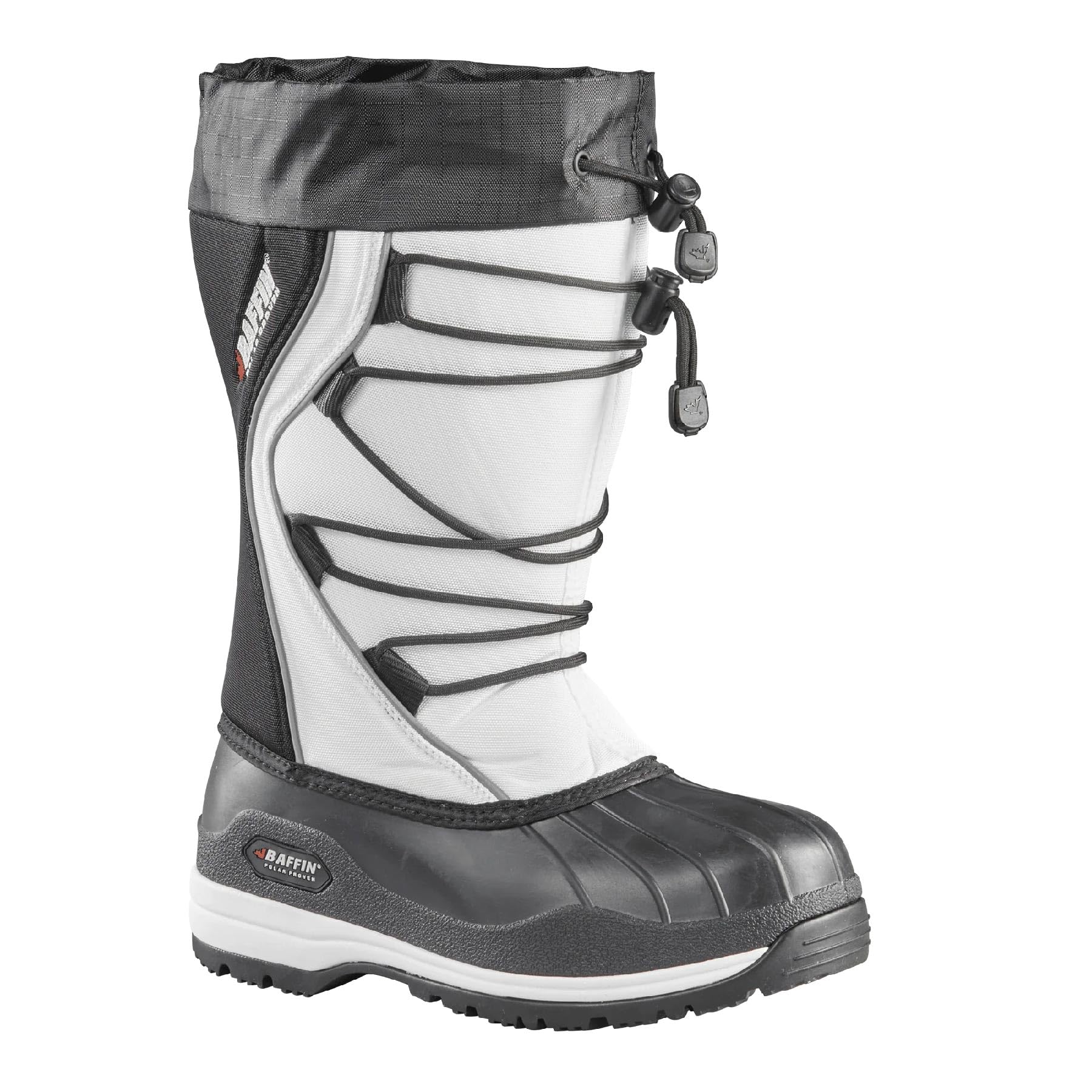
3. Baffin Women’s ICEFIELD Tall Waterproof Lightweight Polar-Rated Snow Boots
Field-tested at both poles, this is the boot that stops toes from freezing at -100°C.
Baffin’s ICEFIELD boot is built for true polar conditions, with a multi-layer removable inner boot that uses B-Tek foam, dual layers of B-Tek Heat, and a Thermaplush lining next to your skin. The thermal engineering is serious: a waffle-comb footbed traps warm air, a double aluminum insole reflects body heat back, and a Polar Rubber outsole stays flexible when other rubbers turn into stones. At 12 inches tall with a locking snow collar, this boot keeps snow out completely. Reviewers point out it as perfectly suited for the Alaskan winter in snow and below-zero temperatures.
Warmth is the most-praised feature by a huge margin — over 130 owners call it out. The design is notably lightweight for its insulation level, which makes walking less of a chore. The main fit nuance is that the toe area runs slightly narrow; sizing up is the common solution, particularly if you plan to layer a thick wool sock. For ice fishing or sitting still in extreme cold, this boot is in a different league than standard winter footwear.
The polar specialist: If your day involves standing on ice at -40°F with no movement, this boot’s removable inner boot and reflective insoles give you warmth no single-layer boot can match. It is overkill for a city commute but perfect for tundra-level work.
Perfect for: women who ice fish, snowmobile, or work in extreme cold where toe numbness is a real risk.
Consider carefully if: you have a wider forefoot — sizing up resolves it, but you may lose some heel fit.
4. Baffin Eiger Men’s Snow Boot
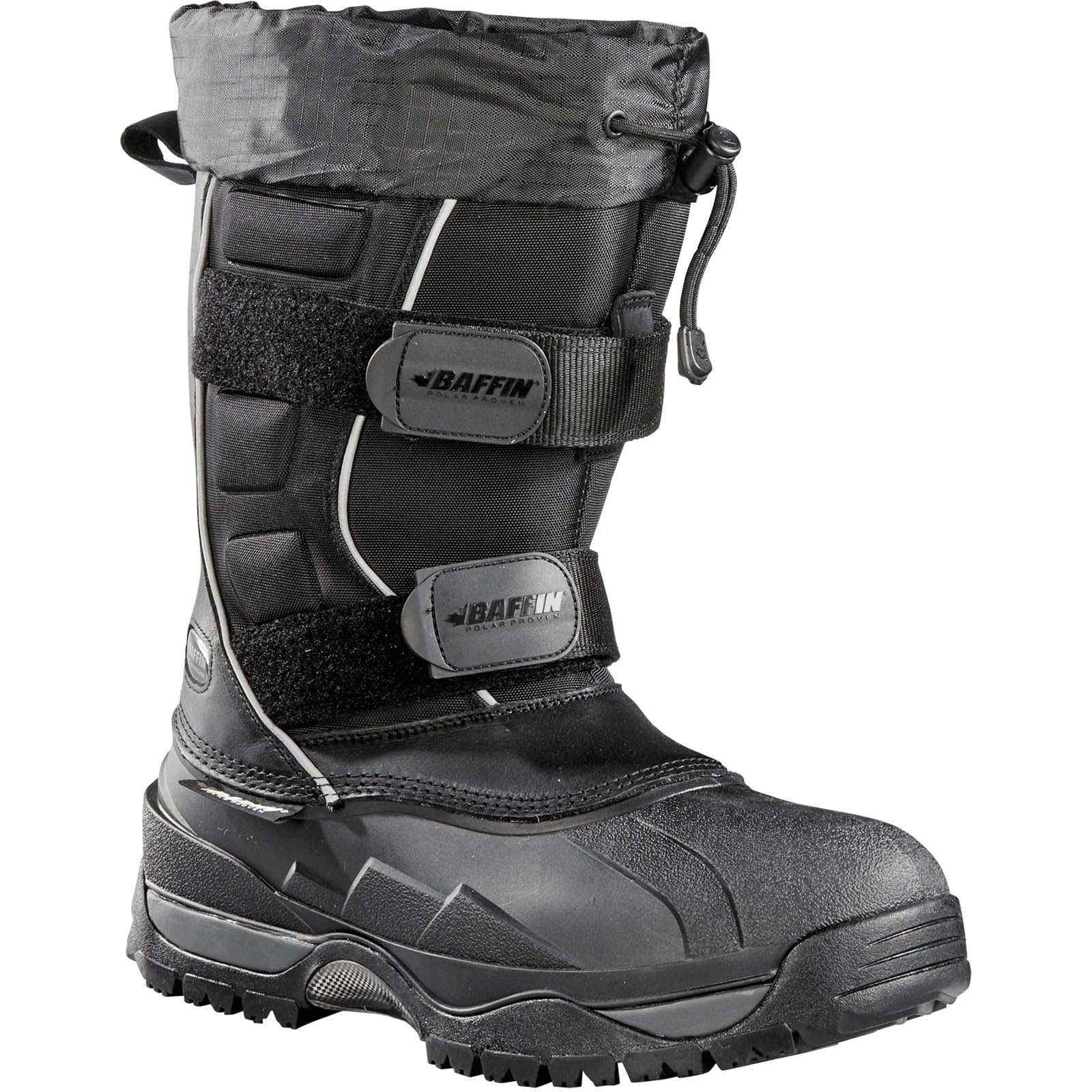
The ice-fishing champ that keeps toes warm so you don’t regret the purchase price.
The Baffin Eiger is not cheap, but owners of this Arctic-rated boot consistently say the investment pays off the first time you stand on a frozen lake. The full-grain leather upper with a nylon locking snow collar seals out the elements, and the Polar Rubber outsole is engineered to stay pliable in extreme cold, which makes a real difference in grip. What sets the Eiger apart is its removable inner boot system that creates a thermal barrier that single-layer boots simply can’t match. As one owner put it: “Pricey? Yes. Actually keeps your toes warm while ice fishing? Also yes.”
Warmth and quality lead the praise — over 70 owners highlight those. The fit is designed for a wider toe, which is great for thick socks, but the shaft is narrower, which can be an issue for muscular calves. Sizing up is common, so use the brand’s fit guide. At 2 pounds per boot, it is not light, but that heft translates to serious insulation and a build that shoppers say lasting over a decade.
The polar bear’s choice: For genuine Arctic conditions where you are standing still for hours, the Eiger’s warmth-per-dollar is tough to top. The calf fit and break-in period are the real-world trade-offs.
Best for: ice fishermen and anyone who stands still in sub-zero temps for extended periods.
Think twice if: you have wide calves or need a boot for lots of walking — the stiffness and shaft fit may frustrate.
5. KEEN Revel IV High Polar
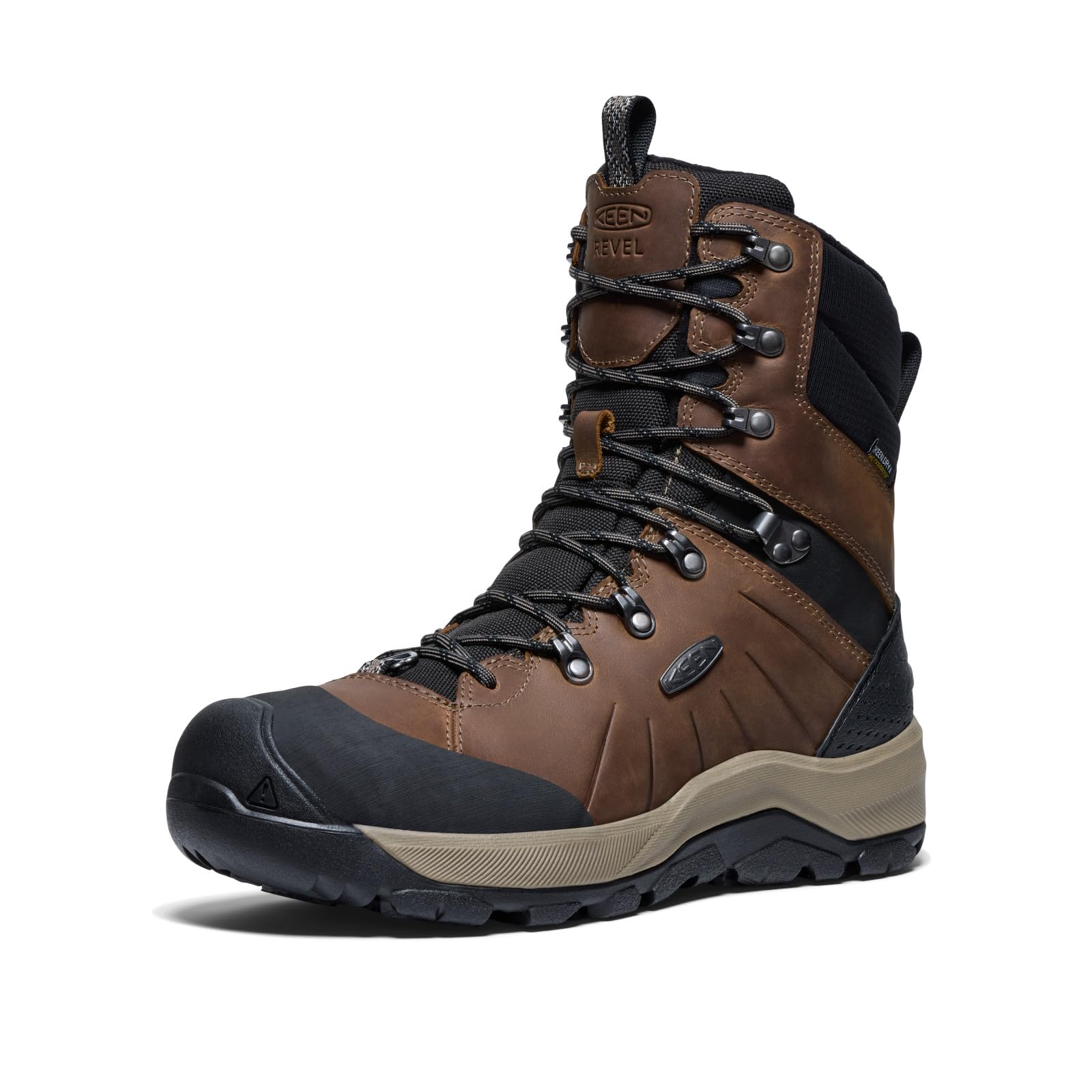
The -40°F boot that your wide feet have been searching for, right from the start.
KEEN built the Revel IV on its traditional wider form, which is a godsend if your normal boots pinch your toes. Rated to -40°F, this boot combines waterproof leather and performance mesh with KEEN’s own high-pile insulation to deliver genuine warmth for active winter use. The traction on snow and ice is well-regarded, thanks to a beefy rubber outsole with deep lugs.
Comfort is the top praise — nearly 40 owners highlight it — and the waterproofing is reliable from the start (KEEN recommends periodic treatment). The warmth from 400g insulation is real for active use: buyers report toasty feet at -2°F while hiking in heavy snow, but note that toes get chilly when sitting still for long periods. That makes this a poor choice for ice fishing but a fantastic one for snowshoeing, winter hikes, or shoveling.
The active winter boot: If you move in the cold — hiking, hunting, snowshoeing — the Revel IV gives you 400g of insulation without the clunk of 1200g boots. Stationary use is not its strength.
Grab these for: active outdoor work or recreation in extreme cold, especially if you have wide feet that other boots crush.
Avoid if: you need maximum stationary warmth for ice fishing or sitting on a snowmobile — look at a 1200g+ boot instead.
6. Helly Hansen Garibaldi V3

The boot that feels like a sneaker but handles a Northern Michigan winter without breaking a sweat.
The Garibaldi V3 is Helly Hansen’s answer to the buyer who refuses to choose between comfort and winter protection. It uses Primaloft insulation paired with a wide toe box that lets your toes splay naturally — a feature owners rave about. As one owner summed it up: “It’s a big mistake to buy any other snow boot.”
Comfort leads the praise — nearly 60 owners highlight it — followed closely by warmth and build quality. The boot is genuinely waterproof for snow and puddle splashes, though one owner noted a moisture failure after 3 hours of heavy rain, suggesting it is better as a daily winter boot than a monsoon runner. At 3.1 pounds, it is lighter than the Muck or the Rocky, which makes a huge difference for all-day walking.
The everyday premium pick: You get Helly Hansen’s 150+ years of cold-weather design in a boot that prioritizes comfort and style without cutting warmth. It handles -11°F with ease and looks good enough for the brewpub after a snowshoe.
Ideal for: daily winter wear, errands, and moderate outdoor activity where comfort and style are as valued as warmth.
Not for: extended submersion in standing water or extreme polar expeditions.
7. Columbia Minx IV
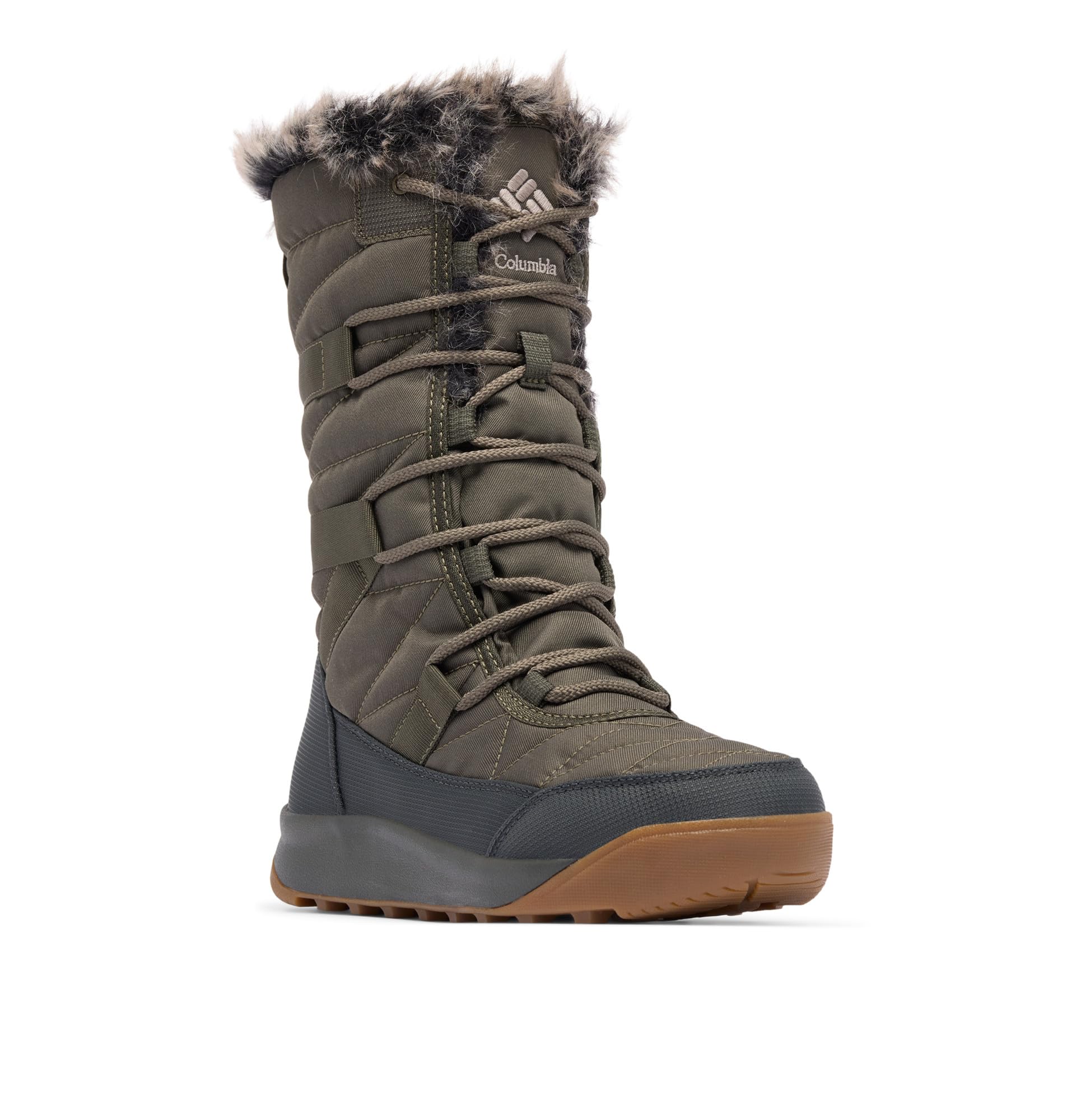
The budget-friendly boot that punches well above its price for warmth and style.
If the arctic-tier boots above are overkill for your winter, the Columbia Minx IV delivers genuine warmth without the major price tag or the heavy weight. The interior is soft and warm, with good arch support that owners consistently appreciate. The traction handles snow well, though several owners note the outsole is slippery on pure ice. The fit is the main talking point: it runs narrow. Buyers strongly recommend ordering a half to full size up — one owner wears a size 8 and went with 8.5 specifically to allow for wool socks below -15°F.
The style gets a lot of love — over 100 owners mention the appearance positively. The boot also dries quickly and is breathable enough to not cause sweaty feet. The water resistance holds up for snow and puddles, but this is not a boot for standing in slush for hours. It is the right pick for the buyer who needs a warm, good-looking winter boot for everyday life without the bulk of a dedicated work boot.
The smart budget buy: You get Columbia’s winter expertise at a friendly price. The warmth is real for daily use, but the narrow fit and lack of a dedicated ice outsole are the honest trade-offs. Size up and save the slush wading for your Mucks.
Best for: daily winter use on campus, city sidewalks, and light snow. A great backup or everyday boot.
Skip if: you have wide feet, need to walk on sheer ice, or plan to stand in deep slush for long periods.
8. THE NORTH FACE Women’s Chilkat V 400

The lightweight champion for women who hike on snow and glaciers in total comfort.
The North Face Chilkat V 400 is built for the woman who wants real winter performance without the extreme weight penalty of a polar boot. The 400g of premium insulation is ideal for active winter pursuits like snowshoeing and glacier walks — owners specifically report that toes stayed warm and that the boots were excellent for traction on ice. The DWR coating handles snow and rain well, though it is not a fully waterproof design for deep puddle submersion.
Warmth is the top praise — over 80 owners highlight it — and the boot is notably comfortable for wide feet, a common pain point in women’s winter boots. The sizing is the main gotcha: owners strongly advise ordering a full size up. The boot is heavier and bulkier than a standard winter shoe, but for the protection it offers on snow, that is an accepted trade-off. Durability is outstanding, with one Colorado mail carrier reporting 3+ winters of daily use with the soles still intact.
The hiker’s winter boot: 400g insulation is a perfect match for moving your body in the cold. The fit runs narrow and small, so size up, and accept that this is for snow, not for wading through floodwater.
Reach for these if: you hike, snowshoe, or walk a lot in snow and want a boot that keeps you warm without locking you into moon-boot clumsiness.
Look elsewhere if: you need a fully waterproof boot for slushy urban commutes or plan to stand still in sub-zero temps for hours.
9. SOREL – Men’s Glacier XT Insulated Winter Boot
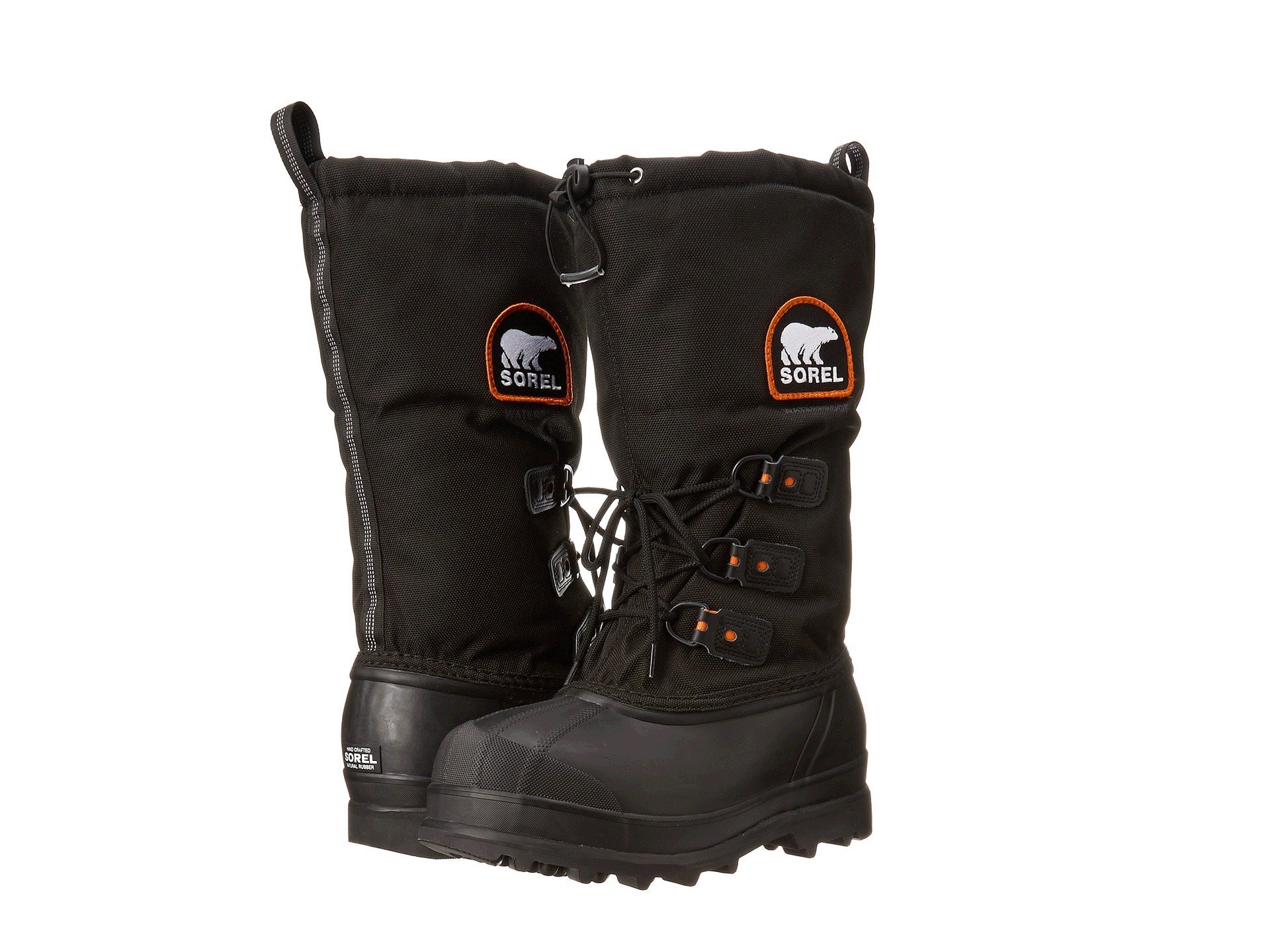
The boot that blends urban style with a removable inner liner for deep-cold flexibility.
Sorel’s Glacier XT uses a removable ThermoPlus inner boot with Omni-Heat reflective lining and a 2.5mm felt anti-freeze midsole to create serious warmth in a package that looks more like a hiking boot than a moon boot. The handmade vulcanized rubber shell is fully waterproof, and the AeroTrac outsole is designed to not load up with snow. The design goes to 16 inches tall, which buyers confirm handles deep snow without wetness. It runs about half a size large, so sizing down or wearing thick socks is the move.
Warmth is the top praise — nearly 100 owners mention it — and the style is close behind with 95 positive mentions. The boot is heavy, which is the price of the insulation and rubber, but owners consistently say the traction is excellent and that they never slip. The removable liner is a clever feature: you can dry it overnight or swap it if it gets wet. The partial laces and drawstring top are secure but not as adjustable as a full lace-up.
The city-meets-tundra boot: You get genuine Sorel cold-weather engineering with a style that doesn’t scream “emergency gear.” The removable liner is a practical bonus, and the vulcanized rubber shell is a lifetime build. Heavy, yes, but that is the trade-off for bombproof construction.
Ideal for: daily wear in deep snow, blizzards, and any situation where you want to look put-together while staying warm.
Not perfect for: extreme low-weight hiking or if you find fully laced boots more supportive for uneven terrain.
10. Helly Hansen Men’s Arctic Patrol Insulated Waterproof Winter Boot
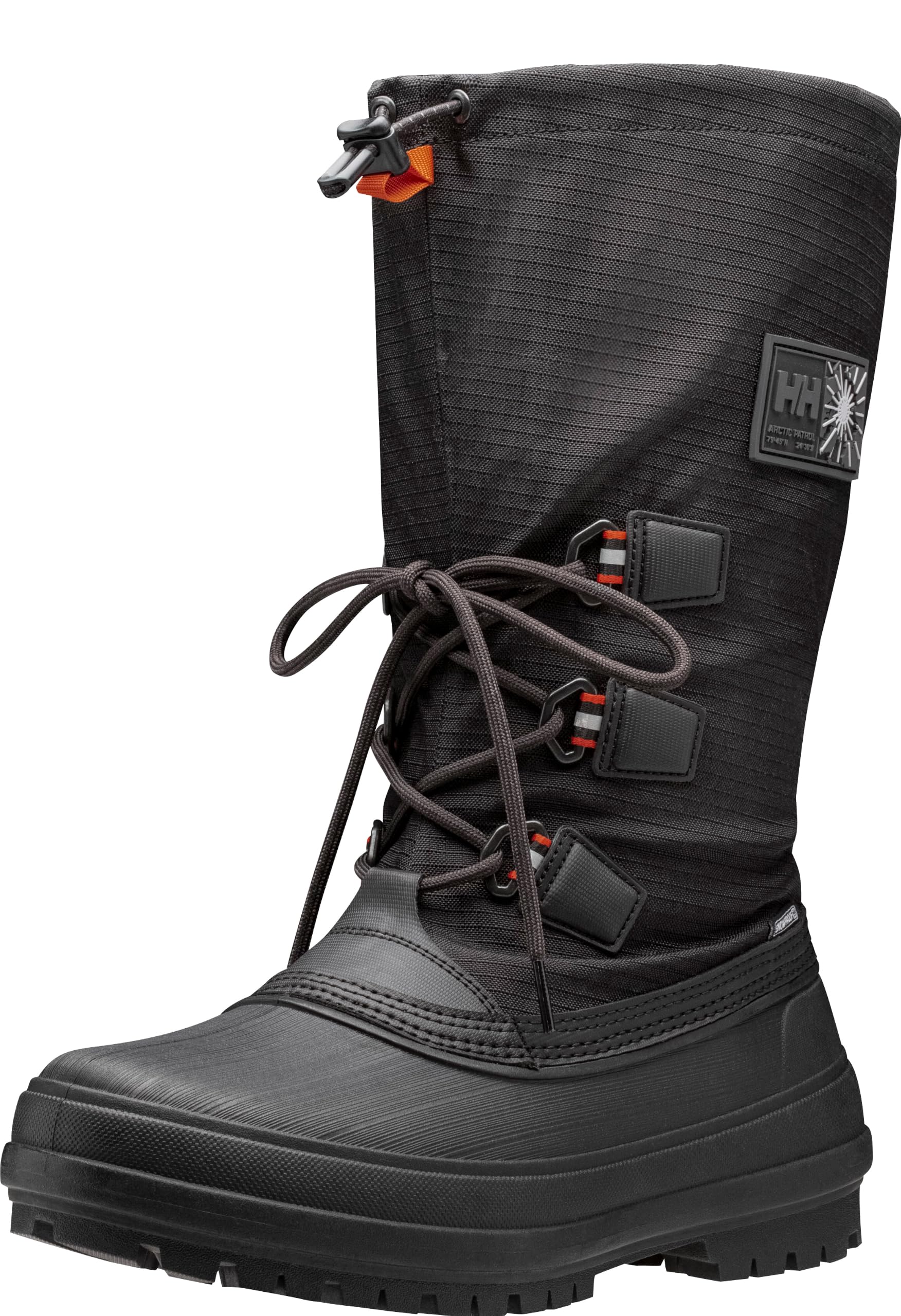
The 600g Primaloft boot that battles the cold with an aluminum shield blocker underfoot.
Helly Hansen’s Arctic Patrol is a solid mid-range option that targets the resort-and-city winter crowd. The 600g of Primaloft insulation is a good middle ground — warm enough for most winter days but not so bulky that you overheat indoors. The boot uses a seam-sealed rubber upper with a removable felt sock liner that has a faux shearling top, and the aluminum shield blocker underfoot is a clever addition to reflect ground chill away from your sole. At 3.1 pounds, it is genuinely lightweight for an insulated boot.
Build quality leads the praise — owners call the construction well-made and warm. The fit is the biggest caveat: the boot runs small and narrow. Multiple owners mention needing to go up a full size, and even then the ankle shaft is snug. This is a boot that fits standard feet well but is a no-go for wide feet. A few owners also report durability concerns with the sole on a single unit, though the general sentiment is that it is a good boot at a fair price when the sizing is handled correctly.
A solid mid-range winter boot: The 600g insulation and aluminum shield make it a legitimate choice for cold weather. The sizing headache is real, but for the buyer who tries it on first or sizes up, the warmth and light weight are genuine wins.
Best for: resort towns, city winters, and casual outdoor use where a light, warm boot is the priority.
Not for: wide feet, very cold standing use, or anyone who wants a boot they can grab in their usual shoe size.
11. Irish Setter Elk Tracker, 12″, Waterproof, Insulated 1000g, Hunting Boot

The 1000-gram, Gore-Tex, Goodyear-welted tank that survives Alaskan freezer work for years.
Irish Setter’s Elk Tracker is built not just for hunting, but for the kind of extreme conditions that destroy lesser boots. This 12-inch giant packs 1000g of 3M Thinsulate Ultra insulation paired with a full-grain waterproof leather upper and a Gore-Tex liner, all built on a Goodyear leather welt that can be re-soled. The ScentBan technology is a bonus for hunters, but the real story is the thermal performance: customers note staying warm in a -25°F freezer processing environment for four years straight. The Bulls-Eye Air Bob outsole provides excellent grip on snow and uneven ground.
Buyers consistently describe these as overbuilt and tough, with many noting they run narrow due to the thick insulation, so ordering a wide (EE) or half size up is common advice. The comfort is outstanding, with minimal break-in required, thanks to the Removable Comfort Cork EVA/Memory Foam footbed. The main downsides are the weight — these are heavy boots — and the outsole on the original version can wear faster on concrete. One owner noted the soles cracked after 2 months, but customer service replaced them immediately, and the same owner reported the boot lasted 11 years after that.
The end-game hunting boot: 1000g of Thinsulate, a Goodyear welt for re-soling, and proven Gore-Tex waterproofing make this a boot that can last a decade. The weight is substantial, but for stationary cold and rugged terrain, that is the price of maximum protection.
Made for: serious hunters, ice fishermen, and anyone who works in extreme cold and demands a rebuildable boot.
Reconsider if: you need a boot for casual walking or high-mileage winter hiking — the heft and stiffness are overkill for easy paces.
Understanding the Specs
Insulation Weight (g)
Measured in grams, this tells you how much synthetic fill is in the boot. More grams means more warmth, but also more bulk. The Muck Arctic Sport has 5mm neoprene and fleece, while the Rocky Blizzard Stalker packs 1200g. For moving activities like hiking, 400g is fine. For stationary use like ice fishing, aim for 1000g or higher.
Waterproof Construction
This is the physical method of water resistance, not a marketing label. A boot can be waterproof through a smooth rubber shell (like the Muck), a Gore-Tex liner inside leather (like the Irish Setter), or a DWR coating on fabric (like the Columbia Minx IV). The first two are reliable in deep slush; the third is only valid for light snow.
FAQ
What temperature rating do I need for an Alaska winter?
Do I need to size up for winter boots?
Are 1200g insulation boots too heavy for walking?
How do I keep my boots from smelling bad by spring?
What is the difference between waterproof and water-resistant?
Do I need a removable inner boot?
Which boots work best for ice fishing?
Can I use Alaska winter boots for hiking in the summer?
Are rubber boots or leather boots better for Alaska winter?
How long should a good pair of Alaska winter boots last?
Final Thoughts: The Verdict
For most users facing a real Alaska winter, the top pick is the MUCK Men’s Arctic Sport Boot because it delivers proven -40°F warmth, a fully waterproof sealed rubber shell, and a neoprene upper that folds down easily — all at a price that undercuts premium brands. If you prioritize maximum stationary warmth for the lowest cost, grab the ROCKY Blizzard Stalker
How We Picked
We do not accept paid placement. Every pick is matched to a real buyer and a real use-case; we do not hands-on test units.
Sources & Methodology
Specifications: manufacturer listings and product documentation. Review insights: verified customer reviews, as of July 2026. Pricing: not shown on this page (it changes often); check the current price via the retailer link.
As an Amazon Associate, Gadgets Feed earns from qualifying purchases. This does not affect which products we feature.