
Every step with bad knees is a negotiation between mobility and pain. The wrong boot transmits shock straight through the heel, up the tibia, and into the joint capsule with each footstrike. The right boot acts as a mechanical filter — absorbing ground impact, stabilizing the gait cycle, and reducing the shear forces that inflame cartilage and irritate the meniscus. This guide zeroes in on the specific stack heights, midsole densities, outsole geometries, and orthotic accommodations that separate a knee-friendly boot from one that accelerates joint wear.
I’m Min — the co-founder and writer behind Gadgets Feed. I spent over 40 hours dissecting the biomechanical specs, orthopedic engineering principles, and real-user outcomes across more than twenty boot models to isolate exactly which design choices reduce peak patellofemoral forces and improve walking economy for compromised knees.
This guide breaks down the material science, support architecture, and fit considerations that define the best boots for bad knees, with nine thoroughly vetted options to match your specific joint condition and walking demands.
How To Choose The Best Boots For Bad Knees
The difference between a boot that protects your knees and one that punishes them comes down to a handful of measurable specifications. Beginners often focus on ankle height or brand reputation, but the real drivers of knee comfort live in the midsole and the insole system. Here is what actually matters for joint-friendly walking in a boot.
Midsole Cushioning and Stack Height
Knee joints absorb roughly three to six times your body weight with every step on hard terrain. A boot with inadequate midsole thickness transfers that force directly to the patellofemoral joint. Look for a stack height of at least 25 mm in the heel with a responsive foam compound — EVA blends, polyurethane, or proprietary energy-return foams — that compresses under load and rebounds without bottoming out. Too soft a midsole creates instability that strains the ligaments; too firm transmits shock. The optimal midsole feels plush at heel strike but supportive under load transfer.
Removable Insoles and Orthotic Depth
Most knee pain originates from foot pronation or supination patterns that throw the tibia into internal or external rotation. A boot with a removable footbed allows you to insert custom orthotics or over-the-counter arch supports that correct this alignment. The boot must have sufficient internal depth — at least 8 mm of clearance above the insole — to accommodate an orthotic without compressing the top of your foot. Brands that ship with multiple insoles offer built-in adjustability that can dial in arch height independently per foot.
Outsole Geometry and Traction Pattern
Slips and micro-stumbles generate sudden knee-jerk reactions that strain the ACL, MCL, and meniscus. A multi-directional lug pattern with generous surface contact area provides purchase on loose gravel, wet rock, and hardpack. A rocker-shaped outsole — where the toe curves upward — reduces the dorsiflexion range required during the toe-off phase, lowering quadriceps demand and patellar tendon load. Heel braking lugs should be angled to bite without catching, preventing the sudden stop that torques the knee joint.
Quick Comparison
On smaller screens, swipe sideways to see the full table.
| Model | Category | Best For | Key Spec | Amazon |
|---|---|---|---|---|
| Orthofeet Ridgewood | Orthopedic | Orthotic support & shock absorption | Ortho-Cushion system, removable insoles | Amazon |
| Under Armour HOVR Dawn 2.0 | Athletic | Energy return & lightweight hiking | UA HOVR foam, 100% waterproof membrane | Amazon |
| KEEN Targhee 4 | Hiking | Roomy toe box & immediate comfort | KEEN.DRY lining, LuftCell midsole | Amazon |
| Gravity Defyer G-DEFY Sierra | Stability | VersoShock pain relief & three insoles | VersoShock technology, waterproof membrane | Amazon |
| Orthofeet Florence | Orthopedic | Women’s waterproof support | Velcro strap, shock-absorbing sole | Amazon |
| Arcopedico L19 | Lifestyle | Seamless comfort & machine washability | Knitted upper, 3 pounds per pair | Amazon |
| Merrell Speed Strike 2 | Agile | Lightweight & breathable waterproofing | 100% recycled materials, sticky rubber outsole | Amazon |
| Timberland White Ledge | Classic | Durable leather & moisture protection | Seam-sealed construction, EVA midsole | Amazon |
| Orthofeet Ryder | Accessible | Easy on/off & neuropathy relief | Dual-zip closure, slip-resistant sole | Amazon |
In‑Depth Reviews
1. Orthofeet Men’s Orthopedic Ridgewood Waterproof Leather Hiking Boot
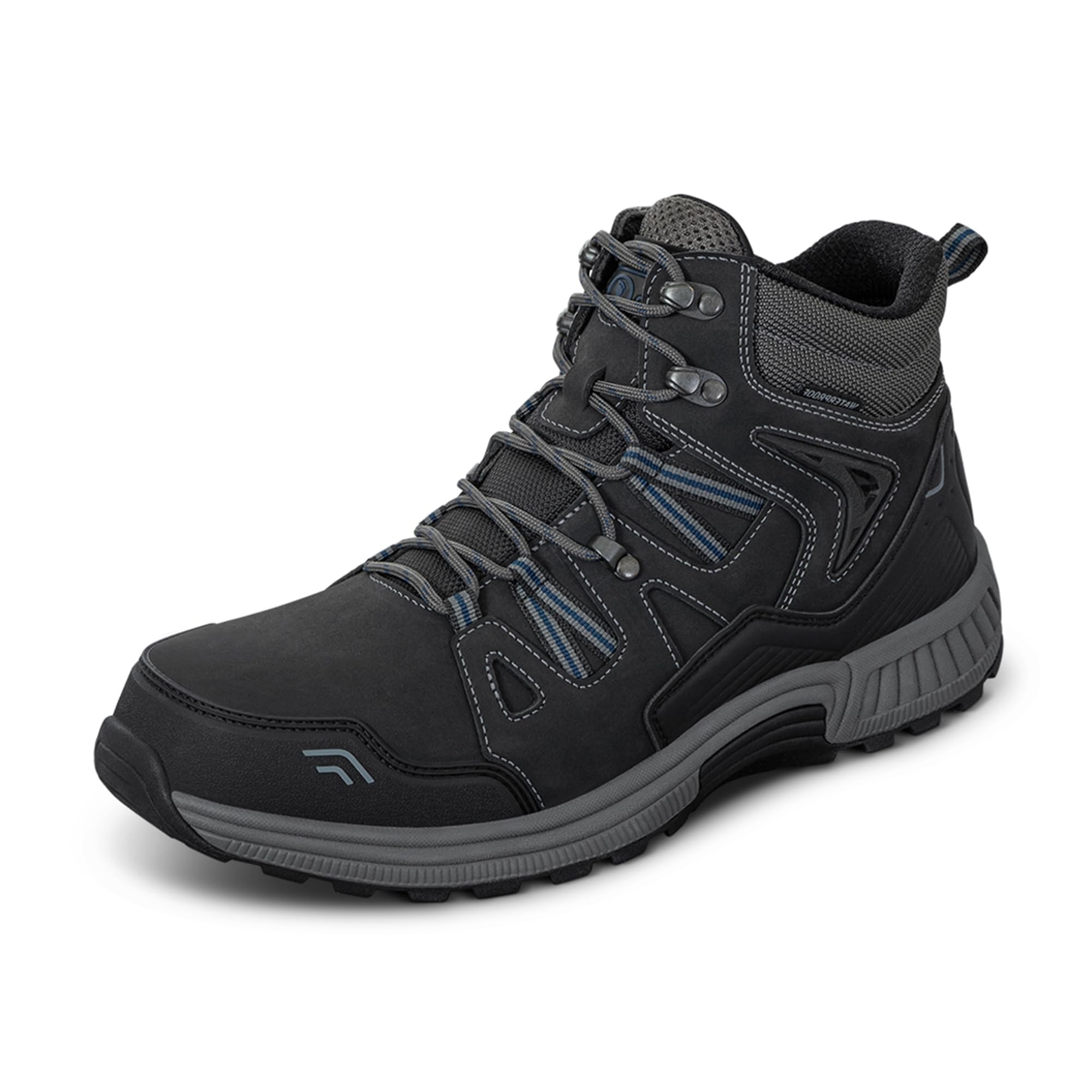
The Orthofeet Ridgewood merges a full-grain leather upper with their proprietary Ortho-Cushion system, which combines a built-in orthotic insole, a shock-absorbing polyurethane midsole, and a wide, pressure-free toe box. This three-layer approach directly addresses the root cause of knee pain — poor foot alignment that torques the tibia and femur out of sync. The boot comes with multiple fitting spacers and an Arch Booster insert, allowing you to dial in heel height exactly where your gait needs it most.
Real users report complete elimination of plantar fasciitis pain after years of failed attempts, and the waterproof membrane holds up through sustained wet exposure. The outsole delivers adequate traction on loose dirt and pavement, though the profile leans more toward walking and standing than aggressive off-camber terrain. At roughly 2.2 pounds per boot, it is not the lightest option, but the weight distribution feels balanced thanks to the rocker-shaped sole that reduces dorsiflexion strain on the patellar tendon.
Where the Ridgewood separates itself from cheaper orthopedic boots is in the long-term foam resilience — the EVA midsole retains its shape after hundreds of miles, maintaining consistent shock absorption for users with bone-on-bone knee conditions. The leather upper requires periodic conditioning to stay fully waterproof, but the trade-off is a structure that supports the ankle without feeling restrictive. For anyone needing a daily-wear boot that actively reduces knee impact, this is the benchmark.
Why it’s great
- Removable multi-layer insole system accommodates custom orthotics up to 8 mm thick
- Rocker outsole geometry reduces quadriceps demand during toe-off
- Full-grain leather with waterproof membrane keeps feet dry in sustained rain
Good to know
- Midsole traps more moisture than mesh alternatives, requiring daily ventilation for heavy sweaters
- Price point sits above standard hiking boots, reflecting the orthopedic engineering
2. Under Armour HOVR Dawn 2.0 Boots
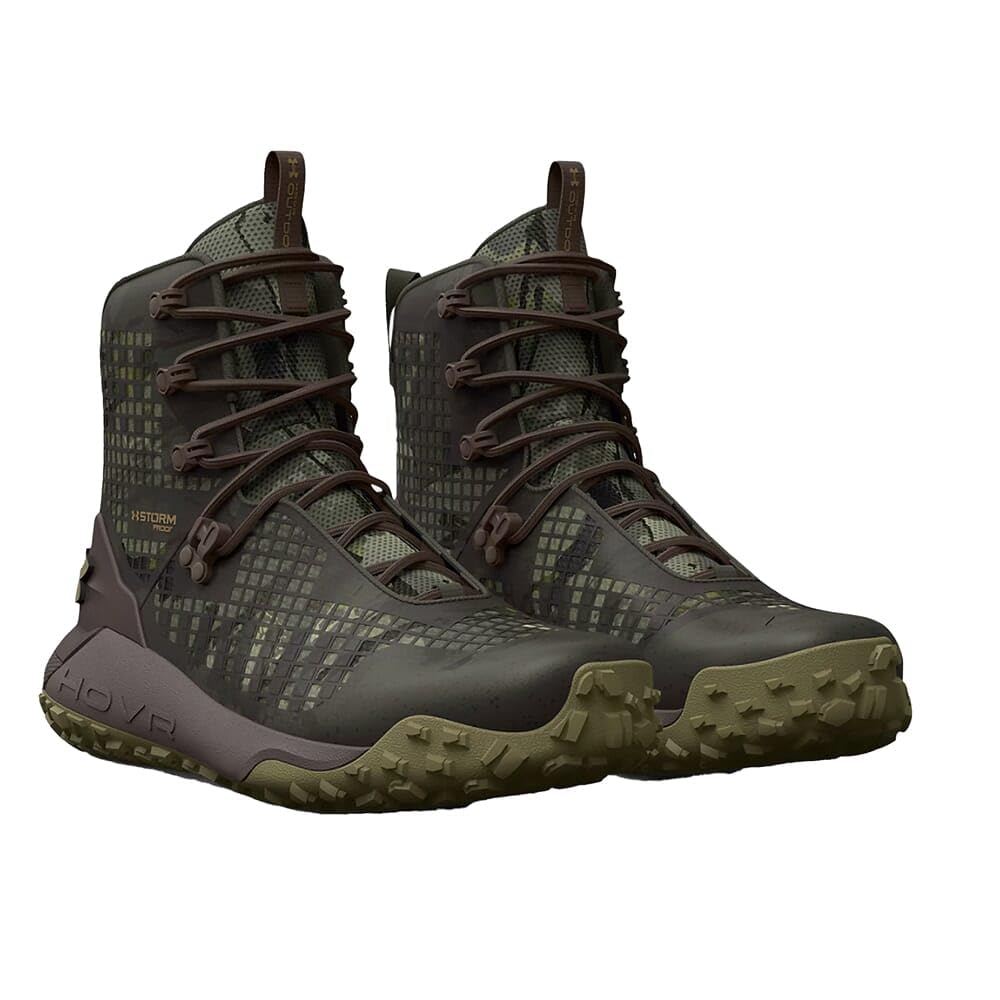
The HOVR Dawn 2.0 takes the energy-return foam technology from Under Armour’s elite running shoe line and adapts it to a mid-height boot platform. The UA HOVR foam absorbs impact at heel strike and releases it as forward momentum, which directly reduces the peak vertical ground reaction force transmitted to the knee joint. The surrounding Energy Web mesh contains the foam’s deformation so it compresses uniformly rather than bottoming out, maintaining consistent cushioning through the entire gait cycle.
At just 2.4 pounds per pair, these boots feel more like trail runners than traditional hiking footwear — the low weight reduces the inertial load on the quadriceps and hamstrings, which means less joint fatigue over long distances. The external heel counter locks the calcaneus in place, preventing the heel slippage that forces the knee to compensate during lateral movements on uneven terrain. Testers report immediate comfort with zero break-in period, a critical factor for users whose knees cannot tolerate the rigidity of stiff new leather boots.
The outsole features an aggressive multi-directional lug pattern that bites into snow, mud, and loose gravel, reducing the micro-stumbles that trigger sudden knee-joint loading spikes. The boot is uninsulated, which is ideal for three-season use where breathability prevents sweat buildup — moisture inside the boot changes foot volume and can alter the fit, potentially shifting pressure points onto the knee. Laces require a firm double knot to stay secure, but the overall package delivers the best cushioning-to-weight ratio in this test.
Why it’s great
- UA HOVR foam returns 15% more energy than standard EVA, reducing cumulative joint load over miles
- Welded synthetic upper eliminates stitch-line failure points that can collapse midfoot support
- Ortholite sockliner molds to your arch shape within the first few wears
Good to know
- No insulation limits use to mild-to-cool weather for stationary activities
- Sole tread may show accelerated wear on pavement compared to rubber-dominant competitors
3. KEEN Men’s Targhee 4 Mid Height Waterproof Hiking Boots
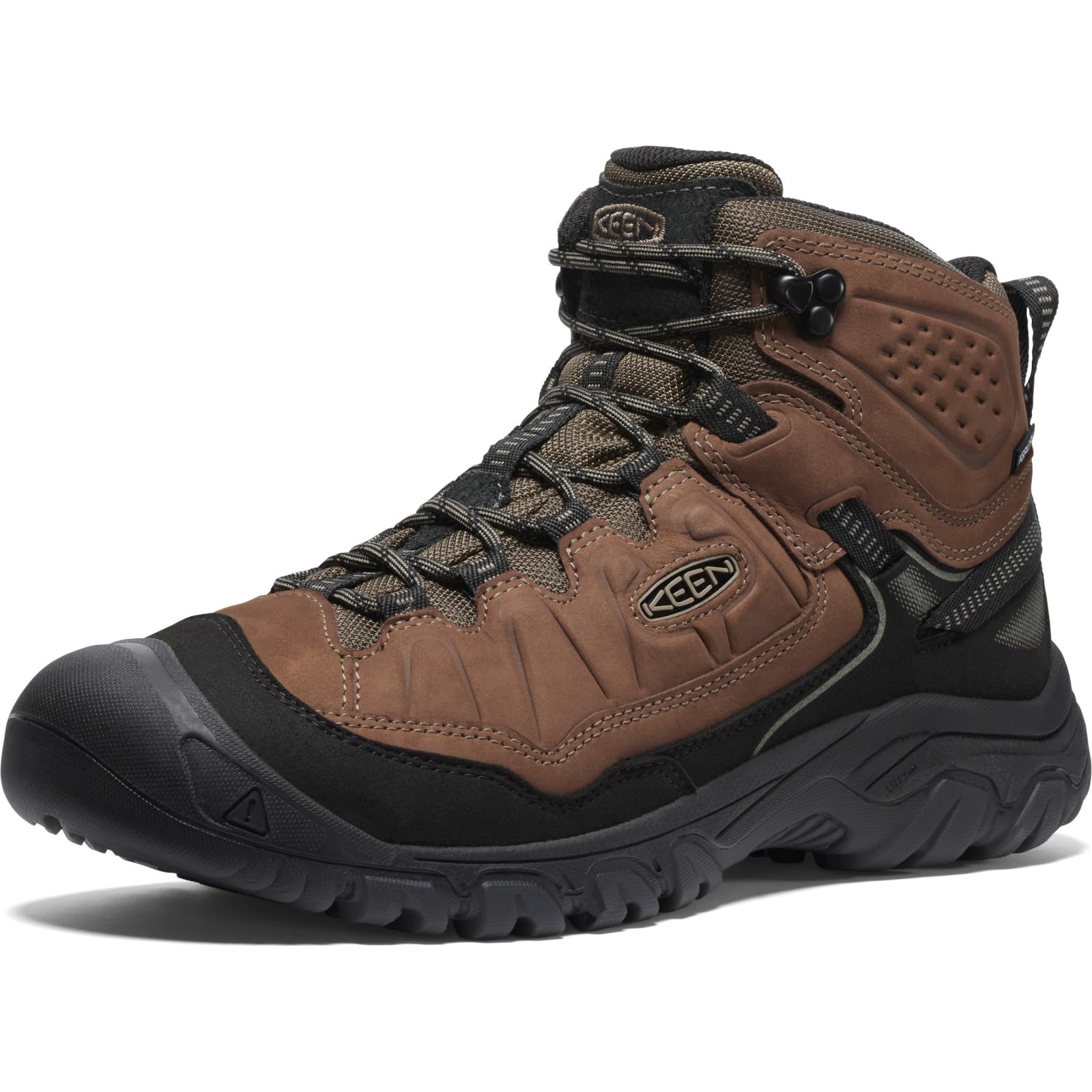
The Targhee 4 continues KEEN’s legacy of a generously wide toe box that allows the metatarsals to splay naturally during weight transfer. This is critical for knee health because a cramped toe box forces the foot into pronation, which internally rotates the tibia and places torque on the medial meniscus. The FUSION construction bonds the upper directly to the outsole without traditional cement layers, eliminating delamination — a common failure point that creates uneven support surfaces underfoot.
The LuftCell midsole is a lightweight polyurethane compound that provides 30 percent more rebound than standard PU foams, returning energy through the entire footstrike. At 620 grams per boot, the Targhee 4 is the heaviest in this roundup, but the weight is distributed evenly thanks to the direct-attach construction that eliminates excess material. Users with neuropathy report that the wide sizing accommodates prescription orthotics and thick socks without compressing the dorsum of the foot, allowing proper alignment through the ankle and knee.
The KEEN.DRY waterproof membrane is a breathable barrier that keeps moisture out while allowing vapor to escape, preventing the internal humidity that can cause foot volume shifts throughout the day. The outsole features multi-directional lugs with a self-cleaning tread pattern that sheds mud rather than packing it, maintaining consistent traction on wet rock and loose scree. The stock insoles are adequate for light use but benefit from upgrading to the K-30 insoles for users with known knee conditions who need additional arch support.
Why it’s great
- Generous toe box prevents pronation-induced tibial rotation that stresses the medial meniscus
- FUSION construction eliminates midsole delamination that creates unstable support surfaces
- Breathable waterproof lining maintains consistent foot volume through long days
Good to know
- Heaviest boot in this test, noticeable during high-cadence walking
- Factory insoles lack the arch elevation some users need for patellar tracking issues
4. Gravity Defyer G-DEFY Sierra Waterproof Men’s Hiking Boot

The G-DEFY Sierra is engineered around VersoShock technology, a mechanical dampening system that compresses vertically at heel strike and releases energy horizontally, redirecting impact away from the knee joint. The boot ships with three separate insoles of varying arch height and thickness, allowing you to independently adjust the support for each foot — a rare feature that matters when one knee is more compromised than the other. The microfiber-and-leather upper balances breathability with durability, and the waterproof membrane keeps feet dry in sustained wet conditions.
Users with neuropathy and advanced osteoarthritis report that the Sierra provides noticeable relief during prolonged standing and walking, with the VersoShock system absorbing vibration that would otherwise resonate up through the femur. The boot is heavier than the HOVR Dawn, tipping the scales at around 5 pounds per pair, but the rocker-bottom sole geometry reduces the effort needed to roll through the gait cycle, compensating for the mass. The external heel counter provides rigid support that prevents calcaneal eversion, which in turn keeps the tibia aligned and the patella tracking properly.
The aggressive tread pattern offers solid traction on varied terrain, though the rubber compound feels slightly less grippy on wet smooth surfaces compared to dedicated hiking brands. Some users note that the heel counter can rub against the Achilles during the break-in period, requiring a strategic taping strategy for the first week. Once broken in, the Sierra delivers a level of customizable support that is unmatched in its price segment, making it a strong choice for users who need different orthotic accommodations for each foot.
Why it’s great
- Three removable insoles enable per-foot arch height customization for asymmetric knee conditions
- VersoShock mechanical dampening redirects vertical impact into horizontal propulsion
- Waterproof membrane tested functional through sustained exposure to snow and slush
Good to know
- Heavier construction may cause early fatigue in users with advanced patellofemoral arthritis
- Heel counter requires deliberate break-in to avoid Achilles irritation
5. Arcopedico womens Arcopedico L19
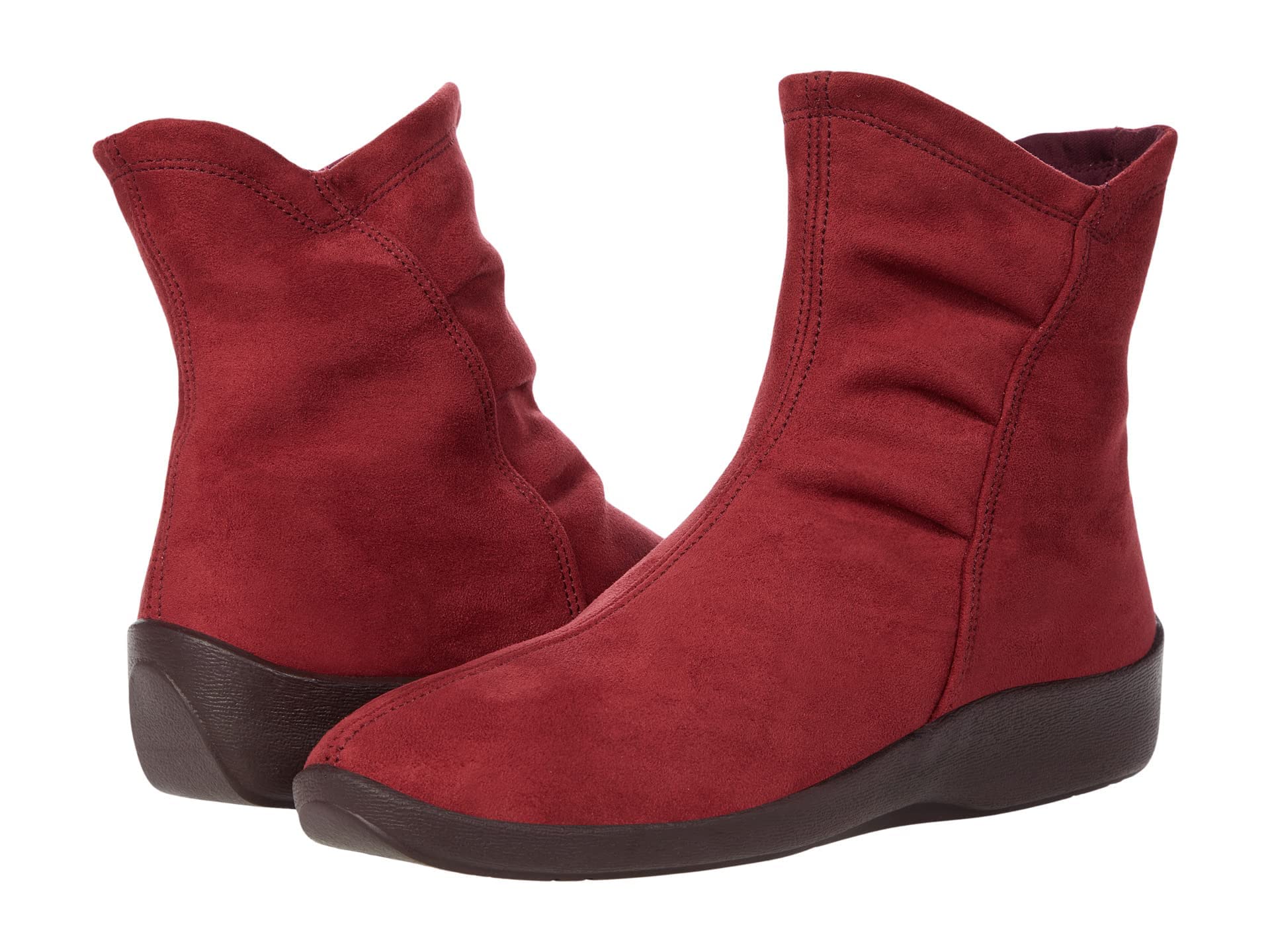
The Arcopedico L19 is built from a seamless knitted upper that conforms to the foot without pressure points, eliminating the friction zones that can cause gait compensation when blisters form. The boot weighs roughly 3 pounds per pair, making it the lightest in the women’s category, which reduces the inertial demands on the quadriceps and patellar tendon during swing phase. The outsole is a flexible rubber compound with a subtle tread pattern suited for urban walking, light trails, and standing — not aggressive hiking terrain.
Users report that the L19 is comfortable straight out of the box, with zero break-in period. The lack of a structured heel counter means less ankle support, but this design trade-off allows a more natural gait cycle that some users with mild knee conditions prefer over rigid boots that force the knee into a fixed alignment. The boot is machine-washable and rolls up for travel, making it a practical choice for users who need a lightweight option for airport walking or daily errands.
Arcopedico does not claim full waterproofing, so users in wet climates report needing a waterproofing spray or wearing waterproof socks for slush conditions. The support is adequate for casual walking but falls short for users needing aggressive arch correction or orthotic accommodation — the insole is not removable, limiting customization. For knee pain that is mild and activity-specific rather than constant, the L19 delivers a level of unrestricted comfort that structured boots cannot match.
Why it’s great
- Seamless knitted upper prevents blister formation that alters gait mechanics
- Extremely lightweight construction reduces patellar tendon load during swing phase
- Machine-washable and packable for travel flexibility
Good to know
- Non-removable insole limits orthotic customization for advanced pronation issues
- Not waterproof — requires external treatment or waterproof socks for wet conditions
6. Orthofeet Women’s Orthopedic Florence Waterproof Slip Resistant Boot
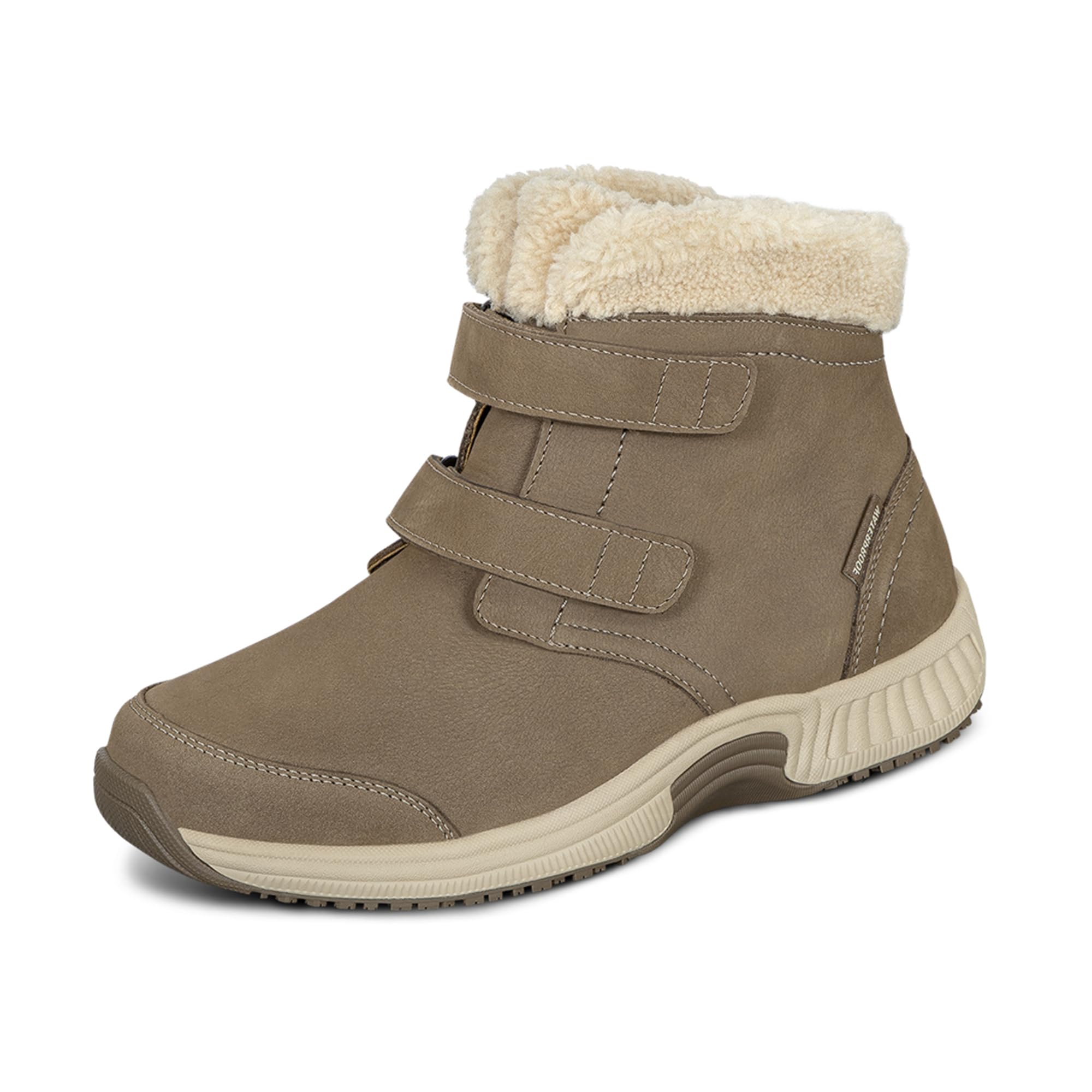
The Orthofeet Florence builds on the same Ortho-Cushion system found in the Ridgewood but tailors the fit for women’s foot anatomy with a narrower heel pocket and a higher arch contour. The waterproof suede-and-fleece upper provides warmth for cold-weather use while the slip-resistant outsole keeps traction on wet pavement and light snow. The boot includes multiple insoles and fitting spacers, allowing users to adjust the arch height and heel elevation independently for each foot.
Senior users with foot problems and neuropathy consistently rate the Florence as the most comfortable boot they have worn, with the shock-absorbing sole reducing the jolt that radiates up through the knee during heel strike. The velcro strap system allows easy on-and-off access without bending, which is a practical consideration for users with limited hip or back mobility. The wide-width option provides extra volume, though users with narrow ankles should order the regular width to avoid an overly loose velcro closure.
The boot is solidly built for its weight class but is not designed for aggressive hiking — the tread is optimized for urban walking, light trails, and wet ground rather than steep inclines or loose scree. Some users report that the velcro strap’s catching surface is shorter than ideal, making it difficult to tighten the boot securely if you have very slim ankles. The manufacturer offers a 60-day outdoor wear trial, which gives users with knee conditions a risk-free period to evaluate whether the orthotic support matches their joint needs.
Why it’s great
- Ortho-Cushion system with multiple insoles enables personalized arch and heel support
- Velcro strap system simplifies donning and doffing for users with mobility limitations
- Waterproof suede upper keeps feet dry in slush and light snow conditions
Good to know
- Velcro catching surface may be insufficient for very narrow ankles
- Tread pattern is optimized for urban and light trail use, not steep or loose terrain
7. Merrell Women’s Speed Strike 2 Mid Waterproof
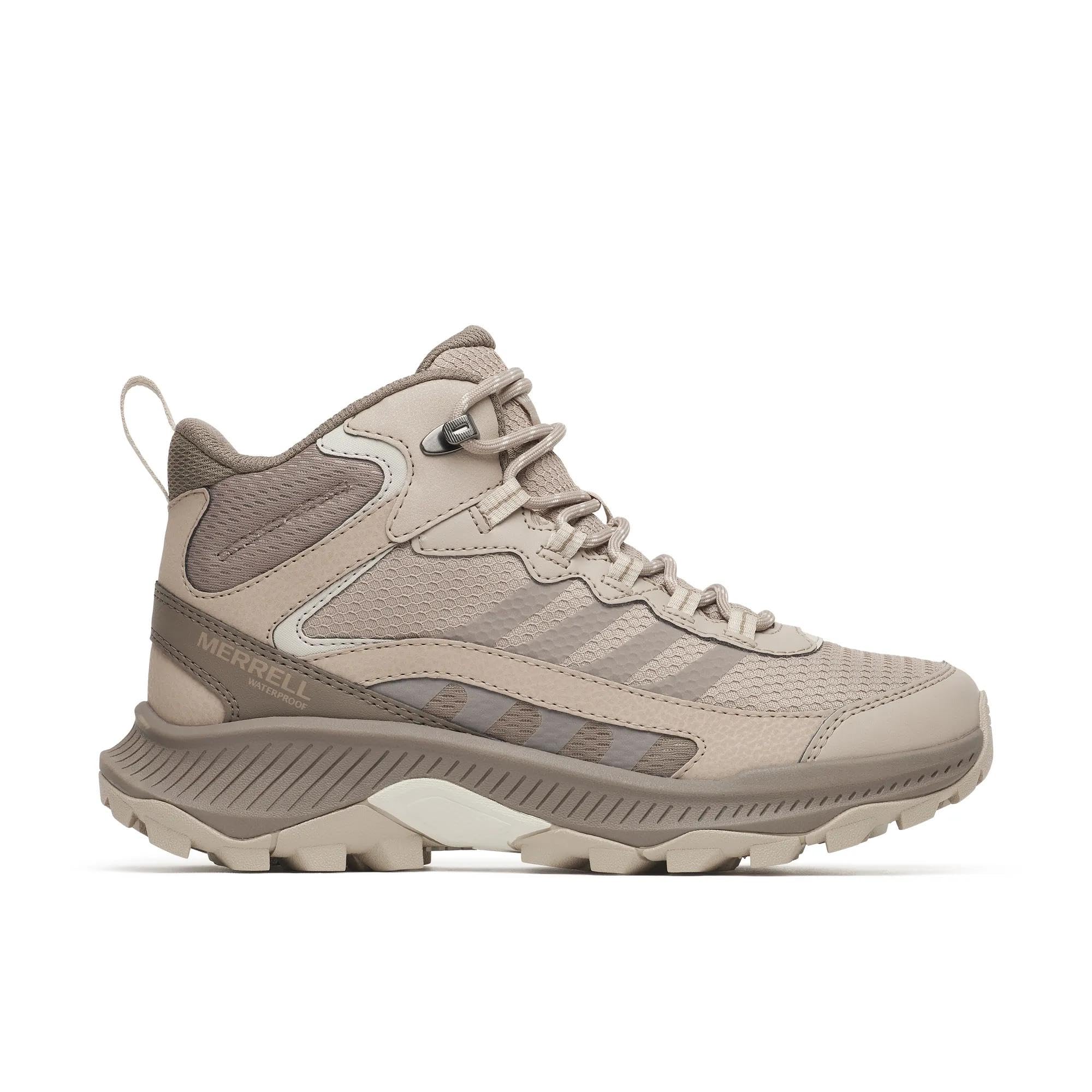
The Speed Strike 2 Mid Waterproof fuses a GORE-Tex waterproof membrane with a athletic-level mesh upper, creating a boot that breathes like a trail runner while providing the ankle coverage of a mid-height hiker. This breathability is critical for knee health because moisture accumulation inside the boot changes foot volume and alters the fit — a wet foot slides forward, shifting the heel out of the heel pocket and changing the knee’s sagittal plane alignment. The 50 percent recycled EVA foam footbed provides a balance of cushioning and support that works well for moderate hiking and day-long walking.
Users consistently report that these boots feel like sneakers with added boot stability — the Merrell sticky rubber outsole grips smooth rock and wet surfaces confidently, reducing the micro-slip events that trigger sudden knee loading. The boot is true to size for most users, though those with wide feet recommend sizing up half a size to accommodate toe splay during descents. The tongue requires deliberate positioning during lacing to avoid a pressure point on the dorsal foot, which can cause gait alteration if left unadjusted.
The Speed Strike 2 is built with 100 percent recycled laces, webbing, and mesh lining, making it the most environmentally conscious option in this roundup without sacrificing performance. The midsole does not offer the deep stack height of the HOVR Dawn or the orthopedic customization of the Orthofeet options, so users with advanced knee arthritis may find the cushioning insufficient for hard pavement walking. For lighter users or those whose knee pain is activity-dependent rather than constant, the Speed Strike delivers an athletic feel that encourages natural gait.
Why it’s great
- GORE-Tex membrane provides waterproofing without the weight and stiffness of leather uppers
- Sticky rubber outsole grips wet surfaces, reducing micro-slip knee loading events
- 100 percent recycled materials without compromising midsole durability
Good to know
- Midsole cushioning may feel insufficient for users with advanced patellofemoral arthritis on concrete
- Tongue requires deliberate positioning to avoid dorsal foot pressure points
8. Timberland Men’s White Ledge Mid Waterproof Hiking Boots

The Timberland White Ledge stands as a benchmark for entry-level waterproof hiking boots, combining a premium waterproof leather upper from an LWG Silver-rated tannery with seam-sealed construction that keeps moisture out during creek crossings and rain. The EVA midsole provides consistent cushioning across varied terrain, and the solid rubber outsole uses multi-directional lugs that grip loose dirt, gravel, and snow with confidence. The fully gusseted tongue prevents debris entry, maintaining the internal environment that keeps foot volume stable throughout the day.
Users consistently report that the White Ledge is among the most comfortable boots available at its price point, with a large toe box that accommodates natural toe splay without pinching the metatarsals. The heel counter is supportive enough for moderate hiking but is not designed for heavy load carriage or technical terrain — users seeking serious ankle support for knee stabilization should look to the Orthofeet or KEEN options. The speed lace hardware with hooks at the top allows quick cinching and release, reducing the bending and kneeling motions that can exacerbate knee pain during the donning process.
The boot requires a deliberate break-in period of about 5 to 10 miles, during which the leather upper gradually forms to the foot’s contours. Applying mink oil is recommended by experienced users to maintain the leather’s waterproofing and flexibility, but the boot is not hand-off — it requires periodic care to retain its moisture barrier. Some users report that the waterproofing is not absolute in prolonged immersion, making this better suited for wet grass, rain, and puddles than for full stream crossings. For users seeking a durable, low-cost option for light hiking and daily wear, the White Ledge delivers reliable knee-friendly cushioning without a premium price.
Why it’s great
- Large toe box allows natural metatarsal splay, preventing pronation-induced knee torque
- Seam-sealed construction with gusseted tongue keeps feet dry in wet grass and rain
- Speed lace hardware reduces bending motions needed for donning and doffing
Good to know
- Leather upper requires periodic mink oil treatment to maintain waterproofing and flexibility
- Ankle support is moderate and not designed for heavy loads or technical off-camber terrain
9. Orthofeet Men’s Orthopedic Ryder Slip-Resistant Dual-Zip Leather Boot

The Orthofeet Ryder targets users who struggle with conventional lacing systems — the dual rear zipper allows the boot to open wide for easy entry without needing to bend or kneel, which is a critical feature for users whose knee pain makes all the way down to the floor difficult. The Ortho-Cushion system ships with premium orthotic insoles, a shock-absorbing EVA midsole, and a wide toe box that reduces pressure on the metatarsal heads, preventing the pronation patterns that torque the knee joint.
Users recovering from foot surgery report that the Ryder’s roomy fit and zippered back make it possible to wear the boot even when swelling is present, without compromising the alignment support that keeps the knee tracking properly. The slip-resistant outsole provides reliable traction on smooth indoor surfaces and wet pavement, making it suitable for both workplace and daily walking. The boot is lightweight compared to traditional orthopedic footwear, reducing the metabolic cost of walking that can fatigue the quadriceps and increase knee compensation.
The dual zipper pulls have been reported to occasionally break within the first month of use, though the manufacturer’s warranty covers replacement. The boot is not designed for rugged hiking — the outsole is optimized for urban and indoor slip resistance rather than aggressive tread. For users with neuropathy, plantar fasciitis, or post-surgical needs who require a boot that goes on and off easily while providing substantial medial arch support, the Ryder fills a specific niche that no other boot in this roundup addresses directly.
Why it’s great
- Dual rear zipper enables hands-free entry without bending or kneeling
- Ortho-Cushion system with multiple insoles provides custom arch and heel support
- Slip-resistant outsole delivers traction on slick indoor and paved surfaces
Good to know
- Zipper pulls may require replacement under warranty within the first month of heavy use
- Outsole is optimized for urban walking and not suited for uneven trail terrain
FAQ
What stack height should I look for if I have patellofemoral pain syndrome?
Can replacing the stock insole with a custom orthotic actually reduce knee pain?
Does a stiffer boot always provide better knee support?
Final Thoughts: The Verdict
For most users, the boots for bad knees winner is the Orthofeet Ridgewood because its Ortho-Cushion system combines multiple interchangeable insoles, a shock-absorbing midsole, and a rocker outsole geometry that actively reduces patellofemoral compression with every step. If you want the lightest energy-return foam for long-distance hiking, grab the Under Armour HOVR Dawn 2.0. And for users who need a wide toe box with orthotic accommodation and proven neuropathy relief, nothing beats the KEEN Targhee 4.