
Our readers keep the lights on and my morning glass full of iced black tea. As an Amazon Associate, I earn from qualifying purchases.
Specs are compiled from manufacturer listings and verified buyer reviews and can change over time — please confirm the key details on the product page before buying.
City snow is the worst kind of snow. It half-melts into brown slush at every crosswalk, refreezes into invisible black ice overnight, and soaks through anything that claims to be “water-resistant.” To survive it, your boots need three things at once: a real waterproof build, insulation that holds warmth on a ten-minute walk, and an outsole (the bottom rubber layer that touches the ground) that bites into wet pavement instead of sliding across it.
I’m Min — the founder and writer behind Gadgets Feed. This guide is built by comparing the manufacturers’ published specifications and the patterns across verified customer reviews, so you get each pick’s real strengths and trade-offs instead of marketing spin.
Below you’ll find how to read insulation ratings and waterproof membranes without getting buried in jargon, plus eight boots that city commuters genuinely wear. This breakdown covers the boots for city snow that keep footing and feeling solid on frozen pavement.
Our Picks at a Glance


How To Choose The Best Boots For City Snow
Winter boots sold for the city have to solve a problem mountain boots don’t: you’re stepping on pavement, not powder. That means constant freeze-thaw cycles, salt, puddles hiding under thin ice, and walking that’s more stop-and-go than a steady climb. Three specs make the difference between boots you wear every day and boots that sit by the door.
Waterproofing: membrane versus shell
A waterproof boot either blocks water with a sealed rubber shell or with a breathable membrane stitched inside the upper. Rubber shells are bulletproof but trap sweat on a warm bus. Membranes — Columbia’s Omni-Tech, KEEN.DRY, and similar — keep water out while letting vapor escape. For city commuting you want the membrane: it keeps your socks dry without turning your feet into a sauna when you step into a heated lobby.
Insulation: grams matter, but so does fit
Insulation is measured in grams, and that number tells you how cold you can go. A boot rated to -25°F is built for serious cold; a boot with low-bulk insulation is built for cold-but-not-arctic city winters. Here’s the thing most people miss: insulation only works if your foot has a little room. Too tight and blood can’t circulate, which makes your feet colder even in a boot rated for extreme temperatures. That’s why nearly every winter boot in this guide runs small — you size up for socks and for warmth.
Traction: look at lug depth and rubber compound
Outsole grip comes from two things: how deep the lugs are (the raised rubber bumps on the bottom) and what the rubber is made of. Deep multi-directional lugs shed slush and bite into packed snow. Soft rubber compounds grip wet ice better but wear faster on dry pavement. Some boots use specific winter compounds like Vibram Arctic Grip, which is engineered for wet ice. If you walk a sidewalk with a slope, traction matters more than insulation.
Quick Comparison
| Model | Best For | Weight | Waterproofing | Insulation Detail | Amazon |
|---|---|---|---|---|---|
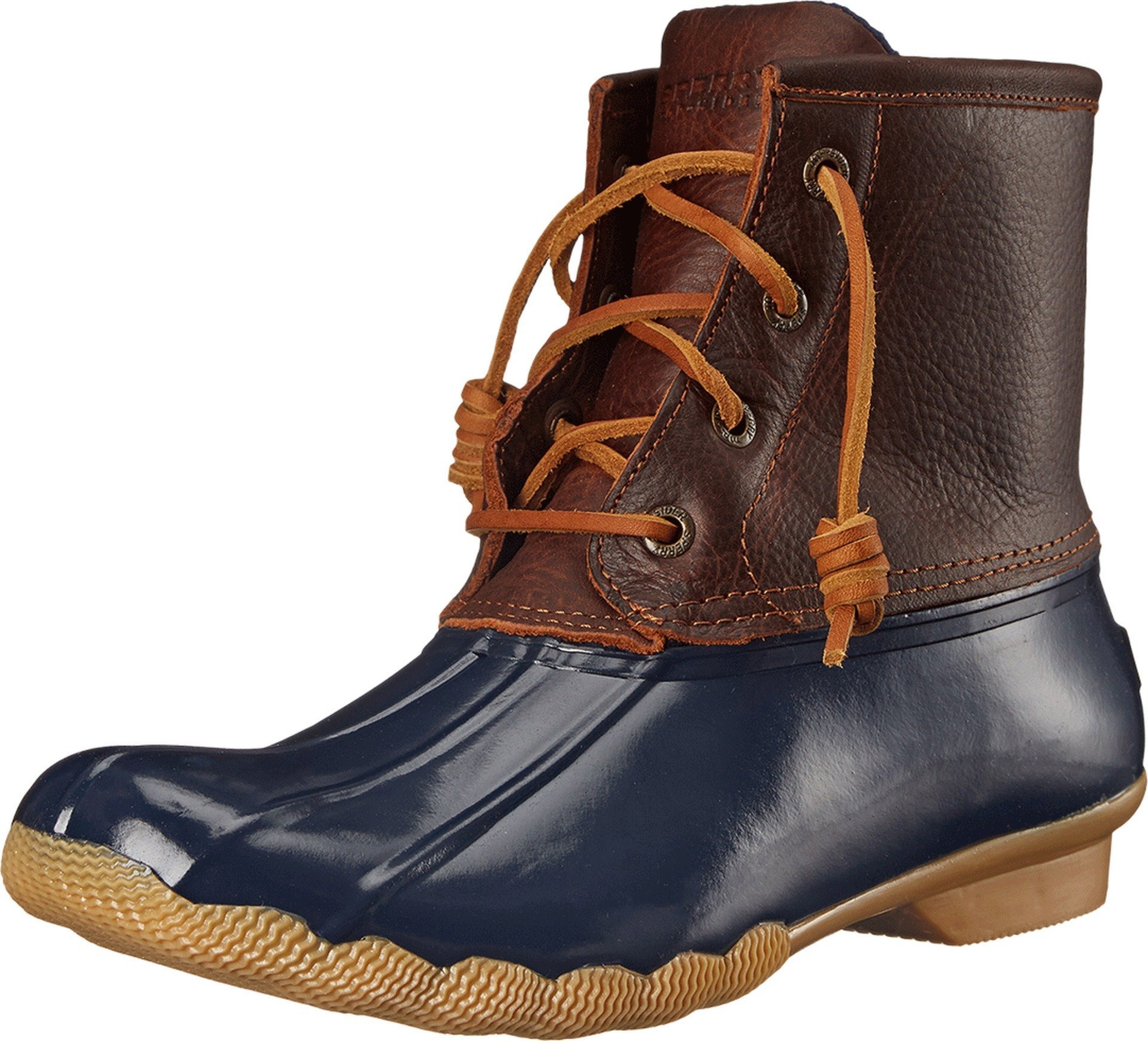
| Sperry womens Saltwater Seasonal★ Best Overall | Wet commutes and rain-to-snow days | 4 lb | Waterproof leather upper with rubber shell | Thermal lining | Amazon |
| Skechers Women’s Park CityBest for Quick Errands | Slipping on and off quickly | 2.5 lb | Waterproof construction | Faux-fur lining | Amazon |
| Columbia Men’s Firecamp BootBest for All-Day Wear | All-day outdoor walking | — | Waterproof construction | Low-bulk insulation | Amazon |
| Columbia Moritza Shield Omni-Heat | Cold city sidewalks and parking lots | — | Waterproof-breathable | Thermal-reflective lining with fleece interior | Amazon |
| SOREL Women’s Out N About lV Chillz | Longer city walks with thick socks | 3.38 lb | Waterproof | Insulated with soft lining | Amazon |
| Columbia Women’s Red Hills Omni-Heat | Slush, sleet, and slick sidewalks | — | Waterproof | Thermal-reflective lining with insulation | Amazon |
| MUCK Women’s Arctic Ice Mid Boot | Icy sidewalks and deep slush | 4.5 lb | 100% waterproof 5mm CR Flex-Foam neoprene | 5mm neoprene inner boot with fleece lining | Amazon |
| KEEN Women’s Revel 4 Mid Height | Colder commutes and packed snow | 20.32 oz | KEEN.DRY waterproof membrane | 200g KEEN.WARM insulation | Amazon |
In‑Depth Reviews
1. Sperry womens Saltwater Seasonal
Our pick — over 4.5★ from 600+ verified ratings; the strongest balance of quality and price.
The duck boot that turned wet sidewalks and slush puddles into just another errand.
If you want one pair that handles rain, ice, and snow without changing your outfit, this is the pick. Sperry builds the Saltwater Seasonal from a waterproof leather upper with a rubber shell wrapped around the bottom, and a thermal lining runs through the inside. The molded Wave-Siping outsole grips wet and dry ground, which is exactly the surface a city throws at you between the subway exit and the corner store.
What wins people over is the build quality — the durable construction is the thing owners bring up again and again, and it shows up in how long these last. Owners also rate the thermal lining and cushioned footbed highly. A long-time wearer reports five-plus years of regular use and says they are still “still in good condition.” Another points out that a wet walk through rain, ice, and snow came with no slipping or sliding, and socks stayed dry. That’s the whole brief for a city snow boot, met.
The catch is getting them on. The upper is famously snug around the ankle and takes real effort to pull on, and it doesn’t loosen much with time. Sizing runs a touch big for some wearers, so if you’re between sizes it’s worth reading the guide page carefully before you commit.
What Commuters Rave About
- Waterproof leather upper with a rubber shell keeps feet dry through slush and rain.
- Thermal lining traps warmth during a long walk in cold, wet weather.
- Molded Wave-Siping outsole keeps you grounded on wet pavement.
- Durable construction that holds up over multiple winter seasons.
Where It Fights Back
- Tight ankle opening makes them hard to pull on.
- Fit runs slightly large for some buyers.
- Heavier than most boots in this guide.
- Not built for technical hiking terrain.
The everyday pick: city commuters who want a boot that keeps feet dry in snow, rain, and mud without a fussy pull-on.
The honest cost: the snug ankle means you’ll work to get them on every time.
2. Skechers Women’s Park City
The lightweight snow boot you can zip on without untying a single lace.
Park City is a hiker-style winter boot with a synthetic suede upper, plush faux-fur trim, and a memory foam footbed. A shock-absorbing midsole softens the concrete pounding of a walk-your-dog loop or a short commute, and the lace-up closure sits alongside a side zipper for fast entry. The waterproof build and anti-slip traction outsole mean slush splash and packed snow are handled without drama.
Compared with the Sperry Saltwater Seasonal, this one is far easier to move around in — the two listings put it at 2.5 pounds versus the Sperry’s 4 pounds, so if portability matters on your walk, this is the more comfortable of the two. Owners praise the memory foam footbed and side zipper, which make them feel more like winter sneakers than boots. Warmth holds up on icy days, and the faux-fur lining keeps feet comfortable on short trips.
The main trade-off is durability on the upper. Owners note the synthetic suede has a tendency to scuff and scrub through at the toe box with frequent wear, so these are not the boots to push hard against salt-stained concrete every single day. Sizing runs close to standard — buyers order one size and mostly stay there. These suit the person running short errands who wants a lightweight, fast-to-wear option and doesn’t mind replacing them sooner than the leather-and-rubber crowd.
Suits the quick-trip crowd: anyone who wants slip-on convenience and a lighter boot for errands.
Skip if you back out of doors: the synthetic suede upper wears through at the toes under long, rough pavement use.
3. Columbia Men’s Firecamp Boot
The multi-sport boot city dwellers wear as a winter workhorse without paying for alpine specs.
Firecamp is Columbia’s lightweight, waterproof answer for men who want a boot that handles both a mountain trail and a downtown sidewalk. Low-bulk insulation keeps the weight down while plush cushioning runs through the interior, and the waterproof construction means wet grass, rain, and puddles stay outside where they belong. It’s the kind of boot you can wear for a full eight-hour shift outside and forget you have on.
What surprises buyers most is the warmth to weight ratio. Owners note the waterproofing held up through rain and wet grass, feet stayed dry, and the low-bulk insulation kept toes comfortable in mid-30s weather without making them sweat indoors like heavier boots do. Owners most often cite build quality and cushioning, and the wide size option earns praise for extra toe room.
One honest note: these run a full size small for many wearers. If you take a medium, seriously consider going up a size or trying the wide. A few owners found the soles less convincing on slick ice than on packed snow, so treat these as a snow-and-slush boot rather than an ice-rink boot. There’s also occasional arrival damage reported, but that’s a shipping issue, not a build issue.
What earns it a slot: the low-bulk insulation and waterproof upper together do more for city winter use than most boots with heavier construction, and the multi-color range keeps the look civic rather than trail.
Plan around: order half to a full size up — that’s the single most repeated adjustment owners make with this boot.
Built for the outdoor shift: men who work or walk outdoors for hours and want a warm, waterproof boot that stays comfortable all day.
Look elsewhere if: you need maximum bite on polished ice — this boot is stronger on snow and slush.
4. Columbia Moritza Shield Omni-Heat
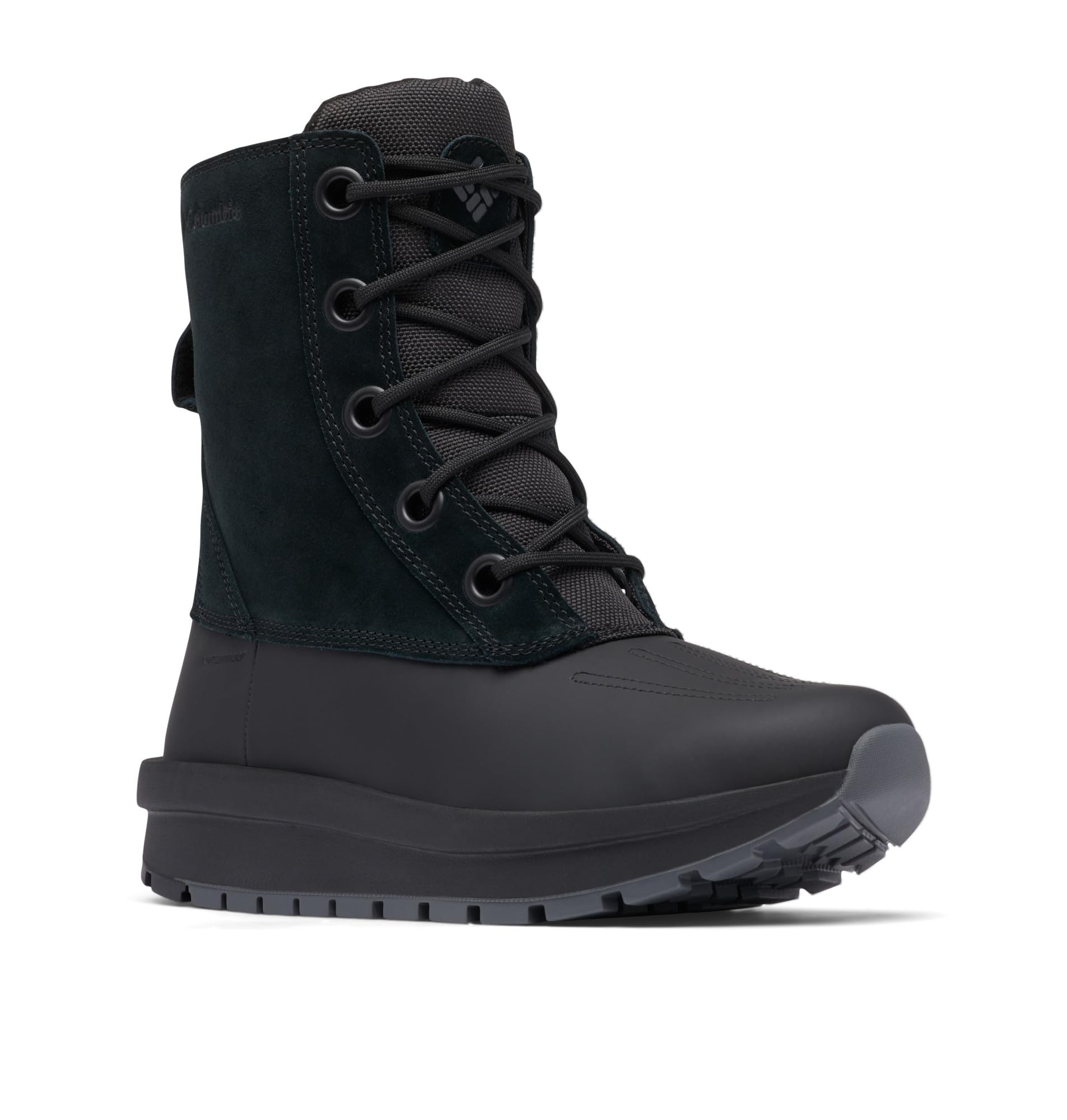
Ultra-warm without the bulk — the boot that feels lighter than it looks but grips through sleet.
Moritza Shield is built around Columbia’s Omni-Heat thermal-reflective lining, a thin metallic layer that bounces your own body heat back at your feet. A fleece interior sits next to that, cushioning runs through the sole for all-day comfort, and the waterproof-breathable upper handles rain and slush without condensation building up inside. The whole package is designed to feel light on your foot.
Owners consistently rank the Omni-Heat warmth first and the outsole grip second. Short walks through sleet and slush land without slipping, and the boots stay comfortable whether you’re out for twenty minutes or plowing a parking lot for an hour. Lightweight matters more than people expect — one woman who sized up half a size reports the boot held up through a three-hour shoveling and plowing session with no foot pain and dry feet in nothing thicker than low-cut sneaker socks.
The trade-off is fit. This boot runs small, and reviewers repeatedly advise going up at least half a size — some noted the toe gets tight with thick socks. The other thing to know is that Omni-Heat runs warm indoors; wear them into a heated office and your feet will be sweating before lunch. That’s a feature designed for outdoor time, not desk time.
Standout spec: Omni-Heat reflective lining is the difference-maker — it delivers warmth without adding the bulk that normally comes with heavy insulation.
Fits like: a snug boot, so plan to size up half a step to leave room for thick socks on the coldest days.
Made for cold commutes: women who walk sidewalks, cross parking lots, and stand at bus stops in freezing weather.
Not the indoor pick: Omni-Heat is engineered for outdoor cold and runs warm once you step inside.
5. SOREL Women’s Out N About lV Chillz Waterproof Boot
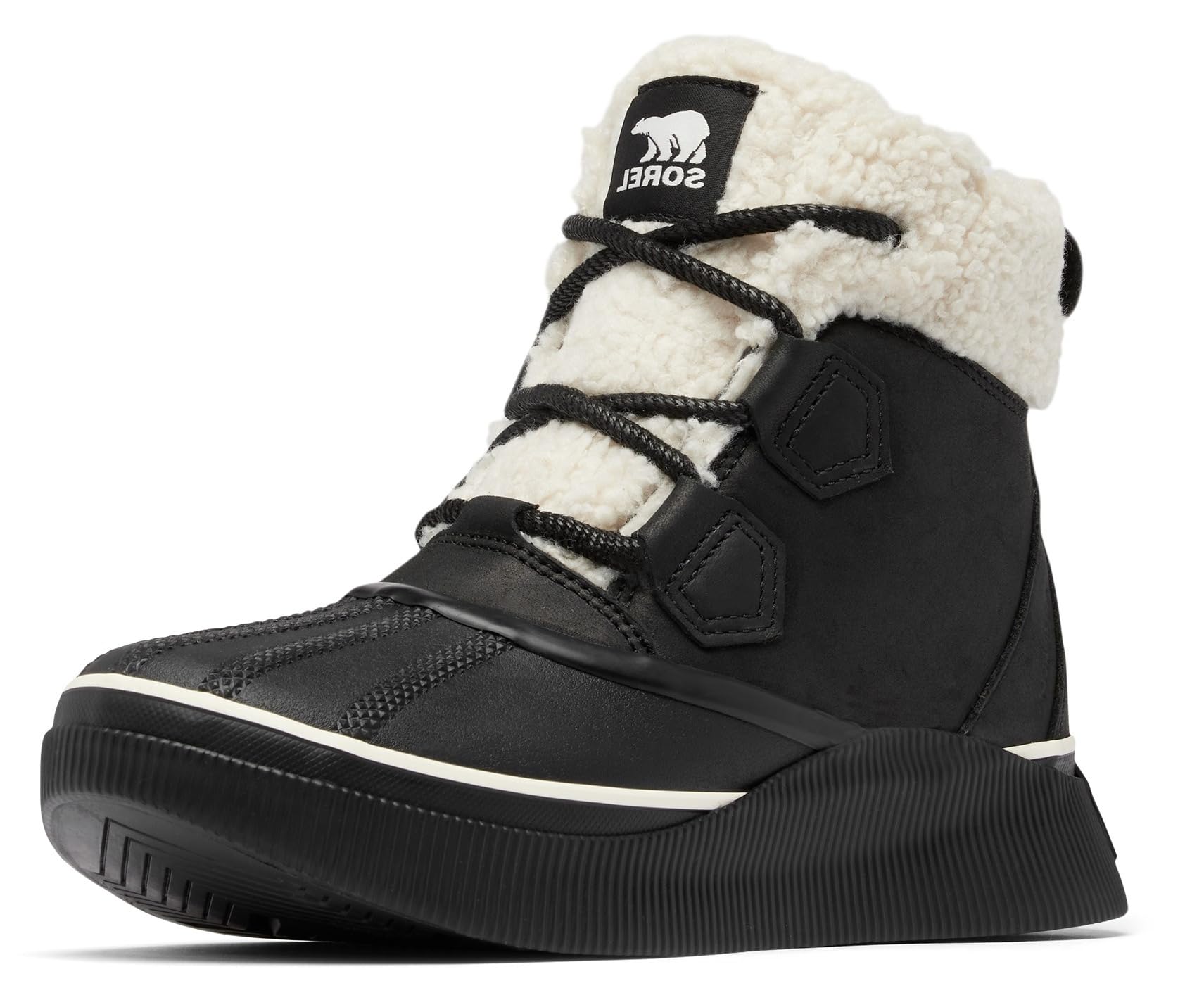
The padded city walker that Sorel built to make miles on cold pavement feel easy.
Where the Sperry Saltwater is a stiff duck boot and the Skechers Park City is a lightweight hiker, the Out N About lV Chillz leans into walking comfort. The waterproof upper keeps feet dry through rain and snow, the soft lining runs warm without feeling heavy, and the interior is roomy enough to take a thick sock without pinching. Owners say their feet never hurt even after long walks on cold concrete.
Cushioning is the standout: buyers report no foot pain after multi-mile walks. Owners who wore these for a real multi-mile trip through mud, sand, and wet terrain called them pain-free by the end, and the warmth held up on cold, wet days. A buyer who took them on an Alaskan glacier tour reports nice warm, dry feet throughout the walk. That combination — comfortable walking plus steady waterproofing — is what makes them one of the better city boots once your foot is in.
The recurring note is sizing. The toe can feel tight from the start before it breaks in, so choosing the right size the first time is what separates a great boot from a return. Buyers who sized correctly describe them as the best winter boot they’ve owned.
Ideal if you walk far: anyone doing longer city distances in cold weather who needs cushioning more than maximum stiffness.
Look at something else if: you can’t afford a sizing gamble — the fit here runs narrow.
6. Columbia Women’s Red Hills Omni-Heat Snow Boots
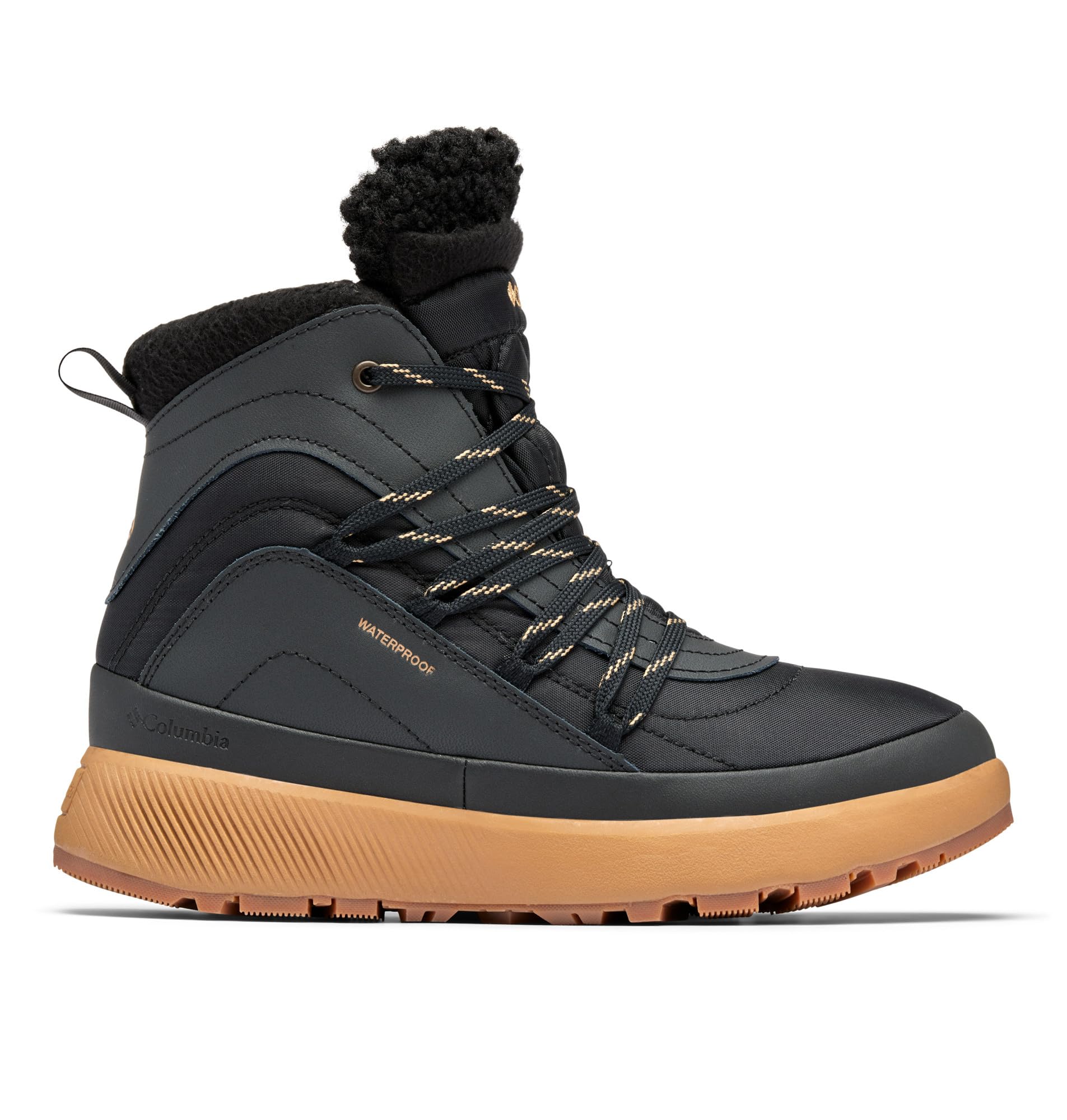
Grippy, waterproof, and cozy enough that owners wear them for miles in freezing European cities.
Red Hills is Columbia’s sidewalk-to-trail winter boot, built with a thermal-reflective lining, insulation, and a plush collar for extra coziness. The waterproof upper shrugs off sleet and snow, and the grippy outsole handles wet ground without the slip you’d expect from a slick-looking boot. It’s the more refined companion to the Moritza Shield — same Omni-Heat thinking, slightly different shape and lacing.
Owners put these through real winter. One wore them daily for a week in Lapland, Finland and reported feet stayed warm and dry the entire time. Another wore them through slush and ice in a Canadian city at -10 degrees Celsius and said there was no slipping on ice, plus the high ankle kept puddle splash out. Owners most often praise the warmth and cushioning, and the boot weighs less than its insulated build suggests.
Sizing is the main thing to sort out. These run small, and the advice that comes up most is to go up at least half a size, especially for wider feet or with thick socks. The lacing can also be finicky — loose laces cause heel rub, so tie them snug. Some owners wish the shaft were slightly taller to keep deep snow out. For daily city wear and travel in cold cities, though, the trade-offs are minor.
Strong Suits
- Thermal-reflective lining and insulation keep feet warm on freezing days.
- Grippy outsole handles wet ground and slick ice without slipping.
- Waterproof upper is ideal for slush, rain, and snow.
- Lightweight enough to walk distance in without wearing you out.
Small Strains
- Runs small — most owners go up half a size.
- Laces need to be tied snug or the heel rubs.
- Shaft could be taller to keep deep snow out.
- Not intended for long backcountry hikes.
Pick for frozen travel: women heading to cold cities who want one boot that handles snow, sleet, and ice without looking outdoorsy.
Watch the sizing: go up half a size and tie the laces snug to lock your heel in.
7. MUCK Women’s Arctic Ice Mid Boot + Vibram Arctic Grip A.T.
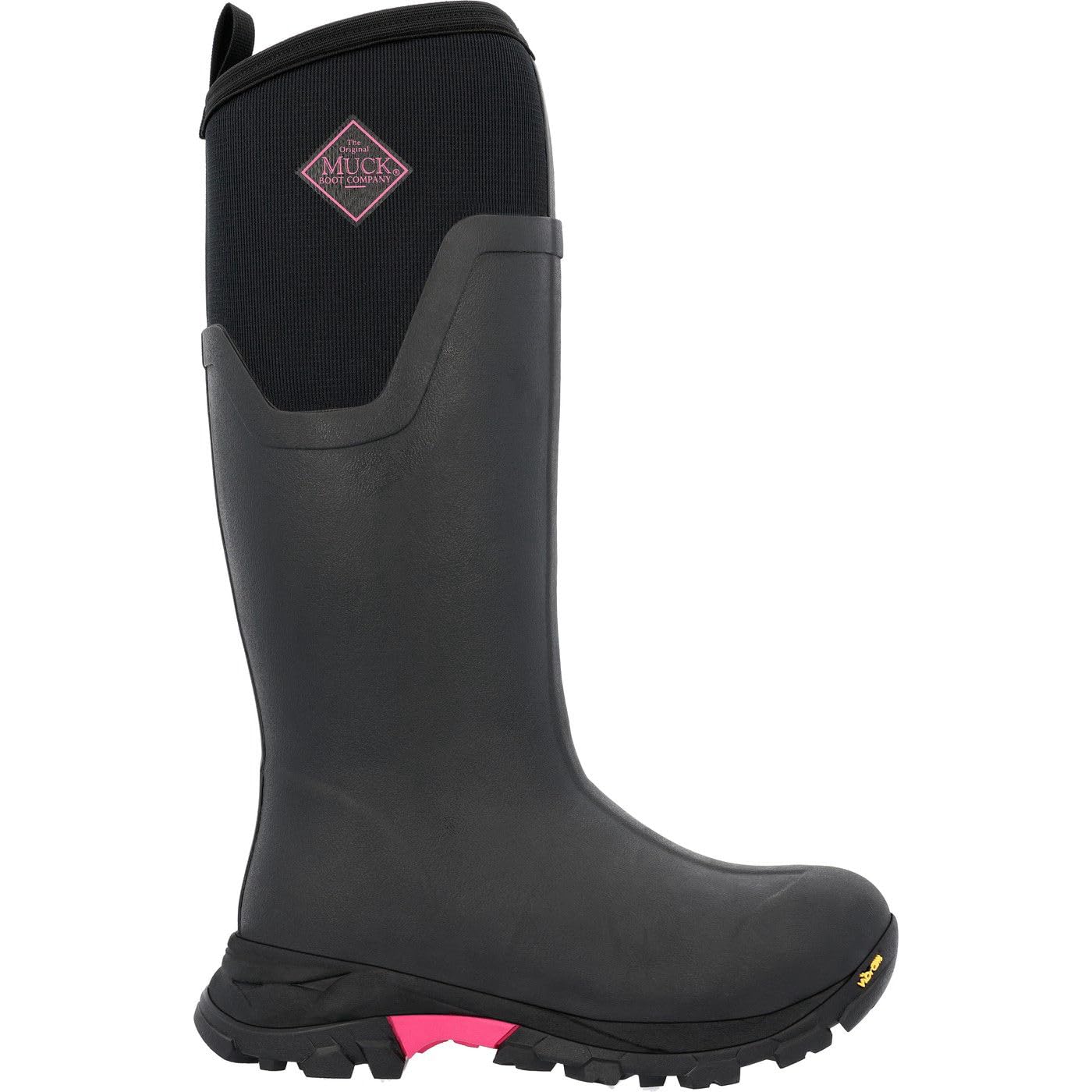
The boot with a sole specifically engineered for wet ice — Vibram Arctic Grip A.T. earns its name.
MUCK’s Arctic Ice Mid is the heavy-weather pick here. It’s 100% waterproof, fully lined in 5mm CR Flex-Foam neoprene (a stretchy rubber foam that keeps water out and warmth in), layered with a fleece lining, and topped with a stretch-fit binding that snugly seals around your leg so cold air stays out. The Vibram Arctic Grip A.T. outsole — combined with the XS Trek Evo compound — is what separates it: it’s formulated to bite into wet ice where regular rubber slides. The comfort range is -40°F to 40°F.
Owners single out the Vibram Arctic Grip A.T. outsole as the reason to buy. One buyer who uses these for sub-zero ice fishing says the extra grip on the bottoms lets them move about easily on slick surfaces. Another walked through 22 inches of snow and stayed dry and comfortable. The neoprene shell keeps them flexible despite being a heavy boot, and the pull-tab makes them easy to put on and pull off — plus the hands-free shaft means you can kick them off without bending.
The honest catch is that they run narrow around the calf. This boot is generous at the foot but roomy at the top, so if you have slim legs, the shaft can feel loose. And at 4.5 pounds a pair, they’re heavy — the trade-off for that much warmth and grip. If you’re walking across icy sidewalks or slush-covered parking lots, that weight buys you confidence. For a quick dash to the mailbox, they’re overkill.
What seals it: Vibram Arctic Grip A.T. plus 5mm neoprene and a -40°F comfort range together make this the most cold-capable option in this guide for icy, slushy ground.
Know before ordering: the shaft runs roomy around the calf and the boot weighs 4.5 pounds — treat it as serious gear, not a light casual pick.
Built for real ice: women who walk on obviously icy sidewalks, driveways, and parking lots in deep winter.
Not for mild winters: the weight and warmth are overkill if your city barely freezes.
8. KEEN Women’s Revel 4 Mid Height Polar Insulated Waterproof Snow Boots

A light hiker’s agility packed with the insulation of a parka — built to stand up to real cold.
Revel 4 Mid Height is KEEN’s technical answer for the coldest mornings. It packs 200g of recycled P.E.T. insulation rated to -25°F, plus three layers of heat-trapping materials underfoot, a KEEN.DRY waterproof membrane, and a Polar Traction outsole with 5mm multi-directional lugs. The upper is waterproof leather and performance mesh, and the fit is KEEN’s Original Fit — generous across the forefoot so toes have room to spread out. At 20.32 ounces per boot, it stays comfortable on a walk.
Traction on ice is where these shine. Owners mention them gripping packed snow and icy sidewalk surfaces with confidence, and one who wore them through an Iceland trip in March said they held up in snow and slush without slipping on a hike. The insulation is rated for serious cold, and owners wearing them at -4°F with ordinary cotton socks say their feet stayed warm and dry. Owners call the cushioning the top strength, with no break-in period needed for all-day wear.
The size question is worth planning around: the wide forefoot is a real feature for some, but plenty of owners found this boot runs large and feel the toes can get tight with very thick socks even so. A few report durability issues over multiple seasons. If your city gets real below-zero mornings, the 200g insulation and -25°F rating are hard to argue with — just be honest with yourself about which size your foot actually needs.
Reason to Choose It
- 200g KEEN.WARM recycled P.E.T. insulation rated to -25°F handles deep cold.
- KEEN.DRY waterproof membrane keeps feet dry in snow and slush.
- Polar Traction outsole with 5mm multi-directional lugs bites on ice.
- Generous KEEN forefoot fit leaves room for toes to spread.
Plan Around
- Some customers note the fit runs large.
- A few note durability issues after multiple seasons.
- Not a budget pick.
- Warmth runs hot indoors like most cold-weather boots.
Reach for these if: your winters regularly drop well below freezing and you want insulation rated for real cold.
Think twice if: you want a light casual boot — the deep-cold build is more boot than a mild winter needs.
Understanding the Specs
Waterproof membranes
A waterproof membrane is a thin layer stitched inside the boot that blocks liquid water while letting water vapor escape. A 100% waterproof neoprene boot like the MUCK Arctic Ice Mid seals completely, which is why it handles deep slush without leaking. A waterproof-breathable upper like the Columbia Omni-Heat pairs (Moritza Shield and Red Hills) keeps rain and slush out while letting sweat leave, which matters when you step into a warm subway car or office.
Insulation ratings
Insulation grams tell you how cold a boot can handle. KEEN’s Revel 4 uses 200g of recycled P.E.T. insulation rated to -25°F, which is deep-winter territory; the MUCK Arctic Ice Mid lists a comfort range of -40°F to 40°F, and the Skechers Park City uses faux fur for lighter cold. The higher the rating, the warmer the boot — but also the more it can feel hot indoors. Match the rating to your actual winter, not the coldest place you might visit.
Outsole grip and lug design
Outsole grip comes from the rubber compound and lug depth. Vibram Arctic Grip, found on the MUCK Arctic Ice Mid, is formulated to hold wet ice. Deep multi-directional lugs, like the 5mm lugs on the KEEN Revel 4, shed slush and grip packed snow. A molded Wave-Siping outsole, like on the Sperry Saltwater, grips wet and dry pavement. The more textured the sole, the better it works on icy or slushy city ground.
Fit and sizing for winter
Winter boots fit differently than regular boots because they hold heavier socks. Most boots in this guide run small — Columbia’s Firecamp and Red Hills runs a full or half size small, and SOREL’s Out N About runs narrow. Sizing up half a size is common advice, especially when you plan to wear thick wool socks. Getting the size right matters for warmth: too tight and blood flow to the toes drops, which is a common cause of cold feet even in a heavily insulated boot.
FAQ
How do I know if a winter boot is waterproof enough for city snow?
Should I size up for winter boots?
What temperature rating actually matters for city snow?
Are insulated boots too warm to wear indoors?
Do winter boots with deep lugs actually grip ice better?
How long should a quality city snow boot last?
Can I wear these winter boots for hiking?
What is the difference between waterproof and water-resistant on a snow boot?
Are lace-up or slip-on winter boots better for city commuting?
Do I need to treat winter boots with a spray-on waterproofer?
Final Thoughts: The Verdict
For most commuters facing city snow, the winning pair is the Sperry womens Saltwater Seasonal — waterproof leather, a rubber shell for slush, and a build that lasts multiple winters. If icy sidewalks are your daily reality, the MUCK Women’s Arctic Ice Mid with its Vibram Arctic Grip A.T. outsole and 100% waterproof neoprene shell is the one built specifically for that surface. And if deep cold is the priority, the KEEN Women’s Revel 4 Mid Height packs 200g of insulation rated to -25°F with KEEN.DRY waterproofing. Any of these three will keep your feet dry and warm from the front door to the office — which is the whole job of winter footwear.
How We Picked
We do not accept paid placement. Every pick is matched to a real buyer and a real use-case; we do not hands-on test units.
Sources & Methodology
Specifications: manufacturer listings and product documentation. Review insights: verified customer reviews, as of September 2026. Pricing: not shown on this page (it changes often); check the current price via the retailer link.
As an Amazon Associate, Gadgets Feed earns from qualifying purchases. This does not affect which products we feature.