
Our readers keep the lights on and my morning glass full of iced black tea. As an Amazon Associate, I earn from qualifying purchases.
Specs are compiled from manufacturer listings and verified buyer reviews and can change over time — please confirm the key details on the product page before buying.
Standing on concrete all day punishes your feet, knees, and lower back. The wrong boots turn every shift into a grind, while the right pair gives you solid support, steel protection from falling objects, and a tread that grips slippery, wet slabs instead of sending you sliding. This guide breaks down the key specs—steel vs. composite toe safety ratings, slip-resistant outsole compounds, and the all-day cushioning that makes a 12-hour pour bearable—so you can pick the pair that keeps you moving and safe.
I’m Min — the founder and writer behind Gadgets Feed. This guide is built by comparing the manufacturers’ published specifications and the patterns across verified customer reviews, so you get each pick’s real strengths and trade-offs instead of marketing spin.
Whether you are running a screed, tying rebar, or wheeling mud, you need a boot that protects your feet without holding you back. Here is exactly how each model stacks up for the best boots for concrete workers.
Our Picks at a Glance


How To Choose The Best Boots For Concrete Workers
Concrete work means constant exposure to abrasive surfaces, wet slurry, heavy loads, and hard impacts. Your boot needs to do three things at once: protect your toes, keep you upright, and not wear down before the first month ends. Below are the most critical specs to compare.
Toe Protection: Steel vs. Composite
Steel toes and composite toes both meet ASTM safety standards for impact and compression, but they have practical differences. Steel toes are heavier and can conduct cold in winter; composite toes are lighter, non-metallic (they will not set off metal detectors), and do not turn your feet into ice cubes on a freezing pour. The trade-off is that composite toes often take up a slightly larger internal volume, so check how that fits your foot shape.
Slip & Chemical Resistance
A concrete worker walks through a mix of water, mud, and leaked diesel—and a standard sole turns that into a skating rink. Look for an outsole rated SRC (the highest European slip standard) and a rubber compound marked oil- and slip-resistant. A wedge sole gives a flat, wide contact patch that spreads your weight evenly, reducing fatigue on flat concrete.
Waterproofing Does Double Duty
When you are standing in a half-inch of bleed water all day, a waterproof membrane is not a luxury. Sealed seams and a breathable waterproof liner (like a sealed membrane that lets vapor out but keeps liquid out) keep your feet dry from the outside without trapping sweat. A moisture-wicking lining pulls perspiration away from your skin, cutting down on blisters and trench foot.
Quick Comparison
| Model | Best For | Toe Type | Weight | Outsole | Amazon |
|---|---|---|---|---|---|
| Georgia Boot Men’s Wedge Steel Toe★ Best Overall | Wedge sole comfort on concrete | Steel Toe | 3 Pounds | Wedge Heel | Amazon |
| Thorogood American Heritage 8″Top Performer | All-day comfort & longevity | Steel Toe | 2 lbs | Slip-Resistant Wedge | Amazon |
| Timberland PRO Endurance 6″Best for Long Shifts | Shock absorption on long shifts | Steel Toe | — | Heat, Oil, Slip & Abrasion Resistant | Amazon |
| ARIAT Treadfast 8″ | Durability & lightweight support | Steel Toe | — | Oil & Slip-Resistant Duratread | Amazon |
| KEEN Utility Lansing Mid | Wide toe box & waterproofing | Asymmetrical Steel Toe | 23.15 oz per shoe | Slip & Oil Resistant | Amazon |
| DUNLOP Snugboot WorkPro Full Safety | Cold insulation & chemical resistance | Composite Toe | — | SRC Slip & Chemical Resistant | Amazon |
| VULTREAK Composite Toe Work Boots | Quick lacing & puncture resistance | Composite Toe | Lightweight (reviewers) | Heat-Resistant Up to 572°F | Amazon |
| NINGO Steel Toe Work Boots | Budget-friendly waterproof option | Steel Toe | — | Slip Resistant | Amazon |
In‑Depth Reviews
1. Georgia Boot Men’s Wedge Steel Toe Work Boots
Our pick — over 4★ from 500+ verified ratings; the strongest balance of quality and price.
Zero break-in time and a wedge sole that concrete pourers trust shift after shift.
Georgia Boot’s 6-inch wedge steel toe is the one you see on every concrete crew for a reason. The wedge heel gives you a flat, stable platform on fresh slabs, and the steel toe keeps your feet safe from dropped rebar and form stakes. It weighs 3 pounds—solid but not back-breaking—and the Barracuda Gold color hides concrete splatter better than lighter leathers.
“Pour concrete for a living and these boots hold up well,” one reviewer noted. Another owner, who wears them over 13 hours a day, says there is “NO BREAK IN TIME” when he gets a new pair. Compared to the NINGO below, the Georgia Boot has fewer bells and whistles—no waterproof membrane, no fancy lacing—but its simplicity means fewer failure points. It just works.
What Wins
- Wedge sole provides excellent stability on flat concrete surfaces
- Buyers report zero break-in period, even for 13-hour shifts
- Simple, durable construction that concrete pourers trust
The Catch
- No waterproof liner—wet concrete will soak through
- Comes with a flat insole; most buy an aftermarket insert for arch support
The one for: concrete workers who want a reliable, no-nonsense boot that is comfortable from day one and handles wet concrete well.
Not for: anyone who needs waterproofing for standing in puddles all day.
2. Thorogood American Heritage 8” Steel Toe Work Boots
The heavyweight champion for durability with a wedge sole that feels softer than tennis shoes.
Your feet take the first hit on every pour. The Thorogood 8” delivers a slip-resistant wedge outsole that spreads your weight evenly across flat concrete, so you are not balancing on a raised heel. It weighs 2 pounds—noticeably less than many steel-toe competitors—and the full-grain leather upper resists the abrasion of walking through rebar and formwork.
This boot stands apart from others in the list because of the reputation buyers report. One skid-steer operator who kicks bucket pins all day shared that this is his third pair, noting “soft cushion insoles” and a break-in period of about three days. Another reviewer, a 12D fit, said the wedge sole “feels soft yet rugged” and kept his feet fresh after 10-12 hour shifts. The steel toe protection is there, but the real win is that you do not feel punished at the end of the day.
Built for the Long Haul
- Wedge sole gives fatigue-fighting stability on flat concrete
- Owners mention pairs lasting over a year in structural steel
- Minimal break-in compared to other full-grain leather boots
One Drawback
- No waterproof membrane—fine for dry pours, not for standing in wet slurry all day
Reach for this if: you want a boot that outlasts cheaper options and you work mostly on dry concrete surfaces.
Look elsewhere if: you need a waterproof liner for wet concrete or slushy conditions every day.
3. Timberland PRO Endurance 6 Inch Steel Safety Toe Work Boot
Oil- and slip-resistant rubber that grips wet floors and a footbed that returns energy with every step.
Timberland PRO built the Endurance for the “long haul,” and the specs back that up. The full-grain waterproof leather upper is paired with an internal waterproof membrane to keep concrete bleed water out. Underfoot, the Anti-Fatigue Technology footbed absorbs shock and gives you a bit of spring back—a real help when you have been on your feet for hours.
A maintenance supervisor who walks about 4 miles per day on the job said this is his second pair and that he gets around 2 years out of each one before the inserts wear down. Compared to the Thorogood above, this model is heavier—customers note the boot has real heft—but it delivers on waterproofing where the Heritage does not. The Ladder Lock heel also helps if you climb scaffolding or ladder rungs between pours.
What Stands Out
- Anti-Fatigue Technology footbed absorbs shock and returns energy
- Waterproof membrane and moisture-wicking lining keep feet dry
- Heat-, oil-, slip-, and abrasion-resistant outsole handles industrial floors
The Trade-off
- Considerably heavier than competitors, which some find tiring on the longest days
Best suited for: workers who walk miles across concrete and need both waterproofing and solid shock absorption.
Skip if: weight is your number one concern—lighter composite-toe options may serve you better.
4. ARIAT Treadfast 8” Waterproof Steel Toe Work Boots
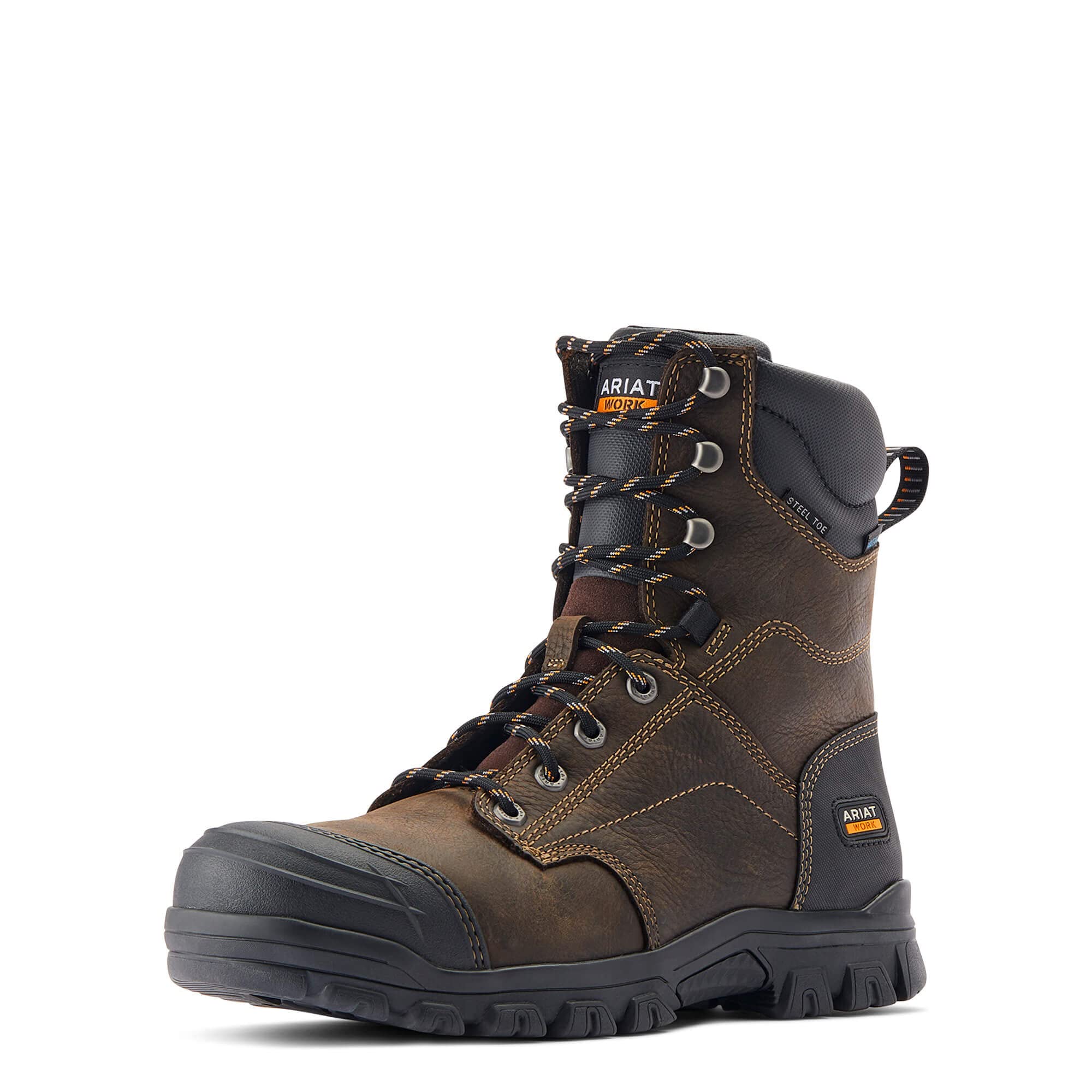
Full-grain leather and DRYShield waterproofing in a boot that aircraft mechanics and wastewater workers swear by.
If you need a boot that handles both wet concrete and chemical exposure, this Ariat Treadfast is a strong candidate. The DRYShield construction creates an impermeable barrier against moisture while still letting vapor escape. The Duratread outsole is oil- and slip-resistant, and the reinforced ExGuards on the toe and heel reduce wear in the high-scuff spots where concrete slurry eats through other boots.
One buyer who works in water and wastewater treatment said these boots, paired with shoe grease, approached a full year of service with “no signs of giving up”—pushing past what competitor boots managed. Another reviewer, an aircraft mechanic on concrete all day, noted the interior padding is thick, which helps in winter. The fit runs true for most, though a few report needing a size adjustment.
Reasons to Buy
- DRYShield waterproof membrane is breathable but keeps moisture out
- Duratread outsole resists oil and slip on slick industrial floors
- 4LR technology gives lightweight support and stability
One Thing to Watch
- A few reviewers point out the stitching at the heel can fail earlier than expected
Who it fits: concrete workers who also deal with chemicals, oils, or wastewater and need a boot that resists breakdown.
Who might pass: those on a tight budget—there are solid options for less.
5. KEEN Utility Lansing Mid Height Steel Toe Waterproof Work Boots

An asymmetrical steel toe that widens the interior so your toes are not cramped after hour six.
The KEEN Lansing Mid weighs 23.15 oz per shoe (656 g)—one of the lighter steel-toe boots here—and uses an asymmetrical steel toe that follows the natural shape of your foot. That extra width matters when your feet swell during a long pour. The TPU stability shank adds arch support across uneven subgrades, and the waterproof leather with moisture-wicking lining keeps you dry on wet slabs.
Shoppers say dry feet even after a 15-hour work day on a construction site, and those with wide feet appreciate that the extra room means no rubbing on the pinky toe. One reviewer called them “all day comfort” and pointed out that you can swap in your own orthotics since the insole is removable. Compared to the Timberland PRO, the Lansing is lighter but has a lower shaft height at mid-height—less ankle coverage if you need it.
What Works
- Asymmetrical steel toe provides a roomier fit for wider feet
- Removable insoles let you add custom orthotics
- Reflective safety elements run the full length for added visibility
What Doesn’t
- Slightly heavy in the feet by the end of a long day, per some reviews
- Runs a bit small—many buyers order one size up
Grab these if: you have wide feet or need a steel toe that does not pinch your toes after hours of standing.
Look at another pair if: you prefer a taller 8-inch boot for more ankle support.
6. DUNLOP Snugboot WorkPro Full Safety – Composite Toe
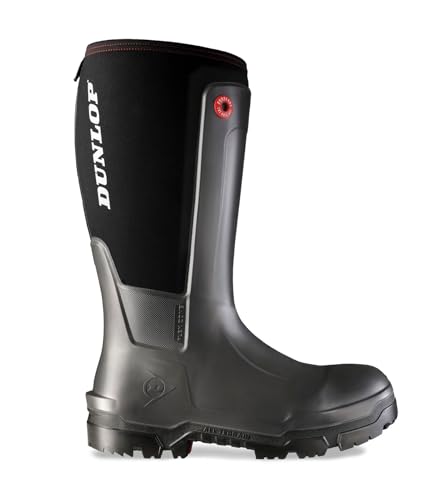
A pull-on rubber boot with composite toe protection and cold insulation down to -58°F for brutal winter pours.
If you work concrete in freezing temps or stand in cold slurry, the DUNLOP Snugboot is built for that reality. It is a 100% rubber boot with a composite toe that meets ASTM and CSA standards—no metal to conduct cold to your toes. The insulation down to -58°F is extreme, but even on a milder day it keeps the chill off your feet. The SRC-rated outsole is both slip-resistant and chemical-resistant, so fuel oil and diesel do not melt the rubber.
Owners mention these boots are “100% waterproof” and comfortable for winter chores and farm work. The pull-on closure with a flexible shaft makes them easy to slip off after a messy day. One reviewer did note leakage around the neoprene shaft, so waterproofing consistency can vary. Still, for extreme cold and chemical environments, this is the pick.
What Excels
- Composite toe is lighter than steel and does not conduct cold
- Insulation rated to -58°F keeps feet warm in freezing conditions
- SRC-rated outsole resists chemicals and slip on oily concrete
What to Know
- Not breathable like leather boots—expect sweatier feet in summer
- Some units may develop leaks at the neoprene cuff over time
Ideal for: winter-pour concrete workers, or anyone dealing with chemicals and freezing slurry.
Choose a leather boot instead if: you work on concrete in hot weather and need breathability.
7. Composite Toe Work Boots for Men and Women – VULTREAK
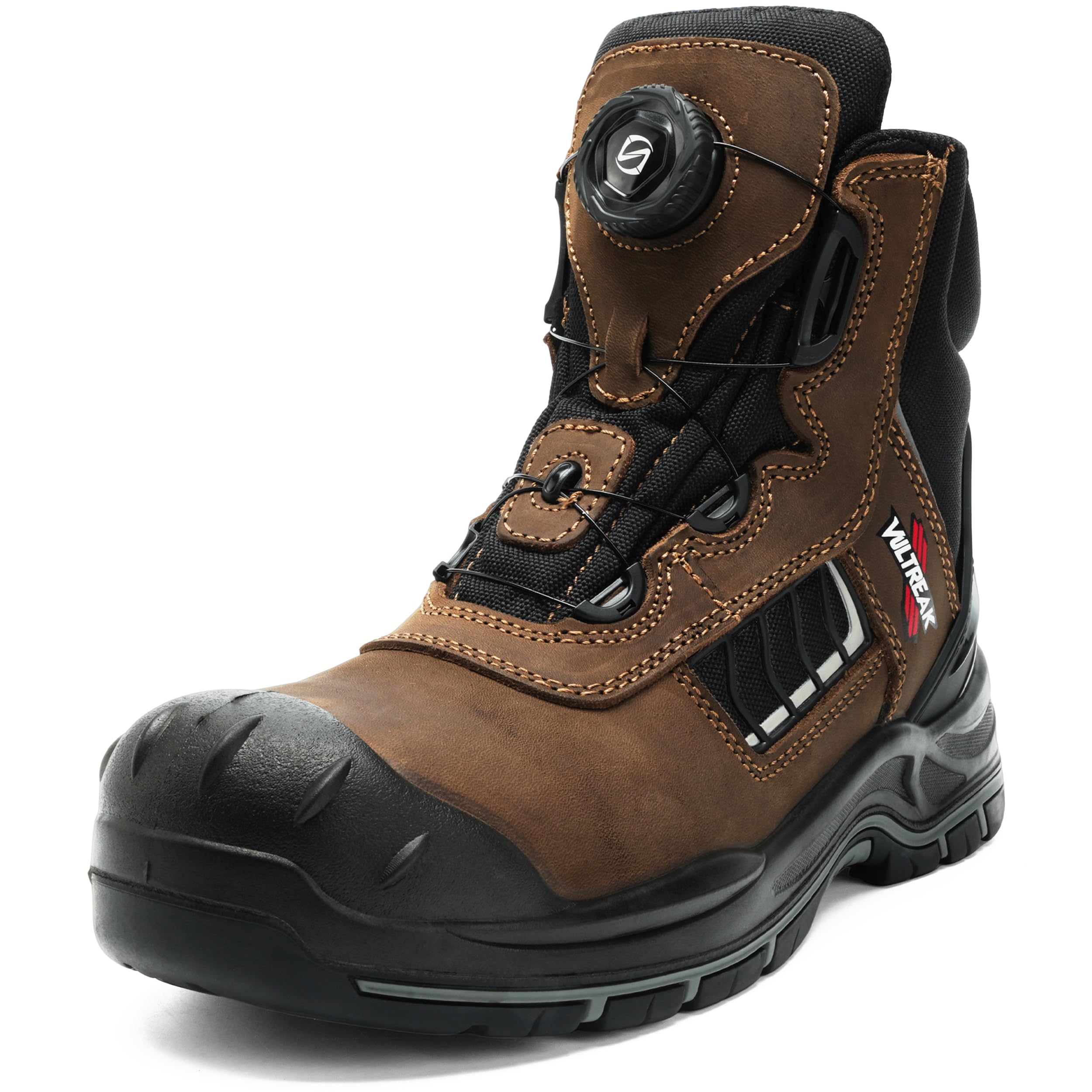
A ratchet lacing system that tightens in seconds and a Kevlar midsole that stops sharp objects.
The VULTREAK composite toe boots give you serious safety without the high price. The composite toe meets the S3 HRO standard (a safety rating for toe protection and heat-resistant outsoles), so it protects your toes better than a basic steel toe. The Kevlar midsole (a puncture-resistant layer) stops rebar ends, nails, and screws from piercing through. The outsole resists heat up to 572°F (300°C), which matters if you are welding near rebar or working around hot equipment. At under, it packs more safety features than most boots in this list.
Customers note the boots are very lightweight and “still look brand new after every day use” even two months in. The quick-fit knob system draws positive attention: “Push and turn to tighten then pull straight out and the boot slips right off.” However, one reviewer had trouble keeping the ratchet system tight, saying it loosens every 10 minutes. If you get a good unit, this is a bargain; if not, the lacing system can be frustrating.
Standout Features
- Quick Fit knob laces and unlaces in seconds
- Kevlar puncture-resistant midsole and heat-resistant outsole up to 572°F
- Crazy horse leather and European safety standards (S3 HRO)
Potential Issues
- Ratchet system may not stay tight on some units
- Runs small—buyers recommend sizing up if between sizes
A good match for: workers who want composite-toe protection, a fast on/off system, and heat resistance without spending a lot.
Steer clear if: you need a traditional lace system you can trust to stay tight all day.
8. NINGO Steel Toe Work Boots for Men, Waterproof Safety Boots
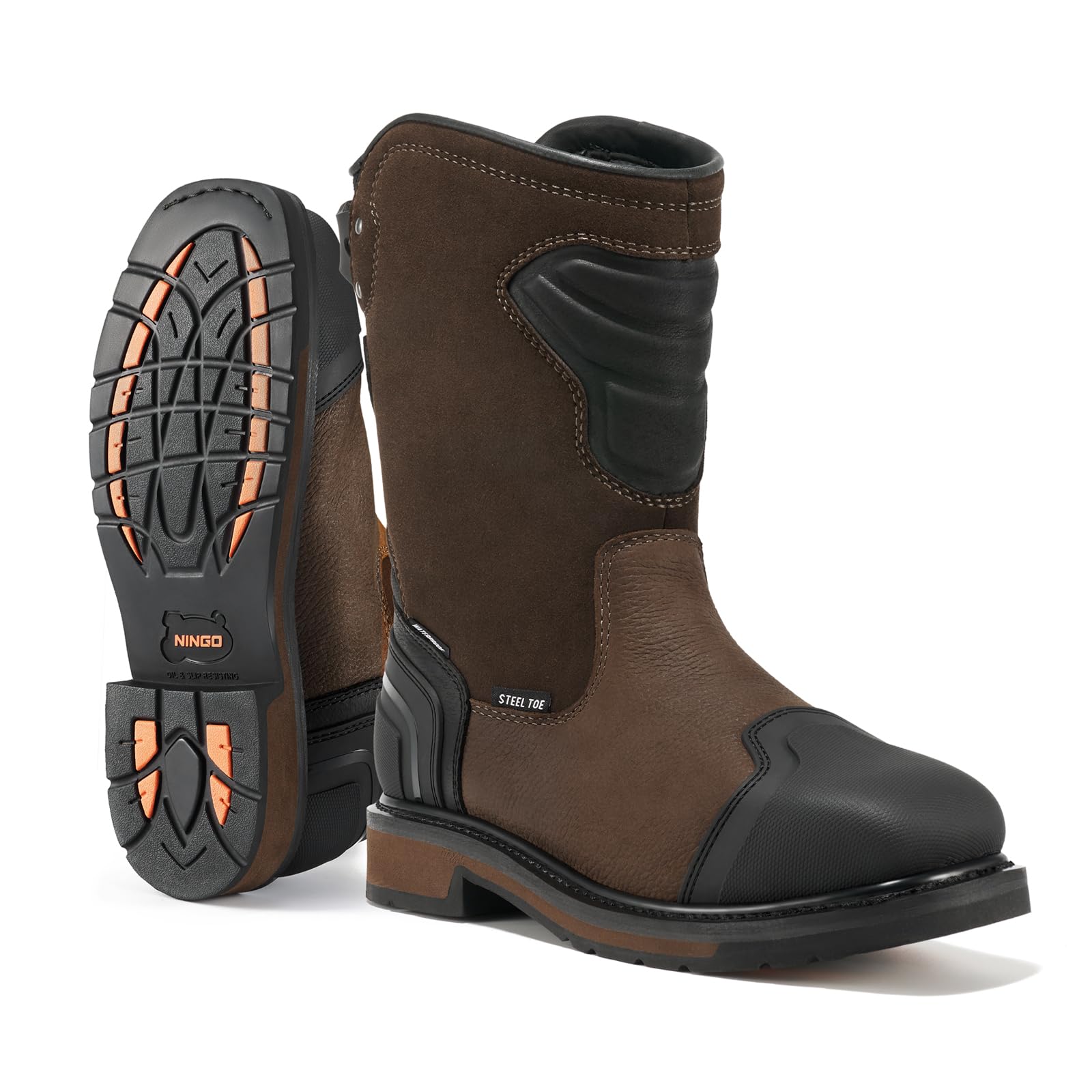
A waterproof steel toe boot at a price that lets you buy two pairs for the cost of one premium model.
At the budget end of the spectrum, the NINGO Steel Toe boot offers a square toe, waterproof construction, and electrical hazard protection. The steel toe meets standard safety requirements, and the slip-resistant outsole is decent for light concrete work. It is the kind of boot you buy when you need something immediately or you are not sure you will stick with the job long-term.
Reactions are split. One reviewer’s husband is on his second pair because the boots are comfortable and durable—he only got rid of the first pair after chemical damage and trapped odor. Another buyer, a construction worker who expects boots to last 6 months, said these started breaking down by week two, calling them fine for “stay at home dads” but not for heavy-duty concrete. The consensus: the NINGO is acceptable for light use, but it will not survive the abuse of a full concrete pour crew.
What You Get
- Waterproof membrane helps keep feet dry in wet conditions
- Electrical hazard protection adds a layer of safety on live-job sites
- Very affordable entry into a steel-toe waterproof boot
Where It Falls Short
- Traction wears off quickly according to longer-term owners
- Not built for daily heavy construction—soles and linings degrade faster
Budget pick for: light concrete duty, occasional use, or as a backup boot in the truck.
Not your boot if: you pour concrete 5-6 days a week and need something that lasts more than a few months.
Understanding the Specs
ASTM Safety Ratings (Steel vs. Composite Toe)
ASTM F2413 is the standard that tests impact and compression protection for the toe. Steel toe boots pass these tests by using a metal cap, while composite toe boots use a non-metal cap made of Kevlar, carbon fiber, or plastic. The practical difference: steel toes are heavier and conduct cold, making your feet colder in winter; composite toes are lighter, do not conduct cold, and will not set off metal detectors. Both protect your toes from a 75-pound impact at the basic level, but some jobs also require electrical hazard (EH) or puncture-resistant ratings.
Slip Resistance & Outsole Durability
The outsole is your only connection to the ground on a wet, muddy slab. Look for stamps like SRC or ASTM F3445, which test grip on steel and ceramic tile with detergent. A wedge sole (flat from heel to toe) is preferred by concrete workers because it provides a larger contact area and reduces pressure points on flat surfaces. Outsole rubber compounds also vary: some are marked oil-resistant so diesel and hydraulic fluid do not turn them into mush.
FAQ
Can I wear composite toe boots for concrete work?
How long do boots for concrete workers usually last?
What does a wedge sole do on concrete?
Is waterproofing important for concrete workers?
Are slip-resistant boots the same as oil-resistant boots?
Do I need a puncture-resistant midsole for concrete work?
How should my work boots fit for concrete?
Can I use steel toe boots in cold weather when pouring concrete?
Final Thoughts: The Verdict
For most concrete workers, the boots for concrete workers winner is the Georgia Boot Men’s Wedge Steel Toe because it feels comfortable from the first wear, has a wedge sole (a flat, wide outsole) that grips flat concrete without catching debris, and holds up well — real pourers say it lasts. If you need waterproofing and anti-fatigue cushioning for long walking shifts, choose the Timberland PRO Endurance 6″. And for extreme cold or chemical-heavy environments, the DUNLOP Snugboot with its -58°F insulation is the one to pick.
How We Picked
We do not accept paid placement. Every pick is matched to a real buyer and a real use-case; we do not hands-on test units.
Sources & Methodology
Specifications: manufacturer listings and product documentation. Review insights: verified customer reviews, as of July 2026. Pricing: not shown on this page (it changes often); check the current price via the retailer link.
As an Amazon Associate, Gadgets Feed earns from qualifying purchases. This does not affect which products we feature.