
The station floor, a gravel driveway, a rain-slicked roadside — an EMT’s shift is spent moving across surfaces that punish standard footwear. Your boots are the single piece of gear that determines whether that twelve-hour rotation ends with numb, aching feet or with enough gas left for the next call. The wrong sole or an unsupportive midsole turns every patient lift into a gamble with your own joints.
I’m Min — the co-founder and writer behind Gadgets Feed. I’ve spent hundreds of hours cross-referencing ASTM safety standards, composite-toe impact ratings, slip-resistance certifications, and side-zipper durability data so you don’t have to hunt through review after review yourself.
EMTs need boots that combine puncture resistance, waterproofing, and instantaneous donning capabilities. This guide breaks down the top contenders to help you land on the ideal pair of boots for emt that won’t quit mid-shift.
How To Choose The Best Boots For EMT
EMT boots live at the intersection of firefighter structural gear and law-enforcement patrol footwear, but they demand a tighter balance. You need a composite toe that won’t set off metal detectors at a scene, a sole that grips wet pavement and oil-slicked asphalt, and a zipper that lets you kick them off the second you hit the station couch. Every spec matters differently for EMS than it does for a mechanic or a soldier.
Safety Certifications That Actually Matter
NFPA 1999 is the gold standard for EMS — it certifies that the boot resists bloodborne pathogen penetration and common scene fluids. Below that, look for ASTM F2413 impact and compression ratings for your toe protection, and ASTM F3445-21 or F2913 for slip resistance. Electrical Hazard (EH) ratings add a layer of protection when you’re working near downed lines or live equipment, but they are secondary to fluid barrier and slip resistance for most EMTs.
Weight vs. Protection: The Real Trade-Off
A boot that weighs over three pounds per pair will fatigue your legs by hour six. Lightweight composite toes and EVA midsoles shave ounces, but they can reduce puncture protection and long-term sole durability. The best EMT boots hover around two to two-and-a-half pounds per boot — heavy enough to carry a solid shank and waterproof membrane, light enough that you don’t dread walking back to the rig.
Why the Side Zipper Is Almost Mandatory
In a station environment, you are taking boots off and putting them back on multiple times per shift. A full-height YKK side zipper with a hook-and-loop storm flap halves the time it takes to swap into station shoes. Skip lacing-only boots unless you are willing to accept that friction every single call. The zipper track and the material around it are common failure points — look for reinforced nylon or leather backing around the zipper channel.
Quick Comparison
On smaller screens, swipe sideways to see the full table.
| Model | Category | Best For | Key Spec | Amazon |
|---|---|---|---|---|
| HAIX Airpower XR2 | Station / EMS | Ultimate protection & fluid barrier | NFPA 1999 + composite toe | Amazon |
| Under Armour Valsetz Zip | Tactical / Patrol | Zero break-in lightweight comfort | Vibram XS Trek / 18 oz | Amazon |
| Belleville Khyber TR960Z | Tactical / All-Terrain | Maximum mileage & Vibram durability | Vibram Ibex outsole / 8 inch | Amazon |
| Merrell Moab 3 Tactical | Hiker / Duty | Sneaker-like feel on long pavement days | COMFORTBASE footbed / 8 inch | Amazon |
| Thorogood Deuce 8″ | Tactical / Safety | Composite safety toe & BBP barrier | Z-Trac outsole / composite toe | Amazon |
| Bates Tactical Sport 2 | Entry-Level / Light Duty | Lightweight budget option with side zip | Composite toe / side zipper | Amazon |
| Thorogood Crosstrex 6″ | Hiker / Waterproof | Waterproof hiker with slip cert | ASTM F3445-21 / BBP membrane | Amazon |
| 5.11 Tactical Fast-Tac 8″ | Tactical / Patrol | Ortholite cushioning for long shifts | 840D nylon / slip-resistant outsole | Amazon |
| Rocky AlphaForce Zipper | Duty / Academy | Budget-friendly academy or station use | Composite toe / EH rated | Amazon |
In‑Depth Reviews
1. HAIX Airpower XR2

The HAIX Airpower XR2 is the full package for EMTs who demand maximum certification coverage. It carries NFPA 1999 certification for bloodborne pathogen resistance, an ASTM-rated composite toe, and a puncture-resistant sole that gives you confidence on cluttered accident scenes. The waterproof CROSSTECH liner blocks fluids without trapping sweat, and the anti-slip outsole resists melting on hot asphalt or exposure to fuel and oil.
You get a laced front with a full-height side zipper that allows rapid donning and doffing — paramedics report that half a day of break-in is all it takes before the boot feels like an extension of your foot. The built-in arch support and shock-absorbing insole distribute weight evenly across a twelve-hour shift, reducing fatigue in the calves and lower back.
The main barrier is the upfront investment, but multiple firefighter-EMTs in the reviews note that this is their fifth pair — the longevity and repairability offset the initial cost. If you want a single boot that covers station, scene, and wildland rescue without compromise, the Airpower XR2 is the benchmark.
Why it’s great
- NFPA 1999 + ASTM composite toe + EH rating in one package
- Quick zip-lace system with smooth front zipper
- Repairable construction — users own for several years
Good to know
- High price point; best for full-time career EMTs
- Bony-footed users may feel pressure points
2. Under Armour Charged Valsetz Zip
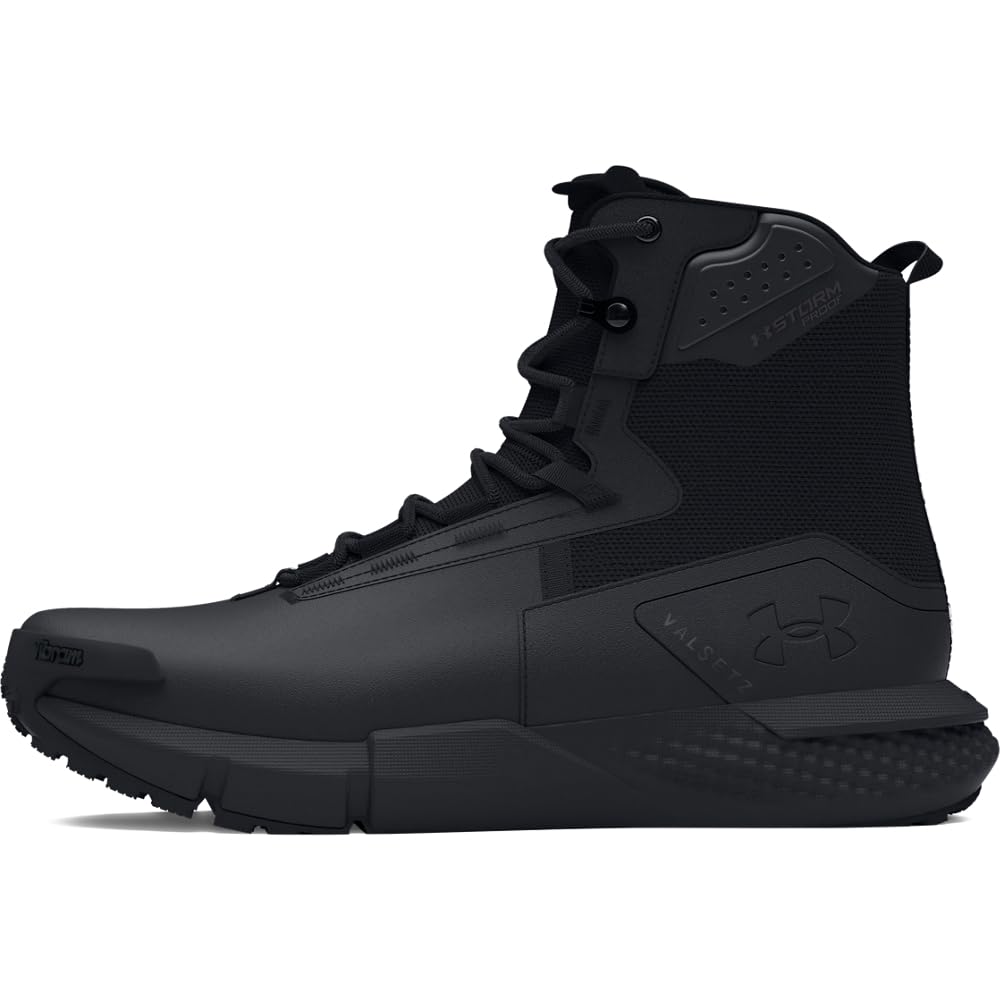
The Under Armour Valsetz Zip bridges the gap between sneaker-level comfort and tactical duty requirements. At 18 ounces per boot, it is one of the lightest 8-inch zip boots on the market, and the full-length Charged Cushioning midsole absorbs heel strike impact effectively on concrete and asphalt. The Vibram XS Trek outsole is fast-rope compatible and carries the ASTM F3445-21 slip rating, giving you wet-traction confidence.
The waterproof boot liner kept testers dry through extended rain exposure, and the medial side zipper paired with heel and tongue pull loops makes transition from the driver seat to a scene genuinely fast. Multiple reviewers noted zero break-in required — the boot feels flexible and forgiving right out of the box, with a fit that accommodates standard and slightly wide feet.
The zipper flap can rub the ankle bone during the first week until the leather softens, and durability reports beyond a single year are still emerging. For EMTs who prioritize light weight and immediate comfort above heavy-duty puncture protection, this boot delivers a compelling mid-range option.
Why it’s great
- Extremely lightweight (18 oz) with agile feel
- Vibram XS Trek outsole with slip certification
- No break-in period; flexible out of box
Good to know
- Zipper flap needs breaking in to avoid ankle rub
- Long-term durability still unproven past 12 months
3. Belleville Khyber TR960Z
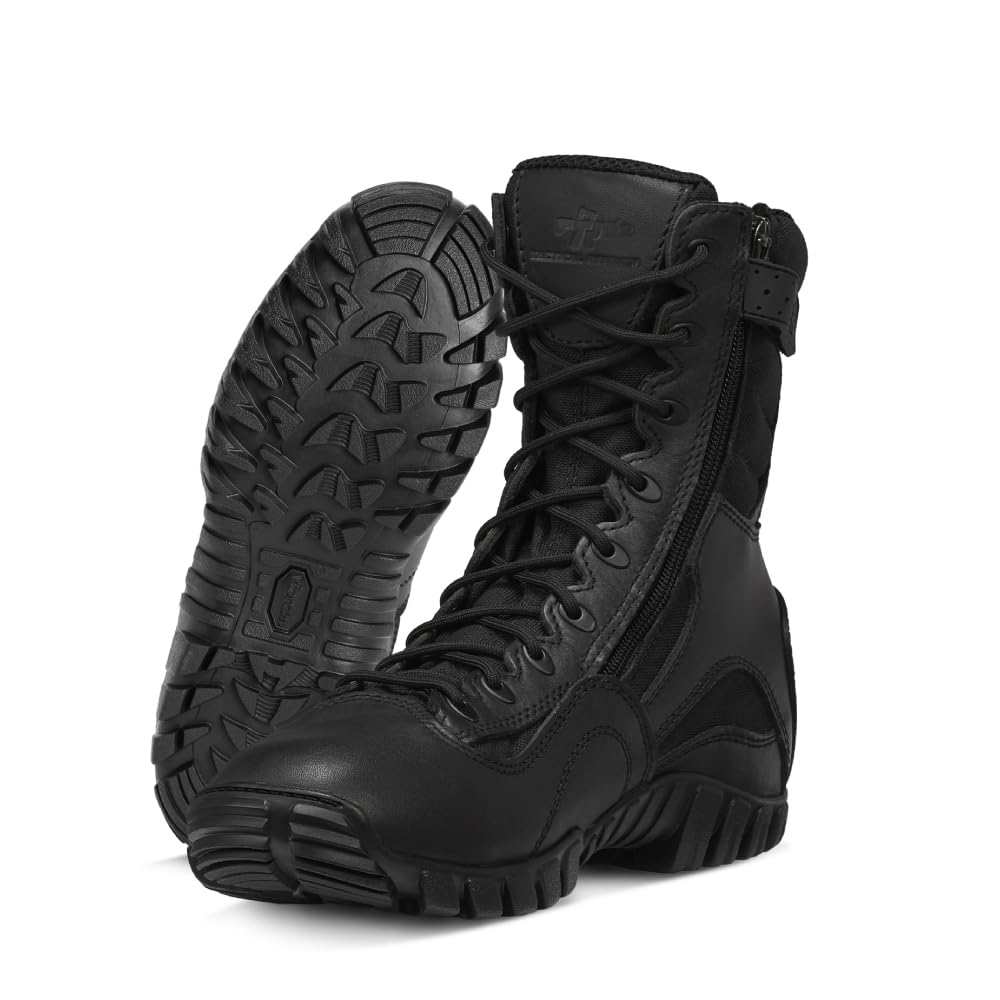
Belleville’s Tactical Research division built the TR960Z for users who log serious mileage — patrol officers and EMTs who walk 7 to 10 miles per shift. The Vibram Ibex outsole provides aggressive traction on loose gravel and wet pavement, while the TR-1 load-bearing orthotic insole supports the arch through prolonged standing. Reviewers consistently report two-plus years of daily wear, outlasting Bates, 5.11, and Hi-Tec boots by a wide margin.
The 8-inch cattlehide leather and nylon upper breathes well enough for Texas summers and holds heat for Midwest winters. The YKK coil zipper with a storm flap offers smooth operation, and the boot polishes to a professional shine for uniform requirements. Zero break-in is a common refrain — the polyurethane midsole and orthotic work together from the first step.
The curved zipper track is a known failure point after 11 to 13 months of heavy daily zip-unzip cycles, and the heel seam can fail early in abrasive desert terrain. For EMTs working mostly pavement and station environments, the TR960Z offers top-tier longevity and comfort at a mid-premium price point.
Why it’s great
- Outstanding longevity — often 2+ years of daily patrol
- Vibram Ibex sole grips wet and loose surfaces securely
- TR-1 orthotic insole reduces foot fatigue on long shifts
Good to know
- Curved zipper track may fail around 11-13 months
- Heel seam vulnerable in rugged desert conditions
4. Merrell Moab 3 Tactical 8″

Merrell took the Moab hiking boot DNA — famous for out-of-the-box comfort — and re-engineered it for tactical duty. The Moab 3 Tactical 8-inch uses a waterproof coated leather and mesh upper with a COMFORTBASE footbed and midsole that reviewers describe as feeling like sneakers even after eight hours of manual labor. The Vibram outsole delivers reliable traction on pavement, grass, and light trail environments.
Side zipper access is included, though some users note that the zipper alone doesn’t allow easy entry without unlacing — you still need to loosen the laces to slide in comfortably. The boot fits true to size for most, with enough volume for wide feet and low arches, and the lightweight build reduces fatigue during long walking shifts.
Waterproofing is functional but not heavy-duty — one reviewer noted the boot dries quickly after getting soaked. The Moab runs warm in summer due to the waterproof liner. For EMTs who spend more time on their feet walking than standing at scenes, this is a solid mid-range pick that bridges hiking comfort with duty requirements.
Why it’s great
- Sneaker-like comfort right out of the box
- Fits wide feet well — accommodates inserts
- Lightweight with good traction for pavement and trail
Good to know
- Side zipper still requires unlacing for proper entry
- Runs warm in hot weather due to waterproof liner
5. Thorogood Deuce 8″ Composite Toe

The Thorogood Deuce 8-inch brings a composite safety toe and a BBP X-Stream waterproof barrier — a combination that makes it a strong candidate for EMTs who need fluid protection without the weight of steel. The Z-Trac dual-density outsole offers aggressive lug traction on muddy or uneven terrain, and the SHOCK ZONE removable insole cushions the heel during high-impact movements.
Users who subjected the Deuce to military training reported that the boot lasted two years of strenuous activity before the sole partially separated in extreme heat — an adhesive repair fixed it easily. The composite toe is nearly unnoticeable during wear, and the boot polishes well enough for uniform inspections. The side zipper with a hook-and-loop flap simplifies removal at the station.
The boot runs stiff initially and requires a dedicated break-in period — expect several shifts before the leather and midsole conform to your foot. The pull tabs are known to break off after 6 to 12 months of use. For EMTs who prioritize a composite toe and BBP barrier over instant out-of-box comfort, this is a durable mid-range choice.
Why it’s great
- ASTM composite toe with BBP fluid barrier
- Lasted 2 years in military-grade training conditions
- Z-Trac outsole provides excellent muddy-terrain grip
Good to know
- Rigid construction requires break-in period
- Pull tabs prone to breaking after 6-12 months
6. Bates Tactical Sport 2 Mid
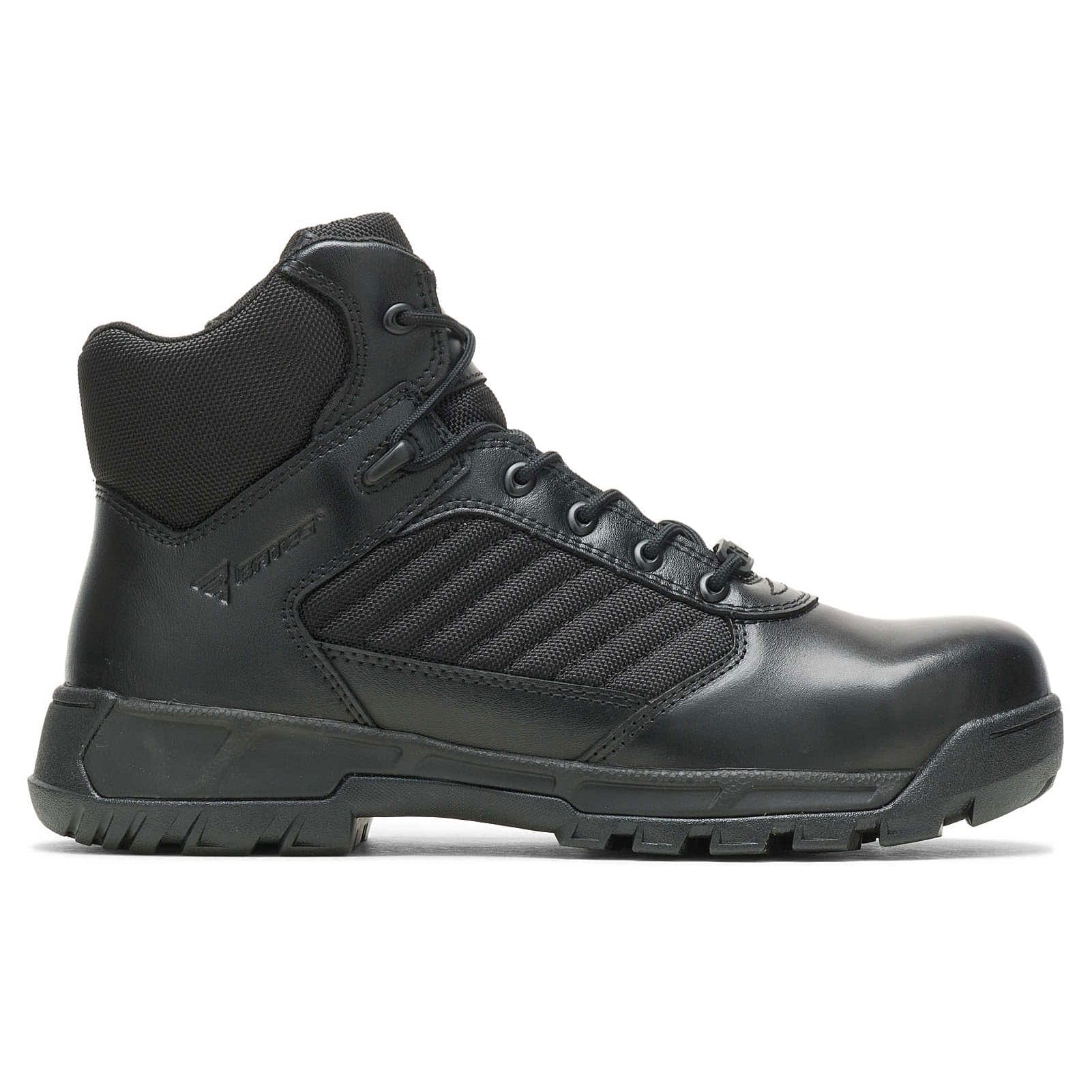
Bates aimed the Tactical Sport 2 Mid at the EMT who wants a composite toe and a side zipper without spending premium dollars. The boot weighs in at hiking-boot territory, making it easy to move through a scene without feeling clunky. The side zipper allows quick on-off transitions, and the overall fit runs true to size for most testers.
Reviewers highlight the comfort during full-day wear — the boot feels broken in from the start with minimal stiffness. The outsole offers good traction on dry and slightly wet surfaces, though it is not as aggressive on mud or loose gravel as the Thorogood Z-Trac. The toe leather is less durable than full-grain competitors, and the tongue seam may irritate the ankle during the first few shifts.
This is a boot best suited for EMTs in station or urban environments where heavy off-road traction is unnecessary. The combination of composite protection, zip convenience, and low weight makes it a compelling entry-level to mid-range option, but expect the toe leather to show wear faster than premium-tier models.
Why it’s great
- Lightweight feel similar to hiking boots
- Side zipper adds convenience for station use
- Composite toe protection without breaking the budget
Good to know
- Toe leather less durable than premium competitors
- Tongue seam may cause ankle irritation initially
7. Thorogood Crosstrex 6″ Waterproof

The Thorogood Crosstrex 6-inch boots bring ASTM F3445-21 slip certification to a hiker-style platform that many EMTs find more comfortable than full 8-inch tactical boots. The BBP waterproof membrane keeps feet dry without the bulk of a full structural boot, and the side zipper with a hook-and-loop flap maintains quick doffing capability. The Crosstrex is lighter and more flexible than the Deuce series, which makes it a strong candidate for warmer-weather EMS work.
Reviewers consistently praise the immediate comfort — one LEO noted that after months of heavy daily use, these were the best boots he had ever worn. The outsole grips smooth surfaces effectively, and the zipper mechanism is rugged enough to survive frequent cycles. The boot runs small; ordering a half size up accommodates thicker socks for winter shifts.
This boot lacks a composite or steel toe cap, which limits its use on scenes with heavy impact risks. It is best suited for EMTs who prioritize mobility, slip resistance, and waterproofing over impact protection, or as a station boot for lighter-duty rotations.
Why it’s great
- Slip resistance certified to ASTM F3445-21
- Lightweight hiker feel with waterproof BBP membrane
- Side zipper is rugged and easy to operate
Good to know
- No safety toe cap — impact protection limited
- Runs small; order half size up for thick socks
8. 5.11 Tactical Fast-Tac 8″
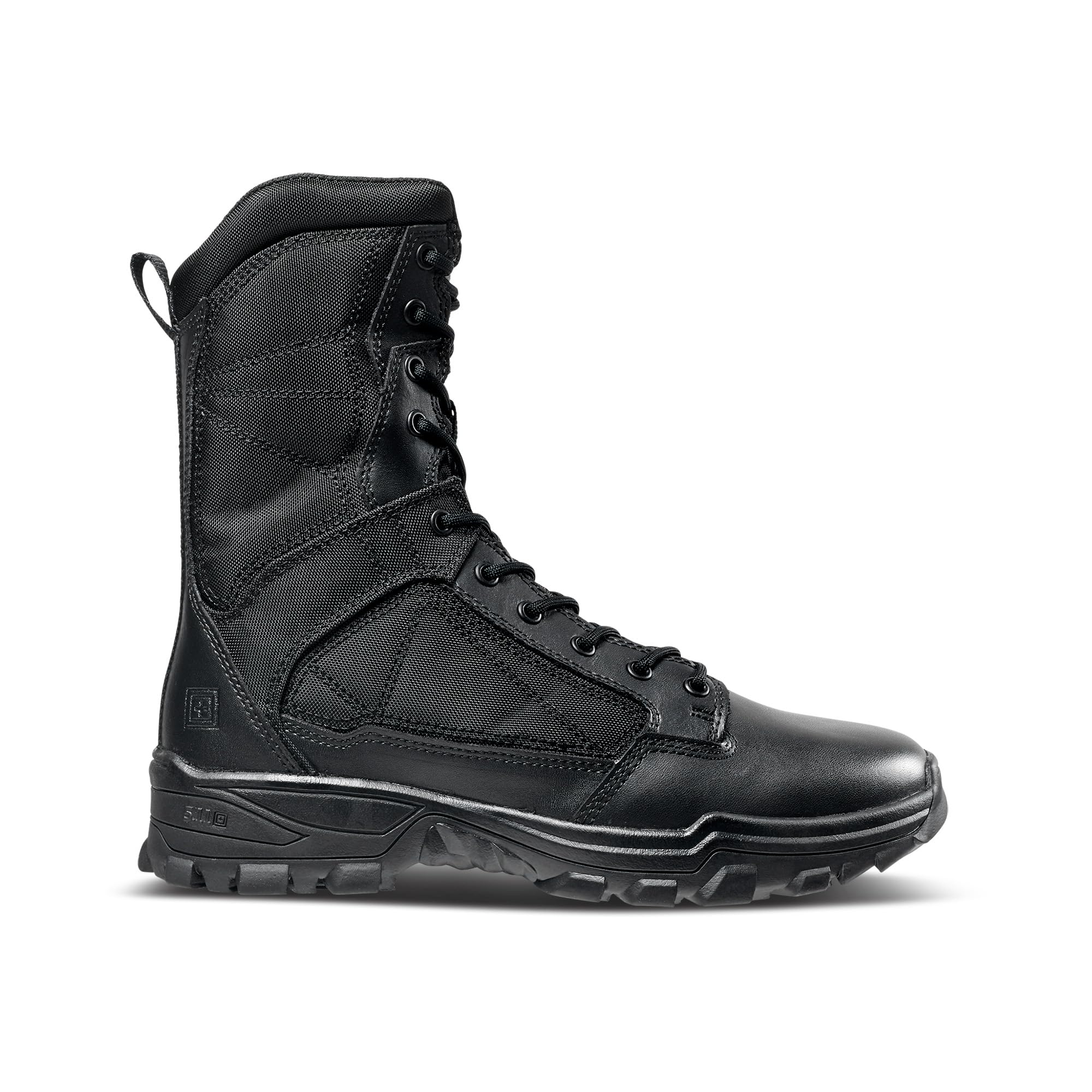
The 5.11 Tactical Fast-Tac 8-inch boot has been a department-store staple for years, and for good reason. It combines a full-grain leather toe with abrasion-resistant 840D nylon, creating a durable upper that survives daily patrol and station use. The Ortholite footbed offers better cushioning than many competitors in the same bracket, and the Speed Urban cup outsole provides reliable traction on wet pavement and polished floors.
One reviewer reported wearing these boots daily for over three years, covering thousands of miles before the sole wore smooth — a testament to the construction quality at this price point. The fit runs slightly narrow, so users with wider feet should consider ordering a half size up or moving to a wide-width variant if available. The boot lacks a side zipper, which is the most common complaint — you are lacing up every time.
For EMTs who prefer the security of a lace-only system or work in environments where zippers are a failure risk, the Fast-Tac delivers proven longevity and solid comfort. The lack of a composite toe and BBP barrier limits its suitability for high-risk medical scenes, making it better suited for light-duty or administrative EMS roles.
Why it’s great
- Proven 3-year lifespan under daily patrol use
- Ortholite footbed cushions long shifts effectively
- Full-grain leather toe resists scuffs and shines well
Good to know
- No side zipper — requires full lacing each time
- Narrow fit; size up for thick socks or wide feet
9. Rocky AlphaForce Zipper Composite Toe

The Rocky AlphaForce Zipper boots are a classic budget-duty option that punches above its weight for the price. They feature a composite toe meeting ASTM impact and compression standards, plus an ASTM F2413-11 Electrical Hazard rating — genuine safety features at an entry-level price point. The full-grain leather and 1000-denier nylon upper provides real durability, and the side zipper with a hook-and-loop flap enables quick on-off access.
The Air-Port cushion footbed circulates air and absorbs heel strike, and the RigiTrac outsole offers slip resistance on dry and lightly wet surfaces. One reviewer reported retiring a pair after three years of heavy industrial use, covering 8 to 19 miles per 20-hour shift — a remarkable lifespan for the price bracket. The boot takes about a day and a half to break in before the leather and midsole conform to your foot.
Build quality is inconsistent — some users report sole separation after a year, and the factory laces are cheap. The side zipper also cannot replace a properly tied lace for secure fit. For academy cadets, part-time EMTs, or anyone needing a certified safety boot on a tight budget, the AlphaForce delivers essential protection without the premium price tag.
Why it’s great
- Composite toe + EH rating at a compelling price
- Side zipper enables quick station transitions
- Reported 3-year lifespan in heavy industrial use
Good to know
- Build quality can be inconsistent — sole separation reports
- Factory laces are low quality; replace immediately
FAQ
What does NFPA 1999 certification mean for EMT boots?
Should I get a steel toe or composite toe for EMS work?
How important is a side zipper on an EMT boot?
Can I wear hiking boots instead of EMT-specific boots?
Final Thoughts: The Verdict
For most users, the boots for emt winner is the HAIX Airpower XR2 because it combines NFPA 1999 fluid certification, an ASTM composite toe, puncture resistance, and a quick zip-lace system in a single package that holds up for years. If you want the lightest boot with zero break-in and exceptional cushioning, grab the Under Armour Valsetz Zip. And for those covering high daily mileage on pavement who need Vibram sole longevity, nothing beats the Belleville Khyber TR960Z.