
Finding a boot that offers unfailing grip on slick, algae-covered river rocks while also draining water quickly and providing support during long wading sessions is the defining challenge of fly fishing footwear. The wrong choice leaves you fighting for balance instead of focusing on your drift.
I’m Min — the co-founder and writer behind Gadgets Feed. I’ve spent hundreds of hours analyzing sole compound data, drainage port designs, and ankle support geometries across dozens of wading boot models to identify the ones that actually perform when you’re mid-stream.
Whether you’re hiking rugged banks, standing for hours on a mossy riverbed, or navigating slippery tidal flats, finding the right boots for fly fishing directly influences your safety, comfort, and ability to stay in the water longer.
How To Choose The Best Boots For Fly Fishing
Selecting the ideal wading boot requires more than just matching your shoe size. You need to balance sole traction against local regulations, prioritize drainage speed to shed weight when surfacing, and decide on a closure system that offers secure fit through miles of uneven terrain.
Sole Type: The Anchor of Your Wading Setup
Felt soles deliver unmatched grip on slimy rocks and smooth river bottoms but are banned in several states due to invasive species concerns. Rubber soles with aggressive lugs or carbide studs are legal everywhere and perform better on muddy banks or when hiking to the water. Some boots now include interchangeable sole systems, letting you swap felt for rubber as conditions dictate.
Drainage and Dry Weight
A boot that holds water turns every step into a battle against gravity. Look for boots with internal drainage channels that funnel water through midsole ports — these systems expel water quickly so your boot lightens the moment you step onto dry ground. Mesh screen ports need to be fine enough to keep gravel out while letting water escape.
Support and Lacing Systems
Wading boots carry heavier loads (water-soaked waders, multiple layers) than hiking boots. Adequate ankle support prevents rolled ankles on shifting rocks. Speed laces, BOA dials, or cinching systems allow you to adjust fit quickly without fighting wet, muddy laces. A secure heel fit is critical — heel lift inside a wading boot causes blisters on long days.
Quick Comparison
On smaller screens, swipe sideways to see the full table.
| Model | Category | Best For | Key Spec | Amazon |
|---|---|---|---|---|
| Simms Freestone Boot | Rubber Sole | Premium Stability | Aggressive rubber lugs | Amazon |
| Korkers Darkhorse | Interchangeable | Versatile Traction | BOA M2 lacing system | Amazon |
| Orvis Clearwater Boot | Rubber Sole | Heavy Duty Support | Toe bumper reinforcement | Amazon |
| Korkers Greenback | Interchangeable | Fast Drying | OmniTrax sole system | Amazon |
| Columbia PFG Dry Tortugas | Deck Boot | Saltwater Flats | Vulcanized rubber upper | Amazon |
| XTRATUF 6″ Ankle Deck Boot | Deck Boot | All-Day Wear | 100% waterproof rubber | Amazon |
| FROGG TOGGS Deep Current | Budget Cleated/Felt | Budget Entry | 2-year warranty | Amazon |
| Foxelli Wading Boots | Budget Rubber | Lightweight Hiking | 1.5 lb weight estimate | Amazon |
| Paramount Outdoors Stonefly | Budget Cleated/Felt | Lightweight Value | Includes cleats | Amazon |
In‑Depth Reviews
1. Simms Men’s Freestone® Boot
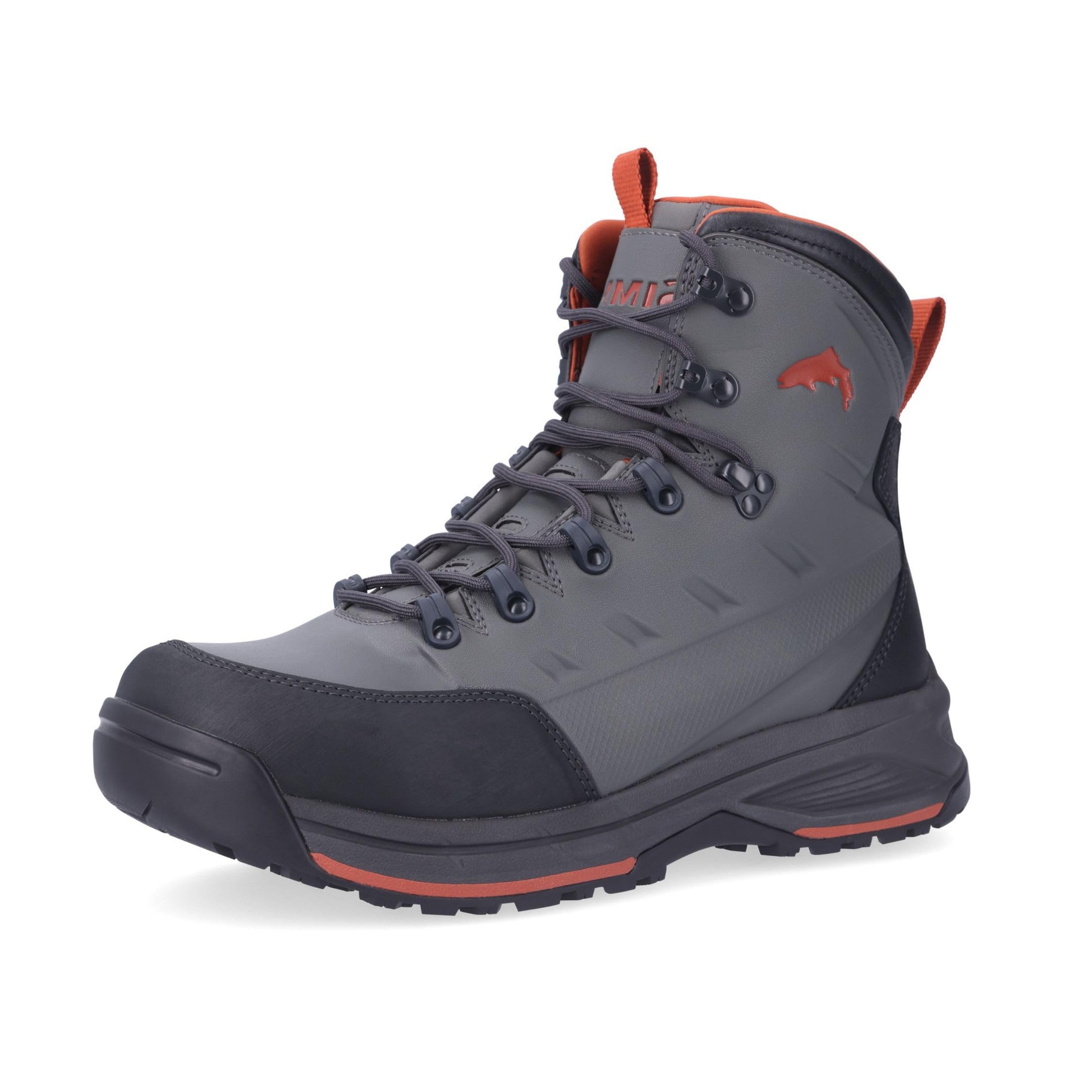
The Simms Freestone delivers the kind of stability that inspires confidence on technical wading terrain. The rubber sole features aggressive, widely spaced lugs that bite into loose gravel, cobble, and soft mud — a design that outperforms generic tread patterns when you’re crossing swift currents. The midsole is firm without being board-like, providing enough rigidity to support a heavy load of waterlogged waders without fatiguing your arches mid-afternoon.
The boot runs true to size and accommodates stocking-foot waders well, with a secure heel pocket that minimizes lift during steep bank climbs. The upper uses a synthetic material that resists abrasion from sharp rocks, and the rubber toe cap adds an extra layer of protection against stubs. Several customers noted the boots feel slightly clunky on dry land, but that clunkiness translates to planted authority when you’re standing on a shifting riverbed.
One trade-off is the weight — the Freestone isn’t the lightest boot in this class, and the rubber sole lacks the supernatural grip of felt on slick bedrock. But for anglers who fish varied terrain and need a single boot that handles everything from gravel bars to muddy banks, the Freestone’s all-around performance makes it hard to beat.
Why it’s great
- Exceptional stability and support for long wading days
- Durable synthetic upper and rubber toe cap
- Aggressive lugs grip well on mud and loose rock
Good to know
- Heavier than some competition
- Rubber sole can feel slick on polished bedrock without studs
2. Korkers Men’s Darkhorse Wading Boot

The Korkers Darkhorse addresses the biggest limitation of wading boots — fixed soles — with its OmniTrax interchangeable system. You get both felt and Kling-On rubber soles in the box, so you can switch from sticky-felt on mossy freestone rivers to rubber-studded traction on muddy banks in minutes. The BOA M2 lacing dial eliminates wet-lace frustration; one turn of the wheel cinches the boot securely, and a quick pull releases tension for removal.
The upper uses hydrophobic materials that drain water through internal channels and out midsole ports, noticeably reducing weight when you step ashore. The 3PFS Achilles stabilization design locks your heel in place, preventing the slip that causes blisters on long hikes. After heavy use on winter steelhead trips, anglers report the carbide-studded soles hold up well against miles of abrasive granite riverbeds.
The stock felt soles are adequate but some users swap them immediately for studded rubber when fishing tailwaters with heavy pressure. The boot runs slightly large — size down half a size if you wear thin wader socks. The Darkhorse is overkill for occasional pond fishing but ideal for serious anglers who fish varying conditions within a single season.
Why it’s great
- BOA dial makes on/off fast and easy
- Interchangeable soles adapt to any riverbed
- Excellent heel lock and ankle support
Good to know
- Stock felt soles are not as durable as aftermarket options
- Runs slightly large; consider sizing down
3. Orvis Clearwater Wading Boot
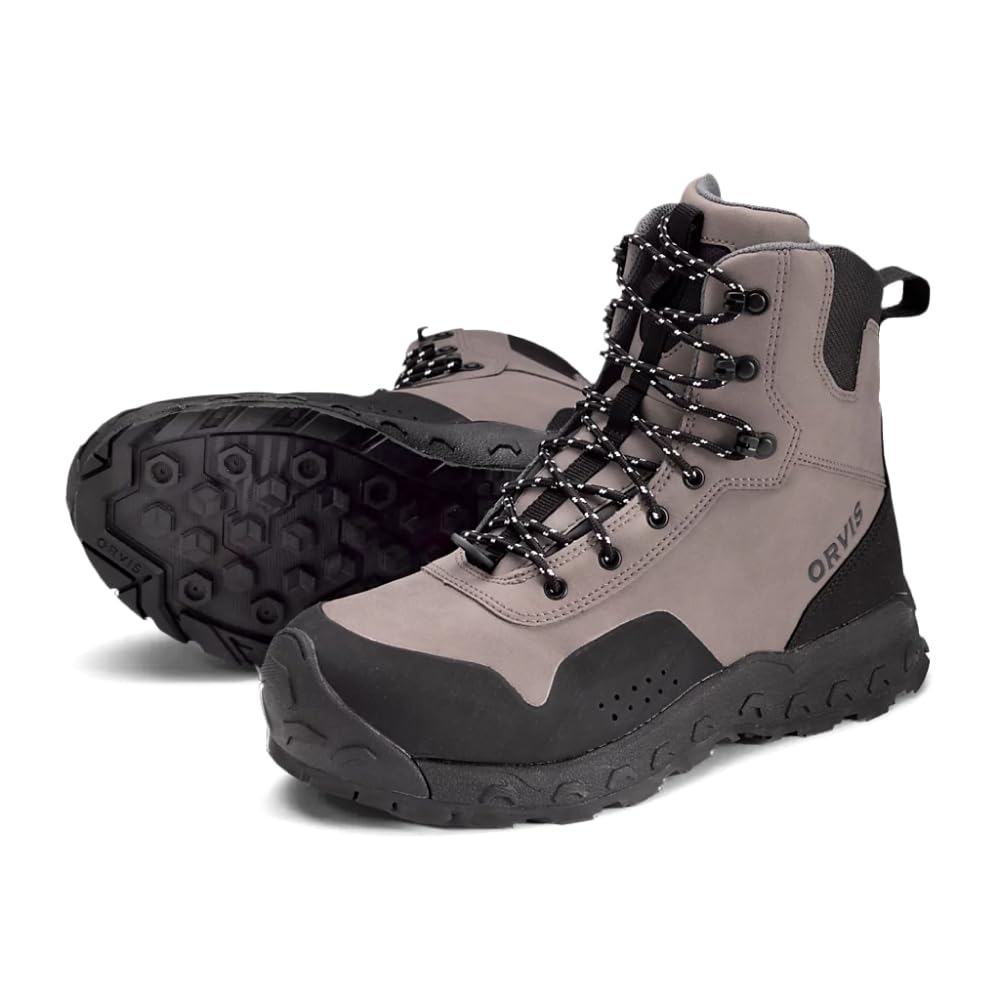
Orvis builds the Clearwater as a workhorse boot that prioritizes durability over frills. The rubber outsole uses large, widely spaced lugs designed to self-clean in mud rather than clogging into slick platforms. A thick rubber toe bumper wraps the front of the boot, protecting your toes from the constant impact of kicking against submerged boulders — a welcome feature for anglers who wade aggressively.
The boot fits true to size with stocking-foot waders, and the lace system extends high enough on the ankle to provide solid support without feeling restrictive. The materials lean stiff out of the box but break in quickly after a few trips. Customers consistently mention the boots handle slick banks and long approach trails to remote rivers without any loss of grip.
Some users find the Clearwater clunky compared to lighter boots like the Foxelli, but that heft correlates directly with the ruggedness of the construction. The boot lacks a speed-lace system or BOA dial, so you’ll be tying wet laces each time you stop to adjust. For anglers who regularly fish rocky tailwaters and need a boot that won’t disintegrate after a single season, the Clearwater delivers.
Why it’s great
- Heavy-duty toe bumper protects against rock impacts
- Self-cleaning lug pattern sheds mud effectively
- Fits true to size with standard waders
Good to know
- Traditional laces are slow to adjust when wet
- Heavier than mid-range competition
4. Korkers Greenback Wading Boot

The Korkers Greenback is the logical entry point into the interchangeable sole world without the BOA premium of the Darkhorse. It shares the same OmniTrax platform, shipping with both felt and Kling-On rubber soles so you can match traction to your home water. The hydrophobic upper material drains quickly through internal channels and midsole ports, which keeps the boot lighter when you’re portaging around obstacles.
The fit is true to size, and the boot works well with medium-weight stocking-foot waders. The lace-up closure uses traditional laces with a quick-cinch design that speeds up adjustments compared to standard laces. The Greenback runs lighter than many felt-bottom boots in its class, making it a solid choice for hikers who walk a mile or more to reach their fishing spots.
The main compromises are in long-term durability — the synthetic upper is less abrasion-resistant than rubber or leather options, and the included felt soles, while grippy, wear faster on rocky terrain. Several users noted that installing the soles requires firm pressure and some patience. For anglers who fish varied but not extreme conditions, the Greenback offers excellent value and unmatched flexibility.
Why it’s great
- Lightweight and drains faster than most competitors
- Two sole types included for adaptable traction
- Quick-cinch laces simplify adjustments
Good to know
- Upper less durable against sharp rocks
- Sole installation can be fiddly
5. Columbia Men’s PFG Dry Tortugas
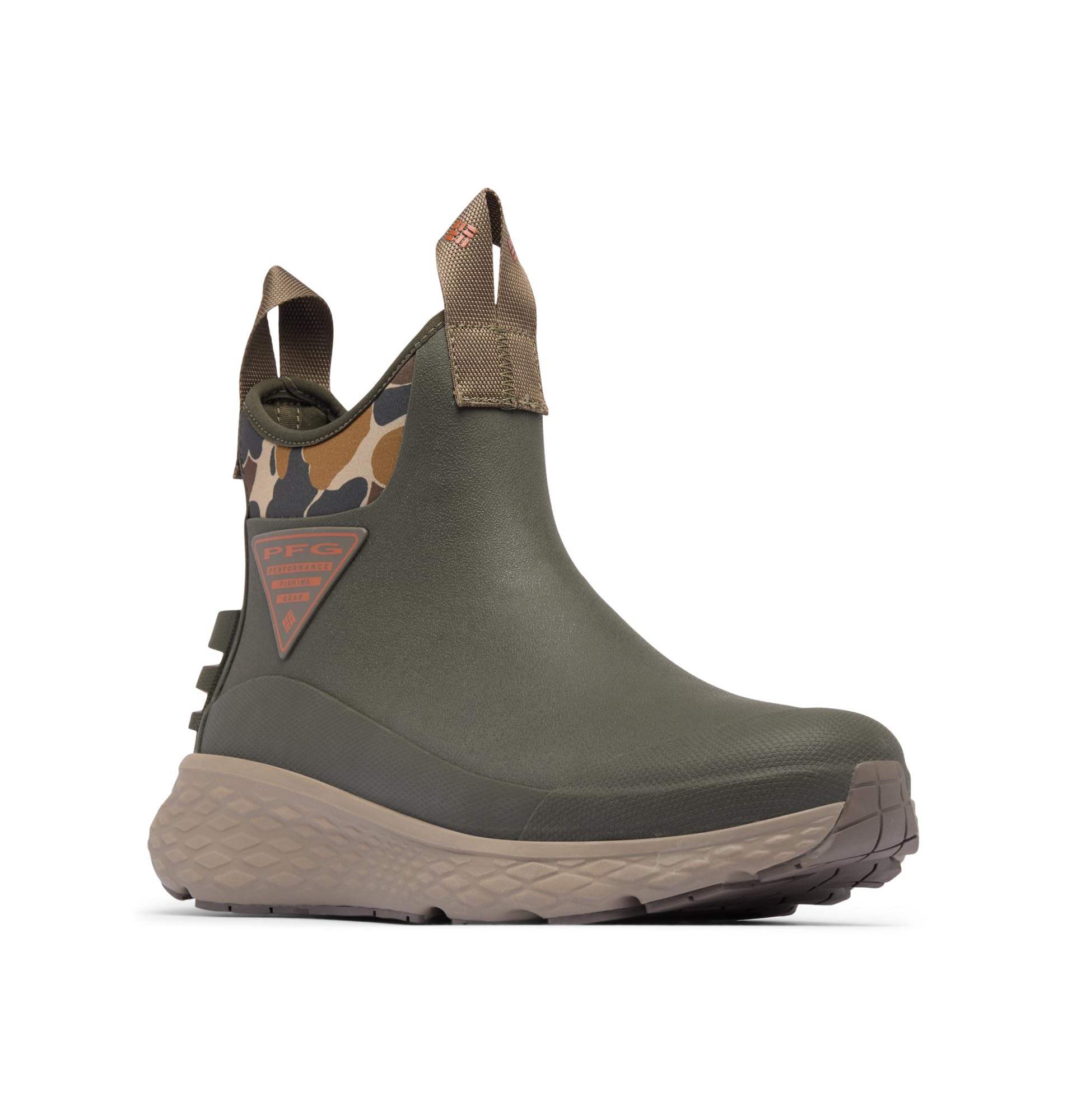
Columbia’s Dry Tortugas is not a wading boot in the traditional sense — it’s a vulcanized rubber deck boot re-engineered for the specific demands of saltwater flats fishing. The outsole incorporates flex grooves that let the boot move naturally with your stride, reducing fatigue during the constant repositioning required on a skiff or while poling across a flat. The cushioning is noticeably plusher than most wading boots, rivaling sneaker-level comfort.
The vulcanized rubber upper is completely waterproof, and the low-cut ankle height allows unrestricted movement while still keeping your feet dry in shallow water. The slip-on design with rear pull tabs makes them easy to remove when transitioning from boat to bank. Anglers who wear them daily report they hold up well, with the caveat that the rubber is softer than XTRATUF’s compound and may wear faster on abrasive surfaces.
The boot runs large — go a full size down from your regular sneaker size for a snug fit. The wide ankle opening creates a loose feel around the heel for some users, which can be an issue if you need precise ankle support. These are best suited for boat-based fly fishing where you mainly stand on decks or sandy flats, not for hiking miles of rocky riverbanks.
Why it’s great
- Very comfortable for all-day wear on the boat
- Flex grooves enhance natural foot motion
- Easy on and off with rear pull tabs
Good to know
- Runs large; plan to size down
- Soft rubber may wear faster on rough ground
6. XTRATUF 6″ Men’s Ankle Deck Boot Sport
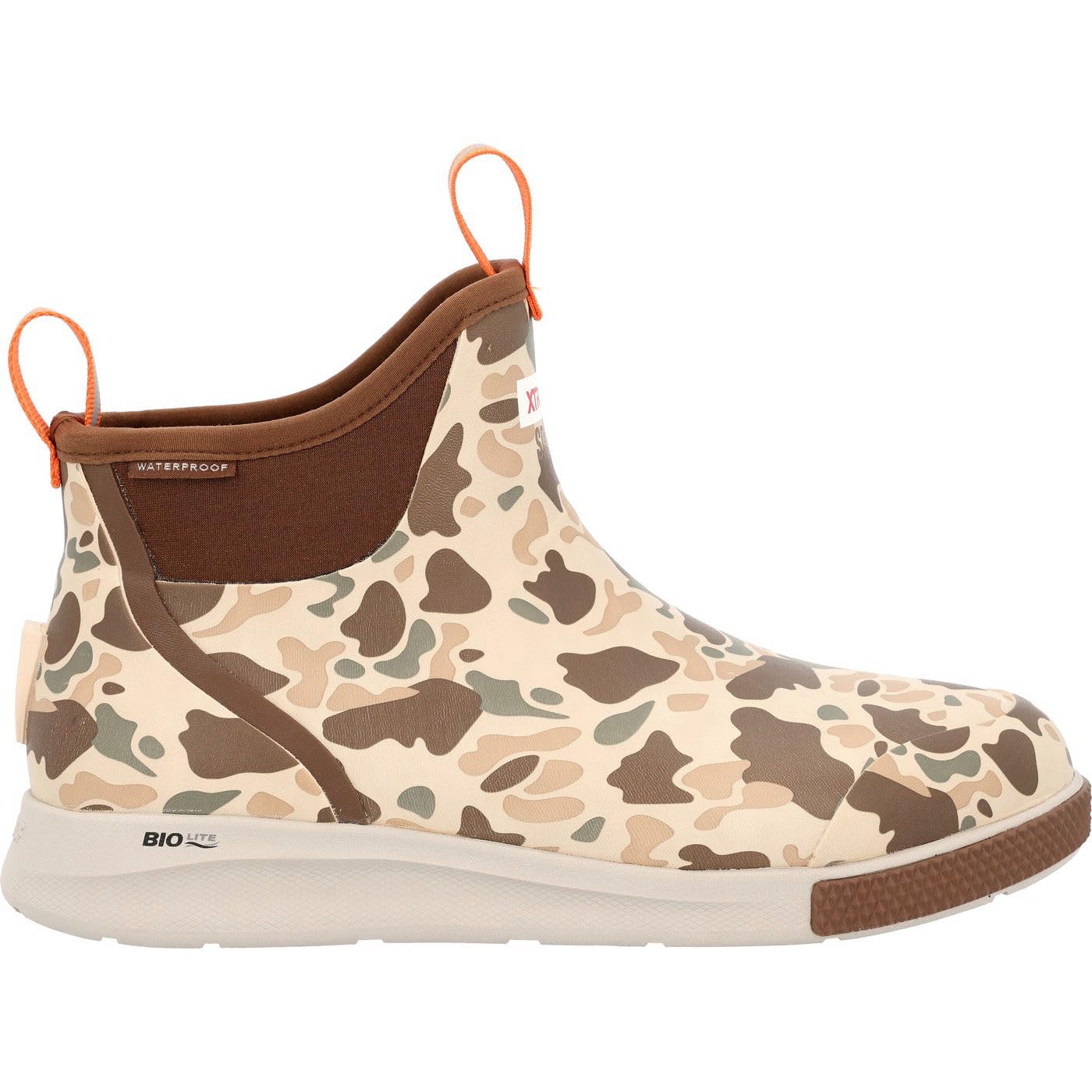
XTRATUF’s reputation in the fishing community is built on its legendary waterproofing, and the 6″ Ankle Deck Boot Sport carries that DNA into a lighter, more flexible package. The slip-resistant rubber outsole grips wet boat decks and sandy beaches well, though it’s not designed for technical wading on loose rock.
The moisture-wicking liner keeps feet comfortable in warmer conditions, and the shorter 6-inch height allows for easy bending and kneeling without the rubber binding behind your knee. The boot runs true to sneaker size, with enough room for a thin sock or light neoprene layer. Multiple customer reviews confirm the rubber holds up well against saltwater exposure, with no splitting or cracking after months of regular use.
The trade-off is predictability — this boot excels at what it was designed for: fishing from a boat or dock, light wading on sand or firm mud, and general outdoor chores. It is not suitable for serious river wading where you need aggressive lugs or ankle support. The price point places it in the mid-range, and the durability makes it a long-term investment for boat-centric anglers.
Why it’s great
- Legendary waterproof construction proven in saltwater
- 30% lighter than classic XTRATUF for all-day wear
- No break-in period needed out of the box
Good to know
- Not built for technical river wading
- Sole lacks aggressive lugs for loose rock
7. FROGG TOGGS Men’s Deep Current Waterproof Wading Boot

FROGG TOGGS brings 26 years of rainwear and wading experience into the Deep Current, a budget-friendly boot that punches above its price point. The boot is available in either a heavy-duty rubber cleated outsole or a traditional felt sole, letting you choose based on your local regulations. The ankle support is surprisingly robust for a budget model — the broad platform and supportive shaft help you stay upright on uneven riverbeds.
Water-draining micro screen ports prevent sand and gravel from entering while allowing water to escape quickly. The additional toe and heel protection shields against stub injuries, and the large heel pull makes the boot easy to remove after a long day. The nylon laces are high-density and hold up better than standard cotton laces, which tend to rot over time. Many users report these boots handle 3-5 miles of varied terrain per trip without blistering.
The main area where the Deep Current shows its budget origin is the outsole grip — the rubber cleated version struggles on slick mud and needs added studs for reliable traction on polished rock. The boot runs true to size or slightly large, which works well with neoprene wader booties. For anglers who fish primarily sandy or gravel-bottom rivers, this boot delivers strong value.
Why it’s great
- Excellent ankle support for a budget boot
- Available in felt or cleated sole options
- Durable nylon laces and micro screen drainage
Good to know
- Rubber cleated sole lacks grip on slick mud
- Budget construction shows in outsole compound
8. Foxelli Wading Boots for Men

Foxelli has carved out a reputation for building lightweight wading boots that feel more like hiking boots than traditional clunky wading footwear. The rubber sole features a multi-directional lug pattern that performs admirably on loose gravel, packed dirt trails, and even sharp rocks — several anglers report wearing these for years on Western US terrain with minimal sole degradation. The weight savings are immediately noticeable when you’re covering long distances to reach remote water.
The boot runs slightly large, so check your wader bootie thickness when selecting a size. The removable insole allows you to swap in custom orthotics or let the boot dry faster between trips. The lace-up design extends high enough to provide solid ankle support, and the tongue construction prevents debris from entering through the lacing area. After five years of heavy use, one reviewer noted the boots looked nearly new with proper care.
The rubber outsole loses grip on wet moss — it is not as reliable as felt or a studded sole on slick bedrock. The water resistance is limited to the upper boot; once water goes over the sole level, the boot soaks through, but that is typical for non-neoprene wading boots. For anglers who prioritize hiking comfort and durability over extreme aquatic traction, the Foxelli is a standout value.
Why it’s great
- Very lightweight and comfortable for long hikes
- Removable insole for custom fit and faster drying
- Excellent durability reported over multiple seasons
Good to know
- Rubber sole is slippery on wet moss without studs
- Water resistance is minimal above the sole line
9. Paramount Outdoors Stonefly Cleated and Felt Sole Wading Shoe

The Paramount Outdoors Stonefly aims to deliver an affordable entry point into felt-soled wading without sacrificing traction. The boot comes with a felt sole and includes metal cleats that you can screw in for additional grip on the most slippery surfaces. The shoe profile is light and roomy — the boot runs large, so you have ample space for thick neoprene wader socks without feeling cramped.
The Stonefly drains and dries quickly thanks to its mesh and synthetic construction. The lightweight design makes it easy to pack for travel, and the price point makes it a low-risk option for beginners or occasional anglers. Several users reported that after 7 months of regular use, the boot showed no signs of delamination or sole separation, outperforming expectations for the cost.
The main weakness is ankle support — the boot is low-cut and flexes easily, which is fine on even terrain but leaves you vulnerable to rolled ankles on uneven rocks. The included cleats are effective but some anglers lose screws over time, which is typical for budget cleat systems. The Stonefly is best suited for light to moderate wading on sandy or gravel riverbeds where ankle support is less critical.
Why it’s great
- Felt sole with included cleats for versatile grip
- Very lightweight and quick-drying construction
- Roomier fit accommodates thick wader booties
Good to know
- Minimal ankle support on uneven terrain
- Cleat screws can loosen and fall out over time
FAQ
Should I choose felt or rubber soles for my wading boots?
How should wading boots fit with neoprene wader booties?
Final Thoughts: The Verdict
For most users, the boots for fly fishing winner is the Simms Freestone Boot because it delivers the best balance of stability, durable construction, and reliable grip for a wide range of river conditions. If you want versatile traction that adapts to changing riverbeds, grab the Korkers Darkhorse. And for saltwater flats fishing from a boat, nothing beats the Columbia PFG Dry Tortugas for comfort and easy on-off convenience.