
The difference between a good day in the forest and a trip to the ER often comes down to what’s on your feet. Logging boots need to resist chainsaw cuts, survive deep mud, grip wet timber, and keep your toes safe from falling weight — all while you’re on your feet for twelve straight hours. A standard work boot simply won’t cut it.
I’m Min — the co-founder and writer behind Gadgets Feed. I’ve spent hundreds of hours analyzing cut-resistance ratings, sole compounds, steel shank designs, and waterproof membrane technologies to separate the boots that actually protect loggers from the ones that just look tough on a shelf.
Every pair reviewed below meets the core safety requirements for forestry work, and I’ve organized them to help you find the best boots for logging based on your specific terrain and budget.
How To Choose The Best Boots For Logging
Logging boots are safety equipment first and footwear second. The wrong pair compromises your grip, your stability, and your protection against cuts and impacts. Here are the critical factors to evaluate before you buy.
Toe Protection: Steel vs. Composite
Steel toes offer the highest impact and compression resistance at the lowest cost, but they conduct cold and are heavier. Composite toes (usually fiberglass or carbon fiber) are lighter and non-conductive, making them a better choice for winter conditions and electrical hazard environments. Both must meet ASTM F2413 standards for logging work.
Outsole Traction and Logger Heel Design
The classic logger heel — a raised, sharply angled heel — digs into soft ground and helps you grip logs when climbing or walking on slopes. The outsole material matters just as much. Vibram rubber compounds like the TC4 Plus and 261K provide superior grip on wet bark and muddy inclines compared to standard rubber blends.
Waterproofing and Cut Resistance
A waterproof membrane (like Scubaliner or TimberDry) keeps feet dry through creek crossings and rain, but not all membranes breathe equally. If you work in hot conditions, look for a boot with moisture-wicking lining to avoid sweat buildup. Chainsaw-rated cut protection is rare in standard logger boots — if you run a saw daily, prioritize boots that carry an ASTM F3325 chainsaw cut score.
Quick Comparison
On smaller screens, swipe sideways to see the full table.
| Model | Category | Best For | Key Spec | Amazon |
|---|---|---|---|---|
| Carolina Composite Toe Logger | Premium | All-day comfort on rough terrain | Vibram 261K outsole | Amazon |
| Chippewa Thunderstruck | Premium | Heavy-duty logging and construction | Vibram Thunderstruck TC4 Plus | Amazon |
| Timberland PRO Boondock HD | Premium | Insulated waterproof work in wet cold | All-Weather TPU outsole | Amazon |
| Carolina 8″ Logger (Steel Toe) | Mid-Range | Tree climbing and uneven terrain | Triple-rib steel shank | Amazon |
| Georgia Boot LTX Logger | Mid-Range | Lightweight composite toe work | 25% lighter than standard loggers | Amazon |
| Carolina Elm 8″ Steel Toe Logger | Mid-Range | Linemen and industrial work | Pillow Cushion memory foam | Amazon |
| SAFETOE Ultra Cow Leather | Budget | Entry-level chainsaw protection | Kevlar puncture-resistant plate | Amazon |
In‑Depth Reviews
1. Carolina Composite Toe Logger Boots
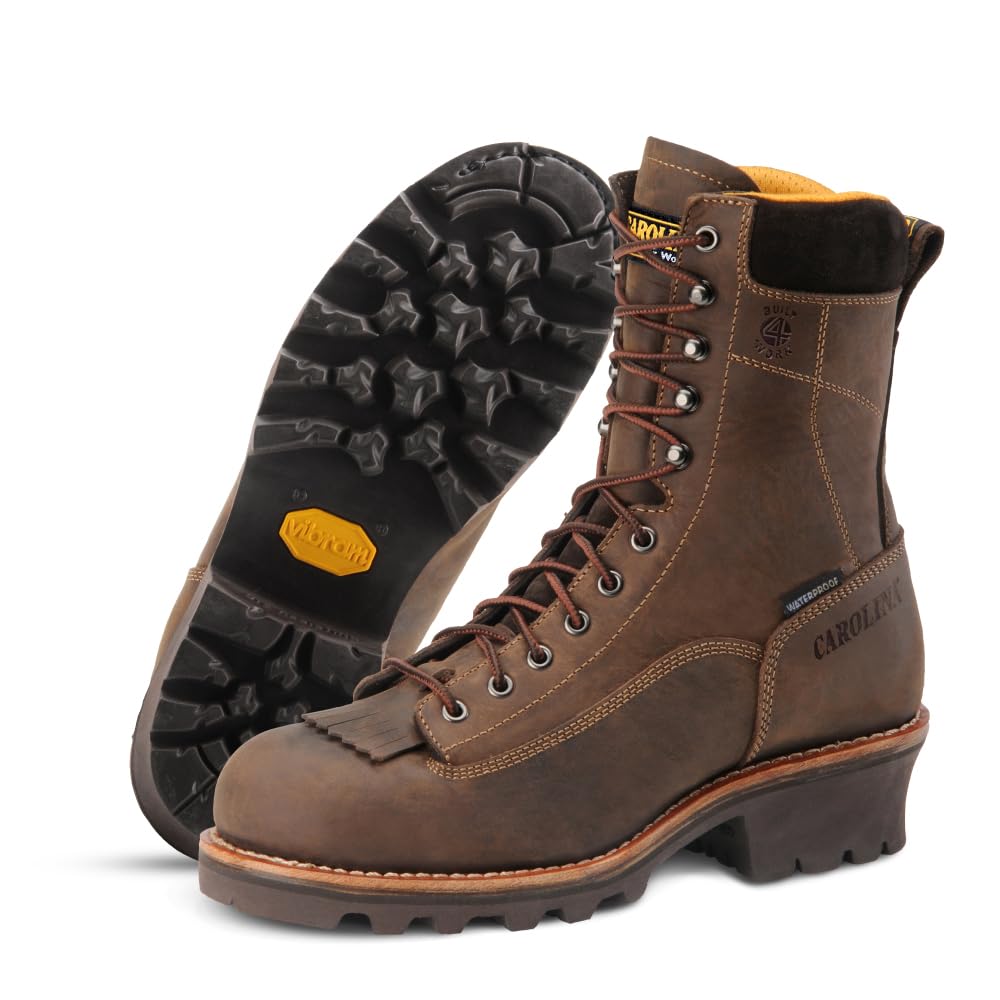
The Carolina Birch composite toe logger delivers the full package for demanding work sites. The full-grain leather upper is paired with a Vibram 261K rubber outsole, which provides aggressive traction on wet bark and loose soil. The Scubaliner waterproof membrane keeps feet dry through standing water and rain without trapping excessive heat, making it a strong year-round option for loggers in variable climates.
AG7 footbed with arch support reduces fatigue during twelve-hour shifts, and the composite toe meets ASTM F2413 safety standards while staying significantly lighter than steel toe alternatives. Users have noted the boot requires a break-in period of several days, but once settled, the support is excellent for climbing, gravel walking, and heavy equipment operation. The non-metallic toe also eliminates cold conduction in winter.
The Vibram sole is slip-resistant per ASTM F3445 standards, and the Goodyear welt construction allows for resoling when the tread wears down. Electrical hazard protection adds another layer of safety for anyone working near power lines or generators. This is the boot that balances protection, comfort, and longevity better than any other in this list.
Why it’s great
- Vibram 261K outsole delivers top-tier wet-surface grip
- Scubaliner waterproofing is breathable and effective
- Composite toe is lightweight and non-conductive
Good to know
- Requires a break-in period of several days
- Not insulated for extreme cold weather
2. Chippewa Thunderstruck Composite Toe Logger
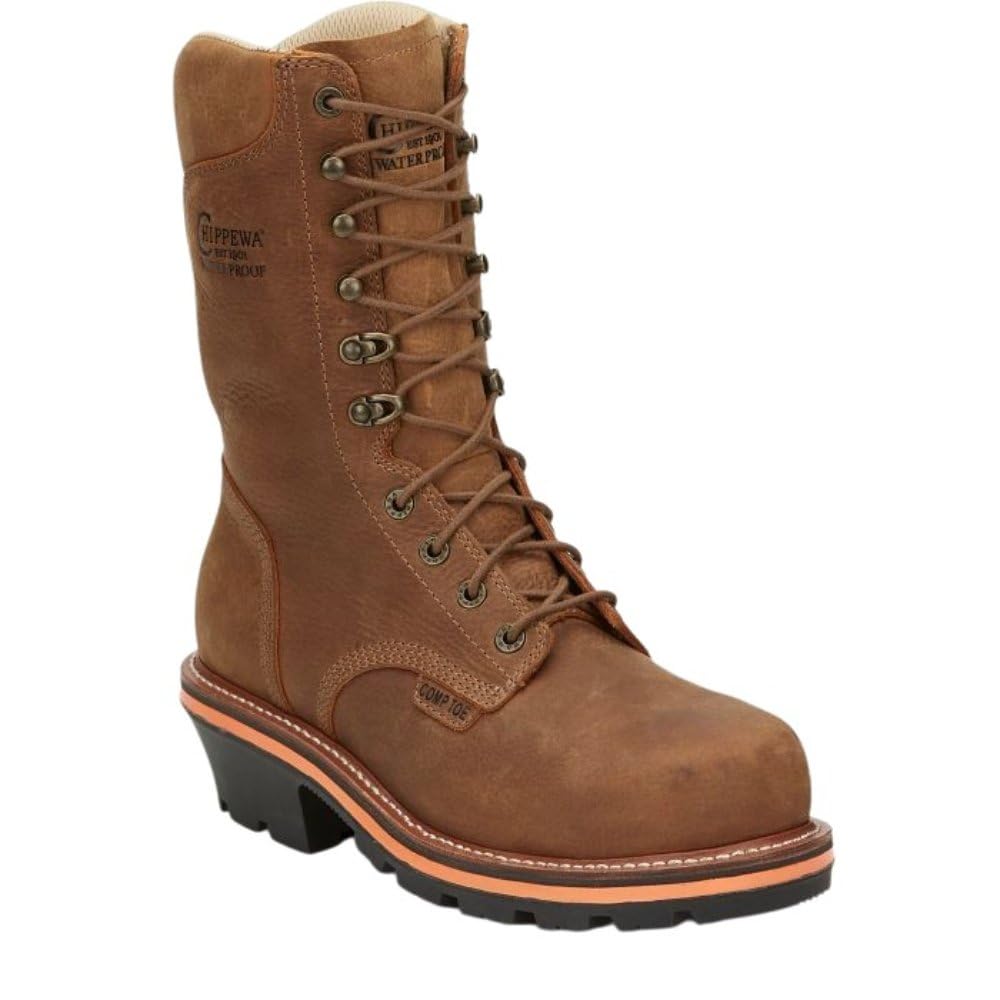
The Chippewa Thunderstruck brings a 10-inch shaft height and a Vibram Thunderstruck TC4 Plus outsole to the table, giving loggers maximum ankle support and grip on steep, unstable surfaces. The full-grain waterproof leather is thick and durable, and the nano composite toe reduces weight while maintaining impact protection. The Ortholite triple-density insole provides excellent cushioning for long days on your feet.
Steel shank construction runs the full length of the boot, providing the torsional rigidity needed for climbing and walking on fallen timber. The raised logger heel bites into soft ground effectively, and the high gusset keeps debris from entering the boot. Users have noted the boots are comfortable for all-day wear after a break-in period, and the Vibram sole holds up well to abrasive surfaces like concrete and gravel.
Some users have reported quality control issues with sole materials breaking down prematurely, and the boots are no longer made in the USA despite the premium price. The closed metal eyelets can make lacing difficult, and there is no pull loop for easy entry. For anyone prioritizing pure traction and ankle stability, however, this boot is hard to beat.
Why it’s great
- 10-inch shaft height for exceptional ankle support
- Vibram TC4 Plus outsole grips wet logs and loose terrain well
- Ortholite insole reduces foot fatigue during long shifts
Good to know
- Some users experienced premature sole breakdown
- Not made in the USA despite the price point
3. Timberland PRO Boondock HD Logger Composite Safety Toe
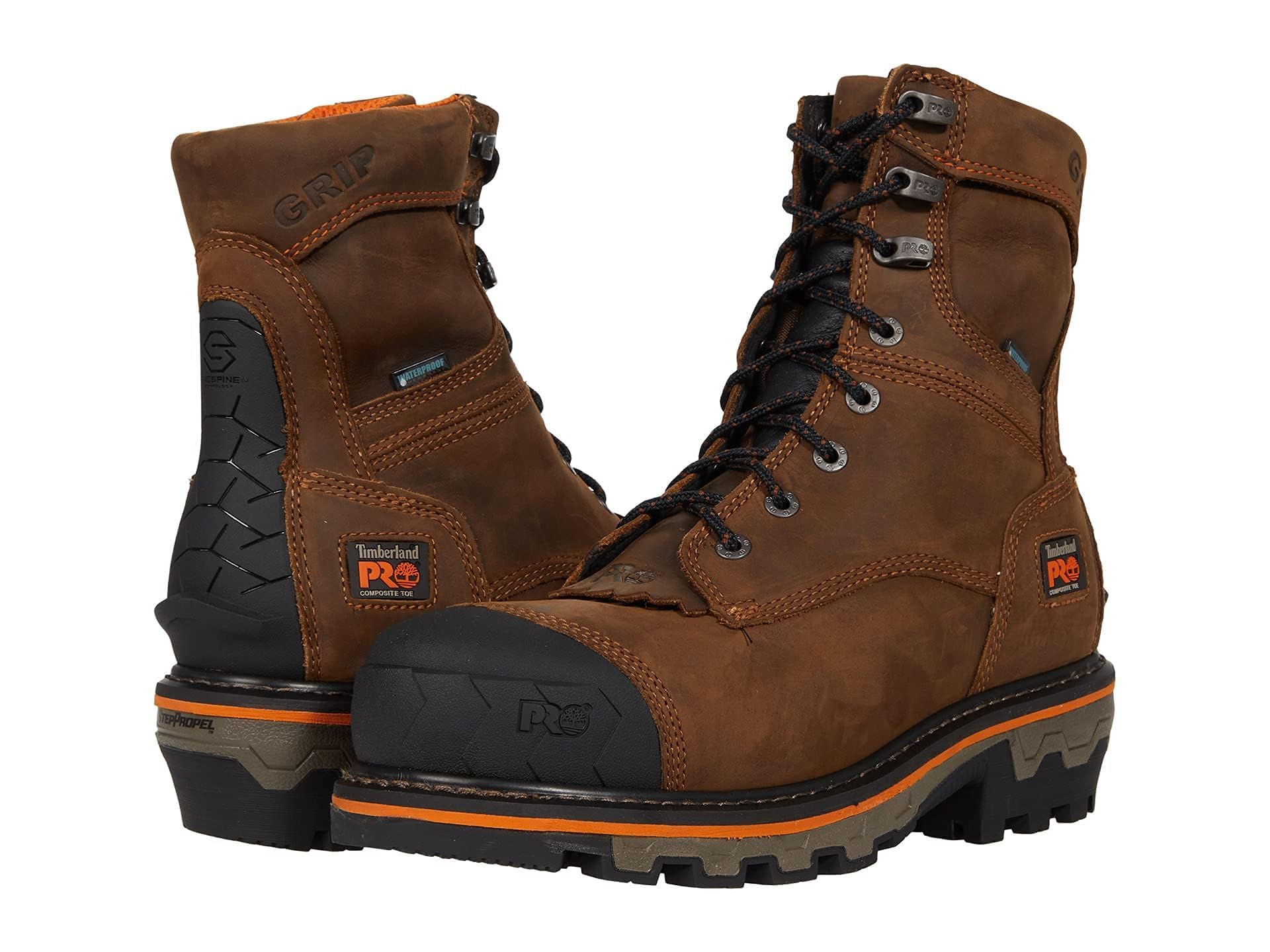
The Timberland PRO Boondock HD is engineered for the coldest, wettest conditions a logger will face. The All-Weather TPU outsole is formulated to stay flexible and maintain traction on wet ice and frosted surfaces, which is critical when working in winter forests. CarbonShield nanotechnology in the toe cap adds strength while keeping the boot lighter than traditional steel toe options.
The waterproof membrane meets ASTM F1671-07 standards, and the Exospine technology improves heel fit and structural durability. The Step Propel footbed uses compressed beads to return energy with each step, which noticeably reduces fatigue on long hikes through the woods. Users have reported the boots lasting two years of heavy use, including work as a garbage man in wet conditions, which speaks to the durability.
The boot does not breathe well — several users noted excessive sweating and foot odor due to the chemical-heavy materials and lack of ventilation. The TPU outsole also wears down faster than Vibram rubber on abrasive surfaces like concrete. This is a specialized cold-weather tool, and it excels in that niche, but it may feel stifling in warm climates.
Why it’s great
- All-Weather TPU outsole grips ice and wet surfaces effectively
- CarbonShield toe is lightweight and meets ASTM safety standards
- Step Propel footbed returns energy with each step
Good to know
- Poor breathability leads to sweating and odor
- TPU outsole wears faster than Vibram on hard surfaces
4. Carolina 8″ Logger Boots (Steel Toe)

The Carolina 8-inch steel toe logger boot is built for tree climbing and steep terrain. The triple-rib steel shank provides superior structural support compared to standard single-rib shanks, preventing the boot from twisting when you are standing on a narrow branch or a log. The tapered logger heel gives you a secure bite when walking on loose bark and muddy inclines.
The memory foam footbed cushions your foot during long days, and the removable kiltie keeps debris out of the lacing area. The steel toe cap meets ASTM impact and compression standards, and the electrical hazard protection adds safety for linemen working near live wires. Users have noted the boot fits well in wide sizes and feels rugged immediately out of the box.
The sole is stiff initially and requires some wear before it flexes naturally. The leather is high quality but needs regular conditioning to stay waterproof, and the boot is not insulated, so it is best for three-season use. For loggers who spend most of their day climbing or balancing on uneven surfaces, this boot offers the best stability in the mid-range category.
Why it’s great
- Triple-rib steel shank prevents twisting on uneven terrain
- Tapered logger heel bites into soft ground effectively
- Memory foam footbed provides all-day cushioning
Good to know
- Sole is stiff initially and requires break-in
- Not insulated for cold weather use
5. Georgia Boot LTX Composite Toe Logger
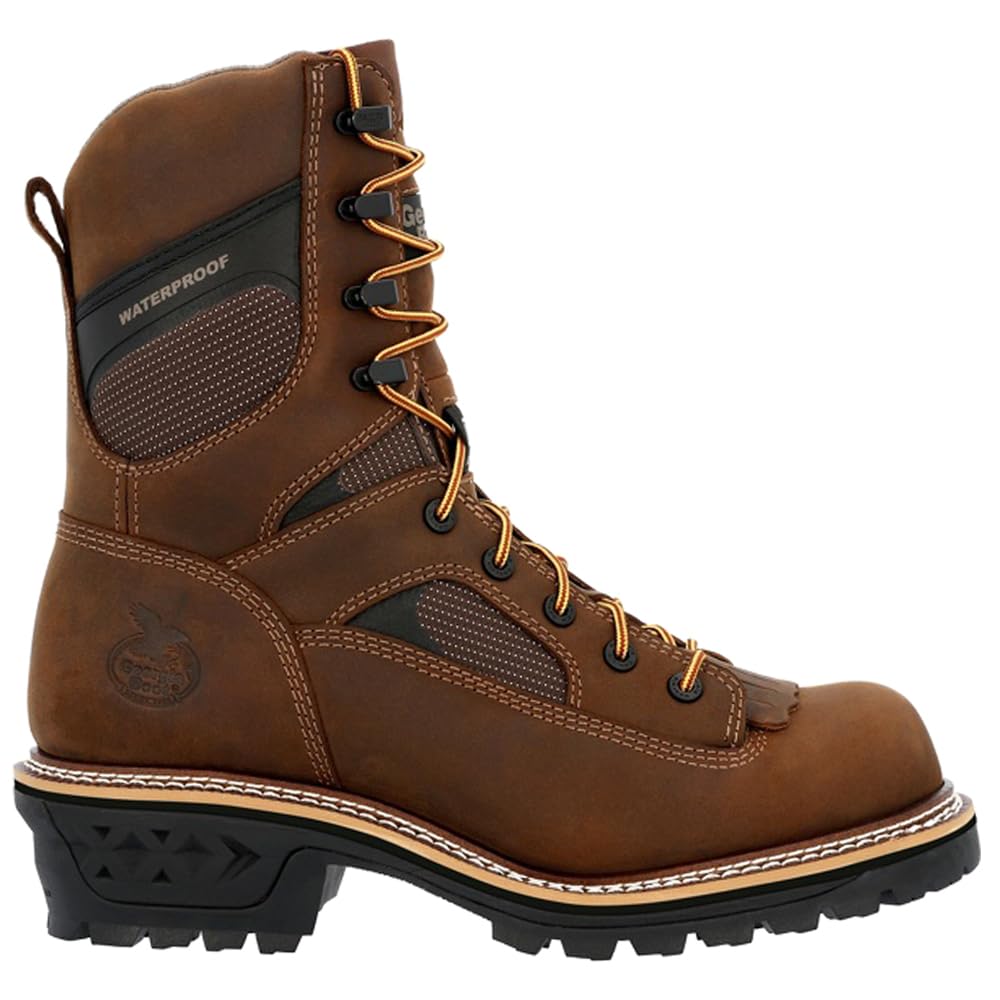
The Georgia Boot LTX Logger stands out for its weight — it is 25 percent lighter than standard logger boots without sacrificing the key safety features. The composite toe cap is ergonomically shaped to give toes better range of motion, which reduces fatigue during long days of walking and crouching. The upper uses a combination of full-grain leather and high-abrasion textile for durability where you need it and flexibility where you move.
The Stretch Gusset Technology allows the boot to flex naturally with your ankle, improving mobility when climbing or kneeling. The 5-ribbed steel shank provides double the width and support of a traditional steel shank, which makes a noticeable difference when carrying heavy loads across unstable ground. Users have reported the boot feels broken in from the first wear and works well in snow and on concrete.
Some users have reported the heel wearing down within six months of heavy use, particularly when climbing poles for telecom work. The boot is also not waterproof — it is water-resistant at best, so it is not ideal for wet environments. For loggers who prioritize mobility and lightweight comfort over maximum durability, this is an excellent choice.
Why it’s great
- 25 percent lighter than standard logger boots
- 5-ribbed steel shank offers superior arch and twist support
- Ergonomic composite toe improves toe movement
Good to know
- Heel tread may wear down within six months of pole climbing
- Only water-resistant, not fully waterproof
6. Carolina Elm 8″ Steel Toe Logger
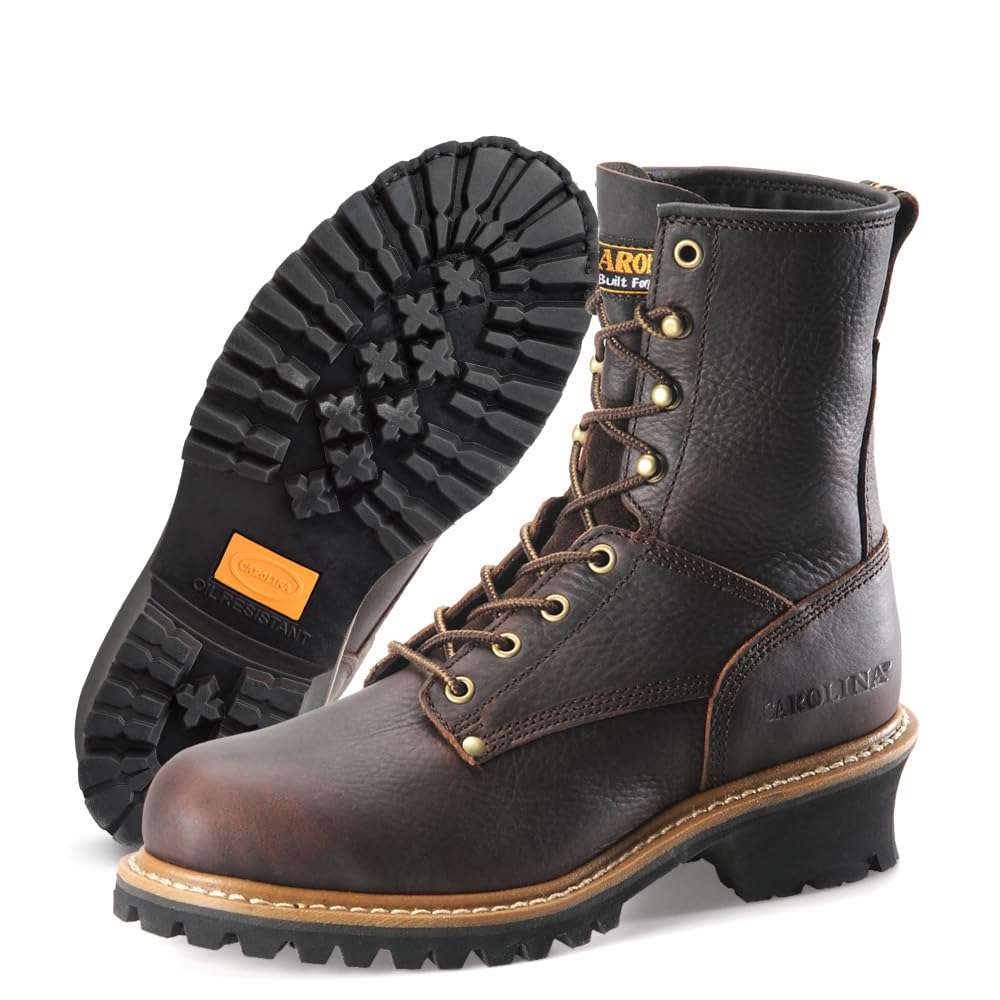
The Carolina Elm delivers solid steel toe protection and a classic logger profile at a price that undercuts most competitors. The triple-stitched leather upper is durable enough for manufacturing plants, construction sites, and light forestry work. The slip-resistant, oil-resisting rubber lug outsole provides reliable grip on concrete and packed dirt, and the steel shank adds stability on uneven ground.
The Pillow Cushion memory foam footbed absorbs shock well and keeps you comfortable for full shifts on hard surfaces. The electrical hazard protection meets ASTM standards, making this boot a solid choice for linemen and industrial workers. Users have reported consistent sizing across Carolina models, and the boots feel comfortable out of the box with minimal break-in required.
Some users have noted the foot padding is adequate but not exceptional — replacing the insole with a premium aftermarket option improves comfort significantly. The boot is not waterproof, and some users experienced sole separation after a few months of heavy use. For the price, this is a capable entry-level logger boot, but it lacks the durability and waterproofing of premium options.
Why it’s great
- Triple-stitched leather upper is durable for industrial work
- Pillow Cushion footbed provides shock absorption out of the box
- Steel shank adds stability on uneven terrain
Good to know
- Not waterproof — best for dry conditions
- Insole padding is basic and benefits from replacement
7. SAFETOE Ultra Cow Leather Chainsaw Work Boots

SAFETOE brings Class 1 chainsaw cut protection to a more accessible price point with its Ultra Cow Leather work boot. The Kevlar puncture-resistant plate runs the full length of the foot, protecting against nails, sharp branches, and chainsaw kickback. The steel toe cap meets ASTM F2413 standards, and the upper is made from thick cow leather that holds up well to abrasion.
The boot includes a waterproof membrane that keeps feet dry in wet grass and shallow puddles, and the slip-resistant PU and rubber sole provides decent traction on most surfaces. The memory foam insole and four-layer rebound technology add comfort for all-day wear. Users have found the sizing chart accurate and the boots lighter than expected for a chainsaw-rated boot.
Sizing inconsistencies have been reported — some users found the boots ran small, particularly in wide sizes. The leather is not stain-resistant, and water droplets can leave permanent marks if not wiped immediately. This is a solid entry-level choice for occasional chainsaw work or for loggers on a tight budget, but it does not match the durability or traction of mid-range and premium options.
Why it’s great
- Class 1 chainsaw cut protection with Kevlar puncture plate
- Leather upper is thick and abrasion-resistant
- Memory foam insole provides decent comfort for the price
Good to know
- Sizing can be inconsistent — check reviews for your size
- Leather stains easily from water if not treated
FAQ
Do I need steel toe or composite toe for logging?
What does a Kevlar puncture plate do in a logging boot?
How long do logger boots typically last with daily use?
Can I use regular work boots for logging instead of logger boots?
Final Thoughts: The Verdict
For most users, the best boots for logging winner is the Carolina Composite Toe Logger because it combines a Vibram 261K outsole, Scubaliner waterproofing, and a lightweight composite toe into a single balanced package that handles wet terrain, cold weather, and long shifts without compromise. If you need maximum ankle support for steep climbing, grab the Chippewa Thunderstruck. And for insulated protection in wet winter conditions, nothing beats the Timberland PRO Boondock HD.