
Our readers keep the lights on and my morning glass full of iced black tea. As an Amazon Associate, I earn from qualifying purchases.
Specs are compiled from manufacturer listings and verified buyer reviews and can change over time — please confirm the key details on the product page before buying.
The challenge with any pair of boots for rain and snow isn’t just keeping the wet stuff out — it’s keeping warmth in while letting your feet breathe so you don’t end up clammy an hour into your day. You want something that handles slushy sidewalks and freezing trails without making you feel like you’re stomping around in weighted buckets.
I’m Min — the founder and writer behind Gadgets Feed. This guide is built by comparing the manufacturers’ published specifications and the patterns across verified customer reviews, so you get each pick’s real strengths and trade-offs instead of marketing spin.
Whether you are trudging through a blizzard or just crossing a puddled parking lot, the right pair of boots for rain and snow should be waterproof, well-insulated, and built with a sole that won’t slip when the pavement gets slick.
Our Picks at a Glance

How To Choose The Best Boots For Rain And Snow
A boot that works for both rain and snow has to do two things at once that usually pull in opposite directions: it must keep water out while also letting trapped moisture from your foot escape. Here is what to watch for before you click buy.
Waterproof Construction Is Non-Negotiable
Look for a boot that explicitly says “waterproof” — not just “water-resistant.” That means a sealed membrane or a rubber outer layer that stops puddle water and slush from seeping in through the seams or tongue. A boot that gets your socks wet in the first half hour of rain is a boot you will hate.
Insulation Weight Matches Your Climate
Insulation is measured in grams; a higher number means more warmth. For moderate winter slush and wet cold, 200g to 400g is a solid range — enough to keep feet toasty on a sub-freezing walk without making you sweat the moment you step indoors. If you deal with deep polar cold (below zero), you will want heavier insulation, but for rain-and-snow mix, lighter insulation plus a good wool sock gives flexibility.
Tread Pattern And Rubber Compound
You want a lugged outsole (deep, widely spaced grooves) that channels away mud and slush rather than letting it pack flat. Brands often give their rubber a specific compound name; the point is that a soft, grippy rubber will hold wet pavement better, while a harder rubber lasts longer on abrasive surfaces but can skate on ice. Look for “non-slip” or “max grip” claims backed by real buyer reports of no slipping in wet yards or snowy hills.
Quick Comparison
| Model | Best For | Waterproof Type | Insulation (grams) | Weight | Amazon |
|---|---|---|---|---|---|
| Helly Hansen Garibaldi V3★ Best Overall | Cold, deep snow | Waterproof membrane | 400g | 3.1 lbs | Amazon |
| Muck Boots Insulated Mid-CalfGreat Value For Work | Wet farm work | 100% natural rubber | 6mm Neoprene | — | Amazon |
| XPETI Crest Thermo | Light snow hikes | Waterproof membrane | — | — | Amazon |
| Trudave Rubber Boots | Heavy mud and slush | 100% rubber | 6mm Neoprene | — | Amazon |
| KEEN Revel 4 Mid | All-day winter wear | Waterproof-breathable | Polar insulation | — | Amazon |
| Columbia Bugaboot III | Budget snow boot | Waterproof leather + rubber shell | 200g | — | Amazon |
| Timberland PRO Work Boot | Jobsite snow duty | Waterproof leather | — | — | Amazon |
In‑Depth Reviews
1. Helly Hansen Men’s Garibaldi V3 Waterproof Winter Boots
Our pick — over 4.5★ from 700+ verified ratings; the strongest balance of quality and price.
The boot that keeps your feet warm when the thermometer drops to -11 without turning them into sweat buckets.
You are looking at 400g of insulation (a measure of how much heat-trapping material is packed in) — that is a serious amount for sub-zero walks and standing in snow, but not so much that your feet swelter the second you walk into a heated building. The “Max Grip” outsole lives up to its name: buyers report a firm sole with great traction on snow, so you get stability whether you are on a packed trail or an icy sidewalk.
“They are extremely comfortable, my feet don’t get cold in them even when it got down to -11 yesterday, they have a firm sole and great traction in the snow, and they look great,” one buyer wrote. Another noted the boots fit true to size and stay laced without coming undone. At 3.1 pounds per pair, they are not ultralight, but they also are not clunky — about what you expect from a real winter boot that goes below zero.
The trade-off? Some buyers mention the shipping time is slow for the initial order, though they say the boots are worth waiting for. If you need something tomorrow rather than next week, that is worth factoring in.
Winter Warrior Strengths
- 400g insulation handles -11°F cold easily
- Max Grip sole for confident walking on snow
- Stylish look that gets compliments
What To Know
- Shipping can take longer than expected
- Heavier than a mid-height hiker
Who should pick this: Anyone who faces genuine sub-zero winters and wants a boot that is warm, dry, and looks good enough for city streets or snowy trails.
One honest limit: If you only see light rain and slush above freezing, the 400g insulation may run too warm for your climate.
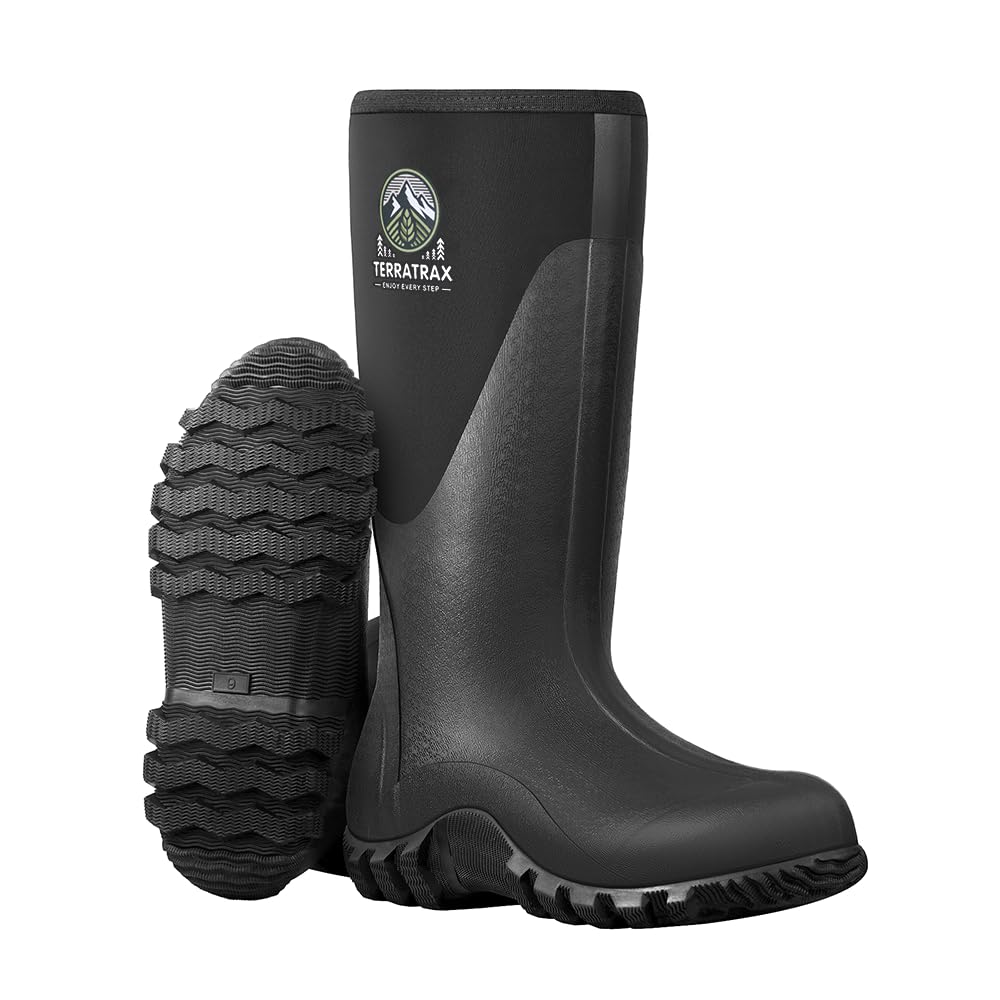
2. Men’s Waterproof Rubber Muck Boots – Insulated Mid-Calf
The rubber pull-on that shrugs off mud, manure, and freezing puddles without complaint.
These are not built for a fashion parade — they are built for the guy who wades into a wet job site or a muddy pond edge and needs a boot that rinses clean in seconds. The 100% waterproof natural rubber shell is the key spec here: it means wet concrete and mud wash off easily, and the boot resists chemical corrosion from fertilizers or construction materials. The 6mm neoprene (a stretchy insulating layer) keeps feet warm on chill mornings and wicks moisture away so you do not get “swamp foot” after hours of wear.
One reviewer noted being out in 10-degree weather for 3 hours and said the boots “were as warm as I needed.” Another noted excellent traction in mud and wet conditions around a pond, with no slipping. The mid-calf height (it says “knee high” in the specs) means you can tromp through deeper standing water than an ankle boot allows. They also come with a rear pull loop and a kick-off lug on the heel so you can get out of them without using your hands — a real plus when your hands are grimy from yard work.
The catch: there is no half-size option, and some buyers wish the boot had a heel kick-lug for easier removal (the design gives you a small rear lug, but it is not as big as some expect). Fit runs about true, though one reviewer sized up to 11 from a 10.5 for thick socks and said it worked well.
Hard-Use Highlights
- 100% natural rubber shell repels mud and chemicals
- 6mm neoprene keeps feet warm in single-digit temps
- Easy kick-off heel design for muddy exits
Things To Watch
- No half sizes available
- Kick-off lug is smaller than some prefer
Reach for these if: You spend your days on a farm, construction site, or wet property and need a waterproof boot that is easy to clean and warm enough for freezing weather.
Look elsewhere if: You want a lace-up hiking style or need to walk more than a couple of miles — rubber pull-ons are not made for long distance.
3. XPETI Men’s Crest Thermo High-Top Winter Hiking Boots
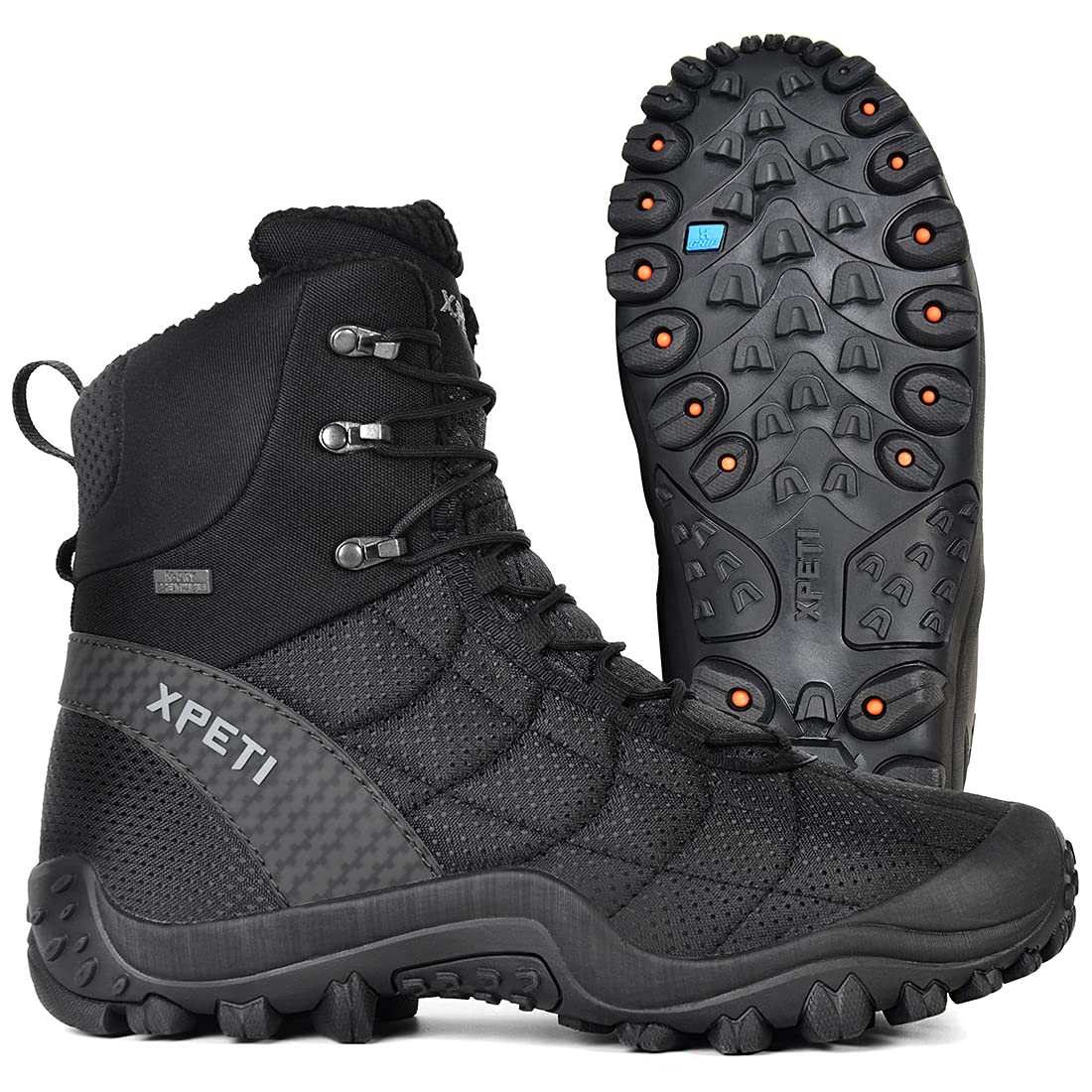
A trim, high-top hiker that handles cold snaps and light snow without bulky weight.
Unlike the rubber work boots above, this one is a closer-to-the-foot hiking-style boot — lighter, more flexible, and easier to wear for a half-day walk through a snowy park or a quick errand in slush. The waterproof membrane (a thin inner layer that keeps water out while letting vapor escape) means your feet stay dry, though one buyer mentioned that melting snow on the top of the foot eventually dampened through, calling it “not as capable in cold temps as I hoped” for prolonged snow exposure.
On the flip side, many buyers love the warmth-to-weight ratio. One reviewer in Northern Kentucky reported being out at 6 degrees with snow on the ground and said “my feet were never an issue. NOT cold at all!” That is impressive for a boot that does not feel like a winter tank. The rubber outsole stays flexible even in freezing temps, which helps step feel natural. Another buyer bought a second pair because they worried the model would be discontinued — a sign of real satisfaction.
Where this boot fits best is the “light snow and ice” scenario that the Texas-to-New York reviewer described: a winter shoe that is tall enough to keep snow out but light enough to wear around town without feeling like you are in full expedition gear. Just be aware that if you plan to stand in deep wet snow for hours, the membrane has limits.
Light-Hiker Positives
- Lighter and more flexible than typical winter boots
- Stays comfortable in 6-degree weather
- Outsole remains flexible in cold temps
Know The Limits
- Waterproofing can be overwhelmed by melting snow over time
- Not ideal for standing in deep slush for hours
Choose this for: Everyday winter wear that involves walking, light snow, and cold pavement — not for standing in a half-frozen pond all afternoon.
Skip it for: Heavy wet snow or sub-zero deep freeze where a heavier boot with more insulation is safer.
4. Trudave Rubber Boots for Men with Steel Shank

An Alaska-tested rubber boot that rolls up for packing and never lets water through.
This one has a hidden structural feature that matters if you are walking on uneven terrain all day: a steel shank (a thin metal plate in the midsole that stiffens the boot so you do not feel every rock and root through the sole). It also has a reinforced protective toe cap — a hard plastic piece that shields your toes from rocks and heavy drops. The 6mm neoprene upper (the same insulating stretchy material as the Muck Boots above) keeps warmth in, and the rubber shell is fully waterproof all the way up.
Buyers are enthusiastic about the warmth and comfort. One reviewer bought them for an Alaska trip involving Zodiac boats and hiking, praising the “really good quality insert, comfortable, warm and dry.” Another says they are “fantastic for mucking stalls” and have great traction in mud without slipping. They also roll up well for packing, which is a nice detail if you need to stash them in a duffel for a trip. A note on sizing: there are no half sizes; a 11.5 buyer sized up to 12 and felt they fit great, while a 14 buyer swapped down to 13 for a better fit.
The main difference versus the Muck Boots product above is the steel shank and the reinforced toe: if you are walking on sharp debris, stepping on roots all day, or doing construction work in wet conditions, the extra underfoot protection makes a real difference. For backyard chores only, you may not need it.
Built-Tough Perks
- Steel shank adds underfoot protection on uneven ground
- Reinforced toe cap protects from heavy drops
- Rolls up flat for packing
Sizing Notes
- No half sizes — may need to go up or down a full size
- Heavier than a non-steel-shank rubber boot
Best suited for: Hunters, construction workers, and anyone who walks on rocky or sharp wet terrain and wants full underfoot armor.
Not the pick if: You are a casual user who just wants a quick slip-on for puddle-running — the steel shank adds weight you will not need.
5. KEEN Revel 4 Mid Height Polar Insulated Waterproof
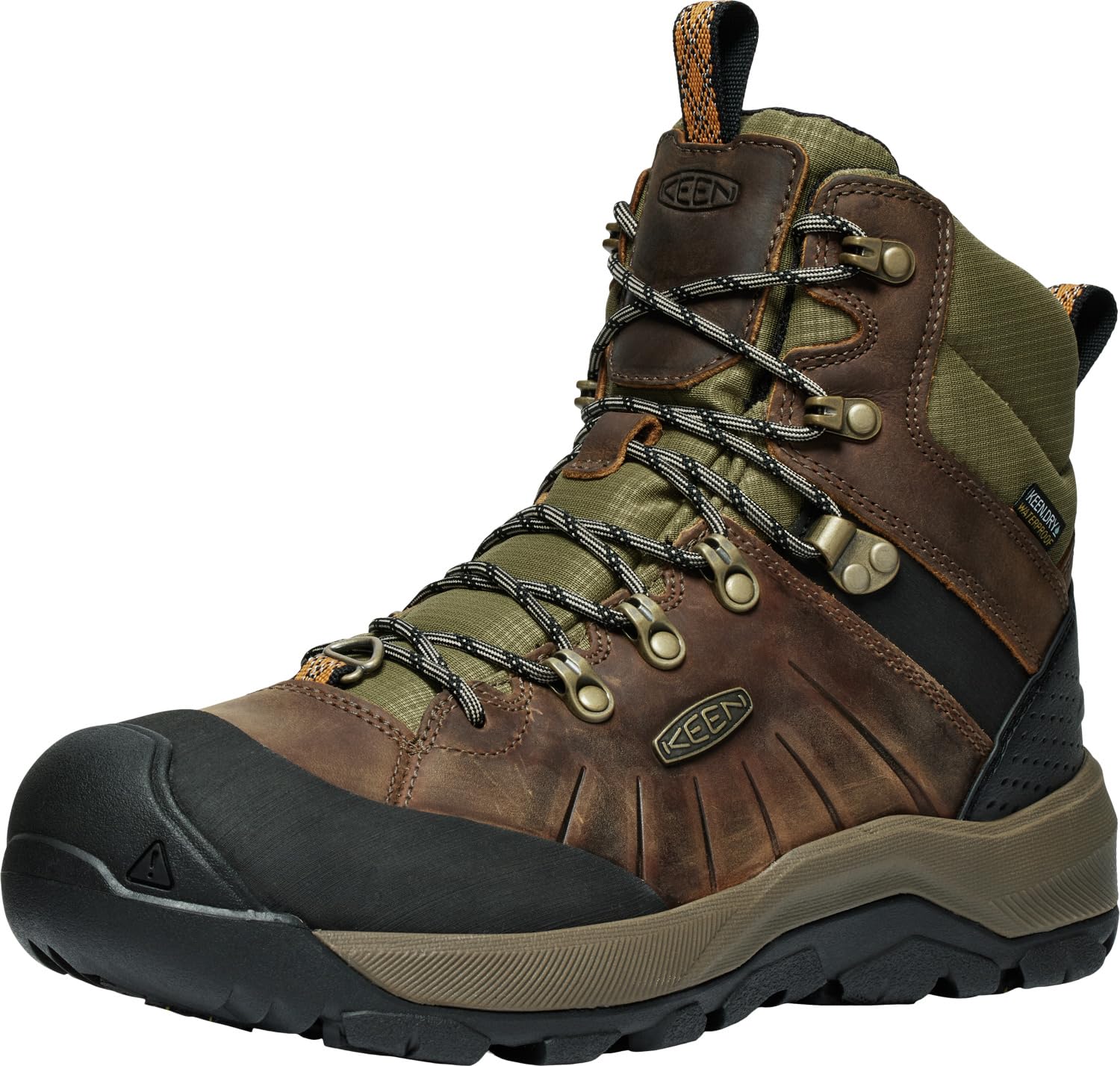
The snow boot that finally fits if you have ever struggled with narrow winter footwear.
KEEN builds its footwear on a wider form by design — and that is the main reason many buyers land here. One reviewer who wears EEE width feet said they scoured websites for a snow boot that would not pinch, and the Revel 4 “fit well and are comfortable.” That extra room in the toe box (the front of the shoe where your toes sit) matters a lot when you add thick wool socks and need blood circulation to keep your feet warm for hours.
The “Polar Insulation” is not measured in grams in the data, but buyers confirm real-world warmth: one wore them for 5 straight days in subzero temps and deep snow and was “kind of blown away — light weight, super warm, waterproof.” Another reviewer climbed a Colorado fourteener in March with snow, ice, and -5°F wind chill and said the boots kept their feet dry and warm. The speed lace webbing system means you can get them snugged up fast, and the thermal heat shield inside captures warmth.
On the downside, for the most extreme cold below -10°F for extended periods, some buyers near the bottom of the temperature range have noted they want a heavier boot. But for the vast majority of rain-and-snow winter, the warmth and wide fit make this a standout.
Why It Stands Out
- Wider fit works for EEE-width and wider feet
- Proven warmth in subzero temps and wind chill
- Lightweight for an insulated snow boot
Consider This
- Polar insulation may not be enough for extreme polar cold below -10°F all day
- Tread is good for snow, less ideal for sheer ice without add-on cleats
Grab these if: You have wider feet and have been frustrated by narrow snow boots — this is the most comfortable wide fit in the list.
Think twice if: You need a boot for standing still in bitter cold for long periods — a heavier insulated boot might serve you better.
6. Columbia Men’s Bugaboot III
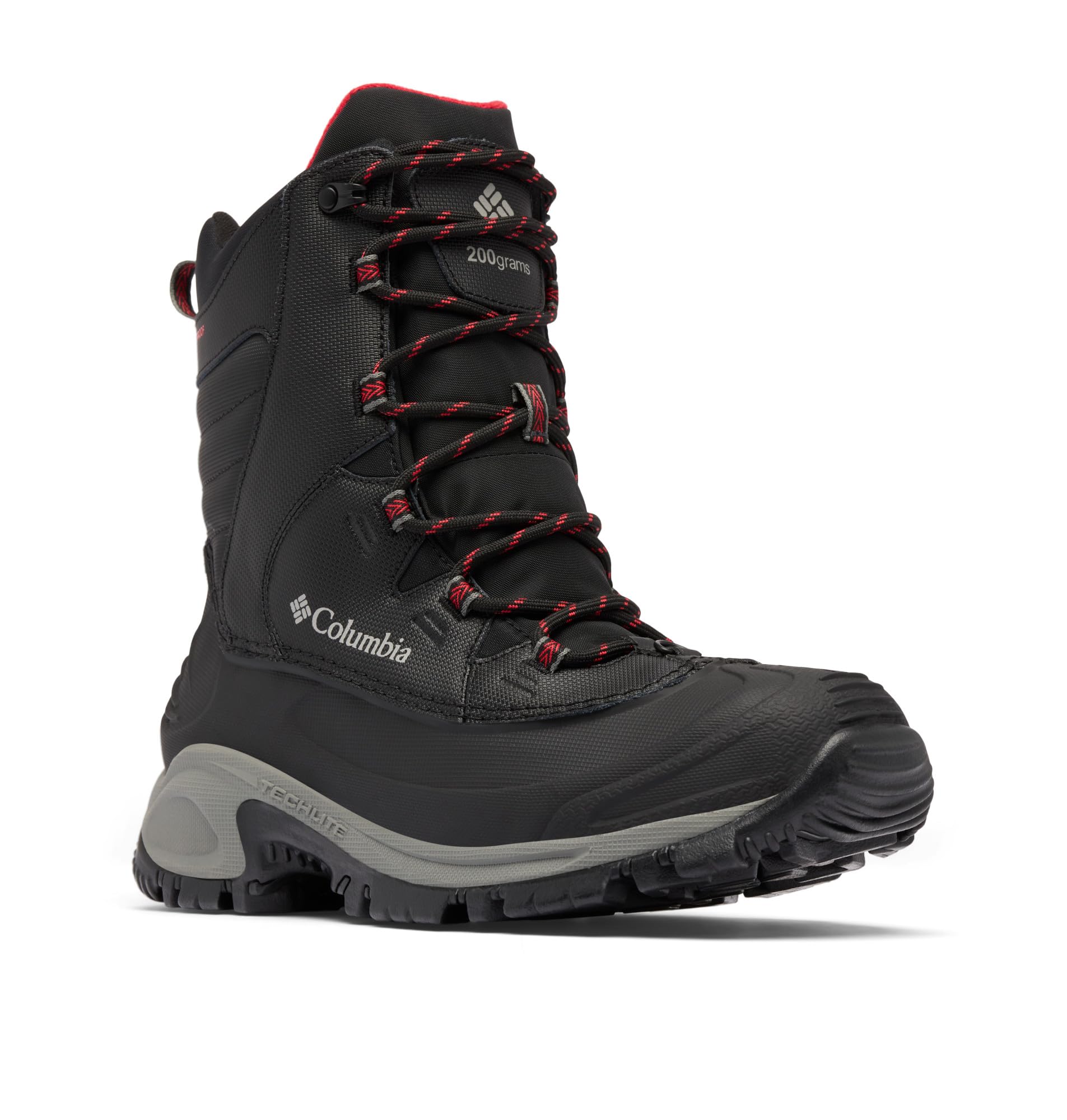
The snow boot that has been around long enough that people buy a second pair when the first one finally wears out.
This is a proven winter boot formula: a waterproof leather upper (the main part of the boot that wraps your foot) combined with an injection-molded rubber shell and outsole (a one-piece rubber bottom that is fully sealed, so no water can sneak in through a seam). The 200g insulation is a moderate weight — enough for most winter days but not for extreme deep freeze. One owner reported, “you will want to wear another pair of socks when it drops below 15-20 degrees,” because after a few hours in the teens, feet get cold.
Buyers consistently praise the build quality. One wrote they have “lasted for years” and called it “a great value for the money — it might be more upfront, but will outlast any of the less expensive brands.” Another reviewer waded through deep snow and slush and said the boots kept their feet “completely bone-dry.” The trade-off is that sizing runs small: Columbia themselves recommend sizing up, and reviewers confirm that. A buyer who normally wears a 10 ended up ordering 11.5 for a comfortable fit with medium socks.
One minor complaint: there are no lace hooks at the top, so cinching the boot tight requires a bit more effort than hook-style lacing. For the price and proven durability, though, that is a small nit to pick.
Solid Seller Strengths
- Waterproof leather and rubber shell keep slush out
- 200g insulation handles most winter weather
- Lasts for years per buyer reports
Pre-Purchase Checklist
- Runs small — size up by 1 to 1.5 full sizes
- No lace hooks at top for easy tightening
- Feet can get cold below 15°F after hours outside
This is for: Shoppers on a budget who want a classic snow boot that is durable and dry, and who are willing to size up for a good fit.
Pass if: You regularly face temperatures below 15°F for long stretches — you will need thicker insulation or the 400g option above.
7. Timberland PRO Men’s 6″ Direct Attach MaxTRAX Soft Toe Waterproof Insulated Boot

A work boot that pulls double duty on icy sidewalks and muddy jobsites without looking out of place.
The “Direct Attach” construction means the outsole is molded directly onto the leather upper — no glue line that can fail over time. The waterproof leather keeps rain and slush out, and the MaxTRAX outsole (Timberland’s name for its slip-resistant rubber compound) provides traction on wet concrete and icy pavement. Buyers who wore them in New York City during a cold, snowy trip said they had “great traction on the wet and icy sidewalks and streets.”
The insulation is not given a gram count in the data, but reviewers confirm the boots run warm. One noted they are “warm and with great traction” on snowy city streets. The fit runs “a tad bit large,” per one buyer, so using the brand measurement guide is smart. The boot also looks like a classic Timberland work boot, which means it transitions from jobsite to casual wear smoothly.
The limitation: this is a 6-inch shaft (mid-height), not a tall boot. If you are walking through deep snow that covers your ankle, snow can get in over the top. It is best for rain, slush, and moderate snow where your pant cuff or a gaiters covers the gap. Also, it is a soft toe, not a steel toe, so it offers protection from bumps but not from heavy impacts like a steel-toe work boot would.
Work-Ready Pros
- Direct Attach construction for lasting sole bond
- MaxTRAX outsole grips wet and icy pavement well
- Classic Timberland look works on and off the clock
Before You Buy
- 6-inch shaft is not tall enough for deep snow wading
- Soft toe, not steel toe — moderate impact protection only
- Fit may run slightly large
Reach for this if: You need a durable, waterproof work-style boot that handles rain and slush on concrete and pavement all day without looking like a rubber muck boot.
Skip it for: Deep snow treks or mucky farm work — you will want a taller shaft and a rubber shell instead of leather.
Understanding the Specs
Insulation Weight
The number of grams of insulating material packed into the boot lining — usually 200g for moderate winter, 400g for deep cold. Higher grams equal more warmth, but they also add bulk and can make your feet sweat faster indoors. For rain and snow where you might go in and out of heated buildings, a moderate 200g or a stretchy 6mm neoprene layer gives flexibility without overheating.
Waterproof Construction
There are two main ways a boot keeps water out: a sealed membrane (a thin inner layer that stops water but lets vapor escape) or a solid rubber shell (a thick outer layer that nothing gets through). Membranes are lighter and more breathable, making them better for walking and hiking. Rubber shells are tougher and completely impervious, ideal for standing in deep puddles or heavy mud. Both work for rain and snow — the choice depends on whether you prioritize breathability or bulletproof wet protection.
FAQ
How much insulation do I need for rain and snow?
Can I wear rain boots in the snow?
What shaft height is best for snow?
Are rubber boots or leather boots better for wet snow?
How should boots for rain and snow fit?
What makes a boot slip-resistant on ice?
Can I machine wash my waterproof boots?
How do I keep my boots from smelling after wet use?
Should I size up for thick winter socks?
What is the difference between a steel shank and steel toe?
Final Thoughts: The Verdict
For most people, the boots for rain and snow winner is the Helly Hansen Garibaldi V3 because it combines 400g insulation with real buyer-proven warmth down to -11°F and a Max Grip sole you can trust on snow. If you want a wide-friendly, lighter design for all-day wear, grab the KEEN Revel 4 Mid. And for muddy, wet work where you need a wash-and-go rubber boot that handles 10-degree weather, the Men’s Waterproof Muck Boots deliver unbeatable value for the price.
How We Picked
We do not accept paid placement. Every pick is matched to a real buyer and a real use-case; we do not hands-on test units.
Sources & Methodology
Specifications: manufacturer listings and product documentation. Review insights: verified customer reviews, as of July 2026. Pricing: not shown on this page (it changes often); check the current price via the retailer link.
As an Amazon Associate, Gadgets Feed earns from qualifying purchases. This does not affect which products we feature.