
A roofer’s boot lives at war — shank-deep in asphalt shingle grit on a 7/12 pitch, soaking sweat for ten hours, then landing on a ladder at quitting time. The wrong boot chews up your arch, slips on a damp deck, or lets a dropped nail find your metatarsal. The right boot makes that daily climb feel like flat ground.
I’m Min — the co-founder and writer behind Gadgets Feed. I’ve spent hundreds of hours dissecting sole compounds, met-guard thickness, and last construction to separate the boots that survive a season of re-roofs from the ones that quit at the first hail storm.
After combing through thousands of verified buyer reports and cross-referencing safety certifications against real-world shingle traction and all-day arch support, I’ve isolated the nine models that define the current standard for boots for roofing.
How To Choose The Best Boots For Roofing
Roofing is perhaps the most punishing environment for a work boot. You need a sole that bites into granular shingles, a toe cap that laughs off a dropped bundle, and a shank stiff enough to keep your arch from collapsing on a slanted deck. Here’s what to look for.
Toe Protection: Steel vs. Composite vs. Alloy
A dropped bundle of shingles or a slipped hammer can crush a standard toe cap in a heartbeat. Steel toes offer the highest impact protection and are the most affordable, but they conduct cold and set off metal detectors. Composite toes are lighter, non-metallic, and thermally insulating, making them better for winter work. Alloy toes split the difference: lighter than steel, thinner walls, but still metallic. For roofing, any of the three will meet ASTM F2413 standards, but composite toes win for all-day comfort in cold climates.
Outsole Traction: The Shingle Surface
Asphalt shingles are loose granules bonded to a fiberglass mat. A flat, smooth sole provides almost no purchase. Look for a deep, aggressive lug pattern — ideally a wedge sole with multi-directional tread. The larger the contact patch, the more stable your footing on a pitched roof. A slip-resistant rating (ASTM F2913 or similar) is critical for wet deck work.
Metatarsal Guard vs. No Guard
If you regularly carry bundles of shingles or handle heavy materials on the roof, a metatarsal guard protects the top of your foot from crush injuries. This external or internal shield extends the protection up over the instep. For residential re-roofing where you’re constantly landing on the balls of your feet, a met guard can be a lifesaver — but it adds stiffness and weight. If you’re mostly doing tear-off or low-pitch work, a standard steel toe may suffice.
Quick Comparison
On smaller screens, swipe sideways to see the full table.
| Model | Category | Best For | Key Spec | Amazon |
|---|---|---|---|---|
| Thorogood 1957 Series 8” | Premium Wedge | All-Day Comfort on Roof Deck | Slip-Resistant Wedge Outsole | Amazon |
| KEEN Utility Cincinnati 8” | Premium Composite | Wide Toe Box & Lightweight | Composite Toe, 21.5 oz | Amazon |
| Ariat Workhog 8” H2O | Premium Insulated | Cold-Weather Roofing | Composite Toe, 600g Insulation | Amazon |
| Georgia Boot Logger GORE-TEX | Premium Logger | Uneven Terrain & Ankle Support | GORE-TEX, Steel Shank | Amazon |
| Ariat Rebar Lift 6” | Mid-Range Composite | Zero Break-In Time | Composite Toe, 5.5 lbs | Amazon |
| CAT Invader Hi Steel Toe | Mid-Range Steel | Concrete & Flat Roof Work | Slip-Resistant Sole, 4.2 lbs | Amazon |
| Wolverine Floorhand 6” Waterproof | Mid-Range Value | Budget Waterproof Performance | Steel Toe, 4 lbs | Amazon |
| MUCK Chore Met Guard | Mid-Range Met Guard | Wet/Icy Conditions with Full Protection | Steel Toe, Met Guard, 4.5 lbs | Amazon |
| Cat Footwear Striver Steel Toe | Entry-Level Steel | Budget-Friendly Daily Driver | Steel Toe, Heavy Build | Amazon |
In‑Depth Reviews
1. Thorogood 1957 Series 8” Waterproof Work Boots

The Thorogood 1957 Series is the gold standard for roofers who live on pitched decks. Its slip-resistant wedge outsole maximizes surface contact with asphalt shingles, giving you a planted feel that flat-soled boots simply can’t match. The full-grain leather upper and waterproof membrane keep your feet dry through morning dew and afternoon rain, while the comfort insole reduces foot fatigue during those 10-hour re-roofs. At 8 inches tall, the shaft provides enough ankle support to stabilize you when carrying a ladder or navigating trusses.
Multiple reviewers report wearing these boots on concrete for years without the sole separating — a common failure point in cheaper wedge designs. The EH (Electrical Hazard) rating adds an extra layer of safety for roofers working near overhead power lines. The moc-toe styling also means you don’t look like you’re wearing a tank on your foot, which matters if you’re meeting with clients on site.
Break-in is remarkably short for a full-grain leather boot — most users report them being comfortable within a week, not the month-long ordeal typical of logger-style boots. The trade-off is weight; these are not ultralight, but the stability they provide on sloped surfaces more than compensates. If you do primarily flat commercial roofs, the wedge sole may clog with gravel, but for residential pitched work, this is your boot.
Why it’s great
- Maximized shingle traction from the wedge outsole
- Fast break-in period — comfort in under a week
- Waterproof yet breathable for all-day wear
Good to know
- Heavier than many composite-toe alternatives
- Wedge sole can pick up gravel on flat work surfaces
2. KEEN Utility Cincinnati 8” Waterproof (Comp Toe)
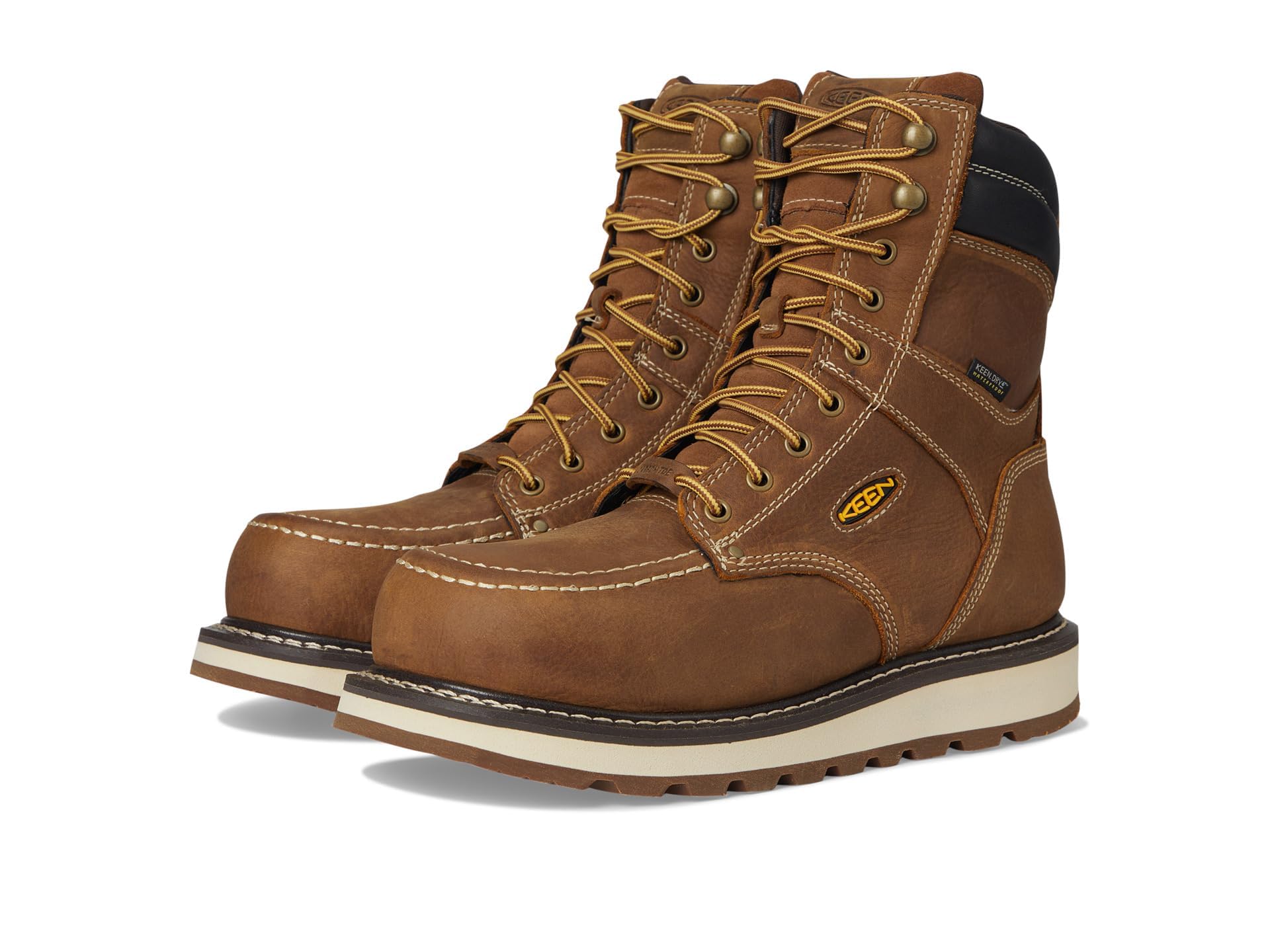
The KEEN Utility Cincinnati is engineered for roofers who prioritize foot volume and toe splay. Its asymmetrical composite toe cap provides ample room for your toes to spread naturally, reducing the cramped feeling that leads to blisters and arch fatigue during long shifts. At roughly 21.5 ounces per boot, it’s noticeably lighter than steel-toe competitors — a welcome relief when you’re climbing ladders all day. The waterproof membrane and rubber toe guard keep your feet dry and protected from shingle scrapes.
Users consistently praise the out-of-box comfort. Many report zero break-in period, which is rare for a boot in this price tier. The wedge sole delivers excellent grip on wet shingles, and the composite toe keeps your weight down without sacrificing ASTM F2413 protection. The Cincinnati is particularly well-suited for roofers who work on both residential and commercial sites, as the sole sheds gravel better than a classic wedge.
The primary durability concern is the toe leather — some reviews note it’s not abrasion-resistant, so if you’re constantly kneeling on rough shingles, the toe cap may show wear faster than a full-grain leather boot. Also, reports of sole separation after two years suggest these may not be the longest-lasting boot for heavy-duty use. However, for comfort and weight savings, they’re hard to beat.
Why it’s great
- Roomiest toe box in class — prevents toe cramping
- Very lightweight for a waterproof composite-toe boot
- Zero break-in required for most users
Good to know
- Toe leather may scuff faster than full-grain alternatives
- Some reports of sole separation after extended use
3. Ariat Men’s Workhog 8 Inch H2O Composite Toe Boot
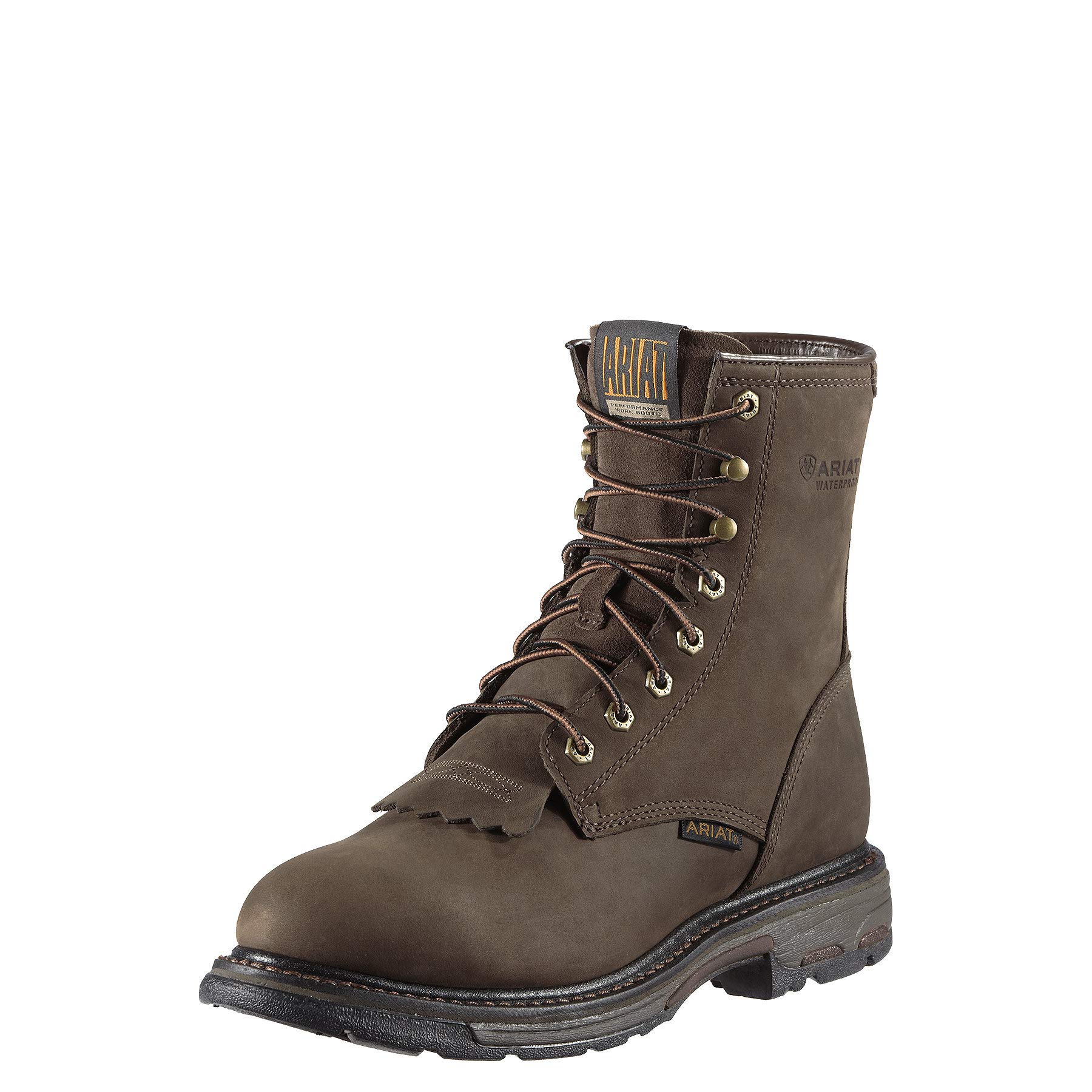
The Ariat Workhog is the cold-weather specialist of this lineup. With 600 grams of Thinsulate insulation and a waterproof membrane, it keeps your feet warm when you’re working on a roof in sub-zero temperatures. The composite toe doesn’t conduct cold like steel, and the slip-resistant sole remains flexible in freezing conditions — a common failure point in budget insulated boots. At 8 inches, the shaft provides solid ankle support for carrying heavy bundles up a ladder.
Reviewers consistently note that these boots maintain comfort from -21°F all the way up to 85°F, making them a versatile choice for year-round roofers in northern climates. The ATS (Advanced Torque Stability) technology provides excellent arch support, which is crucial when you’re standing on a slanted roof surface for hours. The waterproofing holds up to extended exposure to snow and slush, which is a common scenario during winter re-roofs or leak repairs.
The main criticism is the pull loops — some users find them flimsy and suspect they won’t last the life of the boot. The tongue can also shift slightly during break-in. However, for roofers who need a warm, dry, and supportive boot for winter work, the Workhog delivers where many others fail. It’s not the lightest boot, but the insulation and waterproofing justify the weight.
Why it’s great
- Insulation rated for sub-zero temperatures without overheating
- Excellent arch support for slanted surfaces
- Waterproof membrane holds up in snow and slush
Good to know
- Pull loops may not last the boot’s lifespan
- Slightly heavier than non-insulated alternatives
4. Georgia Boot Men’s Low Heel Logger GORE-TEX Waterproof Insulated Work Boots
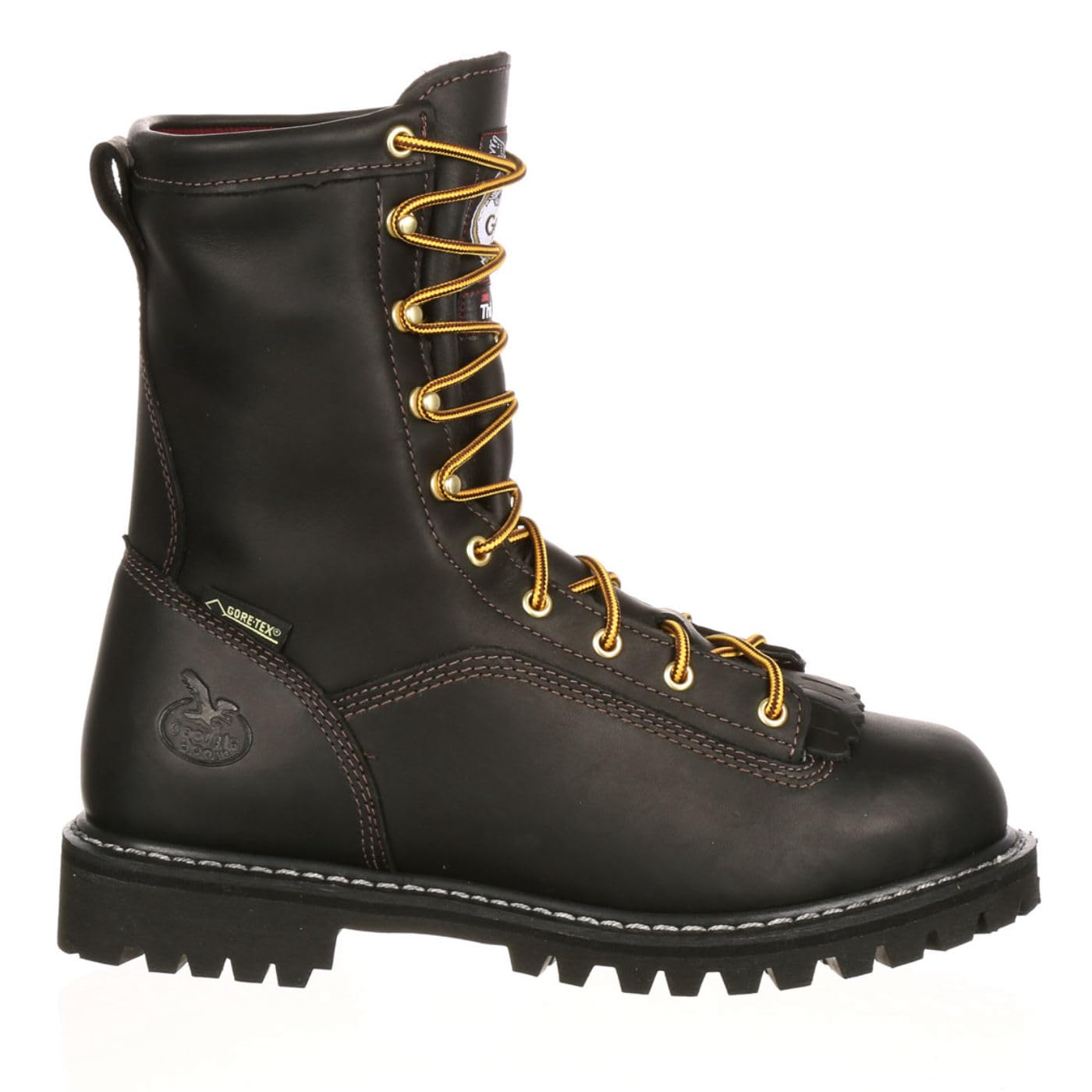
The Georgia Boot Logger is built for roofers who also tackle framing, siding, or any task that puts them on uneven terrain. The low heel logger design provides a stable platform for pitched surfaces, while the steel shank delivers the torsional rigidity needed to keep your foot flat on a sloped deck. The GORE-TEX membrane offers industry-standard waterproofing that breathes better than most proprietary membranes, keeping your feet dry without turning them into saunas.
The full-grain leather upper is thick and abrasion-resistant, standing up to constant contact with shingle granules and nail belts. The 4.5-pound weight per boot is substantial, but the stability on uneven ground justifies the heft. The high ankle cut supports your ankle when you’re balancing on a ridge or carrying a 70-pound bundle. Multiple reviewers report these boots lasting years with proper care — a testament to the Goodyear welt construction.
The break-in on these is a known hurdle. The leather is stiff, and the ankle area can take weeks to soften — expect to wear thick socks for the first few weeks. The low heel logger profile may also feel unfamiliar to roofers used to wedge soles, as the heel can catch on shingles if you’re not careful. But for durability and protection on rough sites, few boots match the Georgia Logger.
Why it’s great
- Thick full-grain leather stands up to shingle abrasion
- GORE-TEX is the gold standard for breathable waterproofing
- Steel shank provides excellent stability on angled surfaces
Good to know
- Break-in period can be several weeks
- Logger heel may catch on shingle edges
5. Ariat Men’s Rebar Lift 6″ Waterproof Composite Toe Work Boot
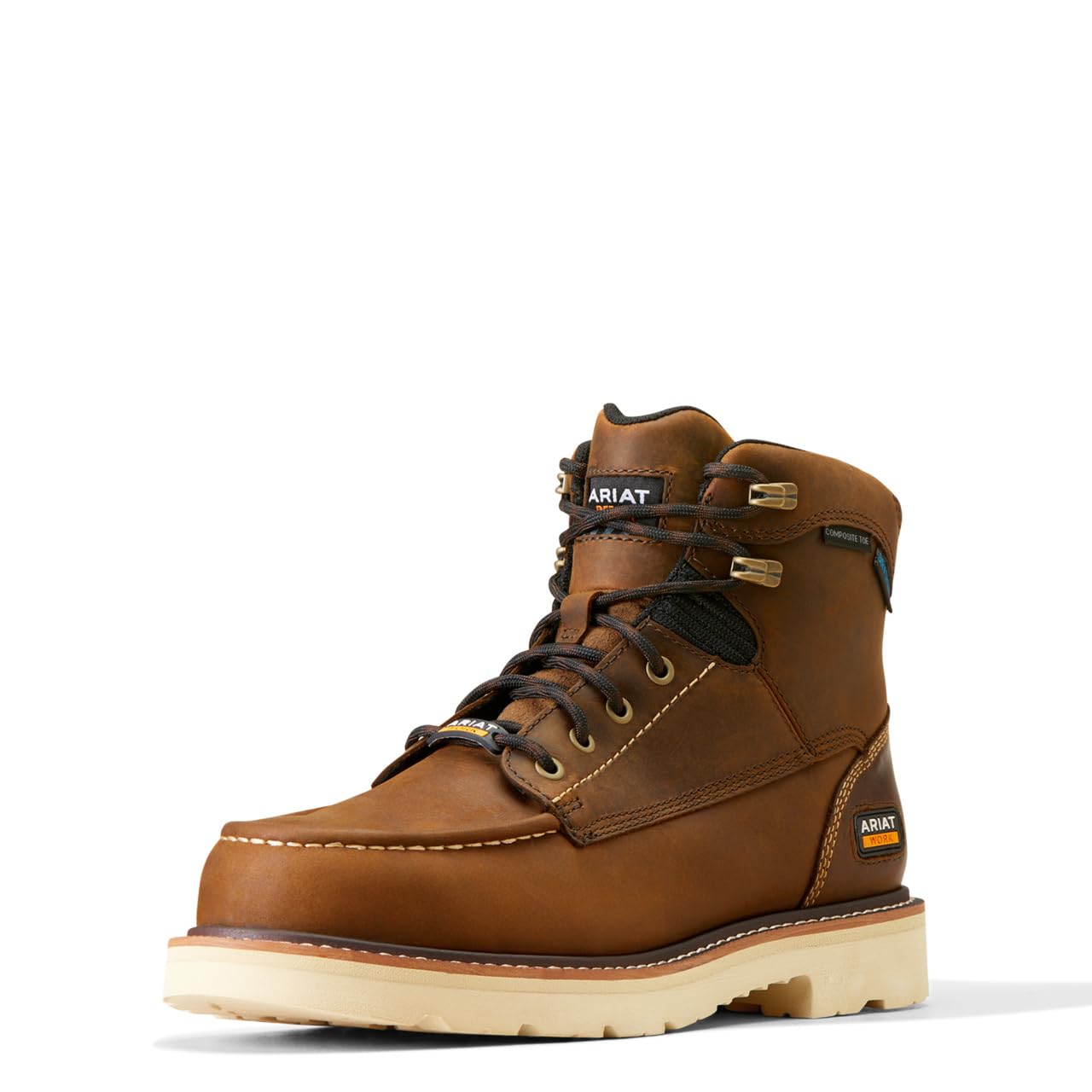
The Ariat Rebar Lift is the mid-range champion that punches above its price tier. The 6-inch shaft is shorter than most of the boots on this list, making it a great option for roofers who prefer mobility over maximum ankle support. The composite toe is lightweight and non-conductive, while the waterproof membrane handles morning dew and light rain with ease. The triple-stitched seams and oil-resistant sole give it a ruggedness that rivals boots costing twice as much.
Reviewers consistently highlight the zero break-in period — it’s comfortable straight out of the box, which is rare for a boot at this price point. The EVA midsole provides good shock absorption when landing from a ladder or stepping off a roof edge. The Rebar Lift also looks good enough to wear off the job site, making it a versatile choice for roofers who meet with clients or run errands after work.
The 5.5-pound weight is on the higher side for a 6-inch boot, partly due to the substantial rubber outsole. The leather also stretches slightly after a few days, so you may want to size down if you plan to add an insole. For roofers who work primarily on low-pitch roofs or flat commercial decks, the Rebar Lift offers exceptional value without sacrificing core protection features.
Why it’s great
- Zero break-in period — comfortable from day one
- Excellent value for a composite-toe waterproof boot
- Triple stitching and oil-resistant outsole for durability
Good to know
- 6-inch shaft offers less ankle support than taller boots
- Leather may stretch, requiring careful sizing
6. CAT Men’s Invader Hi Steel Toe

The CAT Invader Hi is a workhorse for roofers who spend most of their day on concrete or flat roof surfaces. The slip-resistant sole is aggressive enough to handle damp shingles, and the steel toe provides foolproof impact protection. The waterproof membrane keeps your feet dry during unexpected rain, while the padded collar and tongue reduce hot spots during long shifts. The 6-inch profile offers a good balance of ankle support and mobility.
Reviewers who work as diesel mechanics and construction workers praise these boots for holding up to oil, mud, and constant standing. The outsole’s channel design sheds debris better than a standard wedge, making them a solid choice for commercial roofers working with gravel or ballast. The boot also looks professional enough for site meetings without screaming “work boot.”
The laces are the weakest point — multiple reviews note they fray and break within months. This is a minor fix (swap them for Kevlar laces), but it’s a frustration at this price point. The steel toe also makes these heavier than composite alternatives, so if you’re climbing ladders all day, your legs will feel the difference. For roofers who need a durable, slip-resistant boot for mixed surfaces, the Invader Hi delivers.
Why it’s great
- Aggressive slip-resistant sole handles wet shingles and concrete
- Waterproof membrane holds up to rain and mud
- Durable build suited for heavy industrial environments
Good to know
- Stock laces are low quality — plan to replace them
- Steel toe adds significant weight compared to composite
7. Wolverine Men’s Floorhand Waterproof 6” Steel-Toe Work Boot

The Wolverine Floorhand is the budget-friendly option that refuses to cut corners on the essentials. The steel toe meets ASTM safety standards, and the waterproof membrane has proven itself through rain, snow, and even hot grease in real-world reviews. The 6-inch shaft provides decent ankle support, and the rubber outsole offers reliable traction on wet surfaces. For a boot under on sale, this is an exceptional value proposition.
Users consistently report these boots lasting a full year or more of heavy use — some have even gotten a decade from a pair. The break-in is manageable, and the comfort level is comparable to boots costing twice as much. The durable construction has held up to landscaping, construction, restaurant work, and freight handling, showing versatile performance across different environments.
The main downside is the leather pull tab — some reviews note it can pull out after a few wears due to weak stitching. This is a minor issue that doesn’t affect the boot’s structural integrity, but it’s worth noting. The padding is also thinner than premium options, so if you have foot issues, you may need aftermarket insoles. For roofers on a tight budget, the Floorhand is a reliable, no-frills choice.
Why it’s great
- Incredible value for a waterproof steel-toe boot
- Durable construction that can last years
- Reliable traction on wet surfaces
Good to know
- Leather pull tab may fail with heavy use
- Padding is thinner — insoles may be needed for all-day comfort
8. MUCK Men’s Chore Met Guard Work Boots

The MUCK Chore Met Guard is purpose-built for roofers who need maximum top-of-foot protection. The integrated metatarsal guard extends protection up over the instep, shielding your foot from a dropped bundle of shingles or a slipped hammer. The steel toe provides the primary impact protection, while the rubber upper is fully waterproof — perfect for wet, cold environments where keeping your feet dry is critical. The outsole features deep lugs for excellent traction on snow and ice.
Reviewers who work in agriculture, construction, and industrial settings praise these boots for their waterproofness and warmth. The rubber construction makes them easy to clean — just hose them off after a day of tar and gravel. The roomy toe box accommodates thick winter socks, and the steel toe doesn’t dig into your toes even after long hours. The met guard is substantial enough to stop a falling object without transferring all the force to your foot.
The biggest issue is quality control. Some users report the sole separating from the rubber upper after just days of use, while others get two years from the same model. The inconsistency is frustrating at this price point. The boots are also heavy and chunky, which can be tiring during a long day of climbing ladders. For roofers who prioritize foot protection above all else — and who get a defect-free pair — the MUCK Met Guard is a powerful option.
Why it’s great
- Integrated met guard protects the entire instep
- Fully waterproof rubber construction
- Excellent traction on snow and ice
Good to know
- Inconsistent quality control — some pairs have defects
- Heavy and bulky for a roofing boot
9. Cat Footwear mens Striver Steel Toe

The Cat Footwear Striver is the entry-level steel-toe boot that proves you don’t need to spend a fortune for solid protection. The steel toe is robust enough to survive a dropped hammer or shingle bundle, and the rubber outsole provides reliable grip on most roof surfaces. The boot is built heavy — you feel the mass when you lift your foot — but the durability is real, with reviewers reporting it survived remodeling, snow, and concrete with minimal wear after a month.
The break-in is the flip side of that durability. Expect a rough first week — multiple reviewers recommend wearing two pairs of wool socks, applying mink oil, and using a hair dryer to soften the leather. Once broken in, the boots become comfortable and supportive, forming to your foot. The price point makes it an attractive option for apprentices or roofers who need a spare pair for wet days.
The lack of a pull loop at the heel is a common complaint — you may need to have a shoemaker add one. The boot is also noticeably heavy compared to mid-range and premium options, which can accelerate fatigue during a 10-hour shift. However, for the price, the Striver delivers dependable steel-toe protection that will survive a season of rough use without falling apart.
Why it’s great
- Very durable for the entry-level price point
- Steel toe provides reliable impact protection
- Good grip on most roof surfaces
Good to know
- Break-in is long and requires effort
- No pull loop at the heel — can be hard to put on
- Heavy; will cause more fatigue than lighter boots
FAQ
Is a steel toe or composite toe better for roofing?
Do I need a metatarsal guard for roofing?
How important is waterproofing in a roofing boot?
Final Thoughts: The Verdict
For most roofers, the boots for roofing winner is the Thorogood 1957 Series 8” because its wedge outsole delivers unmatched stability on pitched shingle decks while the fast break-in gets you working without pain. If you want a lightweight composite-toe boot with a roomy toe box, grab the KEEN Utility Cincinnati 8”. And for winter work where insulation is non-negotiable, nothing beats the Ariat Workhog 8” H2O.