
Our readers keep the lights on and my morning glass full of iced black tea. As an Amazon Associate, I earn from qualifying purchases.
Specs are compiled from manufacturer listings and verified buyer reviews and can change over time — please confirm the key details on the product page before buying.
Cold, wet feet two miles into a snowshoe loop can ruin the whole trip. That is the real problem with snowshoeing footwear: you need a boot tall enough to shrug off deep powder, stiff enough that a binding strap does not crush your foot, and warm enough to stand still on a frozen ridge without your toes going numb. This guide breaks down the boots that actually hold up on packed trails, fresh powder, and icy parking lots, so you can pick the right pair the first time.
I’m Min — the founder and writer behind Gadgets Feed. This guide is built by comparing the manufacturers’ published specifications and the patterns across verified customer reviews, so you get each pick’s real strengths and trade-offs instead of marketing spin.
You will see how insulation is measured, why height matters under a binding strap, and which outsoles grip ice. The Columbia Firecamp holds 4.7 stars across 900+ ratings and suits most trail days. Here is a plain-English look at the boots for snowshoeing worth your money.
Our Picks at a Glance


How To Choose The Best Boots For Snowshoeing
Snowshoeing asks more of a boot than a walk around the block. Your foot flexes and rolls inside a frame, straps pull across the instep, and you spend long stretches standing still in cold air. That combination rules out soft sneaker-style winter boots and rewards boots that are stiff, tall, and genuinely warm. Here is what actually decides whether a pair works on the trail.
Insulation weight tells you the temperature range
Boot makers rate warmth in grams of synthetic insulation — the higher the number, the more loft traps your body heat. A 250g boot handles active winter hiking and milder snowshoe days where you are moving constantly. A 600g boot is built for standing around in serious cold, like ice fishing or snowmobiling, where your feet are not generating heat. For snowshoeing you want the middle ground: enough insulation to stay warm when you stop for a photo, but not so much that your feet sweat and then freeze.
Height and cuff matter more than you think
A mid-height boot keeps snow out on groomed trails, but deep powder will find its way over the collar. Taller shafts and built-in gaiters seal that gap. If your snowshoe bindings strap high on the ankle, check that the strap lands on a stiff, padded section rather than a soft flex point — that is where pressure sores come from.
Outsole compound decides your grip on ice
Packed snow is forgiving. Ice is not. Soft rubber compounds with siping — the thin slits cut into the sole — bite into frozen surfaces far better than hard rubber. Look for outsoles described as snow-and-ice specific, and expect to add traction devices if you are crossing polished ice.
Quick Comparison
| Model | Best For | Insulation | Height | Waterproofing | Amazon |
|---|---|---|---|---|---|
| Columbia Men’s Firecamp Boot★ Best Overall | Everyday trail days | Low-bulk synthetic | Mid | Waterproof construction | Amazon |
| CC-Los Men’s Snow Boots Waterproof Winter HikingBudget Champion | Budget winter trips | 250g | Mid-calf | Waterproof upper, gusseted tongue | Amazon |
| ROCKY Sport Utility 600G Insulated Waterproof BootBest for Deep Cold | Standing in deep cold | 600g | Eight inch | Waterproof leather | Amazon |
| Merrell Women’s Thermo CHILL MID WP | Long winter walks | Low-bulk insulation | Mid | Waterproof membrane | Amazon |
| The North Face Women’s Sierra Mid Lace Insulated Waterproof Boots | Cold-weather errands | Insulated | Mid | Waterproof | Amazon |
| The North Face Chilkat 400 | Daily winter wear | 400g | Tall | Waterproof rubber shell | Amazon |
| KEEN Revel 4 Mid Height Polar Insulated Waterproof | Snowshoeing on ice | Thermal heat shield | Mid | Waterproof, breathable | Amazon |
| Timberland Men’s Field Boot Mid Waterproof Boots | Trail-to-town wear | PrimaLoft insulation | Mid | TimberDry waterproof lining | Amazon |
| KEEN Women’s Revel III Cold Weather Hiking Boot | Wide-footed snowshoeing | KEEN.Warm up top, tri-layer underfoot | Mid | KEEN.Dry waterproof membrane | Amazon |
| Baffin Men’s Control Max Snow Boot | Extreme cold and deep snow | Removable liner | Tall | Waterproof, seam-sealed | Amazon |
| Baffin Men’s ICEBREAKER Winter Snow Boots | Snowshoe-specific trail days | 8 layers | Tall | B-TEK Dry Waterproof Base | Amazon |
In‑Depth Reviews
1. Columbia Men’s Firecamp Boot
Our pick — over 4.5★ from 900+ verified ratings; the strongest balance of quality and price.
The everyday snowshoe boot that stays warm without turning your feet into a sauna.
The Columbia Firecamp is the boot most people should buy first. It combines a waterproof shell with low-bulk insulation (a thinner layer of synthetic fill that traps heat without adding puffiness), so your foot does not slide around inside a snowshoe binding. It is waterproof — sealed against snow and slush — and the plush cushioning keeps your feet comfy whether you are heading up the mountain or just walking downtown. Multiple colors and sizes are available.
What wins people over is the build quality — the boot feels solidly made, and comfort and warmth follow close behind. Buyers report wearing them through East Coast snowstorms with over a foot of snow, working outside eight hours a day with warm, dry feet. That is exactly the snowshoe-day scenario the Firecamp is built for. One long-term user noted the soles may not be the best for icy traction, which is worth knowing if your route crosses polished ice.
The honest catch here is sizing. The fit runs slightly small, so ordering a half size up is the safe move — one buyer wearing a 9.5 medium went with a 9.5 wide and called the fit perfect. It also runs very warm indoors, and a few folks found their feet sweat with heavy wool socks on. On mild days around freezing, thin socks are the better call.
What You Get
- Waterproof construction keeps slush and snowmelt out
- Low-bulk insulation stays warm without the bulk of a pac boot
- Multi-sport design works on the trail and around town
- Breathable enough to avoid overheating on active days
What To Watch
- Runs slightly small — size up for thick winter socks
- Sole can feel slippery on polished ice
- Very warm indoors; thin socks work better on mild days
Go with this if: you want one versatile boot for trail snowshoeing, shoveling the driveway, and winter errands.
Think twice if: you regularly cross sheer ice or need a tall shaft for deep powder.
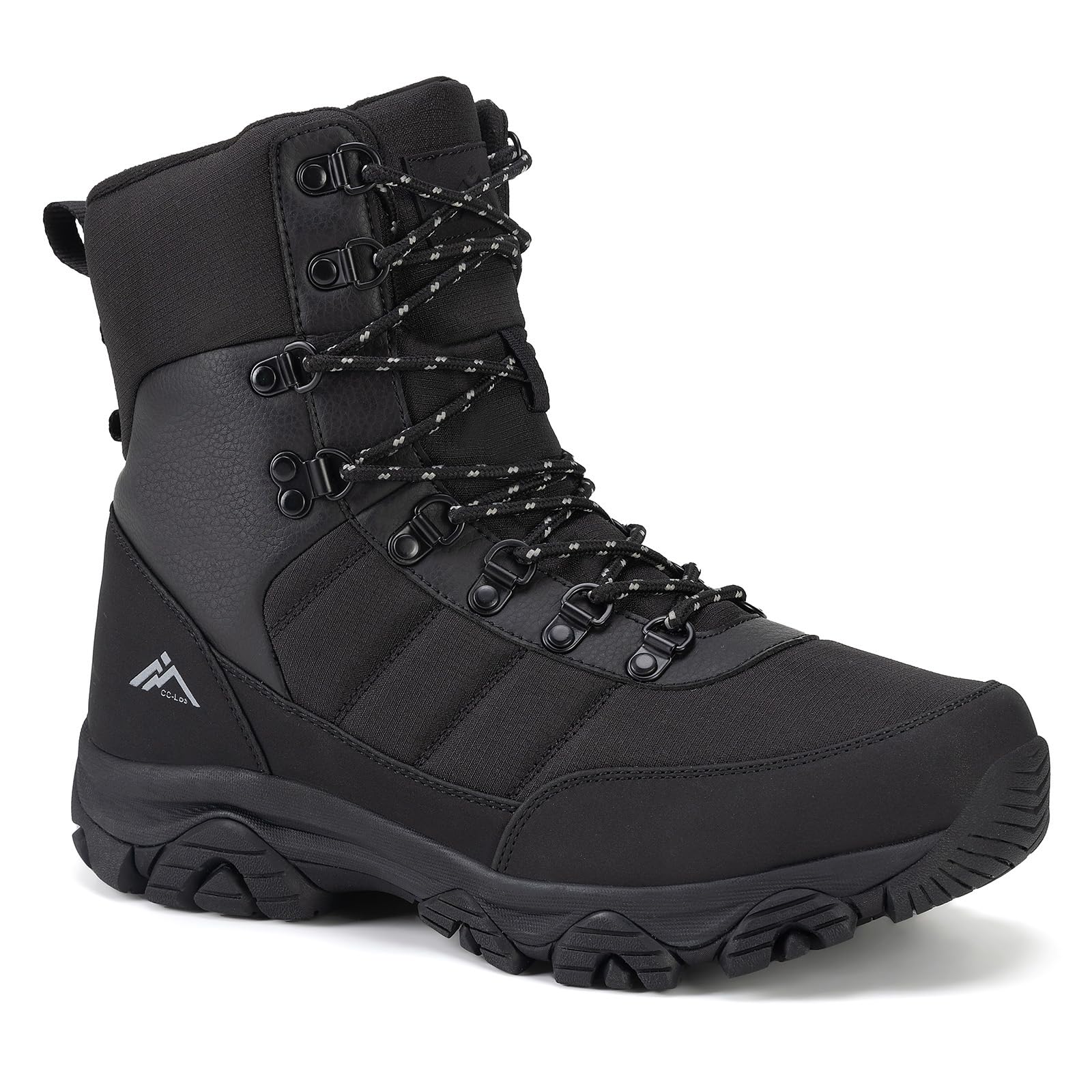
2. CC-Los Men’s Snow Boots Waterproof Winter Waterproof Hiking Outdoor Warm
A mid-calf winter boot that punches well above its entry-level price.
The CC-Los boot takes a different route to warmth than the rock-solid Rocky above it. Its 250g insulation rating — a measure of how much synthetic fill wraps your foot — makes it the lighter of the two by a wide margin, and that is where the 2.4x insulation gap between this boot and the 600g ROCKY shows up on a trail. Lighter fill means less heat when you are moving hard, which suits active snowshoeing better than a heavy expedition boot.
The design centers on keeping weather out. The waterproof upper pairs with a gusseted tongue (a flap of leather stitched up the sides of the laces so snow and slush cannot slip through the gaps) that fully seals the instep. A dual-layer sole runs an MD midsole for cushioning under a high-density rubber outsole with multi-directional lugs — the raised bumps that bite into packed snow. Soft faux fur lines the inside, and the lightweight fleece at the ankle keeps your pant cuffs sitting flat.
What owners keep coming back to is the grip and the real-world waterproofing. One buyer’s summary sums it up: “Perfect gear to wear on our winter’s trips, great grip, comfortable, the waterproof is real, great money value.” That praise is common — the value for money and the fit both land positively. Sizing runs true to athletic shoe sizing; a buyer who wears 9.5 in Nikes found the 9 to 9.5 to be a perfect fit.
Where it fits: If you want a lightweight snowshoe boot for active days and are working to a tighter budget, this one delivers traction and warmth without weighing you down.
Reach for this: for mild-to-moderate winter trips where you are moving steadily and want grip without bulk.
Look elsewhere: if you stand around in serious sub-zero cold, where more insulation fill wins.
3. ROCKY Sport Utility 600G Insulated Waterproof Boot
The eight-inch tank built for standing in the cold, not dashing through it.
Where the CC-Los is a light active boot, the ROCKY Sport Utility is the opposite approach. It carries 600g of 3M Thinsulate Ultra insulation — the kind of fill rated for standing still in serious cold — which is a big step up from the 250g of the CC-Los above. That insulation sits inside a full-grain leather upper with a waterproof build, so snow, slush, and wet grass stay outside where they belong. An eight-inch shaft covers more of your ankle and calf, which matters when powder is deep and you are not moving fast.
The boot’s strongest trait is its fit, and that comes through loud and clear in the numbers: fit is the most-praised aspect by far, with warmth a distant second. Owners describe a boot that feels secure from the first lace-up, with good toe room and solid ankle support. Durability earns mixed marks — a construction worker wore a pair for a year on the job and still called them waterproof with a tough tread, which is well past the typical lifespan for work boots, though not every owner gets that mileage out of them.
Be honest about the trade-offs before you buy. Weight is the recurring gripe — these are heavy, stiff boots that want a break-in period. One reviewer noted they felt heavy and required thick socks to sit right. A few owners also flagged that the fit runs large, with an 11.5 fitting more like a 12. The ROCKY is not a featherweight trail boot; its 600g fill is for standing around in a foot of snow.
The composite safety toe is worth a mention here — it protects your toes against impacts without the cold-transfer feel of steel. Most snowshoe boots skip the composite toe entirely, and it suits anyone who doubles up trail time with boots-on work.
The practical read: This is the pick when warmth and protection matter more than weight. Expect to break them in and size down if you are between sizes.
Pick these when: you need maximum insulation for standing in deep cold or working outside in winter.
Pass if: you want a light, flexible boot for fast-paced snowshoeing.
4. Merrell Women’s Thermo CHILL MID WP
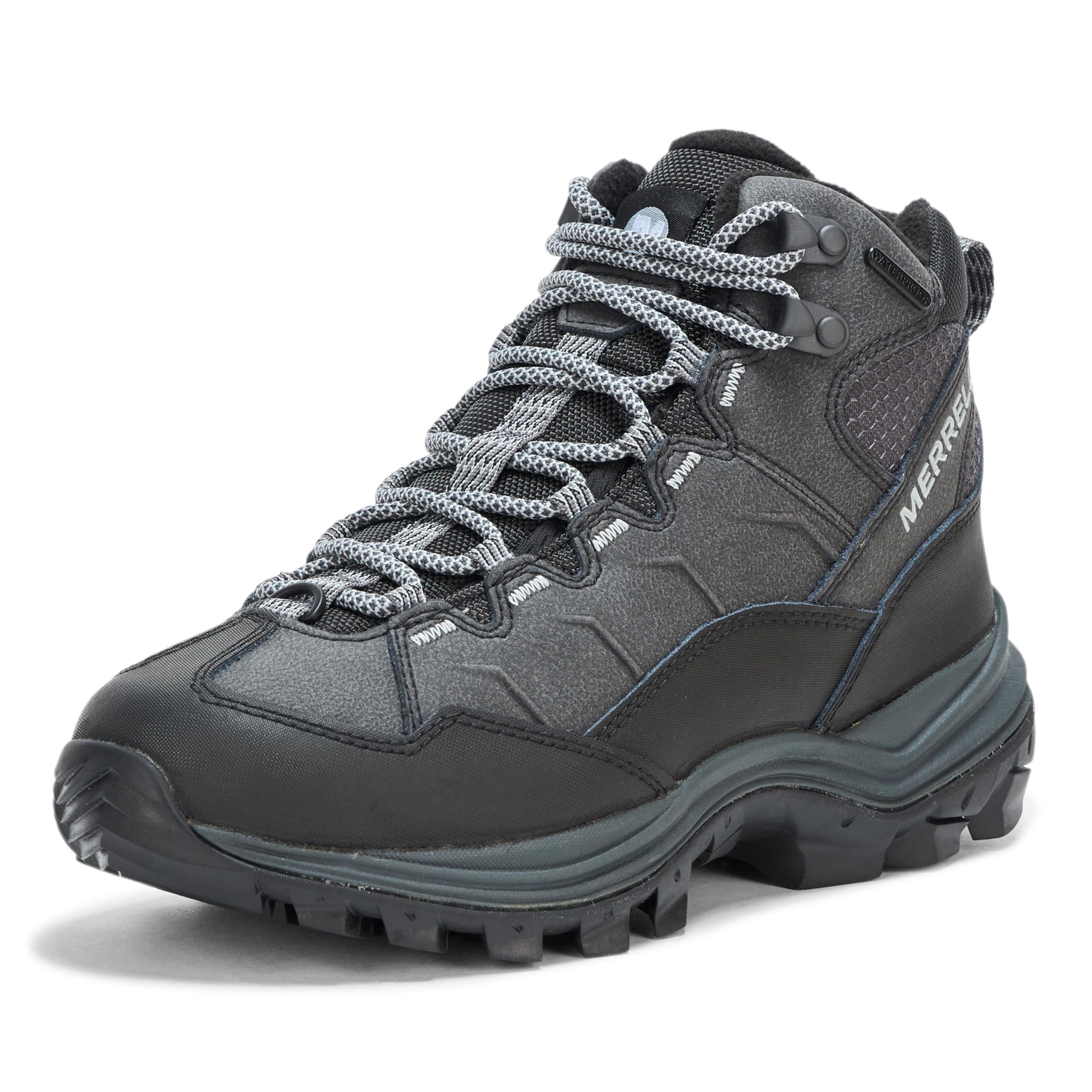
The women’s boot buyers specifically call out for snowshoeing, with warmth that holds up on long cold walks.
For women heading out on snowshoes, the Merrell Thermo CHILL MID WP is the standout pick. It pairs a waterproof membrane — a thin sealed layer that blocks water while letting sweat vapor escape — with low-bulk insulation for all-around warmth in cold temps. The design is built for standing up to snow and low temperatures without the bulk of a pac boot, which keeps your foot stable inside a binding frame.
What owners love most is the build and the comfort. Quality is the top-praised aspect, with comfort a close second and warmth not far behind, and the boots are repeatedly described as a great fit for winter hikes and snowshoeing. One buyer swapped out her Muckboots for these because they are incredibly comfortable and warm, with a roomy toe box — rare for a Merrell, she noted. Another hiked 40+ miles on ice, snow, mud, and rocks with no slips, no break-in, and no blisters, which tells you how the boot performs over real trail distance.
The trade-offs are small but real. A few owners find them somewhat heavy, which is typical for a hiking-grade boot with this much traction. One noticed a top lace hook came off, and another mentions size runs true with a snug mid-foot. The Thermo CHILL MID WP is not an ultra-light shoe, but it keeps feet warm on a winter trail.
Fit note: Sizing runs true, so order your normal size unless you plan to wear very thick wool socks, in which case the roomy toe box gives you some flexibility.
Best for: women who snowshoe and hike through winter and want proven warmth with real ankle support.
Skip if: you need the lightest possible boot or a tall shaft for deep powder.
5. The North Face Women’s Sierra Mid Lace Insulated Waterproof Boots
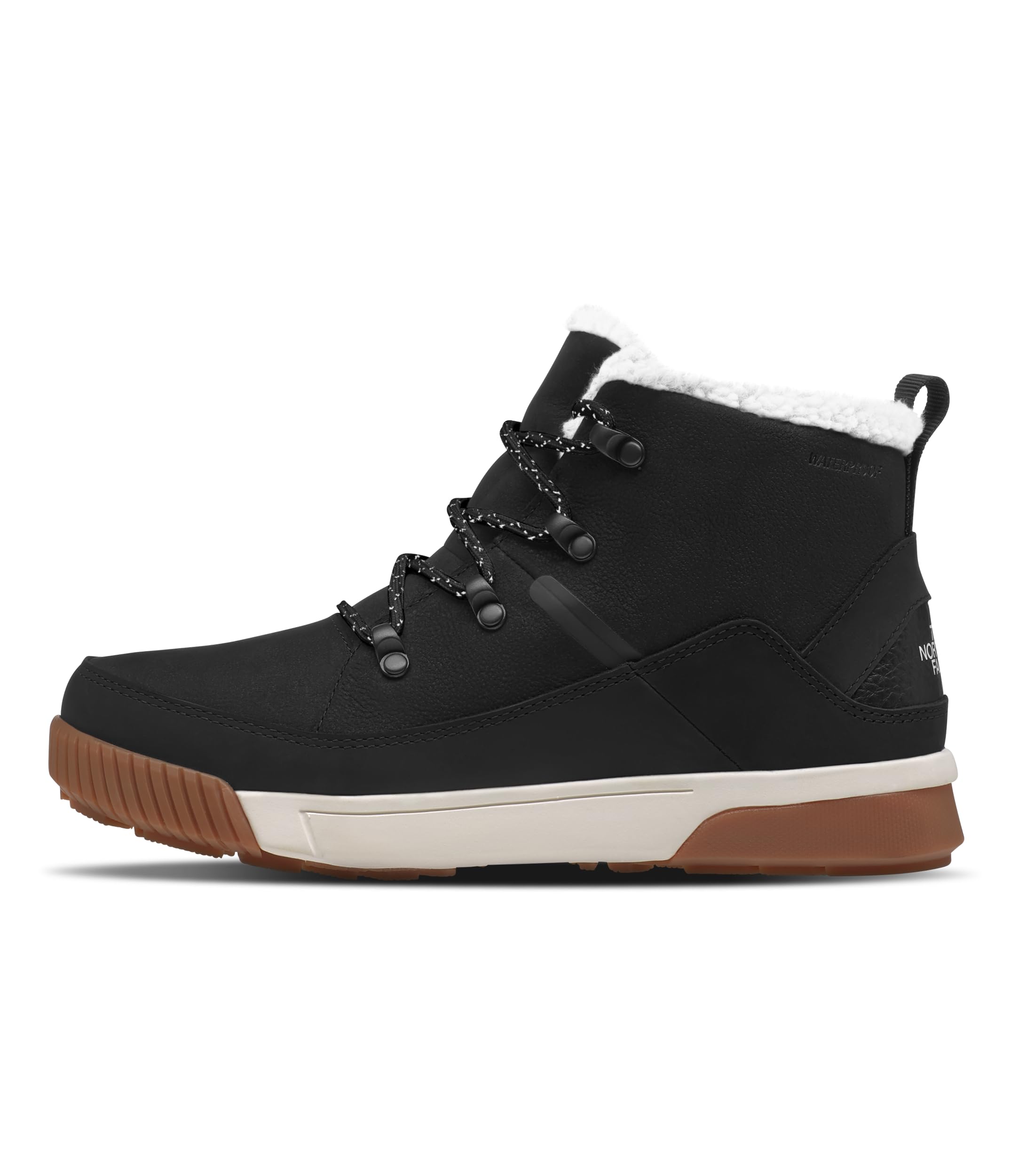
Warm, waterproof, and good-looking enough that you will wear them off the trail too.
This is the boot for the woman who wants snowshoe warmth but also expects her footwear to look the part on the way to the trailhead. Its leather upper and rubber outsole give it a clean, classic silhouette, and the insulation keeps feet warm and dry through winter. It handles snow, ice, and slush well, and it is easy to wipe clean with dish soap after a muddy day.
Warmth is the quality buyers praise most, with the look of the boot running a close second — owners describe them as classy and stylish. Fit is comfortable, and the boot works for walking a lot in cold weather; one owner toured Europe on foot with no foot pain. The waterproofing keeps slush and light snow out on errands and short walks.
Now the honest part: this boot is more of a town-and-light-trail pick than a deep-powder machine. The fit runs small and the mid-foot is snug, so sizing up reflects what owners actually experience. One buyer who normally wears 7.5 found the 8 fit, and others noted the boot is not built for sledding or deep snow — Sorels handle those days better. If your snowshoeing is on groomed trails and packed paths, this boot is up to it.
Strengths
- Warm and waterproof for winter errands and short trail days
- Classic leather-and-rubber look that works around town
- Easy to wipe clean after a muddy walk
- Comfortable for long stretches on your feet
Limits
- Runs small — sizing up is common
- Snug mid-foot can feel tight with thick socks
- Not built for deep snow or steep snowshoe routes
Choose this when: you want one warm, good-looking boot for city winters and easy trail days.
Consider other picks if: deep powder and steep descents are on your snowshoe itinerary.
6. The North Face Chilkat 400

Five winters of snowshoeing, mail routes, and farm muck — and still going.
The Chilkat 400 is the durable workhorse of this list. Its 400g insulation sits inside a waterproof rubber shell with metal grommets for the laces, a combination you can wear in snow, rain, sleet, and mud for hours and still keep your feet warm and dry. That rubber lower is why owners trust it in farm muck and slush; it does not soak through. It is the kind of boot you buy for a four-to-seven-hour day outside and forget about.
Quality is the runaway favorite among owners, with warmth a strong second. One buyer wore a pair for five years in Colorado winters — hiking, snowshoeing, working, daily use — and reported the soles intact and the interior not shredding, which is a serious lifespan for a winter boot. A mail carrier logging eight to twelve hours a day in snow and ice said the boots kept her feet warm all day and stayed waterproof through tested puddles.
Sizing is the thing to get right. The Chilkat runs tight at your regular shoe size and owners consistently recommend going up at least a full size, sometimes more. A normally-size-10 buyer found the 10.5 felt like a 9.5. There is also a note that the boot is not fully waterproof in deep puddles despite the rubber shell, so avoid standing water above the ankle. Get the size right and this is one of the warmest, longest-wearing boots here.
Sizing verdict: Order a full size up from your normal shoe. The roomy fit lets you add thick socks without cramping your toes.
Ideal for: anyone logging long hours outside in snow and ice who wants a boot that lasts for seasons.
Not for: deep standing water, where the low shaft lets moisture over the top.
7. KEEN Revel 4 Mid Height Polar Insulated Waterproof
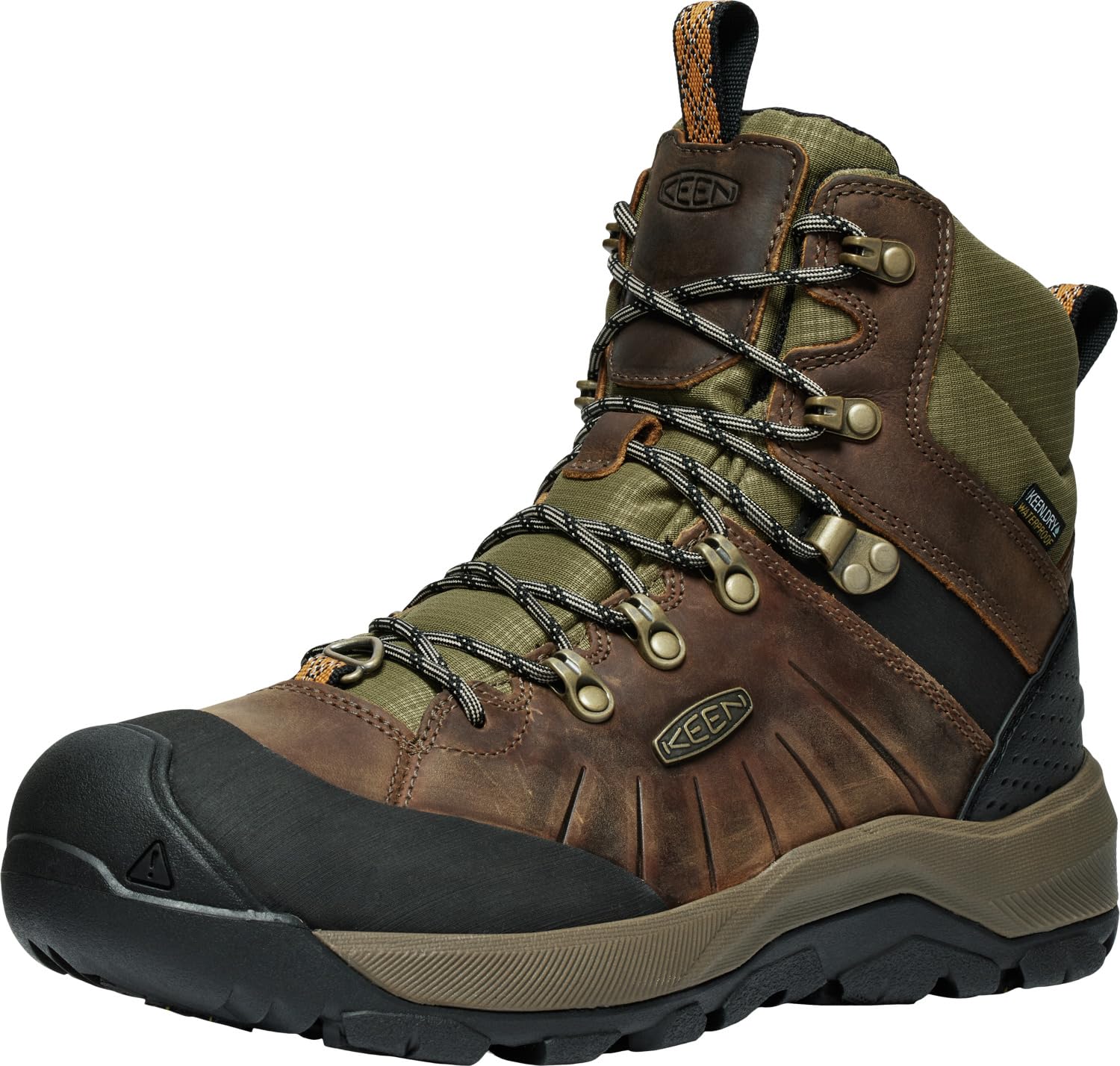
The wide-toe-box boot with a heat shield and a sole that grabs frozen ground.
The Revel 4 Polar is built for the part of snowshoeing that hurts most: ice. Its waterproof, breathable construction keeps slush out, while a thermal heat shield inside captures warmth and a soft rubber sole with siping — thin slits that bite into frozen surfaces — grips ice better than a standard winter boot. A speed lace webbing system lets you cinch the fit fast when your hands are cold. The traditional KEEN wider form gives your toes room in a thicker sock.
Fit is the quality that owners praise most, and the wide toe box is a recurring favorite — one buyer called the extra toe room a standout, and another recommends them as true to size with no need to size up. Snowshoeing and hiking come up again and again in what owners say these boots are for. Warmth holds up in brutal cold too: someone climbed a Colorado fourteener in March snow, ice, and gusty winds at -5°F and kept dry feet.
The real caveat is durability at the toe guard. Some owners mention the rubber toe cap delaminating (peeling loose from the upper) after a season of use, and one heavier user had stitching fail mid-boot in the second winter. Plenty of pairs hold up fine for a year of winter use, but if you are hard on boots, toe-guard delamination is a risk worth knowing about. A separate point: some colorways are actually men’s sizing, so check the label carefully before ordering.
Standout Traits
- Soft rubber sole with siping for genuine ice grip
- Wide toe box that fits thick winter socks comfortably
- Thermal heat shield keeps warmth in on long snowshoe days
- Quick speed-lace system for easy on-and-off
Worth Knowing
- Some units show toe-guard delamination over time
- Men’s and women’s sizing can be confusing by colorway
- An occasional pair needs a full season to soften
Buy it for: snowshoe routes with icy sections where grip and a roomy toe box are the top priorities.
Second-guess it if: you want a boot that shrugs off heavy long-term abuse without any toe-guard wear.
8. Timberland Men’s Field Boot Mid Waterproof Boots
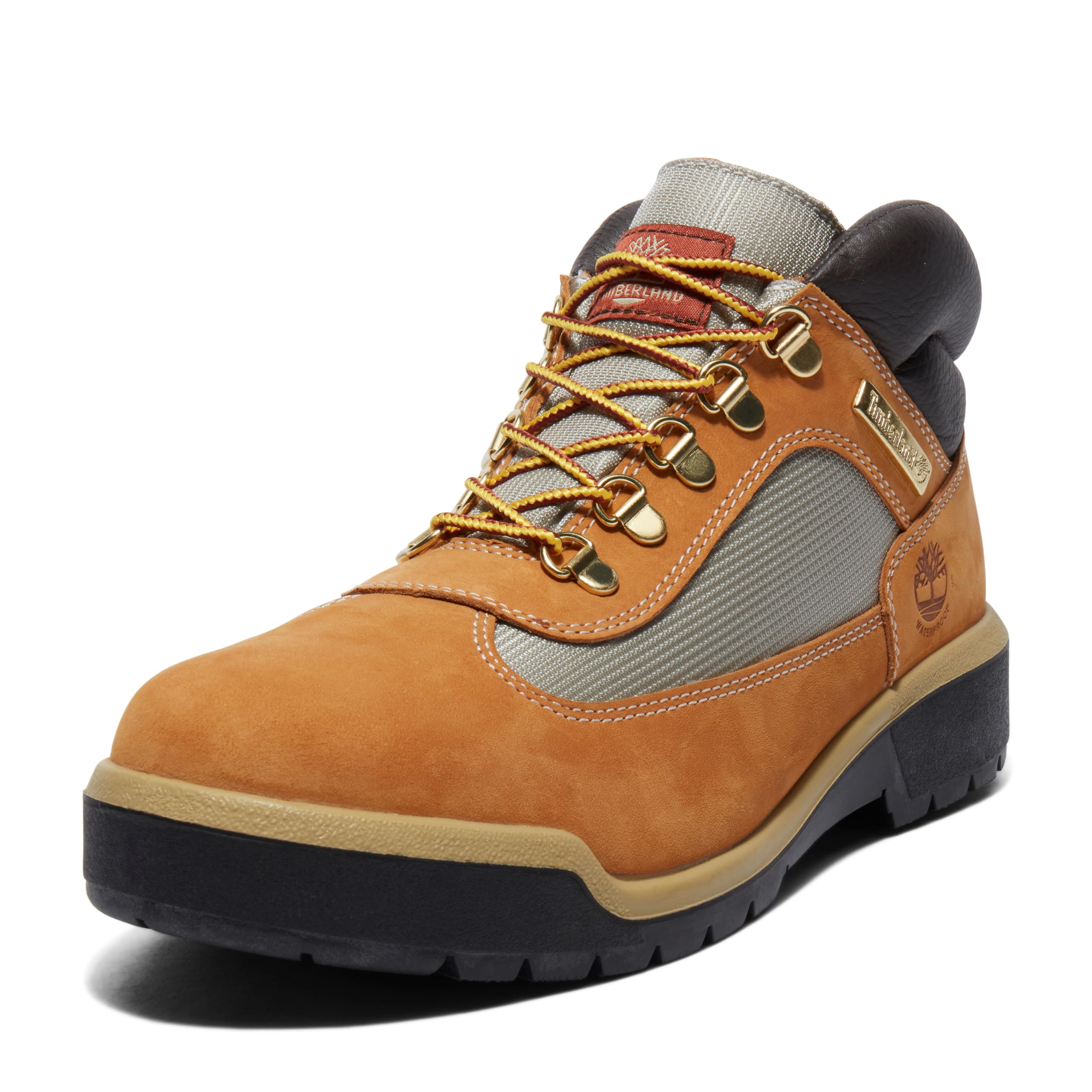
A classic field boot you can wear on the trail and straight into town.
The Field Boot Mid is the crossover pick. Its TimberDry waterproof lining seals out mud puddles and slush, PrimaLoft insulation keeps the cold out on trail days, and a padded collar with an anti-fatigue footbed makes long days on your feet more comfortable. The Premium Timberland leather upper gives it that rugged field-boot look that works as well at a trailhead as it does on a city street.
Quality is what owners rave about most, with comfort and the classic styling close behind. The water resistance earns real praise — one owner notes the boots hold up to mud puddles, and the leather upper takes a beating without looking scuffed. For someone who wants a winter boot that can double as everyday footwear, the styling and durability land well.
Two things to weigh. Fit is mixed — some say true to size, others find they run larger than expected, and at least one buyer found the boot hard to pull on without a shoehorn. Sizing up or down is worth considering based on the reviews. A separate theme some owners raise is authenticity questions, which is worth keeping in mind when you buy. Neither issue is a dealbreaker for most, but they make this a boot best bought carefully.
Style-forward pick: This is the boot for the buyer who wants one pair that works on the trail and looks sharp in town, with reliable waterproofing as the backbone.
Choose this if: you want a versatile winter boot that transitions cleanly from trail to pavement.
Reconsider if: you need a guaranteed fit with no size guessing or a boot that handles deep standing water.
9. KEEN Women’s Revel III Cold Weather Hiking Boot

A wide, waterproof women’s boot that keeps the snow out and the warmth in.
The Revel III is built for women who need a wide toe box and serious weather protection. Its KEEN.Dry waterproof, breathable membrane keeps moisture out, two layers of insulation — KEEN.Warm up top and a tri-layer heat trapolator system underfoot — cut the chill, and a dual-compound snow-and-ice grip outsole holds its ground on slick surfaces. The nubuck leather upper is all-terrain durable.
Fit is what owners praise most, and the warmth and arch support follow right behind. Owners describe these as the boots they reach for on icy sidewalks and for snowshoeing — one buyer wore hers for a full Iceland trip that included hiking, town walking, and snowmobiling at -5°F, and reported never feeling tight, cold, sweaty, or clunky. Another says they kept her feet dry in icy slush on an hour-long hike. The roomy toe box is a specific plus for anyone with wide feet.
The catch is sizing consistency. Some owners find the boot runs very wide, and a few say it runs short — one normally size 8 buyer had smashed toes and needed an 8.5. There is also a note that the rubber on the side sole can peel, and a stick-on interior insulation patch rubbed one owner’s ankle until they trimmed it off. Narrow feet need an insole in the Revel III, but wide-footed hikers get a dialed fit.
Ankle support is a strong suit here — the fabric cuff supports without the stiffness of a full leather boot, so you can walk confidently on uneven packed trails without a long break-in.
Fit strategy: If you have narrow feet, this boot can feel too wide; plan on an insert. If you have wide feet and high arches, this is the shape you want.
Reach for these: if you are a wide-footed woman who snowshoes and hikes through icy winters.
Steer clear if: you have a narrow foot or prefer a snug, stiff leather boot.
10. Baffin Men’s Control Max Snow Boot
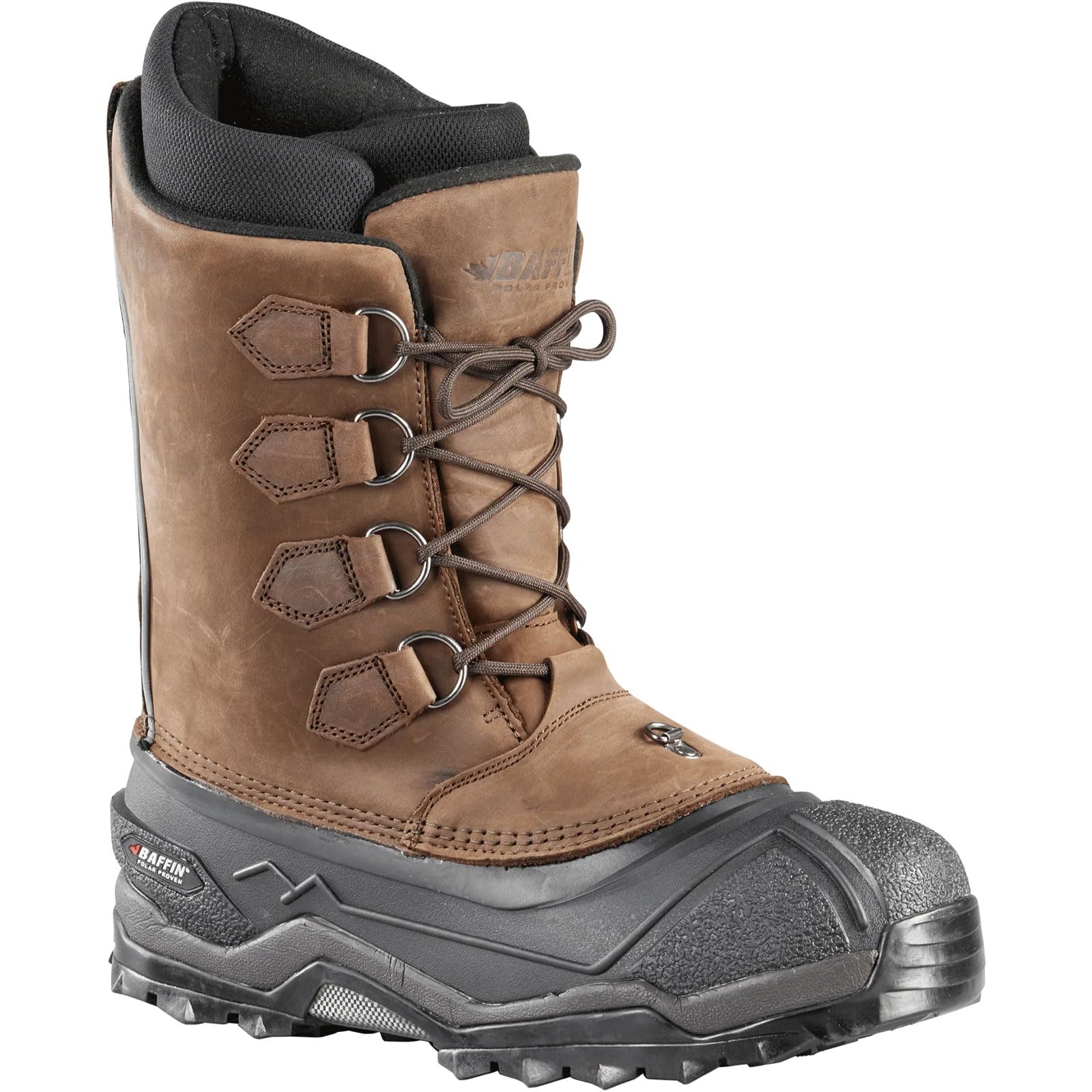
A serious cold-weather system built for standing in the snow, not sprinting through it.
The Control Max is Baffin’s high-output winter boot, and it leans hard into warmth and protection. A removable liner lets you pull it out to dry overnight — a real advantage if you are out in the snow multiple days in a row — while an EVA midsole cushions underfoot and a Polar Rubber outsole grips cold surfaces. The tall shaft and locking snow collar work with winter pants and gaiters.
Warmth and quality are the two things owners agree on most, with comfort not far off. One buyer says they spent eight hours ice fishing on Northern Minnesota ice at 15°F with warm feet, and another describes them as feeling like walking on pillows. For snowmobiling, snow shoveling, and deep-drift days, the insulated build holds up.
Weight and fit are the honest trade-offs. These are bulky boots — one buyer found them overkill for suburban use and returned them, and others note they can be hard to pull pant cuffs over. Sizing runs tight, and Baffin does not offer half sizes, so the reliable move is going up one full size. If you are a size 11 normally, plan on a 12. That bulk is part of the Control Max’s warmth package, so go in knowing what you are buying.
Where It Shines
- Deep insulation keeps feet warm in extreme cold
- Removable liner makes overnight drying easy
- Polar Rubber outsole grips frozen surfaces
- Tall shaft and snow collar pair well with winter pants
The Trade-offs
- Bulky — overkill for casual suburban wear
- Runs tight; size up one full size
- No half sizes, so fit can be a guessing game
- Hard to tuck pant cuffs over the shaft
Made for: ice fishing, snowmobiling, and deep-cold outdoor work where warmth beats weight.
skip it if: you want a slim, street-friendly boot for light winter use.
11. Baffin Men’s ICEBREAKER Lightweight Warm Insulated Waterproof Slip-Resistant Seam-Sealed Winter Snow Boots
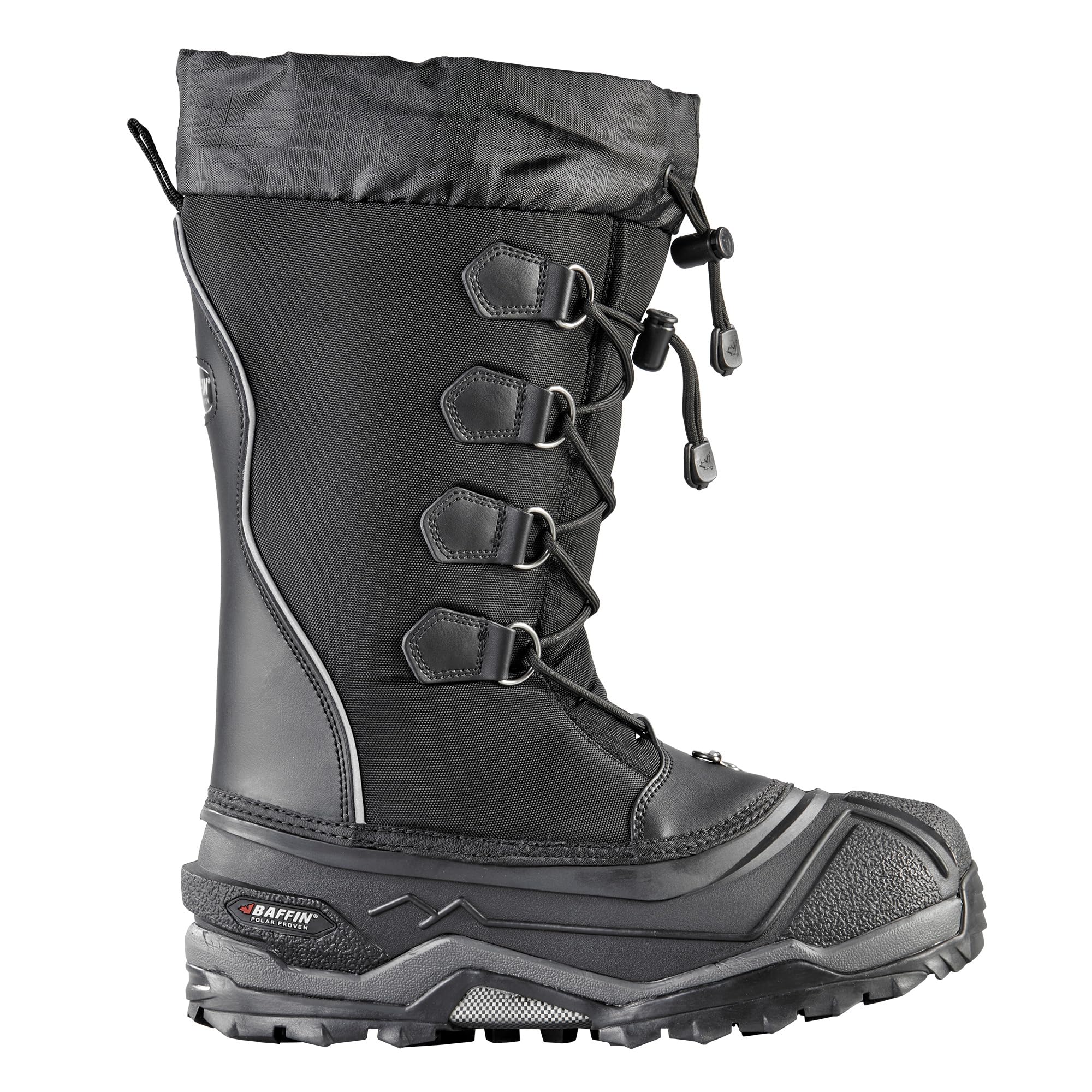
The one boot on this list actually built around snowshoeing, with a sealing snow cuff.
The Icebreaker earns its spot because it is designed specifically for snowshoeing. Eight layers of insulation combine with a B-TEK Dry waterproof base — a sealed waterproof layer rated to keep moisture out over long exposure — and a Polar Rubber outsole for grip on soft snow. It is rated for an Arctic comfort range and marked snowshoe compatible, with a built-in gaiter that folds up about six inches with a drawstring to seal snow out at the ankle.
Comfort is what owners prize most, with warmth close behind, and ease of use rounding out the praise. One owner wore hers through an 8+ foot snow trip with snowmobiling all day and reported dry, comfortable feet with just a single pair of snow socks. Another wore them in a -21°F Chicago polar vortex for eight hours of ice fishing without a hut and called her feet toasty. The snow cuff kept snow out through 3 to 4 foot drifts.
The trouble spot is seam durability. Most pairs hold up fine, but a small number of customers note seams splitting open above the toe after several uses. One buyer who wore them in 8+ feet of powder had no issue, while another hit the seam failure quickly — it is a real but inconsistent risk, and Baffin has been responsive about replacing defective pairs. Nylon upper, not leather, so a few reviewers point out they would prefer the leather version for toughness.
Why it stands out: If your priority is a boot that is genuinely made for snowshoeing — with a snow cuff and an Arctic-rated insulation system — this is the most purpose-built option on the list.
Best for: dedicated snowshoe days and deep-cold trips where a built-in gaiter and heavy insulation are the whole point.
Weigh against others if: you want a seam-built boot with a leather upper for heavy seasonal abuse.
Understanding the Specs
Insulation Weight in Grams
Insulation is measured in grams of synthetic fill per boot, and the number tells you how cold a boot can handle. A 250g boot like the CC-Los is meant for active winter days where you keep moving. A 600g boot like the ROCKY Sport Utility is built for standing around in serious cold. The gap between those two ratings is nearly two and a half times more fill, which is why the heavier boot feels bulky but the lighter one brings less warmth when you stop moving. For snowshoeing, the middle of that range handles most days.
Waterproofing vs. Water Resistance
Waterproofing comes in a few forms, and they are not equal. A gusseted tongue seals the lace gap so slush cannot enter, while a fully sealed membrane or rubber lower blocks moisture from below. Look for terms like “waterproof membrane,” “seam-sealed,” or a named waterproof base — these hold up far better in snow than a boot that only claims water resistance. A waterproof boot keeps your feet dry through puddles and slush; a water-resistant one handles light snow but will eventually soak through.
FAQ
Will insulated winter boots fit into standard snowshoe bindings?
How much insulation do I need for snowshoeing in freezing temperatures?
Do I need to size up on boots for snowshoeing?
What is the difference between the Baffin Icebreaker and the Baffin Control Max?
How do I keep snow from getting into my boots while snowshoeing?
Are leather or synthetic snowshoe boots more durable?
Can I wear snowshoe boots for regular winter walking?
How long should a pair of winter snowshoe boots last?
Do snowshoe boots need to be broken in before the first trip?
Do the boots run true to size across the picks on this list?
Which boots on this list are best for ice fishing or snowmobiling?
Final Thoughts: The Verdict
For most people, the boots for snowshoeing winner is the Columbia Men’s Firecamp Boot, because it balances waterproofing, low-bulk insulation, and comfort in a single versatile design that handles both the trail and everyday winter errands. If you want purpose-built snowshoeing with an integrated snow cuff and Arctic-rated insulation, grab the Baffin Icebreaker. And for standing in extreme cold on ice fishing or snowmobiling trips, the Baffin Control Max is the one to reach for.
Sizing is the one thing almost every buyer has to get right, and it varies by model — so order from a listing with easy returns, because a snug boot on a cold trail is a miserable combination.
How We Picked
We do not accept paid placement. Every pick is matched to a real buyer and a real use-case; we do not hands-on test units.
Sources & Methodology
Specifications: manufacturer listings and product documentation. Review insights: verified customer reviews, as of September 2026. Pricing: not shown on this page (it changes often); check the current price via the retailer link.
As an Amazon Associate, Gadgets Feed earns from qualifying purchases. This does not affect which products we feature.