
Our readers keep the lights on and my morning glass full of iced black tea. As an Amazon Associate, I earn from qualifying purchases.
Specs are compiled from manufacturer listings and verified buyer reviews and can change over time — please confirm the key details on the product page before buying.
Snowshoeing is a workout that punishes the wrong boot. You need a sole stiff enough to handle a crampon binding, insulation thick enough for hours of standing still on snow, and waterproofing that laughs at slush. A bad boot means cold toes, loose bindings, or soaked feet mid-trail. These 11 boots deliver on stiffness, insulation, and waterproofing.
I’m Min — the founder and writer behind Gadgets Feed. This guide is built by comparing the manufacturers’ published specifications and the patterns across verified customer reviews, so you get each pick’s real strengths and trade-offs instead of marketing spin.
Whether you are facing a deep backcountry trek or a quick loop around the local park, finding the right pair of boots to wear with snowshoes depends on insulation, traction, and a binding-friendly shape — and this list covers every price point and use case.
Our Picks at a Glance

How To Choose The Best Boots To Wear With Snowshoes
Snowshoe boots differ from regular winter boots in key ways. Bindings press on the toe and heel, the wider sole demands ankle support, and insulation must prevent cold feet during stops.
Insulation: How much warmth do you actually need?
Insulation is measured in grams — 200g, 400g, 800g, or even 1200g. For most snowshoeing in moderate cold (20°F to 30°F), 200g to 400g is enough. For deep winter (-10°F or colder), you want 800g or more. More insulation means a bulkier boot, which can feel clumsy on the trail. Look for a boot that uses Thinsulate or a synthetic thermal liner that traps warmth without adding too much weight.
Waterproofing: Keep the slush out
Your boot should have a sealed waterproof membrane — look for a brand’s own system like Danner Dry, KEEN.DRY, or Rocky Waterproof, or built-in technologies like a rubber shell or a seam-sealed construction. A durable water-repellent (DWR) coating alone is not enough for snowshoeing; you need a full barrier.
Sole and Traction: Stiff enough for a binding
Most snowshoe bindings rely on a fairly flat, stiff sole to secure the toe and heel. A very flexible hiking boot will feel loose in the binding. Look for a boot with a rubber outsole and a multi-directional lug pattern. Some boots marketed specifically for snowshoeing have a flat platform on the bottom of the heel to fit the binding’s heel plate.
Height and Ankle Support: Protect your ankles
Snowshoeing on uneven terrain can twist an ankle. A mid-calf boot (7 to 8 inches from the heel) is the minimum. Taller boots (10 to 12 inches) give better protection against deep snow and support for heavier loads. Make sure the boot does not rub your calf bone when you walk.
Quick Comparison
| Model | Best For | Insulation | Waterproofing | Sole / Traction | Amazon |
|---|---|---|---|---|---|
| Danner Men’s Vital 8″★ Best Overall | All-day treks | 400g Thinsulate Ultra | Danner Dry barrier | Multidirectional lugged outsole | Amazon |
| Columbia Minx IVStyle Pick | Women’s winter walks | Unknown (stated warm) | Waterproof (stated) | Good traction on snow, slippery on ice | Amazon |
| Kamik Greenbay 4Best Value | Extreme cold | 8mm Thermal Guard liner, -40°C/-40°F rated | Waterproof nylon shell | High-traction rubber outsole | Amazon |
| Columbia Expeditionist Shield | Everyday winter wear | Ample insulation (stated) | Waterproof-breathable | Cold-tune traction | Amazon |
| Absolute Scout 3 | Extreme cold, budget | HEAT-MX, -50°C / -58°F rated | Seam-sealed waterproof | Natural rubber outsole | Amazon |
| ROCKY Blizzard Stalker PRO | Hunting & extreme cold | 1200g Thinsulate Ultra | Rocky Waterproof | Multi-directional Blizzard outsole | Amazon |
| KEEN Revel III Mid | Light hiking in snow | 200g (stated in review) | Waterproof membrane | Excellent snow traction | Amazon |
| North Face Chilkat V 400 | Women’s extreme cold | 400g Premium Insulation | Waterproof DWR | Non-slip on wet pavement | Amazon |
| Baffin ICEFIELD Tall | Polar-rated adventures | Multi-layer, -100°C/-148°F rated (stated in review) | Waterproof base | Polar Rubber outsole | Amazon |
| KEEN Revel 4 Mid Polar | Women’s active winter use | 200g KEEN.WARM, rated to -25°F | KEEN.DRY membrane | KEEN.POLAR TRACTION outsole | Amazon |
| Baffin Eiger Men’s | Standing in extreme cold | Removable liner, Arctic Rated | Nylon shell / full grain leather upper | Polar Rubber outsole | Amazon |
In‑Depth Reviews
1. Danner Men’s Vital 8″ 400g
Our pick — over 4.5★ from 650+ verified ratings; the strongest balance of quality and price.
the just-right boot that pairs 400g of insulation with a rigid outsole for snowshoe bindings.
This boot hits the balance for most winter snowshoe adventures. The 400g Thinsulate Ultra insulation keeps your feet warm without overheating on a climb, and the Danner Dry waterproof barrier handles creeks and slush all day. Buyers report tackling 10-mile bird hunts through marshes and rocky cliffs with no soreness or blisters. The boot needs no break-in period — a rare claim that the reviews back up consistently. The multidirectional lugged outsole grips mossy rocks and slick trails, which is exactly what you need when a snowshoe binding shifts weight unpredictably.
At 3.1 pounds per boot, it is noticeably lighter than the ROCKY Blizzard Stalker PRO (5.4 pounds per pair for a size 10), making a real difference on long days. The Lock & Load lacing system cinches fast and holds, which is helpful when you are layering gloves on a cold morning. The open cell footbed provides cushioning and air circulation, so your feet sweat less than in thicker foam boots.
One honest trade-off: the water resistance gets mixed feedback from owners. Some report the boots keep feet dry in rain and snow, while others say they are not fully waterproof in deep puddles. The wide sizing is also a bit narrow — a few buyers with wider feet noted the wide version still felt snug. For most people, ordering a half size up solves the fit issue.
Durable leather upper
- True 400g Thinsulate Ultra without bulk
- Zero break-in needed, comfortable from first wear
- Under 3.2 lbs per boot, lighter than most extreme-cold boots
Heavy for hiking
- Water resistance can be hit-or-miss in deep puddles
- Wide version not truly wide for some
- Runs about half a size small
Best for work: you want one boot for all-day treks and moderate cold without the weight penalty of 1200g boots.
Skip for light use: you need guaranteed waterproofing for creek crossings or have very wide feet.
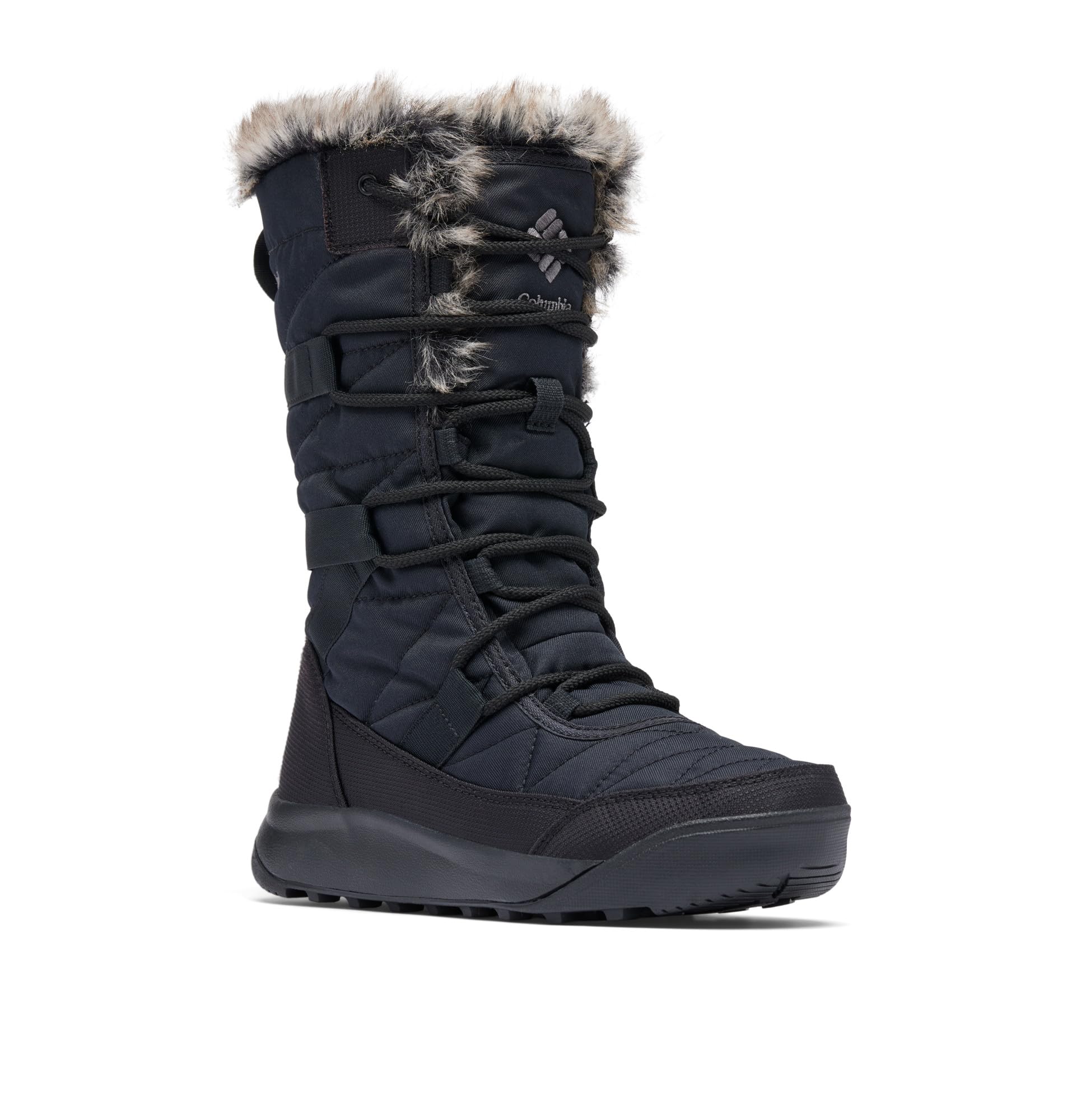
2. Columbia Minx IV
A women’s snow boot that balances warmth with a low price and a stylish silhouette.
The Minx IV is built for people who want a boot that works for both the trail and the coffee shop. It is warm, soft inside, and waterproof, with a fit that buyers describe as very comfortable for walking. The interior is soft and does not feel stiff. Several owners note the boot runs narrow and recommend ordering a wide width or at least half a size up. One review specifically says to “size 8.5 for size 8 feet to allow wool socks below -15°F,” which is good advice for anyone planning to layer thick socks on top.
The traction is good on packed snow but owners mention it is slippery on ice — a common issue in this price range. It is also well-made and dries quickly after getting wet, which matters if you hit a slushy patch. It is not a technical mountaineering boot, but for casual snowshoeing on established trails it does the job.
Lightweight and warm: Women who want a warm, comfortable boot for light snowshoeing and everyday winter wear without spending over a hundred dollars. The narrow fit means wide-footed owners should plan to size up or choose a wide option.
Best for casual: budget-friendly winter walks and errands.
Skip for deep snow: the KEEN Revel 4 if you have wider feet or need better ice traction.
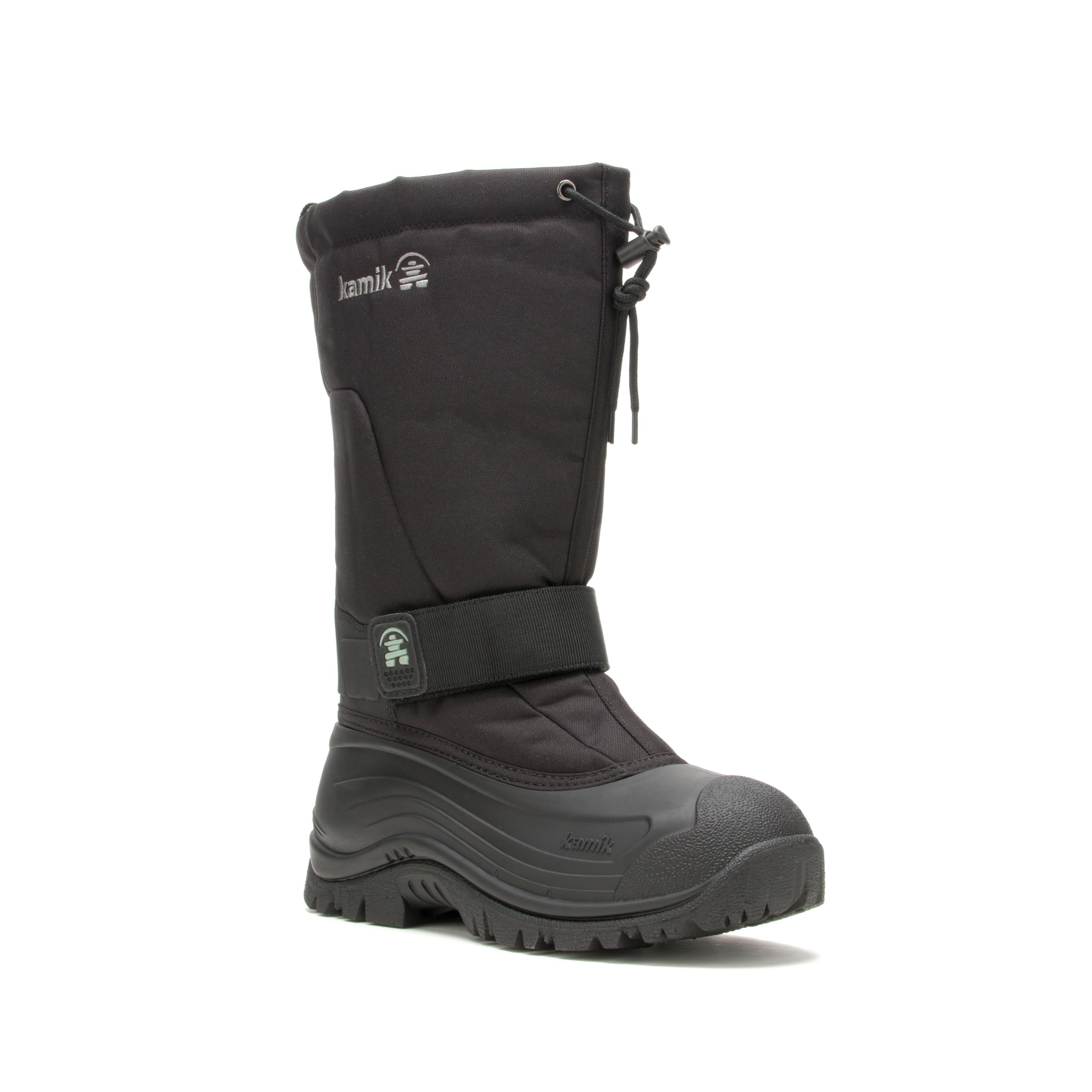
3. Kamik Greenbay 4 Men’s Winter Boot
A Canadian-made boot with a -40°F rating that has buyers reporting a decade of use for under a hundred dollars.
The Kamik Greenbay 4 is the undisputed value champion for extreme cold. It is rated to -40°C / -40°F, which is overkill for most situations but buyers love the confidence. One owner reports testing it at -22°F with their feet staying warm. The boot uses an 8mm Thermal Guard liner made from recycled materials, plus a waterproof nylon shell and a locking snow collar to keep powder out. The adjustable hook-and-loop strap at the midfoot adds stability, making it binding-friendly.
Buyers consistently praise the warmth — it is the single most-discussed feature, with 787 positive mentions. The boot is also easy to slip on and off, with a bungee lace lock that works well with gloves. The reviews show a split on fit: many say it runs small and recommends sizing up, while others find it true to size. Order a half to full size up and plan to wear thick wool socks. The main durability gripe is that the liner can disintegrate over time, though the outer boot often survives for years after a liner swap.
Rated to -40°F: -40°C/-40°F rating for about the price of a single jacket. It is heavier than the Danner Vital (5.2k+ ratings confirm the comfort and value consensus) at 4.5 pounds per pair, but the trade-off is proven performance in genuine arctic conditions.
Grab for extreme cold: you face regular sub-zero temperatures and want a boot that will last through several seasons.
Avoid for daily wear: you have wide feet or need a boot for long-distance hiking.
4. Columbia Men’s Expeditionist Shield
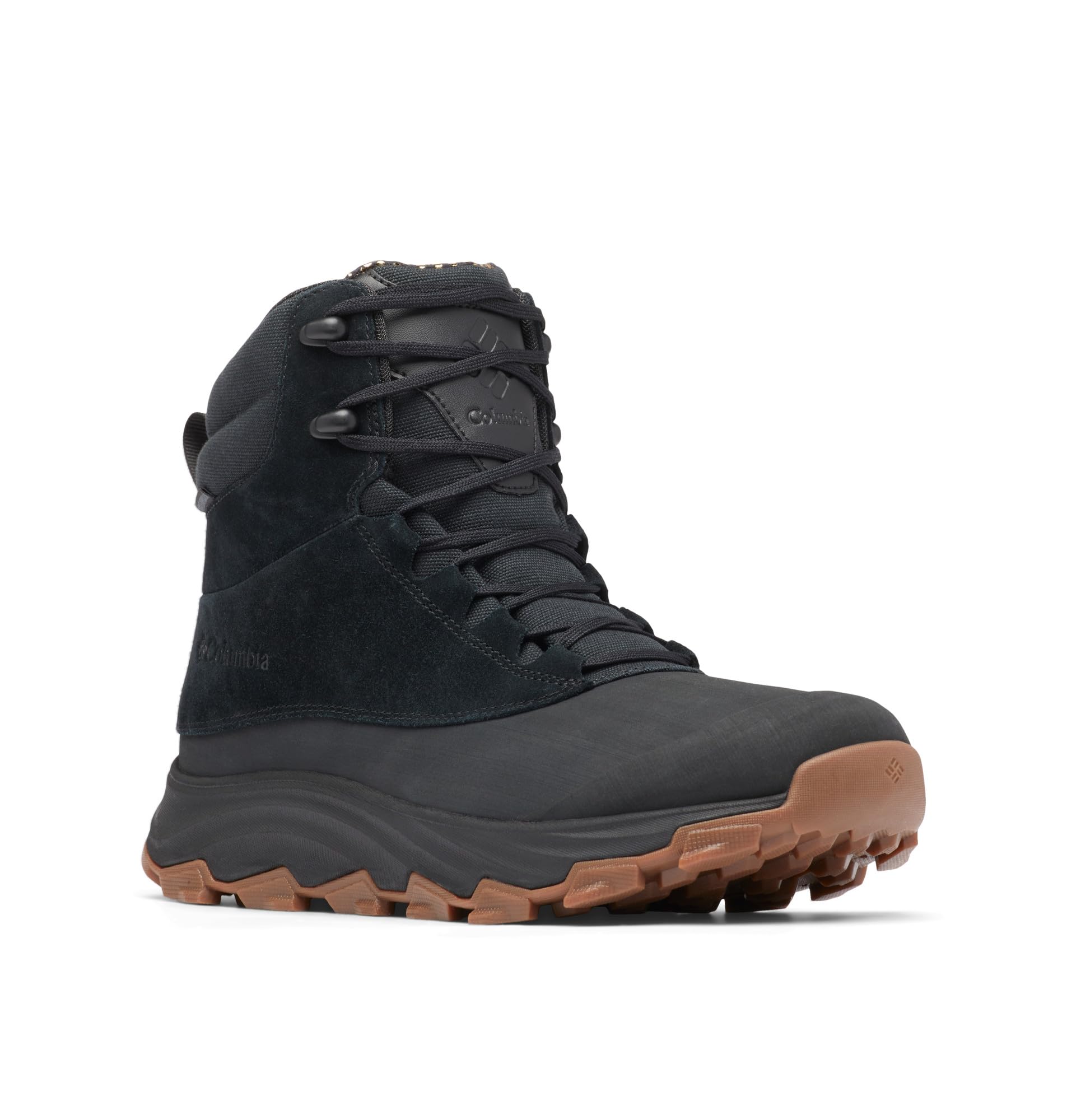
Columbia’s most advanced thermal-reflective tech in a lightweight package for cold weather.
This boot uses Columbia’s signature thermal-reflective lining to bounce body heat back at you, plus a waterproof-breathable membrane. The result is a boot that owners describe as “warm but not hot” and “lightweight like a hiker.” Several reviews call it a daily driver — owners wear it for work, walks, and errands. The aggressive tread is great for snow but tracks snow and salt inside, which is a minor annoyance.
The boot runs small, with many owners sizing up half a size. The gold trim at the collar is a divisive design choice, as several buyers find it juvenile. Durability seems solid overall with one caveat: a single reviewer noted the bottom laces lack metal eyelets, which raises concern about longevity. But the overwhelming consensus is positive: the Expeditionist Shield is one of the best lightweight winter boots on the market.
Omni-Heat reflective: If you prioritize light weight over thick insulation, this is your pick. It is not for standing still at -20°F, but for active snowshoeing in the teens it is ideal.
Best for walking: daily winter wear and moderate snowshoeing where weight matters more than arctic-level warmth.
Consider for icy paths: the Danner Vital for better waterproofing in slush.
5. Absolute Scout 3 Tall Snow Winter Boots
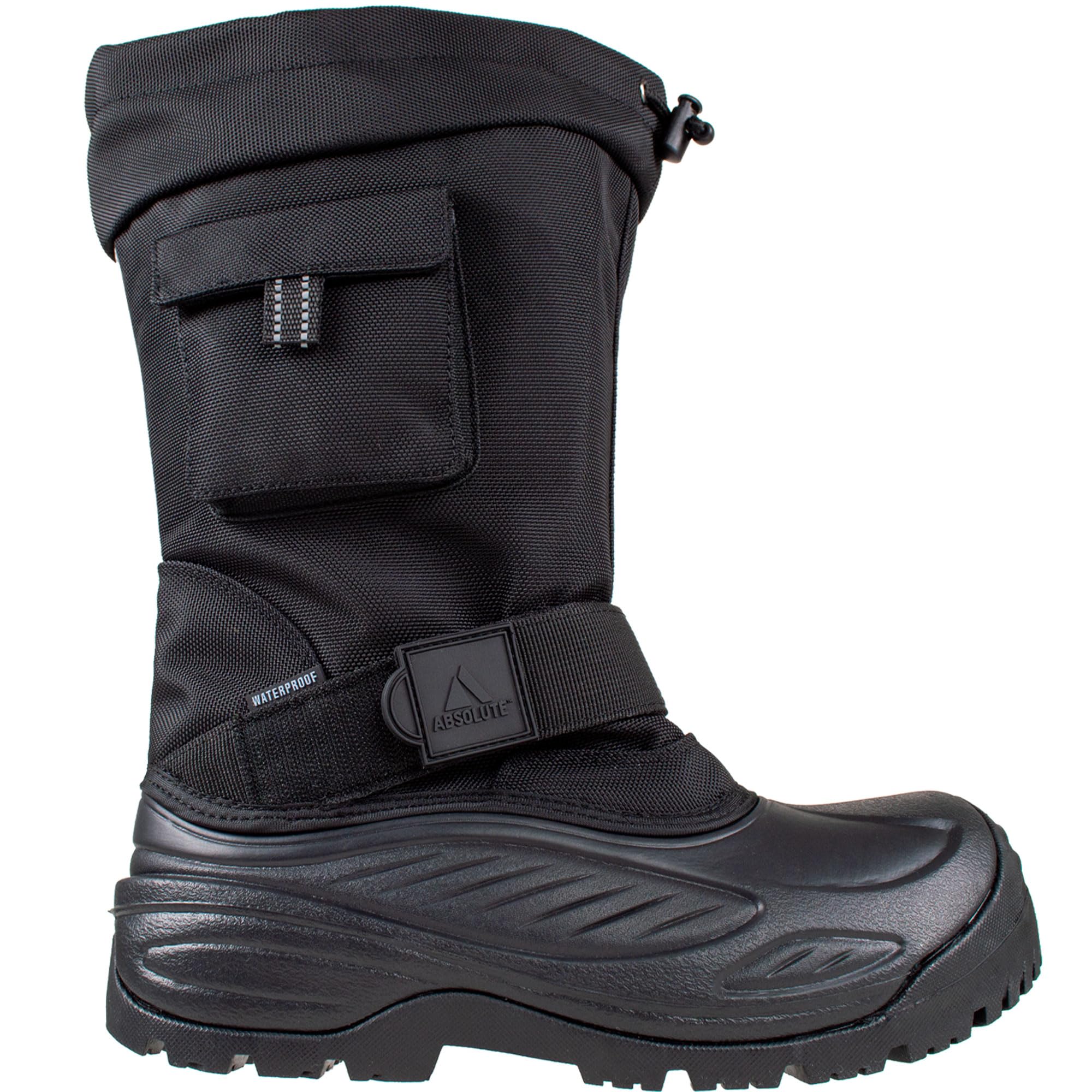
An absurdly warm boot rated to -58°F that costs less than most mid-range winter jackets.
The Scout 3 is the newest boot on this list, and it brings a HEAT-MX thermal insulation rating that rivals boots three times its price. The waterproof shell is seam-sealed, the outsole is natural rubber for good grip on ice, and the tall shell has a functional side pocket. Owners confirm it keeps feet warm below 0°F and describe it as “warm and toasty.” One Texas buyer said it was the first time their toes did not get cold during an extra cold snap.
The big catch is sizing. The boot runs very small — a review from a buyer comparing to Kamik and Baffin boots recommends sizing up 1.5 to 2 sizes for wide feet. The foot bed feels like an E/EE width, but some buyers wish for even wider options. It also lacks a pull loop at the top rear, making it a bit hard to pull on without a boot jack. At 153 ratings, it is the least-reviewed boot here, but the early consensus is strong.
Budget-friendly price: Warmth comparable to the Baffin Eiger at a fraction of the cost, but expect to spend time finding the right size.
Grab for mild winters: you are on a tight budget and deal with extreme cold (-20°F or lower).
Avoid for sub-zero: you need a boot for active hiking — it is bulky and hard to pull on.
6. ROCKY Blizzard Stalker PRO Waterproof 1200G Insulated Boot
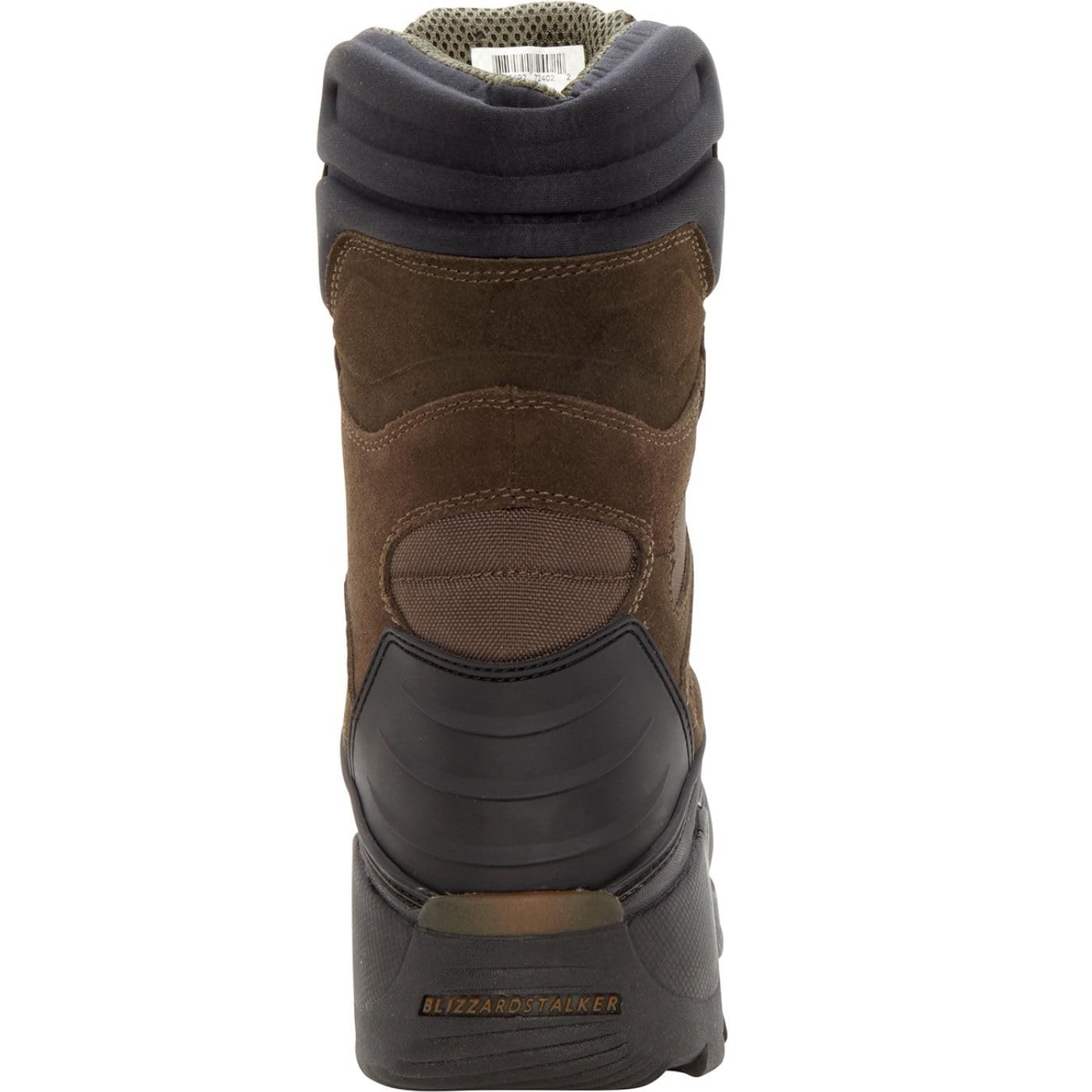
1200 grams of Thinsulate Ultra in a hunting boot built for sitting still in a treestand.
If your snowshoeing involves long periods of standing still — ice fishing, hunting, photography — the Blizzard Stalker is the warmest boot here. The 1200g Thinsulate Ultra insulation is double or triple what most boots use. Buyers confirm it keeps feet warm at temperatures like -25°F during snowmobiling. The waterproof construction uses split suede and 900-denier textile, so it is built to withstand brush and briars. The multi-directional Blizzard outsole provides good traction on snow and OK grip on ice.
The downside is bulk. At 5.4 pounds per pair for a size 10, it is nearly twice as heavy as the Danner Vital. Some customers note the rubber can separate from the upper after about 10 uses, though others report 15 years of use from older pairs. The fit runs large — size up for thick socks. The thin insole also lets some cold through the sole, so consider an aftermarket insole upgrade.
1200g insulation
- 1200g insulation for extreme cold (-25°F and below)
- Rugged suede/denier upper withstands brush
- Removable mesh PU footbed with TPU heel stabilizer
Bulky design
- Very bulky for hiking
- Some reports of rubber separating from upper
- Thin insole lets cold through sole
Best for deep freeze: standing still in extreme cold (ice fishing, hunting, snowshoe photography).
Skip for active use: you need a boot for active, long-distance snowshoeing on uneven terrain.
7. KEEN Men’s Revel III Mid Height Waterproof Insulated Hiking Boot
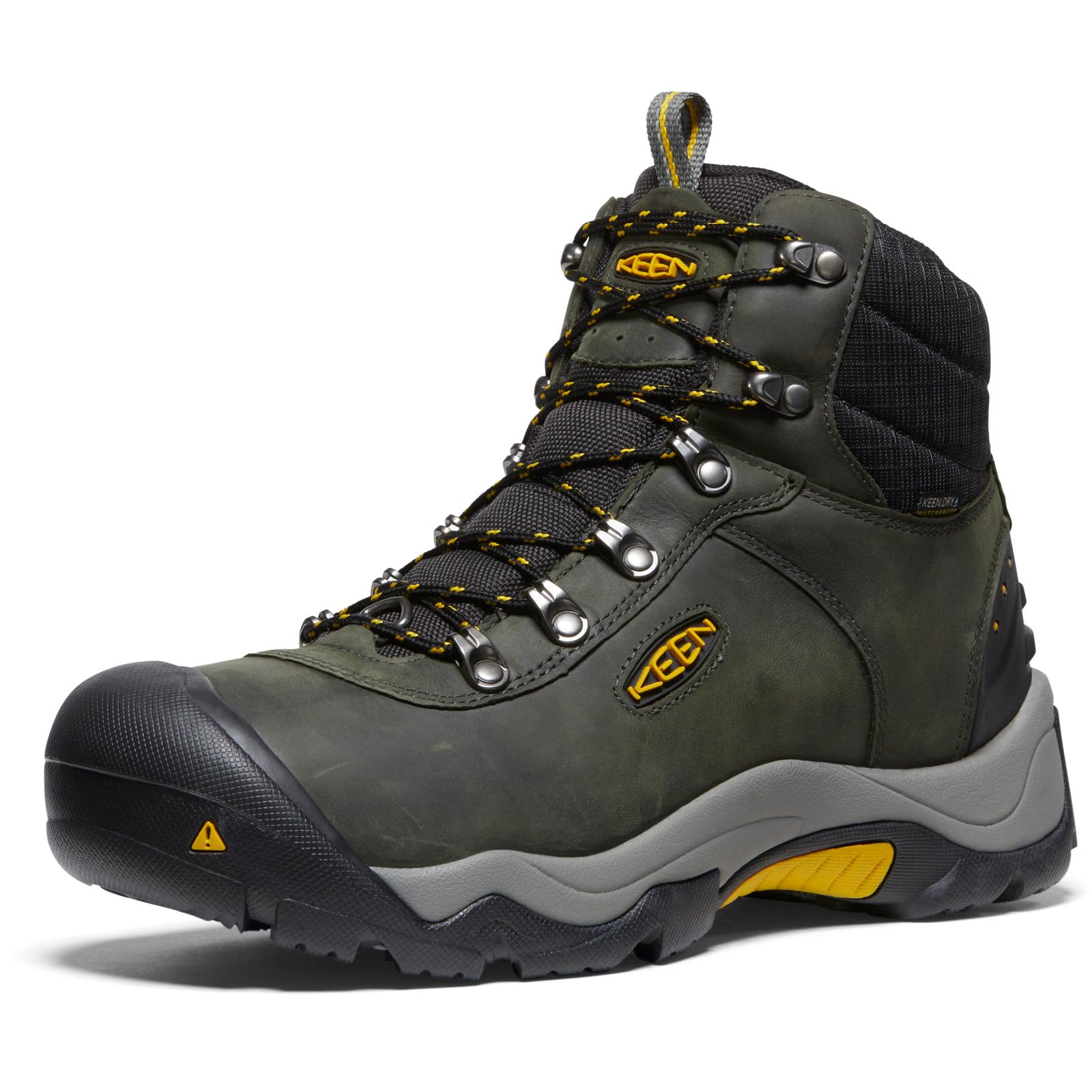
A mid-height hiker with 200g insulation and a toe box that lets your toes splay.
The Revel III is a hybrid: a hiking boot that is warm and waterproof enough for light snowshoeing. It uses a thermal heat shield inside to capture warmth and 200g of insulation, making it best for moderate cold (20°F to 30°F). The KEEN original fit is the standout feature — a wide toe box that owners with wide feet and bunions rave about. One owner tried 13 other boots and chose the Revel III for its comfort. It comes with a speed lace webbing system that adjusts quickly.
The honest trade-off is durability. While some reviewers point out five years of heavy use, others have inconsistent quality control. The sole is softer than most, which reduces ankle support — something to watch if you snowshoe on uneven terrain. It runs large, so standard width feels like a wide. A couple of owners find it warm enough but not for extreme cold. The boot is also compatible with Stabilicers and OR gaiters, which is a big plus for snowshoeing.
Waterproof and grippy: Hikers who transition from fall to winter and want a boot that goes from trail to snowshoe without feeling like a brick.
Best for hiking: you have wide feet and want a comfortable mid-height boot for moderate cold.
Consider for wide feet: you need extreme cold insulation or maximum ankle support for technical terrain.
8. THE NORTH FACE Women’s Chilkat V 400 Waterproof Snow Boot

A women’s boot that excels on snow and glaciers, with a 400g premium insulation build.
The Chilkat V is the pick for women who go hard in winter. It is specifically mentioned in reviews for snowshoeing and glacier walking, with buyers confirming no slipping on snow and ice. The 400g Premium Insulation hits the balance for active use — warm enough for standing around but not so bulky that you overheat on a climb. Buyers describe it as “super warm, comfortable, and lightweight.” One Colorado mail carrier wears it for 8-12 hour shifts and expects at least three winters of use.
The fit is narrow, especially initially. Most owners recommend sizing up a full size — a 7.5 should order 8.5. It is also heavy and bulky, which is a common complaint. Some shoppers say it is not fully waterproof in deep puddles, so avoid creek crossings. The non-slip sole works well on wet pavement. It is a premium boot at a premium price, but the durability consensus is strong — one owner reports five winters of use with the soles intact and no shredding inside.
400g insulation: 400g premium insulation in a women’s-specific last with a non-slip outsole that handles snow and ice.
Best for city snow: Women who need a warm, durable boot for active snowshoeing in moderate to cold conditions.
Avoid for trails: the Baffin ICEFIELD if you face polar-level cold.
9. Baffin Women’s ICEFIELD Tall Waterproof Polar-Rated Snow Boots
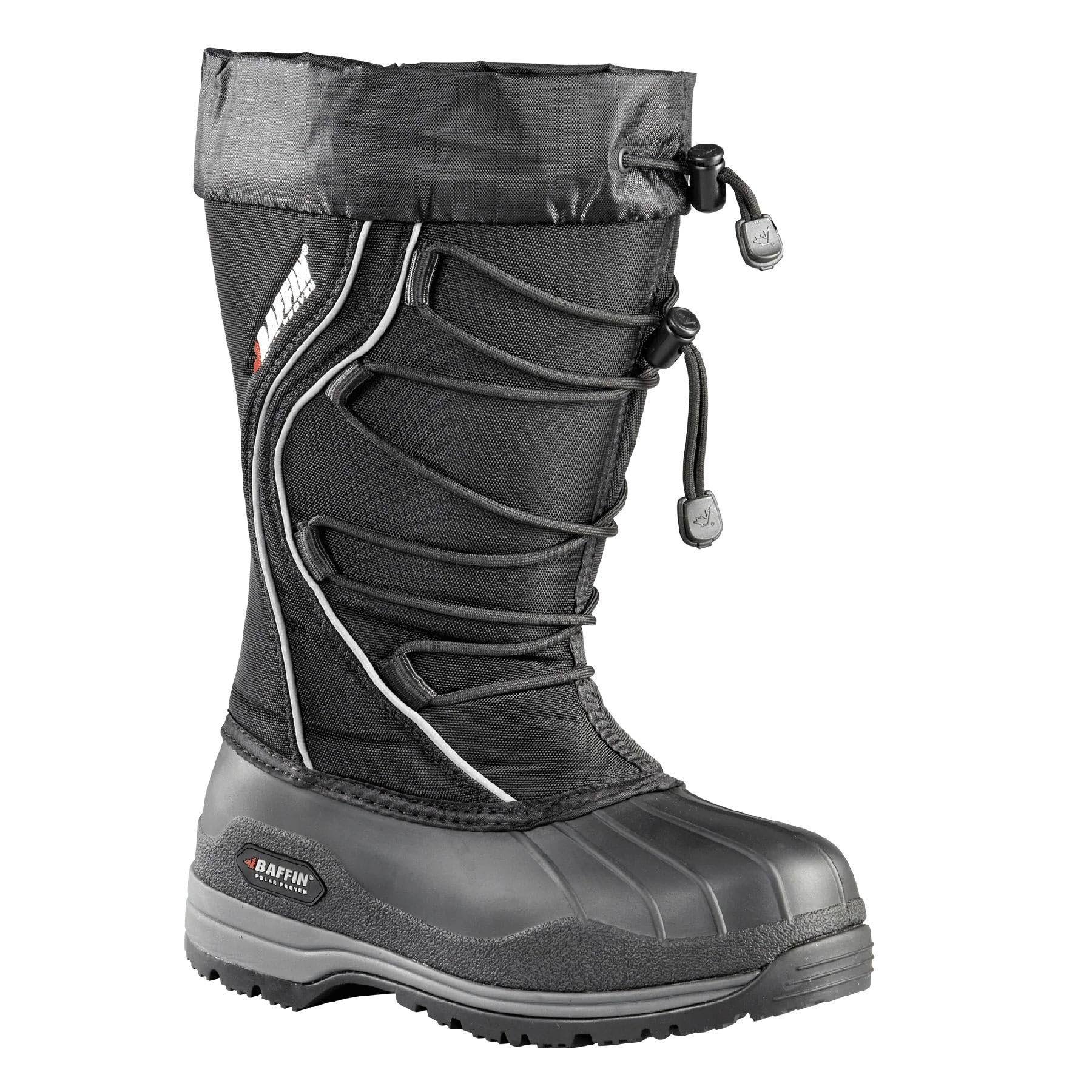
The boot that was field-tested at both the North and South Poles and it shows.
The ICEFIELD is the undisputed queen of extreme cold. It is rated to -100°C/-148°F (per the reviews) and uses a multi-layer insulation system: a removable Comfort-Fit inner boot with B-Tek Foam, dual layers of B-Tek Heat, Thermaplush lining, PolyWool, DiamondNet, and a Vapourized Aluminum Membrane. The result is warmth that one buyer describes as “outperforming Sorel and Columbia” with no sore spots or shin splints. The tall 12-inch nylon upper has a drawstring collar that locks out snow, and the Polar Rubber outsole stays flexible in sub-zero temperatures.
The main consideration is fit. The toe area is narrow, with buyers recommending sizing up a full size. The boot is also designed for extreme conditions only — it is too warm for indoor use or mild days. The side-to-side toggle lacing can be hard to tighten around slender calves. It is lightweight for the amount of insulation (4 pounds per boot), but it is still a bulky boot.
Tall shaft coverage: A boot that is comfortable for standing still at -50°F. If you live in a place where “wind chill” is a life-threatening number, this is the answer.
Best for deep snow: Women who face polar-level cold and need a boot for standing still (ice fishing, snowmobiling, arctic snowshoeing).
Skip for travel: you need a boot for active hiking or do not face extreme cold.
10. KEEN Women’s Revel 4 Mid Height Polar Insulated Waterproof Snow Boots
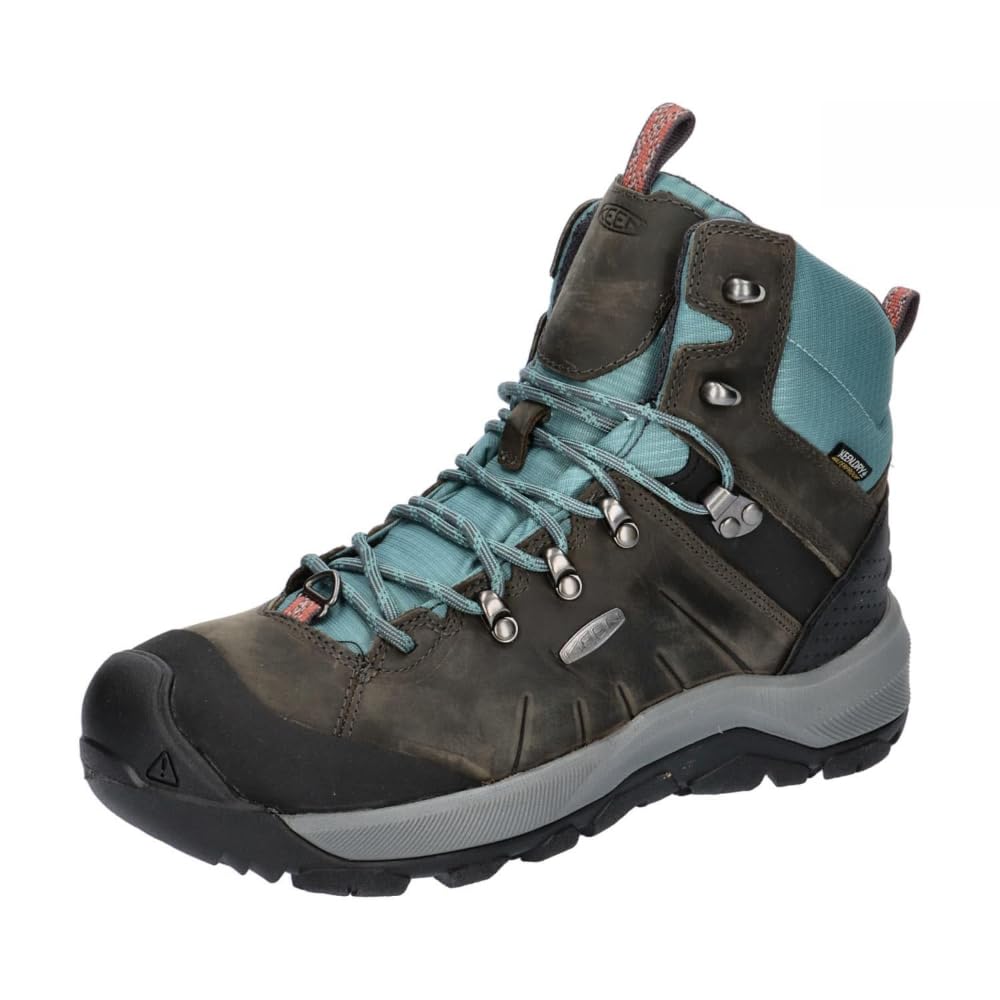
A lightweight hiker with 200g KEEN.WARM insulation and a polar-rated outsole for ice.
The Revel 4 is the women’s version of the Revel III, and it brings 200g of KEEN.WARM recycled PET insulation rated to -25°F, plus a KEEN.POLAR TRACTION outsole that owners call the best traction on ice per a Canadian lab test. It weighs just 20.32 oz / 576g per boot, making it one of the lightest insulated boots here. The original KEEN fit gives generous space across the forefoot for toes to splay. Buyers confirm it is warm and waterproof for snowshoeing, with one owner specifically saying “I took them hiking and snowshoeing. Definitely warm and waterproof.”
The main downside is the toe box is not as wide as expected from KEEN. Several owners with wider toes find it snug and need thin socks. The insulation is 200g — fine for 20°F but not enough for extreme cold. The boot works best for active snowshoeing in moderate cold.
Polar-rated warmth: KEEN.POLAR TRACTION outsole with microscopic shards that dig into ice — genuinely slippery-proof for most conditions.
Best for stationary use: Women who want a lightweight, highly grippy boot for active snowshoeing in the 10°F to 30°F range.
Avoid for running: you have very wide feet or face temperatures below -10°F.
11. Baffin Eiger Men’s Snow Boot
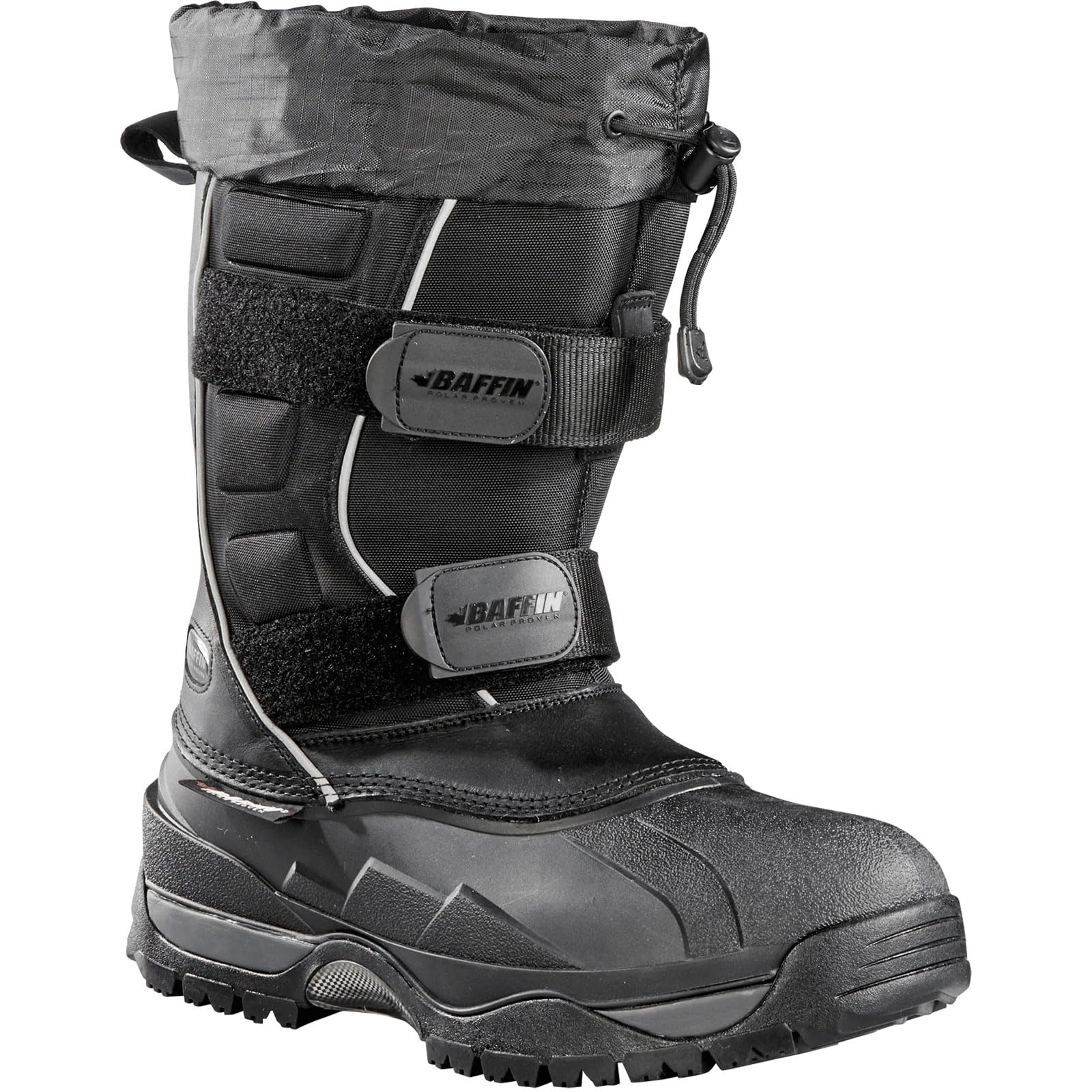
The Baffin Eiger — a polar-rated boot that owners call the best they have ever owned for extreme cold.
The Eiger is the premium pick for men who need absolute warmth. It comes with a removable inner boot, a Polar Rubber outsole for grip on ice, and a full-grain leather upper with a nylon locking snow collar. The crowd favorite here is its warmth — buyers report using it for ice fishing in North Dakota, deer hunting in Minnesota, and standing still for hours with no cold toes. One owner calls it “the best boots I’ve ever owned.” The boot has a pull-on design with a double strap closure for easy entry.
The catch is fit and price. The boot is not for wide feet or muscular calves — some owners find the foot bed and shaft too narrow compared to the Baffin Tundra. Sizing is also tricky: one owner wears size 11.5 but needs size 14. It is expensive at the top of this list, but owners confirm it lasts (one bought a replacement after 10-11 years of use). It is not ideal for long-distance hiking; it shines when you are standing still in extreme cold.
Arctic-grade protection
- Extreme cold warmth — owners confirm toes stay warm at -30°F
- Removable liner for easy drying and cleaning
- Durable full-grain leather lasts a decade or more
Very heavy
- Very expensive — the highest price on this list
- Not for wide feet or muscular calves
- Too bulky for active hiking/snowshoeing
Grab for extreme cold: you are serious about extreme cold and have the budget for a boot that lasts a decade.
Skip for mild weather: you need a boot for active, long-distance snowshoeing or have wide feet.
Understanding the Specs
Insulation Grams
Insulation is measured in grams (g). 200g is for light winter use (20°F to 30°F). 400g hits the balance for most active snowshoeing. 800g to 1200g is for extreme cold and standing still. More grams means more warmth but also more bulk. A boot like the ROCKY Blizzard Stalker uses 1200g and weighs about twice as much as a 200g boot. Think about your activity level — if you are moving, you generate heat and need less insulation.
Waterproof membranes vs DWR
A durable water-repellent (DWR) coating, often seen on jackets, beads water off the surface. It is not enough for snowshoeing. You need a waterproof membrane like Danner Dry, KEEN.DRY, Rocky Waterproof, or a rubber shell (like the Kamik Greenbay 4). These fully block water from getting in while letting moisture vapor out. A boot listed as “water-resistant” with a DWR coating will wet out after 20 minutes in slush.
Traction and lugs
Snowshoe boots need lugs (the rubber bumps on the outsole) that dig into packed snow and ice. A multi-directional lug pattern helps you grip sideways on a slope. Some boots, like the KEEN Revel 4, use a special polar-traction rubber with tiny shards for ice grip. The Kamik Greenbay 4 uses a high-traction rubber outsole. For snowshoeing, look for a fairly flat sole platform under the ball of the foot so the binding sits flush.
Shaft height
Boot height is measured in inches from the heel. 7 to 8 inches is standard and works for most snowshoeing. 10 to 12 inches (like the Baffin ICEFIELD or Absolute Scout 3) gives you better protection against deep snow and more stability for heavy packs. A taller boot also helps prevent snow from going over the top when you are post-holing.
FAQ
Can I use any winter boot for snowshoeing?
How do I know what size to order for snowshoe boots?
What is the best insulation weight for snowshoeing?
Will these boots work with my snowshoe bindings?
How long do these boots typically last?
Are waterproof boots also breathable?
What should I wear for socks with snowshoe boots?
Can I use snowshoe boots for everyday winter wear?
How do I clean and maintain my snow boots?
Final Thoughts: The Verdict
It is the crowd favorite — the top pick across 600+ reviews — and a true do-it-all boot for winter adventures. If you want something lighter for active days, grab the Columbia Expeditionist Shield. And for extreme cold on a budget, the Kamik Greenbay 4 is the one to reach for.
How We Picked
We do not accept paid placement. Every pick is matched to a real buyer and a real use-case; we do not hands-on test units.
Sources & Methodology
Specifications: manufacturer listings and product documentation. Review insights: verified customer reviews, as of July 2026. Pricing: not shown on this page (it changes often); check the current price via the retailer link.
As an Amazon Associate, Gadgets Feed earns from qualifying purchases. This does not affect which products we feature.