
Our readers keep the lights on and my morning glass full of iced black tea. As an Amazon Associate, I earn from qualifying purchases.
Specs are compiled from manufacturer listings and verified buyer reviews and can change over time — please confirm the key details on the product page before buying.
The hardest spot in any garden is the one that gets hammered by sun all day. That strip along a baking driveway, the south-facing bed against a hot wall, the curb line where reflected heat radiates back up. Most plants curl up there. The eight picks below are the ones that don’t — they are all rated for full sun, and each one earns its place in a hot border for a different reason. You will find a shrub that can carry a whole hedge on its own, a groundcover that carpets bare ground in one season, and a repeat-blooming rose that holds up in drought. If you want the short answer before you read on: the Spiraea is the safest anchor for most sunny borders, and the Sweet Drift Rose is the one to reach for if you want color spread low across the front edge.
I’m Min — the founder and writer behind Gadgets Feed. This guide is built by comparing the manufacturers’ published specifications and the patterns across verified customer reviews, so you get each pick’s real strengths and trade-offs instead of marketing spin.
Planting a hot border is really a test of patience — you are buying roots and stems now and trusting them to perform later. That is exactly why the picks below are sorted by how reliably they grow, not by how good they look in a listing photo. Read on for the full breakdown of the best border plants for full sun.
Our Picks at a Glance
How To Choose The Best Border Plants For Full Sun
Choosing a border plant for a sunny spot is not about picking the prettiest flower. It is about matching the plant’s hardiness zone, mature size, and moisture needs to the exact conditions of your bed. Get those three right and the plant does the rest. Get them wrong and no amount of watering will save it.
Start With Your USDA Hardiness Zone
Check your USDA hardiness zone first — that is a number that tells you the coldest winter temperature your area hits. It is the single most important filter. A plant rated for zones 3-8 will survive winters in a zone 5 garden, but one rated for zones 8-11 will not survive a zone 5 frost. Every pick in this guide lists its zone range, so check yours before you buy anything.
Decide On Shrub, Groundcover, Or Flower
Shrubs like the Spiraea grow tall and wide enough to form a living wall along a property line. Groundcovers like the Sedum stay low and spread sideways to fill bare soil and crowd out weeds. Flowering perennials sit in between — they come back every year but die to the ground in winter. A mixed border usually wants all three: a shrub for height, a groundcover for the front edge, and flowers for seasonal color.
Check The Mature Spread Before You Space Them
A plant’s mature spread tells you how much room it needs once it is fully grown, not how big it is on arrival. A shrub that reaches six to seven feet wide will swallow anything planted too close. Read the spacing note — some plants want eighteen inches, others want three feet — and give them that room from day one.
Quick Comparison
| Model | Best For | Type | Mature Size | USDA Zones | Amazon |
|---|---|---|---|---|---|
| Spiraea vanhouttei ‘Renaissance’★ Best Overall | Anchoring a large sunny border | Shrub | 5-6 ft tall, 6-7 ft wide | 3-8 | Amazon |
| Sedum Sunsparkler ‘Lime Zinger’Best Groundcover | Hot, dry slopes and groundcover | Groundcover | 4 in tall | 4-9 | Amazon |
| Clovers Garden Blanket FlowerBest for Pollinators | Season-long color and pollinators | Flowering perennial | 24 in tall, 24 in wide | 3 and warmer | Amazon |
| 6 Pack Daylilies by The Dozen | Filling a long border on a budget | Flowering perennial | — | — | Amazon |
| Purple Blazing Star Bulbs | Vertical purple accent, pollinator support | Bulb perennial | 40 in tall | 3-9 | Amazon |
| Mexican Petunia Bareroots | Tough, hardy full-sun filling | Flowering perennial | 5-7 in on arrival | 3 | Amazon |
| Perfect Plants Sweet Drift Rose | Low, repeat-blooming front edge | Groundcover rose | 1-2 ft tall, 2-3 ft wide | — | Amazon |
| Greenwood Nursery Mesa Bright Bicolor | Small border gaps and containers | Flowering perennial | 1-2 ft tall | 4-9 | Amazon |
In‑Depth Reviews
1. Spiraea vanhouttei ‘Renaissance’ (Spirea) Shrub, #3 – Size Container
Our pick — 4.5★ from 250+ verified ratings; the strongest balance of quality and price.
One shrub, three gallons of root, and enough width to plant a whole line of them.
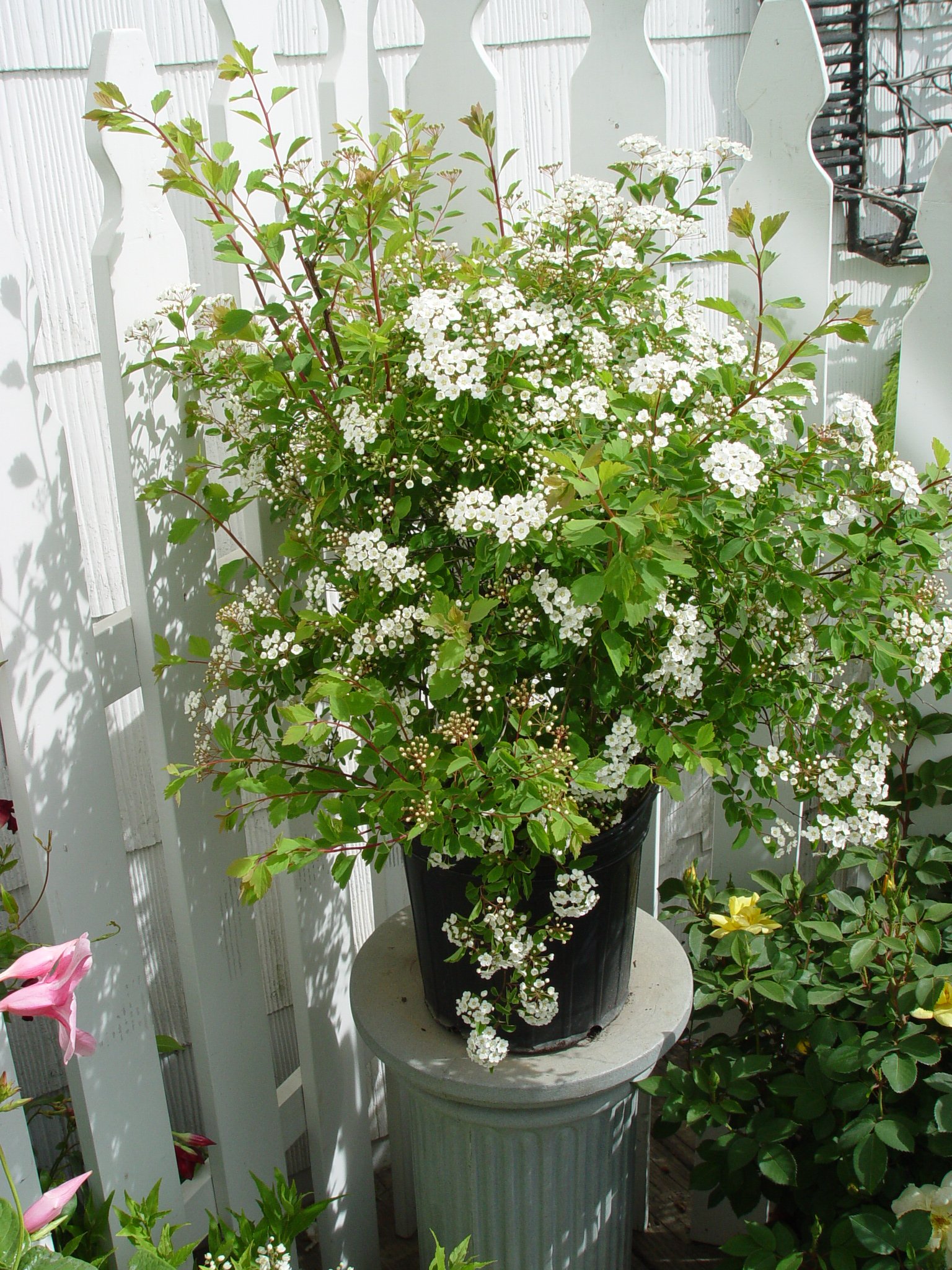
This is the plant to build a border around if you want it to look finished instead of sparse. When planted side by side in a group, the maker notes it makes an elegant border planting — and with a mature spread of six to seven feet and a mature height of five to six feet, a short run of these fills a space that would take a dozen smaller plants. It arrives already rooted in a 3-gallon trade pot (a container roughly the size of a small bucket, holding established soil and roots), so it can go straight into the ground on arrival when the weather cooperates.
The bloom timing is the quiet genius here. White flowers sit against green foliage, and the shrub leafs out in spring right after a normal winter dormancy, when it drops its leaves from late fall through the cold months. That is a real advantage in a mixed border: the Spiraea carries the structure in spring and early summer while slower perennials are still waking up. It is rated to grow in USDA zones 3-8, so it handles cold winters that would kill tender flowering plants outright.
Compared to the Sweet Drift Rose further down this list, the Spiraea is a different animal — the rose spreads low at one to two feet, while this climbs to five or six feet and anchors the back of a bed. What wins people over most is the sheer quality of the plant that shows up: healthy, large, and hearty on arrival, with shipping that keeps every root ball intact. Multiple buyers report the Spiraea pushing three or more inches of new growth and blooming within a week of planting. The one recurring note is shipping damage — an occasional box arrives crushed and a plant comes in slightly lopsided, but the shrub usually recovers with a little care.
Why It Anchors A Border
- Mature size of 5-6 ft tall and 6-7 ft wide fills a long run with just a few plants
- Arrives rooted in a 3-gallon pot and ready to plant immediately in good weather
- Rated for USDA zones 3-8, one of the widest cold-tolerance ranges here
- White blooms over green foliage from spring, with spring leaf-out after winter dormancy
The Fine Print
- Planting is not advised during frigid winter months or in drought conditions
- A few shipments arrive with a crushed box and a slightly lopsided plant
- Goes dormant and leafless from late fall through winter, which surprises new buyers
Plant it if: you need a structural shrub that can carry the back line of a sunny border and survive cold winters down to zone 3.
Think twice if: you want flowers right through to frost — this one blooms in spring and then settles into foliage.
2. Perennial Farm Marketplace Sedum Sunsparkler® ‘Lime Zinger’ (Stonecrop) Groundcover, 1 Quart, Soft Pink Flowers
Four inches tall, matted tight, and built for the spot where nothing else will grow.
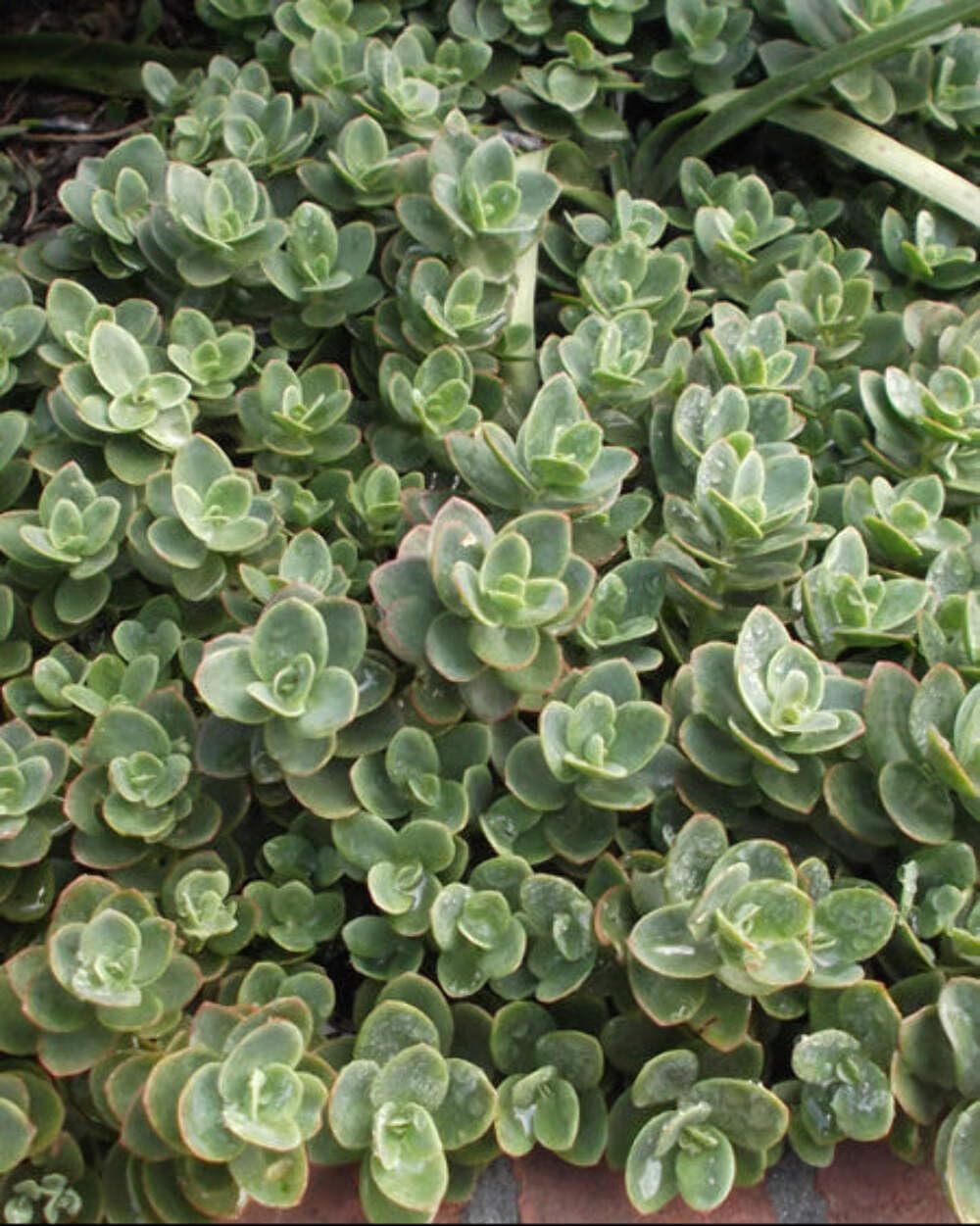
That bare strip of hot soil along a driveway finally has a plant. The foliage stays just four inches tall and spreads into a tight mat in a single season, which means it covers ground fast enough to close a gap before weeds get a foothold. Apple-green rounded leaves pick up a cherry-red edge in cool temperatures, then carry soft pink flowers through late summer into early fall. Set them eighteen inches apart and they knit together into a continuous carpet.
Two things make this Sedum closer to a spade than a plant purchase. First, it is rated drought tolerant and happy in poor soils, so it tolerates the hottest, driest, leanest corner of your border where richer plants sulk. Second, it attracts butterflies, which gives a low front edge a second job beyond looks. It is cold hardy in USDA zones 4-9, and the seller notes it is a registered trademark variety, PP#24632 — a patented selection you will not find under the same name elsewhere.
It does have shipping limits worth knowing before you order. Due to varying agricultural regulations, this one does not ship to AK, AZ, CA, CO, ID, MT, NV, OR, UT, WA, or HI, so if you garden in any of those states, look elsewhere. There is also a seasonal note: if it ships between November 1st and March 1st, the plant may arrive dormant and trimmed, which looks bare until it wakes up in spring. Buyers consistently praise both the packaging and the size of what lands — several report plants arriving larger than expected and growing steadily from day one.
The little workhorse: What gets praised most is the plant quality itself, followed closely by its appearance — buyers describe it as beautiful and larger than expected on arrival.
Ideal for: a hot, dry slope or a bare patch of soil where you want coverage without constant watering.
One catch: it will not ship to a long list of western and coastal states, so check yours before you commit.
3. Clovers Garden Blanket Flower (Gaillardia) Arizona Sun Plants – Two (2) Live Plants
Bees, butterflies, and hummingbirds all get an invitation with this one.
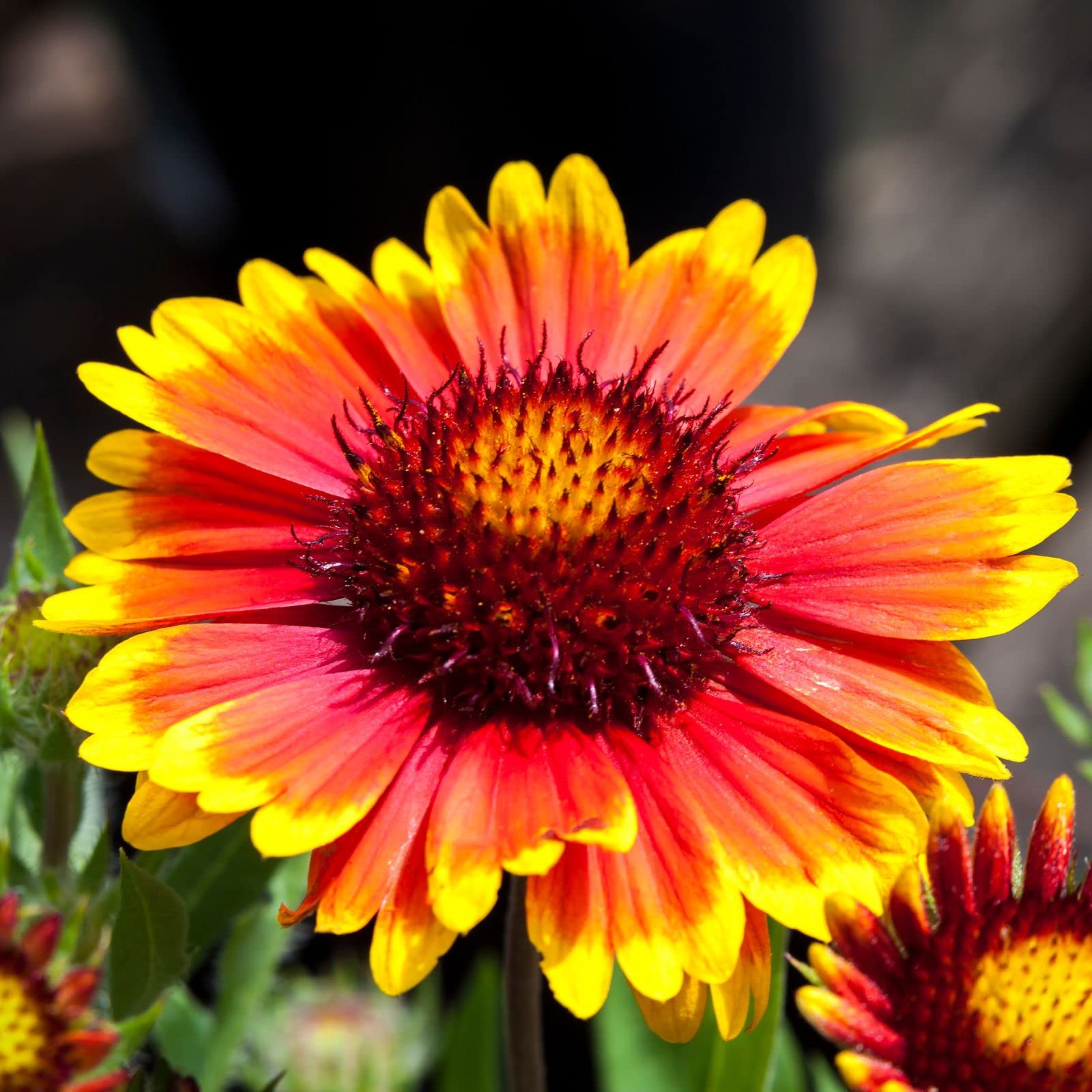
You get two live plants, each four to eight inches tall in a four-inch pot, grown in the Midwest and non-GMO with no neonicotinoids. The compact mound tops out around twenty-four inches wide and tall, so it slots neatly into a foundation planting or a smaller garden bed without crowding what is next to it. Yellow-orange-pink variegated petals sit around a large dark seedhead, and the sturdy stems make it a long-lasting cut flower as well as a border plant.
It blooms all summer and grows as a perennial in zones 3 and warmer. The supplier also claims ten-times root development, meaning the Gaillardia starts better rooted than a bare cutting — a claim worth weighing, but the practical point is that a well-rooted start handles transplant stress better than a bare cutting. For a full-sun border, that matters, because the first two weeks in the ground are the make-or-break window.
The honest note here is bloom consistency. Some gardeners report flowers that came up fast and stayed vibrant, while others found the plants slow to grow and the resulting flowers small. A rare arrival has come in limp and dry. That is a fair caveat rather than a reason to walk away — satisfaction is the trait this plant is most praised for, and the packaging earns consistent credit for getting plants there in healthy shape.
Reach for this if: you want a border that feeds the garden — bees, butterflies, and hummingbirds all visit this plant.
Look elsewhere if: you need guaranteed instant size; these arrive as small plants that take time to fill out.
4. 6 Pack – Daylilies by The Dozen, Easy to Grow, Growers Choice (6 Bareroots)
Six roots that wake up fast and cost a fraction of a potted plant.
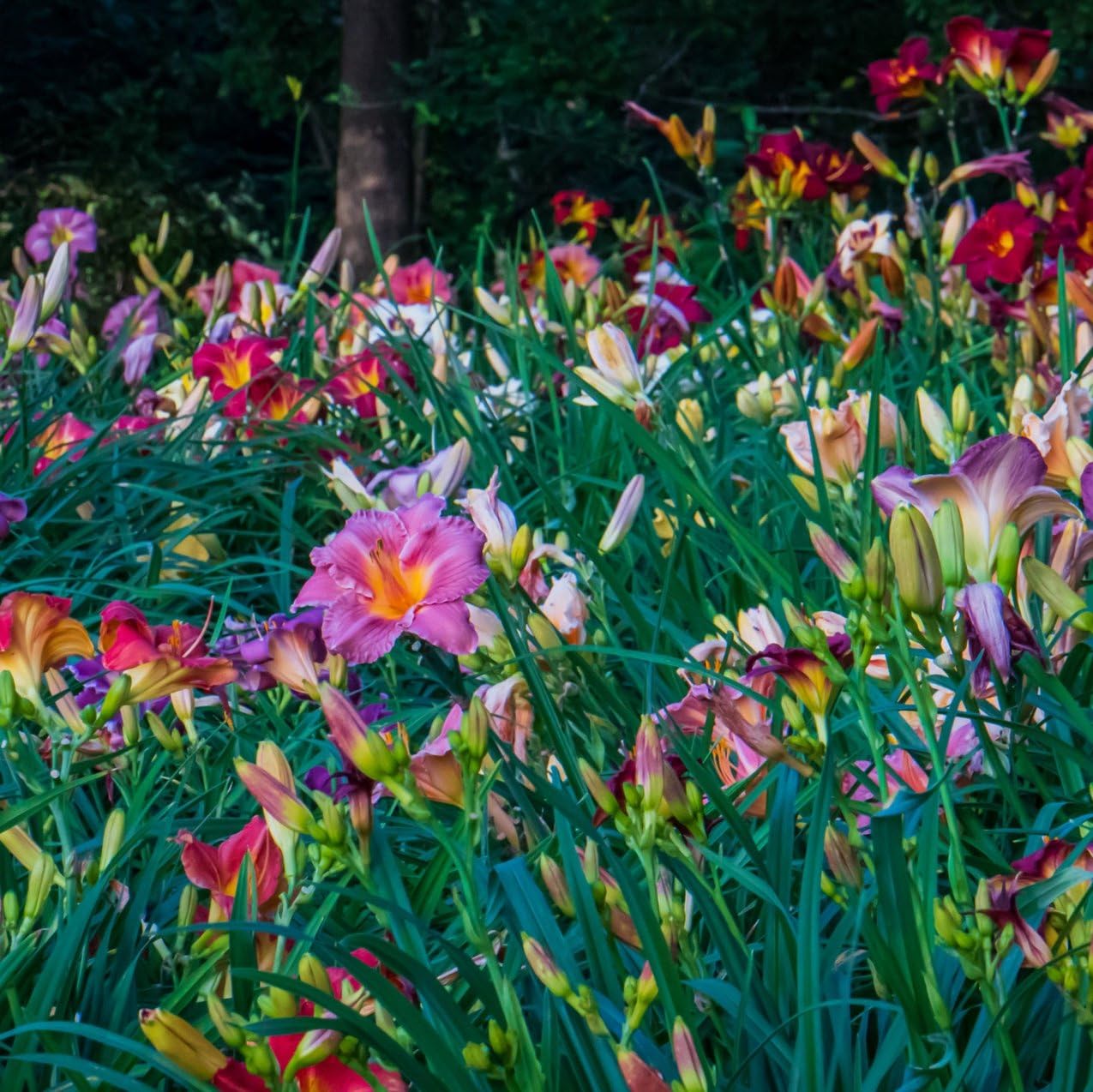
For anyone filling a long border on a tight budget, bareroots are the smart move. You get six daylily roots weighing just 1.5 pounds total, shipped as healthy ready-to-plant divisions from a grower that has been in the trade since 1885. They grow in full sun to part shade and adapt to a wide range of garden conditions, which means they do not punish you for a slightly imperfect spot. Low maintenance is the whole point — plant them, water them, and let them come back year after year.
The in-ground performance is the real story. Buyers describe roots arriving in surprisingly good condition and sprouting vigorously within weeks; one buyer who planted daylilies late in summer still saw growth and ordered another dozen. Another divided the daylily clumps and stretched two 6-packs into thirty-five plants across the border. That is not one plant doing well, it is bareroot daylilies being willing to be split and spread, which is exactly what a big border needs. Growth is what owners praise most here, followed by quality.
Two honest notes. Bareroots arrive with no visible blooms, so you will not know the color mix until the following season — a real limitation if you were hoping for a specific look this year. And a rare shipment lands puny or slow to establish. The upside is that they are cheap enough to buy a few extra and still come out ahead.
Split-and-share value: Daylilies tolerate division well, so a single order can be broken apart into many more planting spots — one owner split two 6-packs of daylilies into thirty-five plants.
Ideal when: you are filling a long, low-priority stretch of border and want a lot of plants for a modest spend.
Handle with care: you will not see flowers this season, and you will not know the exact color blend until next year.
5. Purple Blazing Star – 5 Fresh Bulbs – Liatris Spicata Flower Bulb

Forty inches of purple spire that punches straight through a low border.
Height is the reason to keep this one in mind. Liatris bulbs send up slender, grass-like foliage and velvety purple flower spikes that can reach 40 inches tall, giving you vertical color where the rest of the border is flat. The bulbs ship 4-5 inches across from a California nursery that has been selling since 1985, and they are stored in temperature-controlled refrigeration before shipping to keep them fresh. Five bulbs arrive per order, ready to plant.
The bloom column runs May through June. That timing lines up as a late-season lifeline for pollinators — the blooms feed bees, butterflies, and hummingbirds as other nectar sources taper off, which is where the plant earns its keep in a mixed border. Deer resistance is a bonus your hostas will not give you. Growers report success in zones 3-9, and the bulbs do not need rich soil to establish.
Honesty matters here, because this is the pick where review opinion splits the widest. Appearance and healthy condition are the aspects that win consistent approval — the fresh bulbs arrive with good roots. But bloom performance draws mixed reports: some growers see Liatris spikes push up ten days after emergence, while others wait a season with no flowers, and a few find soft or moldy bulbs on arrival. The cleanest piece of advice is to inspect your shipment the day it lands and complain quickly if it is off — the seller has a reputation to protect.
Why It Earns A Slot
- Reaches 40 inches tall, one of the few vertical accents on this list
- Pollinator-friendly blooms land May through June, filling a nectar gap
- Deer resistant, which protects the rest of the border
- Fresh bulbs stored in refrigerated conditions before shipping
What To Watch
- Bloom results vary widely — some growers see spikes in days, others wait a full season
- A small number of shipments arrive with soft bulbs and less than the stated count
- Not a fast filler; expect a season of growth before much color shows
Best for: a border that needs vertical purple spires and a late-spring pollinator stop.
Not for: anyone who wants guaranteed flowers in the first season — this one can take a year to settle in.
6. 6 Mexican Petunia Plant Live, Ruellia Brittoniana Perennial 5 to 7 Inches Tall Ship Bareroots

Twelve plants in six sets, and the bloom starts about as fast as any border plant can.
Read the fine print on the count and this becomes one of the better values in the group. Each “set” is two plants planted together, so you receive six sets for a total of twelve plants, arriving at five to seven inches tall as bareroots. That is a meaningful head start compared to seed or a single starter pot. Growers in warm-winter areas report Mexican petunias surviving two years in a Texas garden, with the flower count tripling after the first season.
For a full-sun border, the appeal is simple: this plant blooms beautifully across the whole season and loves the heat. Texas summers are a hard test of any flowering plant, and Mexican petunia has plainly passed it — the flowers keep coming and the foliage stays vibrant while other plants fade. It is the kind of plant that gives you color in August, when most borders look tired. Plant quality earns particular praise from buyers, who report it arriving healthy and tall with good foliage.
The genuine caveat is value. Twelve plants in one order is a lot if you only have a small border to fill, and some buyers feel the price is steep for what lands. The plants are also fast spreaders once established, which means you will need to keep an eye on them if you do not want them wandering into the neighboring bed. Reach for this if you can commit serious square footage — it will reward you with season-long purple flowers.
Fast starter: “All plants survived! Submersed in water for 24 hours to revive, planted in ground. Now have beautiful purple flowers that humming birds and butterflies enjoy.”
Plant these if: you have a big sunny bed to fill and want flowers that keep going through the hottest part of summer.
Skip them if: you only need a couple of plants — you will pay for twelve whether you have room for them or not.
7. Perfect Plants Sweet Drift Rose Live Plant, 1 Gallon, Pink Ground Cover
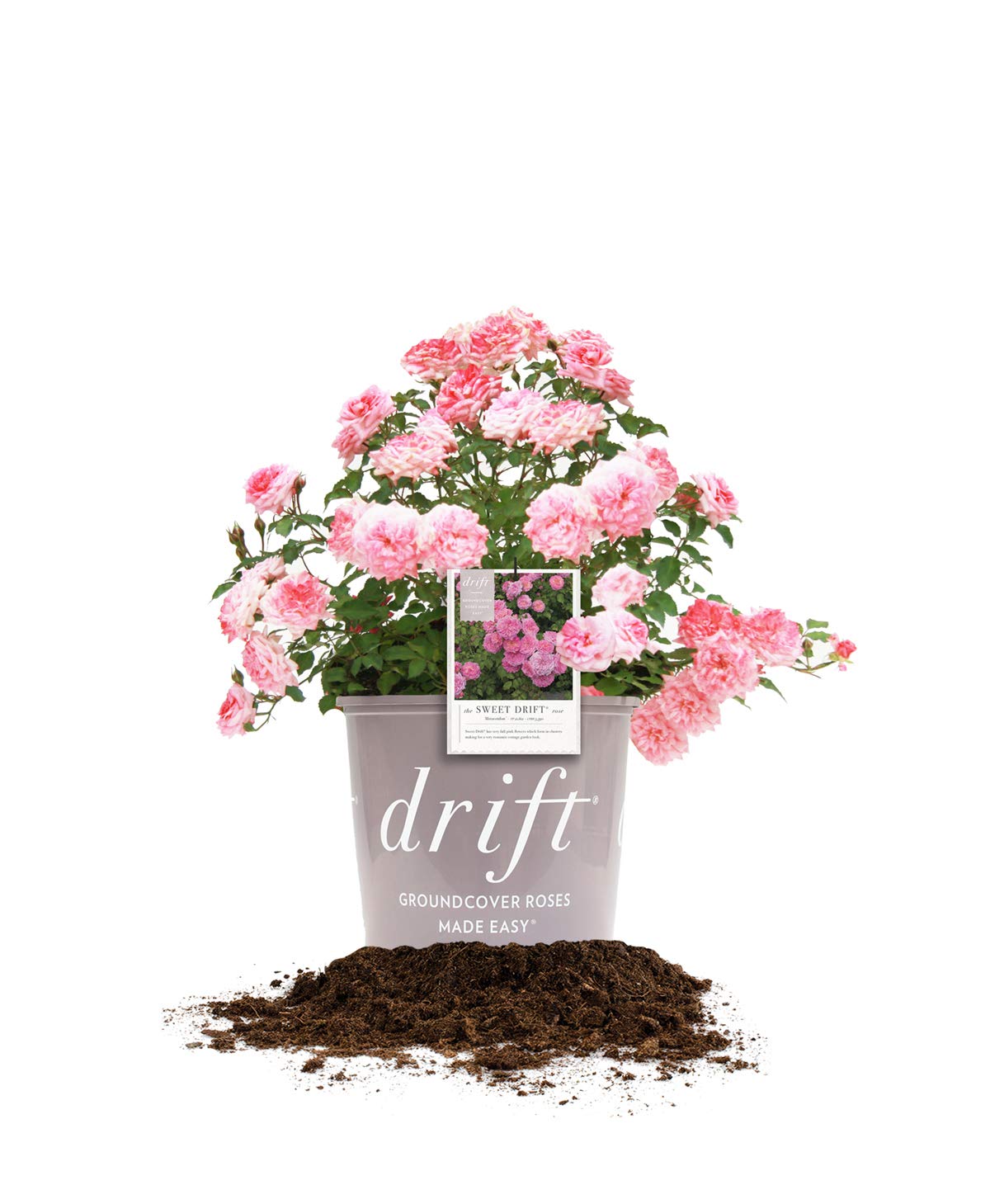
A rose that grows like a groundcover and blooms nearly year-round.
The Sweet Drift Rose does two jobs at once: it stays low and spreads like a mat, and it blooms for much of the year with baby pink flowers. Mature size is one to two feet tall and two to three feet wide, so it works as a border front edge or a low accent near a walkway, patio, gazebo, or mailbox — exactly the kinds of spots where a taller shrub would feel out of place. It comes in a 1-gallon pot with plant food and a care guide included.
The bloom period is the standout spec: the maker states it blooms eight to nine months of the year. That is an unusually long run for a shrub rose, and it makes this plant a strong choice for anyone who wants color without waiting for a single spring flush. In practice, the plant is drought tolerant and winter hardy, which means it holds its ground across all four seasons instead of needing coddling once summer ends. Space these roughly three feet apart and they form a continuous low border without crowding.
The texture and appearance are what owners mention most — deep green foliage running along the soil keeps the bed looking tidy even between bloom cycles, and the plant spreads evenly and brightly across a space. A recurring note is that mature plants sometimes do not survive, particularly where soil drains poorly; make sure the ground drains before you plant. This is a strong fit for anyone who has tried full-sized roses and found them too fussy for a sunny front border.
Why It Beats Standard Roses
- Blooms 8-9 months of the year, per the maker
- Stays 1-2 ft tall and spreads 2-3 ft wide, ideal for low front edges
- Drought tolerant and winter hardy, so it holds through all four seasons
- Arrives in a 1-gallon pot with plant food and a care guide included
Where It Falls Short
- Some owners mention a plant dying shortly after arrival, usually where soil drains poorly
- Bloom color has been described as hotter pink than the pastel shade shown in photos
- Low growth habit means it does not add height to the back of a border
The right pick for: a drought-prone front edge that needs color most of the year without a fussy maintenance routine.
Look past this one if: you want a single dramatic bloom season rather than a steady, low spread.
8. Greenwood Nursery: Live Perennial Plants – ‘Mesa Bright Bicolor’ + Gaillardia x Grandiflora
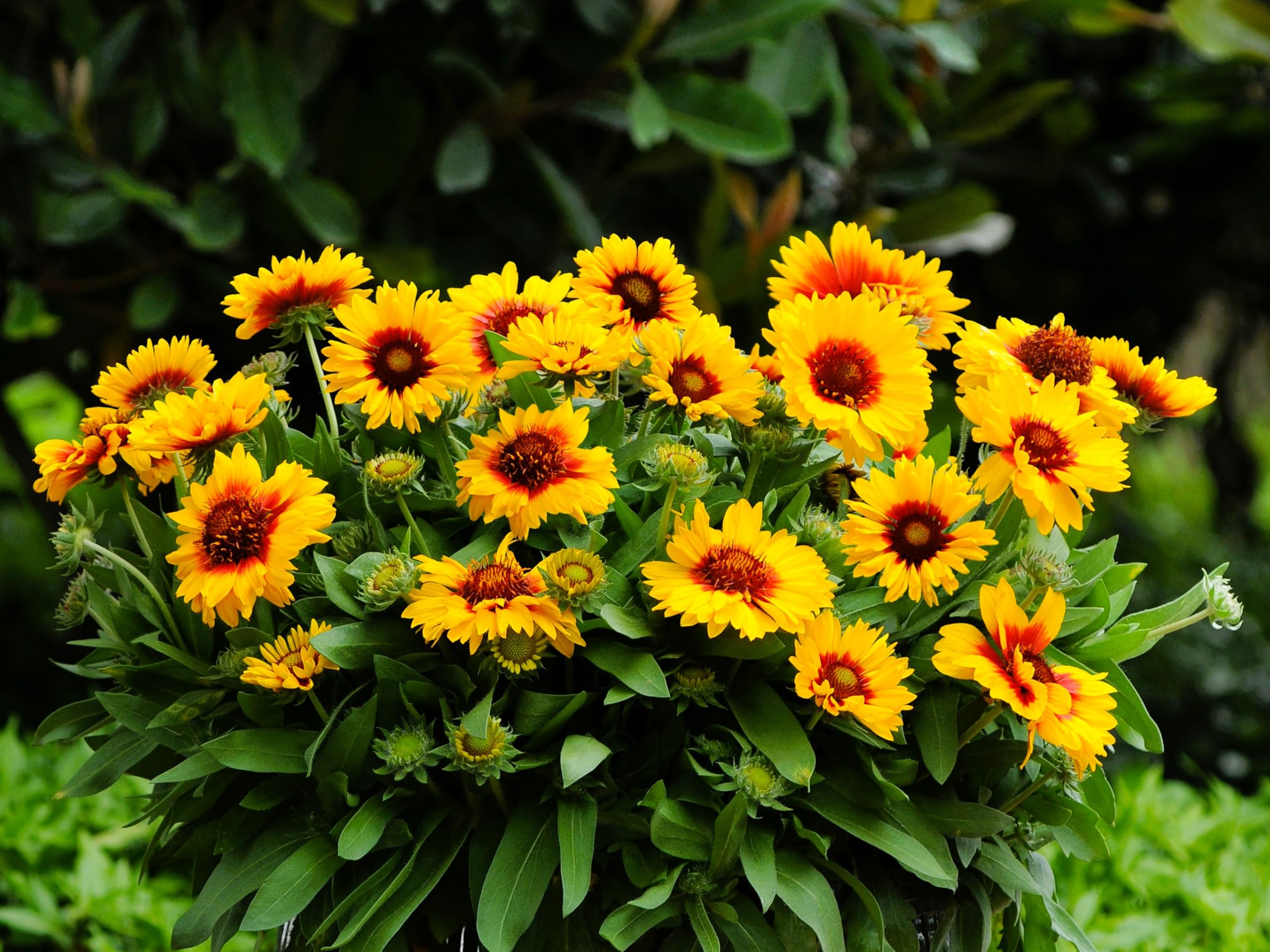
Bright yellow with red centers, compact enough for a tight border gap or a container.
You get two pint-pot plants of Mesa Bright Bicolor Gaillardia, also called blanket flower, with yellow blooms and striking red centers. Bloom season runs spring through autumn, growing as a deciduous perennial that reaches one to two feet tall — small enough for a rock planting or container, big enough to hold its own in a border. It grows fast and, once established, is drought tolerant, so it does not need daily watering to look good.
Sun exposure is straightforward: full sun is preferred for the best blooms. Soil should drain well, and regular watering during establishment is recommended before tapering off. Pair it with Mesa Red, the maker suggests, for a bicolor-to-solid-red combo that reads as intentional rather than accidental. That is a useful tip for anyone who wants a border that looks designed without adding a landscape architect to the budget.
The concern worth flagging is the sizing on arrival. Buyers have had plants arrive larger than expected, but plenty have also opened the box to very small starts, and a rare shipment has died in the ground within ten days even with an irrigation system running. Two out of three seems to be the rough pattern when it goes right — one plant underperforms while the rest thrive. Greenwood Nursery backs every order with a 14-day guarantee from the delivery date, so keep the packaging and photograph any issue quickly.
What buyers love: The blend of quality and appearance is the winning combination here — foliage arrives looking healthy and the plants establish fast when they land in good soil.
Worth ordering if: you want a low, fast-growing bicolor accent for a rock garden or a container by the door.
Reconsider if: you want a sure thing — the arrival size and first-season survival are genuinely inconsistent here.
Understanding the Specs
USDA Hardiness Zone
A USDA hardiness zone is a number that tells you the coldest winter temperatures your garden sees. A plant rated for zones 3-8 survives winters down to zone 3. A plant rated only for zones 8-11 will die in a zone 5 frost. Always match the plant’s zone range to your own before you buy. When a plant is rated for more zones, it works in more gardens — that is why the Spiraea at zones 3-8 fits so widely.
Mature Size and Spread
The mature size is how big the plant gets once established, not how big it is on arrival. Spacing notes tell you how far apart to plant. Sweet Drift Rose wants roughly three feet between plants; Sedum wants eighteen inches. Give them that room from day one, because once they fill in, moving them is a hassle.
Sunlight and Moisture
Full sun means six or more hours of direct sunlight a day — the plant needs it to bloom well. Part shade means roughly three to six hours. Moisture needs are rated moderate or regular, terms that describe the watering schedule the plant wants. Drought tolerant plants, like the Sedum and the roses here, handle a dry spell better than the others.
Pot Size and Bareroot vs Potted
Bareroot plants ship with bare roots and no soil, so they are cheaper and lighter — but they need soaking and quick planting. Potted plants arrive rooted in soil and can often go straight into the ground. A 3-gallon pot like the Spiraea arrives with a mature root system; a 1-quart pot like the Sedum arrives smaller but catches up quickly.
FAQ
Can I plant bareroot daylilies or Mexican petunias directly in the ground?
Will the Sweet Drift Rose actually bloom for eight or nine months?
My Spiraea arrived dormant with no leaves. Is that normal?
Can I grow the Sedum Sunsparkler ‘Lime Zinger’ in a state that is on the no-ship list?
How tall does the Purple Blazing Star actually get, and when does it bloom?
Do these plants need special soil, or will my regular garden soil work?
Is the Blanket Flower the same as the Mesa Bright Bicolor Gaillardia?
What should I do if a plant arrives damaged or dead?
Will deer eat these border plants?
Can I plant these border plants together in one bed?
Final Thoughts: The Verdict
For most gardeners with a hot, sun-baked border to fill, the border plants for full sun winner is the Spiraea vanhouttei ‘Renaissance’ because it arrives rooted and ready to plant, grows to a substantial five to six feet tall and six to seven feet wide, and handles zones 3-8 — the widest working range of any shrub here. If you want a low, repeat-blooming front edge that spreads into a colorful mat, the Sweet Drift Rose is the one to reach for — its eight-to-nine-month bloom window makes it the best value for anyone who wants color almost year-round. And for a groundcover that finally solves a bare, dry slope or a strip of driveway soil, the Sedum Sunsparkler ‘Lime Zinger’ is the one to buy — just check that it ships to your state first, because several are excluded.
How We Picked
We do not accept paid placement. Every pick is matched to a real buyer and a real use-case; we do not hands-on test units.
Sources & Methodology
Specifications: manufacturer listings and product documentation. Review insights: verified customer reviews, as of September 2026. Pricing: not shown on this page (it changes often); check the current price via the retailer link.
As an Amazon Associate, Gadgets Feed earns from qualifying purchases. This does not affect which products we feature.