
Our readers keep the lights on and my morning glass full of iced black tea. As an Amazon Associate, I earn from qualifying purchases.
Specs are compiled from manufacturer listings and verified buyer reviews and can change over time — please confirm the key details on the product page before buying.
The right border shrubs separate a tired yard from a landscape that stops neighbors mid-stride. You want a shrub that fills in fast, stays tidy, and blooms or changes color without demanding a horticulture degree. This list finds the shrubs that show up healthy and keep performing after the first season.
I’m Min — the founder and writer behind Gadgets Feed. This guide is built by comparing the manufacturers’ published specifications and the patterns across verified customer reviews, so you get each pick’s real strengths and trade-offs instead of marketing spin.
Below, you will find the top-rated performers for edging walkways, framing garden beds, and softening fence lines — the best border shrubs that balance fast establishment, mature height, and seasonal interest for curb appeal that lasts.
Our Picks at a Glance


How To Choose The Best Border Shrubs
Picking the right border shrub depends on three things: winter survival, mature width, and if you want green in December or bare branches. The wrong choice means constant trimming or a dead spot to replace.
Match the USDA Hardiness Zone First
Every shrub label carries a zone range (like “zones 6-10”). That number tells you the coldest temperature the plant can handle. If you live in zone 5 and plant something rated for zone 7, you are planting a one-season decoration. Always check your local zone before you click “buy”.
Mind the Mature Spread
That 1-gallon pot will become a 48-inch-wide bush. If your border is only 24 inches wide, you will spend every summer hacking it back. Look for the mature width on the tag and give it at least that much room. Spacing recommendations (often printed as “recommended spacing 24 inches”) are your cheat sheet.
Evergreen vs. Deciduous — The Winter Test
Evergreens (like boxwoods) hold leaves all winter, giving you a green line even in January. Deciduous shrubs (like spirea) drop everything and go dormant (a period of rest where the plant stops growing), leaving a bare twig line until spring. If your border faces the street and you want winter privacy, go evergreen. If you love seasonal flower color, deciduous often blooms harder.
Quick Comparison
| Model | Best For | Mature Height | USDA Zones | Flowering | Amazon |
|---|---|---|---|---|---|
| Southern Living Obsession Nandina★ Best Overall | Year-Round Color | 48 Inches | 6-10 | No Blossoms | Amazon |
| Encore Azalea Autumn TwistReblooming Star | Reblooming Color | 54 Inches | 6a-10b | Magenta Purple and white | Amazon |
| Boxwood WintergreenClassic Edger | Classic Edging | 60 Inches | 4-9 | No Blossoms | Amazon |
| Proven Winners Sprinter Boxwood | Fast Formal Hedges | 24-48 Inches | 5-9 | No Blossoms | Amazon |
| Proven Winners Double Play Candy Corn Spirea | Seasonal Foliage Color | 18-24 Inches | 4-8 | Red/Purple/Yellow Foliage | Amazon |
| Perfect Plants Black Knight Butterfly Bush | Pollinator Attraction | — | 5-9 | Dark Purple (Summer) | Amazon |
| Plants for Pets Silverado Sage | Drought-Tolerant Borders | — | — | Winter Bloom | Amazon |
| Proven Winners Double Play Doozie Spirea | Long Bloom Season | 24-36 Inches | 3-8 | Red to Purple Flowers | Amazon |
| Perfect Plants Lemon Drift Rose | Low-Growing Yellow Blooms | 2 Feet | 4-11 | Bright Yellow (Spring-Fall) | Amazon |
In‑Depth Reviews
1. Southern Living 2 Gal. Obsession Nandina
Our pick — over 4.5★ from 900+ verified ratings; the strongest balance of quality and price.
A non-stop color machine that goes from green to fiery red without you lifting a finger.
This Nandina is the definition of low-stakes border planting. It reaches a mature 48 inches tall and covers itself in bright red foliage (leaf color) that holds through multiple seasons. With no blossoms to deadhead, you get a clean, consistent look that buyers describe as “absolutely gorgeous” straight from the start. The crowd favorite — a top rating across 900+ owners — backs up the claim that these arrive “moist & happy just like it was in a nursery.”
It grows in USDA zones 6 through 10 in sun to part shade. You water twice a week until it settles in, then once a week after that. At 8.8 pounds per plant, it’s a solid, substantial shrub that feels like a nursery find, not a mail-order gamble. The main thing owners notice is how fast the color develops — some report seeing that signature red-green blend within weeks of planting.
It is an evergreen shrub, holding its foliage and color through winter. And while most rave about the health, a few have found the size smaller than expected or had a delivery box get banged up in transit. Give it a full growing season before you judge the final footprint. This one is for you if you want a fire-and-forget border that earns its keep with leaf color instead of flowers. skip it if you need a winter-green screen or want blooms every season.
Color Without Work
- Vibrant red-green foliage appears fast — owners note color showing in just weeks
- No pruning or deadheading needed after establishment
- Surprisingly heavy, well-rooted plants; “just like from the nursery”
Know Before You Plant
- Deciduous — expect bare stems in winter
- Slow-growing compared to some border fillers
- Delivery crates occasionally arrive damaged
Grab it for: a fire-and-forget border that earns its keep with leaf color instead of flowers.
Look elsewhere if: you need a winter-green screen or want blooms every season.
2. Encore Azalea 1 Gal. Autumn Twist Azalea
Twice the bloom cycles of a standard azalea, packing spring, summer, and fall color into one shrub.
The Autumn Twist does something rare among border azaleas: it blooms in spring, summer, and fall. That means magenta-purple and white flowers cover the 54-inch-tall (4.5-foot) frame for months, not just a two-week window. Buyers report planting in spring and seeing 3-4 inches of new growth with “gorgeous flowers” by mid-October — even in zone 6. It is evergreen (keeps leaves year-round), so the green leaves stick around through winter to hold your border line when other plants go dormant.
Give it partial sun and space it 48 inches apart from neighbors. At 5 pounds, it is lighter than the Nandina above, but the root system is well-established in the 1-gallon pot. The biggest variable is bloom consistency: while many arrive already showing buds, a handful of plants arrive without blooms or struggle in the first year. That “hit or miss” quality means you should inspect it on arrival and give it a full season before deciding it is a dud. A better pick than the Nandina if you want flowers instead of foliage for your border.
The real edge here: three-season reblooming in a compact evergreen package — hard to find at this height.
Reach for this if: you want the longest possible flower display from a single shrub without sacrificing winter greenery.
Think twice if: you are in a zone colder than 6a — this one needs milder winters to thrive.
3. Boxwood Wintergreen, 1 Gallon
The traditional evergreen border shrub that handles cold down to zone 4 without blinking.
If your vision of a border is a neat, green line that stays green all winter, this is your plant. The Boxwood Wintergreen pushes to a mature 60 inches (5 feet) tall and 36 inches (3 feet) wide, thriving in full sun to part shade across the widest cold tolerance range on this list — zones 4 through 9. Buyers consistently describe them as “healthy and lots of new growth in just a few days,” with packaging that protects even a large order of 25 plants.
It does not flower, so your curb appeal comes entirely from texture and form. That is a feature, not a bug, for anyone who wants a clean, formal edge without petals to sweep up. The main sticking point is size: some owners find the 1-gallon pot delivers a plant that feels smaller than expected, and a few call it “small and not a gallon pot.” If you need an instant full border, you may want to buy more than you think and let them fill in over a season. This is the best choice over the Sprinter Boxwood if you live in zone 4 and need the absolute cold hardiness.
What wins people over: the vitality on arrival — “heathy and lots of new growth in just a few days” — and a price that matches local nurseries but ships free.
Best for: cold-climate borders where only an evergreen will do, and you prefer to let plants fill in rather than buy instant size.
pass on it if: you need immediate visual height — the 1-gallon size starts small and needs a season to bulk up.
4. Proven Winners 2 Gallon Sprinter Boxwood
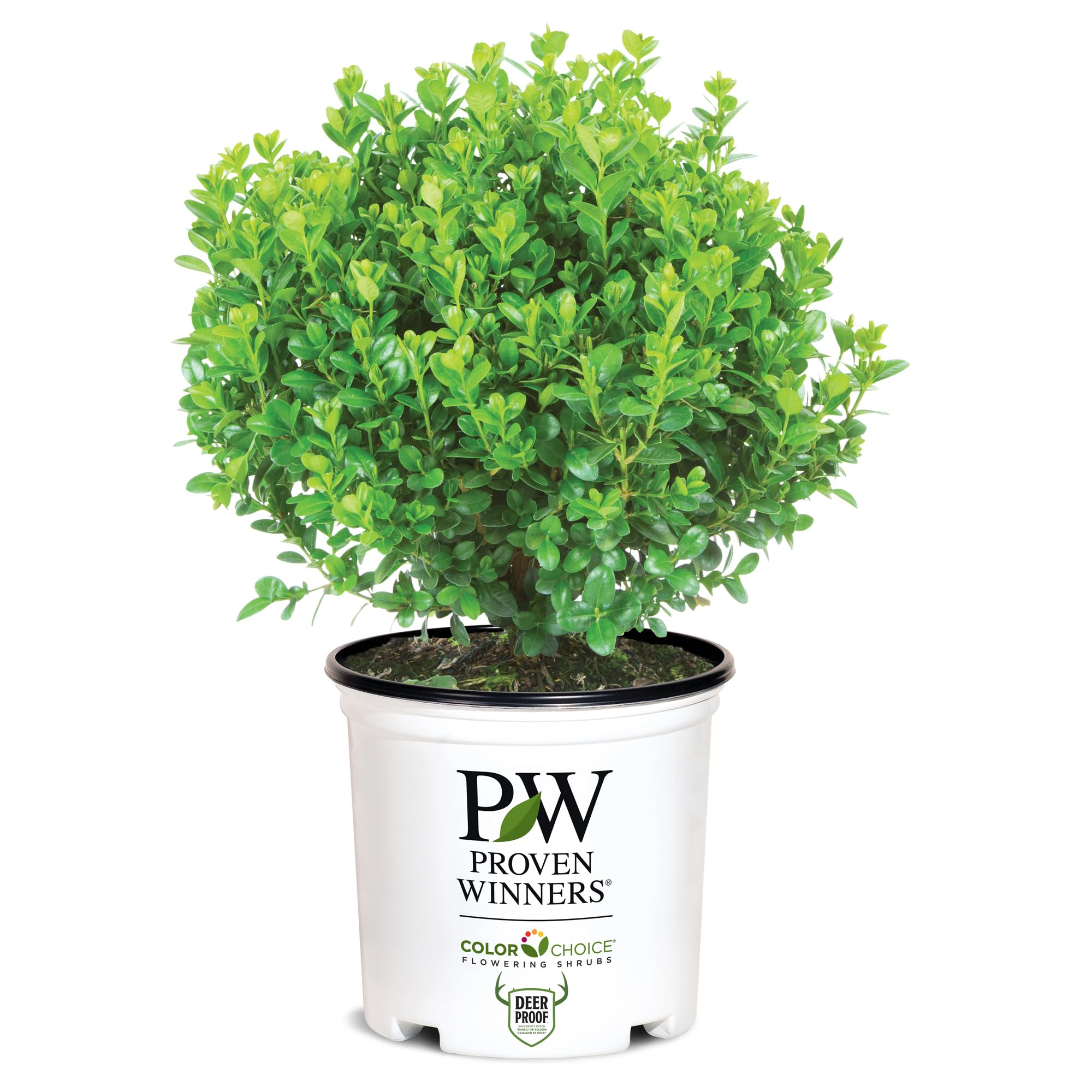
A faster-growing boxwood that actually bulks up fast enough to shape into topiaries by mid-summer.
Standard boxwoods can be frustratingly slow. The Sprinter cultivar (a cultivated variety) from Proven Winners changes that: owners mention that the 2-gallon plants “arrived full, healthy and easy to transplant” and grew so quickly they were shaping them into topiaries within weeks on a sunny deck. It matures between 24 and 48 inches tall and wide, making it one of the more compact boxwood options, ideal for tighter border zones.
It thrives in full shade to part sun across USDA zones 5 to 9. At 2 gallons, the root system is bigger than the 1-gallon Wintergreen above, which means a faster start. The recurring note from owners is that the packaging is superb — “no damage or leakage” — and the plants arrive pre-watered and green. The catch is the same as many mail-order shrubs: the initial size can look small in the pot, and a few owners expected more heft for the price. Give it one growing season and it catches up fast. It fills in faster than the Wintergreen Boxwood, so choose this one if you are impatient for a full hedge.
The standout point: “if ya need hedge plants I would highly recommend the Proven Winners Sprinter Boxwood” — a buyer who planted 15 of them.
Choose this if: you want a boxwood that fills in faster than the standard nursery variety and can handle shaping into a formal look.
Consider the alternative if: your budget is tight — this is a premium-priced cultivar.
5. Proven Winners 2 Gal. Double Play Candy Corn Spirea
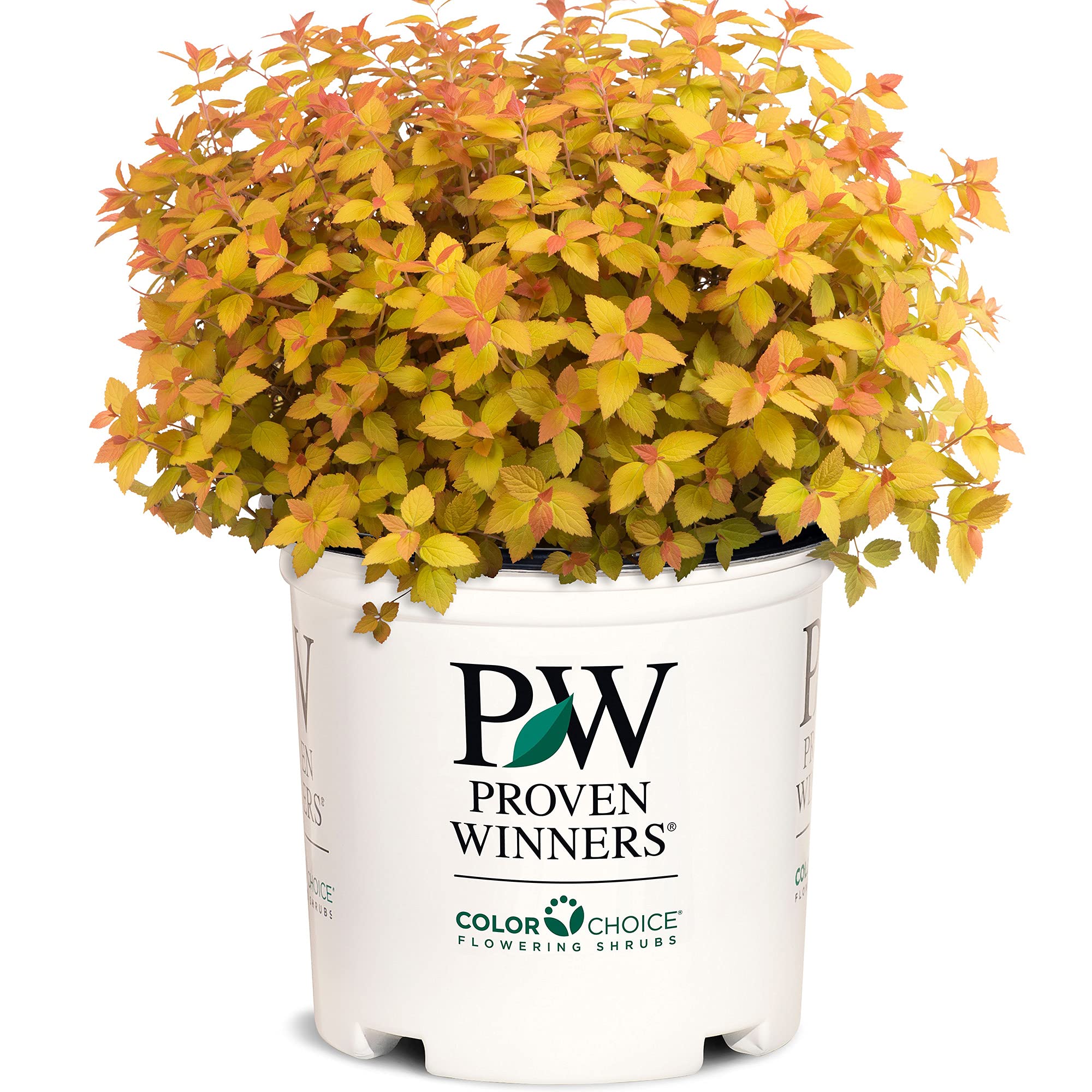
A low-growing spirea where the leaves steal the show — candy apple red maturing through yellow to orange.
Forget flower petals for a second. The Candy Corn Spirea puts its energy into leaves that emerge bright candy apple red, then fade to pineapple yellow, with new growth continuing in orange all season. That three-color transition on a single bush makes it a foreground standout in any border. It stays compact at 18 to 24 inches tall, spreading up to 30 inches wide — perfect for the front row of a layered border.
It handles USDA zones 4 through 8 in full sun to partial shade and is deciduous (drops leaves in winter). Buyers call it “so pretty and healthy” right from the start, often noting it was already budding on arrival. The honest caveat: some owners found the 2-gallon size smaller than expected, and a few plants struggled with transplant survival — two out of four died after moving to the yard in one report. Give it well-drained soil and consistent water until roots establish. No other shrub on this list delivers a three-tone leaf show in a package shorter than 2 feet.
Why it earns a spot: no other shrub on this list delivers a three-tone leaf show in a package shorter than 2 feet.
Ideal for: the front edge of a morning-sun border where leaf color does the heavy lifting.
Not for: anyone who needs an instant full hedge — let this one spread for a season.
6. Perfect Plants Black Knight Butterfly Bush 1 Gallon
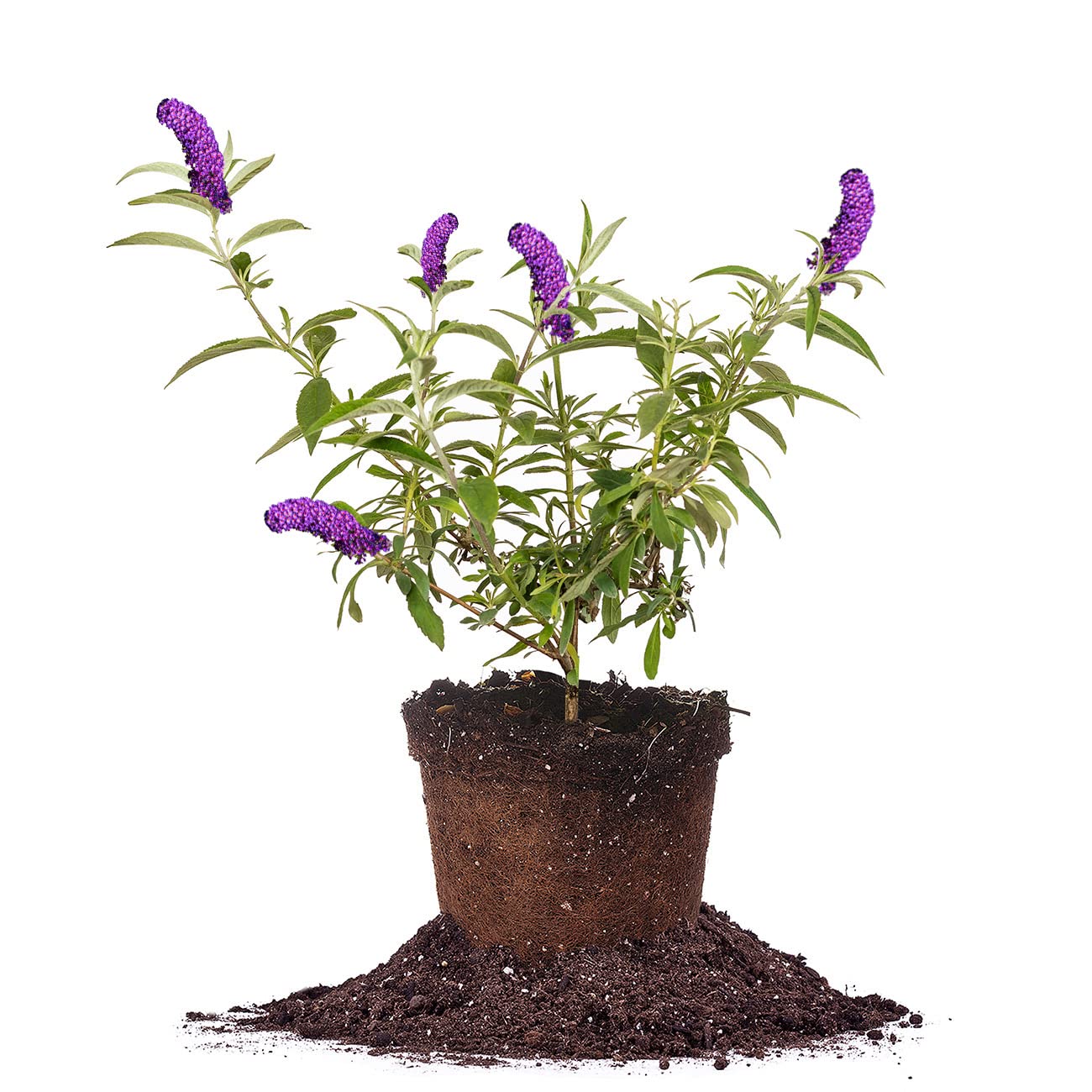
A fragrant shrub that turns your border into a butterfly and hummingbird rest stop all summer.
The Black Knight Butterfly Bush is built for the pollinator-lover. Its dark purple flowers are fragrant, bloom in summer, and attract butterflies, bees, and hummingbirds directly to your border. It grows across USDA zones 5 through 9 and becomes heat and drought tolerant (able to survive with little water) once established. Buyers describe it as “beautiful blooms” that arrived “bigger than expected, very impressed.”
The plant ships with a support rod included and is Florida-grown for nationwide delivery. The biggest frustration is shipping inconsistency — some plants arrive perfectly moist and budding, while a few report the bush arriving “dead as dead can be.” It also cannot ship to Washington, California, or Arizona due to state regulations, so check your address before ordering. If you get a healthy one, it grows fast and rewards you with continuous summer flowers.
Garden Life Support
- Fragrant dark purple blooms draw butterflies and hummingbirds consistently
- Drought and heat tolerant once established — low watering after the first season
- Larger than expected on arrival, with a support rod included
Shipping Roulette
- Some plants arrive dead or dry — check and contact the seller immediately
- Cannot ship to WA, CA, or AZ
- Bloom quantity can be sparse in the first season until the plant acclimates
Go for it if: you want a fragrant, fast-growing pollinator hub that also handles dry spells.
Pass if: you live in WA, CA, or AZ — or if you need a guaranteed first-year bloom show.
7. 1G Silverado Sage Plant by Plants for Pets
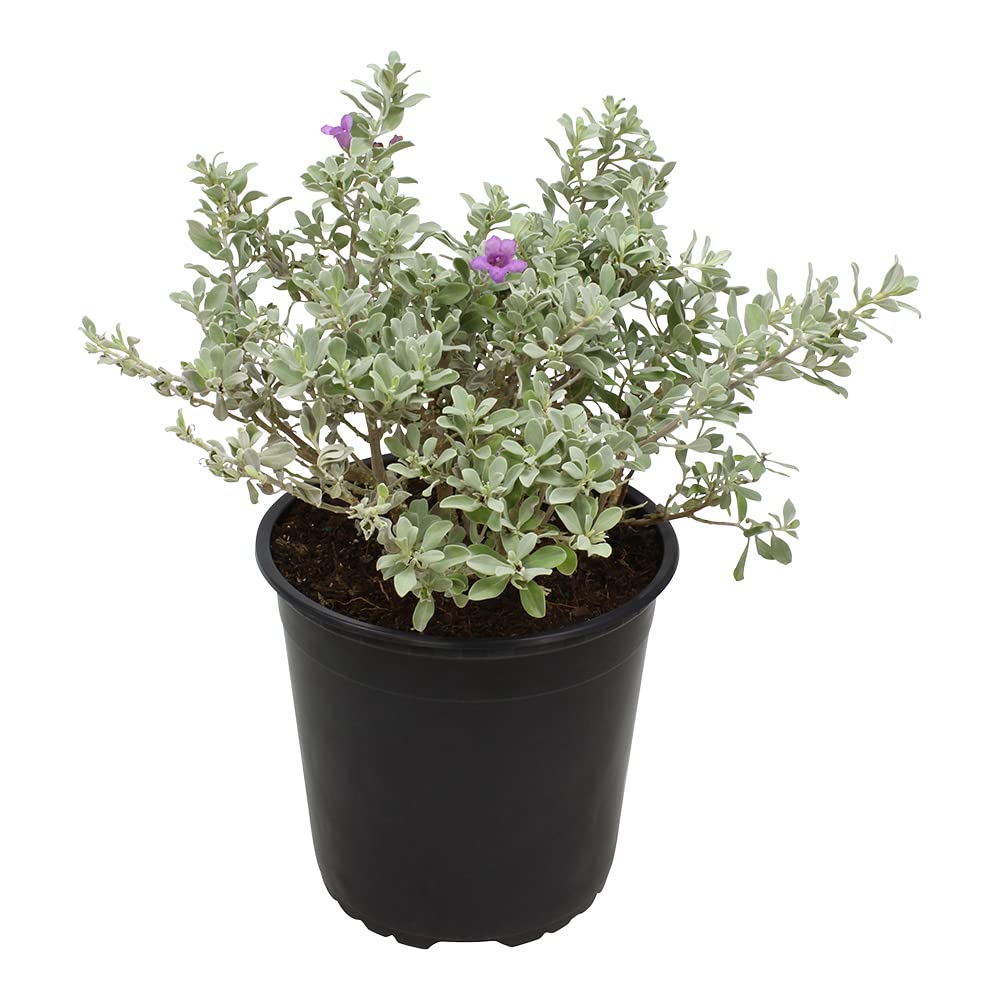
A Texas native that scoffs at dry spells and still delivers purple blooms in winter.
Silverado Sage is the plant for the forgetful waterer. This Texas sage bush is drought tolerant by nature and thrives in full sun as a patio or border plant. It ships in a 1-gallon nursery pot and blooms in winter, adding unexpected color during the colder months. Owners praise how it “arrived healthy, large, and well started” with packaging designed specifically for live plants.
A portion of every purchase goes toward helping shelter animals — a nice bonus if you like your landscaping to do some good beyond curb appeal. The recurring issue is branch damage from shipping. The box sometimes gets crushed by couriers, snapping branches. While the plant itself stays healthy, you may need to prune a few broken tips on arrival. It also may struggle in deep cold (zone 5b and below) without protection. This is the tough, low-water option for hot climates, unlike the flower-focused Azalea and Butterfly Bush.
The thing everyone raves about: the health on arrival — “beautiful plant, in excellent condition and thriving” — despite heavy-handed delivery handling.
Perfect for: dry-climate or forgetful-watering borders where you want a tough plant with winter blooms.
Think twice if: you live in a zone colder than 5b or expect a perfect, unblemished shrub from the start.
8. Proven Winners 2 Gal. Double Play Doozie Spirea

A spirea that arrived with flowers already popping — and kept blooming from spring through fall.
Buyers of the Double Play Doozie Spirea consistently report one thing: it shows up bigger and more advanced than typical mail-order shrubs. Red to purple flowers cover the 24- to 36-inch frame from spring into fall, and multiple owners note that “it even had flowers popping out on it” on the day of delivery. It thrives across the widest cold range on this list — USDA zones 3 through 8 — so it handles brutal northern winters as easily as southern heat.
The shrub is deciduous and loses leaves in winter, but the bloom season is long enough to forgive that. At 8.8 pounds in a 2-gallon pot, the root system is substantial — owners say it looks “not little like most of the ones you get from mail order.” The only potential downside is that it ships dormant (resting, with no leaves) in winter and early spring, so if you order during that window, it will look like a twig. Give it sun and it explodes green once the soil warms. Its bloom-from-spring-to-fall length rivals the Autumn Twist Azalea, but it handles much colder winters (down to zone 3).
Flower Power Right Away
- Arrives full and often already blooming — unusual for mail-order shrubs
- Survived a hard freeze and kept blooming, per owner reports
- Excellent cold tolerance down to zone 3
Seasonal Note
- Dormant shipping in winter and early spring — may look like bare twigs on arrival
- Deciduous — no winter greenery
- Needs full sun for best bloom production
Best for: the northern gardener who wants a blooming border from spring through fall without winter worry.
it’s not for you if: you need an evergreen line or are ordering in deep winter and cannot handle twig-stage.
9. Perfect Plants Lemon Drift Rose Bush 1 Gallon

A small, reblooming rose that carpets the front of your border in bright yellow all season.
The Lemon Drift Rose stays short — only 2 feet tall at maturity — and covers itself in bright yellow blooms from spring through fall. It fits USDA zones 4 to 11, making it among the most forgiving roses for temperature swings. Owners love the “charming and lovely” appearance and report that established plants “survived a colder than usual snowy winter in New Jersey and remained healthy and blooming.”
It is a low-maintenance ground cover rose (a low, spreading rose), meaning you do not need to be a rose expert to keep it going. The drawbacks are real: some plants arrive with yellowing leaves, black spot disease, or in the wrong color entirely (pink instead of Lemon Drift Yellow). The 1-gallon pot sometimes holds a plant with roots that barely fill the container, making it feel overpriced for the size. If the plant is healthy, it is a gem — but quality control is inconsistent. When you get a good one, it is the most charming yellow border rose at this height.
The honest read: when you get a good one, it is the most charming yellow border rose at this height — but the variance in arrival condition makes it a mild gamble.
Ideal for: the front edge of a sunny border where a low, bright yellow bloomer fills the gap between taller shrubs.
Pass if: you cannot risk receiving a diseased or miscolored plant — inspect immediately and file a claim if needed.
Understanding the Specs
USDA Hardiness Zone
This is the single most important number on any shrub tag. It tells you the coldest average winter temperature the plant can survive. A shrub rated for zone 6 might survive a mild winter in zone 5, but a zone 5 plant will sail through a zone 4 polar vortex. Always match the shrub’s zone range to your local zone — you can find yours by searching your zip code on the USDA map.
Mature Height & Spread
The “mature size” on the tag is what the plant reaches in ideal conditions after three to five years — not what is in the pot today. A 48-inch-tall shrub needs 48 inches of vertical clearance and usually about that much horizontal room. Ignore this and you will be pruning every spring or digging it up. The “recommended spacing” number on some labels tells you exactly how far apart to plant for a full hedge look.
FAQ
How far apart should I plant border shrubs?
Will border shrubs survive winter in a pot or container?
Can I plant border shrubs in clay soil?
What is the difference between a 1-gallon and a 2-gallon shrub?
How often should I water newly planted border shrubs?
Do border shrubs need fertilizer in the first year?
Which border shrub stays green all winter?
What is the best low-growing border shrub under 2 feet?
Final Thoughts: The Verdict
For most people, the border shrubs winner is the Southern Living Obsession Nandina because it delivers vibrant leaf color in weeks with almost no maintenance and a top rating across 900+ owners. If you want the longest bloom cycle from a single plant, grab the Encore Azalea Autumn Twist for its spring-through-fall flowers. And for a cold-hardy, tidy evergreen edge that stays green through the worst winter, the Boxwood Wintergreen is the one to reach for.
How We Picked
We do not accept paid placement. Every pick is matched to a real buyer and a real use-case; we do not hands-on test units.
Sources & Methodology
Specifications: manufacturer listings and product documentation. Review insights: verified customer reviews, as of July 2026. Pricing: not shown on this page (it changes often); check the current price via the retailer link.
As an Amazon Associate, Gadgets Feed earns from qualifying purchases. This does not affect which products we feature.