
Feeding a baby with a lip tie is rarely straightforward. The restricted upper lip prevents a deep, effective latch, often leading to clicking sounds, excessive air intake, poor milk transfer, and a frustrated parent desperately searching for a nipple shape and flow that works. Standard bottles designed for typical oral anatomy can exacerbate the problem, making every feeding session a battle.
I’m Min — the co-founder and writer behind Gadgets Feed. I spent hundreds of hours cross-referencing hospital feeding guidelines, pediatric occupational therapist (OT) recommendations, and real parent testimonials specifically for latch-restricted infants to identify the nipple geometries, vent systems, and body materials that actually help bypass a lip tie.
Whether your baby has a diagnosed posterior lip tie or just struggles to seal on circular nipples, you need a bottle engineered for compensation. This guide breaks down exactly which features matter most to find the ultimate bottle for lip tie that reduces air swallowing and maximizes nutrient intake.
How To Choose The Best Bottle For Lip Tie
Selecting a bottle for a lip-tie baby requires shifting focus from standard marketing features like “natural feel” to hard functional specs that accommodate the restricted upper lip’s inability to flange. Three factors dominate the decision: nipple geometry, flow control precision, and the ability of the caretaker to assist feeding mechanically.
Nipple Shape: Asymmetrical vs. Round
A symmetrical, round nipple is the enemy of a lip-tie latch. The tight frenulum prevents the upper lip from flanging outward to create a seal. Asymmetrical nipples with a flat, angled “bubble” and a rounded bottom better mimic the breast during latch, allowing the baby’s tongue to compress the nipple against the hard palate while the upper lip rests passively. Look for nipples with a defined latch-on line or a gradual slope that encourages a deep, asymmetric latch without requiring lip flange.
Flow Rate and Nipple Hole Design
Babies with lip ties often have poor suction strength, making standard slow-flow nipples overwhelming — leading to choking, coughing, or milk leaking from the sides. Preemie flow or extra-slow flow (SS or Size SS) is often the starting point. However, a Y-cut or cross-cut nipple that is firm on one side and soft on the other can offer better control by resisting collapse. The right flow rate prevents the baby from working too hard or flooding their mouth.
Squeezable Bottle Body and Assisted Feeding
For severe ties where the baby generates insufficient negative pressure, a squeezable bottle body (soft, flexible plastic in the middle section) allows the parent to gently squeeze milk upward as the baby sucks. This passive assistance compensates for the weak suction caused by the restricted lip, ensuring the baby receives milk without tiring. Hard-wall bottles rely entirely on the baby’s oral motor skills, which may not be sufficient.
Quick Comparison
On smaller screens, swipe sideways to see the full table.
| Model | Category | Best For | Key Spec | Amazon |
|---|---|---|---|---|
| Pigeon Cleft Palate Bottle | Specialized | Squeeze-feeding with low suction | Squeezable PP body + Y-cut nipple | Amazon |
| Pigeon PPSU Wide Neck | Premium Daily | Deep-latch transition | PPSU material + SS nipple (0m+) | Amazon |
| Lansinoh Glass (4-Pack) | Premium Glass | Anti-colic with clean materials | Borosilicate glass + ventilated nipple | Amazon |
| Gulicola Natural Glass | Glass Transition | Breast-to-bottle for tight latch | Borosilicate glass + ultra-slow nipple | Amazon |
| Dr. Brown’s Preemie Flow | Preemie/Slow | Weak suction with reflux | Internal vent + Preemie nipple | Amazon |
| Lansinoh Anti-Colic Plastic | Plastic Value | Latch ease at mid-range | 3-part vent + NaturalWave nipple | Amazon |
| Playtex VentAire | Budget Entry | Angled feeding on a budget | Angled body + bottom vent | Amazon |
In‑Depth Reviews
1. Pigeon Baby Cleft Palate Bottle
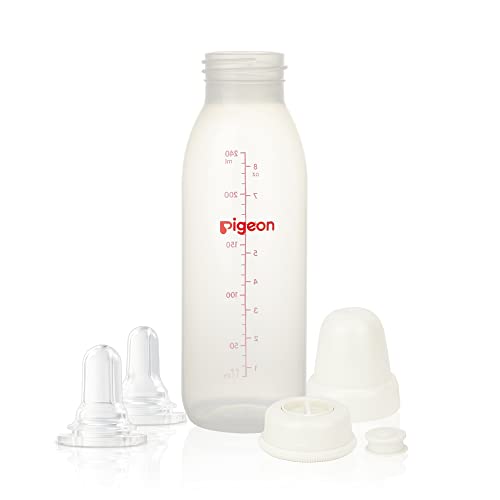
This is the specialist tier. The Pigeon Cleft Palate bottle is built with a soft, squeezable PP middle section that allows a parent to physically push milk toward the nipple when the baby’s intra-oral suction is too weak — which is the single biggest mechanical hurdle in lip-tie feeding. The Y-cut nipple is intentionally firm on one side and soft on the other, resisting collapse while still allowing the tongue to compress it against the palate.
Real parents of babies with high palates and posterior ties report this bottle enabled a good latch after two other brands failed entirely, with one infant gaining over 1 lb in a week after switching. The vent valve forms an inverted triangle structure to prevent nipple collapse during sucking, addressing the common lip-tie problem of negative pressure loss. The 8.11 oz capacity feels generous for a therapeutic bottle, and the two included nipple sizes (SS and S) help dial in flow as the baby’s oral motor skills improve.
This bottle requires an upfront investment for a single unit, but for babies with diagnosed ties that make standard bottles unusable, it is often the only system that works. The hospital may not recommend it; parents who found it through specialists or word-of-mouth describe it as life-changing. Pediatrician guidance is recommended for cleft-specific features, but the squeeze-assist mechanism is universally applicable to severe lip tie feeding challenges.
Why it’s great
- Squeezable body compensates for weak lip seal and suction
- Y-cut nipple resists collapse during compressed latch
- Includes two nipple sizes for progressive flow adjustment
Good to know
- Only available in plastic (no glass option)
- Single bottle in box; higher unit cost
2. Pigeon PPSU Nursing Baby Bottle Wide Neck
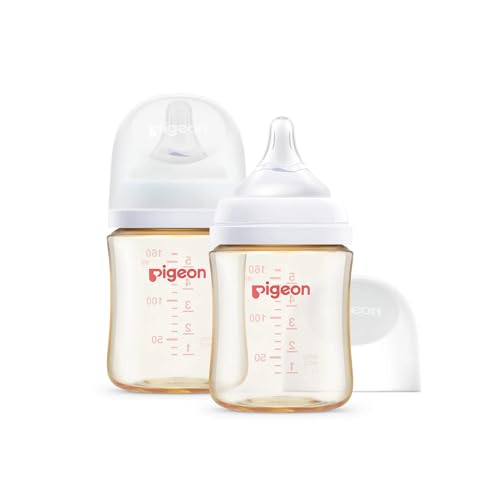
The Pigeon PPSU Wide Neck bottle brings Japanese research on infant sucking behavior — specifically the three natural tongue movements — into a practical design. The nipple features a defined latch-on curve that guides the baby’s mouth into an asymmetric, deep latch position. This is critical for lip-tie babies who cannot flare their upper lip but can use the latch-on line as a physical cue to achieve a better seal.
The SS nipple (0m+) is the slowest available flow in Pigeon’s lineup, which is essential for preventing flooding in a baby whose lip cannot close around the nipple to modulate flow. The bottle body is made from PPSU, a durable, heat-resistant plastic that is safer than standard polypropylene and lighter than glass — a meaningful difference when you’re holding the bottle for extended feeding sessions. OTs often recommend this wide-neck design because the anti-colic nipple dramatically reduces milk leakage from the sides of the mouth.
Parents compare this bottle favorably against Dr. Brown’s and Hegen, noting that the baby requires fewer burping breaks because air intake is minimized through the vent system. The streamlined body is easy for small hands to grip later, though the initial cost is a step up from standard Lansinoh or Dr. Brown’s sets. The flow can be upgraded through sizes SS to 3L as the baby’s oral strength improves post-tie release.
Why it’s great
- Latch-on line guides asymmetric mouth position for tight lips
- SS nipple offers the slowest flow for weak suction control
- PPSU is lightweight, heat-resistant, and safer than standard plastic
Good to know
- Premium price point for a 2-pack
- SS flow may be too slow for babies older than 2 months
3. Lansinoh Glass Baby Bottles (4-Count)
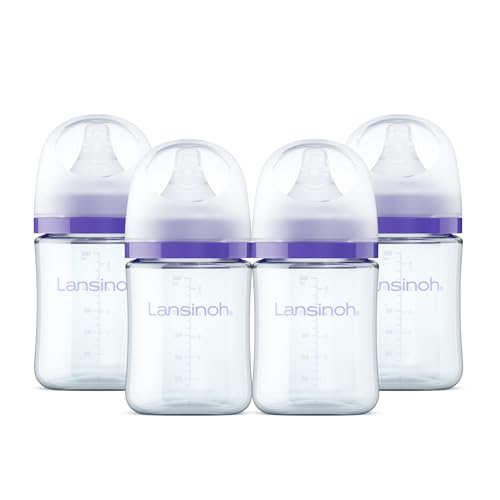
Lansinoh’s borosilicate glass bottle eliminates microplastic concerns while delivering a clinically proven anti-colic nipple with an air ventilation system. The wide, gently sloped nipple is ultra-soft but strong enough to resist collapse, and it molds into the baby’s mouth with a secure latch — even when the upper lip isn’t flanging fully. For lip-tie parents seeking a clean material, this 4-pack offers exceptional value per ounce of premium glass.
The nipple design supports baby-led feeding; the tip stretches with the baby’s sucking motion rather than flooding the mouth. Each bottle is 5 oz with a slow flow nipple (Size S), ideal for newborns through 3 months. The glass body is lightweight for a glass bottle and has survived light falls in real-world testimonials. Many pumping moms appreciate that the bottle threads directly onto Spectra, Baby Buddha, and Pumpables pump flanges, reducing the need to transfer milk between vessels.
With only 2 parts (plus cap), cleaning is straightforward — a relief for exhausted parents who don’t want to wrestle with complex vent assemblies. The nipple ventilation system effectively reduces gas and spit-up, but the glass weight may be a factor for babies still learning to hold the bottle independently. The set’s 4-bottle count makes it a complete daily rotation.
Why it’s great
- Borosilicate glass avoids microplastics and survives thermal shock
- Soft, sloped nipple improves latch without requiring lip flange
- Compatible with major breast pump brands for direct collection
Good to know
- Heavier than plastic; baby may struggle to self-feed
- Max capacity 5 oz; may require multiple bottles for larger feeds
4. Gulicola Natural Glass Baby Bottle Set
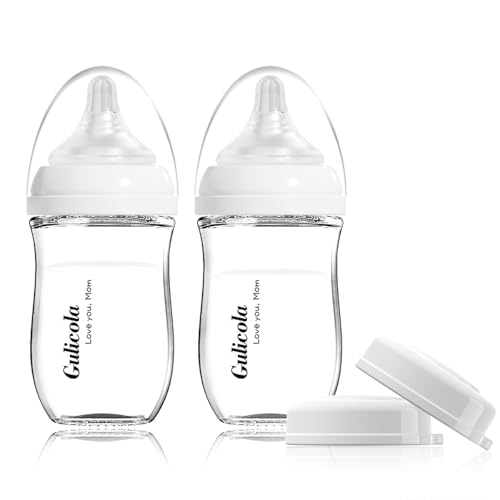
Gulicola’s 5 oz glass bottles are engineered with a strong focus on nipple mimicry: the ultra-soft silicone nipple is designed to feel, flex, and move like a natural breast. The fabric-like texture and wide base encourage a deep latch — the exact mechanism a lip-tie baby needs to compensate for their restricted upper lip. The slow flow nipple (Size S) is calibrated to release milk only when the tongue compresses it, preventing the rapid flow that causes choking in babies with poor lip seal.
The borosilicate glass body is heat-resistant and survives drops onto hard floors without cracking, per multiple owner accounts. The 4-piece assembly (bottle, cap, nipple, storage cap) is straightforward to clean in a sterilizer or boiling water. Anti-colic vents at the nipple base allow continuous drinking without gasping for air or swallowing bubbles. For a breastfed baby transitioning to a bottle, the slow, responsive flow mimics the letdown rhythm of nursing.
The main functional limitation is bubble formation: some users report air bubbles collecting in the nipple tip and a small inner ledge trapping residual milk, making the vent system slightly less effective than premium competitors. Still, as a 2-pack of high-quality glass bottles at a mid-range price, this set is an excellent entry point for parents who want clean materials and a nipple that works with, not against, a restricted latch.
Why it’s great
- Fabric-like nipple texture encourages deep latch for lip tie
- Durable borosilicate glass withstands drops and thermal sterilization
- Anti-colic vent minimizes air intake during continuous feeding
Good to know
- Air bubbles can accumulate in the nipple during use
- Inner ledge traps small amount of milk after feeding
5. Dr. Brown’s Preemie Flow Bottle Set

Dr. Brown’s Options+ system is already the most recognized anti-colic bottle in the US, but the Preemie Flow variant is a different beast. The Preemie Flow nipple is the slowest flow Dr. Brown’s offers — intentionally slower than Level 1 or Level T — designed for premature infants or newborns who cannot handle standard flow volume. For a lip-tie baby who can’t seal properly, this ultra-slow flow prevents the overwhelming gush that leads to coughing, milk leaking from the mouth corners, and refusal to feed.
The internal vent system creates a vacuum-free feeding environment: as the baby sucks, air travels through the vent tube to the back of the bottle rather than entering the milk or the baby’s stomach. This reduces colic, spit-up, and gas — common secondary issues when a lip tie forces the baby to swallow air. The 4 oz / 120 mL size is deliberately small to match newborn stomach capacity, and the set includes Level T nipples for a gradual transition when the baby’s oral motor skills improve.
Reviews from parents of NICU preemies and early-term babies born 4 weeks early consistently report that these bottles eliminated the feeding difficulties seen with standard Dr. Brown’s or store-brand alternatives. The main trade-off is cleaning complexity: the vent system has 3 extra parts per bottle, and milk residue can clog the narrow tube if not rinsed immediately. But for a baby who cannot tolerate even the slowest standard flow, this is the precision solution.
Why it’s great
- Preemie Flow nipple is the slowest available, preventing overflow with weak seal
- Internal vent system reduces air swallowing and reflux
- Level T nipple included for graduated flow progression
Good to know
- Vent system has multiple small parts requiring thorough cleaning
- 4 oz capacity is small; older babies may need larger bottles soon
6. Lansinoh Anti-Colic Plastic Baby Bottles
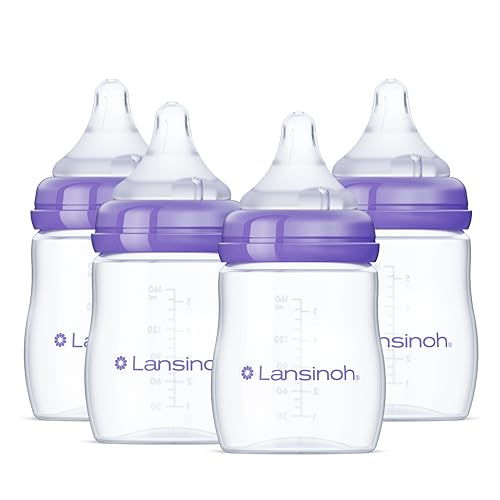
Lansinoh’s plastic anti-colic bottle is a reliable mid-range workhorse that balances latch-friendly nipple design with easy cleaning. The NaturalWave nipple features a wide, gentle slope that molds to the baby’s mouth, promoting a secure latch even when the upper lip can’t flare outward. The air ventilation system is clinically proven to reduce colic by minimizing air intake, addressing the air-swallowing issue that plagues lip-tie babies.
The 3-piece design (excluding cap) is intentionally simple — bottle, nipple ring, and cap — making it the fastest option to clean in the dishwasher or by hand. The slow flow nipple (Size S, 1-3 months) offers a controlled flow rate that matches the weak suction typical of a tied lip. Parents who switch from Dr. Brown’s to Lansinoh often note better flow (less effort required) and zero leaks, although the vent system is less aggressive than Dr. Brown’s internal tube.
The 5 oz / 4-count set provides excellent daily rotation at a mid-range price point. For babies who have already had a lip-tie release and are transitioning back to standard bottles, this set offers a seamless step-down from the specialized squeeze-bottle approach. The nipple’s flexibility also helps babies who were previously breastfed to accept the bottle without confusion.
Why it’s great
- Wide, sloped nipple molds to mouth without requiring lip flange
- Simple 3-piece design is easy to clean and assemble
- Anti-colic vent reduces gas from air swallowing
Good to know
- Plastic body; not suitable for those avoiding plastic entirely
- Less aggressive venting than Dr. Brown’s internal system
7. Playtex Baby VentAire Complete Tummy Comfort Bottle

The Playtex VentAire system takes a fundamentally different approach: instead of a nipple-side vent, the air enters through a patented bottom vent, meaning the milk never touches air inside the bottle. This bottom-up air-free design reduces the risk of gas and fussiness—the same symptoms a lip-tie baby experiences from excessive air swallowing. The ergonomic, angled shape promotes semi-upright feeding, which is recommended by pediatricians to prevent ear infections in infants with feeding difficulties.
The included Nutralatch medium flow nipples are wider and more textured than standard rounds, providing extra grip inside the mouth. For a lip-tie baby, this texture can help stabilize the nipple against the palate even without a full lip seal. The wide-bottle body is easy to clean and dishwasher-safe, and the BPA-free construction meets standard safety benchmarks.
The main drawback is that the 2020 redesign introduced compatibility issues — new parts don’t always interface with old stock, and some users report immediate leaking from the bottom vent. The medium flow nipple may be too fast for newborns with significant suction weakness; parents may need to source slower-flow nipples separately. Still, at an entry-level price for a 3-count, this is the most accessible option for families wanting to test an angled, vented bottle without a large upfront investment.
Why it’s great
- Angled body promotes upright feeding posture
- Bottom vent prevents air mixing with milk
- Wide bottle design is easy to clean and hold
Good to know
- Post-2020 parts may leak and are not backward-compatible
- Medium flow may overwhelm newborns with weak suction
FAQ
Can a standard Dr. Brown’s bottle work for my lip-tie baby?
How does a squeezable bottle help with a lip tie?
Should I choose glass or plastic for a lip-tie bottle?
What nipple flow rate should I start with after a lip-tie release?
Final Thoughts: The Verdict
For most parents seeking a bottle for lip tie, the winner is the Pigeon Cleft Palate Bottle because its squeezable body and Y-cut nipple directly address the weak suction and poor seal that define the lip-tie feeding struggle. If you want a premium everyday bottle with a latch-on guide, grab the Pigeon PPSU Wide Neck. And for the cleanest material with a proven ventilated nipple, nothing beats the Lansinoh Glass 4-Pack.