
Every parent of a newborn with reflux knows the cycle: feed, burp, spit-up, repeat. The wrong bottle introduces excess air that aggravates an already sensitive digestive system, turning every feeding into a battle. Finding a bottle designed to minimize air intake while delivering a slow, controlled flow is the single most effective gear change you can make for your baby’s comfort.
I’m Min — the co-founder and writer behind Gadgets Feed. I’ve spent countless hours analyzing feeding trials, vent system designs, and nipple flow rates to isolate which bottles genuinely reduce reflux symptoms rather than just marketing anti-colic claims.
From glass durability to teat shape and internal vent architecture, this guide walks through the critical factors that separate effective bottles from gimmicks. Choosing the right bottle for newborn with reflux is a decision that directly impacts your baby’s feeding comfort and your household’s peace of mind.
How To Choose The Best Bottle For Newborn With Reflux
Not all anti-colic bottles are created equal, and a reflux baby demands more than just a curved nipple. You need a system that actively prevents air from mixing with milk while delivering a flow rate slow enough to match your newborn’s immature swallowing coordination. Here are the three pillars to evaluate before you buy.
Vent System Design: Active vs Passive Air Management
The most effective reflux bottles use an internal vent tube or a bottom-venting mechanism that channels air away from the milk. Dr. Brown’s Options+ uses a narrow vent tube that runs inside the bottle, creating a vacuum-free environment. Smilo uses a patented bottom-vent system that prevents air from entering through the nipple at all. Any bottle that relies solely on a nipple slit to prevent air ingestion is doing less than half the job.
Nipple Flow Rate: Why “Slow” Is Not Always Slow Enough
Newborns with reflux often choke or gulp on standard slow-flow nipples. Look for bottles that offer an “extra slow” or “SS” nipple size as standard. The Lansinoh, Gulicola, and Pigeon SS nipples are noticeably slower than the typical Flow 1 or Level 1 nipple — they release milk only when the baby actively creates suction, not when the bottle is simply tilted. A breast-like nipple that requires active sucking also reduces the risk of overfeeding, a major trigger for reflux episodes.
Material Matters: Glass, PPSU, or Plastic
Glass bottles like the Dr. Brown’s Options+ and Gulicola models are non-porous, don’t harbor odors, and heat evenly — but they are heavier and can break. PPSU (polyethersulfone) bottles like the Pigeon are lightweight, shatterproof, and heat-resistant without leaching chemicals, making them the premium middle ground. Standard plastic bottles are the lightest and cheapest, but scratch easily and may retain milk residue, which can harbor bacteria between sterilizations.
Quick Comparison
On smaller screens, swipe sideways to see the full table.
| Model | Category | Best For | Key Spec | Amazon |
|---|---|---|---|---|
| Dr. Brown’s Options+ Glass | Glass | Max air reduction | Internal vent tube system | Amazon |
| Lansinoh Anti-Colic Glass | Glass | Breastfeeding transition | Extra-slow flow nipple (XS) | Amazon |
| Pigeon PPSU Wide Neck | PPSU | Durability + latch | 5.4 oz capacity, SS nipple | Amazon |
| Gulicola 3+5 oz Glass Set | Glass | Size variety | 3 oz + 5 oz, 2 nipple flows | Amazon |
| Philips Avent Natural | Plastic | No-drip design | Natural Response nipple, 4 oz | Amazon |
| Smilo Baby Bottle Set | Plastic | Bottom-vent colic relief | Stage 0 slow flow, 5 oz | Amazon |
| Gulicola 3 oz Glass (Pink) | Glass | Small preemie portions | 3 oz, extra slow flow nipple | Amazon |
In‑Depth Reviews
1. Dr. Brown’s Options+ Narrow Glass Baby Bottles
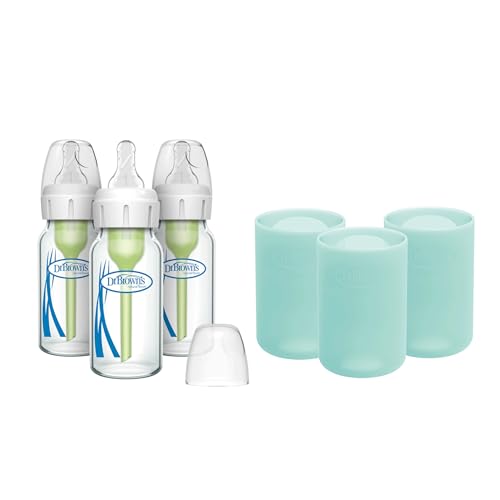
The Dr. Brown’s Options+ narrow glass bottle combines the most clinically proven anti-colic vent system with the hygiene and heat stability of borosilicate glass. The internal vent tube runs the full height of the bottle, keeping air completely separate from the milk — a critical distinction for reflux babies who react to even small amounts of swallowed air. The 4 oz size with a Level 1 slow flow nipple is ideal for newborns whose stomachs can’t handle fast milk delivery.
What sets this bottle apart is the thermal shock resistance of the borosilicate glass, which withstands rapid temperature changes from boiling water sterilization to cold formula without cracking. Owners consistently report that the silicone sleeves protect the glass during drops, and the narrow shape keeps milk warmer longer than plastic alternatives. The 5-piece assembly is slightly more complex than simpler designs, but the vent tube is removable and easy to clean with the included brush.
The nipple shape supports a proper latch that mimics breastfeeding, and the vacuum-free feeding ensures your baby controls the pace. For a reflux newborn who needs maximum air reduction, this is the most thoroughly engineered solution available in this price tier. The 3-pack provides enough rotation for a full day of feeding without constant washing.
Why it’s great
- Clinically proven internal vent tube removes air from milk, reducing gas and spit-up
- Borosilicate glass resists thermal shock and stays clean without odor absorption
- Level 1 slow flow nipple matches newborn feeding pace well
Good to know
- Five-piece assembly takes a few extra seconds compared to simpler bottles
- Glass is heavier than plastic, which may require more hand support during feeding
2. Lansinoh Anti-Colic Glass Baby Bottles
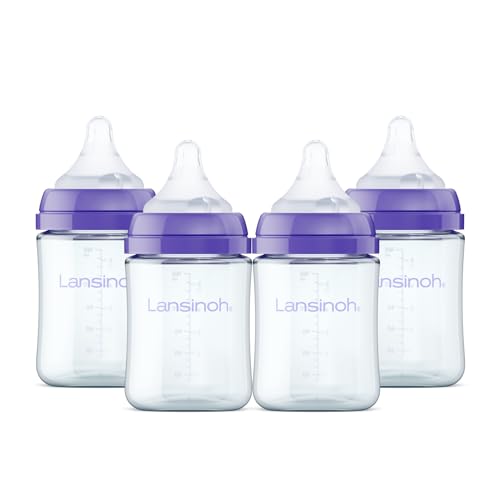
The Lansinoh Anti-Colic Glass set arrives with four 5 oz bottles and four XS (extra-slow flow) nipples — one of the few packs that provides the correct flow rate for reflux-prone newborns right in the box. The air ventilation system is built into the nipple itself, not into a separate vent tube, which reduces the total parts to just three pieces (bottle, ring, nipple). This simpler design means fewer assembly mistakes and less time cleaning small crevices — a practical advantage for exhausted parents.
The borosilicate glass is lightweight compared to other glass options, and the wide, gentle slope of the nipple molds to the baby’s mouth to create a secure seal. Clinical testing shows the air ventilation system measurably reduces gas and fussiness, and the nipple tip stretches only when the baby actively sucks, preventing passive milk flow that can trigger reflux. Parents report that babies transition easily between breast and bottle without nipple confusion, partly because the soft silicone feels similar to breast tissue.
The 4-count pack at this tier offers the best per-bottle value of any glass option on the list. Each 5 oz bottle is large enough to last through the first few months, and the XS flow rate is slow enough that even a newborn with a weak suck won’t gag. The only trade-off is the absence of silicone sleeves in the box, but aftermarket sleeves from the same brand fit perfectly.
Why it’s great
- Extra-slow flow nipple (XS) included standard, ideal for newborn reflux management
- Simple 3-piece assembly reduces cleaning time and assembly errors
- Lightweight borosilicate glass with proven anti-colic ventilation
Good to know
- Silicone sleeves not included, need to be purchased separately
- 5 oz max capacity — won’t last as the baby grows beyond newborn stage
3. Pigeon PPSU Nursing Baby Bottle Wide Neck
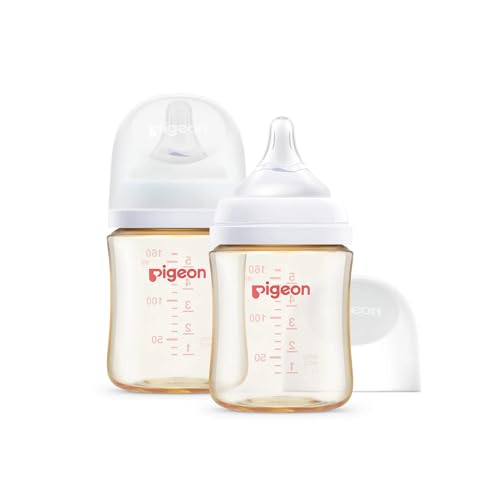
Pigeon’s PPSU wide neck bottle is a premium choice for parents who want the durability of glass without the weight and break risk. PPSU is a high-performance thermoplastic that withstands repeated sterilization without degrading, stays clear without yellowing, and is completely BPA-free — a meaningful advantage for reflux babies who may need frequent small feeds and thus more sterilization cycles. The 5.4 oz size is generous for a newborn while still being lightweight enough for the baby to hold later.
The SS nipple is one of the slowest flow rates available, and it is based on research into the three natural sucking movements babies make during breastfeeding. The nipple features a latching curve that guides the baby’s tongue into proper position, encouraging an effective suction that minimizes air intake. Parents report fewer burping sessions with Pigeon bottles compared to competitors, suggesting the anti-colic design genuinely works without a complex vent tube.
The streamlined body shape is easy to grip, even for small hands, and the wide neck makes scooping formula powder less messy. The nipple sizes progress from SS to 3L, so the same bottle can adapt as your baby’s feeding needs evolve. The 2-pack is a smaller rotation than the Lansinoh or Gulicola sets, but the PPSU material justifies the premium tier through longevity and safety.
Why it’s great
- PPSU material is shatterproof, heat-resistant, and free from chemical leaching
- SS nipple flow is ultra-slow, perfect for newborns with weak suck coordination
- Latching curve nipple design reduces air intake and mimics breastfeeding
Good to know
- Premium price for only a 2-pack compared to other options
- PPSU still plastic — some parents prefer glass for total peace of mind
4. Gulicola Natural Glass Baby Bottle Newborn Set
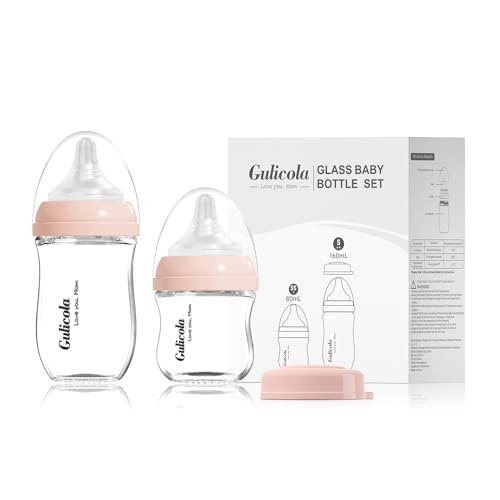
The Gulicola Natural Glass set is uniquely practical because it includes two different sizes — a 3 oz bottle with an extra slow flow nipple (0m+) and a 5 oz bottle with a slow flow nipple (1m+) — plus a storage cap. This setup acknowledges that a reflux newborn often needs smaller, more frequent feeds of 1-2 oz at a time, and a 3 oz bottle reduces the air gap compared to a larger bottle. The borosilicate glass is notably lightweight, and owners report it survives drops on tile and hardwood without cracking.
The nipple design features guidance points that train the baby to latch correctly, and the ultra-soft silicone mimics the natural feel and flex of breastfeeding. The anti-colic vents are positioned within the nipple rim, allowing the baby to drink continuously without gulping air or creating a vacuum. Parents who combo feed report zero nipple confusion, with babies switching easily between breast and bottle because the nipple is so close to the real thing.
With only 4 pieces per bottle, cleaning is straightforward. The wide neck accommodates most bottle warmers and sterilizers, and the glass remains clear after repeated use. The included storage cap transforms the 3 oz bottle into a container for expressed milk or snacks later. For a dedicated breastfeeding mother looking to occasionally bottle-feed without triggering reflux, this is the closest you’ll get to nature.
Why it’s great
- Two different bottle sizes in one pack, matching feed volume to baby’s age
- Ultra-soft, breast-like nipple causes no nipple confusion for breastfed babies
- Lightweight borosilicate glass survives drops and resists thermal shock
Good to know
- Some users report air bubble buildup inside the nipple during feeding
- Nipple vent system is less aggressive than Dr. Brown’s internal tube design
5. Philips Avent Natural Baby Bottles

The Philips Avent Natural bottle uses a “Natural Response” nipple that only releases milk when the baby actively drinks — when the baby pauses to swallow or breathe, the flow stops completely. This self-regulating mechanism is especially valuable for reflux babies who need to control their own pace. The 4 oz size with a Flow 2 (slow) nipple is appropriate for newborns, and the wide breast-shaped nipple encourages a deep latch similar to breastfeeding.
The anti-colic valve is integrated into the nipple skirt rather than a separate tube, keeping the total part count low at just 3 pieces. Owners consistently praise the leak-free performance — a critical factor because a leaking bottle forces the baby to swallow air to maintain suction. The bottle also features a wide mouth that simplifies both filling with formula and hand-washing without a brush reaching every curve.
The 2-pack is an entry-level rotation but pairs well with additional bottles from the same line as your baby grows. The Flow 2 nipple may be slightly fast for some reflux newborns — consider starting with the optional Flow 1 nipple available separately. For parents who prioritize a no-drip, no-leak experience and want a nipple that responds to the baby’s own rhythm, this is a reliable, time-tested choice.
Why it’s great
- Natural Response nipple stops flow when baby pauses, preventing passive milk intake
- Virtually leak-free design — one of the driest bottles on the market
- Wide neck simplifies cleaning and formula scooping
Good to know
- Flow 2 nipple may be too fast for some newborns — Flow 1 sold separately
- Plastic construction scratches more easily than glass or PPSU over time
6. Smilo Baby Bottle Set
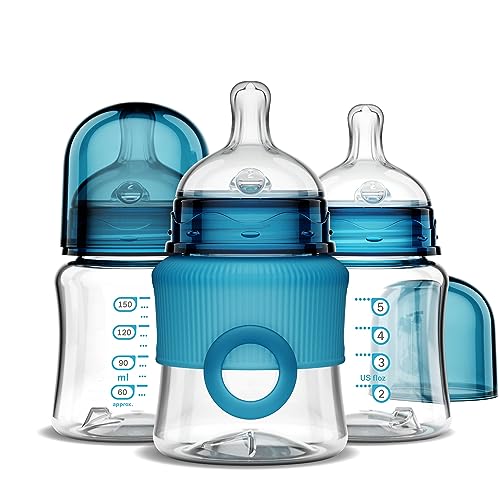
Smilo’s baby bottle set uses a patented bottom-venting system that physically prevents air from entering through the nipple at all — air is instead drawn through vents at the base of the bottle. This design eliminates the need for a separate vent tube inside the milk, making cleaning simpler while still delivering exceptional air reduction for colic and reflux babies. The Stage 0 slow flow nipple is calibrated for 0-3 month olds and requires active suction to release milk.
Owners report that Smilo solved colic issues where Dr. Brown and Avent had failed, suggesting the bottom-vent approach is genuinely different in operation. The plastic construction is BPA-free and feels sturdy, and the clear, slender body is easy for small hands to grip. Nipples for higher stages (1, 2, 3) are sold separately, so the bottle adapts as the baby grows without needing to replace the whole system.
The 3-pack offers excellent value for the rotation needs of a newborn. A few owners note that the harder nipple texture can be less familiar to breastfed babies, and the lid design can feel stiff when opening and closing. For a reflux baby who struggles with traditional vent tubes or nipple-based anti-colic designs, the Smilo bottom vent provides a genuinely distinct and effective alternative worth trying.
Why it’s great
- Unique bottom-vent system prevents air from entering through the nipple
- Stage 0 slow flow nipple is ideal for reflux-prone newborns
- Fewer parts than internal-tube bottles, easier to clean thoroughly
Good to know
- Nipple is firmer than competitors, may require transition for breastfed babies
- Lid can be difficult to open and close quickly
7. Gulicola Small Glass Baby Bottle 3 oz
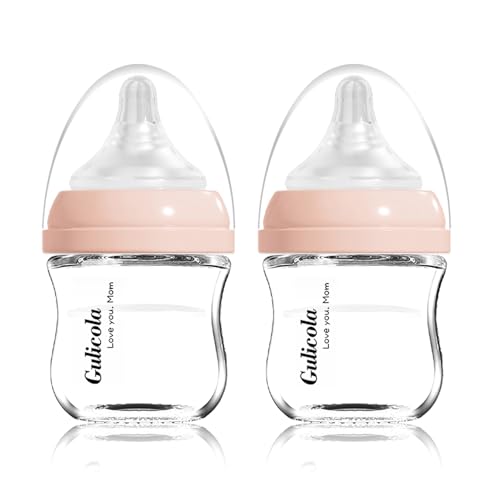
The Gulicola 3 oz glass bottle is the smallest option on this list, specifically designed for newborns, preemies, and breastfed babies who only take 1-2 oz per feeding. The 3 oz volume means less air sits inside the bottle, which naturally reduces the amount of air the baby can swallow — a simple but effective mechanical advantage for reflux management. The extra slow flow (SS) nipple is deliberately restrictive, requiring the baby to work for each swallow just as they would at the breast.
Made from premium borosilicate glass, the bottle is surprisingly lightweight and has survived drops on hardwood and tile in owner reports. The nipple features guidance points that encourage a correct latch, training the baby to use proper suction habits from day one. Only 4 pieces total means assembly is foolproof, and the wide neck accommodates bottle warmers, sterilizers, and microwave sanitization without issues.
The 2-pack provides a minimal rotation that works best when paired with a second set for fuller coverage. Some owners note that the inner ledge at the bottle’s neck can trap a small amount of milk, wasting a few milliliters — an annoyance when every drop matters for a small newborn. For parents who want the lowest entry price into borosilicate glass with an ultra-slow flow and proven reflux-friendly design, this is the most accessible option on the list.
Why it’s great
- Smallest 3 oz volume minimizes air contact with milk, reducing gas risk
- SS extra slow nipple is among the slowest available, preventing gagging
- Lightweight borosilicate glass at a budget-friendly entry point
Good to know
- Inner ledge design can trap a small amount of milk at the bottom
- Only 2 bottles in the pack — may need additional bottles for rotation
FAQ
How many bottle parts are realistic to clean for a newborn with reflux?
Can a fast-flow nipple cause or worsen reflux in newborns?
Is glass or plastic better for preventing reflux symptoms?
Should I use an angled bottle to reduce reflux symptoms?
How often should I replace nipples for a reflux newborn?
Final Thoughts: The Verdict
For most users, the bottle for newborn with reflux winner is the Dr. Brown’s Options+ Narrow Glass because the internal vent tube offers the most clinically proven air reduction for severe reflux, and the borosilicate glass maintains hygiene over repeated sterilization cycles. If you want the gentlest transition from breastfeeding with extra-slow flow, grab the Lansinoh Anti-Colic Glass. And for shatterproof durability with a premium latch design, nothing beats the Pigeon PPSU Wide Neck.