
Every parent knows the soundtrack of colic: the sharp, piercing cry that starts minutes into a feeding, the baby who pulls off the bottle and arches their back, and the long hour of pacing that follows. The root cause is often invisible — air swallowed during a feed that inflates a tiny, immature digestive system. The right bottle doesn’t just hold milk; it actively prevents that air from ever entering the equation, turning a stressful fight into a calm, quiet meal.
I’m Min — the co-founder and writer behind Gadgets Feed. I’ve spent hundreds of hours cross-referencing clinical anti-colic claims, customer failure rates, and real-world venting mechanisms so you don’t have to sort through the aisle of conflicting marketing.
From the bottom-vented systems to simple two-piece designs that minimize air pockets, I’ve found the models that truly stop the gas before it starts. This guide breaks down the specific engineering of the bottles for colic that reduce spit-up and fussing, helping you find a feeding solution that works for your baby’s specific latch and flow needs.
How To Choose The Best Bottles For Colic
Not all anti-colic bottles are created equal. The best one for your baby depends on three critical factors: the vent design, the nipple shape, and the total number of parts you’re willing to clean at 2 AM. Understanding these elements separates a bottle that works from one that just claims to.
The Vent System: Bottom, Internal, or Passive
The vent is the engine of any colic bottle. Bottom-vent systems (like Playtex VentAire) use a one-way valve in the base to draw air in from the bottom, keeping the liquid at the nipple air-free. Internal vent tubes (like Dr. Brown’s) use a straw that runs up into the nipple to redirect air away from the milk. Passive systems rely on the nipple slits themselves to equalize pressure. Bottom vents are generally the easiest to clean, while internal tubes are the most effective at removing air but add cleaning steps.
Nipple Flow and Latch Geometry
A fast-flow nipple on a colicky baby causes gulping, which introduces air faster than the vent can handle. Always start with the slowest flow (Size 0 or 1) for newborns. The nipple shape needs to match your baby’s palate — wide, breast-like bases support a deep latch, reducing the vacuum that causes air pockets. A nipple that is too short or too firm will cause the baby to click and swallow air.
Material: Glass vs. PPSU vs. Plastic
Glass (like Dr. Brown’s Options+) is non-porous, heat-resistant, and never stains or scratches, which means no bacteria hide in micro-scratches. PPSU (like Thyseed or Pigeon) is a high-heat resistant plastic that is lightweight and nearly unbreakable while being BPA-free. Standard polypropylene plastic is the lightest and cheapest, but it degrades faster with high-heat sterilization cycles.
Quick Comparison
On smaller screens, swipe sideways to see the full table.
| Model | Category | Best For | Key Spec | Amazon |
|---|---|---|---|---|
| Philips Avent Anti-Colic | Mid-Range | Minimal parts & easy assembly | AirFree nipple vent (passive) | Amazon |
| Dr. Brown’s Glass Options+ | Premium | Nutrient preservation & glass durability | Internal vent tube system | Amazon |
| Thyseed PPSU | Premium | Breastfed latch & paced feeding | Base-vent with PPSU body | Amazon |
| Lansinoh Anti-Colic | Mid-Range | Breast-to-bottle switching | NaturalWave nipple slit vent | Amazon |
| Playtex VentAire | Value | Angled semi-upright feeding | Bottom vent + angled body | Amazon |
| Evenflo Balance+ | Budget | NICU transitional latch | Proflo silicone vent technology | Amazon |
| Pigeon PPSU Wide Neck | Premium | Scientific sucking movement support | PPSU body + SS slow flow nipple | Amazon |
In‑Depth Reviews
1. Philips Avent Anti-Colic Bottle with AirFree Vent
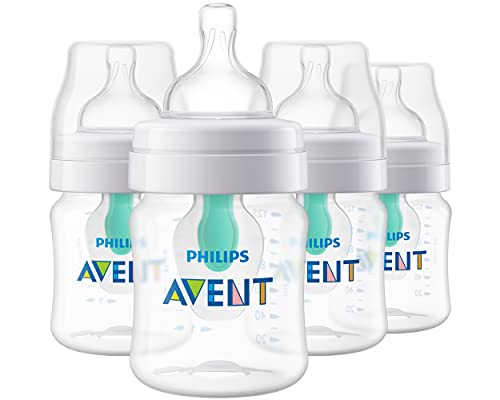
The Philips Avent Anti-Colic represents the sweet spot of simplicity and effectiveness. Instead of a separate base valve or an internal tube, the AirFree vent is built directly into the nipple skirt; it flexes to let air in while keeping the nipple chamber full of milk rather than gas. This passive design means the baby never sucks air from an empty nipple, dramatically reducing swallowed air.
This four-pack of 4oz bottles is ready from day one with Level 1 slow-flow nipples, and the wide neck makes cleaning a breeze — just three parts (bottle, ring, nipple) with no hidden crevices. Parents who switched from Dr. Brown’s consistently report fewer leaks and less assembly frustration while maintaining the same anti-colic effect. The bottle works equally well with or without the AirFree vent insert, giving you flexibility as the baby grows.
The BPA-free construction is dishwasher-safe on the top rack, and the lightweight design is easy for small hands to grasp later on. While the passive vent is slightly less aggressive at removing dissolved air than a tube system, for the vast majority of colic cases, this bottle delivers quiet feeds without the disassembly headache. It’s the best balance of engineering and sanity.
Why it’s great
- Ultra-simple 3-piece design for fast cleaning
- AirFree vent keeps nipple full of milk, not air
- Lightweight and durable construction
Good to know
- Passive vent less powerful than internal tube systems for severe reflux
- Nipple shape may not suit all baby palates
2. Dr. Brown’s Anti-Colic Options+ Narrow Glass Baby Bottle
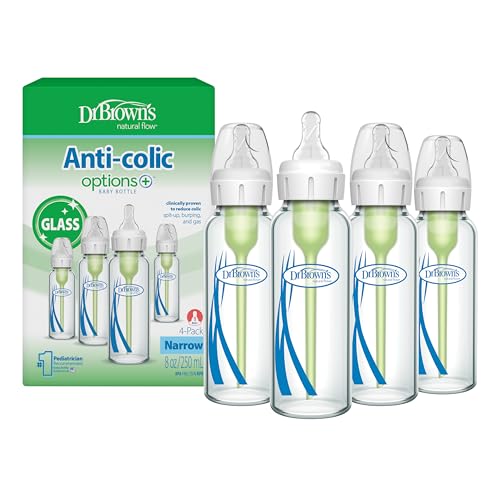
Dr. Brown’s internal vent system is the gold standard for clinically proven colic reduction, and the Options+ Glass version delivers that same vacuum-free feeding in a premium, non-porous package. The thin internal vent tube runs down into the bottle, creating a sealed channel that completely separates air from liquid until the moment the baby draws milk through the nipple. This vacuum-free environment not only reduces gas and spit-up but also preserves bottle-milk nutrients by minimizing agitation.
The borosilicate glass body is heat and thermal-shock resistant, meaning it can go from the freezer to a hot water bath without shattering. Parents praise the durability — no staining, no odor retention, and no microplastic concerns. The Level 1 slow flow nipple provides a consistent rate that mimics breastfeeding, and the removable vent system gives you the option to remove it once the baby’s digestion matures, simplifying the bottle to a standard 3-piece design.
The main trade-off is weight and parts count. The glass bottle is noticeably heavier than plastic alternatives, and the full system (bottle, nipple, ring, vent tube, and tube collar) requires five parts to clean. For serious reflux cases where air reduction is the top priority and you don’t mind the extra wash cycles, this is the most effective anti-colic glass bottle on the market.
Why it’s great
- Durable borosilicate glass resists thermal shock
- Internal vent system most effective at removing air
- Removable vent allows simplification as baby grows
Good to know
- Heavier than plastic options
- 5-piece system requires more cleaning effort
3. Thyseed PPSU Anti-Colic Baby Bottle
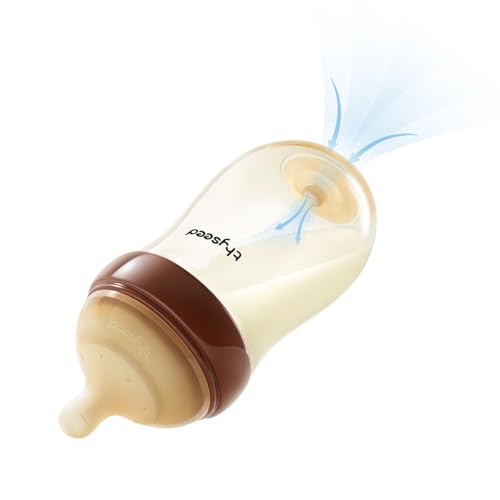
The Thyseed bottle has become a cult favorite among parents of breastfed babies who refuse all other bottles. Its patented base-vent design forces air in from the bottom of the bottle, while the soft silicone nipple mimics the stretch and feel of actual breastfeeding tissue. The result is a bottle that supports a natural, deep latch without the clicking sound that signals air intake.
The “baby-led flow” mechanism releases milk only when the baby actively sucks, supporting paced feeding and reducing gulping and choking risk. The 3-month (M) nipple is designed for babies 3-6 months old and offers a slightly faster flow than the newborn SS size. The bottle is made of lightweight, drop-resistant PPSU plastic that is BPA-free and dishwasher-safe. The sealed neck design eliminates traditional air valves, reducing leak points significantly.
There are two caveats: the bottle does leak when held upside down (the base vent is not a leak-proof seal), and the price per bottle is notably higher than mainstream competitors. However, for babies who are extremely gassy or who have a tongue-tie or lip-tie that makes latching hard, the Thyseed’s nipple geometry is unmatched. Parents report it as “the only bottle that worked” after cycling through Dr. Brown’s, Avent, MAM, and Tommee Tippee.
Why it’s great
- Breast-like nipple stretch supports paced feeding
- PPSU material is lightweight and drop-resistant
- Base vent reduces gas without complex tube system
Good to know
- Leaks from base when held upside down
- Higher price point per bottle
4. Lansinoh Anti-Colic Baby Bottles
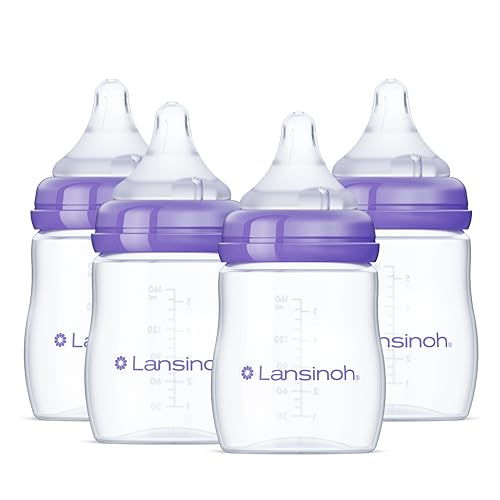
Lansinoh has engineered an anti-colic bottle that focuses on the nipple as the primary vent. The NaturalWave Nipple Air Ventilation System uses a specially designed slit in the nipple that equalizes pressure without a separate valve or tube, minimizing air intake while keeping the bottle to a simple three-piece construction. The nipple is wide, ultra-soft, and features a gentle slope that molds to the baby’s mouth for a secure latch.
This 4-pack of 5oz bottles is designed with the breastfeeding parent in mind. The strong yet flexible silicone nipple tip stretches with the baby’s sucking motion, supporting baby-led feeding and a smooth breast-to-bottle transition. Parents consistently report that their babies accept these bottles even after months of exclusive breastfeeding, and the anti-colic system is clinically proven to reduce colic symptoms.
Cleaning is straightforward — three pieces (excluding cap) that are dishwasher-safe and freezer-safe. The slow flow Size S nipple is appropriate for babies 1-3 months old. Some users note that the nipple flow rate is slightly faster than the industry standard, so very young newborns or preemies may prefer an even slower option. However, for the price point and the ease of the seamless breast-to-bottle transition, this set is a fantastic value.
Why it’s great
- Clinically proven anti-colic nipple vent system
- Wide, soft nipple supports smooth breast-to-bottle switch
- Simple 3-piece cleaning with no hidden parts
Good to know
- Nipple flow may be slightly fast for some newborns
- No built-in leak-proof seal when shaken
5. Playtex Baby VentAire Complete Tummy Comfort Baby Bottle

The Playtex VentAire’s signature feature is its angled body designed to promote semi-upright feeding, which is recommended by pediatricians to help prevent ear infections and reduce air swallowing. The patented anti-colic bottom vent draws air in from the base of the bottle rather than through the nipple, keeping the milk in the nipple chamber completely air-free. The angled shape also makes it easier for the parent to keep the bottle tipped correctly during feeding.
The 9oz 3-pack comes with Nutralatch medium flow nipples, but it’s advisable to purchase the slow flow variation for colicky newborns. The wide-bottle design is dishwasher-safe on the top rack and is notably easy to clean — just the bottle, nipple, and ring. The BPA, PVC, and phthalate-free construction offers peace of mind, and the ergonomic ripple design on the bottle body helps small hands eventually learn to grip.
A post-2020 redesign has introduced some inconsistency with the bottom vent seal — a subset of users report that the vent starts to leak over time, particularly if the bottle is over-tightened or not dried perfectly before assembly. If you get a well-molded unit, the VentAire works beautifully for reflux-prone babies. The angled design truly sets it apart from straight bottles, making it easier to feed without tilting the baby’s head back.
Why it’s great
- Angled body promotes pediatrician-recommended feeding position
- Bottom vent keeps nipple chamber air-free
- Wide design is simple to clean
Good to know
- Post-2020 redesign has potential bottom vent leak issues
- New and old replacement parts are not interchangeable
6. Evenflo Feeding Balance+ Bottles
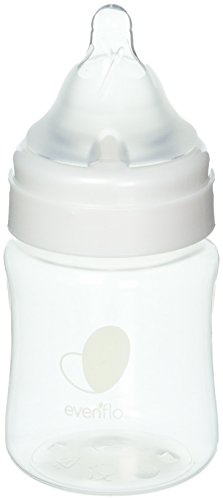
The Evenflo Balance+ is the bottle that NICU nurses often recommend for transitioning preemies from tube feeding to bottle, because the slow flow nipple delivers milk “one drop at a time.” The Proflo silicone venting technology is built into the nipple base, eliminating the need for a separate valve or tube. The vent self-seals to prevent leaks while equalizing pressure during feeding.
The wide neck makes this bottle exceptionally easy to clean (3 pieces total), and the nipple design is orthopedic: it strengthens the baby’s facial muscles by requiring the same sucking motion used during breastfeeding. The true flow rate is consistent — the baby controls the pace, not gravity. Users praise it for having zero leaks, even during travel, and the BPA and PVC free construction adds to its safety profile.
The main drawback is that the vent can sometimes self-seal too aggressively during feeding, causing it to collapse and fail to vent properly. This means the bottle can develop a vacuum that makes it hard for the baby to draw milk. The nipple shape is also fairly narrow, so babies used to a wide, breast-like latch may reject it. For its target use case — preemies and newborns needing a very controlled flow — it is unmatched at this price point.
Why it’s great
- NICU-recommended slow flow for preemies
- True one-drop-at-a-time feeding prevents gulping
- No leaks, even when shaken during travel
Good to know
- Vent may self-seal and fail to equalize pressure
- Narrow nipple shape may not suit all babies
7. Pigeon PPSU Nursing Baby Bottle Wide Neck
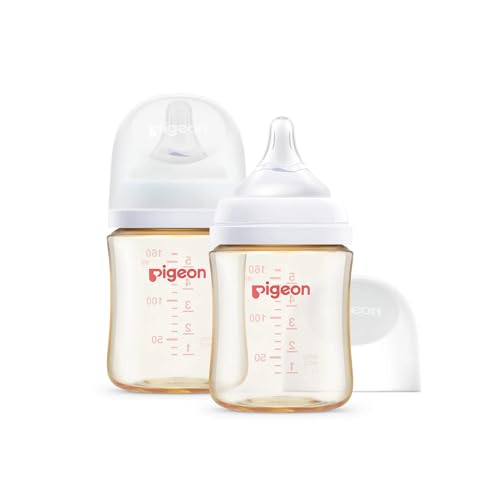
Pigeon’s bottles are built on decades of Japanese research into the three natural movements a baby makes while feeding. The SS (Super Slow) nipple is designed for newborns (0m+) and features a specific hole size, shape, thickness, and softness calibrated for that research — it supports the tongue’s wave-like motion, preventing the baby from needing to bite down to control flow. The result is a bottle that reduces air intake through proper latch mechanics rather than just a vent.
The wide neck and streamlined PPSU body make this bottle easy to clean and hold. The material is durable, heat-resistant, and BPA-free, and it won’t shatter if dropped. Parents who switched from Dr. Brown’s and Hegen report that their babies no longer have milk leaking from the corners of their mouths — a classic sign of a poor latch. The nipple sizes range from SS to 3L, adapting to the baby’s age, and the Latch-on Line on the nipple guides the baby’s mouth into the correct position.
The premium construction comes at a higher per-bottle cost, and the SS nipple flow is extremely slow — some babies may become frustrated if they’re used to a faster flow. Additionally, the bottle is not widely available in standard US retail, so replacement parts may need to be ordered online. For parents who want a bottle that focuses on the ergonomics of the baby’s mouth first and vents second, the Pigeon PPSU is an outstanding choice.
Why it’s great
- Nipple shape based on research of baby’s natural sucking movements
- PPSU body is durable, lightweight, and heat-resistant
- Reduces milk leakage from mouth corners
Good to know
- SS nipple flow may be too slow for some babies
- Replacement parts require online ordering
FAQ
How does an anti-colic bottle actually reduce gas?
Can I use an anti-colic bottle for a baby who does not have colic?
How often do I need to replace the vent parts on these bottles?
Why does my anti-colic bottle still leak even though I assembled it correctly?
Final Thoughts: The Verdict
For most users, the bottles for colic winner is the Philips Avent Anti-Colic because it delivers proven air-reduction with the simplest cleaning routine — no tubes, no tiny valves, just a passive vent built into the nipple that keeps the milk stream uninterrupted. If you want a glass construction that avoids all microplastics and the strongest internal vent system, grab the Dr. Brown’s Options+ Glass. And for a breastfed baby who refuses everything else, nothing beats the Thyseed PPSU for its natural latch and paced feeding.