
Buying glass for the field is a high-stakes decision — the wrong pair means missed sightings, eye strain in fading twilight, and gear that fogs up when you need it most. For the bow hunter, a binocular is not an accessory; it is the tool that confirms a 10-point buck before you draw, or reveals a doe bedded down in shadow at last light.
I’m Min — the co-founder and writer behind Gadgets Feed. I spend my research hours dissecting lens coatings, exit-pupil math, and waterproofing standards to separate genuine field performance from marketing fluff.
After vetting dozens of models across multiple price tiers, I have compiled the definitive guide to the best bow hunting binoculars for serious archers who demand clarity, durability, and reliable performance from dawn to dusk.
How To Choose The Best Bow Hunting Binoculars
Bow hunting demands a different set of optical priorities than rifle hunting — you are often shooting at shorter distances (20 to 60 yards) where field of view and low-light transmission matter more than sheer magnification. A 10x setup is the sweet spot: enough reach to scan a tree line at 200 yards without the image shake that ruins a 12x or 15x glass at dusk. Here are the three specs that separate a good hunting binocular from a great one.
Lens Coatings and Prism Quality
Every air-to-glass surface that lacks a coating robs light, and in the dim cover of pre-dawn, every lost photon means a missed detail. Fully Multi-Coated (FMC) lenses apply anti-reflective layers to all surfaces, boosting transmission above 90 percent. The prism material matters just as much: BaK-4 prisms produce a round, evenly lit exit pupil, while BK-7 prisms create a clipped, dimmer image. Premium models add Dielectric or Phase-Correction coatings on the prism to further sharpen contrast and color. For the bow hunter sitting in a ground blind at sunrise, these coatings determine whether you see a buck’s antler tine or just a silhouette.
Eye Relief and Eyecup Design
Long eye relief — typically 16 to 20 millimeters — is non-negotiable for hunters who wear glasses. It prevents vignetting (that black ring around the image) and lets you hold the binocular at a comfortable distance. For bow hunters who tilt their head up while keeping the draw shoulder back, twist-up eyecups with click-stop positions provide a repeatable, locked-in fit. Models with too-short eye relief force you to jam your eye socket against the cup, inducing fatigue during hours of glassing.
Waterproofing and Fogproof Construction
A bow hunt rarely happens in perfect weather — you are out in rain, snow, and humidity swings. O-ring sealed, nitrogen-purged housings are the standard for keeping moisture out and internal fogging at bay. An IPX7 rating means the binocular can survive submersion in three feet of water for 30 minutes. Without proper sealing, a sudden temperature drop — stepping from a warm truck into a 30-degree morning — will fog the interior lenses and ruin the hunt. Look for models that explicitly state both waterproof (sealed) and fogproof (nitrogen-filled) in the specs.
Quick Comparison
On smaller screens, swipe sideways to see the full table.
| Model | Category | Best For | Key Spec | Amazon |
|---|---|---|---|---|
| Leupold BX-4 Pro Guide HD 10×42 | Premium | Low-light clarity & durability | Guard-ion lens coating | Amazon |
| Nikon MONARCH M7 10×42 | Premium | Wide FOV & edge-to-edge sharpness | ED glass with Dielectric coating | Amazon |
| ZEISS Terra ED 10×42 | Premium | Hydrophobic clarity in wet weather | 88% light transmission | Amazon |
| LEICA Geovid R 10×42 | Premium | Integrated rangefinder & ballistics | 2000-yard laser range | Amazon |
| Nikon Monarch M5 8×42 | Mid-Range | Stable image & generous eye relief | 5.3mm exit pupil | Amazon |
| Nocs Provisions Field Issue 10×32 | Mid-Range | Ultralight packing | 16.7 oz. weight | Amazon |
| Bushnell H2O Xtreme 10×42 | Mid-Range | Waterproof reliability on a budget | IPX7-rated build | Amazon |
| Vortex Copperhead HD 10×42 | Mid-Range | Lifetime warranty peace of mind | HD optical system | Amazon |
| Sogries 10-30×50 Zoom | Budget | Versatile zoom for scouting | 10-30x variable mag | Amazon |
In‑Depth Reviews
1. Leupold BX-4 Pro Guide HD 10×42
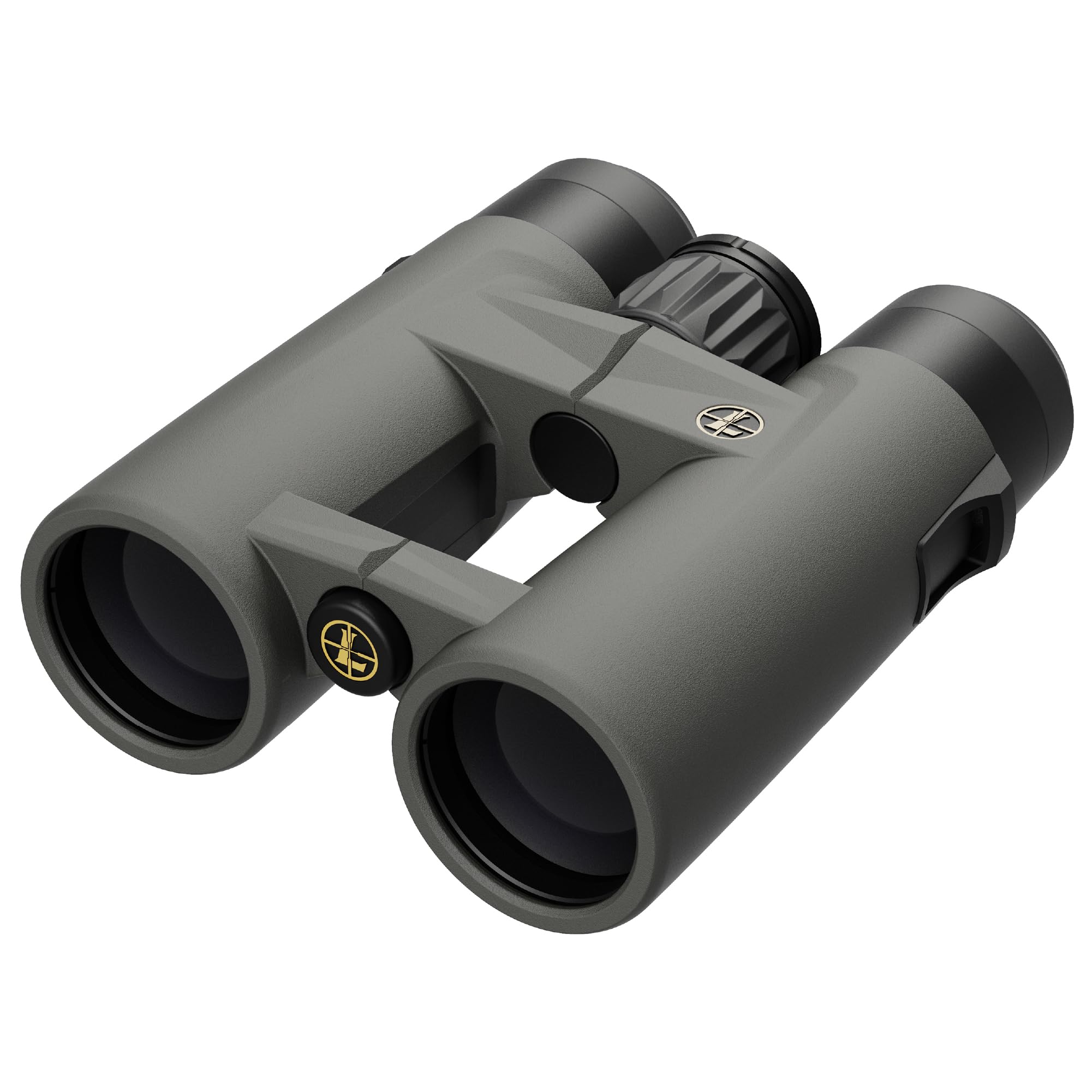
The Leupold BX-4 Pro Guide HD Gen 2 sets the benchmark for what a dedicated bow hunter should demand from a mid-to-premium binocular. Its Guard-ion lens coating actively sheds water, dirt, and fingerprints — a practical advantage when you are glassing through drizzle or wiping twigs off the objective. At 25 ounces, it feels substantial without being a neck-weight, and the open-bridge dual-hinge design distributes mass evenly for one-handed glassing when you need the other hand free for your bow.
The Elite Optical System delivers exceptional light transmission and glare reduction, which translates to crisp detail in the 20 minutes before legal shooting light. Field of view sits at 7.2 degrees (378 feet at 1000 yards), giving you enough sweep to scan a mature oak flat without shifting your head. The rubber-armored housing absorbs the occasional knock against a tree stand rail, and the 100-percent waterproof/fogproof construction means one dunk in a creek won’t end your season.
Customer reviews consistently praise the BX-4 for low-light brightness that rivals glass costing twice as much. One buyer noted using the 10×50 variant for deer hunting in Texas and confirmed it outperformed his previous Nikons at dusk. The only trade-off is a relatively heavy reliance on the tripod adapter if you plan to spot at extreme distances — but for the 10- to 60-yard window a bow hunter lives in, handheld stability is more than adequate.
Why it’s great
- Guard-ion coating repels water and smudges in wet field conditions
- Open-bridge ergonomics allow a secure, balanced grip
- Backed by Leupold’s legendary lifetime customer care
Good to know
- No built-in tripod adapter thread — requires a separate mount
- At 25 ounces, it is not the lightest option for long hikes
2. Nikon MONARCH M7 10×42
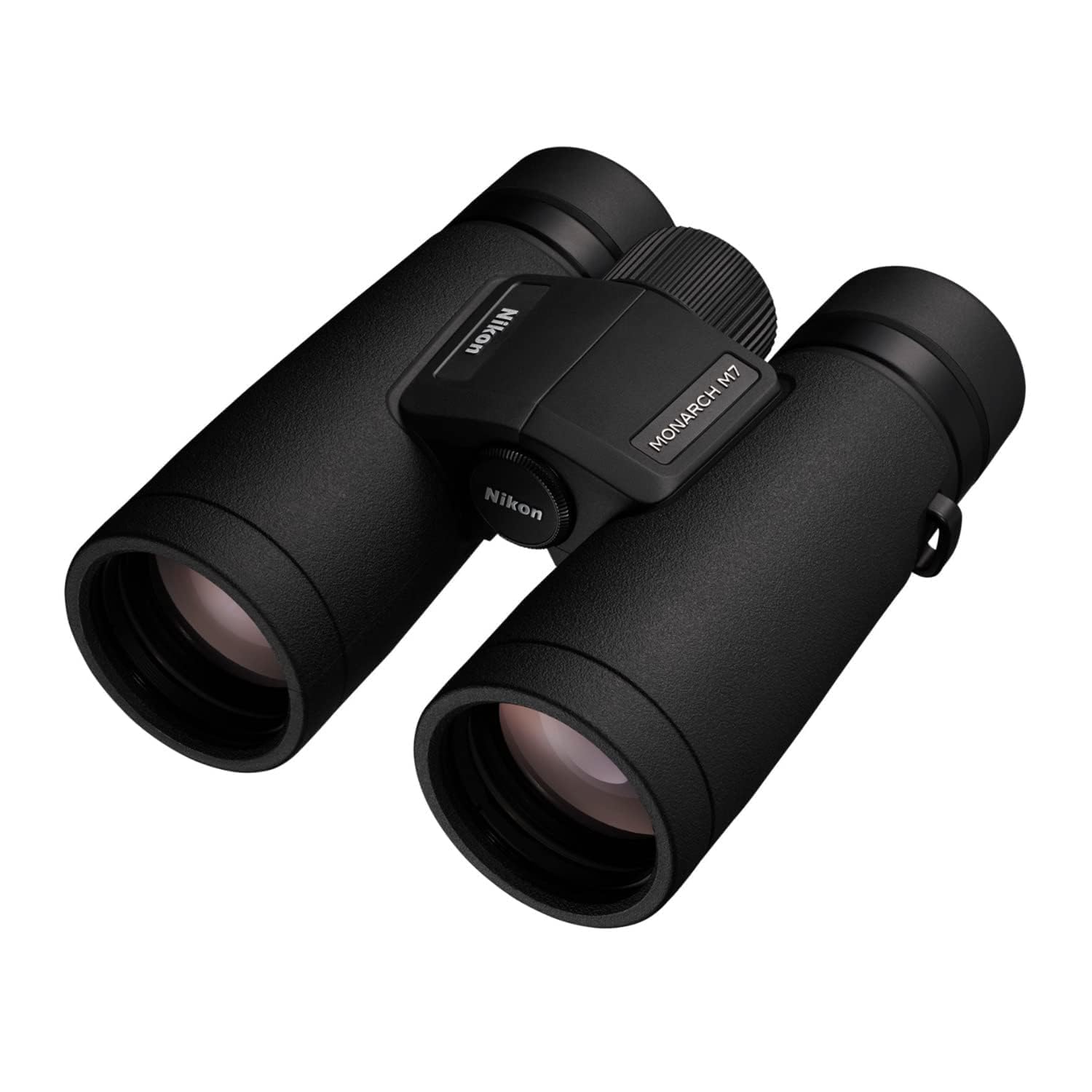
Nikon’s MONARCH M7 is the answer for bow hunters who prioritize a sweeping field of view — 362 feet at 1000 yards is among the widest in the 10×42 class, allowing you to track a moving buck through thick cover without losing the target in a narrow tunnel. The ED (Extra-low Dispersion) glass virtually eliminates chromatic aberration, so you see clean edge-to-edge sharpness even when the deer steps into a sun-dappled patch of brush.
Dielectric high-reflective multilayer prism coatings push light transmission to the point where you can identify antler points 15 minutes before official sunrise. The locking diopter prevents accidental drift when you sling the binocular across your chest, and the oil- and water-repellent coatings on the external lenses cut down on smudging from rain or greasy fingers. Hunters on elk and mule deer excursions report that the M7’s wide FOV pays dividends when scanning vast alpine basins where a quarter-degree shift can mean spotting or missing a bedded bull.
The trade-off: some users note that the image quality improvement over a mid-range model like the Bushnell H2O is marginal for the price difference. But for the archer who spends more time glassing than walking, the edge-to-edge clarity and generous apparent field of view (60 degrees) justify the investment.
Why it’s great
- 362-foot field of view is one of the widest in its class
- ED glass and Dielectric coatings deliver true color in low light
- Locking diopter prevents focus drift during active hunting
Good to know
- Optical leap over mid-range bins is incremental for some users
- Eyecups can feel stiff when twisting out for eyeglass users
3. ZEISS Terra ED 10×42
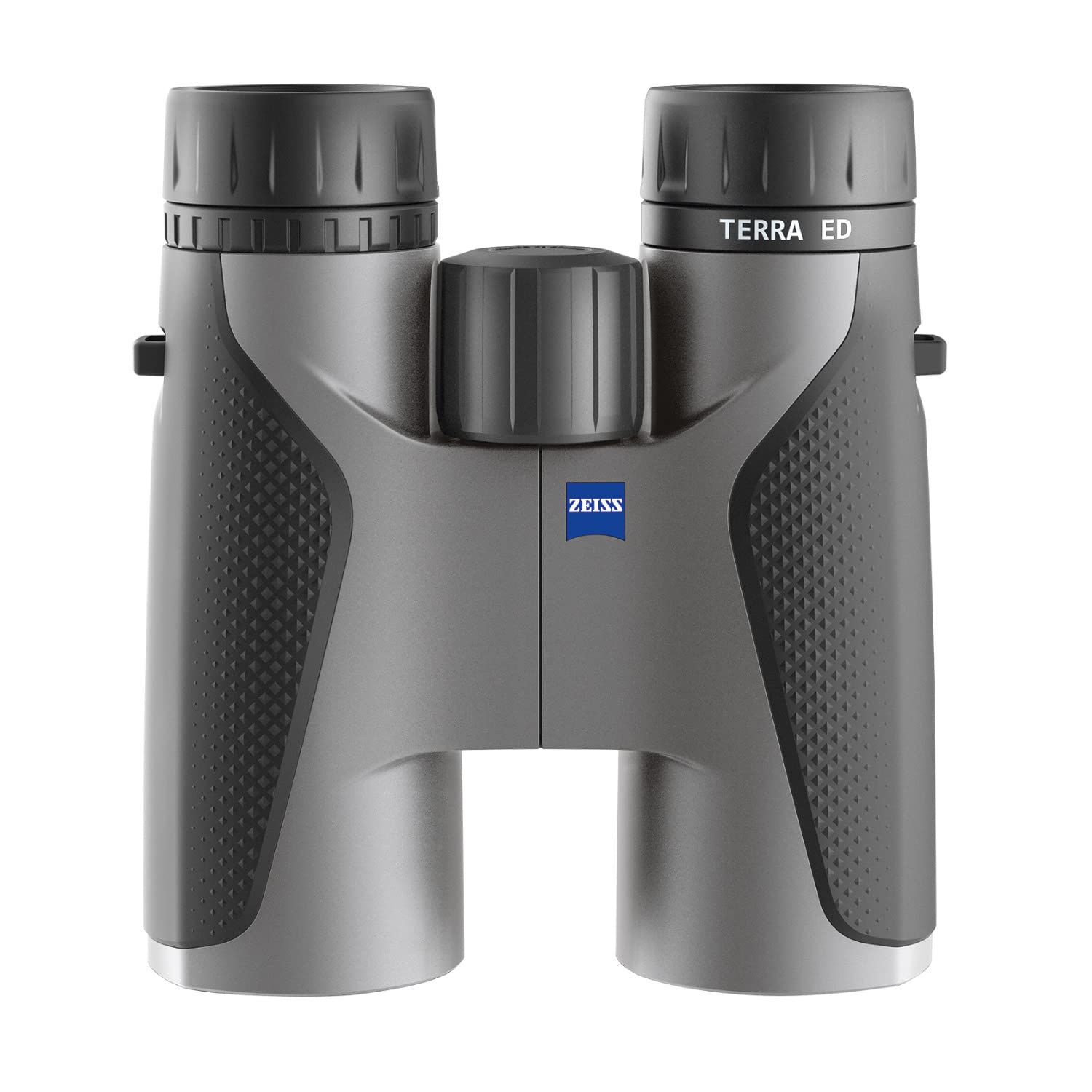
The ZEISS Terra ED brings a slice of German optical engineering to the premium-hungry bow hunter without requiring a second mortgage. The 88-percent light transmission figure, enabled by a hydrophobic multi-coating and Schmidt-Pechan ED glass, means you can glass through a steady mist without the lenses beading up into useless opacity. The large, easy-grip focus wheel is positioned so your index finger lands on it naturally — a detail that matters when a buck steps out and you have two seconds to dial focus.
At 18mm of eye relief, eyeglass wearers will appreciate the full-field view without the black-ring vignette. The fiberglass-reinforced casing feels indestructible in hand, and the rubber armor is tacky enough to hold securely with damp gloves. Field of view measures 330 feet at 1000 yards — slightly tighter than the Nikon M7 but perfectly adequate for eastern whitetail woods or western canyon glassing. Users upgrading from sub- glass consistently report being stunned by the Terra’s color fidelity and contrast in shaded creek bottoms.
The one compromise is the multi-coated (not Fully Multi-Coated) lens designation, which some purists read as a corner cut. In practice, the hydrophobic anti-reflective treatment compensates enough that most hunters will never notice the difference in transmission. The Terra ED is a robust, all-weather performer that excels in the wet, messy conditions that define a real archery season.
Why it’s great
- Hydrophobic coating sheds rain for clear viewing in wet hunts
- Fast-focus wheel puts your finger in the right spot instinctively
- Fiberglass-reinforced body is nearly indestructible
Good to know
- Not labeled Full Multi-Coated — a technical middle ground
- Slightly narrower FOV than some premium peers
4. LEICA Geovid R Gen 2022 10×42

When a bow hunter needs both world-class optics and integrated distance measurement, the LEICA Geovid R Gen 2022 is the ultimate two-in-one tool. The 10×42 delivers the legendary Leica optical signature — vivid natural color reproduction, razor-sharp resolution, and minute detail rendering that reveals antler tines at 300 yards that other glass simply blurs. The Perger-Porro prism system keeps the housing sleek while maintaining a wide 60-degree apparent field of view.
The laser rangefinder engine reaches out to 2000 yards and includes an EHR (Equivalent Horizontal Range) ballistics function that accounts for steep uphill or downhill shots — a genuine asset for bow hunters in mountainous terrain who need to compensate for arrow trajectory at angle. The large ergonomic control buttons are easy to work with gloved fingers, and the operating logic is intuitive enough that you can range a buck, compute the shot angle, and settle the pin in under five seconds.
The trade-off is undeniable weight — 3.8 pounds — which is nearly double a standard 10×42 binocular. You feel it on a neck strap after a five-mile hike. At the premium end of the market, this model is for the bow hunter who values glass clarity and laser precision above all else and is willing to carry the weight for the combined capability. Customer feedback highlights the Leica’s superiority even against high-end Swarovski models for rangefinding accuracy.
Why it’s great
- Integrated 2000-yard laser rangefinder with angle compensation
- Uncompromised Leica optical quality with vivid color reproduction
- Ballistics EHR computes horizontal distance for ethical shots
Good to know
- 3.8-pound weight is heavy for all-day carry
- Premium price tier requires serious budget commitment
5. Nikon Monarch M5 8×42
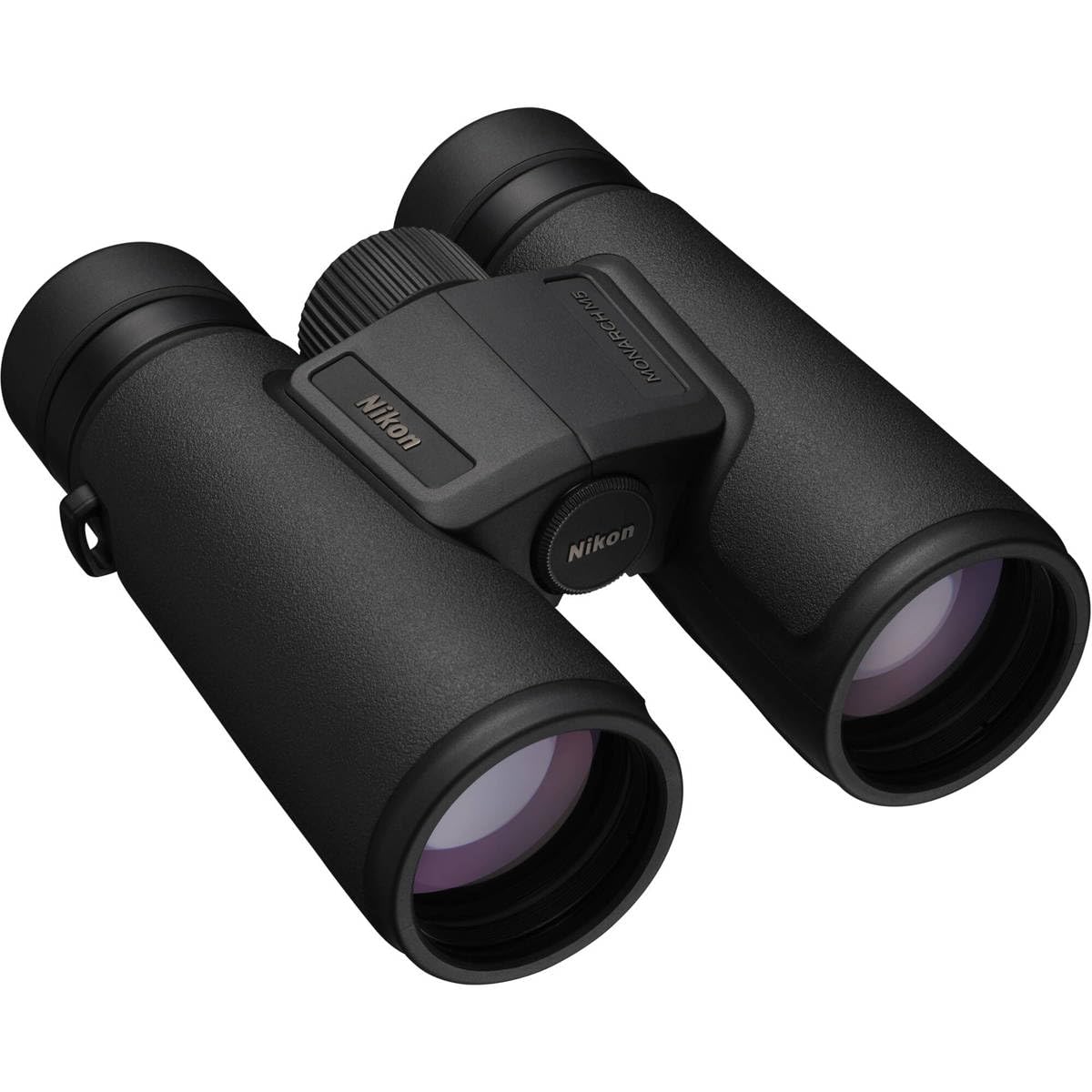
The Nikon Monarch M5 8×42 offers a strategic alternative for bow hunters who value low-light performance over raw magnification. With 8x magnification and a 5.3mm exit pupil — significantly larger than the typical 4.2mm found on 10×42 models — the M5 pours more light into your eye, making it the superior choice for the deep twilight when legal shooting light begins and ends. The ED glass minimizes color fringing, so that last-light sighting of a buck’s body outline is clean and identifiable.
The wide 335-foot field of view at 1000 yards pairs with 19.5mm of eye relief, giving eyeglass wearers an exceptionally forgiving viewing window. The turn-and-slide eyecups lock into three positions, and the large center focusing knob is precise enough to dial in on a squirrel at 15 feet or a treeline at 300 yards without overshooting. Users note that the image quality approaches that of much pricier optics — one reviewer who normally uses Swarovski brought the M5 as a lighter travel companion and was impressed by the edge-to-edge sharpness.
The trade-off is that 8x magnification means less reach for scanning distant fields or ridges. For the bow hunter who sits tight in a ground blind or saddle at 30-yard engagement ranges, the M5’s brightness advantage trumps the extra two power. If you glass wide river bottoms or sagebrush flats where 200-yard identifications are common, consider stepping up to the M7 10×42.
Why it’s great
- 5.3mm exit pupil delivers superior low-light brightness
- ED glass optics rival much more expensive models
- 19.5mm eye relief is ideal for eyeglass wearers
Good to know
- 8x magnification limits distant identification beyond 300 yards
- Heavier than compact options at 24.6 ounces
6. Nocs Provisions Field Issue 10×32

The Nocs Provisions Field Issue 10×32 is purpose-built for bow hunters who prioritize an ultralight load — at 16.7 ounces, it disappears into a bino chest rig or daypack pocket without the bulk of a full-size 42mm optic. Despite the smaller 32mm objective, the Swiss-designed BaK4 prism and fully multi-coated optics deliver surprising brightness for their size, making this a viable choice for spot-and-stalk hunts where every ounce of pack weight matters.
The IPX7 waterproof rating means it can survive a full dunk, and the nitrogen-sealed housing prevents fogging when you climb elevation or cross temperature gradients. The oversized focus wheel is easy to operate with gloves on, and the three-position twist-up eyecups accommodate eyeglass wearers. The 315-foot field of view at 1000 yards is respectable for a compact, and users report that the image holds up well for birding and general wildlife spotting alongside hunting applications.
The main compromise is the smaller exit pupil — 3.2mm — which reduces brightness in low-light conditions compared to a 10×42. Bow hunters who hunt exclusively in dawn and dusk hours may find the Field Issue dims too quickly at last light. But for midday scouting, saddle hunting, or DIY backcountry trips where weight is the primary constraint, this is a brilliantly executed compact.
Why it’s great
- 16.7 ounces is among the lightest 10×32 options on the market
- IPX7 waterproof and nitrogen-sealed for fog-free use
- BaK4 prism delivers surprisingly crisp image for its size
Good to know
- 3.2mm exit pupil limits low-light performance
- Included case and strap feel less premium than the optics
7. Bushnell H2O Xtreme 10×42

Bushnell’s H2O Xtreme 10×42 is the benchmark for entry-level waterproof performance that bow hunters can trust in wet conditions. The O-ring sealed, nitrogen-purged body carries the same IPX7 submersion rating as optics costing five times more, meaning a misplaced step into a marsh won’t ruin your glass. The BaK-4 prisms and Fully Multi-Coated lenses produce a noticeably brighter, clearer image than the basic H2O series, closing the gap to mid-range optics in all but the dimmest light.
Field of view measures 6.8 degrees (357 feet at 1000 yards), and the rubber armor with soft grip texture stays secure even when wet. The roof-prism design keeps the overall dimensions compact enough for a jacket pocket. Users upgrading from 1970s-era 7×35 binoculars report being shocked at the optical improvement — one reviewer called it “more than your money’s worth” after comparing it directly to much pricier models. The included carrying case is functional if not premium, but the optics themselves punch well above their price tier.
The main shortcoming is the lack of a tripod adapter socket, which limits extended glassing sessions from a fixed position. Some users also note that the neck strap is not as comfortable as aftermarket options. For the bow hunter on a tight budget who spends most of their time in the rain, the Bushnell H2O Xtreme is the smartest entry-level choice available.
Why it’s great
- IPX7 waterproof and nitrogen-purged for all-weather reliability
- BaK-4 prisms and FMC lenses deliver surprising clarity
- Compact roof-prism design for easy packing
Good to know
- No tripod adapter socket for stationary glassing
- Included neck strap is less comfortable than premium alternatives
8. Vortex Copperhead HD 10×42

Vortex’s Copperhead HD 10×42 offers the legendary VIP warranty — unlimited, unconditional, and fully transferable — making it a no-risk investment for bow hunters who put their gear through hard seasons. The HD optical system, paired with fully multi-coated lenses, provides strong color fidelity and edge-to-edge sharpness that holds up well in varied hunting conditions from bright midday to shaded timber. The 17mm eye relief is comfortable for most users, and the adjustable eyecups lock into position easily.
The included GlassPak binocular harness changes the carry game: instead of a bouncing neck strap, the harness distributes weight across your shoulders and keeps the binoculars secured against your chest, ready for a quick draw when you spot movement. Waterproof, fogproof, and shockproof construction means one drop off an ATV won’t send you shopping for replacements. Users who put the Copperhead through a full hunting season in rain and snow reported no fogging or water ingress, with one reviewer saying he isn’t sure what a more expensive set would offer besides a few extra minutes of low-light visibility.
The trade-off is that the edge sharpness and low-light brightness do not quite reach the level of Nikon’s Monarch M5 or Leupold’s BX-4 — some users comparing them to the Diamondback line note slightly softer edges. But for the price, combined with the lifetime warranty that covers every kind of damage, the Copperhead HD is an exceptionally safe and capable choice for the budget-conscious bow hunter.
Why it’s great
- VIP lifetime warranty covers damage with no questions asked
- GlassPak harness provides comfortable, hands-free carry
- HD optics deliver strong color and clarity for the price tier
Good to know
- Edge sharpness is slightly softer than premium peers
- Low-light performance trails the Nikon Monarch line
9. Sogries 10-30×50 Zoom
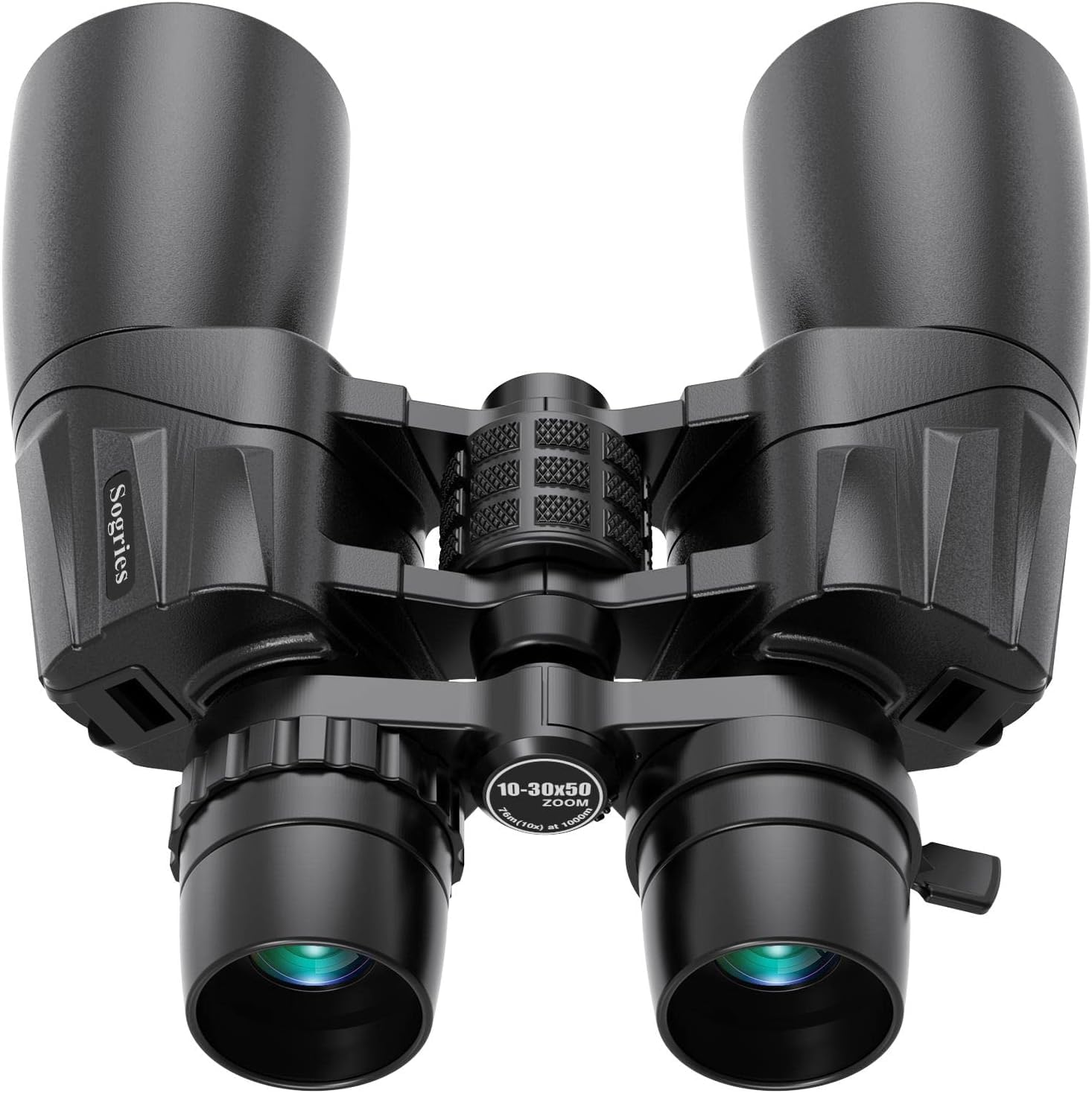
The Sogries 10-30×50 Zoom binoculars occupy a unique niche for the bow hunter who wants variable magnification for scouting trips where you might glass a distant field at 30x and then dial back to 10x for general scanning. The 50mm objective lenses gather ample light, and the BaK-4 prisms with FMC broadband green film achieve an advertised 99.5-percent light transmission, which translates to bright, vivid images even in low-light conditions like twilight — though not complete darkness.
The zoom joystick is smooth and allows one-handed operation, a useful feature when you need to magnify quickly without shifting your grip. The O-ring sealed, nitrogen-purged construction makes it waterproof and fogproof, and the unscented rubber armor with a non-slip fingerprint texture suits scent-conscious bow hunters. With 22mm of eye relief, eyeglass wearers get a full field of view even at maximum zoom. The unit comes with a 10-year warranty, providing long-term peace of mind at an entry-level price.
The most important caveat is weight: the metal-barrel construction required for stability at 30x makes this binocular heavy by hunting standards — it is tripod-recommended at higher magnifications. Hand-held 30x viewing will induce noticeable image shake. This model is best suited for stationary glassing from a blind or truck, not for long stalks. For the bow hunter who wants one optic that can do double duty for both scanning and detailed long-range inspection, the Sogries is a versatile budget option.
Why it’s great
- Variable 10-30x magnification covers both scanning and detailed spotting
- BaK-4 prism and FMC coating deliver bright, high-contrast images
- 10-year warranty provides long-term coverage at a budget price
Good to know
- Metal-barrel build is heavy for mobile hunting
- 30x magnification requires a tripod for stable viewing
FAQ
Is 10×42 the ideal magnification and objective size for bow hunting?
What does Fully Multi-Coated mean for a hunting binocular?
Why is the Leica Geovid R Gen 2022 so heavy compared to other binoculars?
Final Thoughts: The Verdict
For most bow hunters, the best bow hunting binoculars overall is the Leupold BX-4 Pro Guide HD 10×42 because it combines excellent low-light brightness, a durable open-bridge build, and Leupold’s legendary warranty into a package that handles everything from eastern whitetail stands to western elk basins. If you want the widest possible field of view for scanning open terrain, grab the Nikon MONARCH M7 10×42. And for the budget-minded hunter who refuses to compromise on waterproofing, nothing touches the Bushnell H2O Xtreme 10×42.