
Our readers keep the lights on and my morning glass full of iced black tea. As an Amazon Associate, I earn from qualifying purchases.
Specs are compiled from manufacturer listings and verified buyer reviews and can change over time — please confirm the key details on the product page before buying.
Picking a blood pressure monitor for your home usually depends on one frustrating question: will the cuff actually fit you, and will the numbers match what your doctor sees? A quality upper-arm monitor is now an affordable, everyday tool. You do not need to be an engineer to choose the right one — you just need to know which features do the real work.
I’m Min — the founder and writer behind Gadgets Feed. This guide is built by comparing the manufacturers’ published specifications and the patterns across verified customer reviews, so you get each pick’s real strengths and trade-offs instead of marketing spin.
We have separated the reliable from the gimmicky so you can confidently choose the best bp machine for home that fits your arm size, your eyesight, and your daily routine.
Our Picks at a Glance
How To Choose The Best BP Machine For Home
The single biggest mistake first-time buyers make is ignoring the cuff size. A cuff that is too loose or too tight will give you inaccurate numbers, defeating the purpose of home monitoring. Before anything else, measure the circumference of your upper arm and match it to the cuff range listed on the box.
Cuff Size Is the Real Spec That Matters
Most standard cuffs cover arms from roughly 8.5 to 16.5 inches. If your arm is larger than that, you need a monitor with an extra-large cuff option, often labeled XL and reaching up to 21 inches. Some of the best home monitors now ship with two or even three cuffs in the box so every member of the family can get an accurate fit without buying a second machine.
Readability for Daily Use
You will be taking readings in the morning, possibly before you are fully awake. A large backlit screen with bold digits makes that ritual much easier, especially for seniors. Look for a display that also shows a color-coded indicator — usually green, yellow, and red — based on World Health Organization guidelines so you can see at a glance where your numbers fall, without decoding a chart.
Memory and Multi-User Support
Tracking your blood pressure over time is only useful if the monitor remembers your history. If two people in the house will use it, confirm it has separate user profiles so dad’s readings do not get mixed into mom’s. Some models store hundreds of readings per user, which makes it much easier to show your doctor a clear trend at your next appointment.
Quick Comparison
| Model | Best For | Cuff Fit | Memory Slots | Weight | Amazon |
|---|---|---|---|---|---|
| Konquest KBP-2704A★ Best Overall | Proven all-round value | 8.5–16.5 in | 4 users | 1.3 lbs | Amazon |
| SDUNW U80BBig Arm Fit | Big and extra-large arms | 9–17 & 13–21 in | 90 per user | 12.35 oz | Amazon |
| Braun ExactFit 2Comfort Pick | Fast, gentle inflation | 8.6–16.5 in | 30 total | 1.2 lbs | Amazon |
| Braun ExactFit 1 | Simple one-button basics | 8.6–16.5 in | Latest reading | 1.25 lbs | Amazon |
| ALPHAGOMED U80BH | Two-cuff family kit | 9–17 & 13–21 in | 99 per user | — | Amazon |
| iHealth Track | Bluetooth app tracking | 8.7–16.5 in | 99 on-device | 15.45 oz | Amazon |
| AQESO U80AH | Families needing three cuffs | 7–21 in | 500 per user | 1.72 lbs | Amazon |
| URION U83X | Bright display for seniors | Wide-range adjustable | 199 per user | 1.28 lbs | Amazon |
| OMRON Gold BP5360 | AFib detection and app insights | 9–17 in | Unlimited via app | 1.37 lbs | Amazon |
In-Depth Reviews
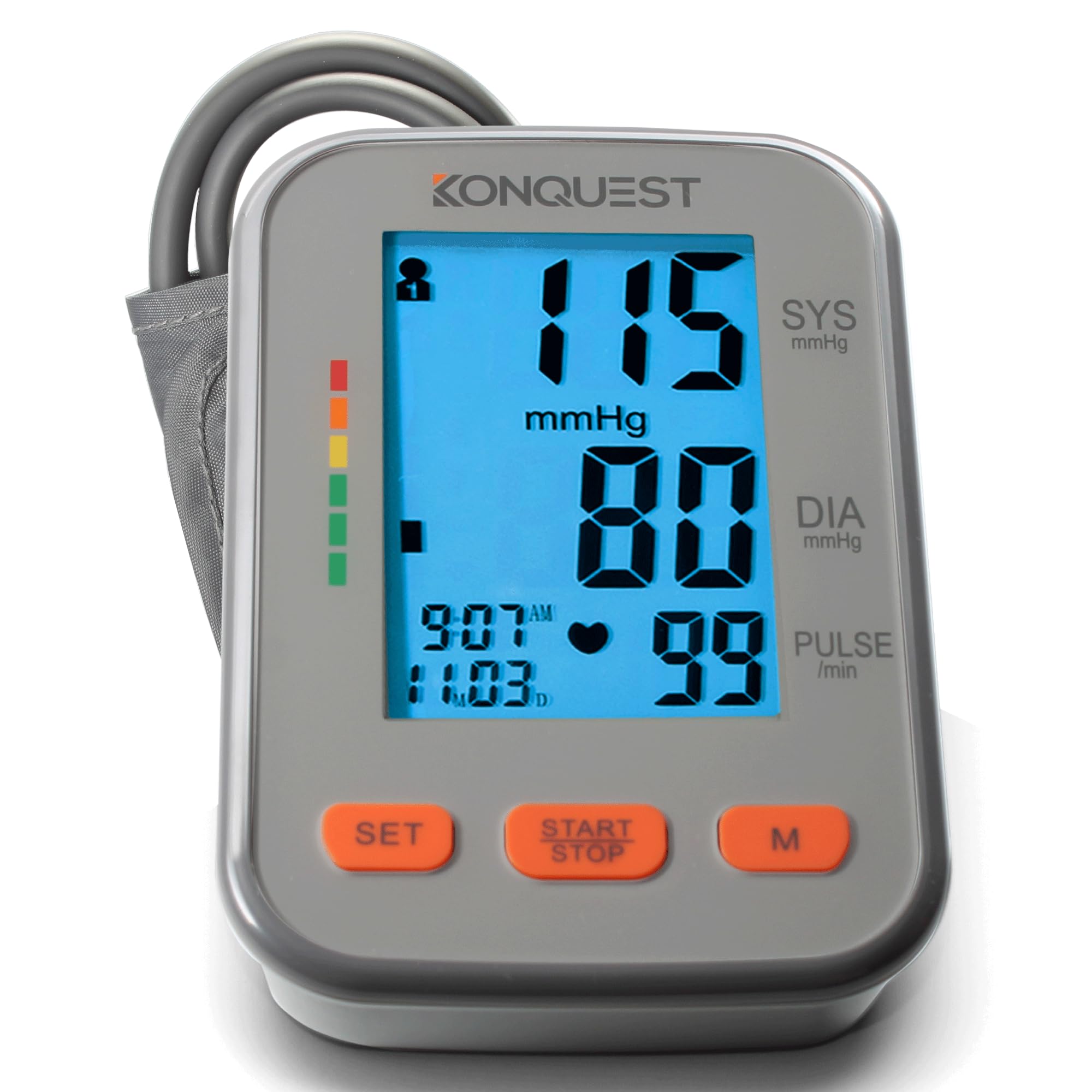
1. Konquest KBP-2704A Upper Arm Monitor
Our pick — 4.5★ from 34,500+ verified ratings; the strongest balance of quality and price.
A crowd favorite with tens of thousands of owners, built around a backlit screen and a self-cinching cuff that just works.
The Konquest is the rare home monitor that earns its status through sheer volume of happy users — it holds a 4.5-star score across over 34,000 ratings, making it the most-proven pick on this list. Its defining feature is a bright backlit LCD that shows your systolic and diastolic pressure, pulse rate, date, time, and user profile all on one screen, which makes early-morning checks easy for seniors.
Durability is the story here. Buyers report taking thousands of readings since September 2023, with the unit surviving extreme temperatures and drops while staying accurate. The 4 AA batteries last roughly six months, and the self-cinching cuff adjusts to fit arms from 8.5 to 16.5 inches. It also flags irregular heartbeats automatically and follows WHO guidelines with one-touch operation.
The main caveat is accuracy, which comes up in a mixed way across reviews — some owners get spot-on results versus their doctor’s unit, while a minority report readings that seem off. The cuff inflation can also feel strong for some. Weighing 1.3 pounds, it is slightly heavier than the Braun ExactFit 2 at 1.2 pounds, but that extra heft buys you the rugged build owners praise.
Why Owners Stick With It
- Functionality is the most-praised trait — well over a thousand owners call it out
- Quality earns a thousand mentions, backing up the multi-year durability claims
- Stores readings for 4 users, so a couple can track separately
Know Before You Buy
- Some owners mention readings that differ from their doctor’s equipment
- The inflating cuff can feel uncomfortable for sensitive users
The proven choice: If you want a monitor backed by tens of thousands of owners and a track record of surviving years of daily use, this is it.
One honest check: If you have a very large arm above 16.5 inches, you will need one of the XL-cuff options further down this list instead.
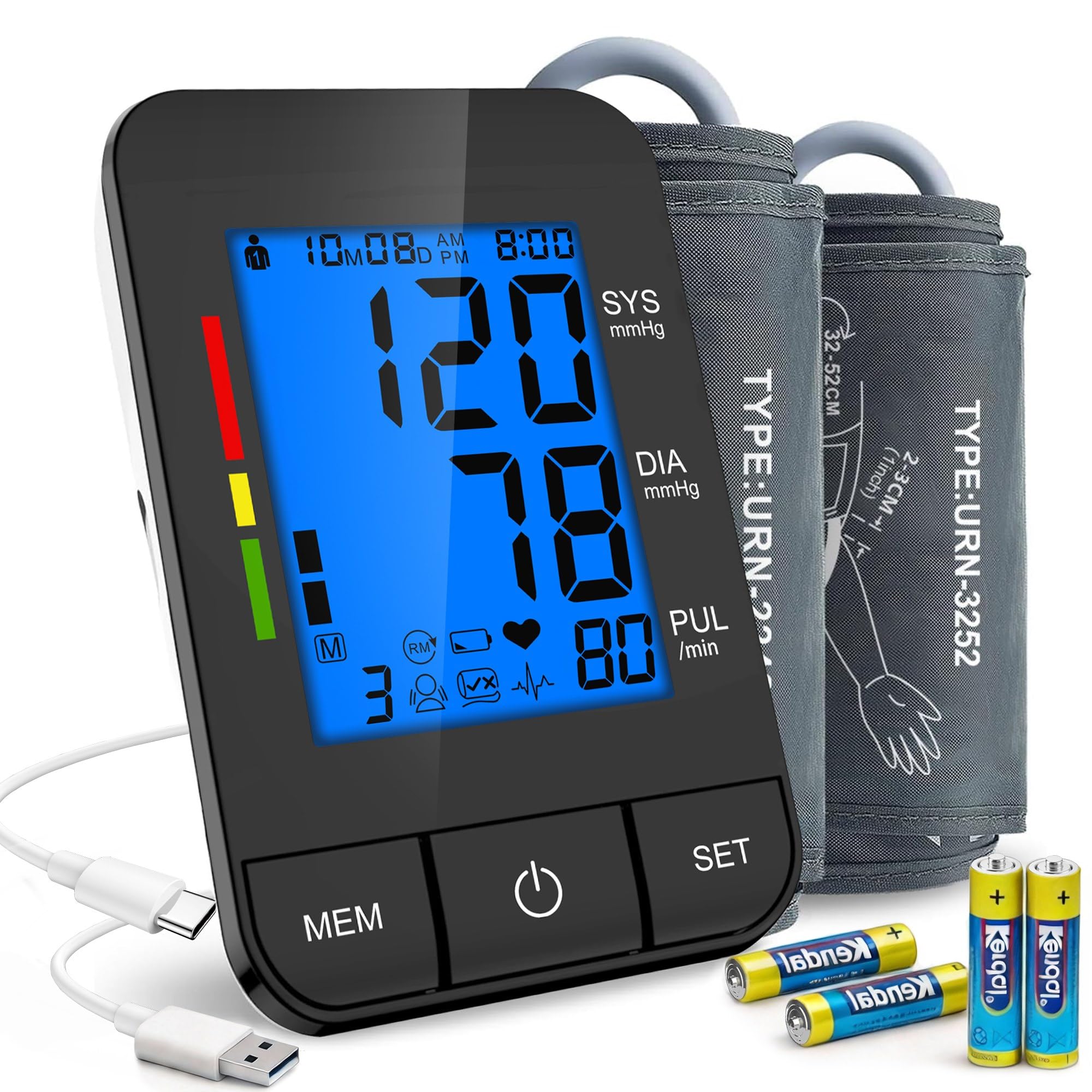
2. SDUNW U80B With Dual-Size Cuffs
Two cuffs in the box — one for standard arms, one for XL arms up to 21 inches — solve the fit problem for good.
The SDUNW is the answer for households where one person has a slim arm and another needs extra-large sizing. It ships with a medium/large cuff covering 9 to 17 inches and a second XL cuff for 13 to 21 inches, so no one settles for a loose or pinching fit that skews the numbers. Its 4.3-star rating across 892 ratings reflects genuine enthusiasm for that two-cuff convenience.
Owners consistently note how comfortable the larger cuff is — the ability to fit bigger arms properly is exactly what wins people over. The backlit LCD is easy to read, measurements take about 30 seconds with quiet automatic inflation, and the monitor stores 90 readings per user across two profiles for a total of 180. It runs on 4 AAA batteries or a Type-C cable, though the cable only powers it — it does not recharge the device.
Accuracy shows up as the most-discussed point and it is genuinely split, so the honest advice is to cross-check your first readings against your doctor’s office unit before you trust it fully. At just 12.35 ounces, it is noticeably lighter than the 1.3-pound Konquest, and its 4.72 x 3.35 x 6.3-inch footprint takes up less drawer space too.
The Fit Advantage
- Two cuff sizes mean one machine works for slim to bariatric builds
- Quality earns the most praise — 51 owners single it out
- Heavy-duty air tube, 2.95mm thick, resists leaks for consistent readings
Consider This
- Accuracy feedback is mixed, so verify against a clinical reading
- The USB cable powers the unit but never charges a battery inside
Reach for it if: You or a family member has a large or extra-large arm and standard cuffs have always felt wrong.
Look elsewhere if: You want the reassurance of tens of thousands of long-term owners behind the accuracy of a single unit.
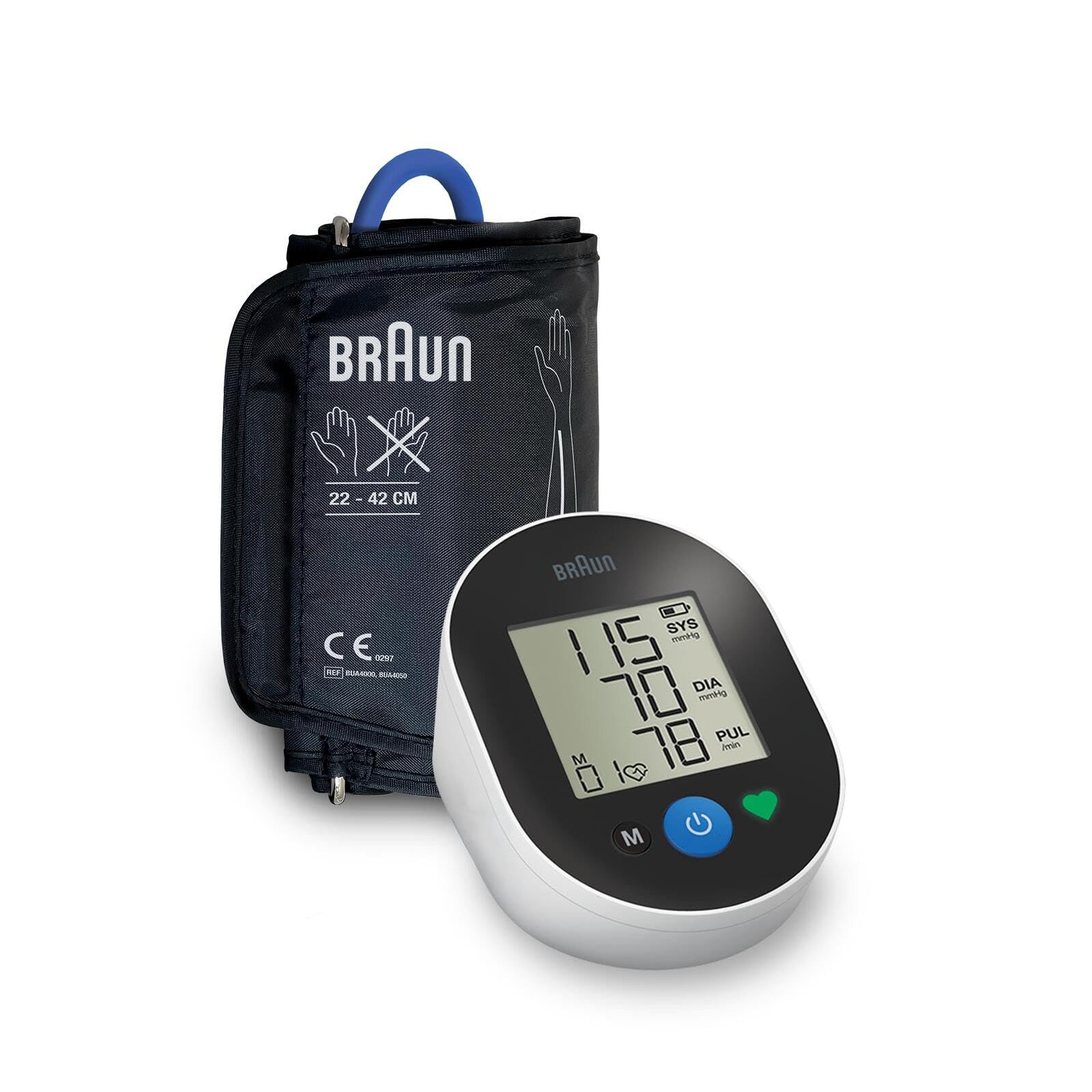
3. Braun ExactFit 2 Blood Pressure Monitor
A 4.4-star Braun unit that measures as the cuff inflates, then lets go fast — so you barely feel the squeeze.
The Braun ExactFit 2 is built around a clever idea: it takes your reading during inflation instead of squeezing tighter and tighter. That means it stops tightening the moment it has what it needs and quickly deflates, which buyers describe as a genuinely gentler experience than older monitors that leave your arm aching.
You get color-coded results instantly with this Braun model — it shows whether your systolic, diastolic, and pulse values sit in a healthy zone, following internationally recognized testing protocols for clinically validated accuracy. The universally-sized cuff fits arms from 8.6 to 16.5 inches, so most adults can use it without swapping parts. You can also review your recent history with 30 memory slots.
Ease of use is the top praised trait, with owners loving how quick and painless it is compared to what they replaced. The feedback on accuracy is mixed rather than universally glowing, which is common across this category, so checking it against a doctor’s reading is still smart. At 1.2 pounds it is the lightest of the two Brauns here and 0.1 pounds lighter than the Konquest above.
Fast and forgiving: If the squeezing sensation of other monitors has ever made you avoid checking, this gentle-inflation design is the one to try first.
A fair warning: One owner found it hard to get a reading at all and called it not ideal for real blood pressure concerns — so confirm your fit before relying on it daily.
Who it suits: Anyone who hates the tight, uncomfortable squeeze of traditional cuffs and wants a quick morning check with color-coded results.
Who should think twice: Buyers who want a larger memory bank or a multi-user setup for the whole family.
4. Braun ExactFit 1 Upper Arm Monitor
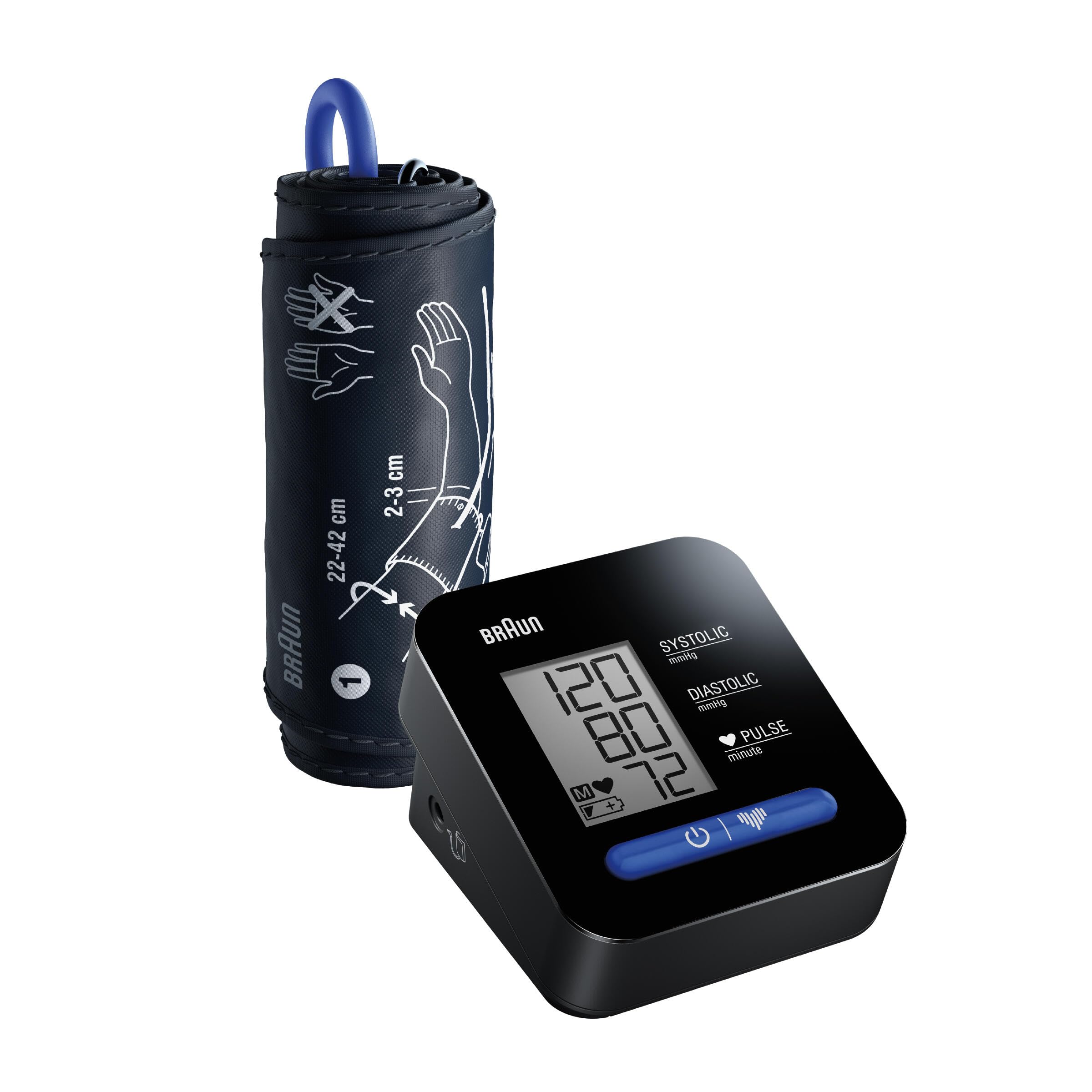
The stripped-down Braun for people who want one button, a big display, and nothing else to figure out.
The ExactFit 1 is the entry point into the Braun family, and it earns a 4.4-star score across 300 ratings by keeping things deliberately simple. One button starts the measurement, and the large, easy-to-read display shows your results without any of the extra data that can confuse new users. It uses the same universal cuff fitting 8.6 to 16.5 inches as its pricier sibling.
What owners love most is the ease of use — it is the single most-mentioned positive, and the consensus is that it just does the job without taking up space. It beats a wrist-type monitor handily in accuracy, and owners who compare it against their doctor’s readings report it tracks closely. The automatic memory stores your latest measurement for quick recall, which is enough if you only need to see your most recent number.
Accuracy feedback is mixed at the margins, and some found the armband positioning finicky at first, though it improves with practice. This is the basic model, and that is precisely its charm — some buyers even say they prefer going back to a simple model over one loaded with modern alterations they do not need.
Deliberately simple: No Bluetooth, no complex menus — just a reliable reading from a trusted consumer brand at a budget-friendly price.
Keep in mind: It stores only the latest reading, so it cannot build a trend history for your doctor.
Best for: A senior or first-time user who wants the least confusing possible device from a recognizable brand.
skip it if: You need to track a history of readings over weeks or months for your next appointment.
5. ALPHAGOMED Two-Cuff Monitor

A 4.4-star family kit with normal and XL cuffs, plus a WHO color bar that tells you your zone at a glance.
The ALPHAGOMED is built for households, and its 772 ratings give it a solid base of real-world feedback. It ships with a standard cuff for 9 to 17 inches and an XL cuff for 13 to 21 inches, so a couple with very different arm sizes can share one machine. The large backlit screen with big fonts is joined by two oversized operation buttons that are genuinely easy for elderly hands to press.
What wins people over is the cuff size — it is the most-praised trait, and owners with larger arms report it fits perfectly where other monitors failed. The 3-color WHO indicator (green, orange, red) on the upper right of the display gives an instant read on whether your numbers are normal, mild, or high. It stores 99 readings per user across two profiles, and the kit includes a nylon carry bag for travel.
Accuracy and durability both come back mixed, with some owners getting readings in line with their medical office unit and others seeing numbers consistently lower than the doctor’s equipment. A few report durability issues over time, so treat this as a good-value family option rather than a lifetime device. It runs on 4 AAA batteries or the included Type-C cable.
The Family Fit
- Cuff size earns the most praise — 24 owners call it out
- Two cuffs plus a carry bag make it easy to share and travel with
- Color-coded WHO zones remove the guesswork from every reading
The Trade-Off
- Some customers note readings that run lower than their clinic’s unit
- Battery life and durability get mixed feedback rather than universal praise
Reach for this if: Two people with very different arm sizes need one affordable machine and a color guide they can read instantly.
Look elsewhere if: You want the longest possible lifespan and can spend more on a premium brand.
6. iHealth Track Smart Bluetooth Monitor
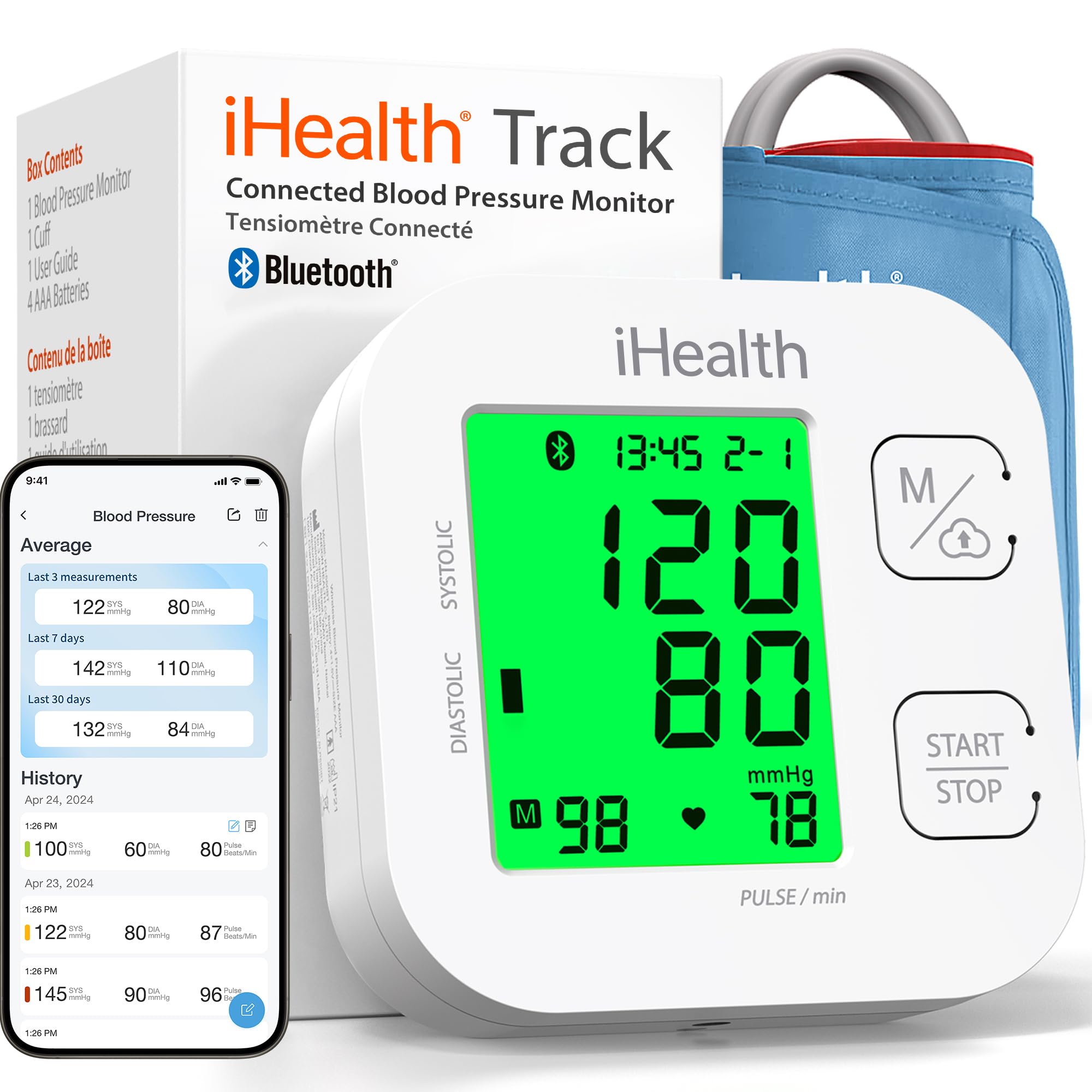
A 4.4-star smart monitor that auto-saves every reading to your phone, so your trend history builds itself.
If you love data and want your blood pressure history without keeping a paper log, the iHealth Track stands out. Its 4.4-star score across over 66,000 ratings makes it among the most-trusted Bluetooth monitors available. A single button starts the measurement, and the large multi-color backlit display glows green, yellow, or red to tell you if your reading is optimal or not.
The real magic is the app — it syncs via Bluetooth to the free iHealth app on iOS and Android, storing unlimited readings on your phone while keeping 99 on the device itself. Owners rave about how smoothly it auto-saves and exports data, making it easy to show your doctor a clean trend chart. The wide-range cuff fits arms from 8.7 to 16.5 inches and feels comfortable even on larger upper arms, with no pain during inflation.
It also automatically detects heart rhythm disturbances and alerts you with a symbol after each reading. Accuracy feedback is mixed at the edges, which is typical for the category, but the sheer volume of satisfied owners is hard to argue with. It runs on 4 AAA batteries, and at 15.45 ounces it is compact enough to toss in a bag for travel.
Set-and-forget tracking: If your phone is always nearby, the app builds your entire blood pressure history for you without lifting a pen.
The catch: Some accuracy complaints exist, and there is no manual inflation mode for users who want more control.
Who it beats: Every non-connected monitor in this list for building a long-term, shareable trend history on your phone.
Who it does not suit: Anyone who wants no app involvement and simply wants to see a number and move on.
7. AQESO Three-Cuff BP Monitor

Three cuffs covering 7 to 21 inches make this the only monitor many families will ever need to buy.
The AQESO is the most flexible option on this list because it solves the fit problem for everyone — small, medium, large, and extra-large arms. It includes S, M/L, and XL cuffs that together span 7 to 21 inches, which is a rare range that even covers pediatric-size arms. It holds a 4.4-star score across 694 ratings, and quality is what owners praise most.
For accuracy-minded buyers, the AQESO uses advanced oscillometric technology and a WHO classification bar for instant understanding. One owner, recovering from cardiac arrest, called it the best of 7 monitors tried, with readings matching both the doctor and cardiologist across two nearly identical units bought for upstairs and downstairs. That kind of trust is hard to buy.
The memory capacity is enormous — 500 readings per user across three user profiles — making it ideal for a multi-generation household tracking health over time. It includes a USB Type-C cable and 4 AAA batteries, though it is not rechargeable; USB use requires a continuous power connection. Battery life draws the recurring negative feedback, so plan to keep spares handy or keep it plugged in.
Why It Stands Out
- Three cuff sizes mean a genuine fit for every arm in the house
- Quality is the top-praised trait — 40 owners call it out
- 500 readings per user across 3 profiles is the biggest memory here
Watch Out For
- Battery life draws consistent negative feedback from multiple owners
- One owner found the velcro stitching on a cuff came unstitched and needs careful handling
The whole-family pick: If grandparents, parents, and kids all need monitoring, three cuffs and 1,500 total memory slots cover everyone.
One limitation: Budget for battery replacements or keep it on the included cable, since battery life is the weak spot.
8. URION U83X 4.5-Inch Display Monitor
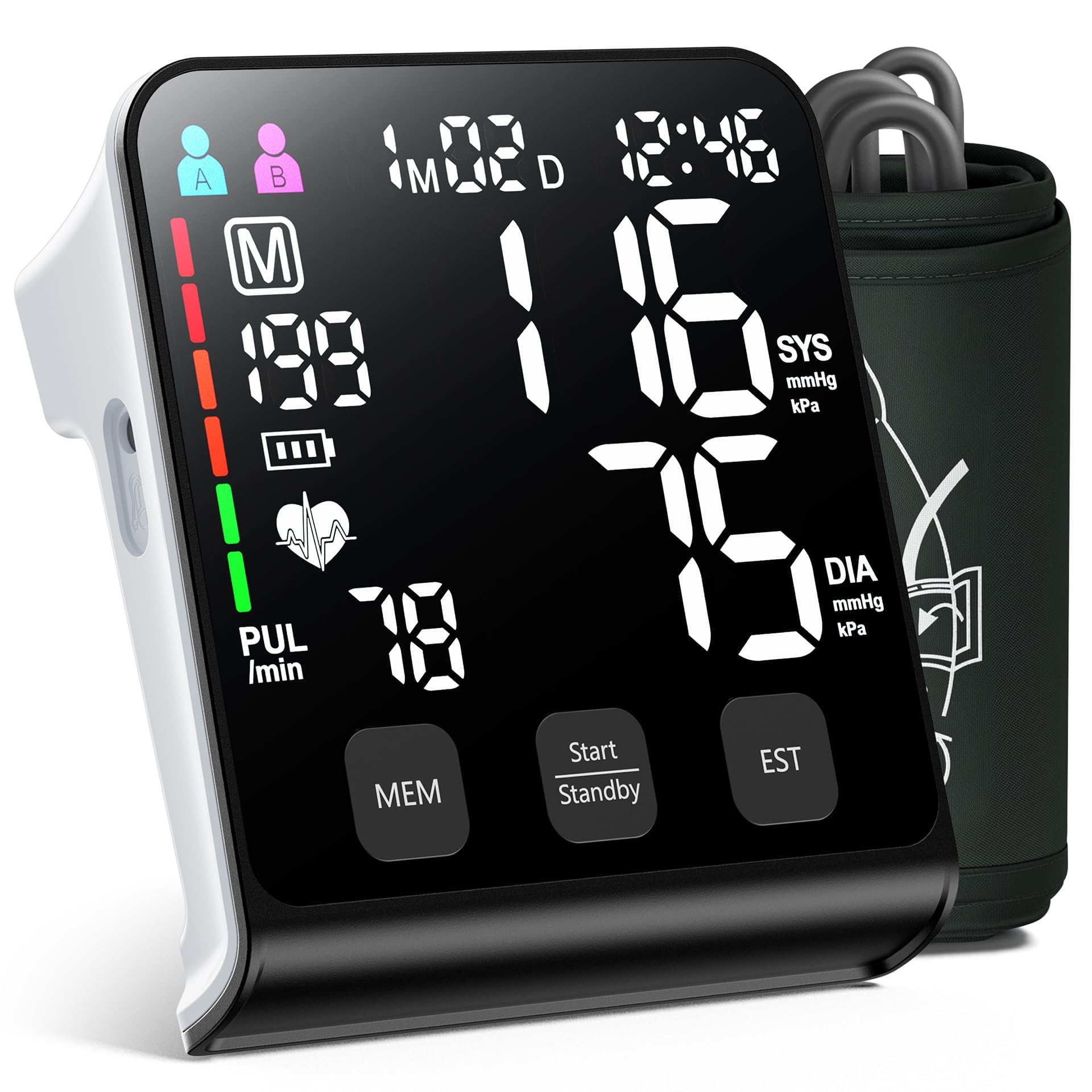
A 4.5-inch backlit screen with oversized digits is the clearest display on this list for aging eyes.
For anyone who has ever squinted at a tiny blood pressure readout, the URION U83X is the answer. Its defining feature is a bright 4.5-inch LED display with bold, oversized digits that stay readable even in low light — making it a genuinely senior-friendly choice. It holds a 4.5-star score across 642 ratings, and ease of use is the thing owners praise most by a wide margin.
Accuracy gets genuinely positive feedback here, which is notable in a category where mixed accuracy reviews are the norm. The intelligent pressure algorithm targets an error margin of ≤±3mmHg., and the adjustable wide-range cuff minimizes human error from a poor fit. It also sends heart rate irregularity alerts for extra confidence., and a scratch-resistant acrylic panel protects the display during daily use.
Memory is generous too — 199 readings per user across two user profiles — and the one-touch operation means wrap, press, and read in seconds. It is FSA and HSA eligible, so you can use pre-tax health savings dollars on it. It runs on 4 AAA batteries or USB-C power, and at 1.28 pounds it is light enough to travel with easily.
The senior’s friend: If low-light visibility and big digits matter more than anything else, no other monitor here matches this 4.5-inch screen.
Worth noting: Accuracy earners genuinely positive feedback here, but any home monitor should still be cross-checked against a clinic reading now and then.
Reach for this if: You or a parent struggles to read smaller displays and wants color-coded alerts plus a clear history.
Look elsewhere if: You need a three-cuff family kit or Bluetooth syncing — this one keeps things screen-focused.
9. OMRON Gold BP5360 With AFib Detection
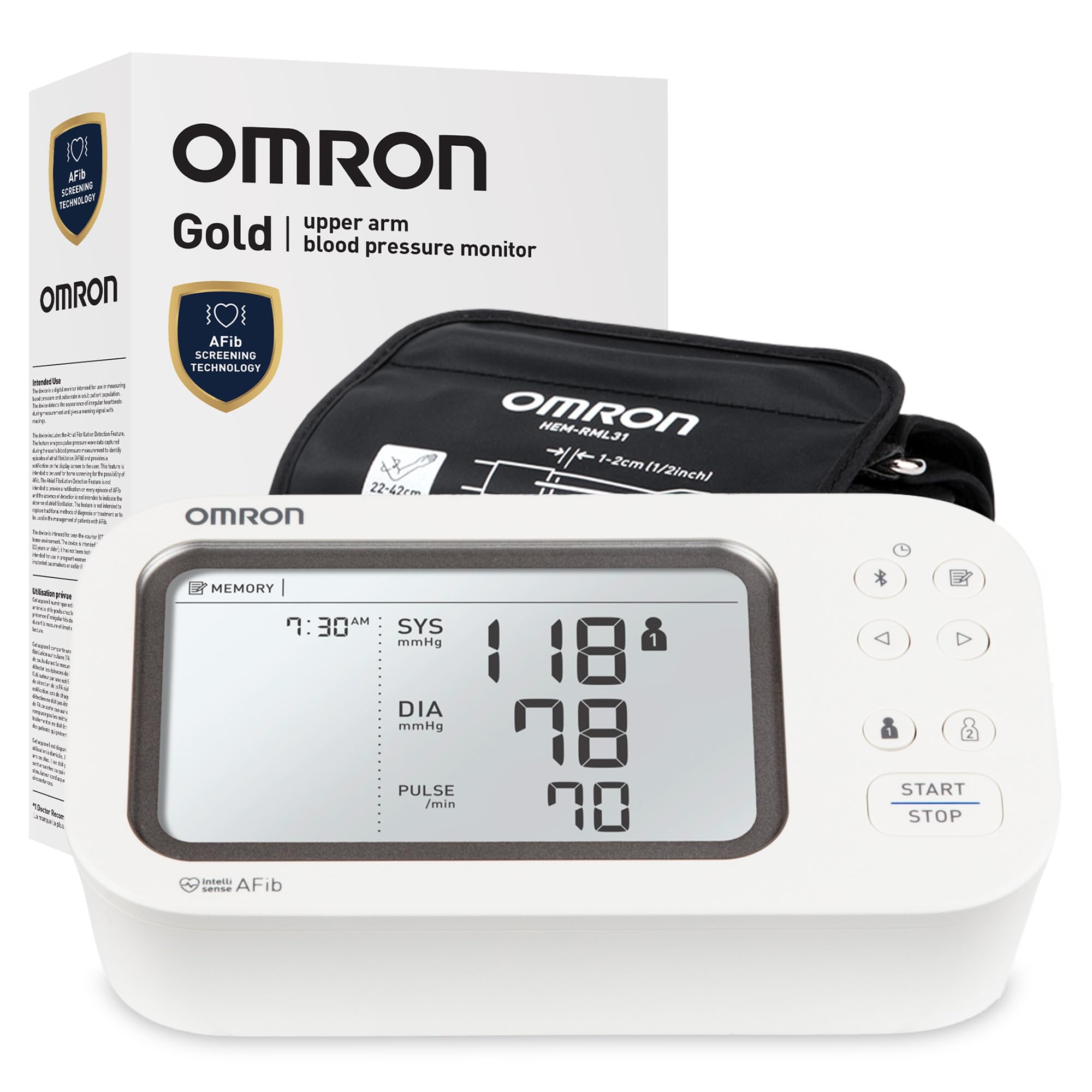
The premium OMRON with AFib detection and a dual display — the brand doctors recommend most, at 4.2 stars.
The OMRON Gold is the most feature-rich monitor here, backed by the brand that doctors and pharmacists recommend most for home blood pressure monitoring. Its headline feature is Atrial Fibrillation (AFib) detection — it screens for unusual heart rhythms every time you check, helping you and your doctor decide if further evaluation is needed. It also includes a High Morning Average Indicator to flag morning spikes tied to cardiovascular risk.
Quality is what owners praise most, and the dual-display design that shows your current and previous reading side by side is a genuinely useful touch. It connects via Bluetooth to the free OMRON connect app for unlimited storage and trend tracking, with compatibility for Apple Health and Google Fit. The wide-range D-ring cuff fits arms from 9 to 17 inches.
There is a catch worth knowing: accuracy and connectivity both get mixed feedback. Some owners find it inaccurate versus their doctor’s monitor and had a frustrating experience, while others find it reliable. One owner noted the unit will not display a reading if it detects AFib — it shows “Possible Afib” instead, which is a safety feature but can be unsettling. The app has also been known to delete unbacked-up history, so export your data externally. It includes 4 AA batteries and fits in its storage case.
The Premium Case
- Quality is the most-praised trait — 81 owners single it out
- AFib detection is unique on this list and could flag something important
- Dual display compares today’s reading to your last one instantly
The Honest Caveats
- Some reviewers point out readings that differ from their doctor’s monitor
- The app occasionally deletes unbacked-up history, so save your data externally
Choose this for: The most advanced feature set, especially AFib screening and morning-spike detection, from a brand with deep clinical credibility.
Think twice if: You want the highest accuracy consensus among owners, or you dislike relying on a smartphone app to hold your history.
Understanding the Specs
Cuff Size and Fit
The single most important spec on any home BP monitor is the cuff range, measured in inches of arm circumference. A cuff that is too small reads high, and one that is too loose reads low, so measure your upper arm before buying. Standard cuffs span roughly 8.5 to 16.5 inches, while XL options reach up to 21 inches. If your arm falls outside a monitor’s range, that machine simply will not give you trustworthy numbers — no amount of software can fix a bad physical fit.
Memory and Multi-User Profiles
Memory slots determine how much history your monitor keeps before it starts overwriting old readings. A single-user model with 30 slots is fine for casual checks, but a multi-user household needs separate profiles so each person’s history stays distinct. Some monitors store 90, 199, or even 500 readings per user, which lets you show your doctor a real trend instead of a single snapshot. Bluetooth models go further, storing unlimited readings in a companion app.
WHO Color-Coded Indicators
Most quality monitors now classify your reading against World Health Organization guidelines and show it as a color — typically green for normal, orange or yellow for mild elevation, and red for high. This removes the guesswork of interpreting raw numbers. Some displays light up in these colors, while others show a colored bar or an indicator on the screen edge. It is a genuinely useful feature for quick daily checks, especially for seniors who prefer not to memorize ranges.
Power Options and Portability
Home monitors run on either AA or AAA batteries, and many now offer a secondary USB-C power option. Note the distinction: a USB cable can power the device during a reading, but it does not recharge an internal battery — the monitor is not rechargeable unless the listing says otherwise. Battery life varies, with some units running about six months on a set of four AAs. If you travel, check the weight, and consider whether a carry bag is included.
FAQ
How do I know which cuff size fits my arm?
Is an upper-arm monitor more accurate than a wrist monitor?
Why do my home readings differ from my doctor’s office readings?
How many readings can these monitors store in memory?
Can two people use the same blood pressure monitor?
What does an irregular heartbeat alert actually do?
How long do the batteries last in a home BP monitor?
Is it worth paying more for a Bluetooth-connected monitor?
What does the WHO color indicator on the display mean?
How should I take a reading for the most accurate result?
Final Thoughts: The Verdict
For most homes, the bp machine for home that wins is the Konquest KBP-2704A because tens of thousands of owners have proven it accurate, durable, and easy to read over years of daily use — and the crowd favorite holds a strong 4.5-star score across more than 34,000 ratings. If your household has a large or bariatric arm that standard cuffs never fit, grab the SDUNW U80B with its dual cuffs up to 21 inches. And if you want your history to build itself on your phone, the iHealth Track is the smart-money pick with over 66,000 owners behind it.
How We Picked
We do not accept paid placement. Every pick is matched to a real buyer and a real use-case; we do not hands-on test units.
Sources & Methodology
Specifications: manufacturer listings and product documentation. Review insights: verified customer reviews, as of August 2026. Pricing: not shown on this page (it changes often); check the current price via the retailer link.
As an Amazon Associate, Gadgets Feed earns from qualifying purchases. This does not affect which products we feature.