
That first step out of bed in the morning can feel like stepping on a shard of glass. Heel pain, often caused by plantar fasciitis, is a sharp, specific problem rooted in inflammation and micro-tears along the connective tissue running from the heel to the toes. A targeted brace works by providing compression, immobilizing the foot overnight, or cushioning the heel strike during the day to reduce that specific tension.
I’m Min — the co-founder and writer behind Gadgets Feed. My analysis of dozens of braces, from silicone heel cups to rigid night splints, focuses on isolating the single feature that makes or breaks relief: how well the design holds the plantar fascia in a neutral, non-stressed position during rest or movement.
This guide breaks down the most effective designs across different use cases to help you find the ideal brace for heel pain that matches your specific symptoms, activity level, and daily routine.
How To Choose The Best Brace For Heel Pain
Not all heel pain braces work the same way. Selecting the right one depends on whether you need passive stretching during sleep or active cushioning during the day. Here are the key factors to consider before buying.
Rigid Night Splints vs. Flexible Heel Cups
A rigid night splint locks the foot at a 90-degree angle to stretch the plantar fascia and Achilles tendon overnight, preventing the tissue from tightening while you sleep. This design is the most effective for eliminating morning pain but can feel bulky. Flexible gel heel cups, in contrast, sit inside your shoe and absorb shock with every step, making them ideal for daytime use if you stand or walk for long hours. For severe cases, many specialists recommend combining both — a night splint for sleep and heel cups for daily wear.
Adjustable Dorsiflexion and Straps
Braces with adjustable dorsiflexion straps allow you to control the angle of stretch. A medical-grade splint typically offers a range from 10 to 90 degrees, letting you dial in a gentle stretch that doesn’t cause muscle cramping. Velcro closure systems are common, but look for splints with reinforced buckles or multiple retention straps to prevent the brace from twisting or slipping off during the night. A poorly secured brace can actually worsen sleep quality by forcing awkward sleeping positions.
Material Breathability and Weight
Since night splints are worn for six to eight hours, breathability is crucial. Nylon and breathable foam padding wick moisture and prevent skin irritation. For heel cups, medical-grade silicone provides the best shock absorption without trapping heat. Weight also matters — a rigid splint weighing under 0.5 kilograms is easier to sleep with, while ultralight heel cups under 60 grams disappear inside most shoes. Avoid bulky neoprene designs that cause excessive sweating or restrict ankle movement during sleep.
Quick Comparison
On smaller screens, swipe sideways to see the full table.
| Model | Category | Best For | Key Spec | Amazon |
|---|---|---|---|---|
| Exhood Upgraded Night Splint | Rigid Night Splint | Morning pain relief | Adjustable 90° dorsiflexion with arch cushion | Amazon |
| KTSAY Plantar Fasciitis Night Splint | Semi-Rigid Night Splint | Value night-time stretching | Memory foam pad + adjustable dorsiflexion straps | Amazon |
| Honarry Plantar Fasciitis Night Splint | Rigid Shell Splint | Stable immobilization | Hard shell + 10–90° wedge adjustment | Amazon |
| Healifty Plantar Night Splint | Lightweight Splint | All-night comfort | Breathable fabric, open-heel design, 210g | Amazon |
| Tuli’s X Brace | Arch Compression Strap | Daytime arch & heel support | Low-dye taping technique, 14g | Amazon |
| Neo-G Achilles Tendon Support | Compression Sleeve | Achilles tendonitis & sports | Silicone tendon cushion, multi-zone compression | Amazon |
| Premium Heel Pain Relief Gel Inserts | Gel Heel Cup | Cushioning & shock absorption | Silicone gel, 2-pack, 60g per pair | Amazon |
In‑Depth Reviews
1. Exhood Upgraded Plantar Fasciitis Night Splint

The Exhood night splint hits the sweet spot between clinical effectiveness and everyday wearability. Its single-strap dorsiflexion design holds the foot at a precise 90-degree angle, which directly prevents the plantar fascia from tightening during sleep. Many users report reduced morning pain after just one night, which is a strong indicator that the splint is maintaining proper stretch tension without shifting off the foot.
What sets this model apart is the integrated arch support cushion built into the wrap. Most night splints neglect the arch, but this one adds a supportive bulge that cradles the midfoot, reducing strain on the entire kinetic chain from heel to calf. The nylon-spandex blend fabric is breathable and doesn’t trap heat, so you can wear it through a full eight-hour sleep cycle without waking up with sweaty feet.
A few users with sensitive skin recommend wearing a thin sock underneath, as the Velcro straps can rub directly on the ankle if overtightened. The splint fits US shoe sizes 4 to 9, so larger feet should check the size chart before purchase. Overall, this is the most balanced option for anyone struggling with chronic plantar fasciitis who wants a simple, comfortable night-time solution.
Why it’s great
- Single-strap design makes it very easy to put on and adjust
- Built-in arch cushion adds support most night splints lack
- Breathable fabric prevents overheating during sleep
Good to know
- Best worn with socks to avoid Velcro irritation
- Size limited to shoe sizes 4–9; not ideal for larger feet
2. KTSAY Plantar Fasciitis Night Splint
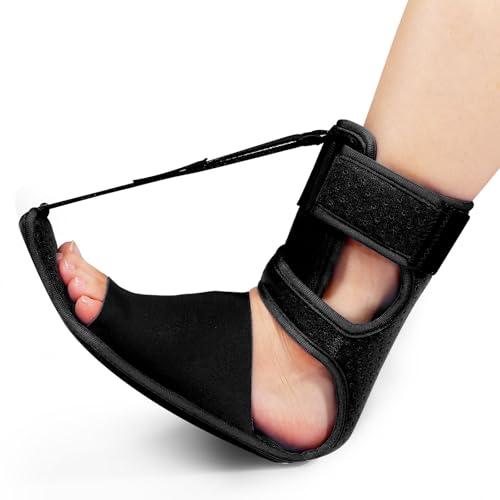
The KTSAY night splint delivers reliable stretching at an entry-level price point. It uses a memory foam pad at the top of the foot to cushion the dorsum, which prevents the hard edge of a traditional splint from digging into the skin. The two adjustable dorsiflexion straps let you progressively increase the stretch angle as your fascia loosens over days or weeks.
Reviewers consistently praise how easy it is to walk in this splint — the foam padding and flexible nylon shell allow limited mobility if you need to get up during the night. The splint doesn’t require any tools to adjust, and the Velcro closures are wide enough to stay secure without pinching. For mild to moderate plantar fasciitis, many users say this eliminated their morning pain within the first week.
One area where this splint falls short is long-term durability of the adhesive loop on the heel pocket. A few users reported that the heel anchor began to loosen after several weeks of regular use, though the manufacturer offers a 365-day replacement warranty. The size is generous — marked as Large — so it accommodates wider feet and higher arches without feeling constrictive.
Why it’s great
- Memory foam pad adds significant comfort for all-night wear
- Walkable design allows easy trips to the bathroom
- Generous sizing fits wider feet and larger shoe sizes
Good to know
- Heel strap adhesion may weaken after weeks of use
- Not as rigid as hard-shell splints for severe cases
3. Honarry Plantar Fasciitis Night Splint

The Honarry splint is a clinical-grade device built for absolute immobilization. Its hard plastic shell cradles the entire lower leg and foot, preventing any plantar flexion during sleep. The wedge adjustment system lets you set the dorsiflexion angle between 10 and 90 degrees, allowing a highly specific stretch calibration that softer wraps simply cannot provide.
This level of rigidity comes with a learning curve. Several users report initial discomfort — leg twitching and pressure on the big toe are common during the first few nights as the body adapts to forced dorsiflexion. The padded liner is removable and washable, but the plastic shell has minimal cushioning against the shin, so wearing thick socks or adding moleskin padding is almost mandatory for long-term use.
Where the Honarry truly shines is efficacy. Doctors and physical therapists frequently recommend this style of splint because the non-negotiable angle ensures the fascia stays elongated. Users who persisted through the adjustment period report dramatic reductions in morning stiffness and heel pain. At roughly half the cost of a prescription orthotic boot, this is a professional-grade tool for serious cases.
Why it’s great
- Wedge system offers precise, repeatable angle adjustment from 10 to 90 degrees
- Rigid shell completely prevents foot flexion during sleep
- Removable liner is easy to hand wash and maintain
Good to know
- Very bulky — hard to sleep on your side without added padding
- Needs thick socks or moleskin to prevent chafing on the shin and toes
4. Healifty Plantar Night Splint

The Healifty night splint prioritizes lightweight comfort above all else. Constructed from a breathable fabric rather than hard plastic, it weighs approximately 210 grams — about half the weight of a rigid shell splint. The open-heel design keeps the foot cooler and allows more natural airflow, which is a genuine benefit for warm sleepers in humid climates.
This design forgoes the rigid wedge mechanism in favor of a fabric tension system that holds the foot at a fixed angle. While this makes the splint much easier to pack for travel and less intrusive in bed, it also means the stretch angle is less customizable. The heel cutout, while breathable, can create a pressure point on the Achilles insertion for some users, causing soreness after a few hours.
The strap system has received mixed feedback. The Velcro loops can be fiddly to tighten while lying down, and users with limited hand dexterity or back problems may struggle with the fastening process. Once fitted correctly, however, the splint stays in place without twisting. It’s a solid choice for those who tried rigid splints but found them too uncomfortable to use consistently.
Why it’s great
- Very lightweight — much easier to sleep in than rigid plastic models
- Open-heel design improves ventilation and reduces overheating
- Compact enough for travel or packing in a gym bag
Good to know
- Heel cutout can cause pressure discomfort on the Achilles tendon
- Straps are difficult to fasten for users with limited hand mobility
5. Tuli’s X Brace Arch Support

The Tuli’s X Brace is not a night splint — it’s a day-wear arch compression system that mimics the low-dye taping technique used by podiatrists. Its patented X-shape design wraps around the arch and heel simultaneously, applying targeted compression to prevent the plantar fascia ligament from over-stretching during weight-bearing activities. The APMA acceptance seal adds clinical credibility.
Weighing just 14 grams per pair, this brace disappears inside most footwear, including flip-flops and high heels. The elastic heel strap secures the compression sleeve in place and adds a layer of cushioning at the back of the foot. For nurses, retail workers, or anyone who stands for hours, the X Brace offloads tension from the fascia without adding bulk to the shoe.
Sizing is the most common pain point. The measurement guide focuses on arch length rather than shoe size, and several users had to exchange for a larger size because the compression was too tight around the midfoot. If you choose this brace, measure your arch circumference and consider sizing up. It is not a cure for plantar fasciitis, but as a symptomatic relief tool during the day, it is remarkably effective.
Why it’s great
- Ultra-lightweight and fits in any shoe from heels to work boots
- APMA-accepted with clinical backing from podiatrists
- Can be worn barefoot or with sandals without visible bulk
Good to know
- Sizing chart can be unreliable — measure carefully and consider sizing up
- Not designed for overnight use; may slip during active exercise
6. Neo-G Achilles Tendon Support

The Neo-G Achilles Tendon Support is purpose-built for people whose heel pain originates from Achilles tendonitis rather than plantar fasciitis. It features a silicone tendon cushion sewn into the back of the sleeve, which puts gentle pressure on the tendon to reduce micro-movement and inflammation. The multi-zone compression knit delivers graduated pressure from the ankle upward, promoting blood flow without cutting off circulation.
This sleeve is registered as a Class 1 Medical Device and is an official partner of the Chartered Society of Physiotherapy, giving it a solid clinical foundation. Athletes and active individuals praise its ability to provide stability during running, walking, and hiking without slipping or bunching. The breathable knitted fabric wicks moisture effectively, making it comfortable for all-day wear in warm conditions.
The main limitation is that this brace does not address the plantar fascia directly. If your heel pain is primarily under the heel pad rather than at the back of the ankle, a different brace type would be more appropriate. The silicone cushion can also feel noticeable against the skin initially, but users typically adjust within a few wears.
Why it’s great
- Silicone cushion provides targeted pressure to the Achilles tendon
- Class 1 Medical Device registration adds clinical confidence
- Moisture-wicking fabric stays breathable during sports and daily wear
Good to know
- Not designed for arch or heel pad pain from plantar fasciitis
- Silicone cushion may feel prominent until the wearer adjusts
7. Premium Heel Pain Relief Gel Inserts (2-Pack)

These gel heel cups are the simplest and most affordable entry point for heel pain relief. Each cup is molded from medical-grade silicone that absorbs shock at the moment of heel strike, reducing the repetitive impact that aggravates plantar fasciitis. The 2-pack format lets you treat both feet simultaneously or keep a spare pair for different shoes.
The low-profile design — just 0.98 inches thick at the heel — fits into most sneakers, work boots, loafers, and even some dress shoes without altering shoe fit. The non-slip gel base grips the insole to prevent sliding, though a few users noted that in very loose or unstructured shoes, the cup can shift slightly. Washing them is straightforward — just rinse with soap and water, and they maintain their shape over weeks of use.
While these inserts provide excellent cushioning, they do not stretch the plantar fascia or correct the underlying tightness that causes morning pain. They are best used as a daytime maintenance tool to reduce discomfort during walking and standing, ideally in combination with a night splint for full 24-hour management. For the price, this is a risk-free way to test whether heel cushioning helps your specific pain pattern.
Why it’s great
- Affordable 2-pack lets you treat both feet or keep backup pairs
- Low-profile silicone fits in most shoe types without crowding
- Immediate shock absorption with no break-in period
Good to know
- May slide in loose or unstructured shoes despite non-slip base
- Provides cushioning only — does not stretch or correct fascia tightness
FAQ
Can I wear a heel pain brace inside my shoes at work?
How long does it take for a night splint to stop morning heel pain?
Should I get a rigid plastic splint or a soft fabric one?
Can a heel brace cure plantar fasciitis permanently?
Final Thoughts: The Verdict
For most users, the brace for heel pain winner is the Exhood Upgraded Plantar Fasciitis Night Splint because it combines adjustable dorsiflexion with a built-in arch cushion that most splints overlook. If you want a value-friendly night-time solution, grab the KTSAY Night Splint. And for active daytime relief that slips discreetly into any shoe, nothing beats the Tuli’s X Brace.