
That once-gleaming brass candlestick, the tarnished house numbers, the antique doorknob that used to catch the light—none of it needs to stay dull. The difference between a surface that looks like a museum piece and one that looks like a forgotten junk drawer find comes down to one choice: the chemical reaction you put on the metal.
I’m Min — the co-founder and writer behind Gadgets Feed. I have spent countless hours analyzing the chemical compositions, abrasion levels, and real-world tarnish-removal speeds of dozens of polish formulas to separate the products that actually restore brass from the ones that leave a cloudy mess.
Whether you are restoring a family heirloom or just want your front-door hardware to shine, this guide to the best brass polish breaks down the precise formulations and application methods that deliver a mirror finish without damaging the underlying metal.
How To Choose The Best Brass Polish
Not all brass polishes are the same. The wrong formula can strip a protective lacquer, leave behind a chalky residue, or fail to remove years of oxidation in a single pass. You need to match the polish to the tarnish level and the brass item’s finish.
Abrasion Level and Grit
The key spec is whether the polish contains mechanical abrasives or relies entirely on chemical chelating agents. High-abrasion creams cut through heavy tarnish fast but can leave micro-scratches on polished or lacquered brass. Non-abrasive liquids are safer for antique pieces with patina or thin plating, though they may require multiple applications on heavily oxidized surfaces.
Form: Cream vs. Liquid vs. Infused Cloth
Cream polishes offer more control and stick to vertical surfaces, making them ideal for detailed fixtures and railings. Liquids spread faster over large flat areas like brass sheets or tabletops but drip more. Infused cloths are the most convenient for quick touch-ups but offer the least amount of product per dollar and can be less effective on deep tarnish.
Anti-Tarnish Protection
Many modern brass polishes include a corrosion inhibitor that leaves a microscopic barrier on the metal after buffing. This protection can extend the polished look from a few days to several months, depending on the formulation and environmental humidity. If you live in a coastal area or near a pool, prioritize a polish with a strong anti-tarnish additive.
Quick Comparison
On smaller screens, swipe sideways to see the full table.
| Model | Category | Best For | Key Spec | Amazon |
|---|---|---|---|---|
| Flitz Multi Purpose Metal Polish Liquid | Liquid | Longest-lasting protection | 16 oz bottle, non-abrasive | Amazon |
| Maas International Liquid Metal Polish | Liquid | Ease of application on large surfaces | 8 oz, strong anti-tarnish | Amazon |
| Weaver Leather Wenol Metal Polish | Cream | Non-abrasive polishing of antique brass | 3.93 oz, abrasive-free | Amazon |
| Maas Metal Polish 1.1lb Can | Cream | Best value for heavy restoration work | 1.1 lb, commercial-strength | Amazon |
| Brasso Liquid Metal Polish | Liquid | Fast tarnish removal on house numbers | 175 ml, classic formula | Amazon |
| Wizards Metal Polish Infused Cotton | Cloth | Quick automotive chrome and brass detailing | 473 ml, infused cloth | Amazon |
| Rolite Brass Copper Polish | Cream | Budget-friendly general household brass | 4.5 oz, biodegradable | Amazon |
In‑Depth Reviews
1. Flitz Multi Purpose Metal Polish Liquid

The Flitz liquid polish is the most versatile solution in this roundup, combining a non-abrasive chemical formula with a 16-ounce bottle that outlasts most competitors. The German-engineered blend cuts through oxidation and tar without scratching the underlying brass, which makes it safe for both lacquered and raw metal surfaces.
What truly sets Flitz apart is the anti-tarnish protection that the manufacturer claims lasts up to six months in freshwater environments and three months in saltwater conditions. Users report that a single application on heavily tarnished brass candleholders restored the shine in under a minute with minimal rubbing, and the protective barrier kept the pieces bright for the entire holiday season.
It also works effectively in a dry vibrating tumbler for smaller brass items like cartridge casings and jewelry findings. The formula is non-flammable and safe for food-prep surfaces, so you can polish brass kitchen fixtures without worrying about chemical residue. For the combination of raw power, safety, and longevity, this is the clear winner.
Why it’s great
- Non-abrasive formula preserves original brass finish
- Provides up to six months of anti-tarnish protection
- Large 16 oz bottle offers excellent value per application
Good to know
- May not remove deep swirls or scratches left by prior mechanical polishing
- Liquid consistency means it can drip off vertical surfaces if applied too liberally
2. Maas International Liquid Metal Polish

The Maas liquid polish strikes a rare balance between effortless application and serious tarnish removal. Users describe wiping it on antique silver tea sets with intricate engraving and watching decades of oxidation dissolve without any hard scrubbing. The liquid format spreads faster than a cream, making it ideal for large flat brass panels or tabletops.
One of the strongest selling points is the smell—or lack thereof. Many traditional brass polishes have an overpowering ammonia-like odor that forces you to work in a ventilated area. Maas uses a much milder scent profile, so you can polish indoor brass fixtures like doorknobs and railings without gassing yourself out of the room.
The anti-tarnish inhibitor leaves behind a visible protective layer that keeps brass bright longer than standard ammonia-based cleaners. Reviewers who used this on brass house numbers reported that the shine lasted through several weeks of rain without re-tarnishing. If you want a liquid that works fast and doesn’t stink, this is your pick.
Why it’s great
- Very low odor compared to traditional brass polishes
- Wipes on and off with minimal effort on large surfaces
- Excellent at removing heavy tarnish from detailed engravings
Good to know
- Premium-tier pricing per ounce relative to bulk options
- Liquid format less ideal for vertical or detailed fixtures without careful application
3. Maas Metal Polish 1.1lb Can

This is the bulk equivalent of the Maas liquid, offering the same commercial-strength formula in a large 1.1-pound cream format. The cream consistency gives you more control during application—it stays where you put it on vertical surfaces like brass kickplates and door hinges without running down the metal.
The value calculation here is straightforward: the cost per ounce of the can is roughly 65 percent lower than the tube version, and users confirm the formula is identical. For anyone tackling a full house worth of brass fixtures, a set of vintage musical instruments, or a boatload of marine brass, this single can will outlast multiple bottles of the competition.
Despite the large size, a small dab goes a long way on each item. The cream works well with a polishing wheel for faster restoration of heavily tarnished brass, but it also responds to hand buffing for smaller pieces. The protective coating it leaves behind lasts months, reducing the frequency of reapplication.
Why it’s great
- Dramatically lower cost per ounce than the tube version
- Cream formula clings to vertical brass surfaces without dripping
- Works effectively with either hand buffing or a polishing wheel
Good to know
- Large can is less portable for quick touch-up jobs
- Requires more thorough wiping to remove all cream residue
4. Weaver Leather Wenol Metal Polish

Wenol is the specialist’s choice for brass items that cannot tolerate any abrasion. The German-made cream contains zero mechanical abrasives, relying entirely on chemical agents to lift tarnish and oxidation. This makes it the safest option for polished brass with a thin protective lacquer or for antique brass that would lose value if scratched.
The polish excels at removing water spots from shiny nickel and sterling silver without leaving behind the streaks that aggressive polishes cause. Users describe applying a tiny amount to a soft cloth, rubbing gently on Nambe serving pieces and vintage brass candlesticks, and achieving a mirror finish that other polishes could not match without abrasive damage.
One important caveat: Wenol should not be used on brass that has an intact factory clear-coat finish, as the chemical action can dull the lacquer. It is also slightly messy in tight crevices due to the paste consistency. But if you are restoring a precious antique or a plated brass item, this is the gentlest effective formula available.
Why it’s great
- Completely abrasive-free, safe for delicate antique brass
- Removes water spots and oxidation without micro-scratches
- Works beautifully on plated metals like silver and nickel
Good to know
- Not suitable for brass with an intact clear-coat lacquer
- Paste can be messy to remove from detailed engravings
5. Brasso Liquid Metal Polish

Brasso is the name that has been synonymous with brass polishing for decades, and this metal can version retains the original formula that countless military and household users swear by. The liquid consistency cuts through weathered tarnish faster than many modern polishes, and a single application on brass house numbers or doorknobs produces visible results in seconds.
Users who have experience with the newer plastic-bottle Brasso report that this metal-can version has a more aggressive chemical action that handles heavy outdoor tarnish more effectively. The application is straightforward: apply a small amount, wait a few seconds for the chemical to react, and wipe off with a clean cloth. No prolonged scrubbing is required for most tarnish levels.
That said, the classic Brasso formula does have a strong ammonia smell that requires adequate ventilation. It also takes slightly more elbow grease than some of the liquid options from Maas or Flitz. But for price-conscious shoppers who just need a reliable brass cleaner for common household items, Brasso remains the budget-friendly benchmark.
Why it’s great
- Time-tested formula that handles heavy tarnish quickly
- Metal can version outperforms the newer plastic-bottle variant
- Simple apply-and-wipe process saves time
Good to know
- Strong ammonia odor requires working in a ventilated area
- May require more scrubbing on deeply pitted or neglected brass
6. Wizards Metal Polish Infused Cotton

The Wizards system breaks the mold by infusing the polishing compound directly into a cotton cloth rather than selling it as a separate liquid or cream. This eliminates the guesswork of how much product to apply and prevents the mess of dripping polish. The cloth is saturated with a powerful compound that cuts through oxidation and brake dust on chrome and brass automotive trim.
Motorcycle enthusiasts have been using this product for decades to bring chrome engine covers and brass fittings back to showroom condition. Users report that after sanding a chrome engine cover from 800 to 3000 grit, the Wizards cloth was able to remove the remaining discoloration and produce a mirror shine that stood up to outdoor exposure.
The trade-off is that the infused cloth format is best suited for moderate tarnish rather than deeply neglected brass. Heavily pitted items may still require a liquid or cream polish beforehand. The pleasant smell is a bonus, and the cloths store conveniently without the risk of spilling a liquid bottle in your garage.
Why it’s great
- Mess-free application with no dripping or measuring
- Exceptional for automotive chrome and motorcycle brass
- Pleasant scent and easy storage in the garage
Good to know
- Less effective on heavily tarnished brass needing multiple passes
- Single-purpose format with less product versatility than liquids
7. Rolite Brass Copper Polish
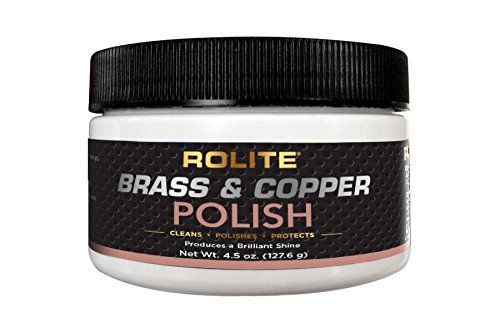
Rolite positions itself as the entry-level option that still delivers professional-grade results. The cream formula is acid-free, silicone-free, and non-toxic, making it one of the few polishes you can use safely around food-prep surfaces without worrying about chemical migration. The 4.5-ounce jar is compact enough to store in a kitchen drawer for quick brass touch-ups.
Users consistently report that Rolite removes heavy tarnish from vintage brass candlesticks in under 30 minutes with two passes, saving hours compared to competing cleaners. The cream works well on household brass like railings, pipes, and decorative fixtures, and the biodegradable formula means you can rinse residue down the sink without environmental guilt.
The one limitation is that the 4.5-ounce size runs out faster than a 16-ounce bottle if you are polishing large items like a brass bed frame or multiple kitchen pots. It is also not recommended for use on gold or silver plated metals. But for the price, the combination of effectiveness and safety makes Rolite a solid choice for the occasional polisher.
Why it’s great
- Acid-free and non-toxic formula safe for kitchen brass
- Removes heavy tarnish in under 30 minutes with two passes
- Biodegradable and eco-friendly composition
Good to know
- Small jar size requires more frequent repurchase
- Not suitable for gold or silver plated metals
FAQ
Can I use a brass polish on lacquered brass?
Why does my brass tarnish again so quickly after polishing?
Final Thoughts: The Verdict
For most users, the best brass polish winner is the Flitz Multi Purpose Metal Polish Liquid because it delivers the perfect balance of non-abrasive safety, long-lasting anti-tarnish protection, and the largest bottle size in this roundup. If you want a polish that works without any odor and spreads easily over large surfaces, grab the Maas International Liquid Metal Polish. And for heavy restoration work on multiple fixtures where value matters most, nothing beats the Maas Metal Polish 1.1lb Can.