
Our readers keep the lights on and my morning glass full of iced black tea. As an Amazon Associate, I earn from qualifying purchases.
Specs are compiled from manufacturer listings and verified buyer reviews and can change over time — please confirm the key details on the product page before buying.
A loaf that slices evenly — without a gummy center or a burnt bottom — depends on one thing: the pan. Your bread bakeware decides if your sourdough rises tall or your banana bread sticks in a mangled heap. Here are five real options, from silicone to cast iron, so you can pick the one that fits the way you bake.
I’m Min — the founder and writer behind Gadgets Feed. This guide is built by comparing the manufacturers’ published specifications and the patterns across verified customer reviews, so you get each pick’s real strengths and trade-offs instead of marketing spin.
We break down the size, material, and heat performance of each loaf pan. You get a clear, data-backed look at the best bread bakeware for home bakers who want reliable results without guesswork.
Quick Picks
- Cast Iron Bread Pan – Crucible Cookware — Top Performer
- Tiawudi Extra Large Bread Pan – Set of 2 — Best Value
- Tasty Clean Ceramic Loaf Pan Set – 2-Pack — Best Looks
- LIANYU 8-Pack Stainless Steel Loaf Pans — Batch Baker
- Vinino 2-Pack Silicone Loaf Pans — Flexible Pick
How To Choose The Best Bread Bakeware
Picking the right bread pan depends on material, size, and how you like your crust. Here is what actually matters when you are scrolling through options.
Material: What your pan is made of
The material determines how heat moves through the dough. Carbon steel heats fast and evenly for a golden brown crust, while cast iron holds steady heat for a thick, crackling crust. Silicone is flexible and nonstick but often needs a cookie sheet underneath for structural support — buyers report that these pans “require a cookie sheet for oven stability.” Stainless steel lasts forever with no coating to chip, though you will want parchment paper or grease to stop sticking.
Size and capacity
Standard 9×5 inch pans fit most recipes, but if you bake large sourdough boules or a 900-gram loaf, an extra-long 13×5 inch or a round 10-inch cast iron pan gives the dough room to spring without spilling over. The Tiawudi Extra Large pan holds 2.9 liters, whereas the Crucible Cookware cast iron pan holds 6.25 liters, so checking inner dimensions matters.
Nonstick coating vs. bare metal
Nonstick coatings like ceramic or PTFE (a type of plastic-based nonstick) make food release easy — Tasty Clean’s ceramic coating means “zero sticking” according to reviewers. But these coatings can wear or scratch over time. Uncoated stainless steel or bare cast iron never flakes, but you must season or grease the pan yourself. If you want a set-and-forget release, go coated. If you want a pan that lasts decades, go bare metal.
Quick Comparison
On smaller screens, swipe sideways to see the full table.
| Model | Best For | Material | Size (Inner) | Oven Safe Temp. | Amazon |
|---|---|---|---|---|---|
| Cast Iron Bread Pan (Crucible Cookware) | Artisan sourdough with steam crust | Bare Cast Iron | 10.24″ round (6.25 L) | Oven safe (no temp limit stated) | Amazon |
| LIANYU 8-Pack Stainless Steel | Batch baking multiple loaves | 18/0 Stainless Steel | 9 x 5 x 2.5 inches | Oven safe (no temp limit stated) | Amazon |
| Tasty Clean Ceramic Loaf Pan Set | Everyday loaves with easy release | Aluminized Steel (Ceramic Coating) | 9 x 5 inches | 425°F | Amazon |
| Tiawudi Extra Large Bread Pan Set | Large loaves or meatloaf | Carbon Steel (Nonstick) | 13.25 x 5.25 inches | 450°F | Amazon |
| Vinino 2-Pack Silicone Loaf Pans | Freezer meals and flexible release | Silicone (Reinforced Rim) | 12.5 x 5.5 inches | Oven safe (no temp limit stated) | Amazon |
In‑Depth Reviews
1. Cast Iron Bread Pan – Crucible Cookware
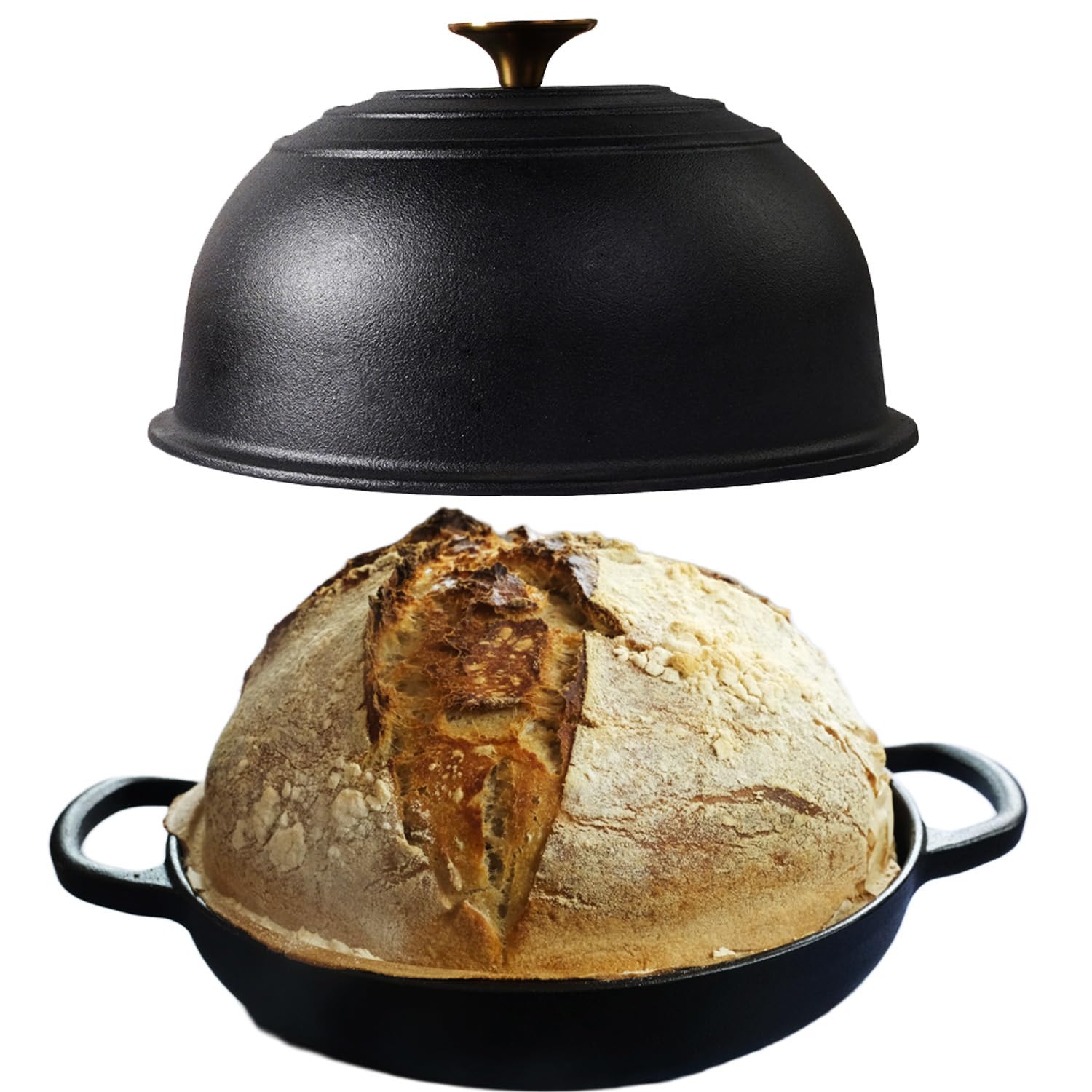
This pan traps steam inside your home oven for a bakery-style crust without needing a separate water tray.
If you want a thin, crispy crust with a tall, airy crumb (the soft inside of the bread), this round 26 cm cast iron pan with a deep lid is built for that. The capacity is 6.25 liters versus the Tiawudi Extra Large pan’s 2.9 liters, so a big boule (a round artisan loaf) has plenty of room to spring upward. At 12.13 pounds, the weight itself holds steady heat for consistent baking.
You do not have to wonder about hot spots. The solid cast iron body spreads heat evenly across the whole pan, and the bare cast iron finish becomes naturally nonstick over time as you use it. Owners mention that it “traps steam well for oven spring” and works for batards (elongated loaves) or even two baguettes. One reviewer noted the lid “doesn’t balance when inverted,” so using it as an open skillet takes some creativity. For artisan bread, this is a dedicated tool that delivers consistent results.
Why it’s great
- Deep lid locks in steam for a thin crispy crust and tall oven spring.
- Massive 6.25-liter capacity handles big sourdough boules easily.
- Cast iron holds heat evenly with no hot spots.
Good to know
- Heavy at 12.13 lb — not one for quick handling.
- Lid doesn’t balance when inverted, limiting uncovered cooking.
Best for: Bakers who want crackling artisan crust and big oven spring from a single pan.
Skip if: You prefer a lightweight or dishwasher-safe pan, or need a standard rectangular loaf shape.
2. Tiawudi Extra Large Bread Pan – Set of 2

Two massive pans that stop burnt edges and doughy middles for good.
At 13 x 5 inches inner size, these pans give your dough room to rise without spilling over the rim. The heavy-weight carbon steel construction — 1.14 kilograms per pan — heats fast and evenly. Customers note “even heat distribution prevents burnt edges/doughy center.” The nonstick coating is free of PFOA (perfluorooctanoic acid), PFOS (perfluorooctane sulfonate), lead, and cadmium, so food releases easily.
The Tiawudi set is oven-safe to 450°F (232°C), which covers nearly any bread or meatloaf recipe. The manufacturer recommends hand washing, and each pan comes with a lifetime guarantee. One buyer mentioned the pans are “heavy, quality pans” that fit a standard bread keeper, and another confirmed the nonstick coating is “truly non stick.” The outer dimensions (15 x 6 x 3 inches) include a generous lip for easy gripping with oven mitts, unlike smaller 9-inch pans that can feel cramped.
The case for it: You get two extra-large pans with heavy carbon steel that bakes evenly every time, plus a lifetime warranty.
The catch: Not dishwasher safe, and at 1.14 kg each they feel substantial — not a lightweight pick for casual bakers.
Best for: Bakers who make large loaves or meatloaf and want even browning without guesswork.
Skip if: You need dishwasher-safe bakeware or want standard 9-inch pans for smaller recipes.
3. Tasty Clean Ceramic Loaf Pan Set – 2-Pack
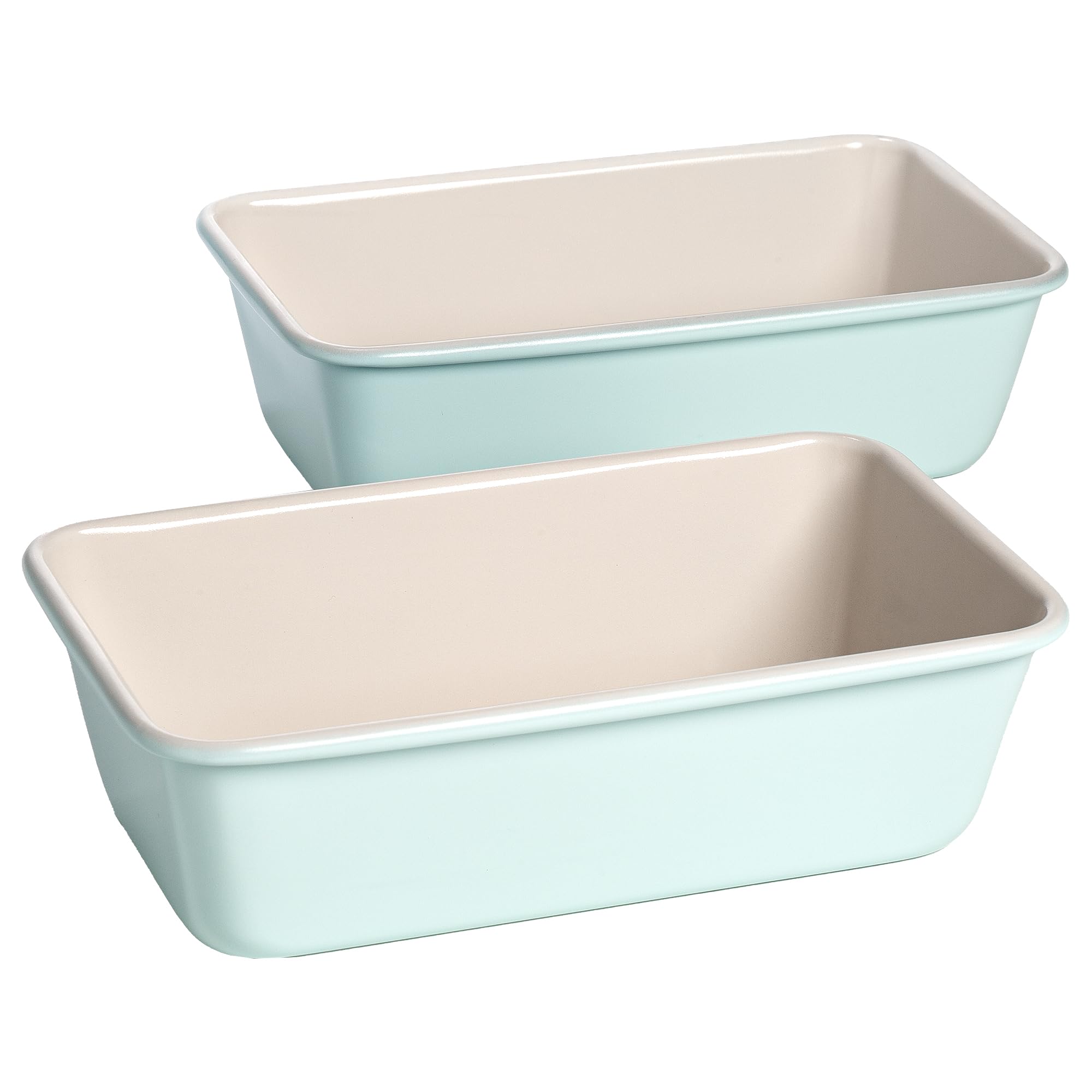
Nonstick ceramic coating releases loaves like magic, with no chemical coating worries.
Made from aluminized steel with a clean ceramic nonstick coating (free of PFAS and PFOA, two types of chemicals used in older nonstick pans), these 9×5-inch pans bake evenly and release food easily. Reviewers point out they “bake evenly with zero sticking” and clean up with just warm soapy water. The light aqua color also looks good enough to keep on open shelving.
Oven-safe to 425°F (218°C) and dishwasher safe (though the manufacturer recommends hand washing to preserve the coating), this set is versatile enough for banana bread, meatloaf, and pound cake. The 9×5-inch size is standard for most recipes, making it a straightforward choice if you do not need extra-long pans. The ceramic coating means no seasoning or heavy greasing required.
Why it’s great
- Ceramic coating provides easy release without PFAS or PFOA.
- Aluminized steel heats evenly for uniform browning.
- Dishwasher safe and easy to clean.
Good to know
- Hand washing recommended to extend the coating life.
- Standard 9-inch size won’t fit extra-large loaves.
Best for: Bakers who want a non-toxic, easy-release surface for everyday loaves and cakes.
Skip if: You bake large artisan loaves or need a pan that can go above 425°F.
4. LIANYU 8-Pack Stainless Steel Loaf Pans

Eight uncoated stainless steel pans for the baker who needs volume without chemical coatings.
Built from heavy-duty 18/0 stainless steel that is nickel-free (so it is safe for people with nickel allergies), these pans have no coating to peel or chip over time. Each pan is 9 x 5 x 2.5 inches — a medium size that reviewers call “the perfect size for a 900 gram sourdough loaf.” The brushed surface and one-piece design mean no corners trap food, making cleanup straightforward in the dishwasher or by hand.
Because there is no nonstick coating, you will want to grease the pans or use parchment paper — one owner reported “use oil or silicone/parchment liners to prevent sticking.” The reinforced rolled edges prevent warping even after repeated use. For a cottage bakery (a small home-based bakery business) or anyone baking multiple loaves at once, this set lets you bake up to 12 loaves in one session, according to one reviewer who runs a cottage bakery and said these pans are “genuinely useful.” They are oven safe and can fit into pressure cookers, air fryers, and refrigerators.
The case for it: Eight durable, nickel-free stainless steel pans that won’t chip or rust, perfect for high-volume baking.
The downside: No nonstick coating means you must grease or use parchment paper every time, or food will stick.
Best for: Serious bakers and cottage bakeries who need many pans and prefer uncoated stainless steel.
Skip if: You want a nonstick surface for the easiest release, or only need one or two pans.
5. Vinino 2-Pack Silicone Loaf Pans
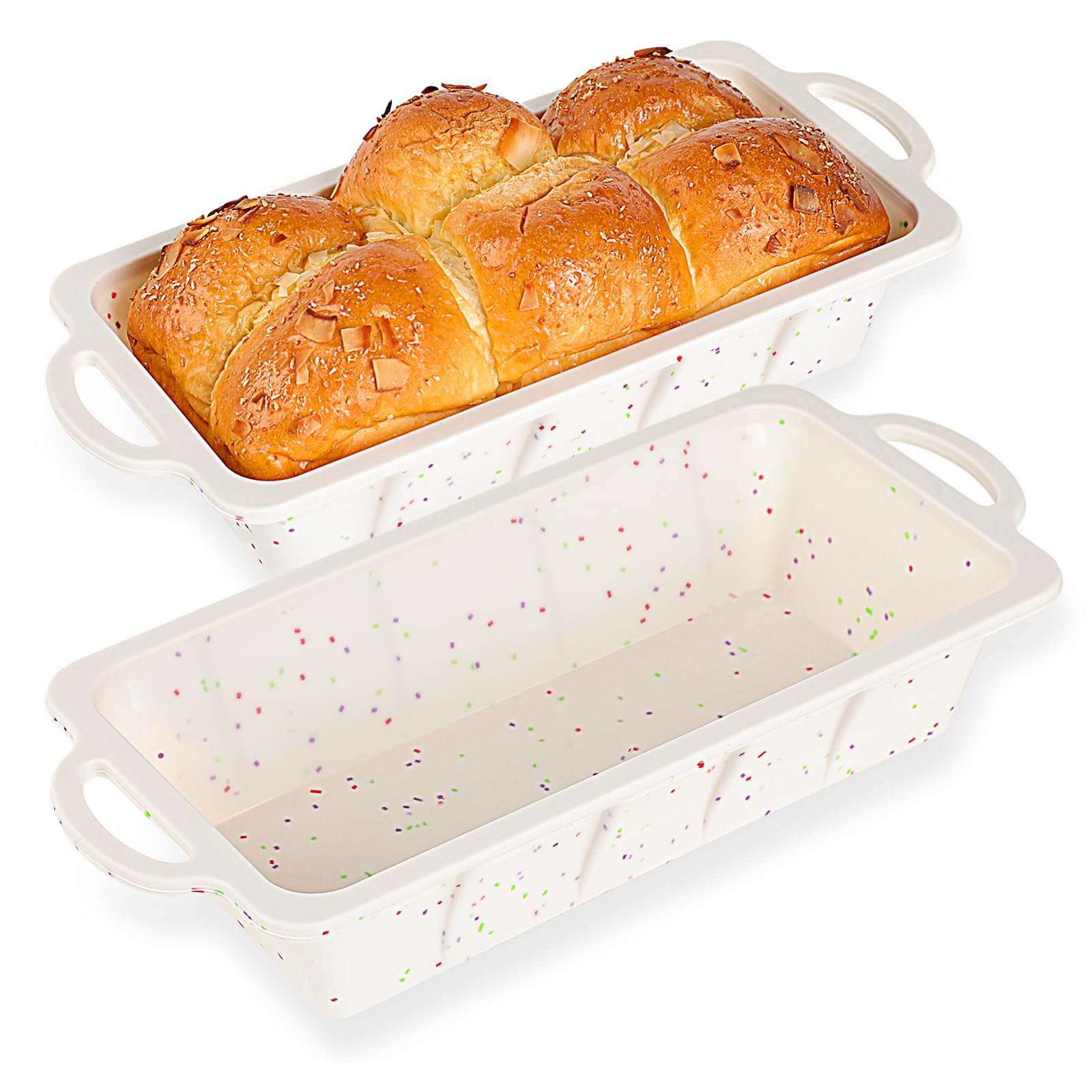
Flexible silicone pans that pop your loaf out whole, no greasing or scraping needed.
These cream-colored silicone pans measure 12.5 x 5.5 inches — longer than standard loaf pans — and weigh just 0.45 pounds each. The flexible material makes releasing baked goods easy, and shoppers say the material “cleans nicely.” A metal reinforced rim adds structure, though buyers report that the pans “require a cookie sheet for oven stability” since silicone can wobble under dense dough.
Each pan holds 16 ounces, making them ideal for small-batch baking like banana bread, meatloaf, or egg bakes. The set of two lets you bake paired loaves or a main dish and a dessert in one session. They are dishwasher safe and oven safe, though one customer observed an “initial silicone smell/taste” that they treated with a vinegar soak. If you want flexibility for freezer-to-oven meal prep or you hate scrubbing stuck-on crust, these are an easy clean solution.
Why it’s great
- Flexible silicone releases baked goods instantly with no sticking.
- Very lightweight at 0.45 lb — easy to handle.
- Dishwasher safe for easy cleanup.
Good to know
- Needs a cookie sheet underneath for oven stability.
- Some owners mention an initial silicone odor that requires treatment.
Best for: Meal preppers and small-batch bakers who want easy release and dishwasher-safe cleanup.
Skip if: You need a sturdy pan that holds its shape without a cookie sheet, or want a classic metal loaf.
Understanding the Specs
Pan Material & Heat Transfer
The material of your bread pan determines how quickly and evenly your loaf bakes. Carbon steel heats fast and gives a golden brown crust — it is a great middle-ground. Cast iron retains heat longer and creates the thick, crackling crust you want in artisan sourdough. Silicone is nonstick and flexible but does not conduct heat well, which is why bakers often need a cookie sheet underneath for support. Stainless steel offers even heating with no coating to chip, but food can stick without grease or parchment paper.
Capacity & Dimensions
Standard loaf pans are 9 x 5 inches, which fits most recipes calling for 2 cups of flour. Extra-large pans (13 x 5 inches) give dough room to rise without spilling, and round cast iron pans (10.24 inch diameter, 6.25 liters) are designed for boules. Always check the inner dimensions, because outer measurements include the lip and handles. A bigger pan also means more surface area for browning, so you get a thicker crust. If you bake small batches, silicone pans hold about 16 ounces — good for snack loaves but too small for a full-size bread recipe.
FAQ
What size bread pan should I use for a standard loaf recipe?
Is cast iron bread pan better than carbon steel?
Can I put a silicone loaf pan directly on the oven rack?
How do I clean a bare cast iron bread pan?
Will a 9×5 inch pan fit in my air fryer or pressure cooker?
What does oven-safe temperature range mean for a loaf pan?
Are stainless steel loaf pans nonstick?
How many loaves can I bake at once with an 8-pack of pans?
Is it safe to use metal utensils on nonstick bread pans?
What is the difference between a bread pan and a loaf pan?
Final Thoughts: The Verdict
For most home bakers, the best bread bakeware is the Tiawudi Extra Large Bread Pan Set. It delivers heavy carbon steel construction, even heat distribution, and a nonstick coating at an honest price point that covers most needs. If you want a steam-trapping pan for crunchy artisan sourdough, grab the Crucible Cookware Cast Iron Bread Pan. And for bakers who need to crank out multiple loaves without chemical coatings, the LIANYU 8-Pack Stainless Steel Loaf Pans offer volume without worrying about coating wear.
How We Picked
We do not accept paid placement, and we did not hands-on test every unit. Instead, we match each pick to a real buyer and use-case by comparing the manufacturers’ published specifications against the patterns in verified customer reviews — so you get each pick’s real strengths and trade-offs instead of marketing copy.
Sources & Methodology
Specifications: manufacturer listings and product documentation. Review insights: verified customer reviews, as of July 2026. Pricing: not shown on this page (it changes often); check the current price via the retailer link.
As an Amazon Associate, Gadgets Feed earns from qualifying purchases. This does not affect which products we feature.